Which Is Closer To Zaragoza, Madrid Or Barcelona?
Madrid and Barcelona both sit about 1.5 to 2 hours from Zaragoza by high-speed train. Here is how the two routes really compare, and what to do with the time you save.
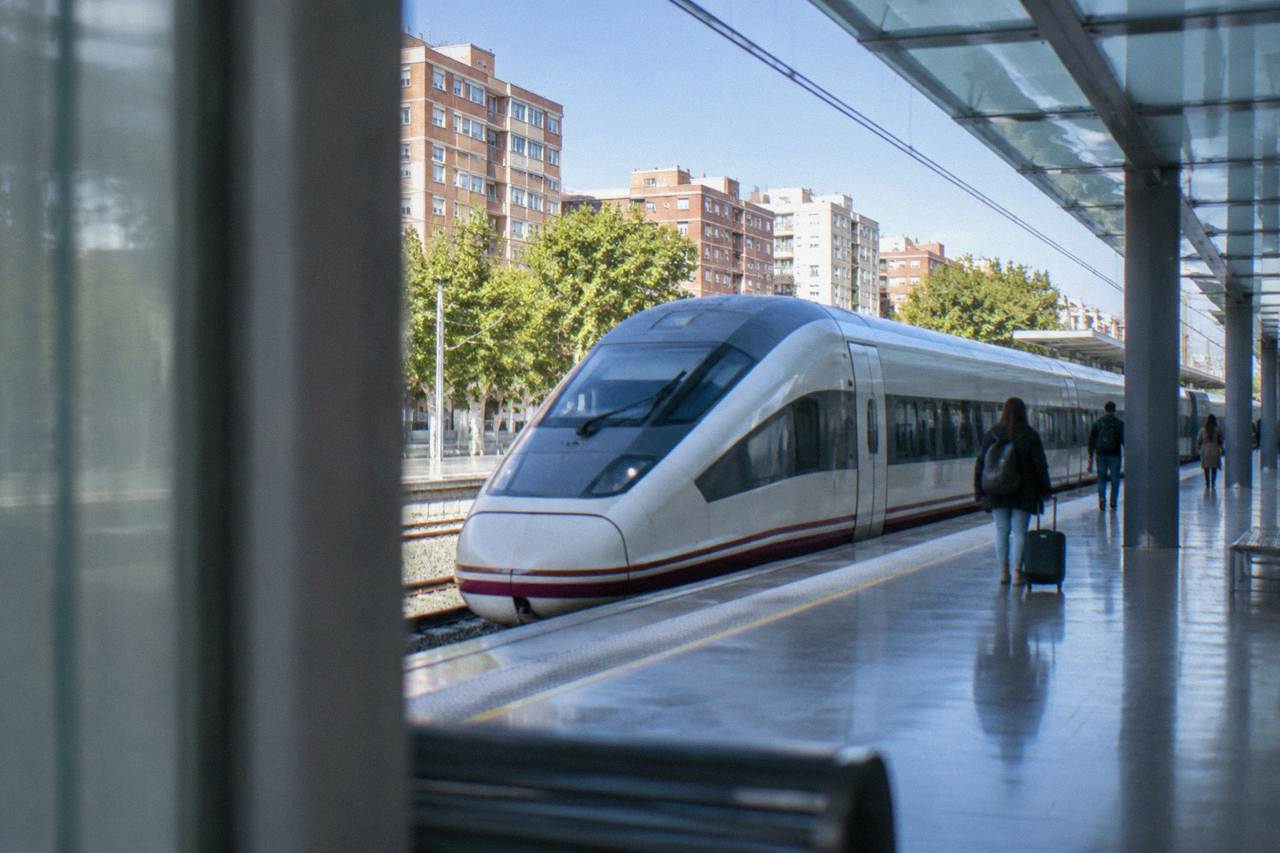
Zaragoza, Spain, the capital of Aragon on the Ebro, occupies one of the most convenient positions in the country: it sits on the north-east high-speed rail corridor with Madrid to the south-west and Barcelona to the east, and both cities are about 1.5 to 2 hours away by fast train. That near-symmetry is unusual in Spain, and it is the reason so many travellers ask which of the two is closer. The question matters in practice, because Zaragoza makes an excellent stop on a Madrid-Barcelona route, or a base for exploring Aragon, and the answer shapes how you plan the trip.
Which Is Closer To Zaragoza, Madrid Or Barcelona?
Neither city is meaningfully closer by rail: the fastest high-speed services from Zaragoza-Delicias to Madrid and to Barcelona both take roughly the same time, about 1.5 to 2 hours, and no exact timetable or fare can be quoted here because none was read on the operators' own pages. Check Renfe, Ouigo, iryo or Omio for live times and fares before booking either leg.
The practical difference between the two routes is not minutes on a clock. It is what each pairing does to your itinerary. Madrid and Zaragoza are linked by the classic AVE corridor through the north-east, and the same line continues east to Barcelona, which is why Zaragoza-Delicias handles both directions from one modern station. The train ride from Madrid to Zaragoza and the high-speed connection from Barcelona each deserve their own planning page, because the details of tickets, station transfers and timing differ even when the headline journey time does not.
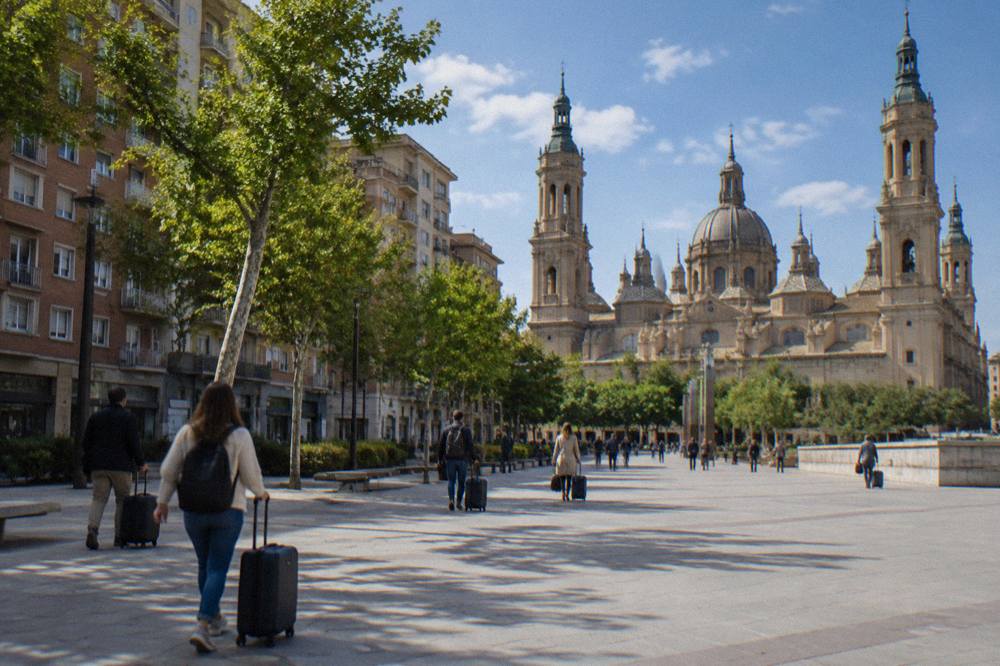
Geographically, Madrid lies to the south-west of Zaragoza and Barcelona to the east, so the two routes leave the region in opposite directions. That matters more than a few minutes of track. A traveller pairing Zaragoza with Madrid is building a central-Spain trip; a traveller pairing it with Barcelona is building a Mediterranean one. The city itself rewards either choice, as the Zaragoza Travel Guide pages on the Aljafería, La Seo and the Basílica del Pilar make clear.
What the verified sources do say, plainly: Zaragoza-Delicias is the main station for both routes, and the fastest services in each direction are best described as about 1.5 to 2 hours. Any page promising an exact minute count or a fixed fare for either city is quoting a number this site cannot verify, and you should treat it with caution. Aggregator figures move with the calendar, the operator and the day of the week.
How Far Is Barcelona From Zaragoza?
By high-speed train Barcelona is about 1.5 to 2 hours from Zaragoza-Delicias, and that is as precise as any honest figure can be here, because no Renfe, Ouigo or iryo timetable was read for this page. The two cities are close enough that Zaragoza works as a legitimate stop on a Barcelona itinerary, and far enough apart that a day trip means a full day.
The Barcelona pairing suits travellers who want contrast. Zaragoza is an inland city on the Ebro with a dry continental climate, Mudéjar architecture and a food tradition built on tapas and Aragonese dishes, while Barcelona offers its own entirely different set of strengths. This site verified nothing about Barcelona, so no claim is made here about its prices, its climate or its sights; what can be said is that the two cities complement rather than duplicate each other. The Zaragoza versus Barcelona comparison covers the character question in depth.
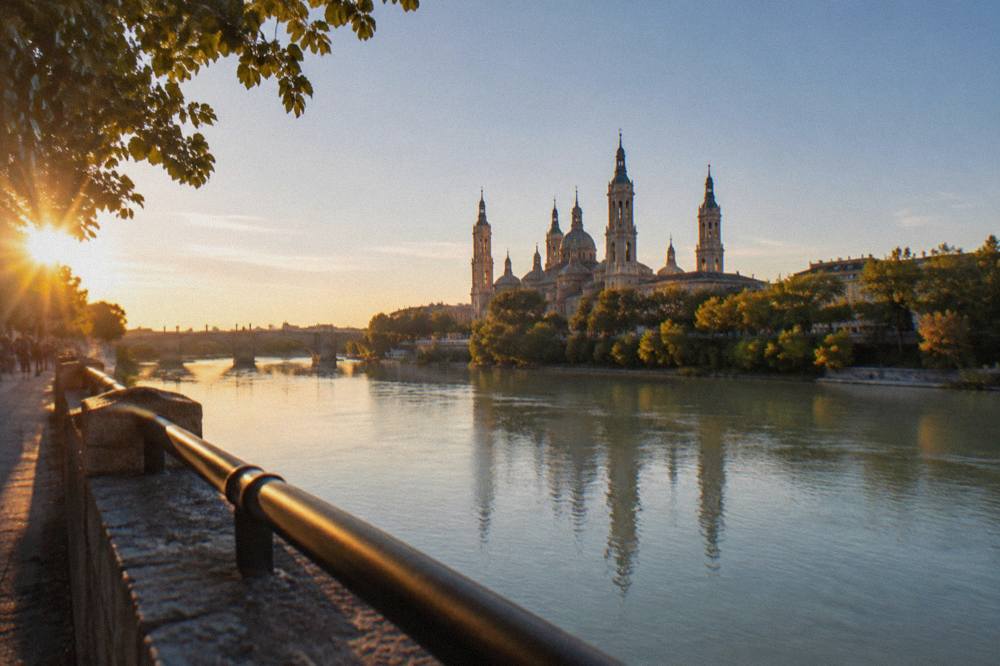
If you are coming from Barcelona for a single day, the day trip from Barcelona itinerary concentrates the old town around Plaza del Pilar, the Puente de Piedra and the Aljafería, all of which cluster within a walkable historic core. The Puente de Piedra itself, the current stone bridge completed in 1440 on the site of a Roman-era crossing, is one of the city's signature views over the Ebro and costs nothing to cross.
The guided options above are built for exactly this kind of compressed visit: a must-see walking tour with a guide, a visit to La Seo, and a guided Aljafería tour with ticket included. The Aljafería charges EUR 7 general admission, EUR 9 with a guided visit, and opens daily 10:00-18:00 in the October timetable, with free entry on the first and third Sunday and Monday of each month. La Seo charges EUR 10 general, a ticket that also includes the Museo de Tapices, the Museo Pilarista and the Rosario de Cristal.
How Do You Choose Between Madrid And Barcelona For A Zaragoza Trip?
Choose by direction and by what you want the pairing to do, not by journey time, because the two rail legs are roughly equal at about 1.5 to 2 hours each. Madrid suits a central-Spain loop and travellers flying into Barajas; Barcelona suits a Mediterranean route and travellers arriving from France or along the coast. Zaragoza itself is equally easy to reach from either side.
The Madrid leg is the one most first-time visitors build, largely because Madrid functions as Spain's rail hub. The Madrid to Zaragoza guide covers the practicalities, and the day trip from Madrid itinerary shows that a single long day is genuinely feasible when the fast train runs in your favour. A useful habit: book the earliest fast service you can comfortably make, because Zaragoza's old town rewards a full morning.
The Barcelona leg suits a different traveller: someone moving along the Mediterranean coast, or combining Aragon with Catalonia. Both pairings arrive at Zaragoza-Delicias, a single station, so the arrival experience is identical whichever city you come from. From the station, urban bus and tram singles cost EUR 1.70, or EUR 0.55 with a Tarjeta Bus, and the card itself costs EUR 7 and works on both networks.
What Can You Do With The Time You Save In Zaragoza?
Because both Madrid and Barcelona are only about 1.5 to 2 hours away, Zaragoza gives you most of a full day on the ground even on a day trip, and the verified sight prices are modest: the Basílica del Pilar is free to enter, its tower viewpoint costs EUR 6, La Seo costs EUR 10 including three museums, and the four Caesaraugusta Roman museums cost EUR 7 on a combined ticket.
That is an unusually cheap day for a major Spanish city, and it is worth spending deliberately. The Basílica del Pilar is free to enter, with the Holy Chapel zone open 8:00-20:30 and the main altar zone open in two daily blocks; the tower viewpoint costs EUR 6 for an adult, EUR 5 for over-65s and residents, and EUR 4 for ages 13-18, students and groups of 20 or more, with children under 12 free. The Caesaraugusta museums, the Roman Forum, the river port, the baths and the theatre, sell a four-museum bono for EUR 7, EUR 5 reduced, with free entry on the first Sunday of the month.
| Sight in Zaragoza | General admission | Opening hours (October timetable) | Free or reduced options |
|---|---|---|---|
| Basílica del Pilar (temple) | Free | Main altar zone Mon-Sat 7:30-13:30 / 16:30-20:15, Sun until 21:30 | Entry always free |
| Basílica del Pilar tower viewpoint | EUR 6 | Mon-Thu 10:30-14:30 / 16:00-20:00, Fri-Sun 10:00-20:00 | EUR 5 over 65 and residents, EUR 4 ages 13-18, free under 12 |
| La Seo (includes Museo de Tapices, Museo Pilarista, Rosario de Cristal) | EUR 10 | Mon-Sat 10:00-14:30 / 16:00-20:00, Sun 10:00-12:00 / 16:00-20:00 | EUR 9 over 65, EUR 7 students and 13-18, free under 12, free for Aragon residents on the 6th, 12th, 23rd and 27th |
| Aljafería palace | EUR 7 (EUR 9 guided) | Daily 10:00-18:00, last access 45 min before close | EUR 2 students, over 65 and Carnet Joven, free under 12, free 1st and 3rd Sunday and Monday |
| Caesaraugusta museums (4-museum bono) | EUR 7 (EUR 5 reduced) | Tue-Sat 10:00-14:00 / 17:00-21:00, Sun 10:00-14:30 | Free 1st Sunday of the month |
A guided walk is the most efficient way to spend a compressed visit. The Must-See Attractions Walking Tour With A Guide covers the essential old town sights in one guided sweep, and it can be booked alongside the fast train in either direction, Check availability for your date before you commit to train tickets.
Does It Matter For Timing Whether You Come From Madrid Or Barcelona?
It matters less than most guides imply: both legs take about 1.5 to 2 hours by high-speed train from Zaragoza-Delicias, so the real planning variables are your departure time, your ticket price on the day, and how much of Zaragoza you want before the return leg. Neither direction buys you a meaningfully longer day.
What does differ is the rhythm of the two trips. Madrid pairings tend to be early-start, late-return affairs, because the capital's rail hub gives flexible scheduling in both directions. Barcelona pairings feel more like a segment of a coastal route, and many travellers overnight in Zaragoza rather than return the same day. If you can only spare one day, the one-day itinerary for Zaragoza is built around exactly this constraint, and the question of how many days you need in Zaragoza is worth settling before you book any train.
Season matters too. AEMET's 1981-2010 normals for the Zaragoza Aeropuerto station put October's average maximum at 21.4 C with 36 mm of rain across 5.4 rain days, comfortably mild for walking the old town. July, by contrast, averages a 32.4 C maximum and only 17 mm of rain, so a summer day trip is best built around early morning and evening sightseeing, with the middle of the day given to a long tapas lunch.
| Planning factor | Madrid pairing | Barcelona pairing |
|---|---|---|
| Fastest high-speed rail time from Zaragoza-Delicias | About 1.5 to 2 hours | About 1.5 to 2 hours |
| Typical trip shape | Out-and-back day trip from a central-Spain base | Overnight stop on a Mediterranean route |
| Best suited to | Travellers flying into Madrid or touring central Spain | Travellers moving along the coast or from France |
| What to check before booking | Live times and fares on Renfe, Ouigo, iryo or Omio | Live times and fares on Renfe, Ouigo, iryo or Omio |
Common Questions About Zaragoza, Madrid And Barcelona
Which is closer to Zaragoza, Madrid or Barcelona?
Neither is meaningfully closer by high-speed rail: the fastest services from Zaragoza-Delicias to both Madrid and Barcelona take about 1.5 to 2 hours. Check Renfe, Ouigo, iryo or Omio for live times and fares.
How far is Barcelona from Zaragoza?
By high-speed train, about 1.5 to 2 hours from Zaragoza-Delicias. No exact timetable or fare is quoted here, because none was read on the operators' own pages.
Can you do Zaragoza as a day trip from either city?
Yes. Because both legs run about 1.5 to 2 hours, a long day trip is feasible from Madrid or Barcelona, especially with an early outbound service. The old town around Plaza del Pilar is compact enough to cover on foot in a single visit.
Is Zaragoza worth stopping at between Madrid and Barcelona?
Yes. The Basílica del Pilar is free to enter, La Seo costs EUR 10 including three museums, and the Aljafería charges EUR 7, so a stop costs little and delivers the city's three defining monuments.
Which station do the trains use in Zaragoza?
Zaragoza-Delicias, for both the Madrid and Barcelona directions. From there, urban bus and tram singles cost EUR 1.70, or EUR 0.55 with a Tarjeta Bus.
Whichever of the two big neighbours you start from, Zaragoza rewards the stop: about 1.5 to 2 hours on a fast train in either direction, a free basilica, a EUR 10 cathedral ticket that includes three museums, and an old town small enough to see properly in the time the rail geography hands you.