Madrid To Zaragoza
The high-speed rail link from Madrid makes Zaragoza, the capital of Aragon on the Ebro, one of the easiest big-city escapes in Spain. Here is how the journey works, what to expect on arrival, and how to spend the hours once the train pulls in.
Short answer
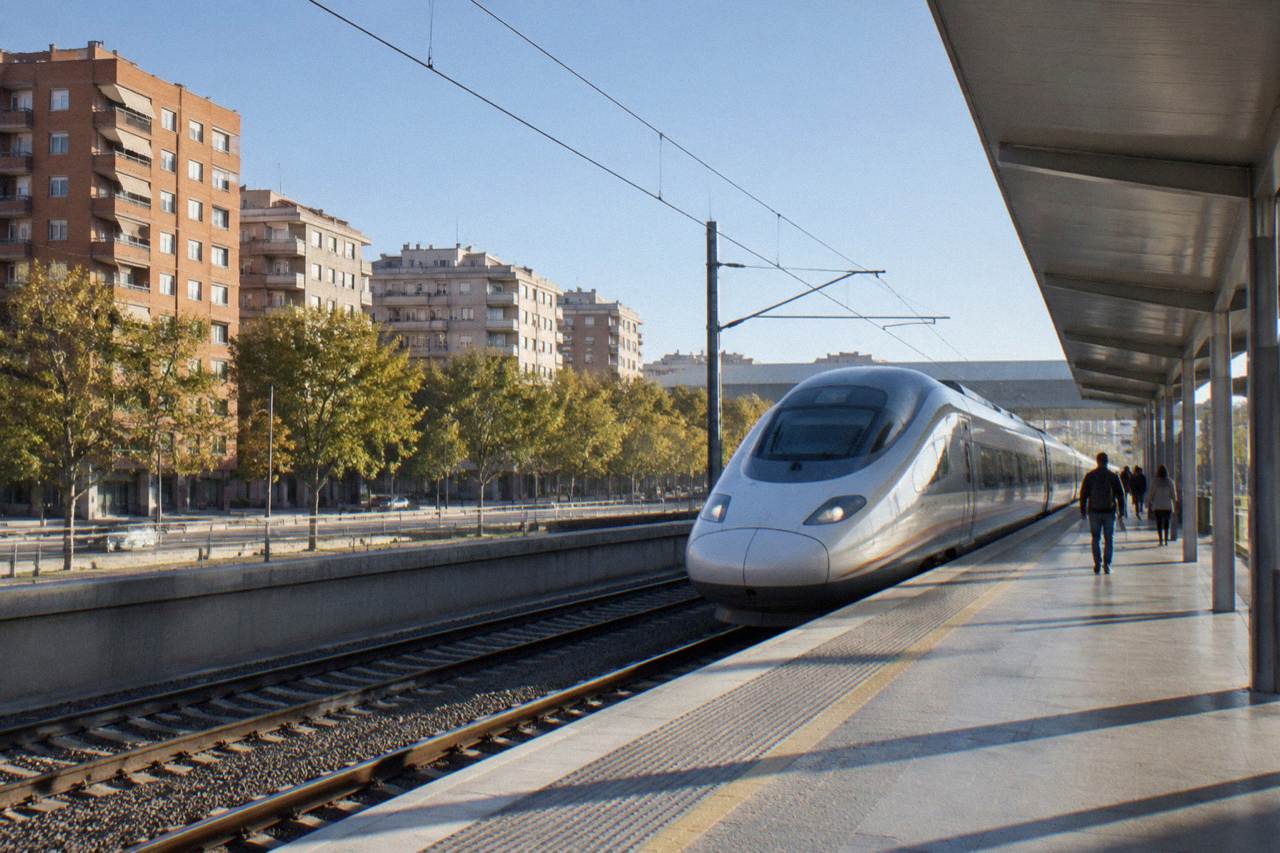
The high-speed train from Madrid to Zaragoza takes about 1.5 to 2 hours and arrives at Zaragoza-Delicias, a short tram or taxi ride from the old town around the Basílica del Pilar. Zaragoza is an inland city in Aragon, not a coastal stop, and it is compact enough to enjoy from the moment you step off the train.
The train from Madrid to Zaragoza is one of the most useful rail journeys in Spain, because it turns the capital of the country into the doorstep of the capital of Aragon. Zaragoza sits inland on the Ebro, roughly halfway between Madrid and Barcelona on the high-speed corridor, and its old town clusters so tightly around the Basílica del Pilar that a traveller arriving at Zaragoza-Delicias can be standing in front of the basilica within half an hour of leaving the platform. This guide covers the journey itself, the station you arrive at, what to do with your first hours in the city, and the practical questions that come up when you plan the trip.
How Long Is The Train From Madrid To Zaragoza?
The high-speed train from Madrid to Zaragoza takes about 1.5 to 2 hours, arriving at Zaragoza-Delicias station. No exact timetable or fare is reproduced here because operator schedules and prices change constantly, so check Renfe, Ouigo, iryo or a fare aggregator such as Omio for live times and tickets before you book.
That journey time is the single biggest reason Zaragoza works as a day trip or a short break. The route runs on the Madrid to Barcelona high-speed corridor, and Zaragoza-Delicias is the intermediate stop where the line crosses the Ebro valley. Because the city is not a terminus, trains pass through in both directions throughout the day, which usually means a spread of departures rather than one or two awkward slots. What no timetable printed here can tell you is which of those departures is cheapest on your date, and that is genuinely a live question: fares on Spanish high-speed services vary by train, by day and by how early you book, so the honest advice is to compare the operators directly and book ahead for the best prices.
For a fuller treatment of the timing question, including how the journey compares with other routes into the city, see How Long Is The Train Ride From Madrid To Zaragoza, and for the wider picture of rail, road and air options, the guide to getting to Zaragoza covers every approach.
Which Station Does The Train Arrive At In Zaragoza?
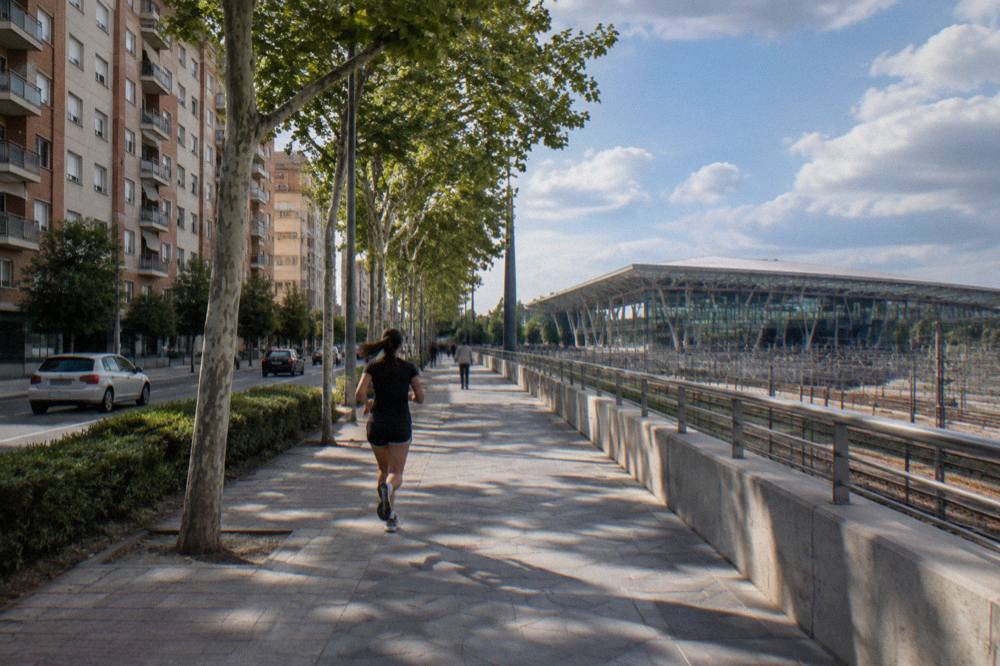
Trains from Madrid arrive at Zaragoza-Delicias, the city's main station, which combines high-speed, regional and bus services in one building. From there the old town around the Basílica del Pilar is a short taxi or tram ride away, and the station's own facilities make arrival straightforward even for a first-time visitor to Aragon.
Delicias matters more than its size suggests, because it is not only a railway station: the building also houses the city's main interurban bus terminal, so a traveller arriving by train can connect to a coach for the surrounding region without crossing the city. The station sits south-west of the historic centre, on the far side of the Ebro from most of the sights, so plan the last leg rather than assuming you can walk. A taxi covers the distance quickly, and the tram and urban bus network runs from close by into the centre; a single urban bus or tram ticket costs 1.70 EUR, or 0.55 EUR with the rechargeable Tarjeta Bus, according to the 2026 Avanza fare table. If your hotel is in the old town, the Centro or the Paseo de la Independencia area, you will be settled within minutes of stepping off the train.
The station has its own dedicated page with arrival logistics, luggage advice and onward connections: read Zaragoza-Delicias train station before you travel. And once you are oriented, a guided walk is one of the fastest ways to turn a station arrival into a sense of the city. The Historical Tour of the Old District with a Guide, a 2.5-hour walk rated 5 from 14 reviews and priced from $106.92 per person, covers the district most visitors head for first, and Check availability to lock in a slot that fits your arrival time.
How Much Does The Madrid To Zaragoza Train Cost?
No fare is reproduced here, because prices on the Madrid to Zaragoza route move with demand, with departure time and with how far ahead you book. Spanish high-speed tickets are sold by several competing operators, Renfe, Ouigo and iryo among them, and the spread between the cheapest and most expensive seat on the same day can be wide, so compare all of them before paying.
Competition on this corridor is the traveller's friend. When several operators run trains over the same tracks, each sets its own fare ladder, and the same journey can carry very different prices depending on which company's train you choose and when. The practical approach is to run the same search on each operator's own site, or through an aggregator that shows them side by side, and to treat the cheapest fare shown as a starting point rather than a fact. Book early for the lowest prices, be flexible about departure times if you can, and remember that a day trip needs a return ticket that works with your last train, not just a cheap outbound.
Is The Train Or The Car Better From Madrid To Zaragoza?
The train is the better choice for almost every visitor, because it removes parking, navigation and the low-emission-zone rules that now restrict older cars in Zaragoza's historic centre. Driving offers freedom for onward exploration into Aragon's countryside, but for a city break focused on the old town, arriving by rail and walking or using public transport is simpler, cheaper and less stressful.
The deciding factor is what Zaragoza does with cars. The city operates a low-emission zone covering the Casco Histórico, with sanctions in force since 12 December 2025 and restrictions applying Monday to Friday from 08:00 to 20:00: vehicles without a DGT environmental label are not permitted, and even labelled cars face the ordinary problem of parking in a dense medieval street plan. Arriving by train sidesteps all of it. You step out at Delicias, take a tram, a bus or a taxi into the centre, and never think about a car again until you leave.
Driving earns its place only if Aragon beyond the city is part of the plan. Monasterio de Piedra, the Moncayo, the wine country of Cariñena and the ruined town of Belchite are all easier with your own vehicle, and a car lets you string several of them together. The compromise many travellers land on is sensible: take the train for the city itself, and rent a car locally only if a day of rural exploring justifies it. The car rental and parking guide works through the options, and the getting around guide covers the tram and bus network you will actually use on arrival.
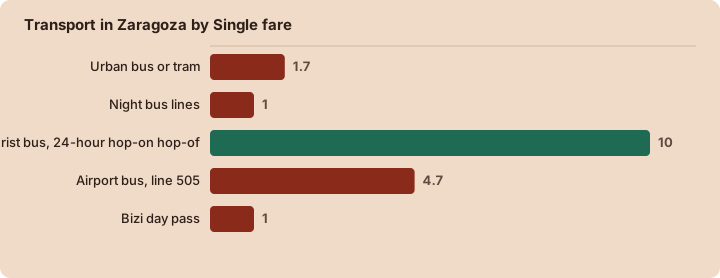
| Transport in Zaragoza | Single fare | Notes |
|---|---|---|
| Urban bus or tram | 1.70 EUR | 0.55 EUR with Tarjeta Bus, 2026 Avanza fares |
| Night bus lines | 1.00 EUR | Same fare table |
| Tourist bus, 24-hour hop-on hop-off | 10 EUR | 16 stops, 90-minute loop, cash only on the bus |
| Airport bus, line 505 | 4.65 EUR | About 2.25 EUR with a Lazo card, timed to flights |
| Bizi day pass | 1 EUR plus per-trip charges | First 30 minutes 0.50 EUR per trip, deposit applies |
What Should You Do With Your First Hours In Zaragoza?
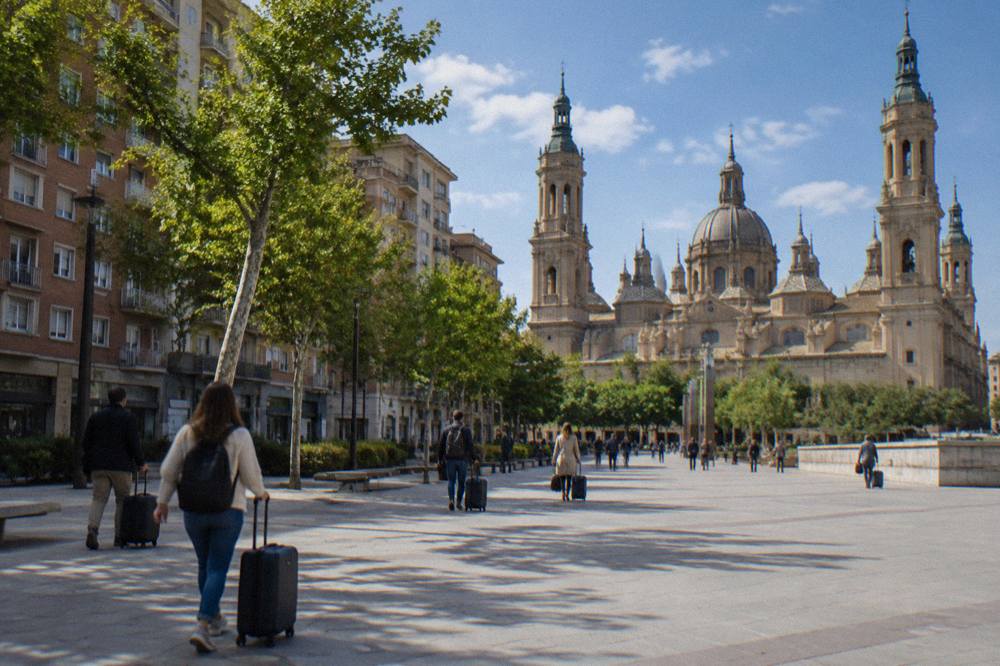
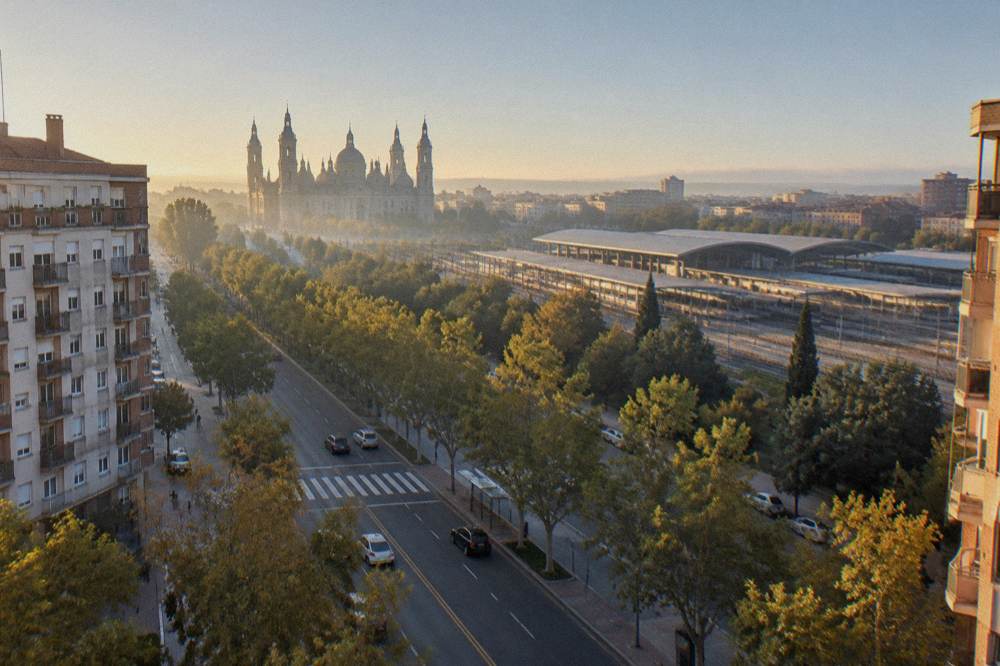
Head straight to the Plaza del Pilar, the monumental square where the Basílica del Pilar, La Seo cathedral and the Ayuntamiento face each other across a single open space. Entering the basilica is free, the tower viewpoint costs 6 EUR for an adult, and the whole old town spreads out from that square in a walkable grid, so a first afternoon needs no transport at all once you arrive.
The Plaza del Pilar is the natural first stop because it concentrates the city's identity in one view. The Basílica del Pilar, with its domes above the Ebro, is the emblem of Aragon; entering the temple itself costs nothing, and the municipal October timetable lists the tower viewpoint at 6 EUR for adults, 5 EUR for over-65s and residents, and 4 EUR for ages 13 to 18, students and groups, with children under 12 free. A few minutes' walk along the square brings you to La Seo, the cathedral of San Salvador, where a general ticket at 10 EUR includes the Museo de Tapices, the Museo Pilarista and the Rosario de Cristal, with a combined cathedral-and-tower ticket at 12 EUR.
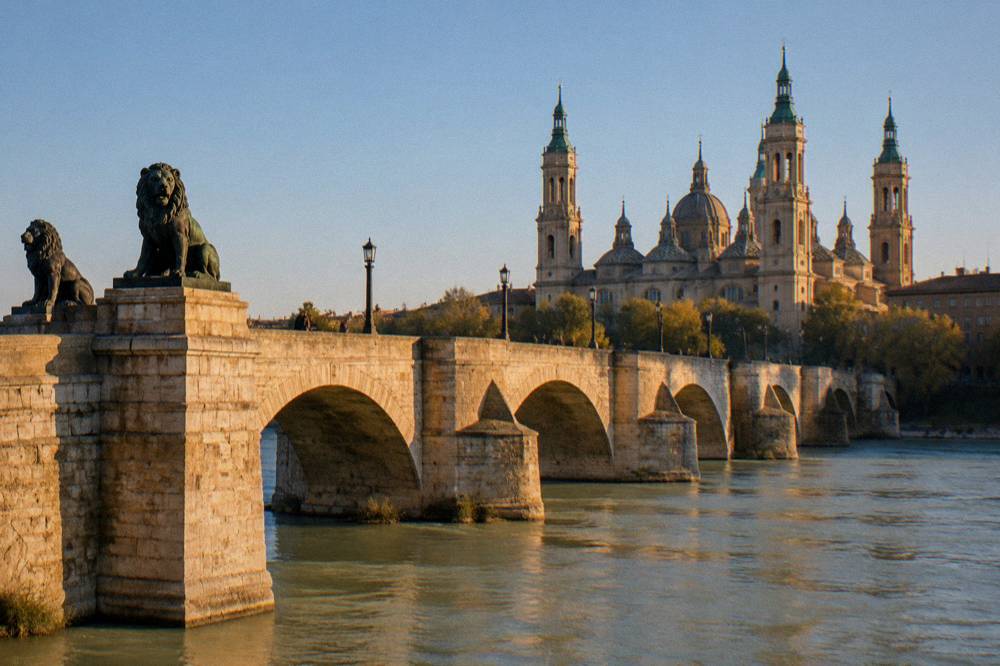
From there the old town unwinds on foot. The Puente de Piedra, the stone bridge whose current structure was built from 1401 and opened in 1440, crosses the Ebro with its four bronze lions and gives the best view back at the basilica's domes. The Roman remains of Caesaraugusta, the city's ancient name, sit in four museums in the same streets, with a four-museum ticket at 7 EUR and free entry on the first Sunday of the month. For a structured first encounter, the Monumental Walking Tour in Old Town of Zaragoza, rated 4.9 from 15 reviews and priced from $97.47 per person, walks the same district with a guide, and the things to do in Zaragoza page carries the full list for a longer stay.
| Sight near the centre | Entry cost | Free or reduced access |
|---|---|---|
| Basílica del Pilar, temple | Free | Open to all during visiting hours |
| Basílica del Pilar, tower viewpoint | 6 EUR adult | 5 EUR over 65 and residents, 4 EUR ages 13 to 18, free under 12 |
| La Seo cathedral, general ticket | 10 EUR | Includes three museums, 12 EUR with tower |
| Aljafería palace | 7 EUR general | Free 1st and 3rd Sunday and Monday of each month |
| Caesaraugusta four-museum ticket | 7 EUR | 5 EUR reduced, free 1st Sunday of the month |
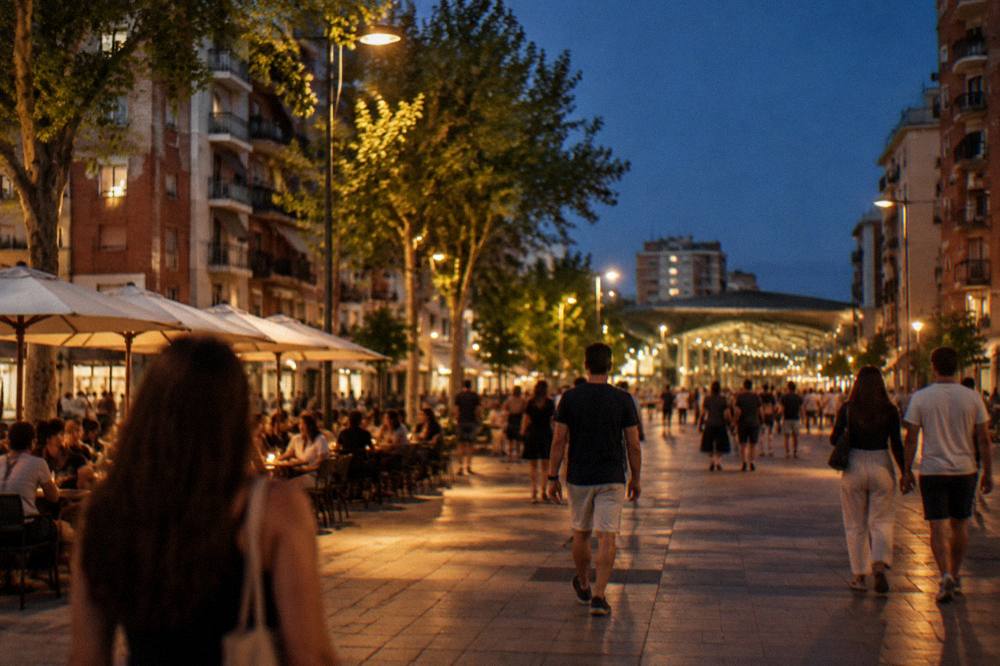
Evening in Zaragoza belongs to the tapas bars of the old town, and the Zaragoza food guide explains what to order, from ternasco de Aragon to migas aragonesas. A guided tapas walk is also a good way to eat well on a first night without gambling on random bars: the Evening Tapas Walking Tour in the Old Town, rated 4.9 from 62 reviews and priced from $106.92 per person for three hours, moves between several stops with a local guide.
Where Should You Stay After The Train Arrives?
Stay in the Casco Histórico, the old town, if you want to wake up under the basilica's domes, or in the Centro around Paseo de la Independencia for shopping and transport links; both are a short hop from Delicias station by tram, bus or taxi. The Delicias district itself, around the station, is the practical choice for a single night between trains rather than for a sightseeing stay.
The old town puts every major sight within a walk: the basilica, La Seo, the Aljafería on its western edge, and the tapas streets in between. Its trade-off is exactly what you would expect from a medieval street plan, older buildings, less parking and thinner hotel stock than the modern centre. The Centro, around Paseo de la Independencia and Plaza de España, carries the larger hotels, the department stores and the tram line, and splits the difference between the station and the basilica. For a one-night stop on a longer rail journey, staying near Delicias saves the transfer altogether, and the where to stay guide maps the districts against each other, with the hotel guide and the budget stays page covering the price ranges.
One budget point worth knowing before you book anything: Aragon has no tourist tax. The regional government explicitly ruled one out in September 2026, on the grounds that it would discourage visitors, so the price of your hotel room is the price you pay, with no nightly city charge added at check-in. That is not true everywhere in Spain, and it quietly changes the arithmetic of a short break.
When Is The Best Time To Make The Trip?
Spring and autumn are the best times to travel from Madrid to Zaragoza, with October standing out because the Fiestas del Pilar run from 10 to 18 October 2026 and fill the city with processions, concerts and the Ofrenda de Flores on 12 October. The AEMET 1981 to 2010 averages for the Zaragoza Aeropuerto station put October at a mean of 16.2 C with 36 mm of rain, and July and August at a mean maximum above 31 C, so summer visits mean serious heat.
The climate table deserves a close read, because Zaragoza is drier than most visitors expect. On the AEMET 1981 to 2010 normals for the Zaragoza Aeropuerto station, the wettest month of the year is May at 44 mm, the driest are July and August at 17 mm each, and the whole year brings only 322 mm of rain across 51.1 days of 1 mm or more, with 2,693 sunshine hours. This is a semi-arid inland city on the Ebro, not a coastal one: there is no sea, no beach and no sea breeze to take the edge off a July afternoon, when the mean maximum sits at 32.4 C. Winter is mild by northern European standards, with January at a mean of 6.6 C and 21 mm of rain, but the frost figure, 23.1 days a year, tells you the nights get properly cold.
| Month | Mean C | Mean max C | Mean min C | Rain mm | Sun hours |
|---|---|---|---|---|---|
| January | 6.6 | 10.5 | 2.7 | 21 | 131 |
| April | 13.8 | 19.6 | 7.9 | 39 | 226 |
| July | 25.3 | 32.4 | 18.3 | 17 | 348 |
| October | 16.2 | 21.4 | 11.0 | 36 | 195 |
All figures are AEMET 1981 to 2010 averages for the Zaragoza Aeropuerto station. The best time to visit guide and the weather page work through the seasons in detail.
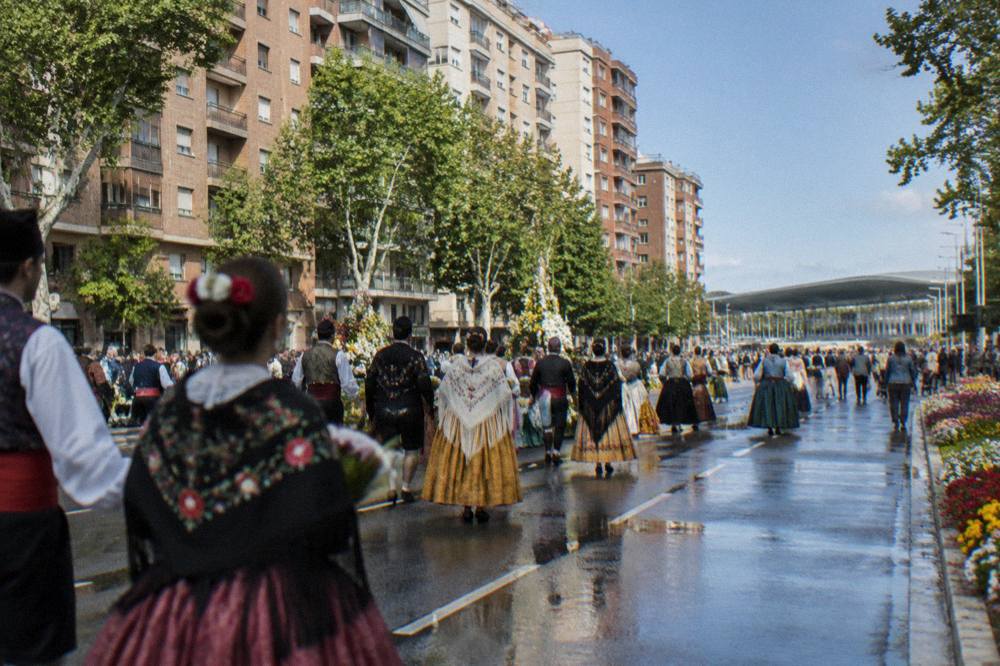
October deserves its own paragraph. The Fiestas del Pilar, from 10 to 18 October 2026, are the largest festival in Aragon's calendar: the pregón opens them from the Ayuntamiento balcony on the evening of 10 October, the Ofrenda de Flores on 12 October brings vast crowds in traditional dress along the route from Paseo de la Independencia to the Plaza del Pilar, and the programme includes jota competitions, concerts and fireworks. Book trains and hotels early for those dates, because the whole region moves. The Fiestas del Pilar guide covers the programme, and the day trip itinerary from Madrid shows how much fits into a single day if you cannot stay overnight.
Can You Do Zaragoza As A Day Trip From Madrid?
Yes, and the train makes it genuinely workable: with about 1.5 to 2 hours each way, a morning departure gives you six to eight usable hours in the city and still gets you back to Madrid at a civilised hour. The sights cluster tightly enough that a day trip covers the Basílica del Pilar, La Seo, the Puente de Piedra and the Aljafería without rushing, though the museums and the tapas evenings are what you sacrifice.
The arithmetic is simple. A train that leaves Madrid mid-morning arrives in Zaragoza before noon; the transfer from Delicias to the Plaza del Pilar takes minutes; and the old town's sights sit within a fifteen-minute walk of one another. An evening return leaves time for a late lunch, the basilica, the cathedral, the bridge and the Aljafería, which is open daily from 10:00 to 18:00 in October at 7 EUR general admission, with guided visits at 9 EUR and free entry on the first and third Sunday and Monday of each month. What a day trip cannot absorb is the depth: the four Caesaraugusta museums, a proper tapas evening, and the Museo Goya after its reopening on 9 October 2026 each want an unhurried hour or two.
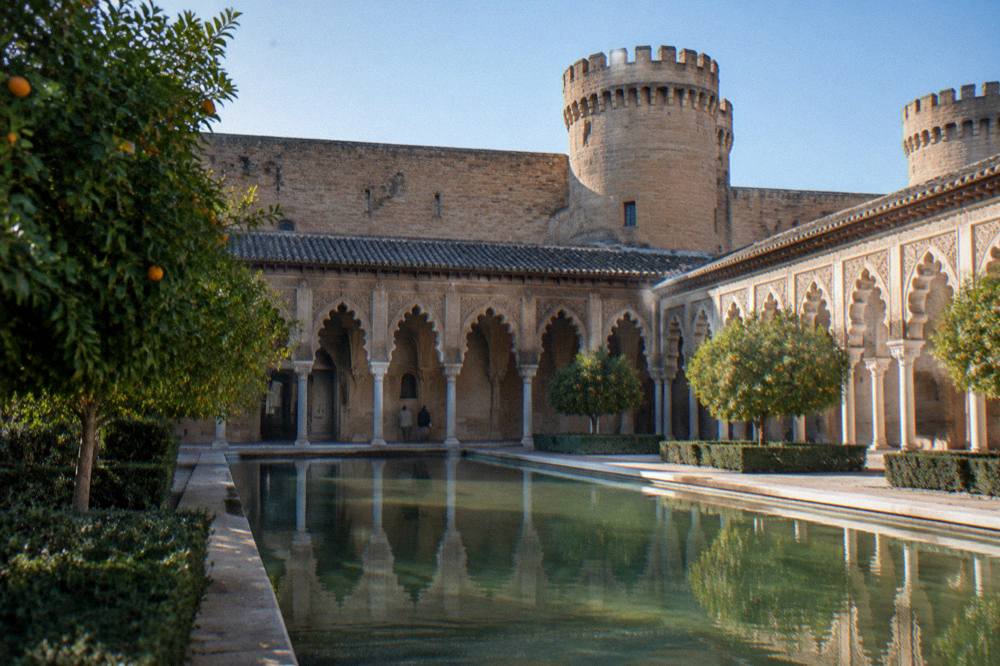
For a compressed visit, a guided walk is the most efficient use of the hours. The Most Complete Tour of Zaragoza: Mysteries, Photos and Surprise, rated 4.9 from 14 reviews and priced from $25.23 per person, packs hidden corners and stories into a walk that still leaves the afternoon free. The one-day itinerary sequences the same hours stop by stop.
If one day proves too short, and it often does, the same rail corridor makes a second night easy: Barcelona is about 1.5 to 2 hours the other way, and the Barcelona to Zaragoza guide covers that leg, while the comparison of Madrid and Barcelona as gateways answers the question most multi-city travellers ask next.
Common Questions About The Madrid To Zaragoza Train
How long is the train from Madrid to Zaragoza?
About 1.5 to 2 hours on the fastest high-speed services. Exact times vary by operator and departure, so check Renfe, Ouigo, iryo or an aggregator such as Omio for live schedules.
Which station does the train arrive at?
Zaragoza-Delicias, the city's main station, which also houses the principal interurban bus terminal. The old town is a short tram, bus or taxi ride away.
How much does a ticket cost?
Fares move with demand, departure time and booking window, and several operators compete on the route, so no single price holds. Compare Renfe, Ouigo and iryo directly and book early for the best rates.
Can you visit Zaragoza from Madrid in one day?
Yes. With roughly two hours each way by train, a morning departure gives you six to eight hours in the city, enough for the Basílica del Pilar, La Seo, the Puente de Piedra and the Aljafería.
Is Zaragoza worth stopping at between Madrid and Barcelona?
Yes. Zaragoza sits on the high-speed corridor between the two, and its old town, Roman remains and Mudéjar architecture reward a stop of anything from an afternoon to two nights. The Zaragoza Travel Guide covers the city in full.
Do you need a car in Zaragoza once you arrive?
No. The old town is walkable, the tram and bus network covers the rest with a 1.70 EUR single fare, and the low-emission zone restricts unlabelled cars in the historic centre on weekdays. A car only earns its keep for day trips into rural Aragon.
Whether you come for a single day between two bigger cities or for a full break at the height of the Fiestas del Pilar, the Madrid to Zaragoza train turns Aragon's capital into one of the least effortful rewards in Spanish travel: step off at Delicias, and the domes of the Basílica del Pilar are minutes away.