Car Rental And Parking In Zaragoza
Zaragoza, the capital of Aragon on the Ebro, is a compact city where most visitors never need a car, but a rental opens up Moncayo, Belchite and the wine country. Here is how the ZBE, the parking picture and the local fares actually stack up.
Short answer
Most visitors to Zaragoza do not need a rental car: the Casco Histórico is walkable, the tram and bus cost 1.70 EUR a single, and the ZBE low emission zone restricts unlabelled cars in the old town from Monday to Friday 08:00 to 20:00. A car pays off mainly for day trips into rural Aragon.
Zaragoza, the capital of Aragon on the Ebro, is one of the few big Spanish cities where the honest answer to "should I rent a car?" is usually no, and then occasionally an emphatic yes. The no comes from geography: the Basílica del Pilar, La Seo, the Aljafería and the Roman museums of Caesaraugusta all sit within a walkable core, the tram runs on a single useful line, and the ZBE low emission zone has restricted unlabelled vehicles in the Casco Histórico since 12 December 2025. The yes comes from everything outside the city: Moncayo, Belchite, the Somontano wine country and the stone villages of the Aragonese interior, where public transport thins out fast.
This page works through the decision in order: whether a car helps in the city at all, where to pick one up, what the ZBE means for a visitor with a rental, how parking around the old town actually behaves, and which day trips justify the keys. Fares and rules below come from the operators' own published tariffs and the municipality's current notices.
Do You Need To Rent A Car In Zaragoza?
No, for a standard city break of one to three days you do not need a car in Zaragoza: the monumental core is compact and walkable, the tram and urban bus charge 1.70 EUR a single or 0.55 EUR with a Tarjeta Bus, and driving into the Casco Histórico means negotiating the ZBE low emission zone. A car only starts earning its keep when the trip leaves the city for rural Aragon.
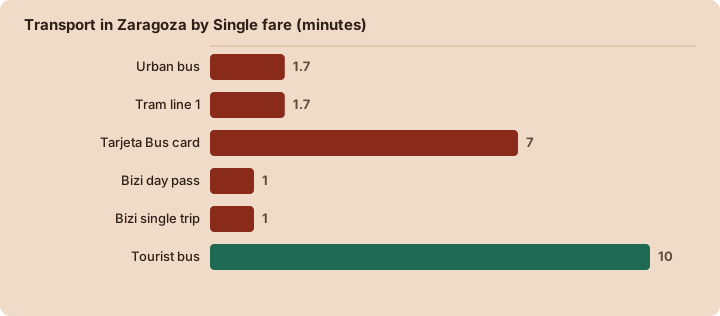
The arithmetic is not close. A Tarjeta Bus itself costs 7 EUR and then drops every single ride to 0.55 EUR on both bus and tram, so a couple making eight transit journeys each spends less on two cards and sixteen rides than on a single day of urban driving once fuel and parking enter the equation. The Bizi bike share is cheaper still: a day pass is 1 EUR fixed plus 0.50 EUR for the first 30 minutes of each trip, and the flat riverside path along the Ebro between the Puente de Piedra and the Parque del Agua is one of the easiest rides in any Spanish city.
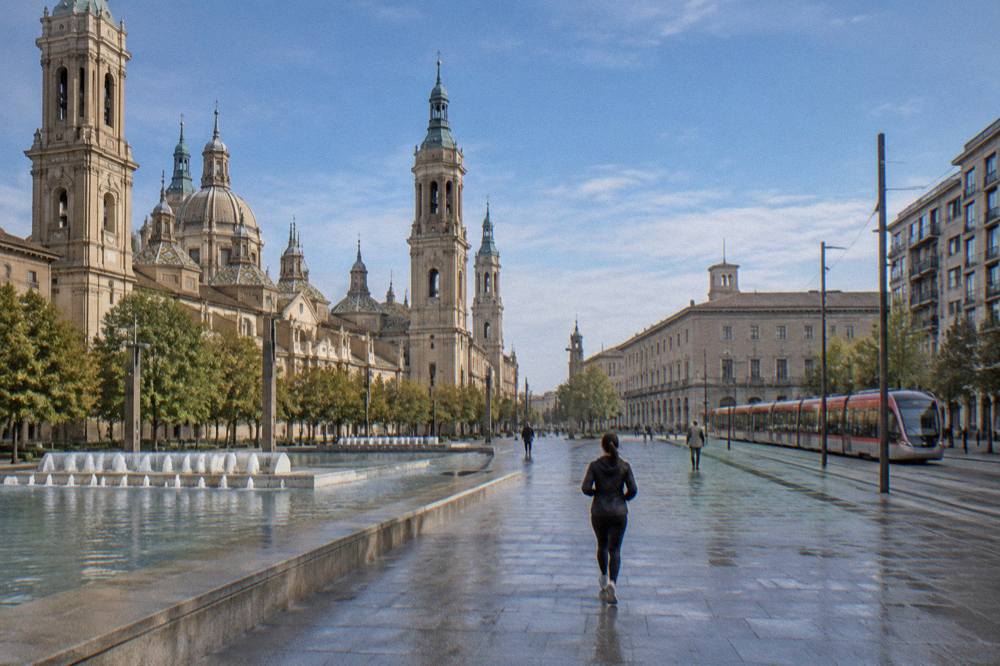
What a car cannot beat is the old town's street plan. The Casco Histórico is a mesh of narrow medieval streets, partly pedestrianised, partly restricted, and since December 2025 partly governed by the ZBE with sanctions live. A visitor who arrives by train at Zaragoza-Delicias, stays near Plaza del Pilar, and walks everywhere will see every major monument in the city without once searching for a space. The full case for going car-free is laid out in getting around Zaragoza, and the arrival logistics in how to get to Zaragoza.
The exception is real, though. Aragon is a large, thinly populated region, and the places that make it distinctive, the Civil War ruins of Belchite, the monastery route toward Veruela under Moncayo, the wine villages of Somontano, are poorly served by regional buses and not served at all on Sundays. If the trip is built around those, rent from day one.
| Transport in Zaragoza | Single fare | With Tarjeta Bus | Notes from the operator's 2026 tariff |
|---|---|---|---|
| Urban bus | 1.70 EUR | 0.55 EUR | Night lines 1.00 EUR |
| Tram line 1 | 1.70 EUR | 0.55 EUR | Same fare system as the bus |
| Tarjeta Bus card | 7 EUR | card price | Valid on bus and tram |
| Bizi day pass | 1 EUR + 0.50 EUR per first 30 min | not applicable | 50 EUR card deposit held |
| Bizi single trip | 1 EUR | not applicable | 50 EUR card deposit held |
| Tourist bus | 10 EUR | not applicable | 24 hours hop-on hop-off, 16 stops, 90-minute loop, cash on board |
Where To Rent A Car In Zaragoza?
The two practical pickup points are Zaragoza Airport (ZAZ), served by the 505 airport bus at 4.65 EUR a single, and the Zaragoza-Delicias station area, where the high-speed rail hub puts rental desks a short hop from the centre; the airport bus runs timed to flights and takes roughly 25 to 35 minutes. Desk hours and fleet prices are on each operator's live listing, not in any city tariff.
Zaragoza Airport is small, with 13 destinations across Ryanair, Wizz Air, Binter, Volotea, Vueling and Alba Star, so a rental collected there suits a visitor flying in rather than one arriving overland. The 505 is the airport bus line, never the 44, which is an urban city route, and a Lazo or Ciudadana card drops the fare to about 2.25 EUR. The station option is simpler for rail arrivals: Delicias handles the AVE connections from Madrid and Barcelona in about 1.5 to 2 hours, and picking up a car there means starting the drive from the ring road rather than threading out of the centre.
One timing note matters more here than in most Spanish cities: if the trip coincides with the Fiestas del Pilar, 10 to 18 October 2026, demand for everything with wheels spikes, and the Ofrenda de Flores on 12 October closes the central streets entirely for much of the day. Reserve early and plan to leave the car parked, or better, walk, during those dates. The festival itself is covered in the Fiestas del Pilar guide.
Before driving anywhere, check the car's paperwork for the DGT environmental label question below, because Spanish rental fleets are labelled, but the sticker is sometimes missing from the windscreen even when the vehicle qualifies.
What Is The ZBE Low Emission Zone And How Does It Affect A Rental Car?
The ZBE Casco Histórico restricts vehicles without a DGT environmental label from driving in Zaragoza's old town, with sanctions live since 12 December 2025, and it operates Monday to Friday from 08:00 to 20:00; vehicles with a B, C, ECO or 0 label may enter, and a driver who strays in by mistake has a 15-minute grace period to leave without a fine. Weekends, and every evening after 20:00, are unrestricted.
For a visitor this is the single most important driving rule in the city. The zone covers the Casco Histórico, exactly the area a tourist's hotel is most likely to sit in, which means the hotel you booked inside the old town may be inside the ZBE. Spanish rental cars are almost universally labelled B or better, since hire fleets are young, but confirm the label before you drive to the hotel, not after. The municipality publishes the zone's boundaries and the FAQ, and the 15-minute grace exists precisely for the case of a confused visitor following a satnav into a restricted street. The full index of guides sits on Zaragoza Travel Guide.
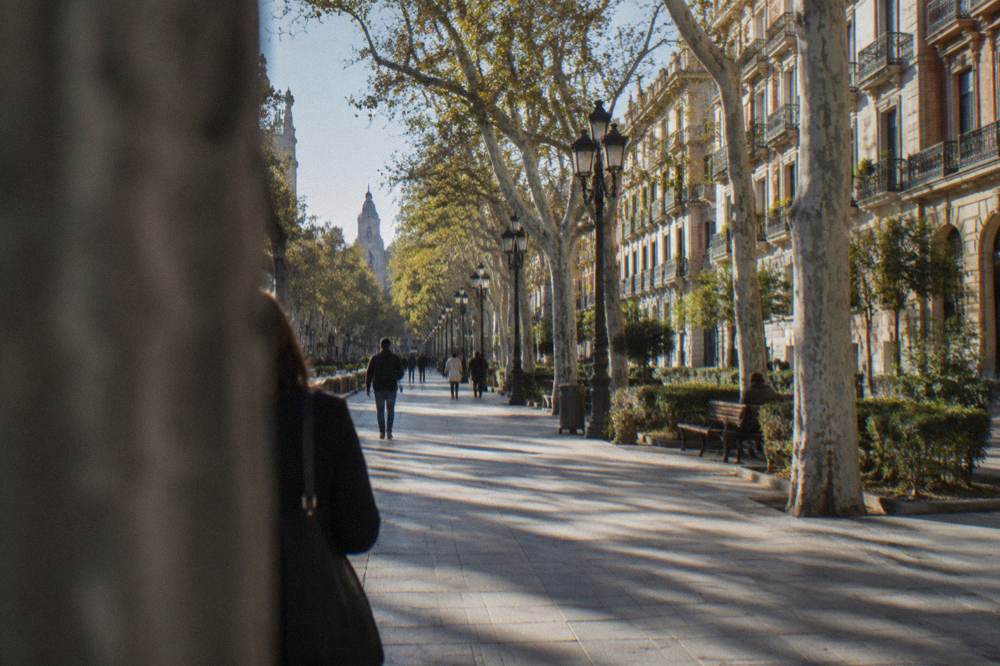
The practical workaround is to sleep outside the zone. The neighbourhoods east and south of the centre, along the Paseo de la Independencia axis and toward Delicias, sit outside the restricted area and are a short tram or walk from Plaza del Pilar. The trade-offs between districts, including which ones suit a car, are compared in where to stay in Zaragoza, and the budget angle in the cost and budget guide.
| ZBE Casco Histórico rule | Detail |
|---|---|
| Status | Sanctions live since 12 December 2025 |
| Operating window | Monday to Friday, 08:00 to 20:00 |
| Vehicles allowed | DGT labels B, C, ECO and 0 |
| Vehicles restricted | Any vehicle without a DGT environmental label |
| Mistaken entry | 15-minute grace period to exit |
| Second phase | From 2030, per the municipality's published plan |
If the whole point of the city stay is the monumental core, a guided walk removes the ZBE from your day entirely. The 105-minute monumental introduction walks the Pilar, La Seo and the old town on foot, and the private options run two to eight hours for visitors who want the route shaped around them.
Where Can You Park In Zaragoza?
Parking in Zaragoza splits into three situations: inside the Casco Histórico, where the ZBE applies on weekdays and street spaces are scarce and tightly signed, in the districts just outside the old town, where on-street and garage parking is easier to find, and at the peripheries near Delicias and the Expo areas, from which the tram reaches the centre in a single line. The municipality publishes no uniform parking tariff, so expect to read the meter or the garage board.
The honest advice is that this city rewards not parking at all. The centre is small enough that a hotel outside the ZBE plus a Tarjeta Bus covers a whole weekend. When a car must be parked, treat the signage as the only authority: the old town mixes resident-only bays, loading windows and festival clearances, and during the Fiestas del Pilar the usual rules are suspended in favour of event closures. The municipality's October monument timetable and event notices list the street closures, and the festival parking picture is part of the Fiestas del Pilar guide.
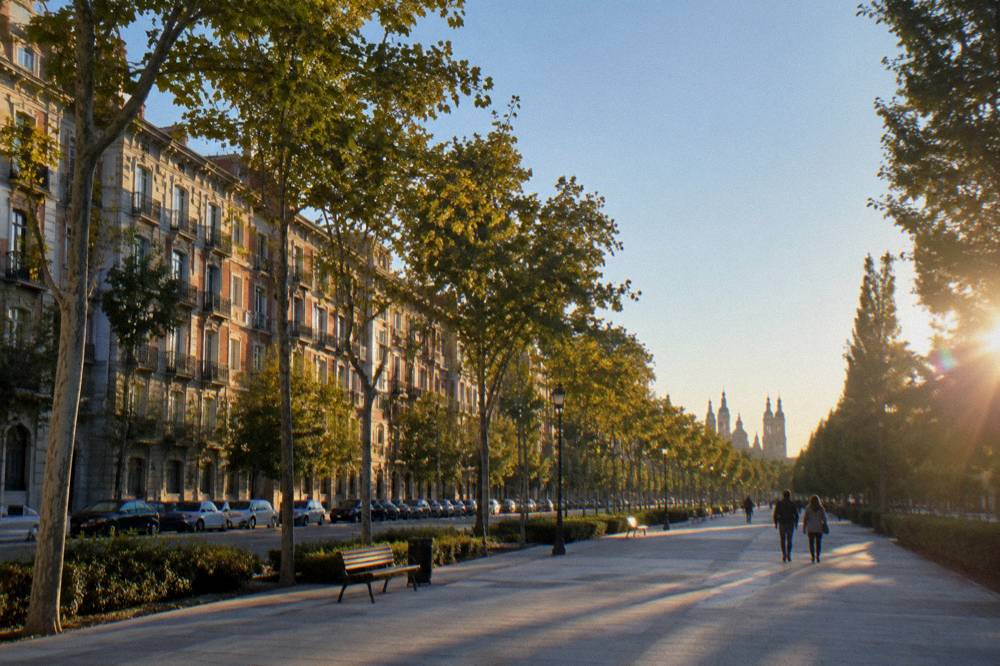
For drivers staying several days, the pattern that works is simple: park once, outside the zone, and use transit for everything central. The tram line runs through the Delicias corridor, so a hotel or garage near a tram stop puts Plaza del Pilar a short ride away at 1.70 EUR a single, or 0.55 EUR once the 7 EUR Tarjeta Bus is loaded. The station district itself is covered in the Delicias guide, and the wider car-free case in getting around Zaragoza.
What Does Driving In Zaragoza And Aragon Actually Cost?
Aragon has no tourist tax, so the only fixed costs are the rental itself, fuel, and parking, and the transit alternative is priced from published 2026 tariffs: 1.70 EUR per bus or tram single, 0.55 EUR with a 7 EUR Tarjeta Bus, a 10 EUR 24-hour tourist bus ticket, and a 1 EUR Bizi day pass plus 0.50 EUR per first 30 minutes. Fuel prices and rental rates move weekly, so check the operator's live listing rather than any printed figure.
The comparison only tilts back toward the car outside the city. Inside Zaragoza, the transit and bike tariffs are so low that even a generous daily budget for a family comes out ahead of fuel plus central parking plus the stress of the ZBE. The tourist bus deserves a special mention for drivers who have parked at a periphery: its 10 EUR general ticket is valid for 24 hours of hop-on hop-off across 16 stops on a 90-minute loop, though it takes cash only on board, which is an unusually old-fashioned rule for a Spanish city service in 2026.
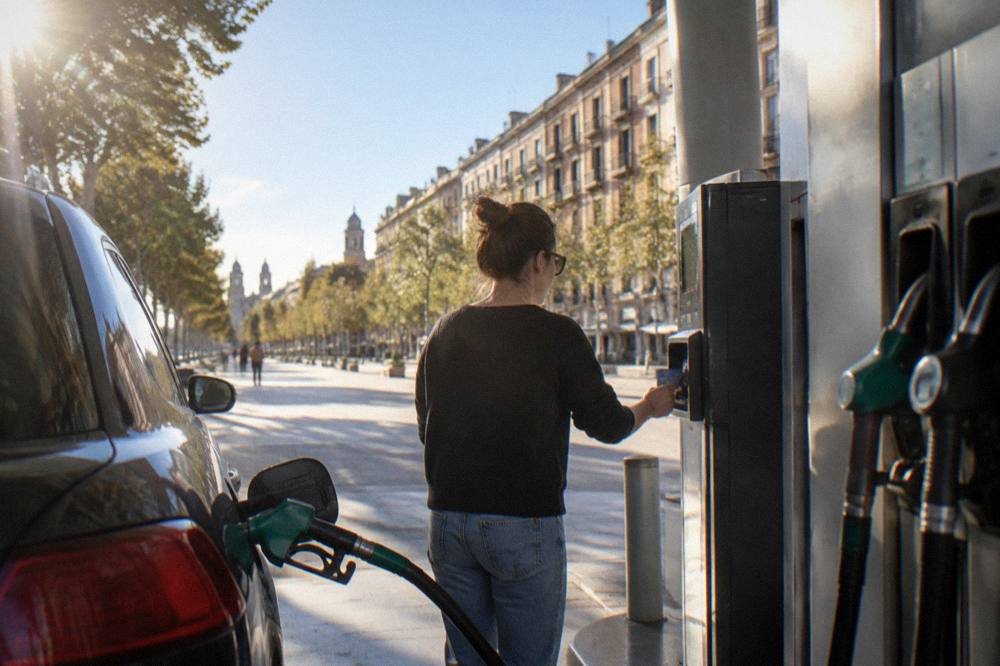
Weather belongs in the cost calculation too, because it decides how pleasant the car-free option is. AEMET's 1981-2010 normals for the Zaragoza Aeropuerto station put July as both the hottest month, with a mean maximum of 32.4 C, and the sunniest, at 348 hours of sun, while May is the wettest month at 44 mm and July and August the driest at 17 mm each. In other words, the months when walking and cycling are hardest are also the months when the car is most tempting, and the shoulder seasons, with March mean maxima of 17.3 C and October's at 21.4 C, are when the city is best enjoyed without one. The full picture is in the weather guide and the best time to visit.
| Month | Mean max C (1981-2010) | Rain mm | Sun hours | Car-free comfort |
|---|---|---|---|---|
| March | 17.3 | 19 | 217 | Excellent for walking and Bizi |
| May | 24.1 | 44 | 274 | Warm, wettest month, still walkable |
| July | 32.4 | 17 | 348 | Hot: tram and bus earn their keep |
| October | 21.4 | 36 | 195 | Excellent, festival crowds excepted |
When Does A Car Earn Its Keep: Day Trips From Zaragoza?
A rental car earns its keep the moment the itinerary leaves Zaragoza for the Aragonese interior: Belchite, the Civil War ruin town, the Moncayo massif, the Somontano wine villages and the stone towns of the pre-Pyrenean south are all far easier by car, because regional bus coverage is sparse. The classic city day trips to Madrid or Barcelona are better done by high-speed train at about 1.5 to 2 hours each way.
Be specific about which journeys suit which mode. The high-speed rail corridors to Madrid and Barcelona are competitive with driving on time alone, and the train deposits you in the centre of either capital, so the car loses twice: the drive itself and the parking at the destination. Those rail options are covered in Madrid to Zaragoza and Barcelona to Zaragoza.
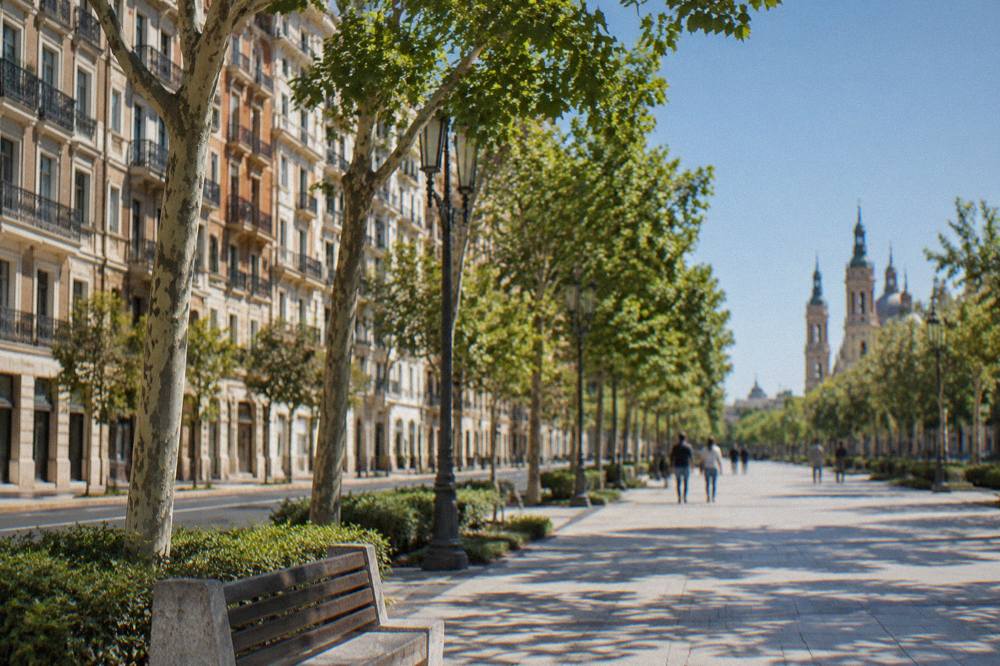
Inland Aragon is the opposite case. Belchite, in particular, is a place to approach with the right frame of mind: its old town is a preserved ruin of the Spanish Civil War, and it deserves a sober, quiet visit rather than a quick photo stop. A guided olive oil and Belchite excursion runs about five hours and handles the logistics, which matters because the ruin's access rules are managed rather than simply open. The Pyrenees excursions to Canfranc, Jaca and Sallent de Gállego, or the Ordesa country around Aínsa and Torla, are long days, about 11 hours, and a guided coach option spares a visitor an unfamiliar mountain drive.
The wine country splits the difference. Somontano around Alquézar and the olive oil routes toward the Belchite plain are doable by car with ease, and several guided wine and olive oil tours run from the city, including a half-day winery trip and a full-day Somontano excursion with Alquézar, for visitors who would rather taste than drive. The food angle of the region is covered in the Zaragoza food guide.
| Destination from Zaragoza | Best mode | Why |
|---|---|---|
| Madrid centre | High-speed train | About 1.5 to 2 hours, no parking at the far end |
| Barcelona centre | High-speed train | About 1.5 to 2 hours, arrives in the centre |
| Belchite old town | Car or guided excursion | Sparse regional bus coverage; guided olive oil tours run about 5 hours |
| Canfranc, Jaca, Sallent de Gállego | Guided excursion or car | About 11-hour day; mountain roads |
| Ordesa, Aínsa, Torla | Guided excursion or car | About 11-hour day; mountain roads |
| Somontano wine country | Car or guided wine tour | Half-day and full-day guided winery tours run from the city |
For the days you leave the car behind, the guided options above cover the monumental core on foot: the 105-minute introduction for a first orientation, and private walks of two to eight hours with a local for visitors who want depth. If the plan is to drive out on most days, a single guided walk on day one still pays for itself as a map of the city you will return to each evening.
What Should You Check Before Driving In Zaragoza?
Before driving in Zaragoza, check four things: that the rental car carries a DGT environmental label for the ZBE, that your hotel is outside the Casco Histórico or reachable within its rules, that your dates do not collide with Fiestas del Pilar street closures from 10 to 18 October 2026, and that you know the transit fares you will fall back on, 1.70 EUR a single or 0.55 EUR with a Tarjeta Bus, for the days the car stays parked.
The label is the one that catches visitors. Spanish law requires rental companies to supply labelled vehicles, but the physical sticker is occasionally absent, and the ZBE is enforced by camera, not by a conversation with an officer. Ask at the desk, note the label in the contract, and photograph the windscreen. The 15-minute grace period covers an honest mistake, not a hotel stay.
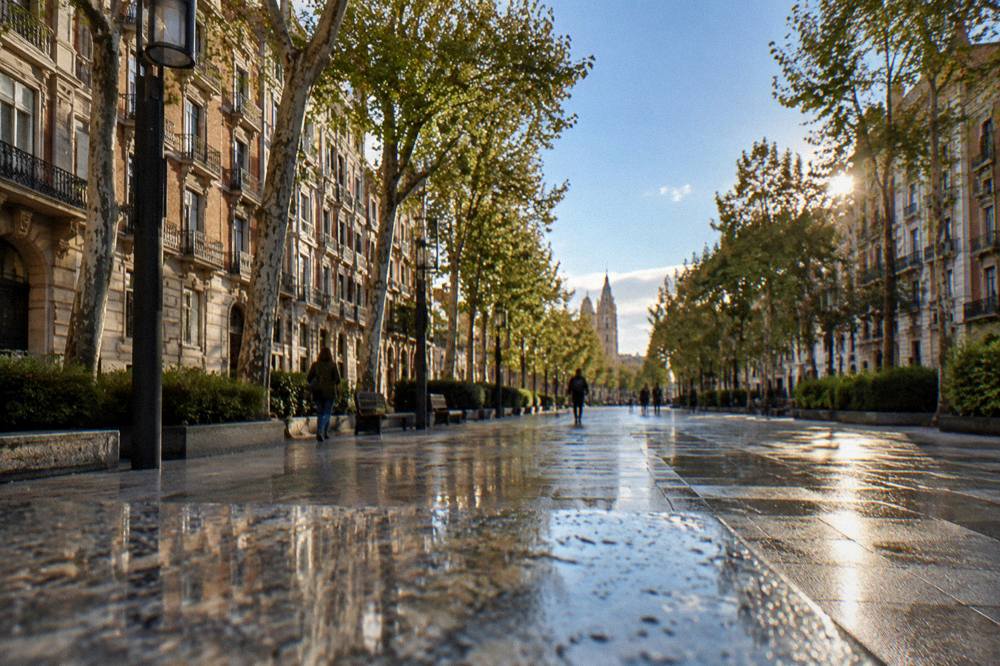
The festival dates deserve a second check even for drivers. The Ofrenda de Flores on 12 October 2026 brings close to a hundred thousand participants into the centre along the route from Paseo de la Independencia to Plaza del Pilar, and streets close accordingly. Visitors flying in for the festival should also read the airport guide and the airport-to-centre transfer guide before assuming a rental beats the 505 bus.
Finally, a word on the wind. The cierzo, the cold, dry north-westerly that funnels down the Ebro valley, is a real feature of Zaragoza's climate and can make an exposed car park feel raw in winter even when the AEMET 1981-2010 normals show a mild-looking January mean of 6.6 C. It is qualitative, no published speed figure exists for it, but every local will mention it, and it is one more small argument for the tram.
Common Questions About Car Rental And Parking In Zaragoza
Do I need a car in Zaragoza city?
No. The monumental core is walkable, the tram and bus charge 1.70 EUR a single or 0.55 EUR with a Tarjeta Bus, and the ZBE restricts unlabelled cars in the old town on weekdays. A car is for rural Aragon day trips.
What is the ZBE low emission zone in Zaragoza?
The ZBE Casco Histórico restricts vehicles without a DGT environmental label, Monday to Friday 08:00 to 20:00, with sanctions live since 12 December 2025 and a 15-minute grace period for mistaken entries. Labelled B, C, ECO and 0 vehicles may enter.
Where do I pick up a rental car in Zaragoza?
At Zaragoza Airport, served by the 505 bus at 4.65 EUR a single, or in the Zaragoza-Delicias station area if arriving by high-speed train from Madrid or Barcelona, which takes about 1.5 to 2 hours.
Can I park in the Zaragoza old town?
On weekdays the ZBE applies to unlabelled cars, and street spaces in the Casco Histórico are scarce and tightly signed. The easier pattern is parking outside the zone and taking the tram in at 1.70 EUR a single.
Is driving better than the train for Madrid or Barcelona day trips?
No. High-speed trains cover both corridors in about 1.5 to 2 hours and arrive in the centre, with no ZBE and no parking at the far end. Save the car for inland Aragon.
The short version: rent a car in Zaragoza for Moncayo, Belchite and the wine country, and leave it parked, or skip it entirely, for everything between the Basílica del Pilar and the Ebro.