Getting Around Zaragoza
Zaragoza, the capital of Aragon on the Ebro, is compact enough to walk and wired together by a single tram line, an urban bus network and a bike-share system, all on one of the cheapest fare structures in mainland Spain.
Short answer
A single ticket on the Zaragoza tram or any urban bus costs 1.70 EUR, or 0.55 EUR with a rechargeable Tarjeta Bus that costs 7 EUR and works on both. The tram is the fastest way across the centre, the airport is served by bus line 505 at 4.65 EUR, and the Casco Historico is a low-emission zone where unlabelled cars face fines.
Zaragoza, the capital of Aragon on the Ebro, is one of the easiest Spanish cities to move around: the historic centre is flat and compact, a single tram line stitches the main sights to the residential districts, and the whole bus-and-tram network runs on one fare card. The Avanza 2026 fare table lists a single urban ticket at 1.70 EUR on both the tram and every city bus, dropping to 0.55 EUR with a Tarjeta Bus, which makes the city cheaper to cross than almost anywhere else of its size on the mainland.
What Does The Zaragoza Tram Cost And Where Does It Go?
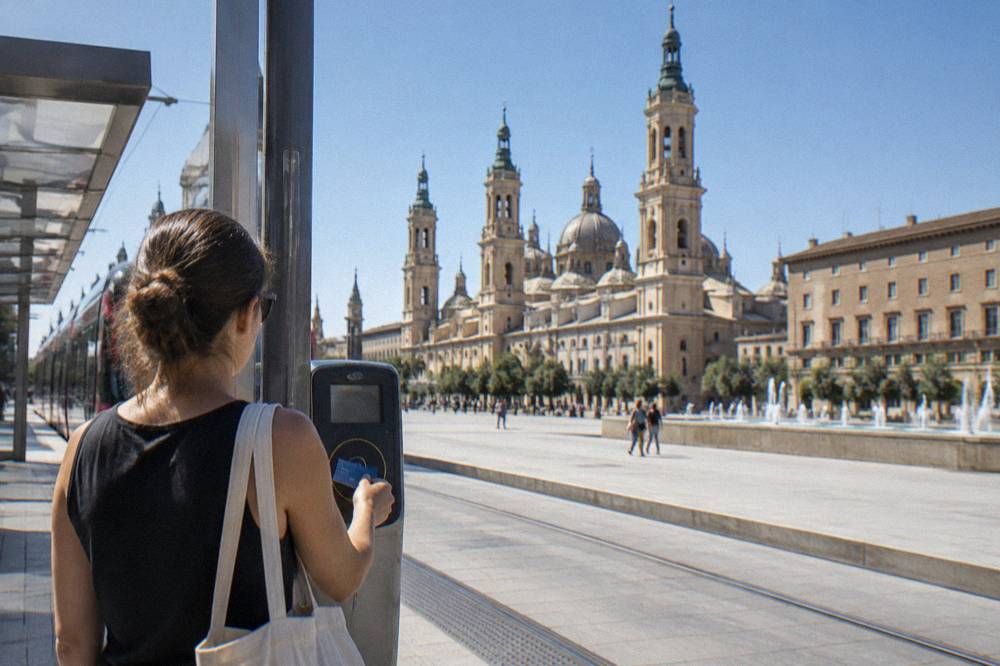
A single ticket on the Zaragoza tram costs 1.70 EUR, the same as any urban bus, and falls to 0.55 EUR with a rechargeable Tarjeta Bus. The card itself costs 7 EUR and is valid on both the tram and the entire bus network, so a visitor making more than a handful of journeys saves from the first swipe. Night lines charge 1.00 EUR per single. The tram is the backbone of the network, linking the southern districts with the city centre.
The Avanza 2026 fare table is the source for every figure above, and it is refreshingly simple: there is no zonal pricing, no peak surcharge and no separate tourist tariff. You either pay 1.70 EUR in cash or contactless per ride, or you load a Tarjeta Bus and pay 0.55 EUR. The card pays for itself after roughly six single journeys, and it removes the need to carry coins on a vehicle that has no cash handling on some stops.
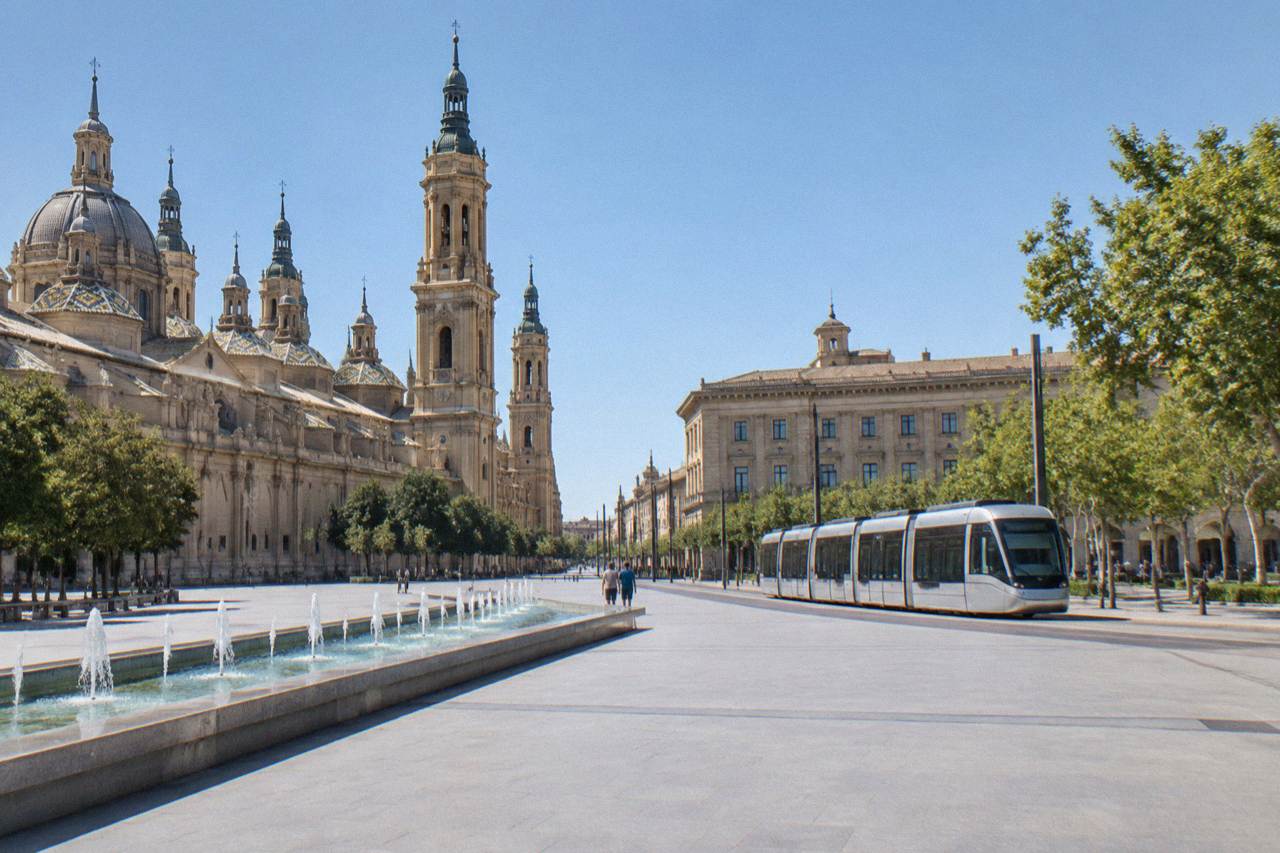
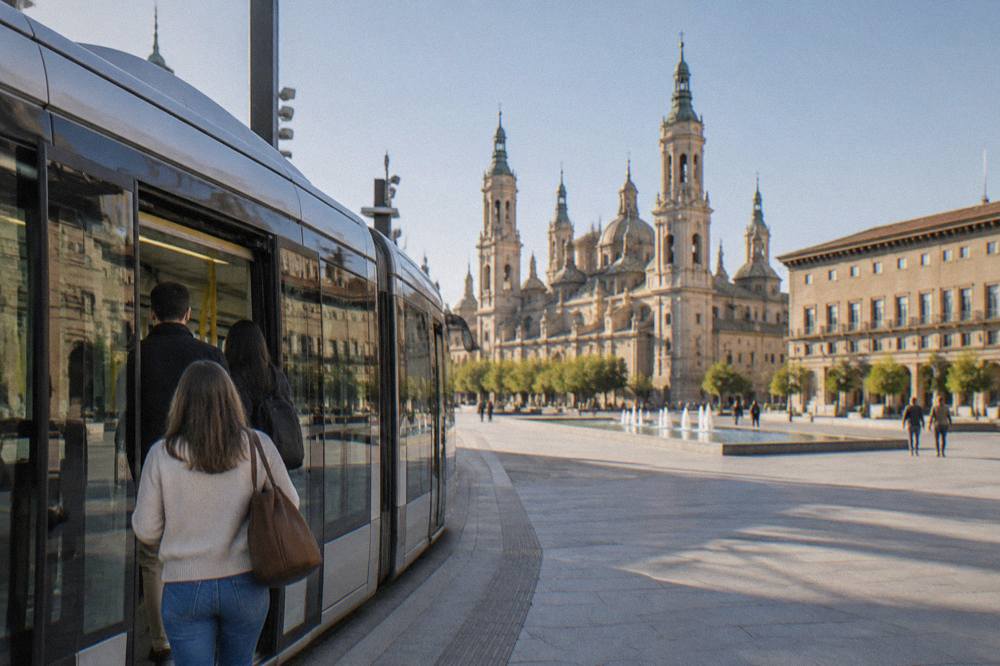
The tram's great virtue for a visitor is that it serves the centre directly. Stops sit within a short walk of the Basílica del Pilar, the Puente de Piedra and the main shopping axis, and the line continues out to the residential south of the city where most hotels cluster around quieter, cheaper streets. If your base is in where to stay in Zaragoza, the tram will almost certainly be the first vehicle you board.
One practical point: the tram runs on the same ticket system as the buses but not the same validation hardware habits. Tap your card or ticket at the platform validator before boarding, because inspectors do check, and an unvalidated ticket counts as no ticket. The 2026 fare table lists no fine figure, so the honest advice is simply not to find out.
Should You Buy A Tarjeta Bus Or Just Pay Per Ride In Zaragoza?
Buy the 7 EUR Tarjeta Bus if you will make more than about six journeys during your stay, because each ride then costs 0.55 EUR instead of 1.70 EUR, and the card works on both the tram and every urban bus, including night lines at their own tariff. For a one-day visit with two or three rides, paying per single is simpler and barely more expensive. There is no day pass in the published 2026 tariff.
The arithmetic is worth spelling out. At 1.70 EUR per single, six rides cost 10.20 EUR. The card plus six rides costs 7 EUR plus 3.30 EUR, or 10.30 EUR, so the break-even sits at exactly that point. From ride seven onward the card wins by 1.15 EUR per journey. A visitor staying three days and moving normally will make ten to fifteen rides, which puts the saving somewhere between three and eight euros, modest but real.
| Ticket | Price | Where it works | Notes |
|---|---|---|---|
| Single, cash or contactless | 1.70 EUR | Tram and urban bus | No transfers included |
| Night line single | 1.00 EUR | Night buses | Separate night tariff |
| Tarjeta Bus card | 7 EUR | Purchase price | Rechargeable |
| Tarjeta Bus ride | 0.55 EUR | Tram and urban bus | Card required, no paper equivalent |
What the card does not do is cover the tourist bus, the airport bus or Bizi bikes, which run on entirely separate systems. The airport bus line 505 charges its own 4.65 EUR fare with a 2.25 EUR Lazo-card rate, the Zaragoza Bus Turistico sells a separate 10 EUR ticket, and Bizi has its own day, month and annual passes. Budget each of those as its own line item when you plan, and see Zaragoza cost and budget for how transport fits the wider picture.
For a short stay, the guided options below also cut the number of tram rides you need, since a walking tour covers the whole Casco Historico on foot in one go.
How Do You Get From Zaragoza Airport To The City Centre?
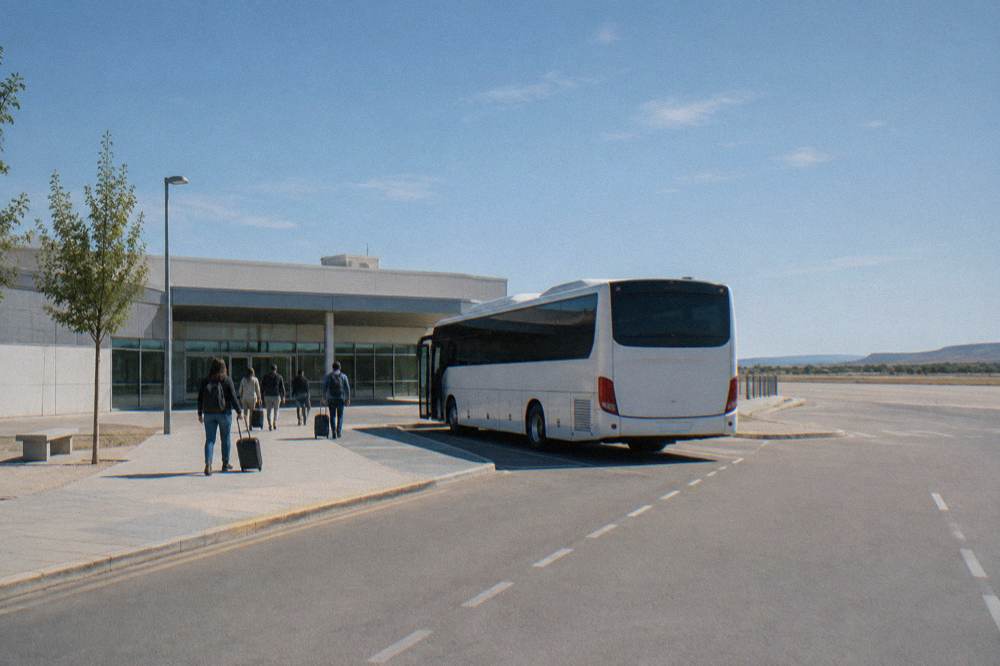
The airport bus is line 505, which costs 4.65 EUR for a single, or about 2.25 EUR with a Lazo or Ciudadana card, and takes roughly 25 to 35 minutes to the centre, with departures timed to flight arrivals. A taxi covers the same run in 15 to 20 minutes at a fare this page does not quote, because no verified tariff exists. The bus is the standard choice and it accepts bank card and mobile payment on board.
The 505 runs from Zaragoza Airport (ZAZ) into the city, coordinated with the flight schedule rather than on a fixed frequency, so the practical rule is to head for the stop after landing and expect the next departure to be planned around your plane. The full detail sits on Zaragoza airport to city centre.
Zaragoza's airport is small, with Aena's 2026 list showing Ryanair, Wizz Air, Binter, Volotea, Vueling and Alba Star flying to thirteen destinations, so most international visitors actually arrive by train or via Madrid or Barcelona. If that is your route, how to get to Zaragoza covers the rail options, and high-speed services from Madrid and Barcelona take about 1.5 to 2 hours to Zaragoza-Delicias.
Once you are in the centre, the question stops being which vehicle to take and becomes whether to take one at all. A guided walk solves the first afternoon in one booking.
How Do You Get From Zaragoza-Delicias Station To The Centre?
Zaragoza-Delicias is the city's only through station for high-speed trains, and the centre is reachable from it by urban bus or tram at the standard 1.70 EUR single, or 0.55 EUR with a Tarjeta Bus, with the Aljafería and the river sights close to the line. High-speed trains from Madrid and Barcelona take about 1.5 to 2 hours into Delicias. The station is also the departure point for several guided tours that pick up in the city.
Delicias sits a short ride south of the historic core, and the tram and bus network connects it without any transfer gymnastics. The station itself is the interchange for intercity and regional services, so if you are arriving from the capital, Madrid to Zaragoza or Barcelona to Zaragoza explain the rail side, while Zaragoza-Delicias train station covers the arrival experience.
The practical advice is to buy the Tarjeta Bus at the station if you have not already, because Delicias is where most visitors first touch the network, and the card then covers everything from the tram to the night buses for the rest of the stay. The station area also marks the boundary where the low-emission zone begins for drivers, which matters if you are picking up a rental car.
Is Zaragoza Walkable Without Any Transport At All?
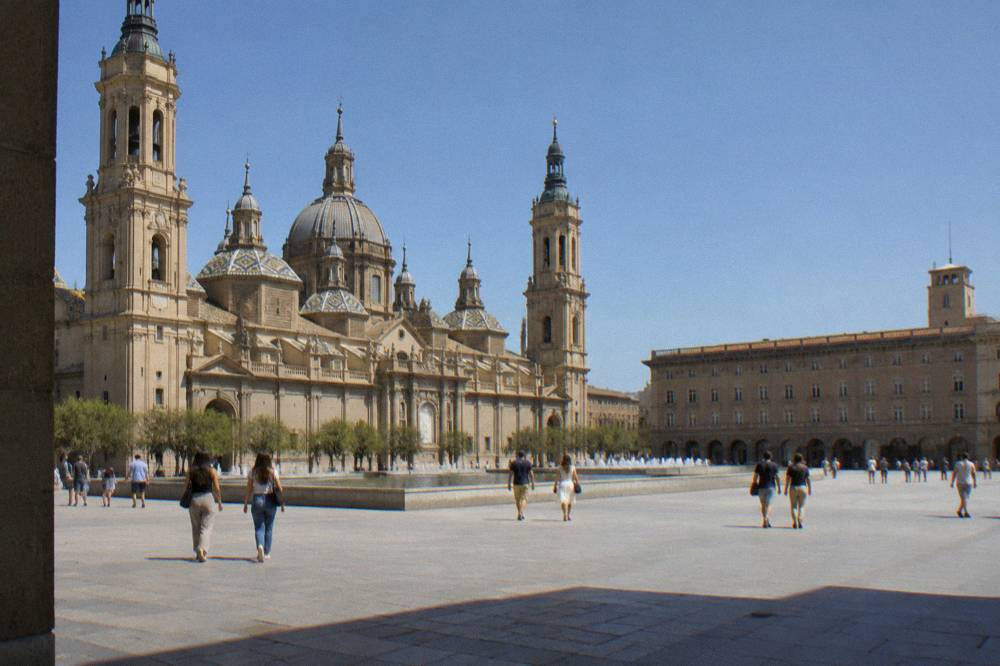
Yes, largely: the Casco Historico, the Basílica del Pilar, La Seo, the Puente de Piedra and the Aljafería sit close enough together that a visitor can cover the core sights entirely on foot, and the centre is flat. AEMET's 1981 to 2010 normals for the Zaragoza Aeropuerto station show the comfortable walking months are April, May, October and November, with mean temperatures of 13.8, 18.0, 16.2 and 10.6 C.
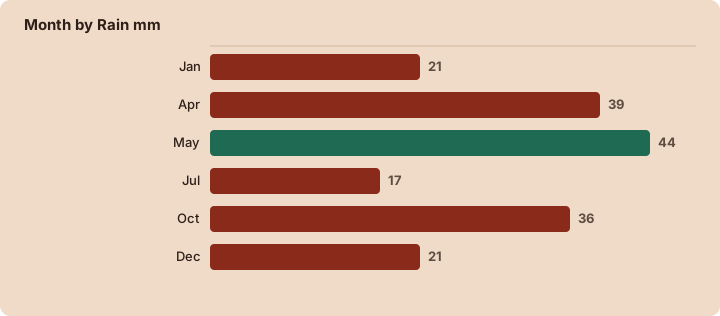
The weather decides how pleasant that walk is. Zaragoza is inland on the Ebro with a dry continental climate, no sea and no coast to soften it, and the same AEMET 1981 to 2010 normals put July's mean maximum at 32.4 C and August's at 31.7 C, with only 17 mm of rain in each. Summer walking is an early-morning activity here, not a midday one. The full breakdown is on Zaragoza weather and best time to visit Zaragoza.
| Month | Mean C | Mean max C | Rain mm | Rain days 1 mm+ | Verdict for walking |
|---|---|---|---|---|---|
| Jan | 6.6 | 10.5 | 21 | 4.0 | Cold but dry |
| Apr | 13.8 | 19.6 | 39 | 5.7 | Excellent |
| May | 18.0 | 24.1 | 44 | 6.4 | Excellent, wettest month |
| Jul | 25.3 | 32.4 | 17 | 2.6 | Early starts only |
| Oct | 16.2 | 21.4 | 36 | 5.4 | Excellent |
| Dec | 7.0 | 10.8 | 21 | 4.8 | Cold but dry |
Every figure in that table is the 1981 to 2010 average for the Zaragoza Aeropuerto station, the only window AEMET publishes for it. Note the counterintuitive one: May is the wettest month at 44 mm, while the height of summer is the driest, so a spring visit trades a little rain for a lot of comfort. The full index of guides sits on Zaragoza Travel Guide.
When the sights are this close together, the guided options below turn the walk into the transport itself. The must-see attractions walk covers the core monuments in one guided loop, Check availability before you plan your tram days around it.
Should You Use The Bizi Bike Share In Zaragoza?
Bizi costs 1 EUR for a day pass plus 0.50 EUR for the first 30 minutes of each trip, with a 50 EUR card deposit held on day, month and single passes, according to the 2026 Bizi tariff sheet. A monthly pass costs 10 EUR for 31 days, an annual pass 60 EUR, and a single trip 1 EUR. For a visitor doing three or four short hops a day, the day pass is the only option that makes sense.
The deposit is the detail that surprises people. Bizi holds 50 EUR against your card on the day, month and single products, refunded when you return the card and the bikes in good order, so it is not a system to enter casually for one ride. The per-trip pricing after the first 30 minutes means Bizi rewards short point-to-point hops rather than leisurely circuits.
| Bizi product | Price | Deposit held | Notes |
|---|---|---|---|
| Day pass | 1 EUR fixed | 50 EUR | Plus 0.50 EUR per trip, first 30 min |
| Single trip | 1 EUR | 50 EUR | One journey |
| Monthly (31 days) | 10 EUR | 50 EUR | Regular users |
| Annual | 60 EUR | 50 EUR | Residents mainly |
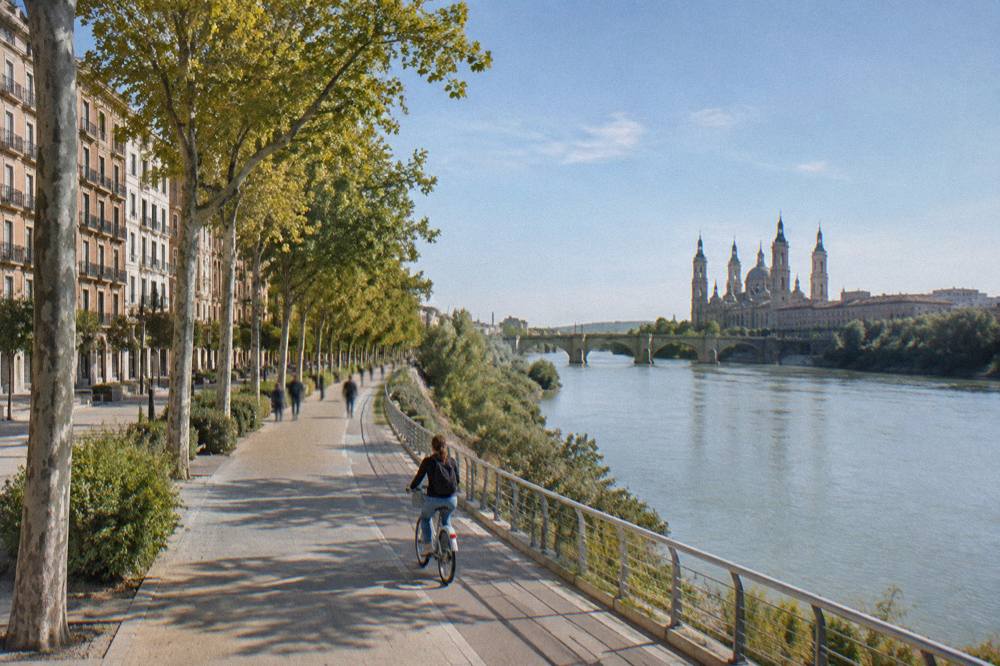
Zaragoza's flat centre and long riverside make cycling genuinely pleasant, and the Ebro banks are the natural place to try it, as described in the Ebro river walk guide. The cierzo, the cold dry north-west wind that funnels down the Ebro valley, is the qualitative factor no tariff sheet captures: on a cierzo day, cycling into it along the river is hard work, and AEMET issues Aragon wind warnings when it strengthens.
Should You Drive In Zaragoza Or Leave The Car Outside?
Most visitors should not drive into Zaragoza at all: the Casco Historico is a low-emission zone with sanctions since 12 December 2025, active Monday to Friday from 08:00 to 20:00, and any vehicle without a DGT environmental label risks a fine, with a 15-minute grace period if you enter by mistake. The tram, buses and walking cover the centre completely, so a car adds cost and risk without adding reach.
The ZBE rules are the single most important fact for anyone arriving by car, whether a rental from the airport or their own vehicle driven down from elsewhere in Spain. The zone covers the historic core, exactly the part of the city a visitor wants to be in, and the label requirement means older petrol and diesel cars without a DGT B, C, ECO or 0 label are restricted outright during the enforcement hours. Weekend arrivals are unaffected, which is why a Saturday-to-Tuesday visit pattern works smoothly for drivers.
| Driving question | Answer | Source basis |
|---|---|---|
| ZBE enforcement hours | Mon-Fri 08:00-20:00 | ZBE rules, sanctions since 12 Dec 2025 |
| Grace period | 15 minutes | ZBE FAQ |
| Label required | DGT environmental label | ZBE rules |
| Second ZBE phase | From 2030 | ZBE rules |
| Parking tariffs | Not quoted here | No verified tariff published |
This page deliberately quotes no parking-lot price and no taxi fare, because no verified tariff for either exists in the sources behind it. Check the operator's or the car park's own notice before you rely on a figure you have read elsewhere. For the rental side, including the airport pickup, see Zaragoza car rental and parking.
What Is The Tourist Bus And When Is It Worth Taking?
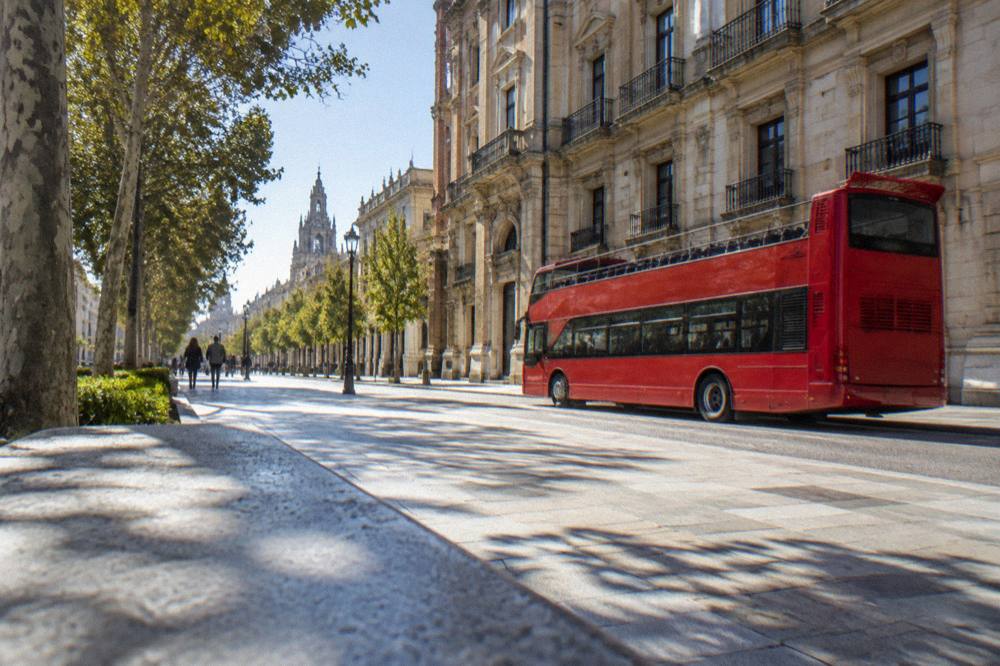
The Zaragoza Bus Turistico costs 10 EUR for a general ticket, valid 24 hours hop-on hop-off across 16 stops on a 90-minute loop, and payment is cash only on board. It is worth taking if you want a fixed circuit of the major sights in one seated sweep, especially in July and August heat, and it is worth skipping if you are happy walking, because the core sights are close together and the tram covers the same distances for 1.70 EUR.
The cash-only rule is the practical trap: the municipal tourist-bus page is explicit that no card payment is taken on the vehicle, so arrive with a 10 EUR note. The 24-hour validity means an afternoon ticket carries into the next morning, which suits a two-day visit where you want the bus for orientation on day one and your own feet on day two.
The bus also earns its keep for the Aljafería, which sits slightly outside the walking core. The palace's own October timetable lists daily opening at 10:00 to 18:00, EUR 7 general admission, EUR 9 with a guided tour, EUR 4 with a tourist bus ticket, EUR 2 for students, over-65s and Carnet Joven holders, and free entry for under-12s plus on the 1st and 3rd Sunday and Monday of each month. That EUR 4 bus-ticket rate is a genuine combined saving, and the palace can be explored with a guide as well: The Aljafería guided visit includes the ticket and a guided tour, so check its live listing if you prefer the building explained rather than just entered.
How Do The Guided Tours Fit Into A Transport Plan?
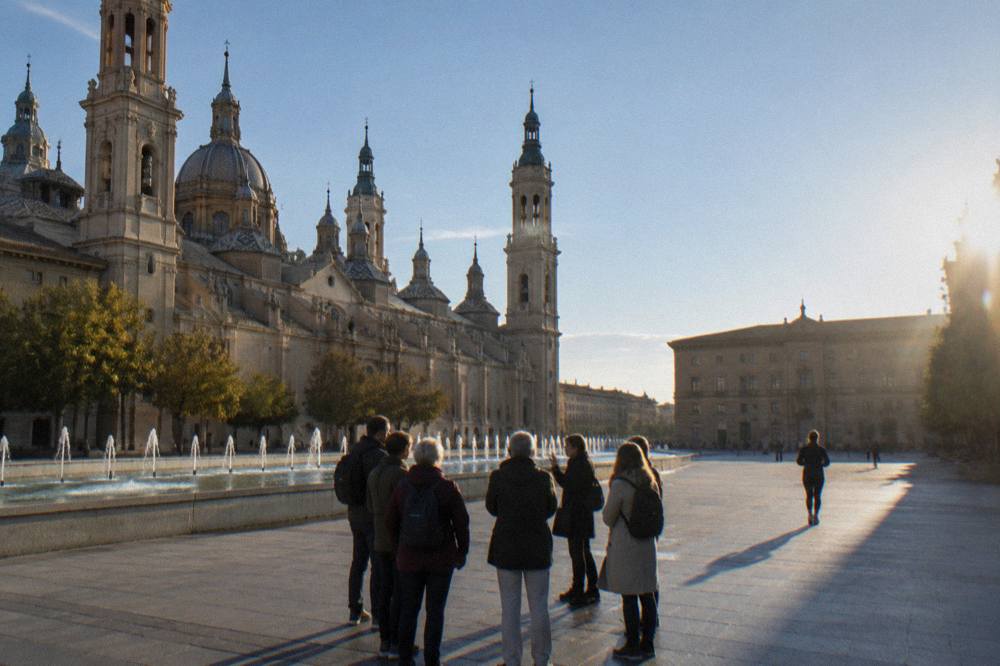
The guided tours replace transport rather than compete with it: a walking tour of the Casco Historico covers the Basílica del Pilar, La Seo and the old district on foot, a cathedral visit covers La Seo at its own 1.5-hour pace, and an Aljafería tour reaches the one major sight outside the walking core. A visitor who books these needs the tram mainly for airport, station and hotel transfers, not for sightseeing.
The trio below is built exactly that way, one tour per transport problem. The must-see walk handles the centre, the La Seo visit handles the cathedral, and the Aljafería tour handles the outlier.
For La Seo specifically, the cathedral's own timetable lists Monday to Saturday 10:00 to 14:30 and 16:00 to 20:00, Sunday 10:00 to 12:00 and 16:00 to 20:00, with general admission at EUR 10 including the Museo de Tapices, the Museo Pilarista and the Rosario de Cristal, EUR 9 for over-65s, EUR 7 for students and 13 to 18-year-olds, free for under-12s, and EUR 12 for the general ticket plus the tower. The La Seo cathedral visit runs about 1.5 hours, so check its live listing alongside your monument timetable.
What Should Your Transport Plan Look Like By Trip Length?
For one day, walk the centre and buy nothing but a 1.70 EUR tram single if you arrive from Delicias. For two to three days, buy the 7 EUR Tarjeta Bus and use the 0.55 EUR rides plus the 10 EUR tourist bus for orientation. For a week or longer, add a 1 EUR Bizi day pass for the riverside, and only rent a car if you are heading out to the day-trip destinations, where public transport thins out.
The logic is that Zaragoza's transport costs are so low that the decision is really about convenience, not money. A full three-day transport budget, Tarjeta Bus plus a dozen card rides plus one tourist bus ticket, comes to about 24 EUR, a figure that would not cover a single day of metro travel in some European capitals. The Zaragoza travel planning guide places this in the wider itinerary.
The one genuine exception is the day-trip layer. Destinations such as Monasterio de Piedra, Albarracín, the Ordesa valley and the Bardenas Reales sit beyond easy public transport, and several guided excursions depart from Zaragoza to cover them, which is often cheaper and always simpler than a rental car once the ZBE and parking questions are factored in. If you do drive out, the ZBE hours end at 20:00 on weekdays, so a late return into the Casco Historico is unrestricted.
| Trip length | Recommended setup | Approximate transport cost |
|---|---|---|
| 1 day | Walk, one 1.70 EUR tram single if needed | 1.70-3.40 EUR |
| 2-3 days | Tarjeta Bus (7 EUR) plus 0.55 EUR rides, tourist bus 10 EUR | 20-25 EUR |
| 4-7 days | Add Bizi day passes at 1 EUR plus 0.50 EUR per trip | 25-35 EUR |
| Day trips beyond the city | Guided excursions or rental car | Tour prices vary by listing |
Common Questions About Getting Around Zaragoza
How much is the tram in Zaragoza?
A single ticket costs 1.70 EUR, the same as any urban bus, or 0.55 EUR with a Tarjeta Bus that costs 7 EUR to buy and works on both networks. Night lines charge 1.00 EUR per single. These are the published 2026 Avanza fares.
Is there a day pass for Zaragoza public transport?
The 2026 Avanza tariff lists no day pass. The Tarjeta Bus at 7 EUR plus 0.55 EUR per ride is the closest equivalent, and it beats the 1.70 EUR cash single from about the seventh journey onward.
Can you drive into Zaragoza city centre?
Only with a DGT environmental label. The Casco Historico is a low-emission zone with sanctions since 12 December 2025, active Monday to Friday from 08:00 to 20:00, with a 15-minute grace period if you enter by mistake. Weekend driving is unrestricted.
How do you pay for Bizi bikes in Zaragoza?
The 2026 Bizi tariff lists a 1 EUR day pass plus 0.50 EUR for the first 30 minutes of each trip, a 10 EUR monthly pass, a 60 EUR annual pass and 1 EUR single trips, with a 50 EUR card deposit held on the day, month and single products.
Is the Zaragoza tourist bus worth it?
At 10 EUR for 24 hours of hop-on hop-off across 16 stops on a 90-minute loop, it earns its price for orientation and for the Aljafería, where the palace's own timetable gives a reduced EUR 4 admission with a tourist bus ticket. Payment is cash only on board.
The honest summary for Zaragoza, Spain, is that a 7 EUR card, a pair of comfortable shoes and one 10 EUR bus ticket cover almost everything a visitor needs, and the only real planning question is which of the guided walks to book for the day you arrive.