Barcelona To Zaragoza By Train: Times, Stations And What To Do When You Arrive
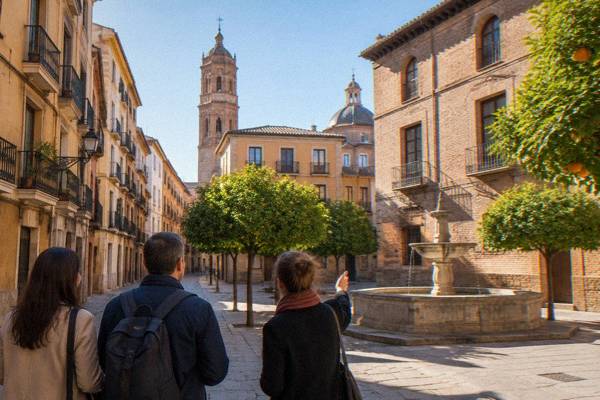
The high-speed line from Barcelona to Zaragoza, Spain, takes about 1.5 to 2 hours, and it drops you in the capital of Aragon, a city of Mudéjar towers, Roman ruins and one of the biggest basilicas in Spain.
Short answer
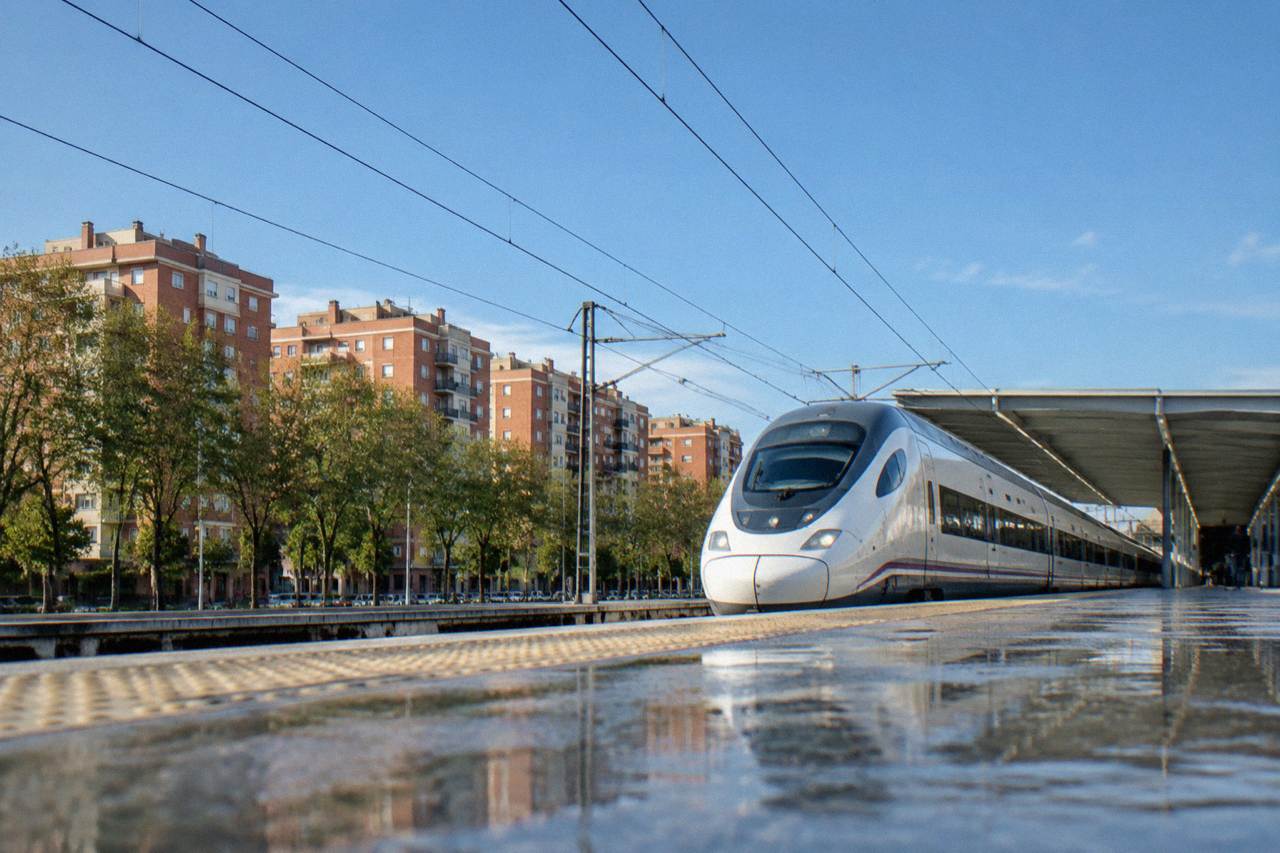
High-speed trains from Barcelona to Zaragoza-Delicias take about 1.5 to 2 hours. Zaragoza, the capital of Aragon on the Ebro, is compact enough to explore on foot from the station area, and the Old Town, the Basílica del Pilar and the Aljafería can all be reached by tram or a short walk.
The high-speed connection from Barcelona to Zaragoza turns the capital of Aragon into one of the easiest city breaks in Spain. Zaragoza sits inland on the Ebro, roughly halfway between Barcelona and Madrid on the main high-speed corridor, and the fastest services cover the run in about 1.5 to 2 hours. That puts a city of Roman forums, Mudéjar brickwork, a vast baroque basilica and a proper tapas culture within a morning's travel of Barcelona. This guide covers how the train works, what to expect at Zaragoza-Delicias station, how to reach the Old Town, and how to use the hours after you arrive, all of it grounded in what the operators and the municipality publish rather than guesswork.
How Long Is The Train From Barcelona To Zaragoza?
The fastest high-speed services between Barcelona and Zaragoza take about 1.5 to 2 hours, arriving at Zaragoza-Delicias station. Aggregator listings put the quickest runs at around 1 hour 40, but no official operator timetable was read for this page, so treat that as approximate and check Renfe, Ouigo, iryo or Omio for live times. Slower regional services exist but are not worth comparing for a short trip.
The line is one of the busiest sections of high-speed track in Spain, because it continues from Zaragoza to Madrid, and Zaragoza-Delicias is the interchange where the corridor splits. That means the Barcelona to Zaragoza leg benefits from the same rolling stock and the same frequency pressure as the full Barcelona to Madrid run. For planning purposes, the honest framing is simple: the journey is short enough that a day trip is realistic, and comfortable enough that you arrive ready to walk. For a fuller comparison of the two cities as destinations, see Zaragoza vs Barcelona, and for the mirror-image route from the capital, read the Madrid to Zaragoza guide.
A natural question is which of Spain's two giants is closer, and the answer for most travellers is that both are about equally convenient by high-speed rail. The comparison of Madrid and Barcelona as gateways covers that in detail, and the dedicated answer page on whether there is a high-speed train from Barcelona to Zaragoza gives the short version.
Which Operators Run Barcelona To Zaragoza, And Where Do You Book?
Renfe, Ouigo and iryo all run high-speed trains on the Barcelona to Zaragoza corridor, and tickets are sold on each operator's own site or through an aggregator such as Omio. No fare table for this route was read for this page, so no price is printed here: fares vary by date, departure time and how far ahead you book. Check the operator's live listing for the actual cost before committing to a date.
Three competing operators on one corridor is good news for price and schedule flexibility, but it also means the cheapest ticket is not always on the first site you check. The practical advice is to compare across the operators for your specific travel date, because the difference between operators on the same day can be substantial. Booking opens well in advance on all three, and the usual pattern on Spanish high-speed lines holds: departures around weekends and holiday periods fill first.
One timing consideration has nothing to do with trains: if you can choose your travel date, October has a strong argument in its favour. The Fiestas del Pilar run from 10 to 18 October 2026, with the Ofrenda de Flores on 12 October, and the city's atmosphere changes completely for those nine days. The trade-off is that accommodation fills and the flower offering draws enormous crowds, so book early or pick a quieter month. The Fiestas del Pilar guide covers the programme, and the best time to visit Zaragoza page weighs the whole calendar.
What Does The Train Cost, And How Do You Get The Best Fare?
No verified fare for the Barcelona to Zaragoza train can be printed here, because no official operator price table was read for this page. What can be said honestly is that three operators compete on the route, that fares move with demand, and that checking Renfe, Ouigo, iryo or Omio directly for your date is the only reliable way to a number. Booking ahead on Spanish high-speed lines generally beats buying at the station on the day.
The reason this page refuses a figure is the same reason you should distrust any guide that gives one without a date attached: a fare is a property of a specific train on a specific day, not of the route. The operators run dynamic pricing, so a Tuesday in February and the eve of a public holiday are different products. What you can control is when you book, which operator you compare, and whether you accept a less convenient departure time in exchange for a lower price.
A separate budget question is what Zaragoza itself costs once you arrive, and that is easier to answer with published numbers. The urban transport fares are fixed and cheap: a single bus or tram ticket is 1.70 EUR, dropping to 0.55 EUR with the Tarjeta Bus, which itself costs 7 EUR and works on both bus and tram, per the 2026 Avanza fare table. Entry to the Basílica del Pilar is free, the tower viewpoint is 6 EUR for an adult, La Seo is 10 EUR general including three linked museums, and the Aljafería is 7 EUR general or 9 EUR with a guided tour. The Zaragoza cost and budget page builds a full daily budget from those figures.
| Item | Price | Notes |
|---|---|---|
| Urban bus or tram single | 1.70 EUR | No transfer, per the 2026 Avanza fare table |
| Same trip with Tarjeta Bus | 0.55 EUR | Card itself 7 EUR, valid on bus and tram |
| Basílica del Pilar entry | Free | Tower viewpoint charged separately |
| Pilar tower viewpoint, adult | 6 EUR | Last access 30 minutes before close |
| La Seo, general | 10 EUR | Includes Museo de Tapices, Museo Pilarista, Rosario de Cristal |
| Aljafería, general | 7 EUR | 9 EUR with guided tour; free 1st and 3rd Sunday and Monday |
What Is Zaragoza-Delicias Station Like When You Step Off The Train?
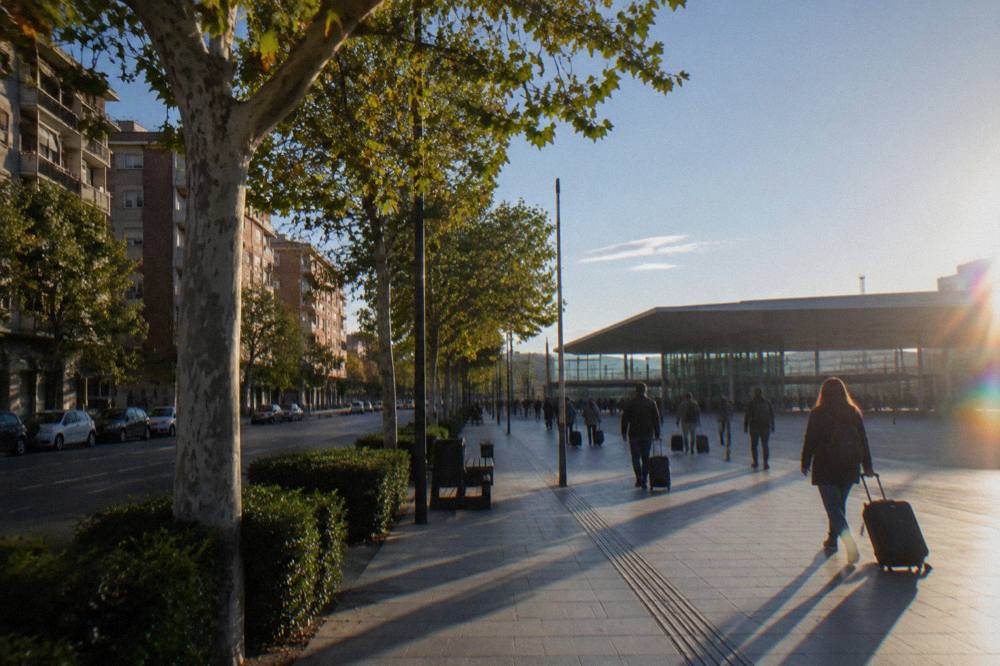
Zaragoza-Delicias is a single combined rail and bus interchange south-west of the centre, and it is the station every Barcelona train uses. The tram and urban buses connect it to the Old Town, and a single ticket costs 1.70 EUR, or 0.55 EUR with a Tarjeta Bus. The station's own facilities are modern, and the journey from the platforms to the Basílica del Pilar area is a short tram ride rather than a walk with luggage.
Delicias was rebuilt for the Expo 2008 era and it shows: the building is airy, the signage is clear, and the bus station sits under the same roof, which matters if you are connecting onward to places the train does not reach. The tram stop is directly outside, and Line 1 runs from there into the centre. The Zaragoza-Delicias train station guide covers the layout in detail, and the getting around Zaragoza page explains the tram, bus and Bizi bike-share systems together.
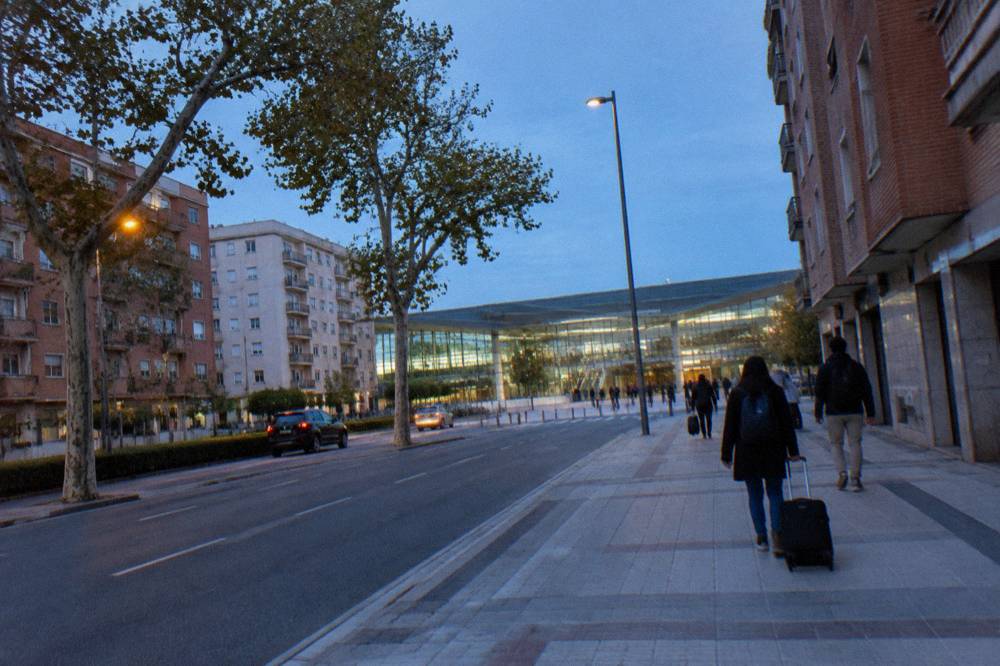
One practical note for anyone arriving by car or renting one: Zaragoza operates a low-emission zone in the Casco Histórico, with sanctions active since 12 December 2025, running Monday to Friday from 08:00 to 20:00. Vehicles without a DGT environmental label are restricted, and there is a 15-minute grace period if you enter by mistake. The Zaragoza car rental and parking page explains what that means for visitors.
| Way to reach the centre from Delicias | Cost | Notes |
|---|---|---|
| Tram Line 1 | 1.70 EUR single, 0.55 EUR with Tarjeta Bus | Stop directly outside the station |
| Urban bus | 1.70 EUR single, 0.55 EUR with Tarjeta Bus | Night lines 1.00 EUR |
| Taxi | Metered | Rank at the station forecourt |
| Bizi day pass | 1 EUR fixed plus 0.50 EUR for the first 30 minutes | 50 EUR card deposit held on day passes |
What Should You Do With Your First Day In Zaragoza?
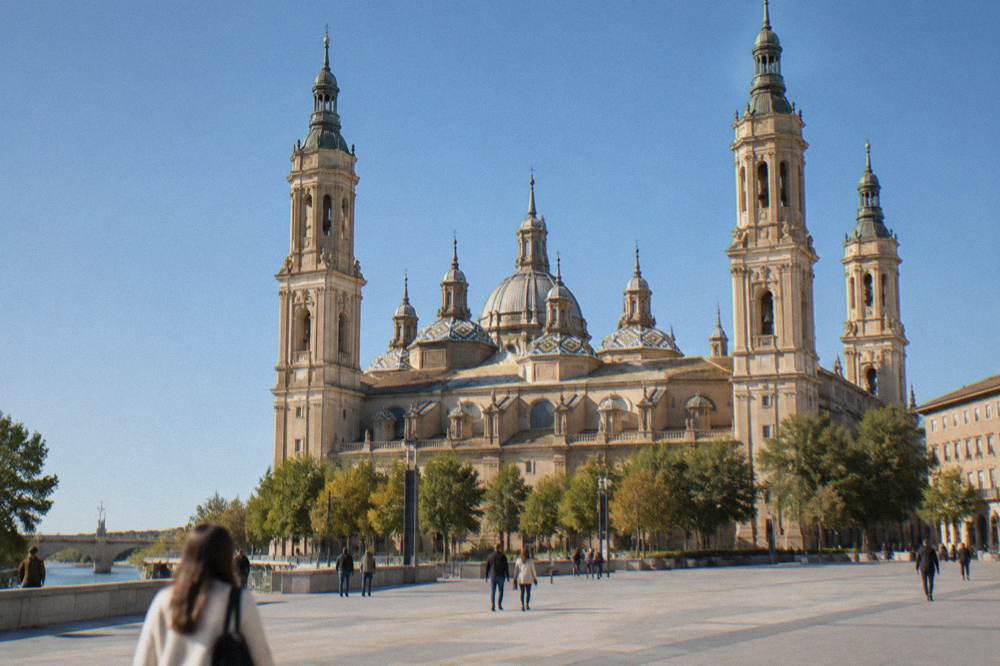
Spend your first day on the axis between the Basílica del Pilar, La Seo and the Aljafería, because those three monuments define the city and they sit within a walkable stretch along and behind the Ebro. The Pilar is free to enter, La Seo costs 10 EUR general with three museums included, and the Aljafería is 7 EUR, so a full first day of the headline sights costs very little beyond lunch.
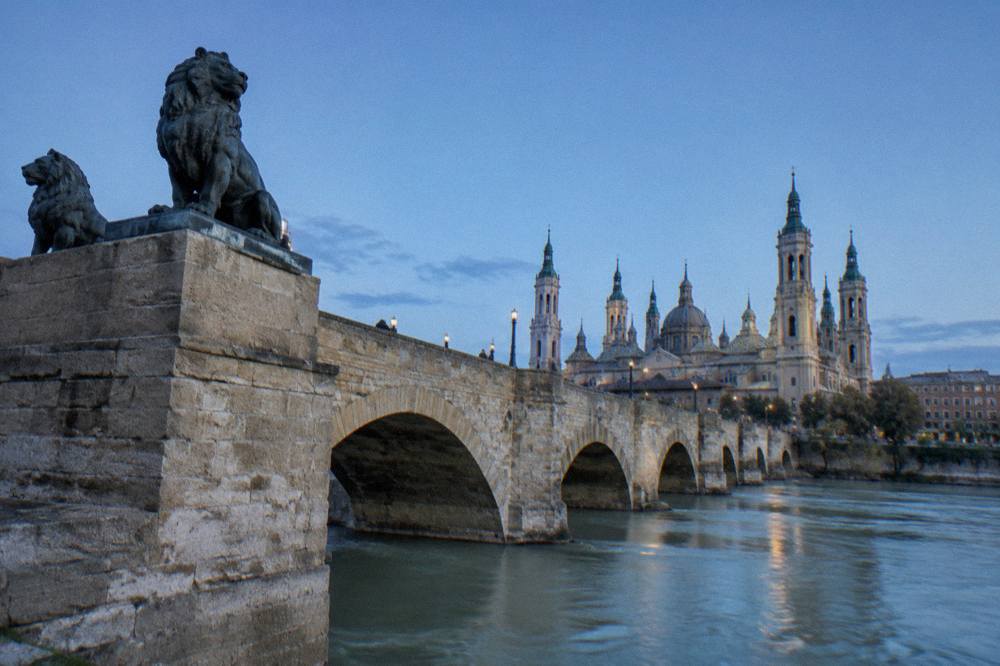
The classic route starts at the Plaza del Pilar, the enormous open square where the basilica and La Seo face each other across a few hundred metres of stone. Entering the basilica is free, and the tower viewpoint, at 6 EUR for an adult, gives the widest view over the Ebro bend and the Mudéjar brickwork of the city's rooftops. From there, cross the Puente de Piedra, the stone bridge whose current form was built from 1401 and opened in 1440, guarded by four bronze lions added in 1991, for the classic postcard view back toward the basilica's domes. More of these guides are collected on Zaragoza Travel Guide.
The Aljafería, the Islamic palace that later served the Catholic Monarchs, sits a tram ride west of the centre and is the single most atmospheric interior in the city. Its October hours are 10:00 to 18:00 daily, with Spanish guided tours at set times through the day, and it is free on the first and third Sunday and Monday of each month. Between the palace and the Old Town, the Roman layer is easy to miss but worth an hour: Zaragoza was Caesaraugusta, and the forum, river port, baths and theatre museums each charge a few euros, with a four-museum ticket at 7 EUR.
A private must-see attractions walking tour compresses all of this into a two-hour guided walk, from $78.78 per person, rated 4.6 from 9 reviews on the operator's listing. Check availability if you would rather have the outline of the city explained at the start of the day than piece it together from guidebooks. For a fuller plan, the one day in Zaragoza itinerary is built around exactly this arrival pattern.
Do You Even Need A Guide, Or Can You Walk Zaragoza Yourself?
You can walk Zaragoza yourself, because the core sights sit close together and the city is flat, but a guided or app-led tour adds context that the buildings do not display on their walls. The Roman walls, the Mudéjar ceilings and the Aljafería's carved stucco all reward explanation, and the cheapest guided options start at 10.41 USD for a 105-minute monumental introduction, with app-based self-guided walks from 7.99 USD.
The range of options is genuinely wide. At the budget end, an app-guided walk from the Roman walls to Renaissance wonders costs from $7.99 per person and is rated 4.6 from 8 reviews, while a self-guided audio tour of the city of four cultures runs from $11.99, rated 4.2 from 5 reviews. Both let you set your own pace, which suits a day-trip arrival where the return train time is fixed.
There is also a genuinely free option, and naming it is part of being honest about it: the Indispensable Zaragoza Free Tour on GuruWalk is a two-hour Old Town walk, tip-based, rated 4.97 from 576 reviews, led by a local guru. It is not this site's product, it costs whatever you decide to tip, and for a first orientation it is hard to beat. The free things to do in Zaragoza page lists the free museum days and free monuments alongside it.
Is Zaragoza Worth The Detour From Barcelona?
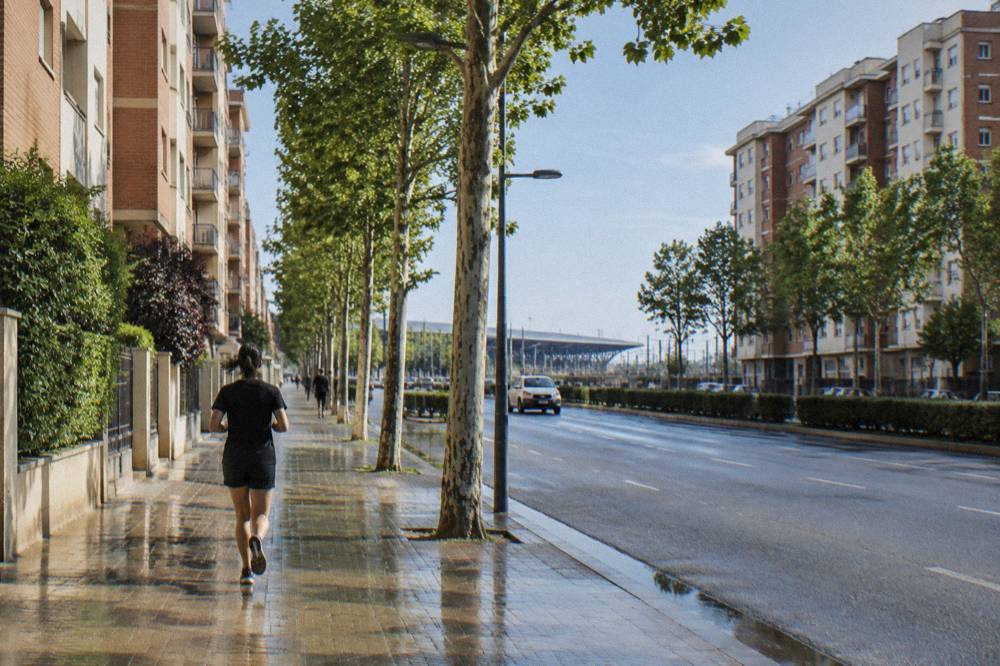
Zaragoza is worth the detour because it delivers a concentration of Roman, Islamic, Mudéjar and baroque heritage that Barcelona cannot replicate, at visitor volumes far below the Sagrada Família's, and at prices that are visibly lower once you arrive. It is not a substitute for Barcelona, and it does not try to be: it is an inland, semi-arid city on the Ebro with its own food tradition and its own monumental square, and the two cities complement each other.
The honest comparison is one of character rather than numbers, because this page's verified figures cover Zaragoza only. Barcelona has the coast, the modernista architecture and the international profile; Zaragoza has the Aljafería, the Pilar, a Roman city under the pavement and an Aragonese table built on ternasco lamb and red wine from Cariñena. What Zaragoza offers the Barcelona visitor is contrast: a city where the headline monument has no queue-management problem, where a cathedral ticket includes three museums, and where the tapas bars of the Old Town run at a local pace. The is Zaragoza worth visiting answer page makes the case in full.
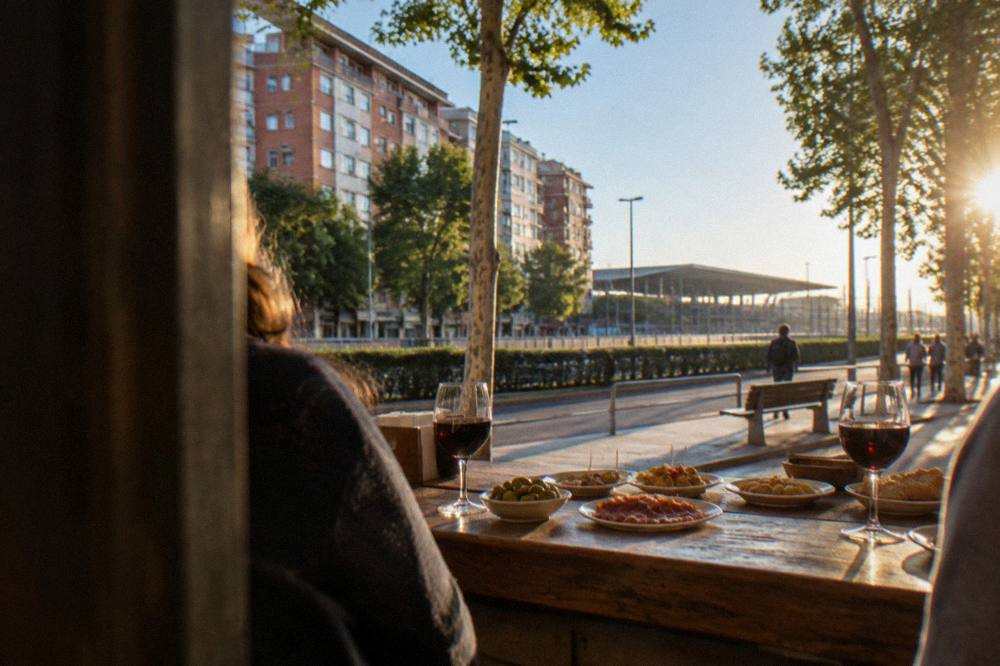
Food deserves a paragraph of its own, because it is the part of the visit most often undersold. The Aragonese canon runs through ternasco de Aragón lamb, migas aragonesas and a sweet tradition of fruit and nun's pastries, and the Zaragoza food guide maps the dishes and where to find them. If you want the tapas layer explained while you eat, a guided evening tapas walk from $106.92 per person covers the Old Town bars with a local, and the Zaragoza tapas crawl page does the same route on paper for free.
When Is The Best Time Of Year To Make This Trip?
The best months for a Barcelona to Zaragoza train trip are May, June, September and October, based on the AEMET 1981-2010 averages for the Zaragoza Aeropuerto station, which show May at a mean of 18.0 C, June at 22.6 C, September at 21.2 C and October at 16.2 C. July and August are the hottest months, with mean maxima of 32.4 C and 31.7 C, and only 17 mm of rain each.
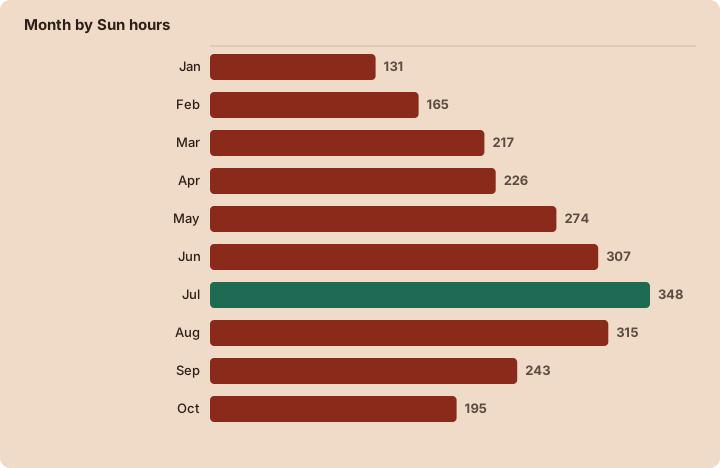
Zaragoza's climate is dry continental and semi-arid, and the numbers deserve their label: they are 1981-2010 averages from the airport station, the only window AEMET publishes for it. The year brings just 322 mm of rain over 51.1 days of 1 mm or more, with May the wettest month at 44 mm and July and August the driest at 17 mm. Sunshine is generous, 2,693 hours across the year, with July the sunniest month at 348 hours. What the sheet does not carry is a days-above-30 C figure, so no claim about heatwave frequency belongs on this page; the mean maxima are the honest measure. The Zaragoza weather guide unpacks the full table month by month.
| Month | Mean C | Mean max C | Mean min C | Rain mm | Sun hours |
|---|---|---|---|---|---|
| Jan | 6.6 | 10.5 | 2.7 | 21 | 131 |
| Feb | 8.2 | 13.1 | 3.3 | 22 | 165 |
| Mar | 11.6 | 17.3 | 5.8 | 19 | 217 |
| Apr | 13.8 | 19.6 | 7.9 | 39 | 226 |
| May | 18.0 | 24.1 | 11.8 | 44 | 274 |
| Jun | 22.6 | 29.3 | 15.8 | 26 | 307 |
| Jul | 25.3 | 32.4 | 18.3 | 17 | 348 |
| Aug | 25.0 | 31.7 | 18.3 | 17 | 315 |
| Sep | 21.2 | 27.1 | 15.2 | 30 | 243 |
| Oct | 16.2 | 21.4 | 11.0 | 36 | 195 |
| Nov | 10.6 | 14.8 | 6.3 | 30 | 148 |
| Dec | 7.0 | 10.8 | 3.2 | 21 | 124 |
All figures are AEMET 1981-2010 averages for the Zaragoza Aeropuerto station.
One wind deserves a mention precisely because it is hard to quantify: the cierzo, the cold, dry north-west wind that funnels down the Ebro valley. AEMET publishes no wind speed or frequency figure for the station, so this page prints none, but any visitor who arrives on a cierzo day will know about it within minutes of leaving Delicias. It is a feature of the valley, not a defect, and it is the reason the evening light in Zaragoza is often startlingly clear.
Where Should You Stay If The Train Trip Becomes An Overnight?
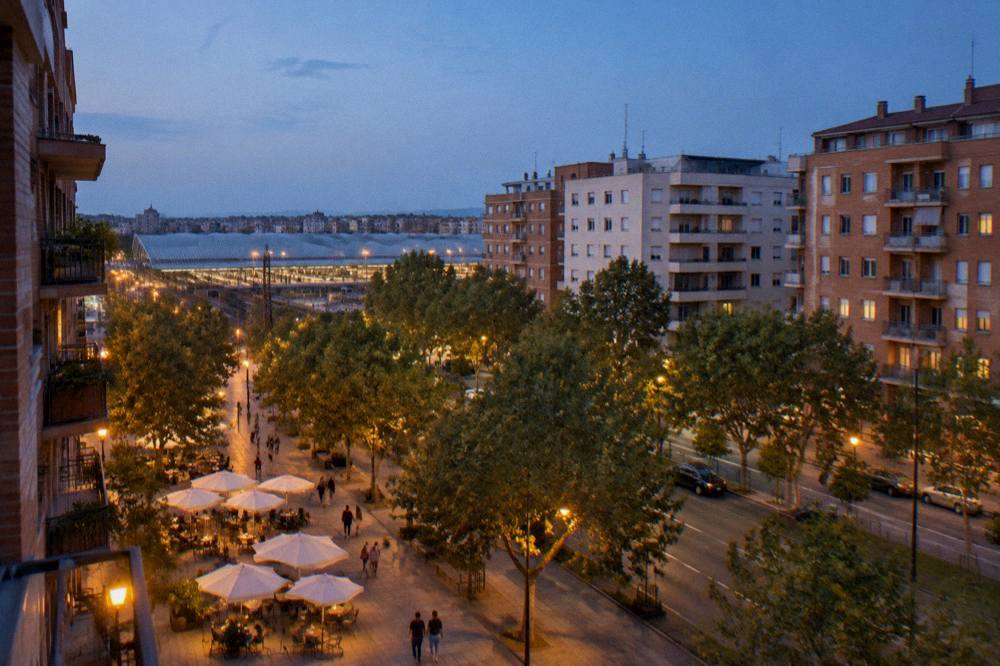
Stay in the Casco Histórico or just north of it around Paseo de la Independencia, because that puts the Plaza del Pilar, La Seo and the tapas bars within a flat ten-minute walk and keeps the tram line to Delicias within reach for the return train. The Old Town is where the monuments are; the Independencia side adds wider streets, bigger rooms and the main shopping axis.
The choice of neighbourhood matters more in Zaragoza than in many cities because the sights are tightly clustered: once you are inside the loop of the old walls, everything headline-worthy is on foot. The where to stay in Zaragoza guide breaks the districts down, the best hotels in Zaragoza page lists the top properties by area, and the hostels and budget stays page covers the cheap end, which is genuinely cheap by the standards of Spain's two big coastal cities.
If the trip grows beyond a night, the day-trip radius is remarkable: Monasterio de Piedra, Albarracín, Tarazona and the Moncayo are all reachable by road, and the Pyrenees sit close enough that organized excursions run from the city. The Pyrenees day trip and Tarazona pages cover the two directions most visitors choose first, and the Zaragoza travel planning guide ties the whole region together.
Common Questions About The Barcelona To Zaragoza Train
Is there a high-speed train from Barcelona to Zaragoza?
Yes. Renfe, Ouigo and iryo all run high-speed services on the corridor, and the fastest trains cover the distance in about 1.5 to 2 hours, arriving at Zaragoza-Delicias. Check the operators or an aggregator for live times and fares for your date.
How long is the train ride from Barcelona to Zaragoza?
About 1.5 to 2 hours on the fastest high-speed services. Aggregator listings put the quickest runs at around 1 hour 40, but no official operator timetable was read for this page, so confirm exact times when you book.
Where does the Barcelona train arrive in Zaragoza?
All trains arrive at Zaragoza-Delicias, the combined rail and bus interchange south-west of the centre. Tram Line 1 and urban buses connect the station to the Old Town, with a single ticket at 1.70 EUR, or 0.55 EUR with a Tarjeta Bus.
Is Zaragoza a day trip from Barcelona?
It is, and the dedicated Zaragoza day trip from Barcelona itinerary is built around exactly that. With about 1.5 to 2 hours each way by high-speed train, a morning arrival gives you six to eight hours in the city, enough for the Pilar, La Seo, the Puente de Piedra and a proper tapas stop.
Do they speak English in Zaragoza?
Less widely than in Barcelona or Madrid, though hotel and museum staff generally manage. A few Spanish phrases go further here than on the coast, and guided tours in English exist, including several of the walking and tapas options listed above.
What is the cheapest way to get from Barcelona to Zaragoza?
Usually a booked-in-advance high-speed ticket on one of the three competing operators, but no verified fare table for this route was read for this page, so compare Renfe, Ouigo and iryo directly for your date rather than trusting a printed number.
The train from Barcelona to Zaragoza is one of the simplest good decisions in Spanish travel: two hours or less, three competing operators, a station that connects straight to the tram, and a city whose headline sights cost a handful of euros between them. Book the operator that fits your date, step off at Delicias, and let the Plaza del Pilar do the rest.