Zaragoza Weather: Month-By-Month Climate, Rain And The Cierzo Wind
Zaragoza, the capital of Aragon on the Ebro, has a dry continental semi-arid climate: hot summers, cool winters, little rain and a great deal of sun. Here is what the official AEMET 1981-2010 averages for the Zaragoza Aeropuerto station say, month by month.
Short answer
Zaragoza's 1981-2010 AEMET averages show a mean annual temperature of 15.5 C, only 322 mm of rain across 51.1 rainy days, and 2,693 hours of sunshine. July is the hottest and sunniest month at a 32.4 C mean maximum, July and August the driest at 17 mm each, and May the wettest at 44 mm.
Zaragoza, the capital of Aragon in north-eastern Spain, sits inland on the Ebro with no sea anywhere near it, and its weather shows it. AEMET's 1981-2010 climate normals for the Zaragoza Aeropuerto station, the only averaging window the station page publishes, give the city a mean annual temperature of 15.5 C, just 322 mm of rain across 51.1 days of 1 mm or more, and 2,693 hours of sunshine a year. That is a dry, sunny, strongly seasonal continental climate: hot summers, cool winters, and a famous cold wind called the cierzo that funnels down the Ebro valley. This guide lays out what those official averages mean for each month, each season and each kind of trip, from the Fiestas del Pilar in October to the height of July.
What Is The Weather Like In Zaragoza Spain?
Zaragoza has a dry continental semi-arid climate, and AEMET's 1981-2010 normals for the Zaragoza Aeropuerto station put the annual mean at 15.5 C, with a yearly mean maximum of 21.0 C and a mean minimum of 10.0 C. The city receives only 322 mm of rain over 51.1 days of 1 mm or more, and 2,693 hours of sunshine. July is the hottest month at a 32.4 C mean maximum, January the coldest at a 2.7 C mean minimum.
The headline is the contrast. Zaragoza is one of the driest and sunniest provincial capitals in Spain, yet its summers are genuinely hot and its winters genuinely cool, with 23.1 frost days a year on the same AEMET sheet. The city owes both faces to geography: it stands in the middle of the Ebro depression, ringed by mountains that block moist Atlantic air and leave the valley dry. Where a coastal city gets a sea breeze to soften the afternoon, Zaragoza gets nothing of the kind, because there is no sea for hundreds of kilometres. What it does get is the cierzo, the cold, dry north-west wind that runs down the valley, which AEMET treats qualitatively rather than with a published speed figure.
For a visitor the practical reading is simple. Rain is rarely the problem here: even the wettest month, May, averages only 44 mm. The two things that actually shape a Zaragoza trip are summer heat and winter chill, and the months in between, April to June and September to October, are when the city is at its most comfortable. If you are still deciding when to come, the companion page on the best time to visit Zaragoza works through the calendar against the festival programme, and the Zaragoza travel planning guide puts the weather into a full trip framework.
How Hot Does Zaragoza Get In Summer?
By AEMET's 1981-2010 averages for Zaragoza Aeropuerto, July is the hottest month with a mean maximum of 32.4 C, a mean of 25.3 C and a mean minimum of 18.3 C, and August runs it close at 31.7 C, 25.0 C and 18.3 C. June averages a 29.3 C mean maximum and September still reaches 27.1 C. July is also the sunniest month at 348 hours, with August at 315 and June at 307.
Summer in Zaragoza is a real summer, not a warm-weather suggestion. The 1981-2010 mean maxima climb from 24.1 C in May to 29.3 C in June and then to 32.4 C in July, and the nights barely recover, with mean minima of 18.3 C in both July and August. The sun is generous: the three summer months together supply nearly a thousand of the year's 2,693 sunshine hours.
The saving grace is dryness. July and August are the driest months on the sheet at 17 mm each, with only 2.6 and 2.3 days of 1 mm or more of rain respectively, so a summer downpour is a rarity rather than a planning factor. What you plan around instead is the heat itself. The old town's sights, the Basílica del Pilar, La Seo and the Aljafería, all have interiors that stay cool, and the Ebro river walk gives you open shade-lined stretches for the evening. The free things to do in Zaragoza page includes several options that suit a hot-day rhythm, and the getting around Zaragoza guide explains the tram and bus network for the moments when walking between sights is the wrong call.
| Month | Mean max C | Mean C | Mean min C | Sun hours |
|---|---|---|---|---|
| June | 29.3 | 22.6 | 15.8 | 307 |
| July | 32.4 | 25.3 | 18.3 | 348 |
| August | 31.7 | 25.0 | 18.3 | 315 |
| September | 27.1 | 21.2 | 15.2 | 243 |
AEMET 1981-2010 normals, Zaragoza Aeropuerto station.
Walking tours in summer are best booked for the first hours of the day, and the guided options below all work well as morning plans, with the old town monumental walk among the most popular formats for exactly that reason. Check availability
Does It Rain A Lot In Zaragoza?
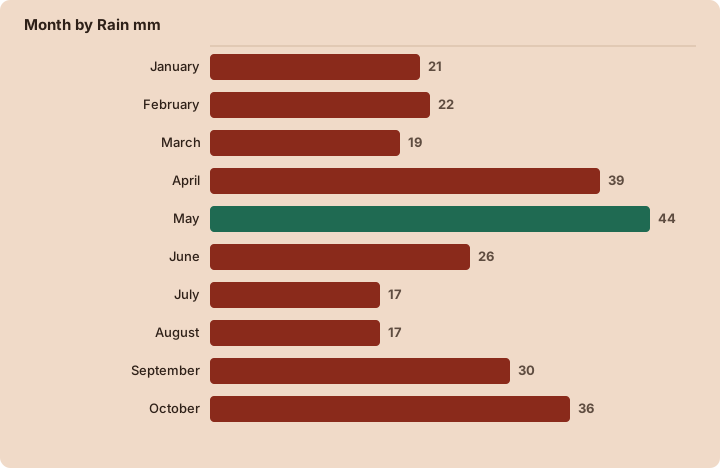
No. AEMET's 1981-2010 normals for Zaragoza Aeropuerto record just 322 mm of rain across the whole year, spread over 51.1 days with 1 mm or more, which makes Zaragoza distinctly dry by Spanish standards. May is the wettest month at 44 mm, April follows at 39 mm and October at 36 mm, while July and August are the driest at 17 mm each. No month averages even 7 rainy days.
The rain pattern is the opposite of what many visitors expect. The wettest stretch on the sheet is not winter but spring: May's 44 mm over 6.4 days of 1 mm or more, April's 39 mm over 5.7 days, and March a mere 19 mm. Autumn's contribution is moderate, with October at 36 mm and November at 30 mm, and the winter months are actually among the drier ones, with January and December at 21 mm each. The practical translation: a trip to Zaragoza can be planned around heat and wind, but almost never around rain, and a rained-out day is a genuine outlier in any month.
That said, the rain that does fall often arrives in short, heavy showers rather than long drizzle, a signature of the semi-arid Ebro valley. When a wet day does land, the city has strong indoor options: the Caesaraugusta museum circuit covers the Roman forum, river port, baths and theatre, and the Zaragoza rainy day guide is built entirely around them. The Zaragoza museums page collects the rest of the indoor line-up, including the Pablo Serrano and origami museums.
| Month | Rain mm | Days with 1 mm or more |
|---|---|---|
| January | 21 | 4.0 |
| February | 22 | 3.9 |
| March | 19 | 3.7 |
| April | 39 | 5.7 |
| May | 44 | 6.4 |
| June | 26 | 4.0 |
| July | 17 | 2.6 |
| August | 17 | 2.3 |
| September | 30 | 3.2 |
| October | 36 | 5.4 |
| November | 30 | 5.1 |
| December | 21 | 4.8 |
AEMET 1981-2010 normals, Zaragoza Aeropuerto station.
Is Zaragoza A Windy City? The Cierzo Explained
Yes, and the wind has a name: the cierzo, a cold, dry north-west wind that funnels down the Ebro valley, and it is the single weather feature locals talk about most. AEMET publishes no wind speed or days-of-wind figure for the Zaragoza Aeropuerto station, so this guide states none, but the cierzo is a defining, well-documented characteristic of the valley's climate, and AEMET issues Aragon wind warnings when it strengthens.
The cierzo works like this. The Ebro depression runs from the Cantabrian coast towards the Mediterranean, and when pressure differences line up, air is pushed down the corridor at speed, arriving in Zaragoza cold and very dry. It is strongest and most frequent in the cooler half of the year, and it does two things to the weather that the monthly averages do not show: it drops the felt temperature sharply on an otherwise mild day, and it scrubs the sky to a hard, clear blue that photographers come for. A sunny January afternoon with the cierzo blowing feels nothing like a still one.
For planning, treat the cierzo as a layering problem rather than a cancellation risk. It rarely stops anything working; it just makes the open riverside stretches, the Puente de Piedra and the Expo 2008 parklands, feel raw, while the old town's narrow streets block most of it. The Ebro river walk and the Parque del Agua are the two places where it is felt most, and both are better on a calm day. The blog answer is Zaragoza a windy city takes the question further for readers who want the full story.
How Cold Does Zaragoza Get In Winter?
AEMET's 1981-2010 normals give January a mean of 6.6 C, a mean maximum of 10.5 C and a mean minimum of 2.7 C, with December at 7.0 C and February at 8.2 C, and the year averages 23.1 frost days, so Zaragoza winters are properly cool for Spain. The AEMET sheet publishes no snowfall figure, only frost and fog days, and this guide states no snowfall number.
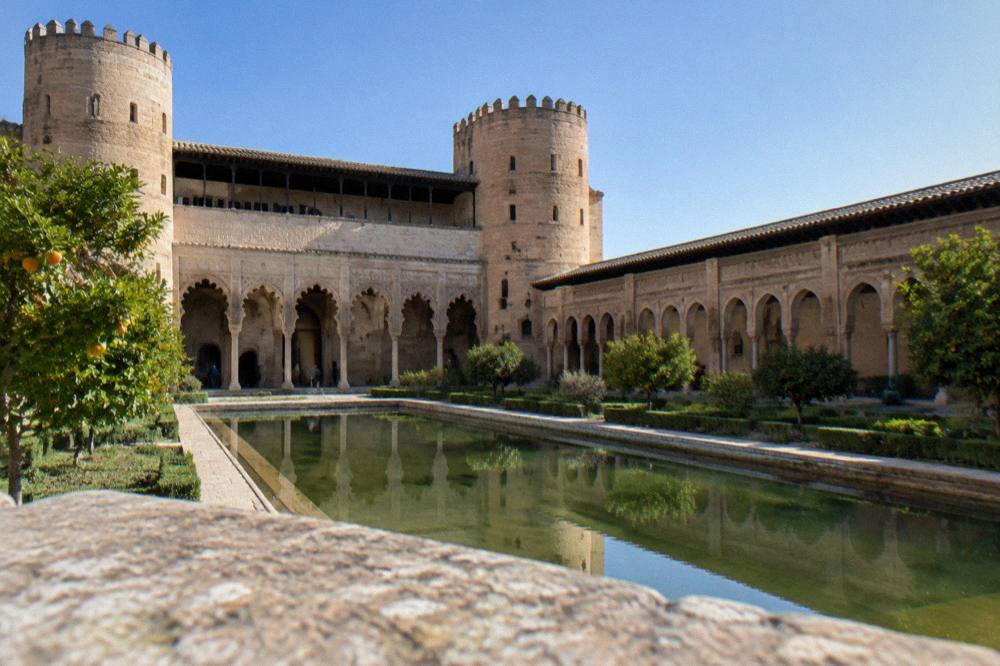
Winter here is dry, sunny and cold at night. December delivers 124 hours of sunshine and January 131, low by the city's own standards but generous by northern European ones, and rain stays modest at 21 and 22 mm. The frost figure, 23.1 days a year, mostly falls in these months, and the 21.3 annual fog days cluster here too, when cold, still air settles over the valley. Daytime temperatures around 10 to 13 C make sightseeing entirely comfortable with a proper coat, and the city's interiors, from the Aljafería's plasterwork halls to the Museo de Tapices beside La Seo, are unheated heritage spaces rather than refuges, so dress for the outside.
The compensations are real. Winter is the quietest season on the streets, the light is sharp and low, and the Christmas period, with the municipal lights switched on from 20 November 2026, gives the centre a night-time warmth the weather does not. The Christmas in Zaragoza guide covers that season in detail, and Semana Santa in Zaragoza, in late March, arrives once the averages have already climbed back to a 17.3 C mean maximum.
What Is The Best Month To Visit Zaragoza For Good Weather?
By the AEMET 1981-2010 averages, the two best weather windows are May to June and September to October: May offers a 24.1 C mean maximum with 274 hours of sun, June 29.3 C with 307 hours, September 27.1 C with 243 hours, and October 21.4 C with 195 hours. Rain stays modest in all four, from 26 to 44 mm, and the extreme heat of July and August is avoided.
Each of those months has its own character. May is the greenest and, on the sheet, the wettest month, though 44 mm is still very little; it suits the Parque Grande and the riverside parks at their best. June is warmer and drier, ideal for long evenings of tapas in the old town, and the last month before the serious heat. September cools slowly from August's peak while keeping most of its sun, and October, with a 21.4 C mean maximum and 36 mm of rain, is the month of the Fiestas del Pilar, which in 2026 run from 10 to 18 October with the Ofrenda de Flores on 12 October.
October deserves a special mention for the way weather and festival collide. The 1981-2010 averages say mild days around 21 C, cool nights around 11 C and a real chance of a shower, which is exactly what to pack for if you are coming for the fiestas: layers, a light rain shell and shoes that survive a crowd. The Fiestas del Pilar and Ofrenda de Flores guides cover the programme; this page only supplies the sky.
| Month | Mean max C | Mean min C | Rain mm | Sun hours | Verdict |
|---|---|---|---|---|---|
| March | 17.3 | 5.8 | 19 | 217 | Cool, dry, quiet |
| April | 19.6 | 7.9 | 39 | 226 | Mild, greenest |
| May | 24.1 | 11.8 | 44 | 274 | Warm, best all-round |
| June | 29.3 | 15.8 | 26 | 307 | Hot, long evenings |
| September | 27.1 | 15.2 | 30 | 243 | Warm, post-heat |
| October | 21.4 | 11.0 | 36 | 195 | Mild, Pilar fiestas |
AEMET 1981-2010 normals, Zaragoza Aeropuerto station.
What Should You Pack For Zaragoza Weather?
Pack for a dry, continental climate with big day-to-night swings: summer calls for sun protection, breathable clothing and nothing warmer than a light layer for the 18.3 C July and August nights, while winter needs a proper coat, warm layers and gloves for 2.7 C January nights, and spring and autumn trips need layers plus a compact rain shell for the 36 to 44 mm months. A windproof outer layer is worth bringing in any season for the cierzo.
The swing is the packing story. In July the mean maximum sits far above the mean minimum; in October the gap is smaller but still real; in January the two sit closest together. A day that starts with a cold morning walk to the Aljafería can end with drinks outside at a comfortable evening temperature, so outfits that shed and stack beat single heavy garments. Sun protection matters more than most visitors expect: 348 hours of July sunshine and 2,693 across the year, with only 61 percent average humidity drying you out quietly, means hats and water bottles earn their place from May to September. The full index of guides sits on Zaragoza Travel Guide.
| Season | Daytime feel | Nighttime feel | What to bring |
|---|---|---|---|
| Spring (Mar-May) | Mild to warm, 17-24 C mean max | Cool, 6-12 C mean min | Layers, light rain shell, sun hat |
| Summer (Jun-Aug) | Hot, 29-32 C mean max | Warm, 16-18 C mean min | Breathable clothing, high-SPF sunscreen, water bottle |
| Autumn (Sep-Nov) | Warm to cool, 15-27 C mean max | Cool, 6-15 C mean min | Layers, compact rain shell, comfortable walking shoes |
| Winter (Dec-Feb) | Cool, 11-13 C mean max | Cold, 3-4 C mean min | Proper coat, warm layers, gloves, windproof outer |
Temperature figures are AEMET 1981-2010 monthly means for the Zaragoza Aeropuerto station.
Footwear deserves a line of its own. Zaragoza is a walking city: the old town, the riverside and the museum circuit are all best done on foot, and the paving is a mix of stone and compacted earth that gets slippery after the occasional shower. If you are booking a guided walk, the old town monumental walk and the free monumental tour both cover ground that rewards solid shoes in every season.
Does Zaragoza Weather Affect The Sights And Festivals?
Yes, mostly in predictable ways: the 1981-2010 AEMET averages put the Fiestas del Pilar in a mild October window of 21.4 C mean maximum and 11.0 C mean minimum with 36 mm of rain, summer events shift to evenings to avoid the 32.4 C July mean maximum, and the cierzo wind, not rain, is the factor most likely to move an outdoor plan. The city's main sights are open year-round, and no month closes the old town.
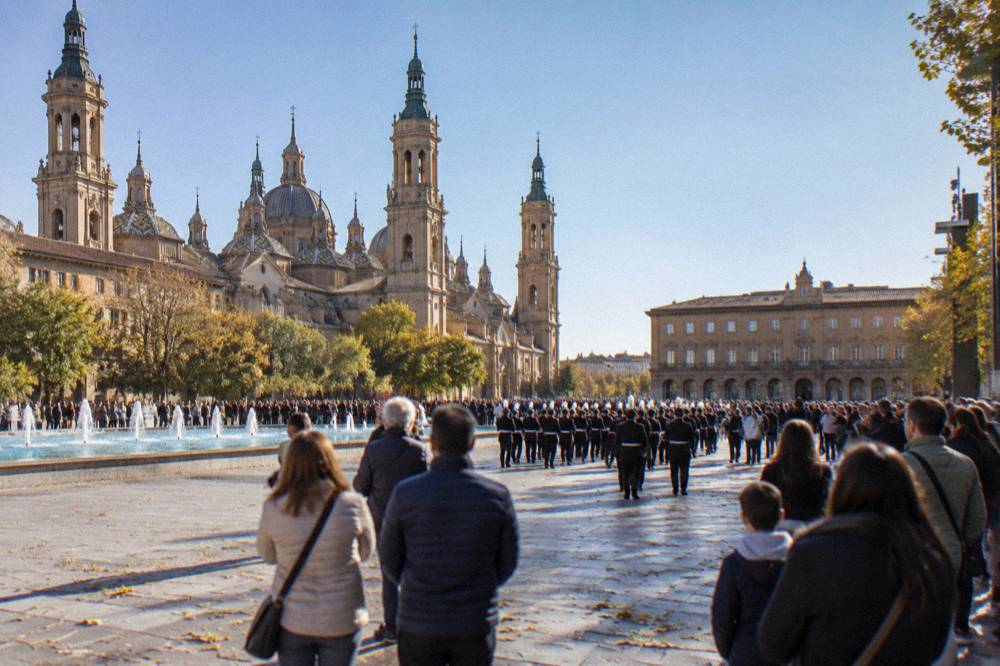
The festival calendar is built around this climate. The Pilar fiestas land in the first genuinely mild month after summer, and their programme, from the pregón on the opening Saturday to the closing fireworks by the Ebro on 18 October 2026, is overwhelmingly outdoor, which the October averages justify. Semana Santa processions in late March fall in a month with a 17.3 C mean maximum and only 19 mm of rain, and the Christmas lights season from 20 November runs into December's 10.8 C mean maximum, cold enough for a coat and dry enough, at 21 mm, to keep the streets full.
Sightseeing weather matters most at the edges of the day. The Basílica del Pilar's tower viewpoint, the Pilar tower experience, is an open-air platform where the cierzo is felt at full strength, so a calm morning beats a windy afternoon for the views over the Ebro river walk. The Aljafería palace and the Caesaraugusta museums are indifferent to weather, and the Zaragoza 3 day itinerary can be resequenced around a hot or windy day without losing anything.
Zaragoza Weather Month By Month: The Full AEMET Table
The complete AEMET 1981-2010 normals for the Zaragoza Aeropuerto station give the year a 15.5 C mean, with monthly means running from 6.6 C in January to 25.3 C in July, monthly mean maxima from 10.5 C in January to 32.4 C in July, monthly mean minima from 2.7 C in January to 18.3 C in July and August, and monthly rainfall from 17 mm in July and August to 44 mm in May.
This is the table to come back to when a specific month is on your mind. Every figure is the 1981-2010 average published by AEMET for station 9434, Zaragoza Aeropuerto, at 249 m altitude, and no other window is used anywhere on this page.
| Month | Mean max C | Mean C | Mean min C | Rain mm | Rainy days | Sun hours |
|---|---|---|---|---|---|---|
| January | 10.5 | 6.6 | 2.7 | 21 | 4.0 | 131 |
| February | 13.1 | 8.2 | 3.3 | 22 | 3.9 | 165 |
| March | 17.3 | 11.6 | 5.8 | 19 | 3.7 | 217 |
| April | 19.6 | 13.8 | 7.9 | 39 | 5.7 | 226 |
| May | 24.1 | 18.0 | 11.8 | 44 | 6.4 | 274 |
| June | 29.3 | 22.6 | 15.8 | 26 | 4.0 | 307 |
| July | 32.4 | 25.3 | 18.3 | 17 | 2.6 | 348 |
| August | 31.7 | 25.0 | 18.3 | 17 | 2.3 | 315 |
| September | 27.1 | 21.2 | 15.2 | 30 | 3.2 | 243 |
| October | 21.4 | 16.2 | 11.0 | 36 | 5.4 | 195 |
| November | 14.8 | 10.6 | 6.3 | 30 | 5.1 | 148 |
| December | 10.8 | 7.0 | 3.2 | 21 | 4.8 | 124 |
| Year | 21.0 | 15.5 | 10.0 | 322 | 51.1 | 2693 |
AEMET 1981-2010 normals, Zaragoza Aeropuerto station (9434). Rainy days are days with 1 mm of rain or more.
A few readings worth pulling out. February warms faster than most visitors expect, from a 10.5 C January mean maximum to 13.1 C. March is drier than April on the sheet, 19 mm against 39 mm, so early spring is not the wet spell the calendar suggests. September is the month with the biggest gap between reputation and reality: it still averages a 27.1 C mean maximum, effectively a summer month, while the city's event calendar has already moved to autumn rhythms. And the annual extras on the same AEMET sheet, 81.6 clear days, 21.3 fog days and 61 percent average humidity, describe a city that is more often cloudless than not.
How Does Zaragoza Weather Compare With Madrid And Barcelona?
Zaragoza sits between its two big neighbours in character: like inland Madrid it has hot, dry summers, with a July mean maximum of 32.4 C, and unlike coastal Barcelona it has no sea breeze to moderate afternoons, while its annual 322 mm of rain and 2,693 sunshine hours describe a drier, sunnier climate than either coast-influenced city. This page states no Madrid or Barcelona figures beyond that comparison, because the AEMET sheet in use covers only the Zaragoza Aeropuerto station.
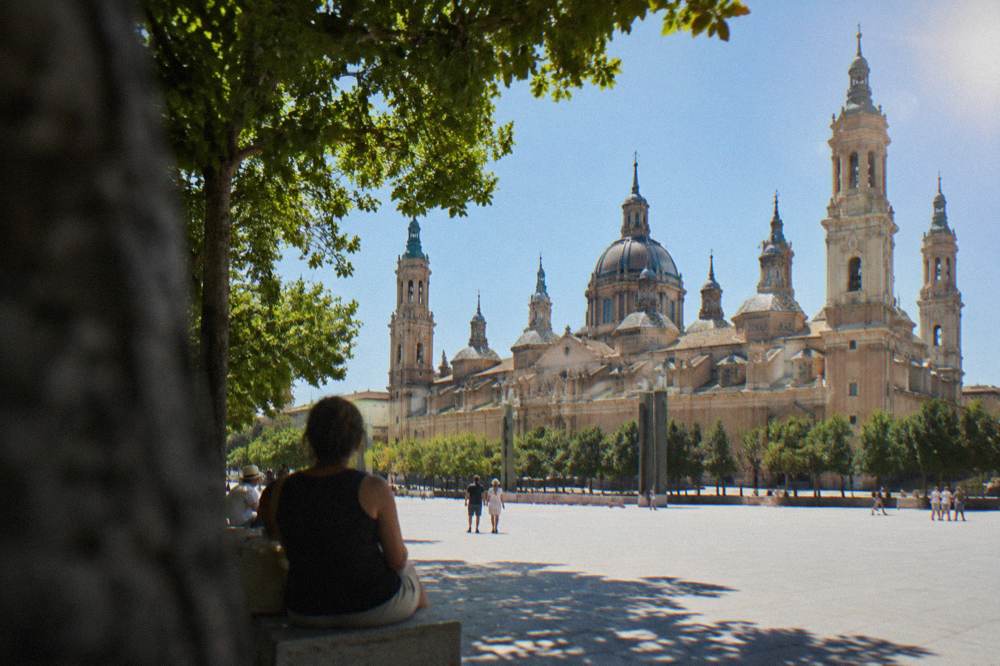
The honest framing is that Zaragoza's climate is the Ebro valley's climate. It is hotter in summer than the Mediterranean coast, colder at night in winter, and drier than almost anywhere else in northern Spain, and the same mountains that keep it dry give it the cierzo. Visitors arriving from Madrid by high-speed train, about 1.5 to 2 hours, or from Barcelona on a similar timing, notice the difference within a day: the light is harder, the air is drier, and the evenings cool off faster once the sun drops.
That has planning consequences. A Zaragoza day trip from either city works in any season, but a day trip in July should be built around morning and evening hours, and one in January around the middle of the day. The day trip from Madrid and day trip from Barcelona guides handle the train logistics; the weather advice is the same one this page repeats, because the averages above are the whole story.
Does The Weather Change How You Should Tour The City?
Yes, mainly through timing: with a 32.4 C July mean maximum and 348 hours of July sun, summer touring in Zaragoza works best as early-morning and evening activity with indoor museums in the middle, while the 10.5 C January mean maximum and the cierzo wind make winter touring a midday-and-layers exercise, and a private guide gives you the flexibility to resequence a day around either. The sights themselves never close for weather.
Guided walking is the format most sensitive to the sky, and Zaragoza has a wide spread of it, from the free tip-based walks to private custom tours. The free monumental tour runs a fixed route that works in any weather, and the private custom walks, such as the private custom walking tour with a local guide, let you weight the route towards shaded old-town streets on a hot day or towards interiors when the cierzo blows.
The self-guided alternatives are equally weather-aware. The Zaragoza self-guided city walking tour and scavenger hunt and the app-guided Roman walls walk can both be started at whatever hour the forecast favours, which is exactly the freedom a hot July or a windy February rewards. For a fuller comparison of every format, the Zaragoza tours guide lays out the options side by side.
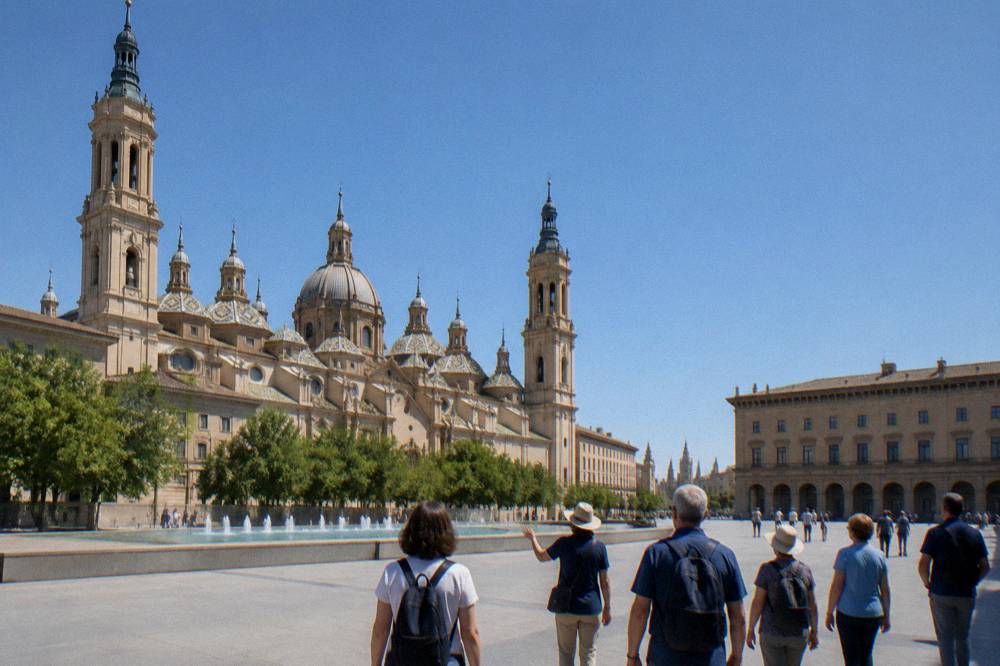
Whatever the month, the guided formats above share one advantage over a fixed itinerary: they start at a set hour, so picking a morning slot in summer and a midday slot in winter is the single easiest weather adjustment you can make to a Zaragoza trip.
What Is The Sunniest And Driest Time In Zaragoza?
By the AEMET 1981-2010 normals, the sunniest stretch is June to August, with 307, 348 and 315 sunshine hours respectively, and the driest is July and August at 17 mm of rain each over just 2.6 and 2.3 rainy days, making high summer the most reliably cloud-free window in the year, and July the single sunniest month on the sheet at 348 hours.
If your priority is guaranteed blue sky rather than comfortable temperature, the answer is unambiguous: July. It combines the highest mean maximum, the least rain and the most sun of any month, and the 81.6 clear days the annual sheet records are spread with a strong summer bias. The trade-off is heat, and the honest question is whether you want a blue sky enough to walk through the hottest afternoons the city produces. Many visitors do, with an early start, a long shaded lunch and a siesta rhythm that the city's own summer timetable encourages.
The shoulder-month alternative keeps most of the sun at half the heat. September still delivers 243 hours against July's 348, and June's 307 come at a mean maximum three degrees below July's. For photographers, the Zaragoza photography guide notes where the hard, clear light of the dry valley pays off best, from the Puente de Piedra at dusk to the mudéjar brickwork that gives the city its colour.
Common Questions About Zaragoza Weather
What is the hottest month in Zaragoza?
July, with a 32.4 C mean maximum on AEMET's 1981-2010 normals for the Zaragoza Aeropuerto station, a 25.3 C monthly mean and an 18.3 C mean minimum. August is marginally cooler at a 31.7 C mean maximum. July is also the sunniest month, at 348 hours.
What is the coldest month in Zaragoza?
January, with a 6.6 C monthly mean, a 10.5 C mean maximum and a 2.7 C mean minimum on the same 1981-2010 AEMET sheet. The year averages 23.1 frost days, concentrated in winter, and 21.3 fog days, which also cluster in the cold months.
Does it rain a lot in Zaragoza?
No. The 1981-2010 normals give the city 322 mm of rain a year over 51.1 days of 1 mm or more. The wettest month is May at 44 mm and the driest are July and August at 17 mm each. No month averages seven rainy days.
Does it snow in Zaragoza?
The AEMET 1981-2010 normals sheet for Zaragoza Aeropuerto publishes no snowfall figure, only 23.1 annual frost days, so this guide states no snowfall number. Winters are cold at night, with January's mean minimum at 2.7 C, but precipitation is low all year.
What is the cierzo wind in Zaragoza?
The cierzo is the cold, dry north-west wind that funnels down the Ebro valley to Zaragoza. It is a defining feature of the valley's climate, strongest in the cooler months, and AEMET issues wind warnings for Aragon when it strengthens. No wind speed or frequency figure is published on the station's normals sheet.
When is the best weather in Zaragoza?
May to June and September to October, by the 1981-2010 AEMET averages. May offers a 24.1 C mean maximum, June 29.3 C, September 27.1 C and October 21.4 C, all with modest rainfall and generous sunshine, and October brings the Fiestas del Pilar with it.
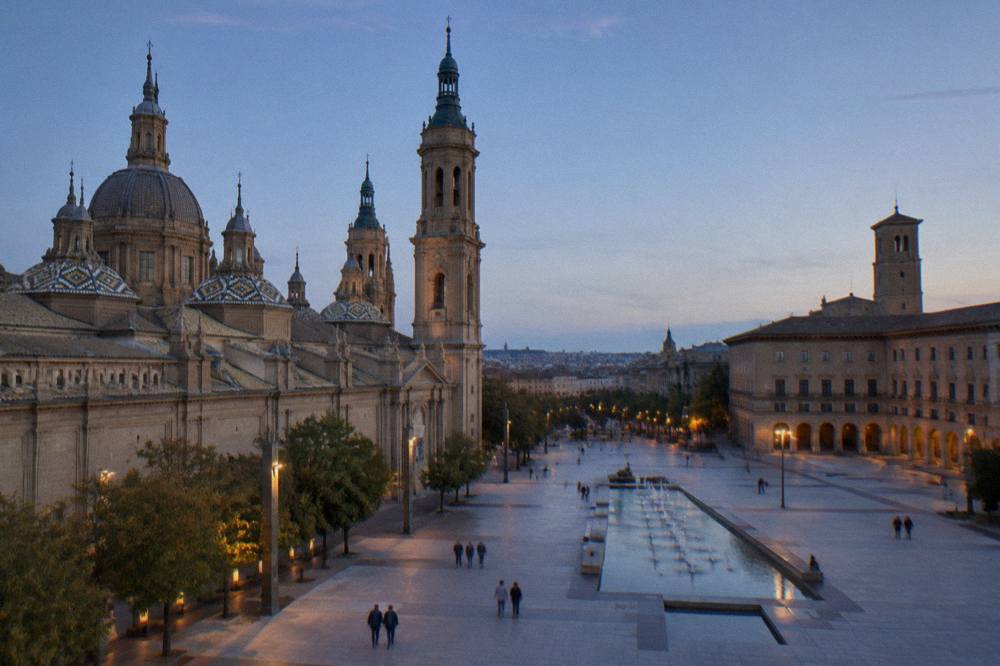
Where To Read Next For Your Zaragoza Trip
The weather is one input among several, and the pages to read next are the best time to visit Zaragoza guide, which weighs climate against festivals and crowds, the Zaragoza travel planning page for the practical frame, the Zaragoza 2 day itinerary and the where to stay in Zaragoza guide for the trip itself, and the Zaragoza food guide for the evenings that this dry, sunny climate makes easy to spend outside.
Start with the best time to visit Zaragoza to weigh climate against festivals and crowds, then the Zaragoza travel planning page for the practical frame. If the averages above have already decided your month, the Zaragoza 2 day itinerary and the where to stay in Zaragoza guide will do the rest of the work, and the Zaragoza food guide will fill the evenings.
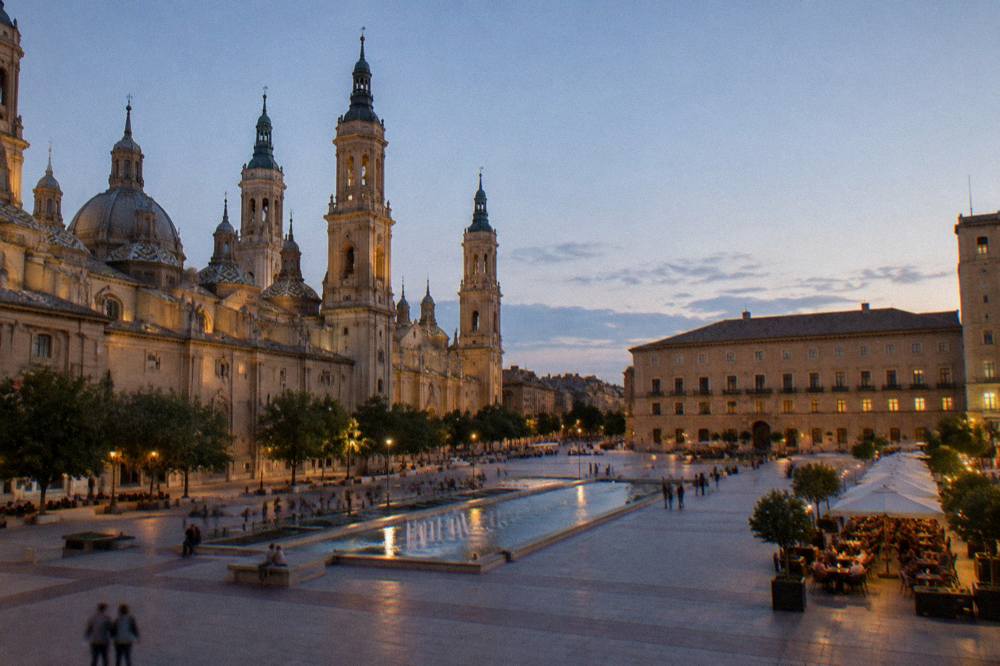
With 2,693 hours of sun, 322 mm of rain and a wind that keeps the sky honest, Zaragoza's climate is one of the most visitor-friendly in Spain, and the AEMET 1981-2010 normals above let you check any month against your own plans before you book a thing.