Parque Del Agua Zaragoza: A Visitor Guide To The Expo-Era Riverside Park
Parque del Agua Luis Bunuel is Zaragoza's largest green space, more than 120 hectares of parkland in the Ranillas meander beside the Expo 2008 site, designed to flood safely when the Ebro rises.
Short answer
Parque del Agua is a free public park of more than 120 hectares in the Ranillas meander of the Ebro, beside the Expo 2008 site in Zaragoza, Spain, with 5 km and 10 km running circuits and the Acuario de Zaragoza on its edge.
Zaragoza, the capital of Aragon on the Ebro, keeps its biggest green statement a short ride north-east of the historic centre: Parque del Agua Luis Bunuel, more than 120 hectares of designed parkland laid out in the Ranillas meander for the International Exposition of 2008 and kept as public space ever since. The park is free to enter, open to the river on one side and to the former Expo site on the other, and it behaves like no ordinary city park, because it was engineered to take floodwater from the Ebro without damage. This guide covers what the park is, how to reach it with the city's buses, trams and bike share, what the adjacent Acuario de Zaragoza charges, and how the climate shapes a visit month by month.
What Is Parque Del Agua In Zaragoza?
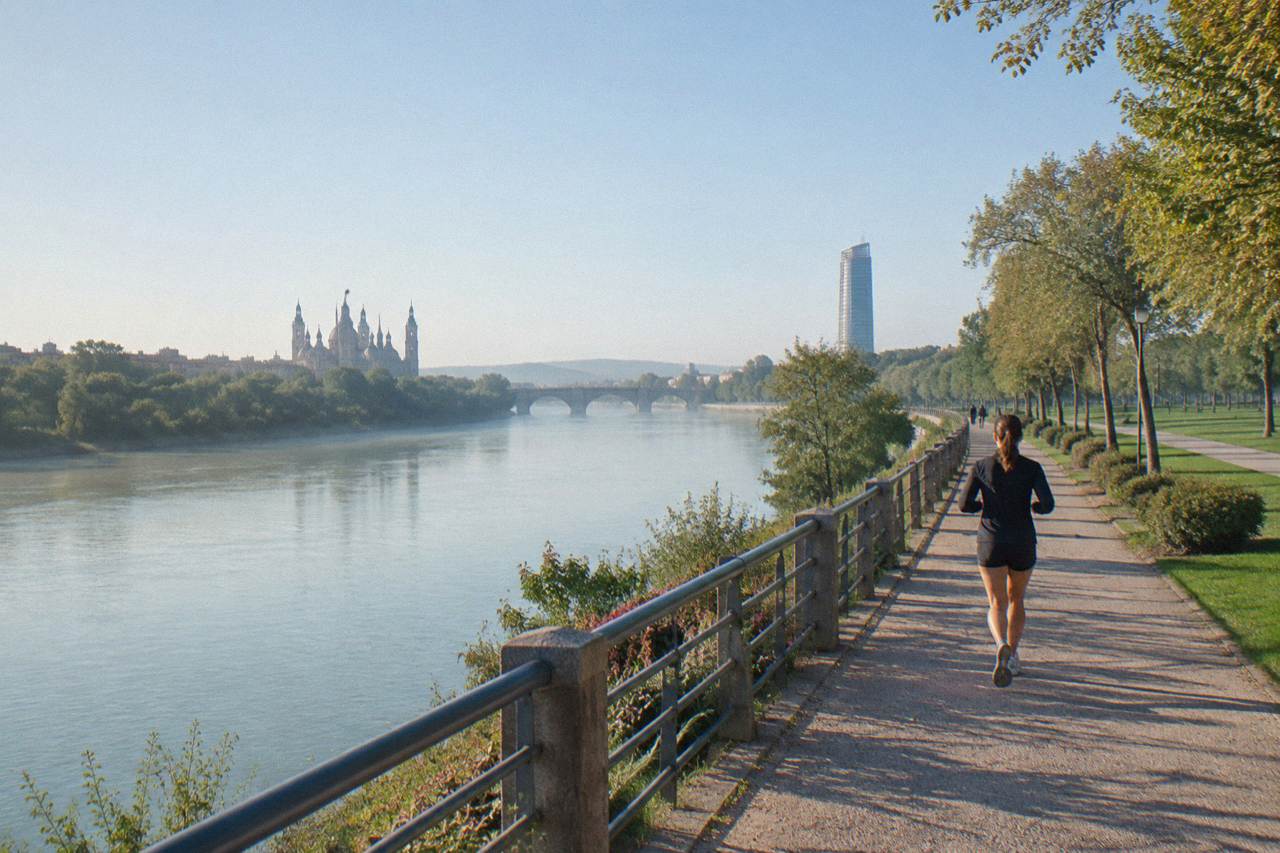
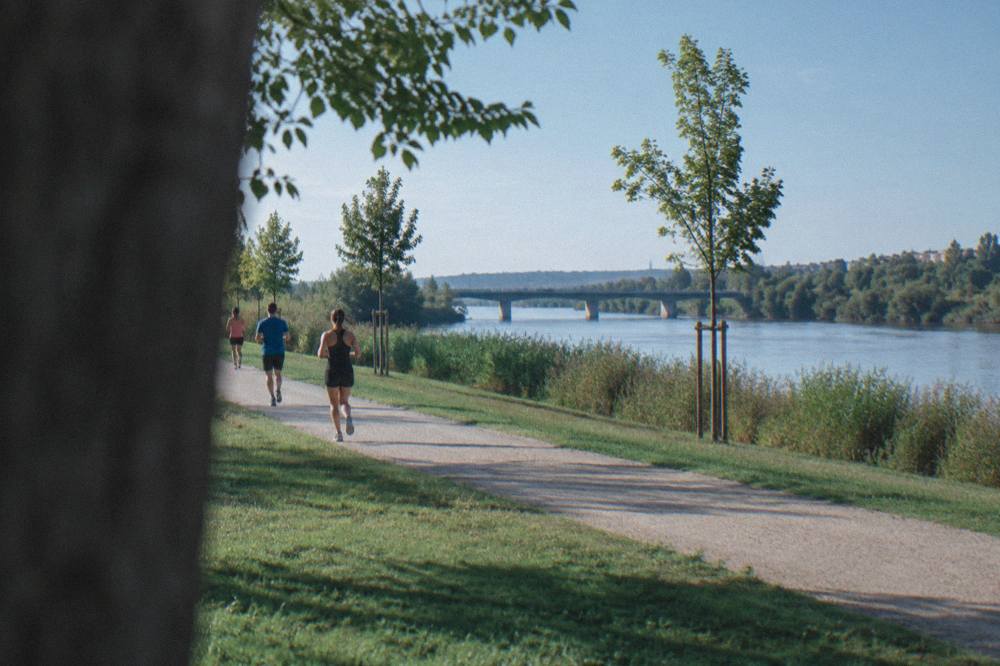
Parque del Agua Luis Bunuel is a public riverside park of more than 120 hectares in the Ranillas meander of the Ebro, created around the International Exposition of 2008 and described by the municipality as the first European green space to hold the Green Globe certification. It was designed to flood safely in big Ebro rises, and it carries two marked running circuits, one of 5 km and one of 10 km, through meadow, woodland and riverbank.
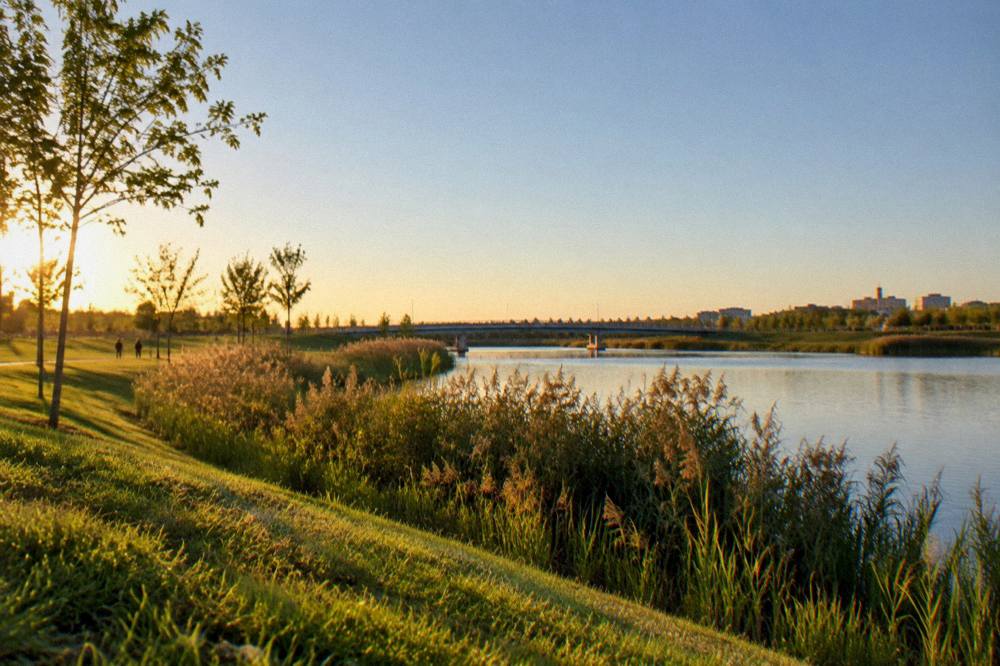
The park's whole logic comes from the river. The Ranillas meander is a natural bend in the Ebro, and rather than walling the water out, the design lets the meadow areas take floodwater when the Ebro rises, which is why so much of the surface is open grassland and reed beds rather than formal gardens. The municipality's own page on the park states this plainly: the park floods safely in big Ebro rises. That makes it a working piece of river infrastructure as much as a place for a walk, and it explains why the planting leans native, with poplars, willows and tamarisk along the water.
The Bunuel in the name honours Luis Bunuel, the Aragon-born filmmaker, and the park sits directly beside the Expo 2008 site, whose theme was water and sustainable development. The two spaces were made for the same event and still read as one continuous landscape: the third-milenio bridge and the former national pavilions on one side, the wilder meander park on the other. Visitors who come for the architecture of the Expo site usually end up walking well into the park without noticing the boundary, and visitors who come for a run pass the tercer milenio bridge and the water tower on their loop.
For orientation, the essentials sit in one table:
| Fact | Detail |
|---|---|
| Full name | Parque del Agua Luis Bunuel |
| Size | More than 120 hectares |
| Location | Ranillas meander of the Ebro, beside the Expo 2008 site |
| Running circuits | 5 km and 10 km |
| Design behaviour | Floods safely in big Ebro rises |
| Recognition | First European green space with the Green Globe |
| Entry cost | Free public park |
How Do You Get To Parque Del Agua?
Urban buses and the tram charge a flat 1.70 EUR single in Zaragoza, falling to 0.55 EUR with the rechargeable Tarjeta Bus, and the same ticket system covers the routes that serve the Actur and Expo districts where the park sits. The Zaragoza Bus Turistico costs 10 EUR for 24 hours of hop-on hop-off across 16 stops, and the Bizi bike share runs a 1 EUR day pass plus 0.50 EUR for each trip under 30 minutes.
The fare side of the journey is the part worth knowing in advance, because it is uniform across the network. The 2026 Avanza fare table lists the single at 1.70 EUR with no transfer, 0.55 EUR with the Tarjeta Bus, and the card itself at 7 EUR, valid on both bus and tram. Night lines are 1.00 EUR. Nothing in the published fares depends on distance, so a cross-city ride to the Ranillas meander costs the same as a two-stop hop.
For the exact lines serving the park entrances, check the Avanza network map before you travel, because urban works in the city have been causing route deviations in several areas and the municipality posts notices when a loop or stop moves. The tram's line runs through the Actur district close to the park's western edge, and the airport is irrelevant here since line 505 runs to the centre, not the north-east.
| Transport option | 2026 fare | Notes |
|---|---|---|
| Urban bus or tram single | 1.70 EUR | No transfer included |
| With Tarjeta Bus | 0.55 EUR | Card costs 7 EUR, valid bus and tram |
| Night bus single | 1.00 EUR | Night lines only |
| Zaragoza Bus Turistico | 10 EUR | 24 hours, 16 stops, 90-minute loop, cash only on the bus |
| Bizi day pass | 1 EUR fixed | Plus 0.50 EUR per trip up to 30 minutes, 50 EUR card deposit held |
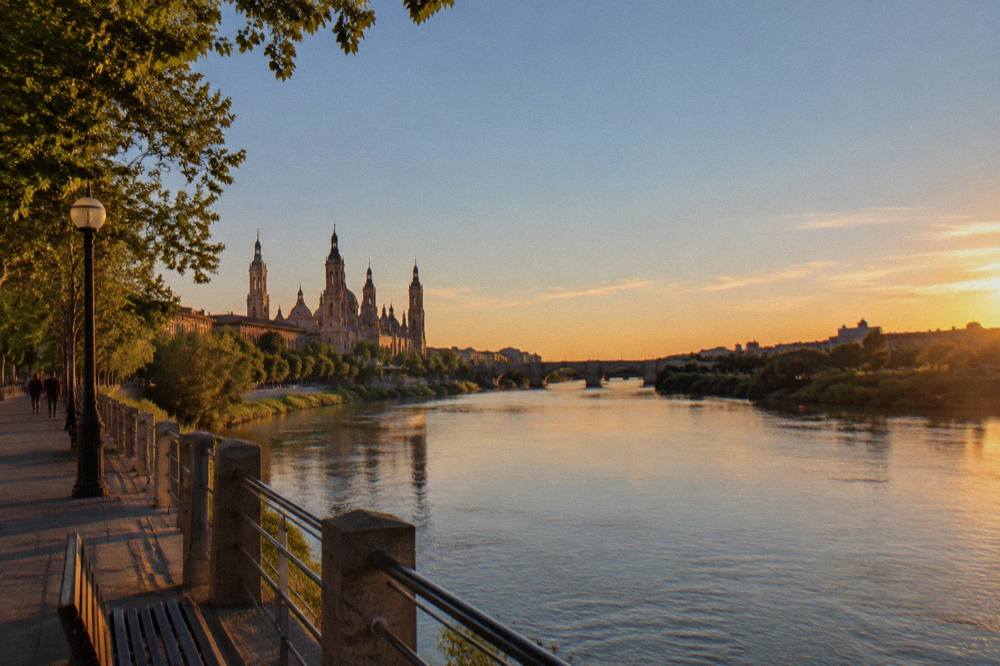
Cycling is arguably the most natural way in. The Bizi share scheme's 2026 tariffs list a day pass at 1 EUR fixed plus 0.50 EUR for the first 30 minutes of each ride, with a 50 EUR deposit held on the card for day, month and single options. The Ebro's banks carry the city's river walk, and the Ebro river walk connects the historic centre to the Expo reaches, so a rider can leave the Puente de Piedra area and reach the meander on riverside paths almost the whole way.
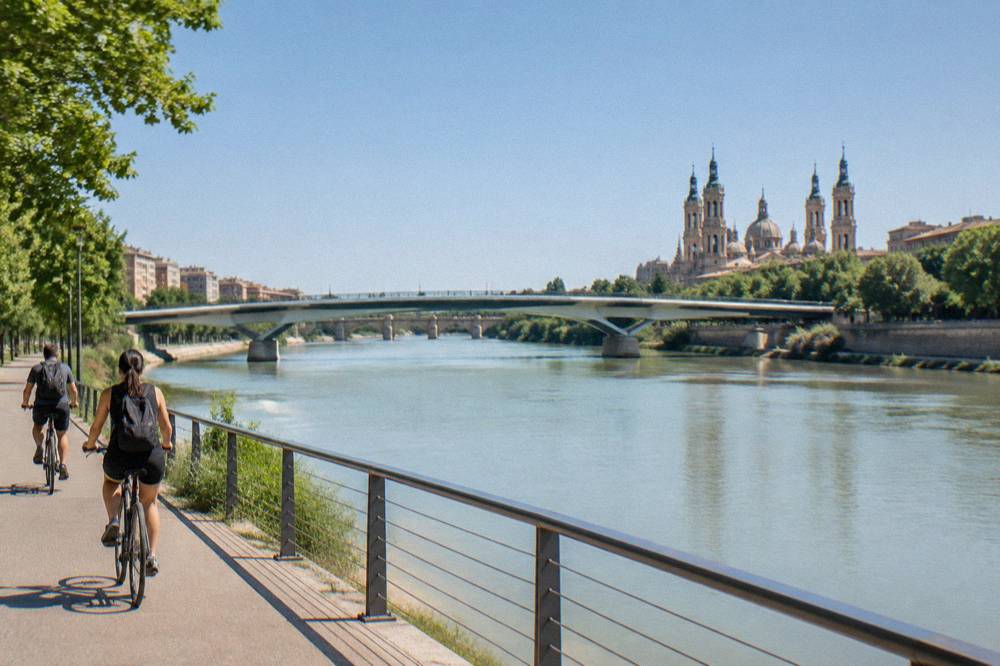
One planning note if you are driving: Zaragoza's low emission zone covers the Casco Historico, with sanctions since 12 December 2025, active Monday to Friday from 08:00 to 20:00, and it requires a DGT environmental label. The park itself sits outside that first-phase zone, but hotel-side parking in the centre may be affected, so check where your accommodation stands before bringing a car in.
What Can You Actually Do In The Park?
The two marked circuits, 5 km and 10 km, are the park's spine, and they carry runners, walkers and cyclists through riverside meadow, woodland belts and stretches with open views across the Ebro to the Expo site. Around them the park offers lawns, shaded picnic spots, birdlife along the reed beds, and direct walking access to the former Expo grounds, the third-milenio bridge and the Acuario de Zaragoza on its edge.
Running is what the park was clearly built for. The municipality publishes the two circuit lengths, 5 km and 10 km, and both are flat, which matters in a city where summer heat is the main constraint on training. Locals treat the shorter loop as a recovery lap and the longer one as the full meander, and the surfaces mix compacted gravel and paved sections. Walkers share the same paths without friction, because the park is wide enough that the two never crowd each other.
The nature is quieter than the architecture but real. The meander's reed beds and backwaters hold waterfowl year round, and the flood-meadow design means the bird population shifts with the river's mood. AEMET's 1981 to 2010 normals for the Zaragoza Aeropuerto station show just 322 mm of rain across a typical year, so the park is dry underfoot far more often than not, with May the wettest month at 44 mm and July and August the driest at 17 mm each.
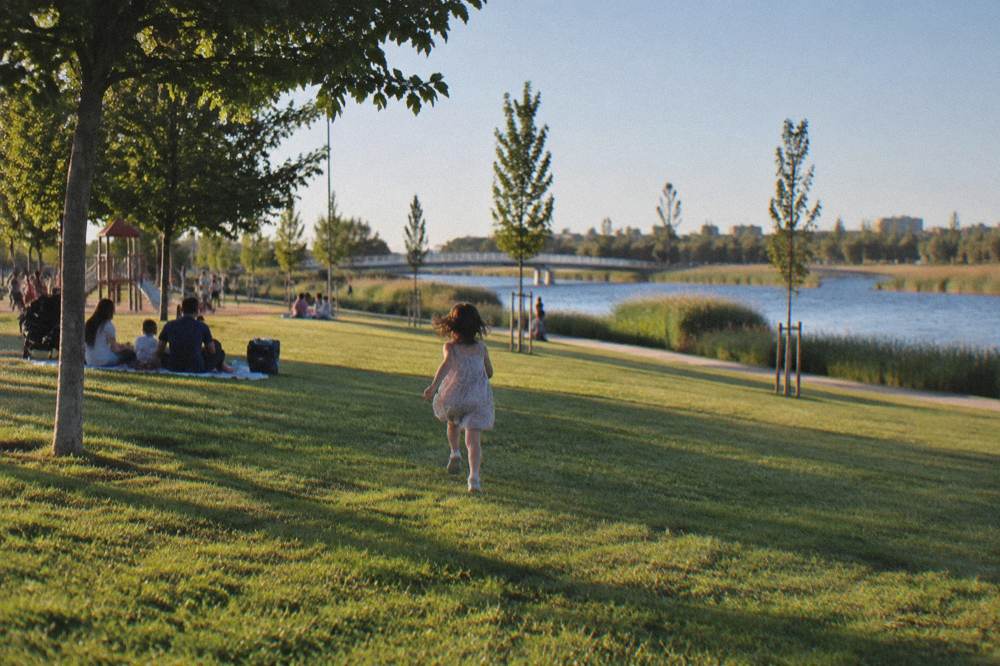
For families the park works as a half day: lawns for games, shade for a picnic, paths that a child can scooter along safely, and the aquarium as the anchor attraction. The things to do in Zaragoza overview places the park among the city's headline outdoor options, and it earns the slot on scale alone, since nothing else in the city offers this much continuous green.
If you want the monuments explained rather than just seen, the Old Town monumental walking tour is the natural pairing: it covers the historic core in one guided walk, rated 4.9 from 15 reviews on its listing, leaving the afternoon free for the park. You can Check availability on the operator's live listing, and the tour's own page carries the current schedule.
What About The Torre Del Agua And The Expo 2008 Site?
The Torre del Agua and the Pabellon Puente are the two landmark structures of the adjacent Expo 2008 site, visible from all over the park, but their current admission prices and opening hours are not published in any verified source, so plan around them as landmarks to view rather than attractions with a known ticket. The Expo site itself, with its bridges and former pavilions, is walkable public space connected to the park by the riverside paths.
The honest position on the tower is that it is easy to admire and hard to book with confidence. If a visit inside either matters to your trip, check the operators' own notices before you go, since access to both has changed repeatedly since 2008.
What is verifiable is the relationship between the two landscapes. The Expo 2008 site's water theme is the reason the park exists in its present form, and the third-milenio bridge ties the meander to the neighbourhoods on the far bank. The Torre del Agua page on this site covers the tower's structure and Expo history in detail, and the Puente de Piedra guide covers the older, lion-guarded crossing that anchors the city's river identity.
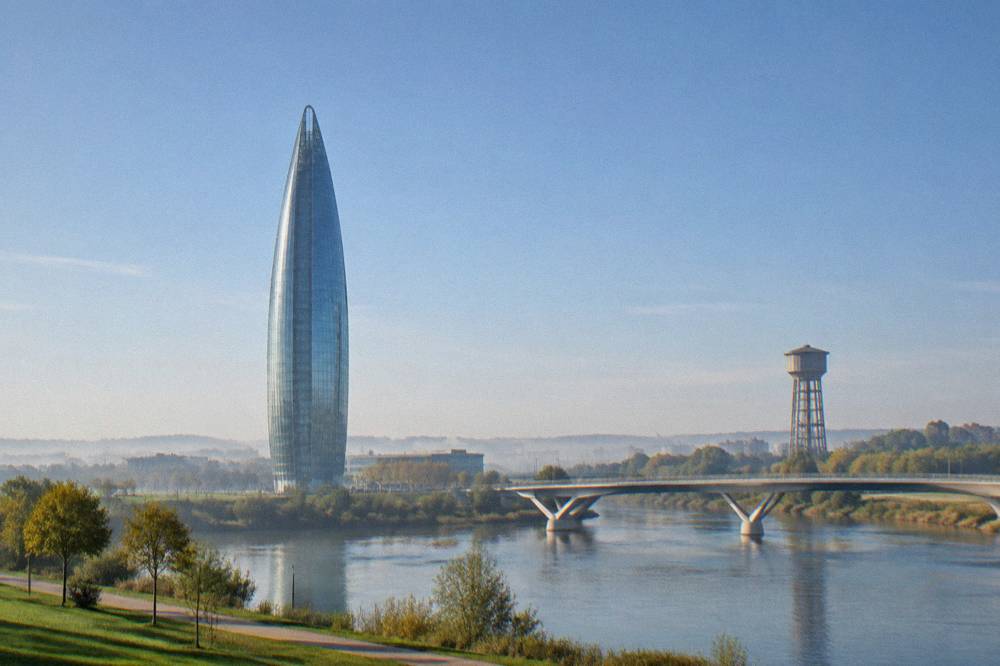
A practical route for a full day in the north-east of the city: start with the tower and the Expo bridges, walk the park's shorter circuit, cross to the aquarium for the afternoon, and finish on the riverbank as the sun drops behind the water tower. The distances are all walkable, and the park's design means you can shorten any leg without losing the thread.
What Does The Acuario De Zaragoza Cost?
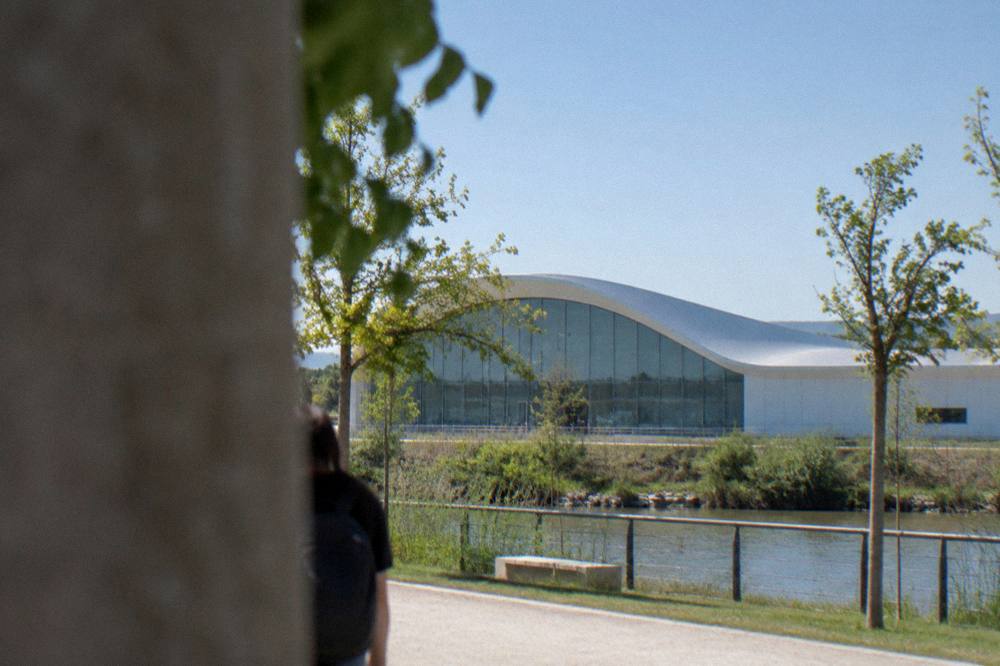
The Acuario de Zaragoza, which calls itself the largest river aquarium in Europe with more than 5,000 specimens, charges 20 EUR general admission, 14 EUR for children aged 4 to 14 and for seniors, free for ages 0 to 3, and an online family pack of 55 EUR covering two adults and two children. Its daily opening hours are published as an image calendar rather than a text timetable, so check the aquarium's own calendar before setting out.
The aquarium sits on the park's edge and is the one part of the area with a real ticket. The pricing structure rewards booking as a family, since the 55 EUR pack undercuts the sum of two adults and two children by a clear margin, and the child rate applies from age 4, which matters for families with a toddler and a school-age child mixing free and paid entries. More of these guides are collected on Zaragoza Travel Guide.
| Acuario de Zaragoza ticket | Price |
|---|---|
| General | 20 EUR |
| Child 4 to 14 | 14 EUR |
| Senior | 14 EUR |
| Ages 0 to 3 | Free |
| Online family pack, 2 adults and 2 children | 55 EUR |
The river-aquarium concept fits the park's identity. Rather than the usual sharks and tropical reefs, the collection follows river life, which pairs naturally with a park built on a meander and a city whose history is a history of the Ebro. The aquarium's own site carries the September to December 2026 opening calendar as an image, so the days it opens are checkable but not quotable as hours here.
When Is The Best Time Of Year To Visit The Park?
AEMET's 1981 to 2010 normals for the Zaragoza Aeropuerto station show the park at its most inviting in May and October, with mean maxima of 24.1 C and 21.4 C and only 44 mm and 36 mm of rain, while July and August push the mean maximum to 32.4 C and 31.7 C with just 17 mm of rain each, making summer mornings and evenings the workable window. Winter days average a mean maximum of 10.5 C in January, cold but dry and often bright.
The full monthly picture, from the only window the station publishes:
| Month | Mean max C | Mean C | Mean min C | Rain mm | Sun hours |
|---|---|---|---|---|---|
| Jan | 10.5 | 6.6 | 2.7 | 21 | 131 |
| Feb | 13.1 | 8.2 | 3.3 | 22 | 165 |
| Mar | 17.3 | 11.6 | 5.8 | 19 | 217 |
| Apr | 19.6 | 13.8 | 7.9 | 39 | 226 |
| May | 24.1 | 18.0 | 11.8 | 44 | 274 |
| Jun | 29.3 | 22.6 | 15.8 | 26 | 307 |
| Jul | 32.4 | 25.3 | 18.3 | 17 | 348 |
| Aug | 31.7 | 25.0 | 18.3 | 17 | 315 |
| Sep | 27.1 | 21.2 | 15.2 | 30 | 243 |
| Oct | 21.4 | 16.2 | 11.0 | 36 | 195 |
| Nov | 14.8 | 10.6 | 6.3 | 30 | 148 |
| Dec | 10.8 | 7.0 | 3.2 | 21 | 124 |
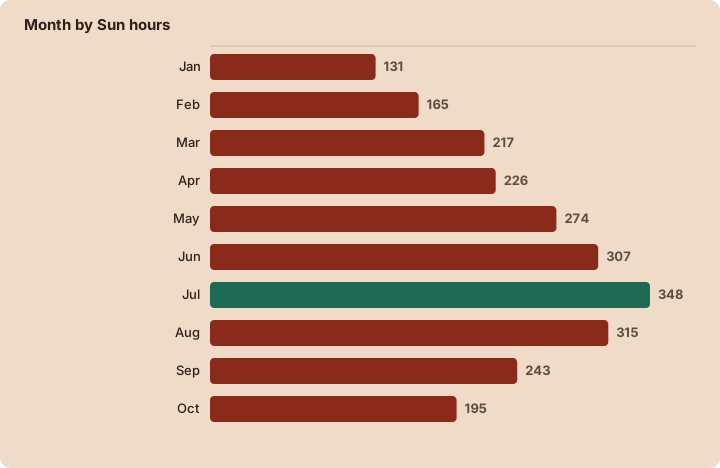
Two readings of that table matter for a park visit. First, the sun hours: July averages 348 hours and June 307, against 124 in December, so summer gives long evenings on the riverbank but at the cost of a mean maximum above 32 C. Second, the rain is modest in every month, 322 mm across the whole year, so a rained-off visit is genuinely unlikely, though May's 44 mm and October's 36 mm are the months most likely to deliver a shower.
The best time to visit Zaragoza guide works through the same data for the city as a whole, and the park follows the city's logic: shoulder months for comfort, early and late hours in summer, and no need to plan around rain the way a coastal visitor might expect. One wind note, the cierzo, the cold dry north-west wind of the Ebro valley, can make a winter riverside walk feel sharper than the thermometer suggests, though no published speed or frequency figure exists for it.
Can You Combine The Park With The Rest Of Zaragoza In One Day?
Yes, comfortably, because the park and the historic core sit on the same river and the tram-and-bus fare of 1.70 EUR, or 0.55 EUR with the Tarjeta Bus, links them in one flat-fare network. A realistic day pairs a morning in the Casco Historico around the Basilica del Pilar and La Seo, an afternoon in the park and aquarium, and an evening tapas stop back in the centre, all without a car.
The pairing works because Zaragoza's sights are concentrated. The Basilica del Pilar and its tower viewpoint, La Seo, the Aljaferia and the Roman Caesaraugusta museums all sit within the historic core, and entering the basilica itself is free, with the tower viewpoint at 6 EUR for an adult. A morning covering those leaves the full afternoon for the meander.
For visitors who prefer a guide's structure, the free monumental tour of Zaragoza, a tip-based free walk rated 4.65 from 64 reviews, covers the headline monuments at no fixed price, and the Aljaferia ticket with guided visit, from 24.76 per person and rated 4.7 from 82 reviews, handles the palace that most visitors otherwise under-appreciate. The Aljaferia charges 7 EUR general and 9 EUR guided at the desk, and it opens daily at 10:00 with last access 45 minutes before close, per the municipal October timetable.
| Sight | Verified entry | Verified hours, October |
|---|---|---|
| Basilica del Pilar, temple | Free | Main altar zone Mon-Sat 7:30-13:30 and 16:30-20:15 |
| Pilar tower viewpoint | 6 EUR adult | Mon-Thu 10:30-14:30 and 16:00-20:00, Fri-Sun 10:00-20:00 |
| Aljaferia | 7 EUR general, 9 EUR guided | Daily 10:00-18:00 |
| La Seo, includes three museums | 10 EUR general | Mon-Sat 10:00-14:30 and 16:00-20:00 |
| Caesaraugusta four-museum bono | 7 EUR | Tue-Sat 10:00-14:00 and 17:00-21:00 |
| IAACC Pablo Serrano | Free | Tue-Sat 10-14 and 17-21, Sun 10-14 |
Note one gap in that table: the Museo de Zaragoza's central building is closed for Ministry of Culture works with no reopening date, and its Etnologia and Ceramica sites in Parque Grande are also shut at present, so the Parque Grande area is currently a park visit rather than a museum visit. The Aljaferia palace and the Roman museums carry the museum weight instead.
Is Parque Del Agua Worth The Trip From The Centre?
For most visitors, yes, because the park offers something the historic core cannot: more than 120 hectares of open river landscape, flat 5 km and 10 km circuits, and the Expo 2008 architecture all in one free public space, reachable on a 1.70 EUR flat fare. Visitors short on time should choose between it and other sights by interest, since the park rewards a half day rather than a quick look, and its best hours in summer are early and late.
The honest trade-off is distance against atmosphere. The Casco Historico delivers density, the park delivers breadth, and the two together are the full Zaragoza: a Mudéjar and baroque core on one bank, an engineered river landscape on the other. If your stay is a single day, the one day itinerary keeps the park as an optional evening walk, and if you have two or three days, the two day and three day versions give the meander its own block.
For runners and cyclists the park is not optional at all, it is the city's main training ground, and for families it is the easiest large-space day out in Zaragoza. Birders and photographers get the reed beds and the tower at dawn and dusk, and anyone with an interest in landscape design gets a rare case study: a park that welcomes its river's floods instead of fighting them, certified with the Green Globe as the first European green space to hold it.
Common Questions About Parque Del Agua
Is Parque del Agua free to enter?
Yes, the park itself is a free public space of more than 120 hectares, open like any city park. The charges start only at the adjacent Acuario de Zaragoza, at 20 EUR general admission, and at any tower or bridge-pavilion access, for which no verified prices are published.
How big is Parque del Agua in Zaragoza?
The municipality's own page states the park covers more than 120 hectares in the Ranillas meander of the Ebro, laid out beside the Expo 2008 site, with two marked running circuits of 5 km and 10 km.
Can you walk from Parque del Agua to the Expo 2008 site?
Yes, the two spaces are continuous. The park sits directly beside the former Expo grounds, and riverside paths connect the meadow to the third-milenio bridge and the landmark towers without any barrier between them.
Does Parque del Agua flood?
It is designed to. The park takes floodwater in big Ebro rises by design, which is why much of it is open meadow and reed bed rather than formal garden, and the municipality describes it as flooding safely when the river is high.
How much is the aquarium at Parque del Agua?
The Acuario de Zaragoza charges 20 EUR general, 14 EUR for children aged 4 to 14 and seniors, free for ages 0 to 3, and 55 EUR for an online family pack of two adults and two children. Its opening calendar is published as an image, so check the aquarium's own calendar for the day you plan to visit.
When is the best time of day to visit in summer?
Early morning or evening. AEMET's 1981 to 2010 normals for Zaragoza Aeropuerto put the July mean maximum at 32.4 C with 348 hours of sun, so the comfortable hours for the open meadow are before mid-morning and after about 19:00.
A final planning thought: the park is the one part of Zaragoza where the river is the main sight, so let the Ebro set your pace, take the flat fare, keep a Bizi day pass in mind, and give the meander the long half day it deserves.