Zaragoza In Two Days
Two days cover the Basílica del Pilar, La Seo, the Aljafería and the Roman remains of Caesaraugusta, with time left for tapas and an evening walk along the Ebro.
Short answer
Two days is enough for Zaragoza's core: Day One for Plaza del Pilar, La Seo, the Roman forum and El Tubo tapas; Day Two for the Aljafería, the river walk and the Caesaraugusta museums.
Zaragoza, the capital of Aragon on the Ebro in north-eastern Spain, is a city that rewards exactly two unhurried days. The monumental core is compact: the Basílica del Pilar, La Seo, the Aljafería and the Roman remains of Caesaraugusta all sit within a walkable band along the river, so a well-planned 48 hours covers the essentials without the rush that a single day imposes. This itinerary spreads the sights across two balanced days, uses only verified ticket prices and transport fares, and leaves room for the thing Zaragoza does best, which is long evenings over tapas.
Why Is Two Days The Right Amount Of Time For Zaragoza?
Two days is the sweet spot because Zaragoza's sights split naturally into two clusters: the riverside ecclesiastical core of the Basílica del Pilar, La Seo and the Roman forum on Day One, and the Aljafería palace plus the remaining Caesaraugusta museums on Day Two. The high-speed connection from Madrid or Barcelona takes about 1.5 to 2 hours, so a two-day stay absorbs the journey comfortably and still leaves an evening for tapas rather than a frantic checklist sprint.
The answer to how many days you need in Zaragoza depends on depth, but two days is where the city stops feeling compressed. One day works, and the one-day itinerary on this site proves it, yet it forces a choice between the Aljafería and the Roman museums, and it leaves nothing for the Ebro river walk at sunset. Three days, covered in the three-day itinerary, opens the door to day trips, but the city itself is essentially complete after two.
The practical logic is geographic. The old town clusters around Plaza del Pilar: the basilica, the cathedral of La Seo, the Roman forum museum and the Puente de Piedra all stand within a few minutes of one another. The Aljafería sits a tram ride or a longer walk to the west, and pairing it with the Roman theatre and baths museums gives Day Two its own coherent arc. Splitting the city this way means you never backtrack, and each day ends near the tapas bars of El Tubo.
One planning note that matters in 2026: the Museo de Zaragoza's central building is closed for Ministry of Culture works with no reopening date, so it appears nowhere in this itinerary. The Museo Goya, by contrast, reopens on 9 October 2026, which makes it a genuine Day Two option for anyone visiting after that date, though its admission price has not been published and should be checked on the museum's own page before you go.
What Should Day One In Zaragoza Look Like?
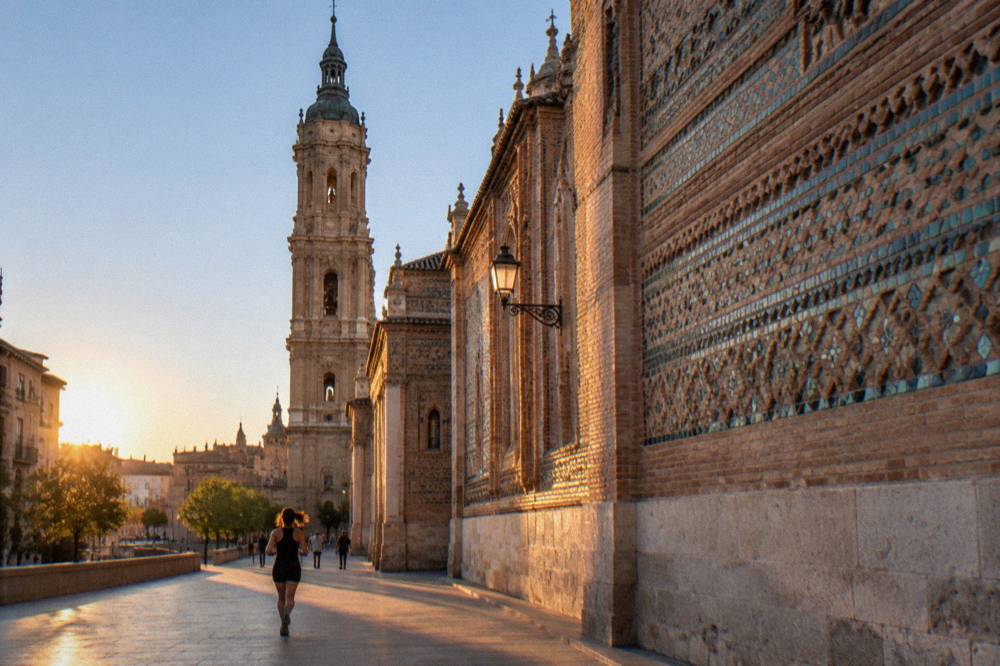
Day One belongs to the riverside core: start at the Basílica del Pilar, whose interior is free to enter, climb the Torre Mirador viewpoint for EUR 6, cross to La Seo cathedral and its Museo de Tapices for EUR 10, then descend into the Roman forum museum for EUR 4 before finishing the evening with tapas in El Tubo. Every sight on this list sits within the old town, so the whole day runs on foot.
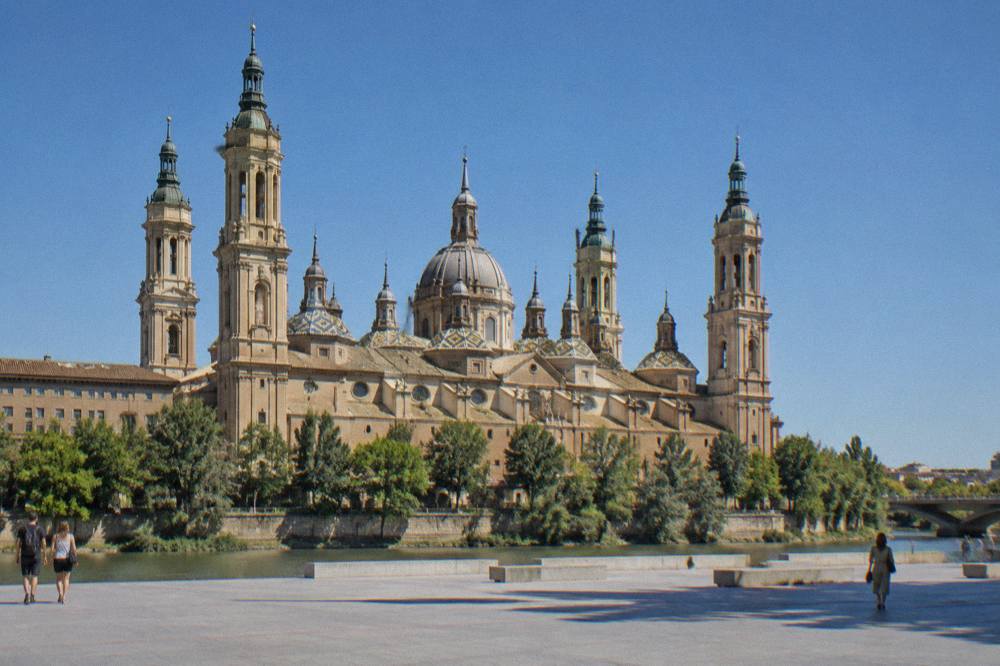
The Basílica del Pilar opens early: the municipal monument timetable lists the Holy Chapel zone from 8:00 to 20:30 and the main altar zone from 7:30 on weekdays. Entering the temple itself is free, and the October timetable confirms it, so the basilica costs nothing unless you add the tower. The Torre Mirador viewpoint charges EUR 6 for an adult, EUR 5 for over 65s and residents, EUR 4 for ages 13 to 18, students and groups of 20 or more, and nothing for under 12s. Hours run Monday to Thursday 10:30 to 14:30 and 16:00 to 20:00, Friday to Sunday 10:00 to 20:00, with last access 30 minutes before closing.
One thing to hold in mind rather than on the page: the basilica's dome, the Regina Patriarcharum, has been under restoration since an agreement signed on 23 January 2026 funded with EUR 600,000 by Fundación Ibercaja. Completion is not confirmed, so treat any scaffolding you see as current rather than permanent, and do not expect a finished dome on any particular date.
From the Pilar it is a short walk along the arcades to La Seo, the cathedral of San Salvador, where a general ticket at EUR 10 covers the cathedral, the Museo de Tapices, the Museo Pilarista and the Rosario de Cristal. Over 65s pay EUR 9, students and 13 to 18 year olds EUR 7, under 12s enter free, and the general ticket combined with the Pilar tower costs EUR 12. Aragon residents get free entry on the 6th, 12th, 23rd and 27th of each month. La Seo opens Monday to Saturday 10:00 to 14:30 and 16:00 to 20:00, Sundays from 10:00 to 12:00 and again from 16:00. The Museo de Tapices alone justifies the ticket: it holds one of the finest Gothic textile collections anywhere, and the ticket's cross-inclusion with the Museo Pilarista makes the EUR 10 one of the better values in the city.
Afternoon belongs to the Romans. The forum museum of Caesaraugusta sits directly beneath the Plaza del Pilar flank and charges EUR 4, with the four-museum bono at EUR 7 covering the forum, the river port, the baths and the theatre. All four open Tuesday to Saturday 10:00 to 14:00 and 17:00 to 21:00, and Sunday and holidays 10:00 to 14:30. If you only do one, make it the forum, because the excavated curia and sewer system sit metres from where you will have lunch.
A guided morning saves time if you would rather not read every panel. The Monumental Walking Tour in Old Town of Zaragoza, a 2.5-hour guided walk rated 4.9 from 15 reviews, covers the old district with a guide and pairs naturally with this Day One arc; it has its own page at Monumental Walking Tour in Old Town of Zaragoza, and you can Check availability before you commit.
Where Should You Eat And Explore On Day One Evening?
El Tubo, the narrow tapas lane district behind the Teatro Principal, is the default evening plan, and a guided tapas walk turns it into a plan with no guesswork: the 3-Hour Evening Tapas Walking Tour in the Old Town runs from USD 106.92 per person and is rated 4.9 from 62 reviews. Otherwise, pick bars by the crowd on the street, order ternasco and migas where they appear on the counter, and let the evening run long, which is what Aragonese evenings are for.
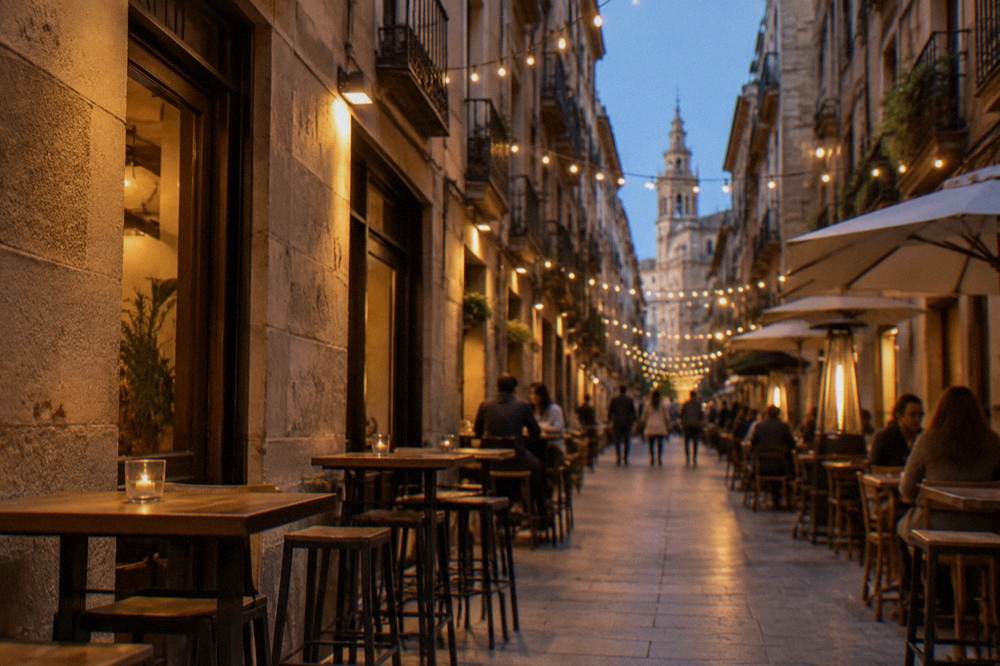
The El Tubo district is the classic finish to Day One, and the site's dedicated tapas crawl itinerary breaks the area down street by street. What two days in Zaragoza demands is restraint at lunch so the evening has room: the region's signature dishes, ternasco de Aragón (roast lamb) and migas aragonesas (fried breadcrumbs with grapes and pork), are heavy, and the tapas counters will add more. The site's food pages cover what food Zaragoza is famous for in detail if you want to plan the eating as carefully as the sightseeing.
For the evening itself, a guided walk does the choosing for you. The Evening Tapas Walking Tour in the Old Town costs from USD 106.92 per person, runs 3 hours, and carries a 4.9 rating from 62 reviews; the Midday Market and Tapas Tour is the same price with a perfect 5 from 9 reviews if you would rather move the food earlier and keep the night free for the after-dark itinerary.
If you prefer to eat without a guide, end the night on the Puente de Piedra, the stone bridge whose current structure was built from 1401 and opened in 1440, guarded by four bronze lions added in 1991. The bridge view of the illuminated Pilar is the city's signature image, and it costs nothing.
What Should Day Two In Zaragoza Look Like?
Day Two goes west and then back along the river: spend the morning at the Aljafería palace, EUR 7 general admission or EUR 9 with a guided tour, open daily 10:00 to 18:00 in October, then return east for the Roman theatre and baths museums, both covered by the EUR 7 four-museum bono, and close the day with the Ebro river walk and the Parque del Agua if your legs allow.
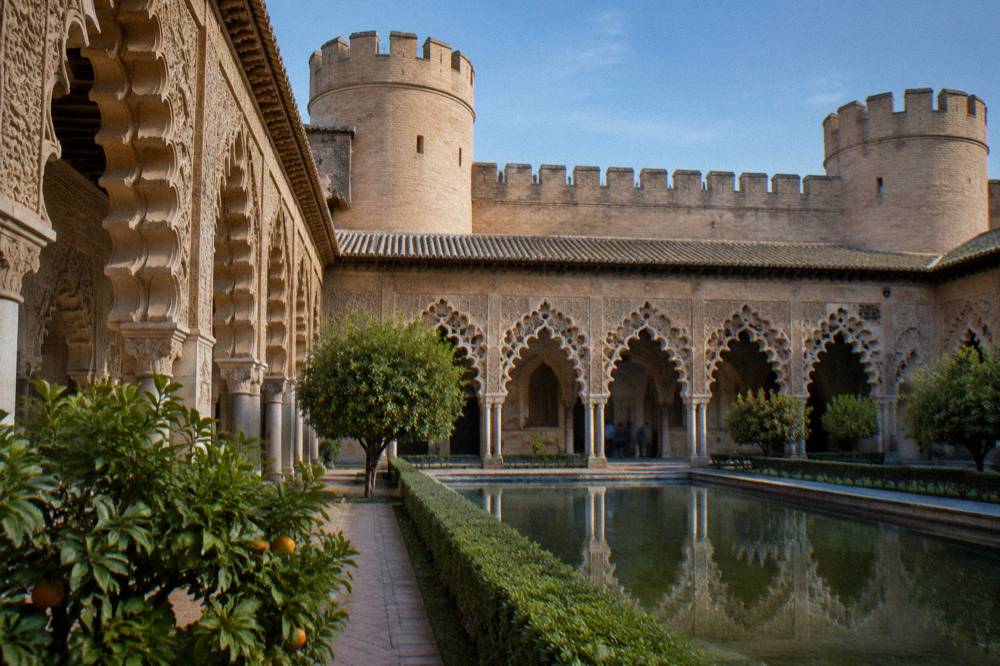
The Aljafería is the finest Islamic-era palace in Spain outside Andalusia and the single unmissable sight of Day Two. The October timetable lists daily opening 10:00 to 18:00, general admission EUR 7, guided visits EUR 9, and a reduced EUR 4 rate if you show a tourist bus ticket, with EUR 2 for students, over 65s and Carnet Joven holders and free entry for under 12s. Entry is free on the first and third Sunday and Monday of each month, and last access is 45 minutes before closing. Spanish-language guided tours run at 10:30, 12:30, 13:30, 15:00 and 16:00, with an exhibition tour at 11:30. If your Spanish is not strong, the Aljafería Palace: Ticket and Guided Visit product, from USD 24.76 and rated 4.7 from 82 reviews, bundles the entry with a guided visit.
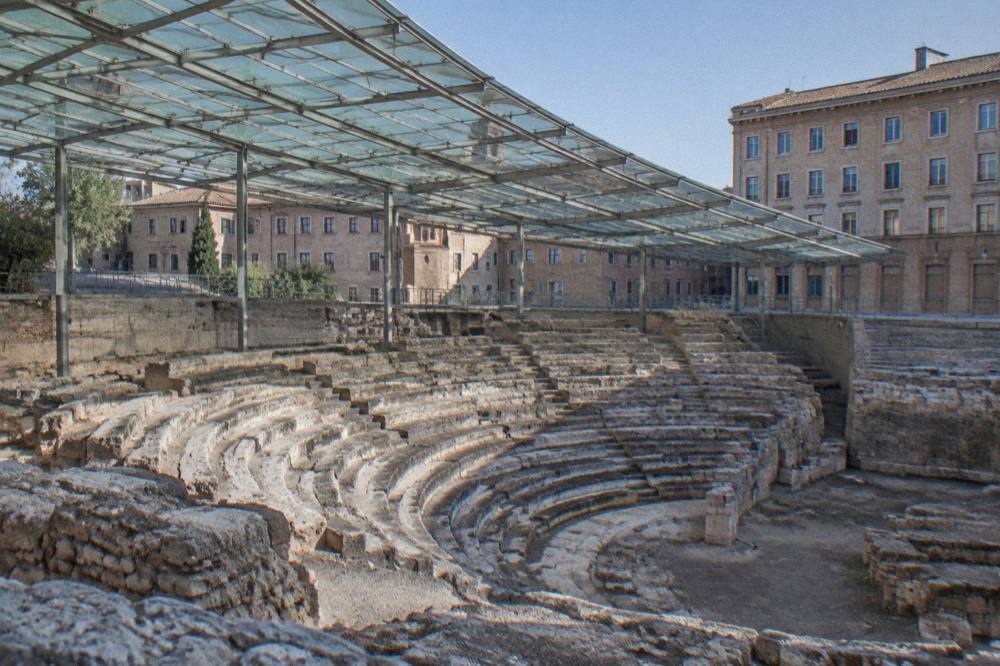
The afternoon completes the Roman set. The theatre museum and the baths museum, both part of the Caesaraugusta circuit, use the same hours as the forum and are covered by the EUR 7 bono if you did not buy it on Day One. The theatre is the more atmospheric of the two: its tiered seating sits below modern street level, and the museum's excavation records give the place a documentary weight the smaller museums lack. The site's Roman Caesaraugusta guide covers all four museums in depth.
Late afternoon belongs to the river. The Ebro walk, covered in the site's dedicated riverside guide, runs along both banks, and the Parque del Agua Luis Buñuel, more than 120 hectares in the Ranillas meander beside the Expo 2008 site, holds two running circuits of 5 and 10 kilometres if you want a proper stretch of the legs. The park was the first European green space certified with the Green Globe, and it floods safely in big Ebro rises, which is a design feature rather than a flaw.
How Much Does Two Days In Zaragoza Cost?
Two days costs roughly EUR 30 to 40 per person in sightseeing tickets if you take the Pilar tower, La Seo, the Aljafería and the four-museum Roman bono, plus EUR 3.40 per day for two tram or bus rides at EUR 1.70 each. There is no tourist tax in Aragon, so nothing is added to the hotel bill. Food is the open variable: counter tapas run cheaper than seated restaurants.
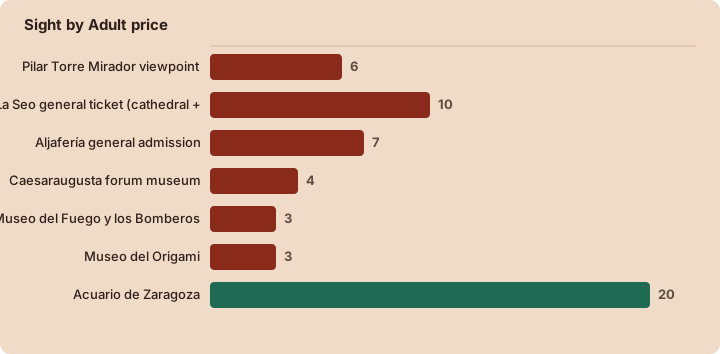
The ticket arithmetic is transparent because the municipal monument timetable publishes every price. Here is the full sightseeing ledger for this itinerary:
| Sight | Adult price | Reduced / free conditions |
|---|---|---|
| Basílica del Pilar, temple entry | Free | Always free |
| Pilar Torre Mirador viewpoint | EUR 6 | EUR 5 over 65 / residents; EUR 4 ages 13-18, students, groups 20+; free under 12 |
| La Seo general ticket (cathedral + Museo de Tapices + Museo Pilarista + Rosario de Cristal) | EUR 10 | EUR 9 over 65; EUR 7 students / 13-18; free under 12; EUR 12 with tower |
| Aljafería general admission | EUR 7 | EUR 9 guided; EUR 4 with tourist bus ticket; EUR 2 students / over 65; free under 12; free 1st and 3rd Sunday and Monday |
| Caesaraugusta forum museum | EUR 4 | EUR 7 four-museum bono (EUR 5 reduced); free 1st Sunday of the month |
| Museo del Fuego y los Bomberos | EUR 3 | Free 1st Sunday |
| Museo del Origami | EUR 3 | Free 1st Tuesday and Sunday |
| Acuario de Zaragoza | EUR 20 | EUR 14 child 4-14 and senior; 0-3 free; family pack EUR 55 online |
Transport is equally cheap. The 2026 Avanza fare table lists the urban bus and tram single at EUR 1.70, or EUR 0.55 with the Tarjeta Bus, which itself costs EUR 7 and works on both bus and tram. Night lines cost EUR 1.00.
| Transport | Price | Notes |
|---|---|---|
| Bus or tram single | EUR 1.70 | No transfer, per the 2026 fare table |
| Tarjeta Bus single | EUR 0.55 | Card costs EUR 7, valid on bus and tram |
| Night bus single | EUR 1.00 | Night lines |
| Airport bus, line 505 | EUR 4.65 | EUR 2.25 with Lazo card, 25-35 minutes, timed to flights |
| Tourist bus, 24-hour hop-on hop-off | EUR 10 | 16 stops, 90-minute loop, cash only on the bus |
| Bizi bike share day pass | EUR 1 + EUR 0.50 per trip | First 30 minutes per trip, EUR 50 card deposit held |
Two free-entry rules stretch a budget further. The Caesaraugusta museums are free on the first Sunday of the month, and the Aljafería is free on the first and third Sunday and Monday, so a visit that lands on the right weekend can strip EUR 14 out of the ledger. The IAACC Pablo Serrano, the Torreón de la Zuda and the Centro de Historias are all free every day they open, and the Zuda's fifth-floor "mirador de las cuatro culturas" viewpoint costs nothing.
What If It Rains During Your Two Days In Zaragoza?
Rain is a modest risk in Zaragoza, and the AEMET 1981 to 2010 normals for the Zaragoza Aeropuerto station put the wettest month at May with 44 mm and the driest at July and August with 17 mm each, so a summer two-day visit is unlikely to need a wet-weather plan at all. If rain does arrive, the Roman museums, the Museo de Tapices inside La Seo, the origami museum and the aquarium absorb a full day indoors without exhausting the list.
| Month | Mean max C | Mean min C | Rain mm | Sun hours |
|---|---|---|---|---|
| January | 10.5 | 2.7 | 21 | 131 |
| April | 19.6 | 7.9 | 39 | 226 |
| July | 32.4 | 18.3 | 17 | 348 |
| October | 21.4 | 11.0 | 36 | 195 |
The figures above are the 1981 to 2010 averages for the Zaragoza Aeropuerto station, the only window the station page publishes, and they describe a dry continental climate: 322 mm of rain across the whole year, concentrated in spring and autumn. October, the month of the Fiestas del Pilar, averages 36 mm, so festival visitors should pack for the possibility rather than the certainty of rain. The site's weather guide and best time to visit guide carry the full month-by-month table.
For a rained-off afternoon, the rainy day itinerary lists the indoor options in order, and the Acuario de Zaragoza, which markets itself as the largest river aquarium in Europe with more than 5,000 specimens, is the heaviest hitter among them at EUR 20 general admission. Its opening calendar is published as an image, so check the aquarium's own site for the day's hours rather than assuming them.
Should You Add A Day Trip Or Keep The Two Days In The City?
Keep the two days in the city unless your second day falls on a Monday, when several museums close and a half-day escape starts to make sense; the strong day-trip options from Zaragoza, including Monasterio de Piedra, Albarracín and the Loarre castle area, each deserve a full day of their own and belong to a three-day plan, not a compressed two-day one.
The honest answer is that Zaragoza's own sights fill two days exactly. If you are extending, the three-day itinerary shows where the third day goes, and the dedicated day-trip pages, including Monasterio de Piedra, Albarracín and Teruel, cover the escapes properly. Arriving from the capitals is easy either way: the high-speed run from Madrid or Barcelona takes about 1.5 to 2 hours, and the day trip from Madrid and day trip from Barcelona pages explain how even a one-day version works, though this itinerary assumes you are staying two nights.
One October exception deserves its own paragraph. The Fiestas del Pilar run from 10 to 18 October 2026, with the Ofrenda de Flores on 12 October, when the municipal programme lists 994 groups and roughly 99,980 registered participants walking the route from Paseo de la Independencia to Plaza del Pilar. If your two days overlap the festival, scrap this itinerary's pacing for the festival days: the flower offering, the jota contests and the concerts are unrepeatable, and the monuments can wait until the crowds thin.
Where Should You Stay For A Two-Day Visit To Zaragoza?
Stay in or beside the Casco Histórico, the old town, because every Day One sight and most Day Two sights sit inside it or a short tram ride away, and the tapas district is then a walk rather than a journey at the end of the day; the Centro and Paseo de la Independencia area immediately south is the quieter alternative with the same walking access.
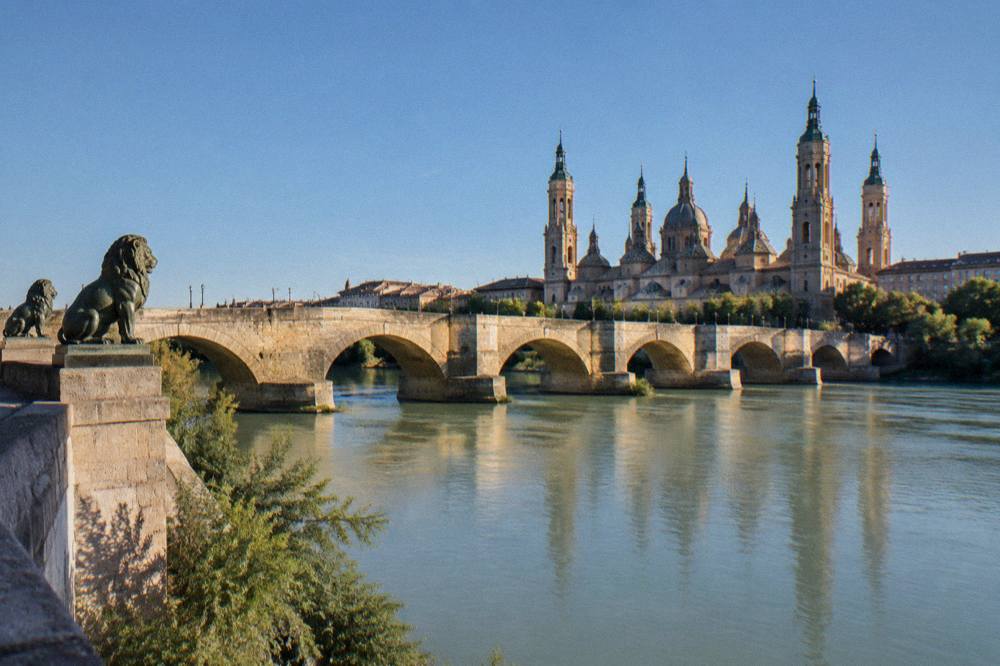
Location matters more than star rating on a two-day visit, because the itinerary's whole design depends on walking. The old town puts the Pilar, La Seo, the forum and El Tubo at your door, and the tram line to the Aljafería runs from the centre. The site's where to stay guide compares the districts in detail; for this itinerary, the choice between the Casco Histórico and the Centro area is a choice between atmosphere and sleep, since festival weekends in the old town are loud by design.
One practical note for drivers: Zaragoza operates a low-emission zone in the Casco Histórico, with sanctions in force since 12 December 2025, active Monday to Friday from 08:00 to 20:00, and restricted to vehicles carrying a DGT environmental label, with a 15-minute grace period if you enter by mistake. If you arrive by car, park outside the zone and walk in, or check your hotel's location against the zone boundary before booking.
What Should You Pack For Two Days In Zaragoza?
Pack for dry heat or dry cold rather than for rain: comfortable walking shoes for two full days on stone, a sun hat from May to September when the 1981 to 2010 average maximum climbs from 24.1 C in May to 32.4 C in July, and a warm layer for evenings from October to March when average minimums fall to between 2.7 and 5.8 C, plus a light rain layer in spring and autumn when the monthly average touches 36 to 44 mm.
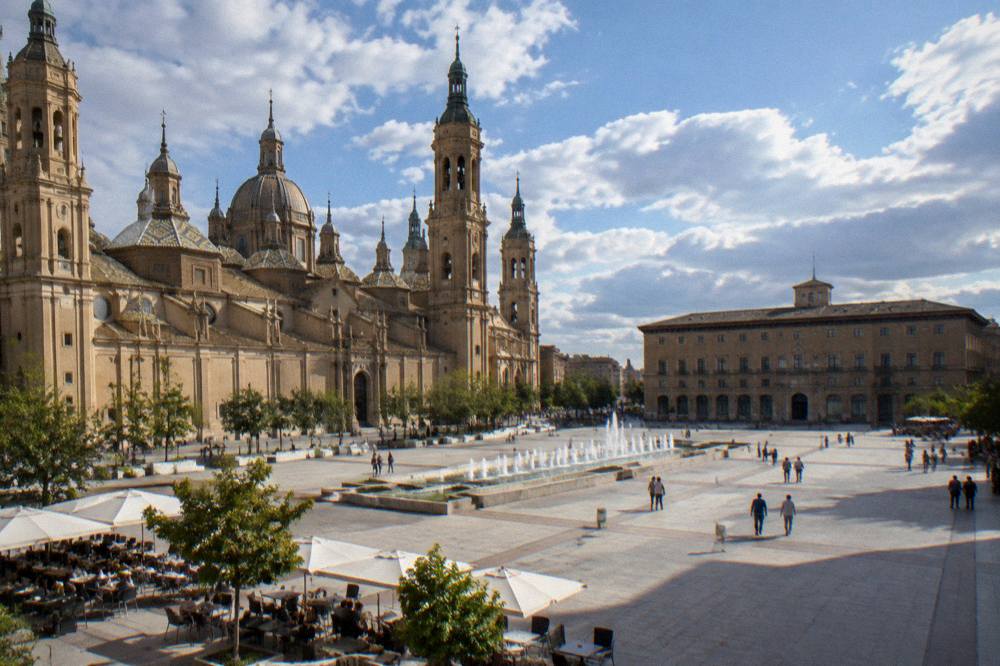
The city's dryness surprises visitors who expect coastal Spain's humidity: the same AEMET station records 61 percent average humidity and 81.6 clear days a year. The cierzo, the cold, dry north-westerly wind that funnels down the Ebro valley, can make a sunny winter day feel sharp, so a windproof layer earns its place in the bag from November to March. Summer visitors should plan the Pilar tower climb and the river walk for morning, since the stone streets hold heat through the afternoon.
Money needs are simple. There is no tourist tax in Aragon, the regional government having explicitly ruled one out in September 2026, and the sightseeing ledger above is the whole of the mandatory spend. The tourist bus takes cash only on the vehicle, everything else takes cards, and the Tarjeta Bus pays for itself after roughly seven rides, which a two-day visitor will not reach unless using the tram constantly.
For travellers from outside the Schengen area, the EU's Entry/Exit System has been fully operational since 10 April 2026, with biometrics registered at the border for short stays, while ETIAS, the travel authorisation for visa-exempt visitors, has not started accepting applications, so check the official EU travel pages rather than a booking site for the current requirement before you fly.
Common Questions About Two Days In Zaragoza
Is two days enough for Zaragoza?
Yes. Two days cover the Basílica del Pilar, La Seo, the Aljafería, all four Caesaraugusta museums, the Puente de Piedra and the Ebro river walk, with evenings free for tapas. A third day is only needed for day trips outside the city.
What is the best two-day itinerary for Zaragoza?
Day One: the Basílica del Pilar and its EUR 6 tower viewpoint, La Seo with the Museo de Tapices at EUR 10, the Roman forum museum at EUR 4, then tapas in El Tubo. Day Two: the Aljafería at EUR 7, the Roman theatre and baths museums on the EUR 7 four-museum bono, then the Ebro river walk and Parque del Agua.
How much do tickets cost for two days in Zaragoza?
Roughly EUR 30 to 40 per person for all the paid sights in this itinerary: EUR 6 for the Pilar tower, EUR 10 for La Seo and its museums, EUR 7 for the Aljafería and EUR 7 for the four-museum Roman bono, with free entry to the basilica itself and free days at several museums.
Is Zaragoza walkable in two days?
Yes. Every Day One sight sits in the old town, and the Aljafería on Day Two is a short tram ride at EUR 1.70 a single, or EUR 0.55 with the Tarjeta Bus. No journey in this itinerary requires a taxi.
What is there to do in Zaragoza at night?
El Tubo's tapas counters, the illuminated Puente de Piedra and the view of the lit Basílica del Pilar from the Ebro's left bank are the standard evening. The Legends and Ghosts Night Tour, from USD 15.76 and rated 5 from its single review, adds a two-hour stories-and-ghosts walk if you want a guided version.
Can you visit Zaragoza as a day trip from Madrid or Barcelona?
You can, since the high-speed train takes about 1.5 to 2 hours from either capital, but a day trip forces you to drop either the Aljafería or the Roman museums. Two days is the better frame, and this Zaragoza Travel Guide exists because the city rewards the slower pace.
Two days in Zaragoza, Spain, is enough to see the Pilar, La Seo, the Aljafería and the Roman city beneath the modern one, and to eat well in between, without ever feeling that the city got away from you.