How Many Days Do You Need In Zaragoza?
Two days covers Zaragoza's essentials and three lets you breathe: a practical answer to how many days you need in Zaragoza, Spain, with itinerary splits for one, two and three days.
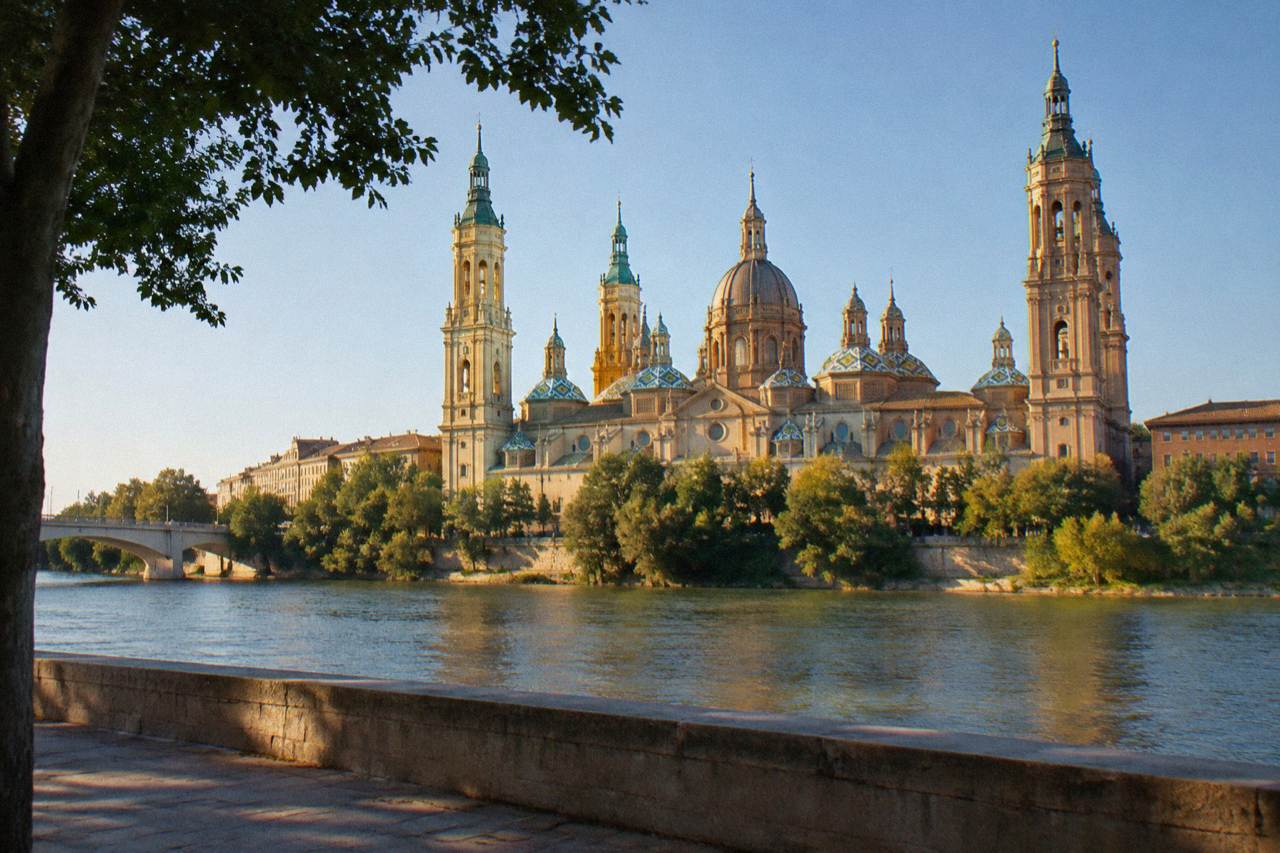
Zaragoza, the capital of Aragon on the Ebro in inland Spain, is a city most visitors underestimate on the map and then wish they had timed better on the ground. The honest answer to the day-count question is that two full days cover the essentials, and three days let you add the Aljafería at a humane pace, the Roman museums, a tapas evening and a walk along the Ebro without checking your watch. This page breaks the decision down by what you actually want from the city, from a rushed single day to a relaxed three-day stay, and it names the sights that justify each extra day.
How Many Days Do You Need In Zaragoza?
Two full days is the realistic minimum for Zaragoza, and three days is the comfortable answer. In two days you can see the Basílica del Pilar, La Seo, the Aljafería, the Puente de Piedra and the main Roman remains, with one evening for tapas. A third day adds the Caesaraugusta museums at leisure, the Parque del Agua, and either a day trip or a slower food-focused afternoon in the old town.
The reason two days is the floor rather than one is geography plus opening hours. Zaragoza's big four, the Pilar, La Seo, the Aljafería and the Roman remains, sit in two clusters: the Pilar and La Seo face each other across Plaza del Pilar, while the Aljafería stands about a tram ride away to the west. The municipal October timetable gives the Aljafería daily hours of 10:00 to 18:00, and the Pilar's tower viewpoint closes as early as 20:00 on weekdays with last access 30 minutes before closing. Squeeze all of that into one day and you will be sprinting between buildings that deserve slow looking.
Three days changes the character of the visit. The city's museum stock is unusually deep for its size: four separate Caesaraugusta sites (the Foro, the river port, the baths and the theatre), the Museo Pilarista inside the basilica complex, the Museo de Tapices included in the La Seo ticket, and the Museo Goya, which reopens on 9 October 2026 after renovation with hours of Tuesday to Saturday 10:00 to 20:00 and Sunday 10:00 to 14:00. That last one alone argues for a third day if your visit falls after the reopening.
If you are working out the full shape of a short trip, the two-day itinerary and the three-day itinerary walk through each day hour by hour, and the question of whether the city justifies the journey at all is answered separately in is Zaragoza Spain worth visiting.
What Can You Realistically See In One Day In Zaragoza?
One day in Zaragoza gives you the Pilar, La Seo, the Puente de Piedra, one Roman museum and an evening tapas route, and it means cutting the Aljafería or rushing it. Entering the basilica is free and the tower viewpoint costs EUR 6 for an adult, La Seo is EUR 10 general including three museums, and the Aljafería is EUR 7 general, so a single day forces a choice between the palace and any depth at all.
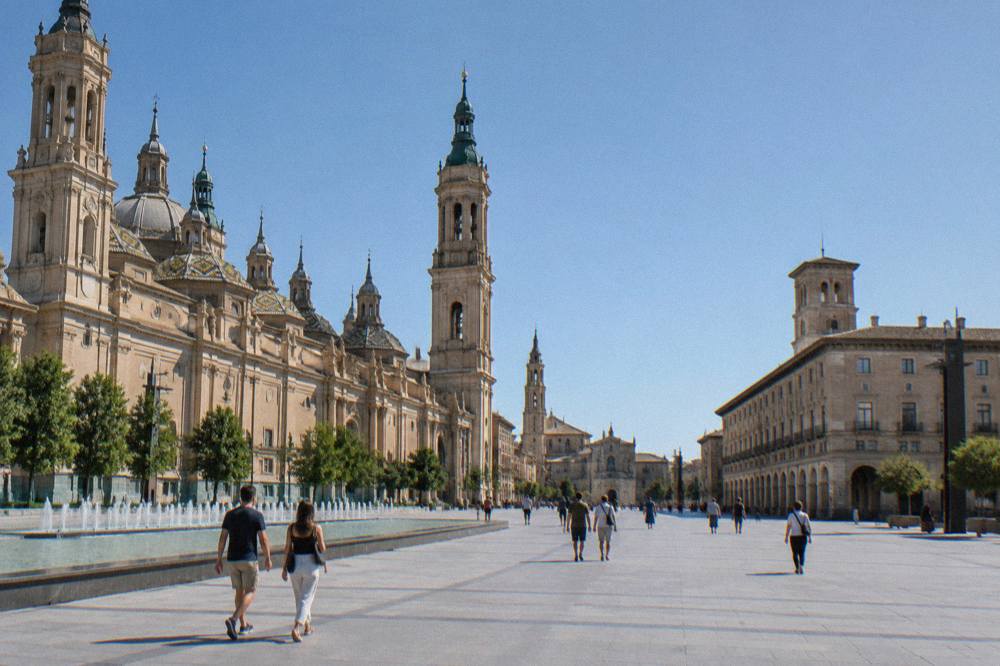
A one-day visit should start at Plaza del Pilar early, before the square fills. Enter the basilica first, because entry to the temple is free and the morning light through the domes is the reason photographers come. Climb the Torre Mirador if the queue is short: EUR 6 adult, EUR 5 for over 65s and residents, EUR 4 for ages 13 to 18, students and groups of 20 or more, free under 12. Then cross the square to La Seo, whose EUR 10 general ticket also covers the Museo de Tapices, the Museo Pilarista and the Rosario de Cristal, with reduced rates of EUR 9 for over 65s and EUR 7 for students and ages 13 to 18.
Afternoon is the decision point. The Aljafería, the Islamic-era palace, needs roughly two hours with the guided visit, and the municipal timetable lists Spanish guided tours at 10:30, 12:30, 13:30, 15:00 and 16:00, with last access 45 minutes before closing. If the palace does not fit, the Roman theatre museum is the better single Caesaraugusta pick, and the Puente de Piedra, the stone bridge with its four bronze lions, gives you the classic view back at the Pilar across the Ebro at sunset.
Evening belongs to food. A guided tapas walk saves you the guesswork on a tight schedule, and the city's food reputation is covered in detail in what food is Zaragoza famous for. The one-day shape is spelled out fully in a good one-day itinerary for Zaragoza, including what to drop when time runs out.
What Does A Two-Day Zaragoza Itinerary Cover?
Two days covers every headline sight in Zaragoza at a normal pace: day one for the Pilar, its tower, La Seo and the old district, day two for the Aljafería, two or three Caesaraugusta museums and an Ebro-river evening. The second day is what removes the single worst trade-off of a one-day visit, the choice between the palace and the Roman remains.
Splitting the city by bank and district is the trick. Day one stays in the Casco Histórico: the basilica in the morning, La Seo before lunch, the Museo de Tapices included in the cathedral ticket, then the old district lanes and the Puente de Piedra viewpoint in the late afternoon. Day two crosses west to the Aljafería in the morning, ideally on a guided visit, then returns to the Roman cluster: the Foro at EUR 4, the baths and the river port at EUR 3 each, or the four-museum bono at EUR 7, EUR 5 reduced, with free entry the first Sunday of the month. More of these guides are collected on Zaragoza Travel Guide.
The table below shows what each day-count realistically buys, using the verified ticket prices from the municipal October timetable:
| Stay length | Realistic coverage | What you sacrifice |
|---|---|---|
| 1 day | Pilar, tower, La Seo, Puente de Piedra, one Roman museum, evening tapas | The Aljafería, most museums, any leisure pace |
| 2 days | All of the above plus the Aljafería, two or three Caesaraugusta sites, an Ebro walk | Museo Goya, Parque del Agua, day trips |
| 3 days | All of the above plus the fourth Caesaraugusta site, Museo Goya after 9 October 2026, Parque del Agua, a slower food afternoon | Only the far day trips |
A guided walk on the first morning is the most efficient way to orient yourself, and the 2.5-hour Historical Tour of the Old District with a Guide, from $106.92 per person and rated 5 from 14 reviews, covers the old district's headline buildings and stories in one sweep, leaving the afternoon free for the museums. Check availability if that shape fits your first day.
Why Three Days Is The Comfortable Answer For Zaragoza?
Three days is the comfortable answer because Zaragoza's depth is in its second-tier sights, not just its headline pair: the fourth Caesaraugusta museum, the Museo Goya from 9 October 2026, the free IAACC Pablo Serrano and Centro de Historias, and the 120-hectare Parque del Agua all sit outside the two-day core. A third day also absorbs the city's rhythm, the long Spanish lunch and the late evening light on the Ebro, without costing you a single major sight.
The third day earns its keep in three ways. First, museums: the Caesaraugusta bono at EUR 7 covers four sites that reward unhurried reading, and the Museo Goya's reopening on 9 October 2026 adds a serious Goya collection to the city's offer, open Tuesday to Saturday 10:00 to 20:00 and Sunday 10:00 to 14:00, closed Mondays, with the admission price not yet published on the museum's own page. Second, green space: the Parque del Agua Luis Buñuel, more than 120 hectares in the Ranillas meander beside the Expo 2008 site, carries running circuits of 5 and 10 kilometres and was the first European green space to hold the Green Globe certification, a fact the municipality publishes on its own park page. Third, weather: AEMET's 1981 to 2010 normals for the Zaragoza Aeropuerto station show October averaging a 21.4 C mean maximum against July's 32.4 C, so a long outdoor afternoon is pleasant for most of the shoulder season.
One caution that belongs in any day-count discussion: the Museo de Zaragoza's central building on Plaza de los Sitios is closed for Ministry of Culture works with no reopening date, so do not budget a half-day for it. Plan around the sights that are confirmed open.
How Many Days Do I Need In Zaragoza?
If you are asking as a city-break traveller arriving by high-speed train, two days is the right answer for the core city and three is right if you want the Aljafería, the full Roman set and the Goya museum without hurrying. High-speed trains put Madrid and Barcelona about 1.5 to 2 hours away, which makes a two-night Zaragoza stay an easy add-on to either, and the city's compact centre means you lose no time to commuting once you arrive.
The train logic matters more than most guides admit. Because the fast connection from Madrid or Barcelona takes about 1.5 to 2 hours, Zaragoza works as either a standalone two-night break or a deliberate stop between Spain's two biggest cities. A traveller doing the Madrid-to-Barcelona rail corridor can give Zaragoza one night and see the Pilar and La Seo, but that visitor will leave with the Aljafería unseen, and the palace is one of the finest Islamic-era buildings surviving in Spain. Two nights, meaning two full days, is the point at which nothing headline is lost.
Families and slow travellers should lean to three. The things to do in Zaragoza list runs well past the big two churches, and the free-entry days, the Caesaraugusta museums on the first Sunday of the month, the Aljafería on the first and third Sunday and Monday, reward a stay long enough to catch one. If your dates fall during Fiestas del Pilar, from 10 to 18 October 2026, the answer changes shape: the city fills with visitors for the Ofrenda de Flores on 12 October, and hotel demand around those dates argues for booking well ahead regardless of how many days you choose.
Common Questions About How Many Days You Need In Zaragoza
How many days do you need in Zaragoza, Spain?
Two full days for the essentials, three for a comfortable, unhurried visit that includes the Aljafería, all four Caesaraugusta museums and the Museo Goya (reopening 9 October 2026).
Can you see Zaragoza in one day?
You can see the Basílica del Pilar, La Seo, the Puente de Piedra and one Roman museum in a single day, but you will have to cut the Aljafería or rush it, and the palace deserves about two hours on a guided visit.
Is Zaragoza worth a weekend?
Yes. A two-night weekend covers both major churches, the Aljafería, the Roman remains and an evening tapas route, which is exactly the two-day core itinerary.
Is Zaragoza or Valencia better for a short break?
They are different trips: Zaragoza is inland, drier and monument-dense, while Valencia adds a coast. The comparison is set out in full in the city-versus-city answer on this site.
Do I need a car for the number of days I choose?
No. The bus and tram single fare is 1.70 EUR, the centre is walkable between the Pilar and La Seo, and the Aljafería is a short tram ride away; a car only earns its cost if you add far day trips.
The short version, and the one that survives contact with the actual city: book two nights as the floor, stretch to three if the Museo Goya's reopening or the Fiestas del Pilar fall inside your dates, and let the pace of the old district decide whether you ever want to leave.