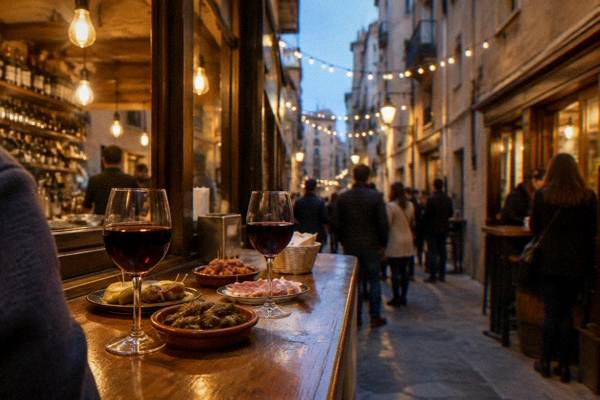
What Food Is Zaragoza Famous For?
Zaragoza, the capital of Aragon in Spain, is famous for ternasco de Aragon lamb, migas aragonesas, a deep tapas culture and the wines of nearby Carinena. Here is what to eat, and the guided food experiences worth booking.
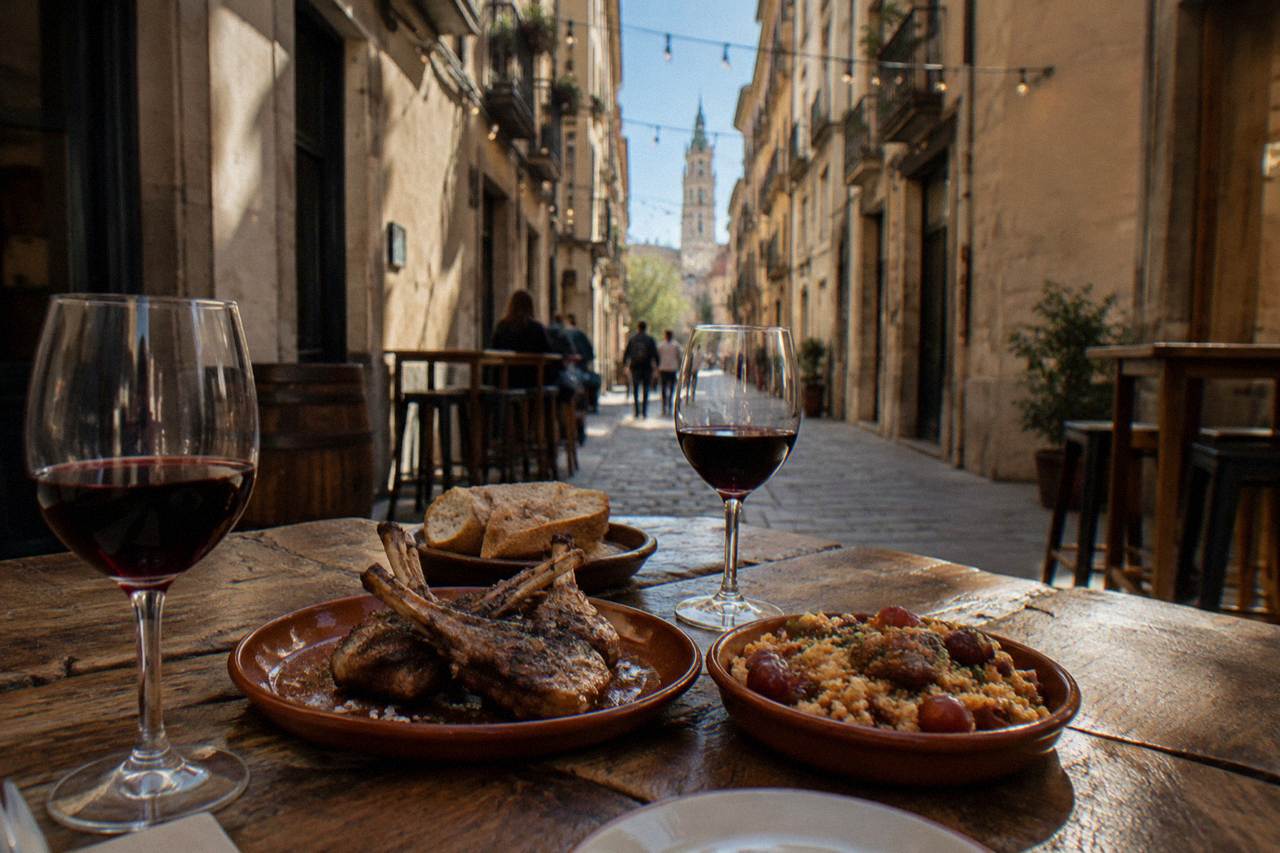
Zaragoza, the capital of Aragon, sits inland on the Ebro, and its food is what you would expect from a dry, continental river plain crossed by shepherding routes: lamb, bread, olive oil, river vegetables and red wine. The city is the natural place to taste Aragonese cooking, because it is the region's capital and its bars, markets and restaurants draw on the whole of the surrounding countryside. This page sets out the dishes the city is actually known for, how the tapas culture works, and which guided food experiences are worth your evening.
What Food Is Zaragoza Famous For?
Zaragoza is famous for ternasco de Aragon, milk-fed roast lamb served in thick cutlets, and for migas aragonesas, a shepherd's dish of fried breadcrumbs with grapes, chorizo or bacon. Around those two anchors sit borrajas, a river vegetable grown in the Ebro valley, chilindrón stews, longaniza sausage, and a tapas culture that runs from the old town's bar counters to the Mercado Central. The wines of the Carinena region, south of the city, complete the plate.
That short list is the honest answer, and it is worth understanding why. Aragon is sheep country, and ternasco, the milk-fed lamb of the region, is the dish that appears at every family celebration, roasted with nothing more than salt, fat and a hot oven. Migas began as a way of using yesterday's bread and is now a winter restaurant dish and a festival staple in one. Borrajas, a leafy green stem vegetable, is one of the very few vegetables strongly identified with a single Spanish region, and the Ebro valley grows almost all of it.
Chilindrón deserves a line of its own: a stew base of red peppers, tomato, onion and sometimes ham that carries chicken, lamb or rabbit, and appears on menus across the city. For sweets, Aragon is the fruit-growing heart of Spain, and its candied fruit, guirlache almond brittle and trenza de Almudevar pastry all lean on that orchard heritage. None of this is invented restaurant folklore; it is the standard regional repertoire of Aragon, and Zaragoza is where it is most concentrated.
The dishes at a glance:
| Dish | What It Is | When To Look For It |
|---|---|---|
| Ternasco de Aragon | Milk-fed lamb, roasted plain with potatoes | Year-round; the celebratory Sunday dish |
| Migas aragonesas | Fried breadcrumbs with grapes, chorizo or bacon | Colder months; a winter and festival dish |
| Borrajas | River-grown green stem vegetable, sauteed with garlic | In season, when the Ebro valley harvest allows |
| Chilindrón | Stew of red peppers, tomato and onion with chicken, lamb or rabbit | Year-round on traditional menus |
| Longaniza | Regional cured sausage, often grilled as a tapa | Year-round at bar counters |
| Candied fruit and guirlache | Orchard sweets, almond brittle with caramelised sugar | Year-round; strong at Christmas |
The practical way into it is a guided tasting. The evening traditional tapas walking tour in the old center covers the classic dishes in three hours with a local guide, from $108.94 per person, rated 5 from 22 reviews; Check availability. For the wider picture of the city's food culture, see the Zaragoza food guide.
What Is Ternasco De Aragon?
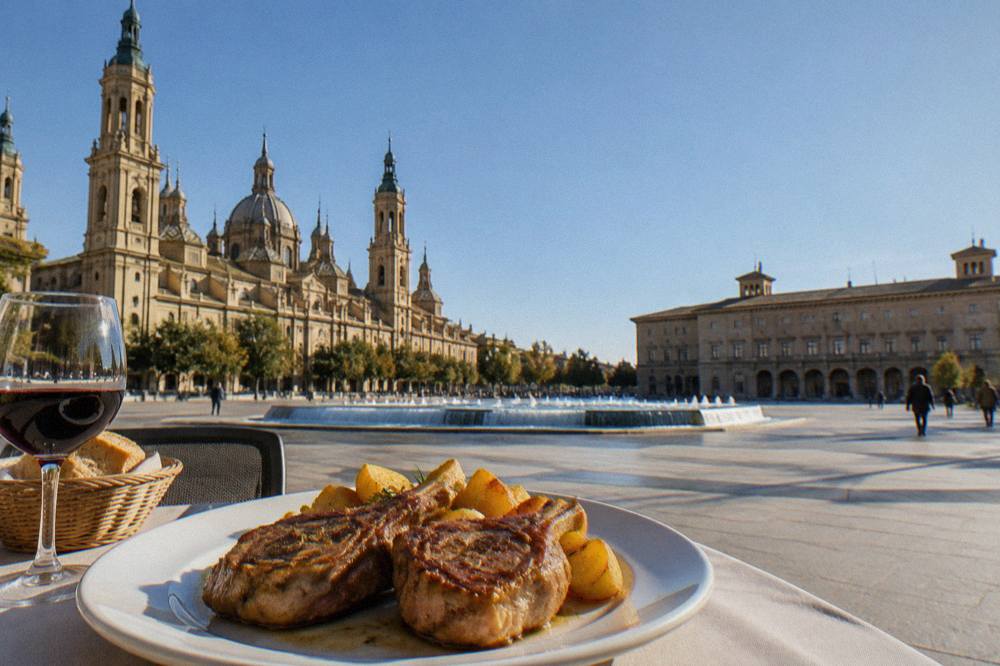
Ternasco de Aragon is the milk-fed lamb of the region, typically roasted plain in a wood or stone oven with potatoes, and it is the single dish most Aragonese would name as their own. The animals are slaughtered young, which keeps the meat pale and mild, and the traditional cooking method is deliberately simple: salt, a little fat and time, with no marinade to hide anything. In Zaragoza it appears everywhere from Sunday family tables to old-town restaurant menus.
The dish matters to the region's identity in a way that goes beyond taste. Sheep herding shaped Aragon's economy for centuries, moving flocks between the Ebro valley and upland pastures, and the lamb that system produced became the celebratory food of the region. Roast ternasco with potatoes is the plate that appears at weddings, first communions and Christmas, and every Zaragoza cook has an opinion about the correct oven temperature.
Ordering it is straightforward. Look for "ternasco asado" on a menu, expect thick cutlets rather than a whole leg, and expect it to arrive with roasted potatoes that have cooked in the dripping. It pairs naturally with a red from Carinena, the wine region south of the city, whose garnacha-based reds were historically sold in the city's taverns by the jug. If you want the full picture of what else the city eats, the companion piece on what Zaragoza is famous for covers the monuments and culture around the table.
What Is The Best Place To Eat In Zaragoza?
The honest answer for most visitors is the old town's tapas bars, the area around Plaza de la Magdalena and the streets running down to the Ebro, where counters carry the day's dishes and the kitchen works in small portions. Zaragoza's eating culture is a tapas-and-raciones culture rather than a fine-dining one: you move between bars, take a small plate and a glass of wine at each, and end wherever the evening has led. The Mercado Central is the daytime counterpart for produce.
What is verifiable is the structure: the historic center holds the densest concentration of bars serving the regional repertoire, and the tapas crawl, moving from counter to counter, is the local way of eating an evening. The typical pattern is a small tapa with a drink at the bar, a larger ración to share if something deserves it, and a last stop for dessert or a sweet wine. The rest of the planning pages sit on Zaragoza Travel Guide.
The dishes to look for on any counter are the ones above: ternasco when a bar has a roasting oven, migas in the colder months, borrajas when in season, chilindrón stews, and longaniza sausage. A guided crawl removes the guesswork. The evening traditional tapas walk in the old center runs three hours from $108.94 per person, rated 5 from 22 reviews, and the Zaragoza tapas crawl guide explains how the route works if you would rather go alone.
Can You Cook Aragonese Food Yourself In Zaragoza?
Yes, and the midday market tour and Spanish cooking class is the tour built for it: from $113.53 per person, rated 5 from 41 reviews, it pairs a walk through the Mercado Central with a hands-on class cooking the regional repertoire. Learning to cook migas, a chilindrón or a proper ternasco in the city where they are everyday food turns a meal into something you take home. The class format suits beginners and confident cooks alike.
The market half of that experience is not decoration. Spanish home cooking starts at the market stall, choosing borrajas in season, asking the butcher for the right lamb cut, and the class format mirrors how Aragonese households actually shop and cook. A cooking day is also the one food experience in the city that ends with a full sit-down meal of your own making, which makes it a good anchor for a rainy afternoon or a day when the monuments are done by two o'clock.
What About Wine And Olive Oil Around Zaragoza?
Aragon's table drinks are the reds of the Carinena region south of the city and the olive oil pressed from the groves of the Ebro valley's southern edge. In Zaragoza itself the practical way to taste them is a guided wine and tapas evening, from $106.92 per person and rated 5 from 21 reviews, or a half-day trip out to an olive oil mill with a stop at the ruined old town of Belchite, from $108.94 per person. Both are bookable as tours from the city.
Carinena is one of Spain's oldest named wine areas, garnacha country with a long history of jug wine for the city's taverns, and its reds are the standard pour beside ternasco. Olive oil is the quieter half of the region's pantry, and the mills to the south press the peppery, green oil that finishes every migas and every salad in the city. Belchite, on the olive-oil route, is a Civil War ruin preserved as it was left, and a visit there is a sobering counterpoint to a food day; the Belchite guide explains the history.
The guided options, compared:
| Experience | Format | From (Per Person) | Rating |
|---|---|---|---|
| Evening traditional tapas walk, old center | 3-hour guided evening walk | $108.94 | 5 from 22 reviews |
| Midday market tour and cooking class | Market walk plus hands-on class | $113.53 | 5 from 41 reviews |
| Wine tasting and tapas, old town | 3-hour guided tasting | $106.92 | 5 from 21 reviews |
| Olive oil tour and Belchite old town | 5-hour guided day trip from the city | $108.94 | 4.8 from 18 reviews |
Common Questions About Zaragoza Food
What food is Zaragoza famous for?
Ternasco de Aragon roast lamb, migas aragonesas, borrajas, chilindrón stews, longaniza sausage, candied fruit and almond sweets, and the red wines of the Carinena region, eaten across a tapas culture centred on the old town.
What is ternasco?
Milk-fed lamb from Aragon, roasted plain with potatoes, and the region's signature celebratory dish. Look for "ternasco asado" on old-town menus.
Is Zaragoza good for tapas?
Yes. The historic center holds the densest run of tapas bars, and the local pattern is a crawl: a small plate and a glass at one counter, then move on. A guided evening walk costs from $108.94 per person.
Can I take a cooking class in Zaragoza?
Yes. A midday market tour followed by a Spanish cooking class runs from $113.53 per person, rated 5 from 41 reviews, and covers the regional repertoire.
What wine should I drink in Zaragoza?
Reds from the Carinena region, garnacha-based, are the local pour beside lamb. Guided wine and tapas tastings in the old town start at $106.92 per person.
What is the best place to eat in Zaragoza?
No single venue can be named from verified sources. The practical answer is the old town's tapas bars around Plaza de la Magdalena and the streets toward the Ebro, worked as a crawl rather than a single sitting.
Zaragoza rewards eating the way the city eats: a small plate here, a glass of Carinena there, and one proper roast ternasco to anchor the trip. Whether you walk the old center with a guide, cook the dishes yourself or head south to the olive groves, the food of Aragon is the part of the city that follows you home, and it is the reason many visitors end up staying an extra night.