Belchite: Zaragoza's Ruined Old Town Day Trip, Spain
Belchite is a village in Zaragoza province, Aragon, whose old town was destroyed in the Spanish Civil War and left standing exactly as it fell, making it one of the most sobering day trips from the city of Zaragoza.
Short answer
Belchite is a village in Zaragoza province, Aragon, reached by road from the city, and is visited for Pueblo Viejo, its old town, destroyed in the Battle of Belchite during the Spanish Civil War and preserved as a ruin. There is no verified entry fee or opening hour for the site, so check locally before travelling, and the only bookable ways to reach it with a guide are the olive oil day tours from Zaragoza.
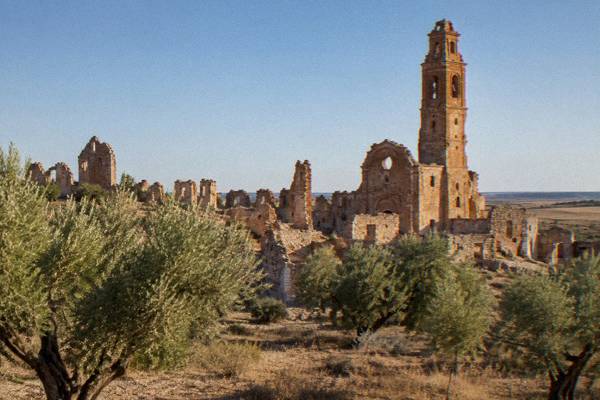
Belchite is a village in the province of Zaragoza, in Aragon in north-eastern Spain, and the reason travellers make the journey is not a castle or a viewpoint but an absence: Pueblo Viejo, the old town, was reduced to rubble in the Spanish Civil War and never rebuilt. The ruins stand exactly where they fell, roofless houses and a shattered church tower on a dry plain, while the new village was built beside them after the war. It is a place to walk quietly, read the few plaques, and leave with more questions than photographs.
What Is Belchite And Why Do People Visit From Zaragoza?
Belchite is a small town in Zaragoza province, Aragon, Spain, reached from the city by road, and is visited almost entirely for Pueblo Viejo, its old town, which was destroyed in the Battle of Belchite during the Spanish Civil War and deliberately left in ruins. The new village of Belchite was built next to the old one in the post-war years, so a visit means two settlements side by side: a living town and its broken predecessor.
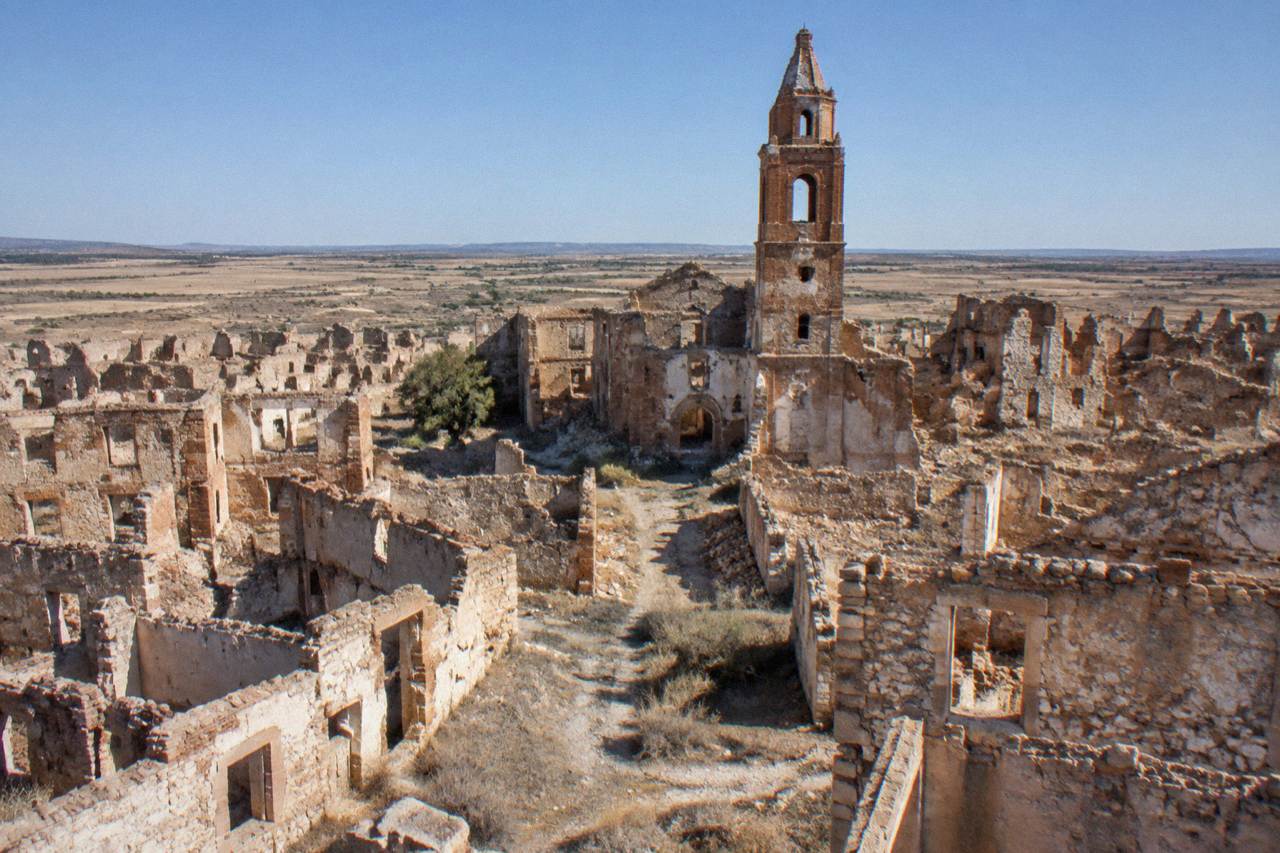
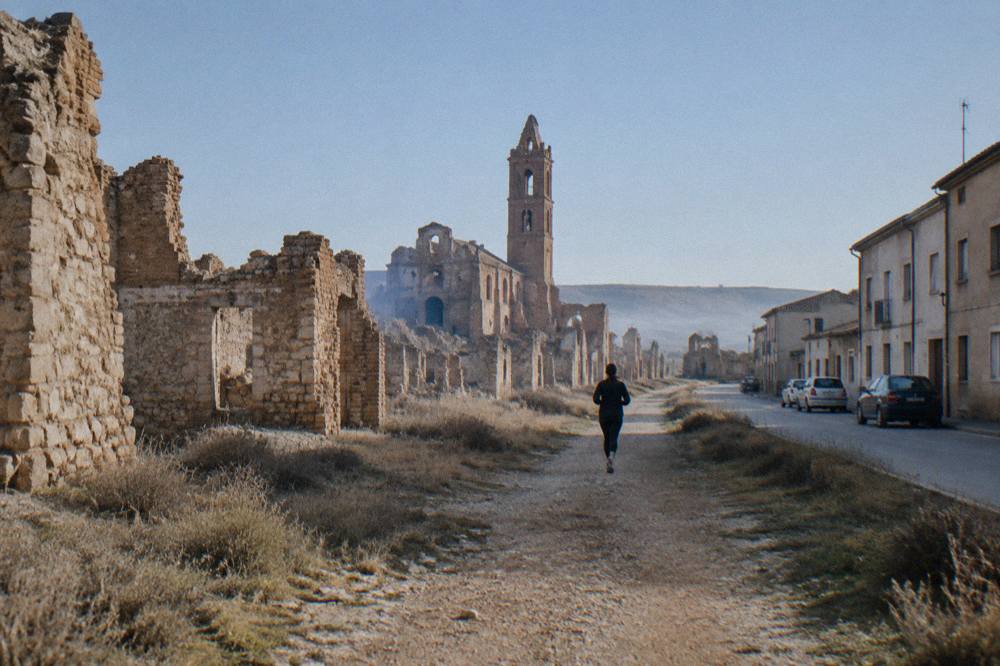
The old town is the draw, and it is a difficult one. The street plan survives, with lanes you can trace between collapsed facades, and the tower of the church of San Martín de Tours still stands, broken at the top. Because the site has stood open to the sky for generations, the stone has weathered, and the whole ensemble reads less like a monument than like a wound kept visible on purpose. Visitors come for that honesty. There is no interpretation centre confirmed in the verified sources, no published entry fee, and no verified opening calendar, so the practical answer is to treat access details as something to confirm locally on the day.
For context on the wider region, the Zaragoza travel planning guide covers how the city's day-trip geography works, and the things to do in Zaragoza page covers the city end of the trip. Belchite sits to the south-east of Zaragoza, out on the arid plain that characterises so much of central Aragon, a landscape of low scrub, dry gullies and enormous skies. The wind here is the same cierzo that funnels down the Ebro valley, and on a hard day it makes the ruins feel even emptier.
What Happened At Belchite During The Spanish Civil War?
The Battle of Belchite took place during the Spanish Civil War, when Republican forces captured the town from Nationalist troops in a diversionary offensive ahead of the wider Aragon campaign, and the fighting destroyed the old town almost completely. After the war the Franco regime left the ruins standing as a propaganda symbol and built a new Belchite beside them, which is why the ruin survives today rather than being cleared or rebuilt.
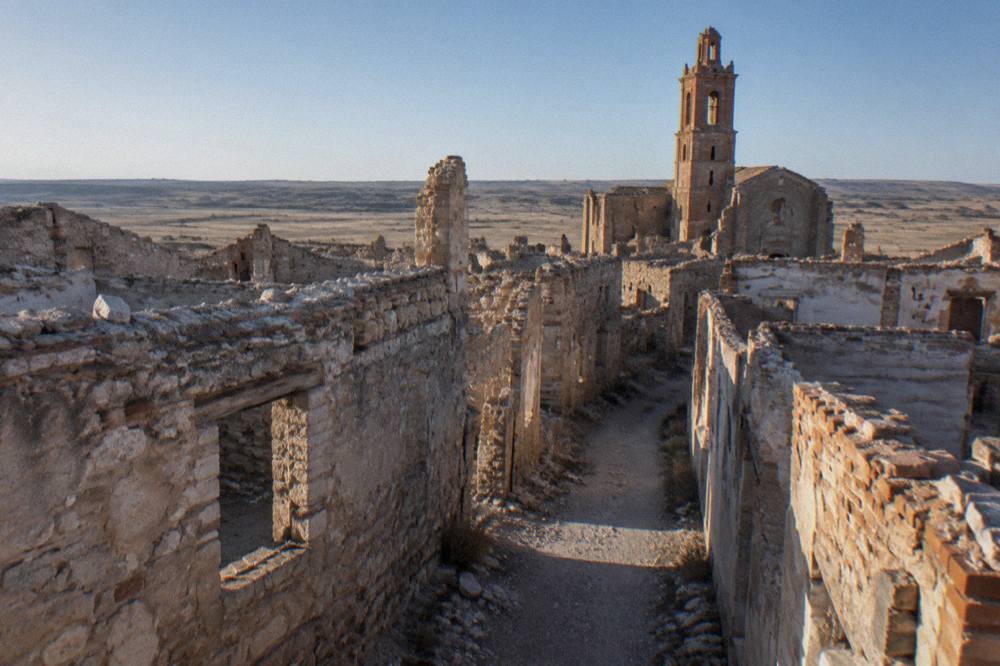
The battle was brutal and close-quarters. The town changed hands street by street, and by the end the fabric of Pueblo Viejo was beyond saving. What the post-war authorities did next is the reason a traveller can walk those lanes now: rather than restore or demolish, they froze the destruction and started again on adjacent ground. The new town's architecture is plainly post-war, and the contrast between the two Belchites, one inhabited and one abandoned, is part of what makes the visit more than a ruin-stop.
Treat the site soberly. This is not a picturesque ruin in the sense of a romantic abbey; it is the record of a battle in a war whose divisions ran through families, and many visitors will find the silence the strongest impression of the day. Walk the lanes, look at the church tower, and resist turning it into a photo shoot. The Civil War also left its mark elsewhere in the region, and the Teruel day trip covers another Aragonese city where the war's battles shaped what stands today.
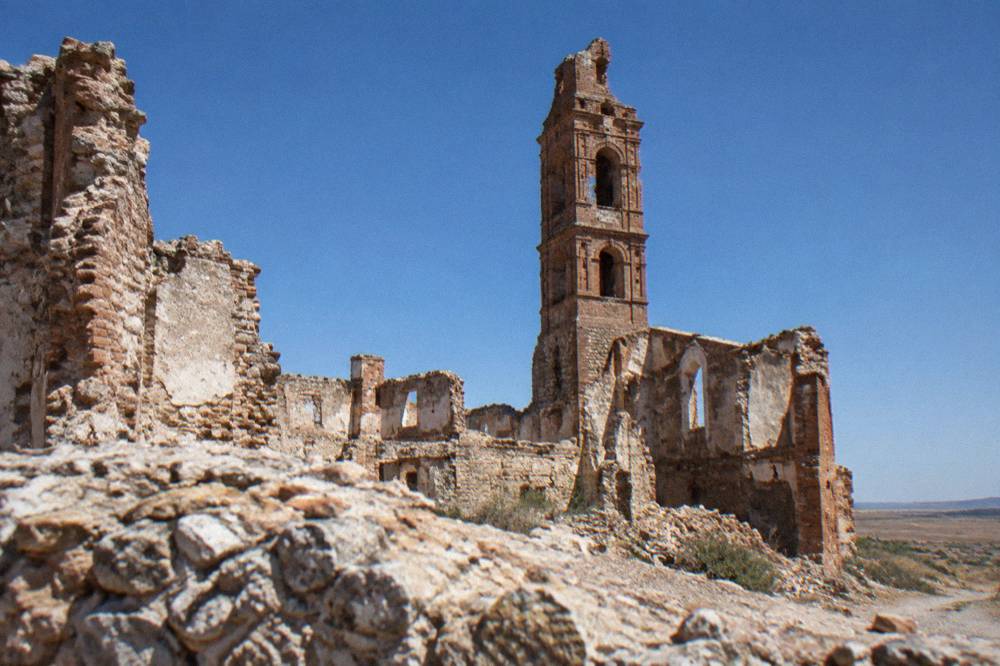
What Can You Actually See In Pueblo Viejo De Belchite?
The main sights inside Pueblo Viejo are the ruined church of San Martín de Tours with its broken tower, the surviving street plan with its lanes between roofless houses, the remains of the old convent of San Rafael, and the wide views across the dry Aragonese plain from the edge of the village. Everything is stone, rubble and sky, and the visit is a walk rather than a museum, with no verified ticket price, opening hours or guided service on site published in the sources available.
The church of San Martín is the landmark. Its tower, snapped short, appears in almost every photograph of Belchite, and it gives the ruin its silhouette against the plain. Around it the lanes still follow their pre-war course, so you can walk what were living streets and see where the houses fell outward into them. The convent of San Rafael stands at the other end of the old town and is one of the more complete surviving structures. Between the two, the housing is mostly collapsed to wall height, and the site's power comes precisely from that scale: an entire community's footprint, emptied.
Practically, the verified sources give no entry fee, no opening hours and no on-site facilities for Pueblo Viejo, so plan on the assumption that you confirm access locally before travelling, carry your own water, and expect no shade. The climate matters here: AEMET's 1981 to 2010 normals for the Zaragoza Aeropuerto station show July with a mean maximum of 32.4 C and June at 29.3 C, while October averages a mean maximum of 21.4 C, so shoulder months are the comfortable ones for walking an exposed ruin.
| Month | Mean maximum C (1981-2010) | Mean minimum C (1981-2010) | Rain mm (1981-2010) |
|---|---|---|---|
| March | 17.3 | 5.8 | 19 |
| April | 19.6 | 7.9 | 39 |
| May | 24.1 | 11.8 | 44 |
| October | 21.4 | 11.0 | 36 |
The figures above are the AEMET 1981 to 2010 averages for the Zaragoza Aeropuerto station, the only window the station publishes, and they describe the regional climate Belchite shares. May is the wettest month of that series at 44 mm, which is still modest, and the summer is genuinely hot and dry. If a spring or autumn visit is possible, take it.
Because Belchite is best reached with a plan, here are the guided day trips from Zaragoza that include it or make natural companions for the same region:
The first of those cards, the Canfranc, Jaca and Sallent de Gállego excursion, is a very different day, into the Pyrenees rather than the southern plain, and it is the option to pick if your trip to Zaragoza has room for both a mountain day and a Belchite day. You can also Check availability for the Pyrenees excursion on its own listing.
Can You Visit Belchite On A Guided Tour From Zaragoza?
Yes, and the guided options are olive oil day tours from Zaragoza that pair a visit to the old town of Belchite with an Aragonese olive oil mill and tasting: the Midday Olive Oil Tour and Visit to Old Town of Belchite, from $106.92 per person and rated 5 from 35 reviews, and the Olive Oil Tour and Visit to Belchite Old Town, from $108.94 per person and rated 4.8 from 18 reviews. Both are roughly five-hour day trips and both are bookable from the city.
These two cards are the only products that put Belchite itself on the itinerary, and they frame the visit around one of Aragon's real agricultural products, olive oil, which softens the day without trivialising the ruin. The midday olive oil and Belchite tour runs from $106.92 per person with a perfect 5 rating from 35 reviews over about five hours, and the olive oil and Belchite old town tour runs from $108.94 per person, rated 4.8 from 18 reviews. Prices and ratings are as listed on the operator's live listing, so confirm current details there before booking.
| Tour | From (per person) | Rating | Duration |
|---|---|---|---|
| Midday Olive Oil Tour and Visit to Old Town of Belchite | $106.92 | 5 from 35 reviews | 5 hours |
| Olive Oil Tour and Visit to Belchite Old Town | $108.94 | 4.8 from 18 reviews | day trip |
For comparison, the other guided day trips out of Zaragoza cover different ground entirely. The excursion to Canfranc, Jaca and Sallent de Gállego is an 11-hour Pyrenees day from $66.40 per person, rated 4.7 from 10 reviews, and the half-day winery tour from Zaragoza is a wine day from $166.28 per person, rated 5 from 21 reviews. Belchite's olive oil tours sit between those in character: rural, agricultural and quietly reflective.
If a guided day is not what you want, the independent route is straightforward in kind: Belchite lies to the south-east of Zaragoza on the plain, and the new village has the ordinary services of a small Aragonese town. What the verified sources do not give is a bus timetable, a driving distance or a drive time for the journey, so treat any figure you see elsewhere as unconfirmed and plan the road from a map on the day.
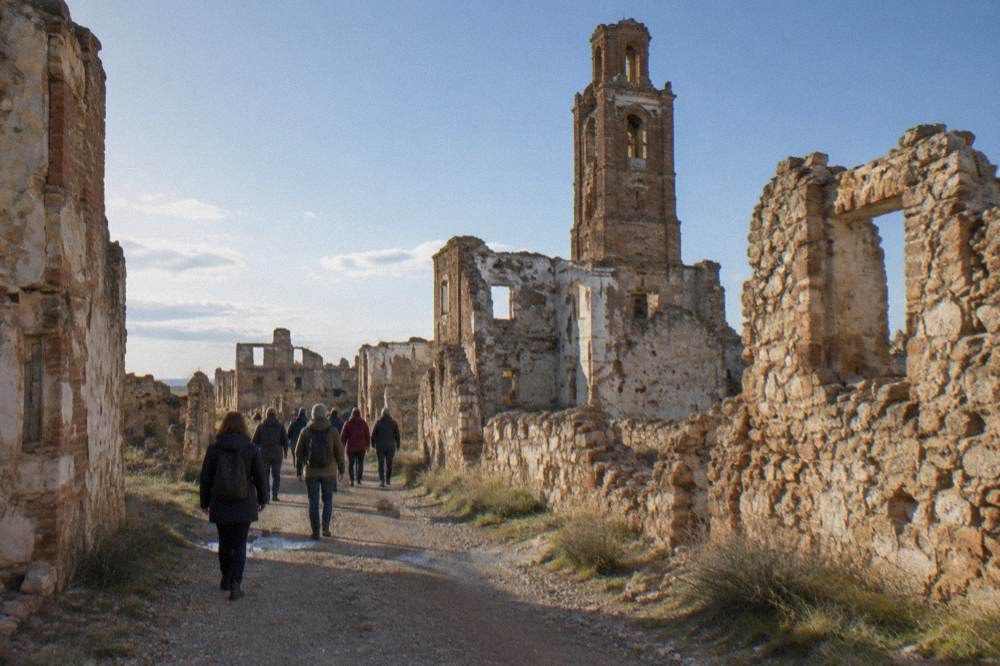
What Is New Belchite Like?
New Belchite is the functioning town built beside the ruins in the years after the Spanish Civil War, with ordinary streets, shops, bars and a church, and it is where any practical need on the visit gets met: parking, food, water and fuel. It is architecturally plain by comparison with Aragon's historic towns, but it is the inhabited half of a story the ruin only tells half of, and most visitors pass through it without stopping long.
The new town is not a destination in itself, and that is fine. Its role in a Belchite day is logistical: it is where you arrive, where you leave the car, and where you eat if you have not brought anything. The juxtaposition is the point, though. Walking out of a living street and into a dead one a few minutes later compresses decades of Aragonese history into a very short distance, and even visitors who come only for the photographs usually notice it.
Sober travellers sometimes pair Belchite with other memory-sites of the region. The Fuendetodos day trip, Goya's birthplace village, makes a quieter companion in the same southern half of Zaragoza province, and the Monasterio de Piedra day trip adds waterfalls and parkland for a contrasting afternoon. Neither of those is a war site, but both round out a picture of rural Aragon that the ruin alone cannot give.
How Does Belchite Compare With Other Zaragoza Day Trips?
Belchite is the historical and reflective choice among Zaragoza's day trips, where Monasterio de Piedra is the natural one, the Pyrenees excursions the mountain ones, and the wine tours the gastronomic ones; no other destination in the verified set offers a preserved Civil War ruin, so nothing else fills its role. Its limitation is practical rather than scenic: with no verified entry fee, hours or on-site facilities, it asks for more self-organisation than a ticketed monument.
The comparison matters because most visitors to Zaragoza have room for two or three days out, not all of them. If your trip is short, the question is whether Belchite's gravity earns one of those slots, and for many travellers with any interest in modern history it does. If your trip is built around mountains, the Ordesa National Park day trip and the Jaca day trip pull you north, and Belchite pulls you south-east, so they do not compete for the same day.
| Day trip from Zaragoza | Character | Direction from the city | Guided card available |
|---|---|---|---|
| Belchite | Civil War ruin, reflective walk | south-east | yes, olive oil tours |
| Monasterio de Piedra | Waterfalls and monastery park | south-west | no card |
| Canfranc and Jaca | Pyrenees mountains and railway | north | yes, 11-hour excursion |
| Somontano and Alquézar | Wine country and hill village | north-east | yes, full-day excursion |
| Tarazona and Moncayo | Historic town and mountain | west | yes, 7-hour tour |
The guided cards in that table come from the operator listings, where the Canfranc, Jaca and Sallent de Gállego excursion runs from $66.40 per person rated 4.7 from 10 reviews, the cursed town of Trasmoz tour with Tarazona and Moncayo runs from $209.33 per person rated 4.7 from 6 reviews, and the full-day Somontano wine excursion with Alquézar runs from $280.95 per person rated 5 from 14 reviews. Each is a full day, so a Belchite olive oil tour plus one mountain or wine day is a realistic pairing for a four-night stay.
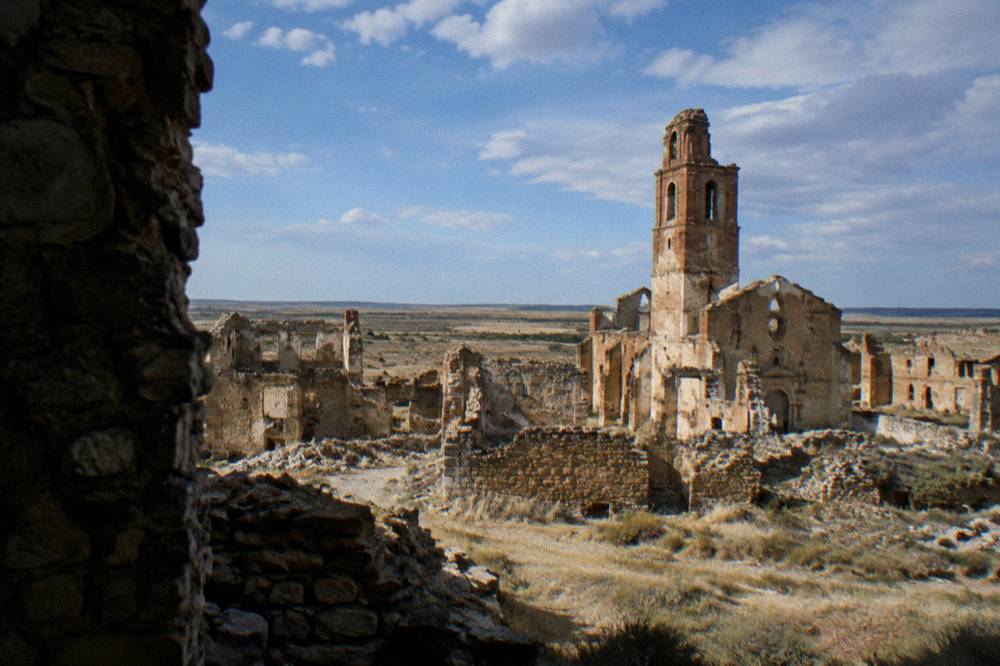
What Should You Know Before You Go To Belchite?
Go in spring or autumn rather than high summer, confirm access to Pueblo Viejo locally before travelling because no opening hours or entry fee are published in the verified sources, bring water and sun protection because the ruin is fully exposed, and treat the site as a place of memory rather than a photo location. Allow roughly half a day including travel, longer if you take a guided olive oil tour, and check the weather forecast for wind before you set out.
The exposure is the practical point most guides underplay. The old town has no shade, no benches and no confirmed facilities, and the regional climate is dry continental: AEMET's 1981 to 2010 normals for the Zaragoza Aeropuerto station show July and August as the driest months at 17 mm of rain each, with July the sunniest at 348 hours, so a midsummer walk among the ruins is a hot one. March and October sit at mean maxima of 17.3 C and 21.4 C in the same series, which is walking weather.
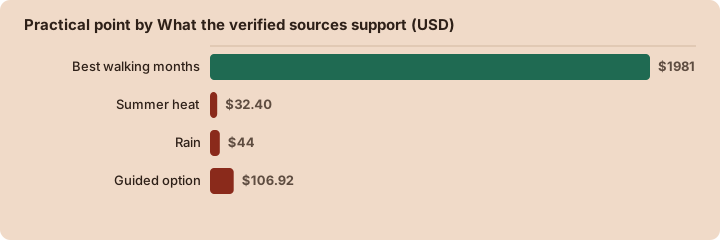
| Practical point | What the verified sources support |
|---|---|
| Best walking months | March to May and October, per the 1981-2010 AEMET normals |
| Summer heat | July mean maximum 32.4 C, 348 sun hours, in the same series |
| Rain | modest all year; May wettest at 44 mm in the same series |
| Site access | no published hours or fee; confirm locally on the day |
| Guided option | olive oil day tours from Zaragoza, from $106.92 per person |
One more thing worth knowing: Aragon has no tourist tax, the regional government having explicitly ruled one out in September 2026, so a day trip from the city carries no local levy beyond what you spend. And if your visit falls in mid-October, the Fiestas del Pilar run from 10 to 18 October 2026 with the Ofrenda de Flores on 12 October, which fills Zaragoza itself and makes a quiet day in Belchite a useful counterweight to the crowds in the city.
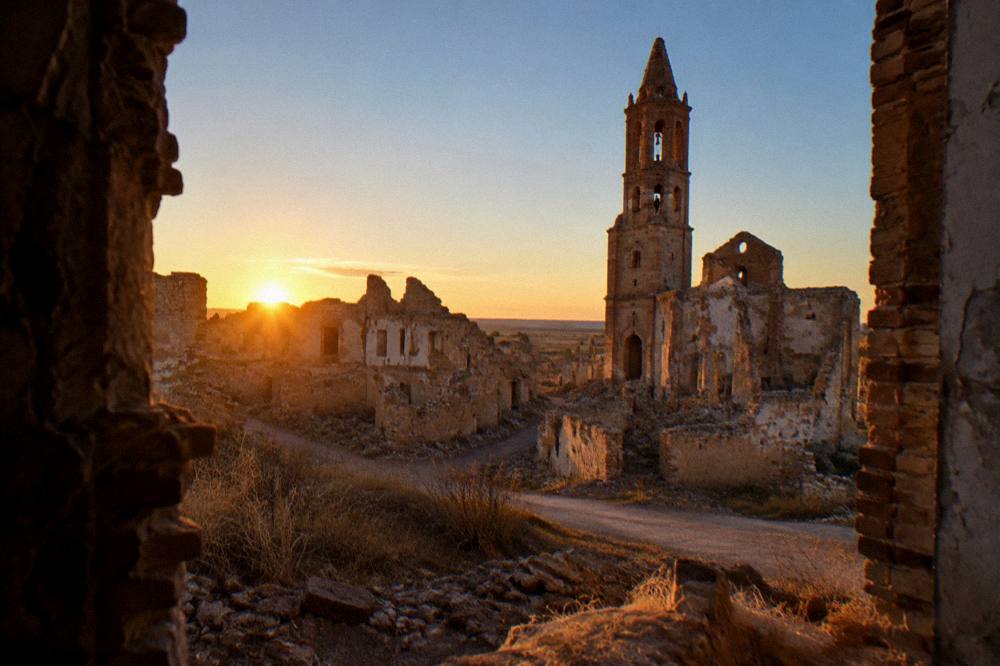
Is Belchite Worth The Journey From Zaragoza?
For most travellers with an interest in history, yes: Pueblo Viejo is a genuinely singular site, a whole Spanish village preserved in its destroyed state, and nothing else within day-trip range of Zaragoza offers that. For travellers whose priorities are landscapes, food or family ease, other destinations serve better, and the honest answer is that Belchite rewards a particular temperament, one that values witness over spectacle.
The visitors who rate the day highest tend to be those who arrive knowing what they are walking into. The visitors who are disappointed tend to be those expecting a managed attraction with tickets, tours and a café. Set expectations accordingly: a half-day of quiet walking, a plain new town for lunch, and a drive back across a landscape that explains, better than any panel, why this corner of Aragon was fought over so hard.
If the answer for your trip is yes, the olive oil guided tours are the low-friction way to do it, and the Zaragoza tours overview lists every guided option from the city. If the answer is no, the Tarazona day trip and the Calatayud day trip are quieter historic alternatives in the same general direction, and the mountains north of the city will always be there for the next visit.
How Do You Fit Belchite Into A Longer Zaragoza Itinerary?
Belchite works best as the half-day or single-day excursion in a three- or four-night Zaragoza stay: pair it with a morning or afternoon in the city's old town, keep one full day for the Basílica del Pilar and the Aljafería, and reserve a second day trip for either the Pyrenees or wine country. The three-day itinerary has the slot, and the olive oil tours' five-hour length leaves the evening free for tapas in the city.
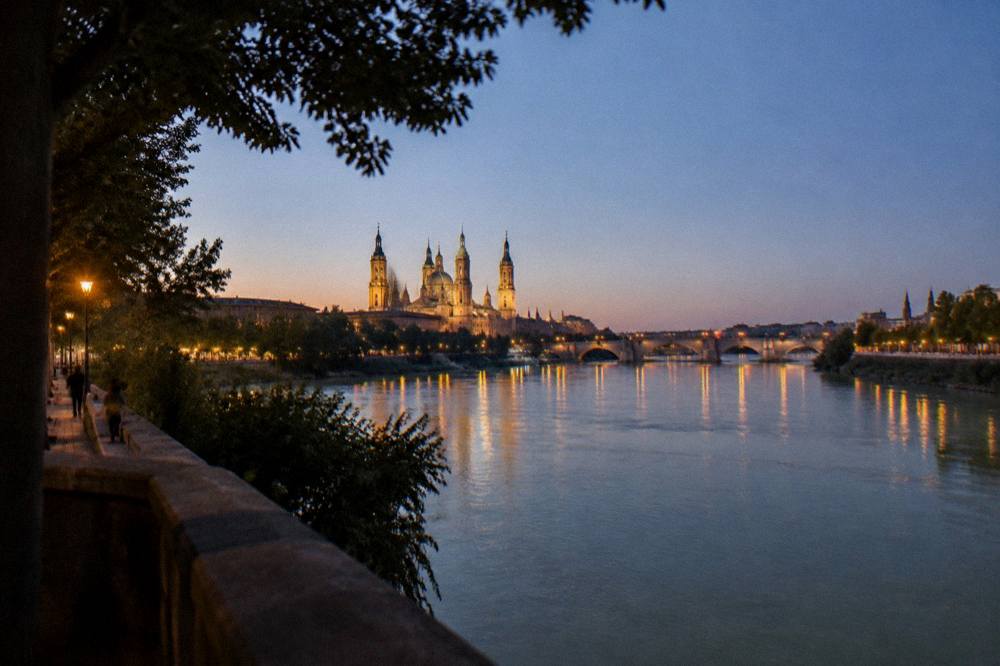
The city end of that plan is not filler. Zaragoza's own sights, the Basílica del Pilar, La Seo and the Aljafería, are the equal of anything within day-trip range, and a Belchite day is stronger when it sits inside a trip that has already given the city its due. The three-day Zaragoza itinerary shows how the monuments compress into a short stay, and the Zaragoza tapas crawl covers the evening that follows a dusty afternoon on the plain.
A final thought on tone. Belchite is on few first pages of Spain guides, and the reason is not that it is hard to reach but that it is hard to sell. The ruin asks you to stand in a place where a community ended and to simply look. Go for that, plan the practical side from what you can confirm on the day, and it will be the day of your trip you think about longest, as the Zaragoza Travel Guide covers in its wider history of the city and its province.
Common Questions About Belchite
What is Belchite?
Belchite is a town in Zaragoza province, Aragon, Spain, best known for Pueblo Viejo, its old town, which was destroyed in the Battle of Belchite during the Spanish Civil War and left standing as a ruin while a new town was built beside it.
How far is Belchite from Zaragoza?
No driving distance or journey time is verified in the sources for this route, so treat any figure you see as unconfirmed. Belchite lies to the south-east of Zaragoza on the dry Aragonese plain, and the journey is commonly made by road as a half-day trip.
Can you visit Belchite on a guided tour from Zaragoza?
Yes. Two bookable day trips from Zaragoza pair the old town with an Aragonese olive oil visit: the Midday Olive Oil Tour and Visit to Old Town of Belchite, from $106.92 per person and rated 5 from 35 reviews, and the Olive Oil Tour and Visit to Belchite Old Town, from $108.94 per person and rated 4.8 from 18 reviews.
Is there an entry fee for Belchite old town?
No entry fee or opening hours for Pueblo Viejo are published in the verified sources, so confirm access locally before travelling and plan to be self-sufficient with water and sun protection.
Why was Belchite never rebuilt?
After the Civil War the ruins were left standing as a symbol and the new town was built on adjacent ground, which is why the destroyed old town survives as a walkable ruin today rather than having been cleared or restored.
When is the best time of year to visit Belchite?
Spring and autumn. AEMET's 1981 to 2010 normals for the Zaragoza Aeropuerto station show July with a mean maximum of 32.4 C, while March averages 17.3 C and October 21.4 C, and the ruin offers no shade at all.