Teruel From Zaragoza: A Mudéjar Day Trip Into Southern Aragon, Spain
Teruel sits south of Zaragoza in the highlands of Aragon, and it packs Mudéjar towers, a famous pair of doomed lovers and a cured-ham tradition into a city small enough to walk in a day.
Short answer
Teruel is the capital of its own province in southern Aragon, reached as a day trip from Zaragoza by road or rail, and it is known above all for its Mudéjar brick towers, the legend of the Lovers of Teruel and Teruel ham.
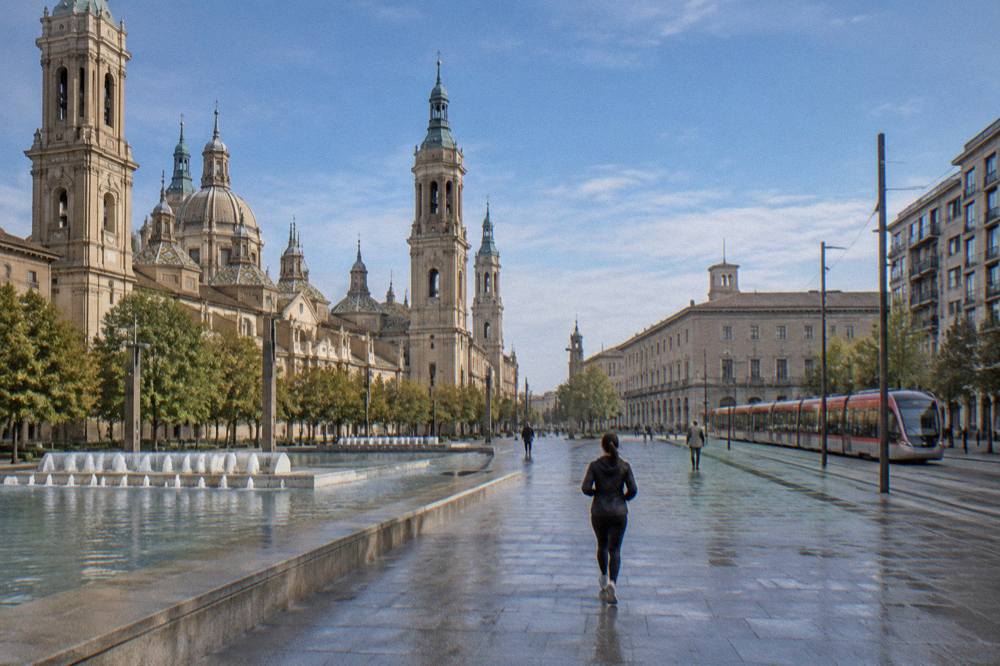
Teruel is the capital of the province of the same name in southern Aragon, and it makes one of the most distinctive day trips you can take from Zaragoza, the capital of the region on the Ebro. Where Zaragoza spreads along a wide river valley, Teruel climbs a hill at the end of a range, all terracotta brick, narrow lanes and cold, clear air. The city is small enough that its core is entirely walkable, yet it carries an architectural reputation that reaches across Spain: it is the place most people mean when they say Mudéjar, the brick-and-tile building style that Muslim craftsmen developed under Christian rule in Aragon. Planning the trip is simple, but the details matter, because Teruel rewards visitors who know what they are looking at before they arrive. This page, part of the Zaragoza Travel Guide day-trip series, covers what Teruel is famous for, how to structure a one-day visit from Zaragoza, and how it compares with the other destinations that fan out from the Aragonese capital.
Why Is Teruel Worth A Day Trip From Zaragoza?
Teruel is worth the journey because it concentrates an entire architectural tradition into a walkable hilltop core: a set of Mudéjar towers in glazed brick and tile, a pair of churches that define the style, and a legend of doomed lovers that gave the city its romantic identity, all in a provincial capital that sees far fewer visitors than Zaragoza itself. The contrast is the point: one day takes you from the Ebro valley to a colder, quieter, more vertical Aragon.
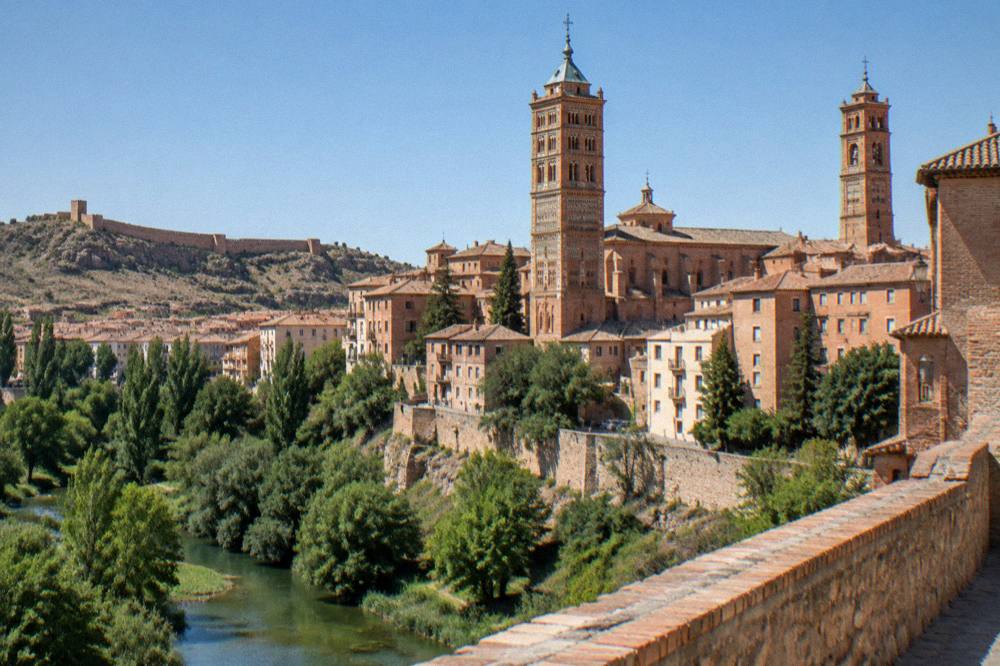
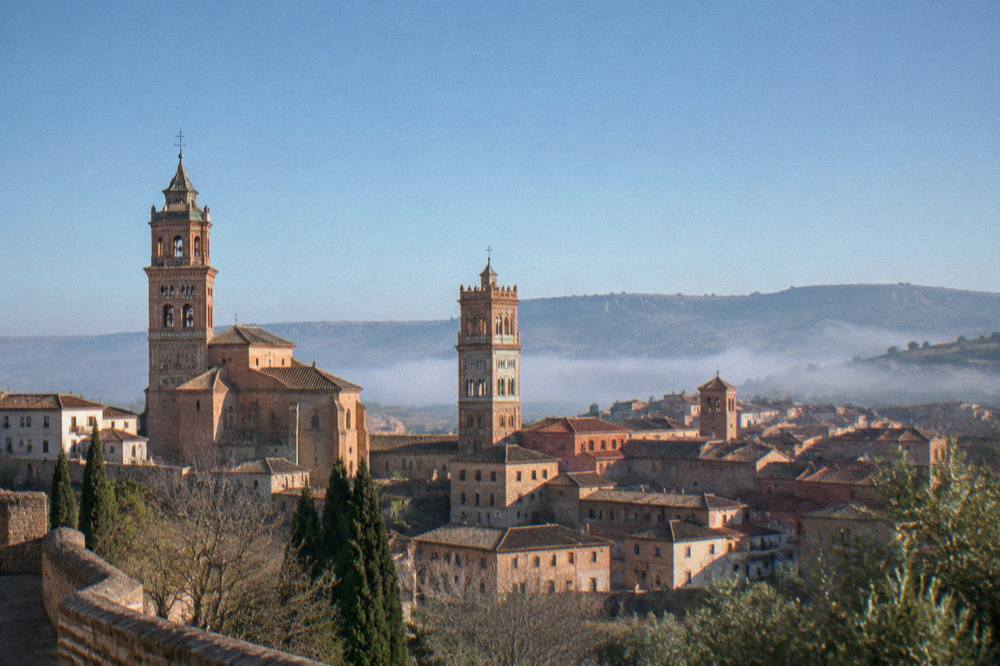
The province of Teruel is one of the most sparsely populated in Spain, and its capital has turned that isolation into character. The historic centre clusters around a handful of squares, so a visitor arriving mid-morning can see the principal monuments, eat a long lunch and still have time for the viewpoint before the light goes. The city's economy runs on cured ham and on its monuments, and both are visible: ham-curing warehouses ring the town, and the towers of San Martín and the cathedral rise above the roofline from almost every street.
What Teruel does not offer is the scale of Zaragoza. There is no river promenade like the Ebro walk, no palace like the Aljafería, and the museum offer is thinner. That is precisely why the pairing works: a visitor who has spent days in Zaragoza's monumental core, described in the one-day Zaragoza itinerary, arrives in Teruel with the vocabulary already in place and can read the Mudéjar facades with fresh eyes. The style that decorates Zaragoza's churches reaches its most refined expression two provinces south, in brick laid in patterns that have been studied and copied ever since.
What Is Teruel Famous For?
Teruel is famous for three things: its Mudéjar towers, among the finest brick architecture in Spain; the legend of the Lovers of Teruel, a medieval story of a doomed couple whose tombs are displayed side by side; and Teruel ham, a cured mountain ham that carries the city's name across every Spanish deli counter. A fourth fame, dinosaurs, belongs to the province's dinosaur sites and their dedicated theme park.
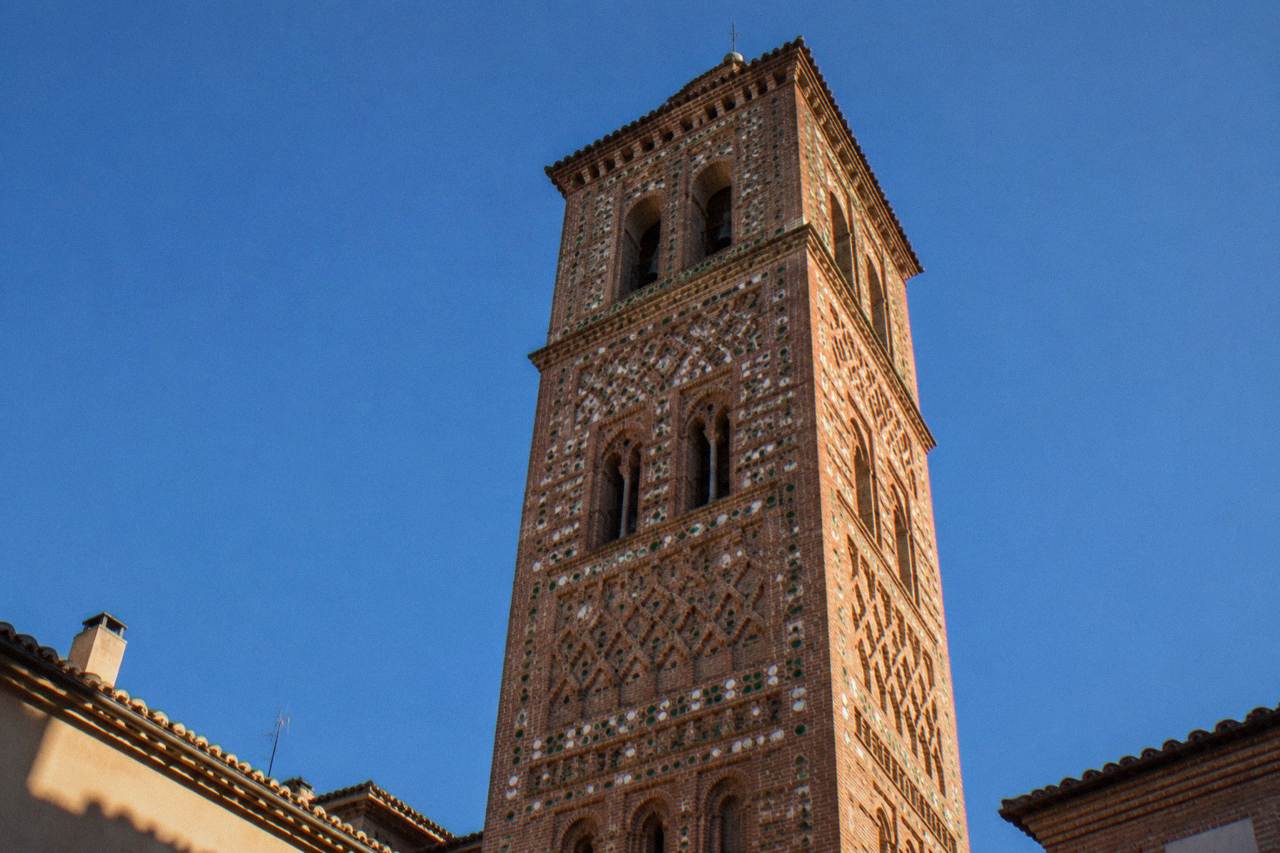
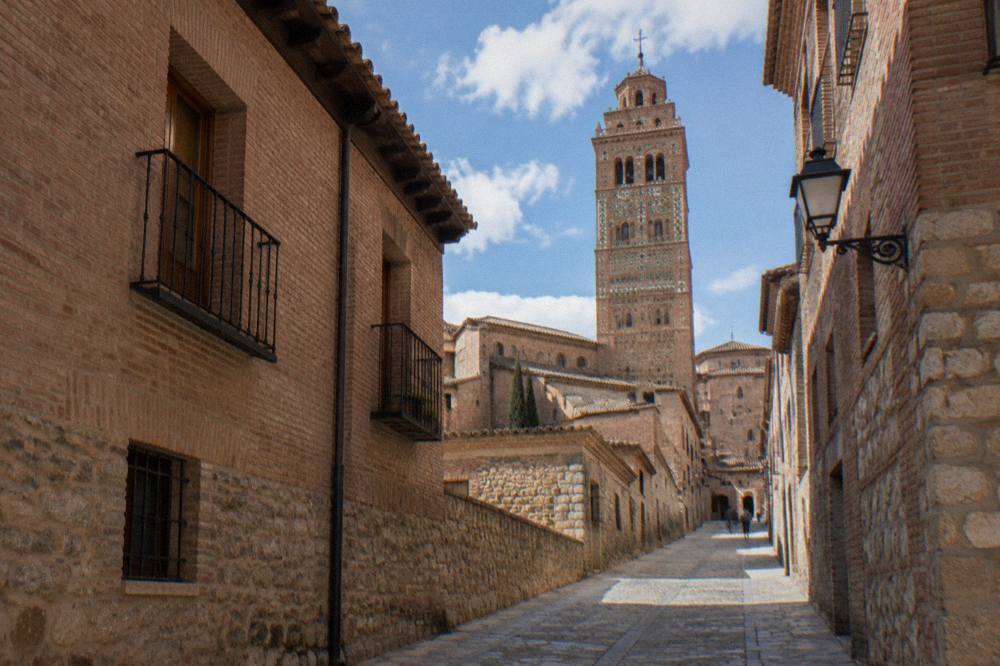
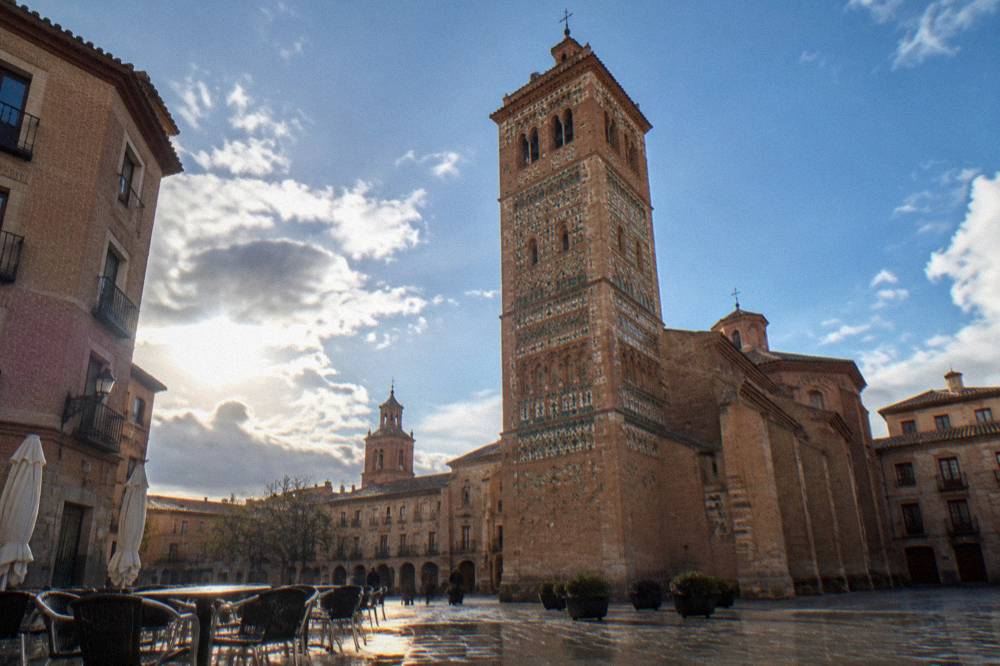
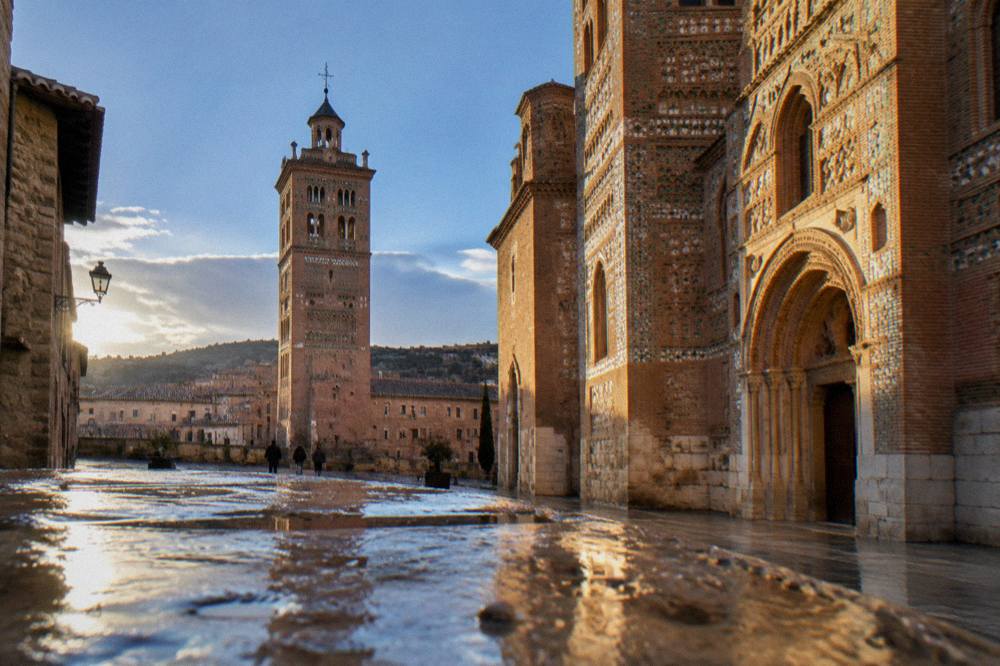
The Mudéjar heritage is the headline. Aragon is the heartland of the style, and the UNESCO World Heritage item "Mudejar Architecture of Aragon", inscribed in 1986, recognises the tradition across the region; Teruel's towers, with their brick screens and green and white ceramic inlay, are the image most people carry of it. The tower of San Martín, standing over a stepped street, and the tower of El Salvador are the two most photographed structures, while the cathedral's painted wooden ceiling is one of the treasures of the style. If you want the full background on the tradition before you go, the Mudéjar architecture guide on this site's Zaragoza pages covers the style as it appears across the region.
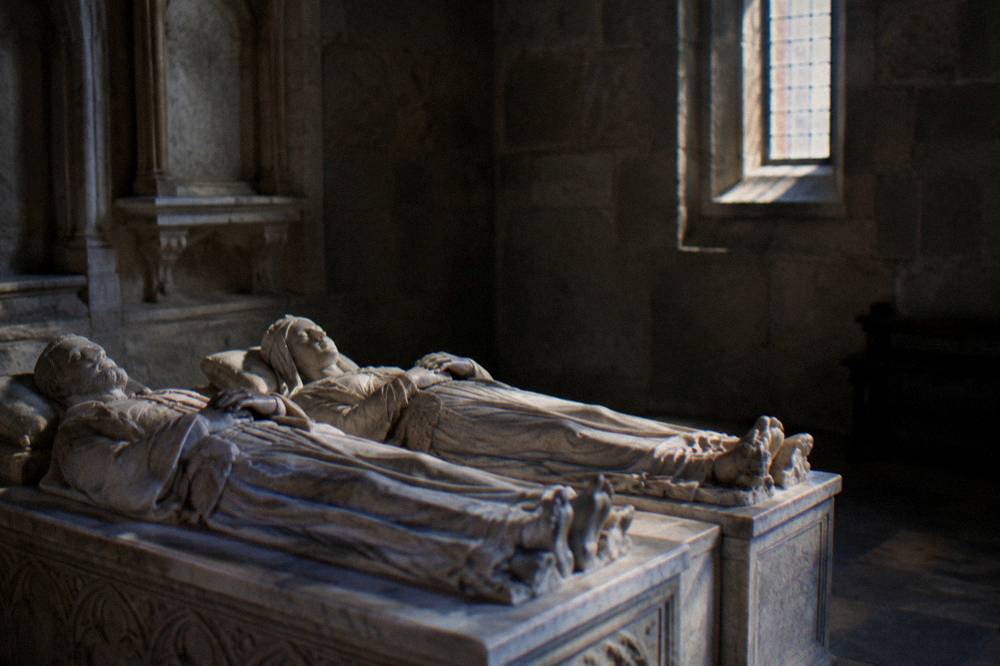
The Lovers of Teruel give the city its emotional core. According to the legend, Diego Marcilla and Isabel de Segura were denied marriage because Diego lacked money; he left to make his fortune, returned too late, and died at Isabel's feet at her wedding. The city built a mausoleum where their recumbent figures lie with hands that almost touch, sculpted in marble, and the story is re-enacted in the city's festivals each February. Even visitors unmoved by the tale tend to remember the tombs.
Teruel ham is the third fame, and the most edible. The province's altitude and dry, cold winters make it ideal curing country, and Teruel ham was the first Spanish ham to receive protected status tied to its mountain climate. Every bar in the old quarter serves it, usually with bread rubbed with tomato. Finally, the province is one of Europe's richest dinosaur-fossil regions, and Dinópolis, the palaeontology park on the edge of the capital, has made the province a family destination in its own right.
The guided options below cover the range of day trips that leave from Zaragoza, from the Pyrenees excursion this site features to a witch-lore trip into the Moncayo country and a half-day winery run; Teruel itself is travelled independently, but the pattern of a guided day out from the Aragonese capital is the same.
How Do You Get From Zaragoza To Teruel?
You get from Zaragoza to Teruel by road or by rail, travelling south from the Ebro valley into the Iberian mountain system, and the journey is the kind best planned around your own pace: the city lies far enough from Zaragoza that an early start matters more than the specific mode. No timetable or fare for this route is published on this site, so check the current schedule with the operator before you commit to a day trip.
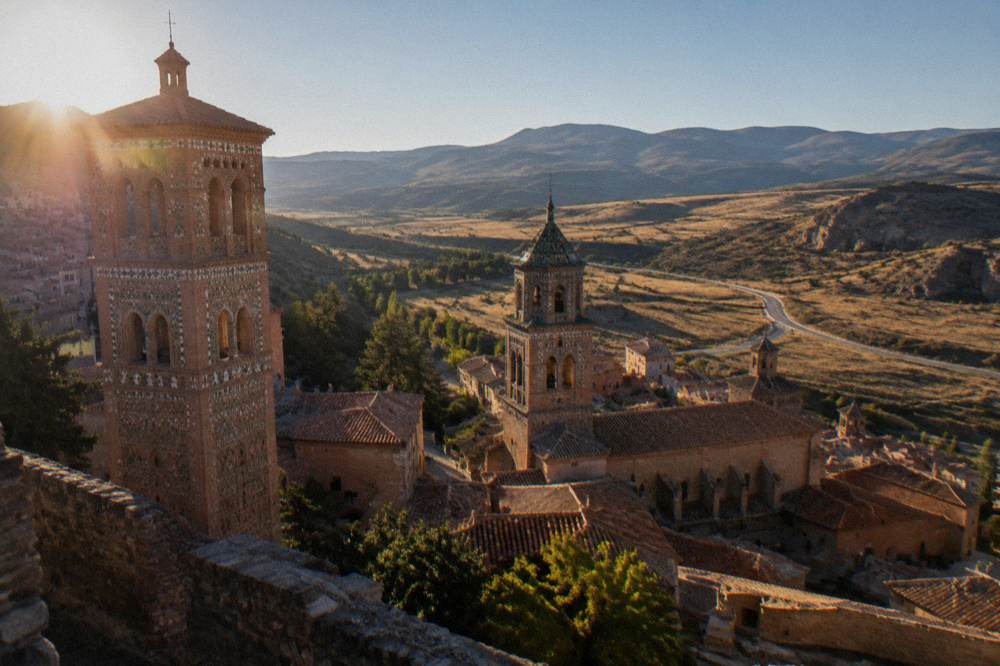
The direction is the fixed fact: Teruel lies to the south of Zaragoza, deeper into Aragon, and the route climbs out of the Ebro basin into higher, colder country. Travellers coming from Madrid or Barcelona typically arrive first at Zaragoza-Delicias, the region's high-speed hub, which is about 1.5 to 2 hours from both cities by fast train; Teruel is then the second leg of the journey. If you are building the wider picture, the how to get to Zaragoza pages on this site cover the arrival options into the Aragonese capital, and Albarracín, another southern-Aragon hill town, can even be combined with Teruel on a longer trip.
Within Zaragoza itself, the practical costs are fixed and verified. A single ticket on the urban bus or tram costs 1.70 EUR, dropping to 0.55 EUR with a Tarjeta Bus, which itself costs 7 EUR and works on both networks. The airport bus is line 505, at 4.65 EUR for a single, about 2.25 EUR with a Lazo card. The Zaragoza Tourist Bus, a 24-hour hop-on hop-off circuit with 16 stops on a 90-minute loop, costs 10 EUR, and the municipal page notes it is cash only on board.
| Transport in Zaragoza | Ticket | Price (EUR) | Notes |
|---|---|---|---|
| Urban bus and tram | Single | 1.70 | No transfer, night lines 1.00 |
| Urban bus and tram | Tarjeta Bus trip | 0.55 | Card costs 7.00, valid on bus and tram |
| Airport bus (line 505) | Single | 4.65 | About 2.25 with Lazo card, timed to flights |
| Tourist Bus | 24-hour ticket | 10.00 | 16 stops, 90-minute loop, cash only on board |
| Bizi bike share | Day pass | 1.00 | Plus 0.50 per trip up to 30 minutes, 50.00 deposit held |
Because the journey south is long by Aragonese standards, most visitors treat Teruel as a full-day trip with a very early departure, or as an overnight with a morning in the old quarter. Driving gives the most freedom to stop in Albarracín or the sierra; the train arrives within reach of the centre; either way the return leg lands you back in a Zaragoza that is still serving dinner at midnight.
What Can You See In Teruel In One Day?
A one-day Teruel visit can cover the Mudéjar towers of San Martín and El Salvador, the cathedral with its painted ceiling, the Mausoleum of the Lovers, the Plaza del Torico with its small bull statue, and the aqueduct viaduct at the edge of the old town, with a ham lunch in between: the core is compact, steep in places, and best walked in a loop that starts and ends at the Torico.
Start at the Plaza del Torico, the little square that is the city's living room, where a small bronze bull on a column gives the plaza its name and the surrounding bars serve morning coffee. From there the old quarter rises in tiers. The tower of San Martín stands a few streets up, its brick shaft wrapped in interlacing ceramic patterns, and the church of El Salvador holds a matching tower that can be climbed for a view over the roofscape. The cathedral, formally the church of Santa María de Mediavilla, contains the painted wooden ceiling that is the single most celebrated interior in the city, a coffered masterpiece of Mudéjar carpentry.
The Mausoleum of the Lovers, attached to the church of San Pedro, is the emotional stop. The two marble figures lie in an upper chapel designed for exactly one purpose: letting visitors stand between the tombs of Diego and Isabel and read the story on the surrounding panels. The viaduct, a stone aqueduct carrying water across a ravine at the edge of town, makes a natural final walk, with views back over the towers.
Two practical notes shape the day. First, Teruel is a city of stairs and slopes: comfortable shoes matter more here than in flat, riverside Zaragoza. Second, the lunch hour is sacred, and the ham is the reason many people come; a long midday meal in the old quarter is not lost time, it is the destination. Families travelling with children usually budget time for Dinópolis on the edge of town, which pairs well with a shorter monument circuit. For a sense of what a guided Aragon day out looks like when someone else handles the logistics, the witch-lore trip below runs from Zaragoza into the Moncayo country with food included.
Which Other Day Trips From Zaragoza Sit Near Teruel?
The destinations that pair most naturally with a Teruel trip are Albarracín, the walled mountain town to the west of the province, and the Sierra de Gúdar ski country to the east, but from Zaragoza the practical pairings are the other southern and eastern day trips: Albarracín, Monasterio de Piedra, Daroca and Calatayud, all reached heading south or south-west from the Ebro valley, each a different kind of Aragonese day out.
Teruel province is large, and most visitors combine the capital with at least one other stop. Albarracín is the classic pairing: a red-walled town on a bend above a river, regularly described as one of the most beautiful villages in Spain, and covered in its own page on this site. Monasterio de Piedra, with its waterfalls and monastery park, lies to the north-west of Teruel and closer to Zaragoza, making it a separate day trip in its own right. Daroca and Calatayud sit along the western corridor towards Madrid and carry Mudéjar churches of their own, so a visitor bitten by the Teruel towers can chase the style across the region. The Mudéjar tradition page on this site explains how the style spread along Aragon's river valleys.
| Day trip from Zaragoza | Direction from Zaragoza | Character | Guided option from Zaragoza |
|---|---|---|---|
| Teruel | South | Mudéjar towers, lovers' tombs, ham | Independent travel, no tour |
| Albarracín | South-west | Walled mountain town above a river | Independent travel, no tour |
| Monasterio de Piedra | West | Waterfalls and monastery park | Independent travel, no tour |
| Daroca | South-west | Mudéjar churches on a walled hill | Independent travel, no tour |
| Tarazona and Moncayo | North-west | Cathedral city under a mountain | Cursed-town guided trip, from 209.33 USD, rated 4.7 from 6 reviews |
| Belchite | South-east | Civil War ruin, visited soberly | Olive-oil guided trip, from 106.92 USD, rated 5 from 35 reviews |
Belchite deserves a separate word. It is a ruined village from the Spanish Civil War, left standing as it was destroyed, and it is visited quietly and soberly rather than as a photo stop. The guided olive-oil trips from Zaragoza that include the old town treat it with that respect, pairing the visit with a working mill. The comparison that matters for planning is simple: Teruel is the architectural day, Albarracín the picturesque one, Monasterio de Piedra the natural one, and Belchite the historical one, and a week based in Zaragoza can string several of them together.
When Is The Best Time Of Year To Visit Teruel?
The best time to visit Teruel is late spring through early autumn, because the city stands at altitude in the southern Aragonese highlands and its winters are genuinely cold: the same continental pattern that gives Zaragoza its dry summers and frosty nights applies more sharply the higher you climb, so May, June, September and October combine comfortable walking weather with the best light on the brickwork.
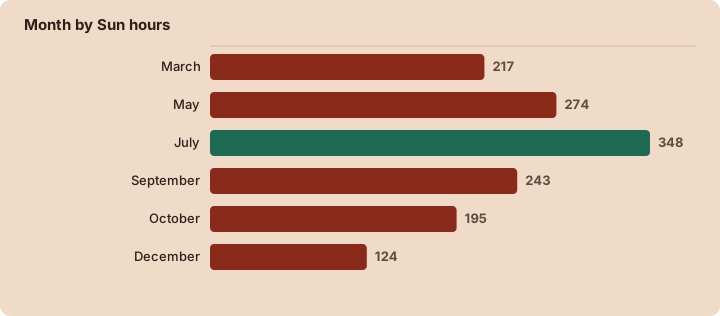
AEMET's 1981-2010 normals for the Zaragoza Aeropuerto station, the nearest verified climate series this site publishes, show the pattern of the Ebro valley you depart from: July carries the highest mean maximum at 32.4 C and the most sun at 348 hours, while May is the wettest month at 44 mm and July and August the driest at 17 mm. The year brings 322 mm of rain over 51.1 days of 1 mm or more, and the station records 23.1 frost days a year. Teruel, higher and further south, runs colder in winter than these valley figures, which is why the summer months and the shoulder seasons are when the walking circuit of the old quarter is most comfortable.
| Month | Mean max C (Zaragoza Aeropuerto, 1981-2010) | Mean min C | Rain mm | Sun hours |
|---|---|---|---|---|
| March | 17.3 | 5.8 | 19 | 217 |
| May | 24.1 | 11.8 | 44 | 274 |
| July | 32.4 | 18.3 | 17 | 348 |
| September | 27.1 | 15.2 | 30 | 243 |
| October | 21.4 | 11.0 | 36 | 195 |
| December | 10.8 | 3.2 | 21 | 124 |
Two seasonal notes shape the choice. February brings the festival of La Vaquilla del Ángel and the re-enactment of the Lovers' legend, which fills the old quarter with processions and is the most atmospheric week of the Teruel year, but it is also among the coldest. October belongs to Zaragoza: the Fiestas del Pilar run from 10 to 18 October 2026, with the Ofrenda de Flores on 12 October, and a visitor in the region that month should see the capital's festival before or after any Teruel day. Winter visitors should also know that the province's ski stations in the Sierra de Gúdar are a genuine snow season draw, though this site publishes no snowfall figures for any Aragonese station.
Should You Take A Guided Tour Or Travel To Teruel Independently?
Teruel itself is travelled independently: no guided tour from Zaragoza covers it, so you plan your own route and buy your own lunch, and the city rewards that freedom because its core is walkable and its story is best absorbed slowly. Guided tours from Zaragoza, by contrast, exist for the Pyrenees, the Tarazona-Moncayo country, the wine regions and the olive-oil belt, and they suit travellers who want the logistics handled.
The trade-off is straightforward. Independent travel to Teruel means an early start, your own tickets and a day structured around lunch, but it also means you can linger at the Lovers' tombs or the cathedral ceiling as long as you like. The Ordesa excursion this page features, an 11-hour circuit taking in Aínsa, Torla and the Sorrosal waterfall, is rated 5 from 3 reviews and costs from $66.40 per person, and it can be checked via the operator's live listing: Check availability.
| Guided day trip from Zaragoza | Kind | From (USD) | Rating | Reviews | Duration |
|---|---|---|---|---|---|
| Ordesa, Aínsa and Sorrosal Waterfall | Pyrenees sightseeing | 66.4 | 5.0 | 3 | 11 hours |
| Canfranc, Jaca and Sallent de Gállego | Pyrenees excursion | 66.4 | 4.7 | 10 | 11 hours |
| Cursed town with witches, Tarazona country | Tarazona and Moncayo | 209.33 | 4.7 | 6 | 7 hours |
| Somontano wine excursion and Alquézar | Wine day trip | 280.95 | 5.0 | 14 | Full day |
| Olive oil and Belchite Old Town | Olive oil day trip | 108.94 | 4.8 | 18 | Half day |
| Half-day winery tour | Wine day trip | 166.28 | 5.0 | 21 | Half day |
For a flavour of the free end of the spectrum, Zaragoza itself has a strong GuruWalk offer: the Indispensable Zaragoza Free Tour of the old town, a two-hour walk rated 4.97 from 576 reviews, tip-based, led by a named guru on the GuruWalk platform. It costs nothing up front and it is a good way to build the Mudéjar vocabulary you will use in Teruel a day or two later. The winery half-day below is the mid-priced guided option, rated 5 from 21 reviews.
How Does Teruel Compare With Zaragoza Itself?
Teruel is smaller, higher, quieter and more single-minded than Zaragoza: where Zaragoza offers a basilica, a palace, Roman ruins and a river, Teruel offers one style, one legend and one ham, done about as well as they can be done. A traveller with limited days should see Zaragoza first, because it is the regional capital with the deepest monument list, and add Teruel when the Mudéjar interest takes hold.
Zaragoza's own monument list is verified on this site and it is long. Entering the Basílica del Pilar is free, its tower viewpoint costs 6 EUR for an adult, La Seo charges 10 EUR general including three associated museums, and the Aljafería charges 7 EUR general or 9 EUR with a guided tour, free on the first and third Sunday and Monday of each month. The Caesaraugusta Roman museums run a four-museum bono at 7 EUR, and the municipal tourist bus covers 16 stops on its 90-minute loop. A visitor who has done that circuit arrives in Teruel knowing exactly what Mudéjar ornament looks like, and the towers of San Martín and El Salvador read as the style's final word.
| Zaragoza monument | General admission (EUR) | Included or noted |
|---|---|---|
| Basílica del Pilar, temple entry | 0 | Free entry, tower viewpoint 6.00 |
| La Seo cathedral | 10 | Includes Museo de Tapices, Museo Pilarista, Rosario de Cristal |
| Aljafería palace | 7 | Guided visit 9.00, free 1st and 3rd Sunday and Monday |
| Caesaraugusta four-museum bono | 7 | Foro, Puerto Fluvial, Termas, Teatro |
| IAACC Pablo Serrano | 0 | Free entry |
| Centro de Historias | 0 | Free entry |
The honest summary is that Teruel does not replace Zaragoza and Zaragoza does not replace Teruel. Zaragoza is the base: the trains, the airport bus, the hotels and the food scene are all there, and the day trips radiate outwards. Teruel is the excursion that shows what the rest of Aragon looks like, a province of altitude, brick and silence that most visitors to Spain never see.
The guided options below are the current selection of day trips leaving from Zaragoza.
For wine-minded travellers, the Somontano full-day option below is the premium choice, rated 5 from 14 reviews at from $280.95.
Common Questions About Teruel
Where is Teruel in Spain?
Teruel is the capital of the province of Teruel, in the south of Aragon, the same autonomous region as Zaragoza. It lies south of Zaragoza, inland, in the Iberian mountain system, and it has no coast: Aragon is an inland region and Zaragoza sits on the Ebro.
What is Teruel famous for?
Teruel is famous for its Mudéjar towers in patterned brick and ceramic, the legend and tombs of the Lovers of Teruel, Teruel cured ham, and the dinosaur heritage of the province, presented at the Dinópolis park on the edge of the city.
Can you visit Teruel as a day trip from Zaragoza?
Yes, Teruel works as a full-day trip from Zaragoza by road or rail, travelling south, though the journey is long enough that an early start is essential and some visitors prefer an overnight. No timetable or fare for the route is published on this site, so check the current schedule with the operator before travelling.
Is there a guided tour from Zaragoza to Teruel?
No guided tour from Zaragoza to Teruel appears in the current selection of bookable day trips, so the city is travelled independently. Guided day trips from Zaragoza cover the Pyrenees, the Tarazona and Moncayo country, the wine regions and the olive-oil belt around Belchite.
What is the best time of year to visit Teruel?
Late spring through early autumn offers the most comfortable walking weather, while February brings the festival of La Vaquilla del Ángel and the re-enactment of the Lovers' legend, the most atmospheric week of the year, at the price of genuine winter cold at altitude.
Can you combine Teruel with Albarracín?
Yes, and it is the classic pairing: Albarracín, the walled mountain town west of Teruel, combines naturally with the capital on a longer trip, and both are covered as day-trip destinations from Zaragoza on this site.
Teruel remains what it has always been: the southern sentinel of Aragon, a small city of brick towers and cured ham that repays the journey from Zaragoza with a day unlike any other within reach of the Ebro.