Mudejar Architecture In Zaragoza
Zaragoza, the capital of Aragon on the Ebro, holds three of the ten UNESCO-listed components of Mudejar Architecture of Aragon. This guide covers what Mudejar is, which Zaragoza buildings carry the listing, what tickets and tour times cost, and how to plan the day.
Short answer
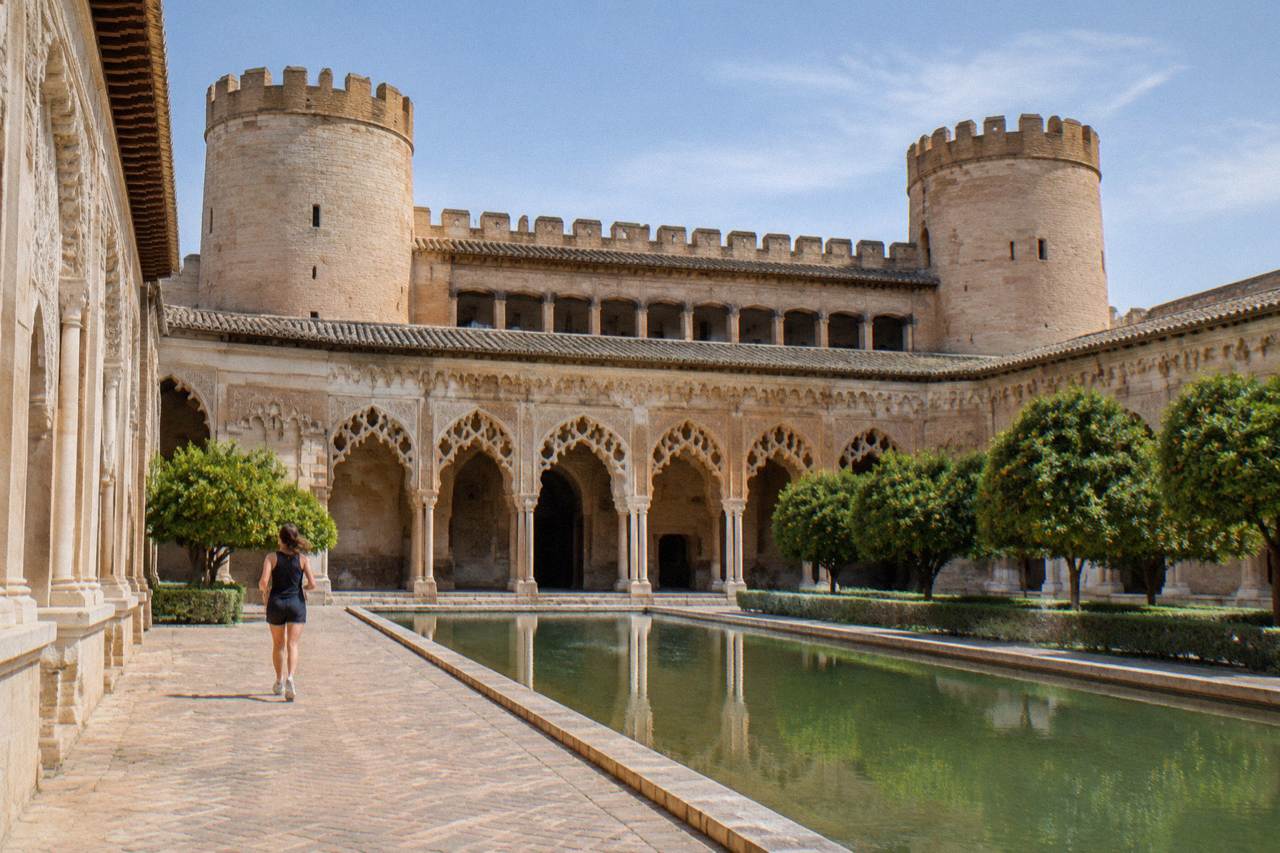
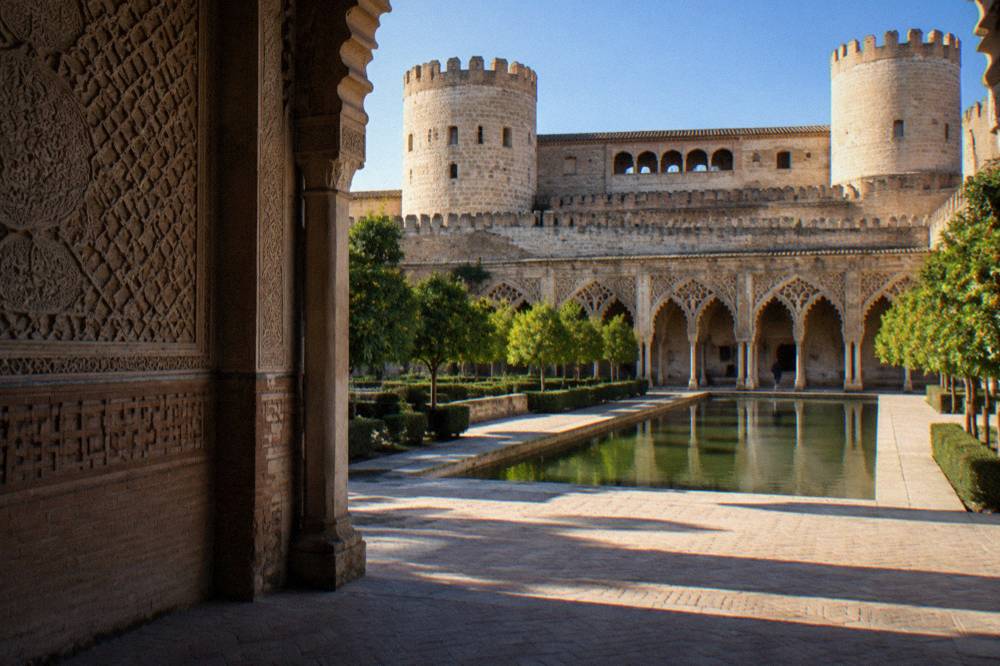
Zaragoza has exactly three UNESCO-listed Mudejar components: the surviving Mudejar features of the Aljafería Palace, the tower and parish church of San Pablo, and the apse, parroquieta and cimborio of La Seo. Aljafería entry is EUR 7 general or EUR 9 with a guided tour, La Seo is EUR 10 including three museums, and both sit within a short walk of the historic centre.
Zaragoza, the capital of Aragon on the Ebro in north-eastern Spain, keeps one of the most concentrated collections of Mudejar architecture anywhere in Europe. Mudejar is the style that Muslim craftsmen, living under Christian rule after the medieval Reconquest of the Ebro valley, developed in brick, plaster, timber and glazed tile: geometric brickwork, stalactite ceilings, horseshoe arches and elaborate ceramic skin applied to churches, palaces and towers. UNESCO inscribed "Mudejar Architecture of Aragon" on the World Heritage List in 1986 and extended it in 2001, and exactly three of its ten components stand in Zaragoza city. The rest of this page is a practical plan for seeing them: what the style is, what the tickets cost, when the guided tours run, and how to fit all three into a single day on foot.
What Is Mudejar Architecture In Zaragoza?
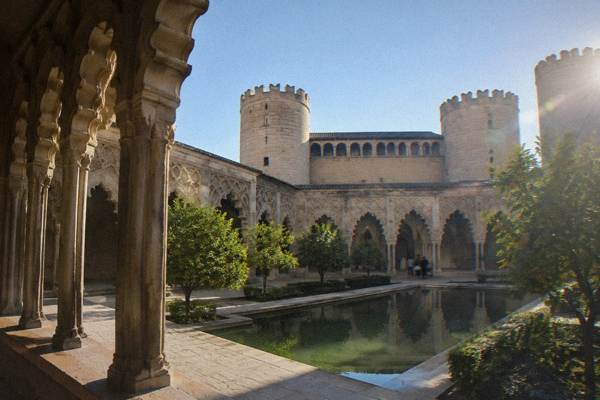
Mudejar architecture is the building style created by Muslim craftsmen working under Christian rule in Aragon, built mostly of brick with carved plaster, wooden roofs and glazed ceramic decoration. In Zaragoza it survives most fully in the surviving Mudejar features of the Aljafería Palace, in La Seo's Mudejar apse, parroquieta and cimborio, and in the tower and parish church of San Pablo, the three components UNESCO lists for the city.
The word Mudejar comes from the Arabic mudayyan, meaning one who has been allowed to stay. After the Christian conquest of Zaragoza, the Muslim population remained, and its master builders kept working, now for Christian and sometimes Jewish patrons. The result was not a survival of older taste but a genuinely new style: Christian building types, churches, palaces, bell towers, executed with Islamic technique and ornament.
Three materials define it. Brick, laid in patterns that alternate stretchers and headers so the wall itself becomes decoration. Plaster, carved into vegetal scrollwork, Kufic and Naskh calligraphy and sebka lozenges. Glazed ceramic, cut into small tiles and set into brick as colour, green, white, blue and black, catching the strong Ebro light. The style ran for centuries and kept absorbing new ideas, so a later medieval bell tower can carry Gothic openings inside a wholly Mudejar skin.
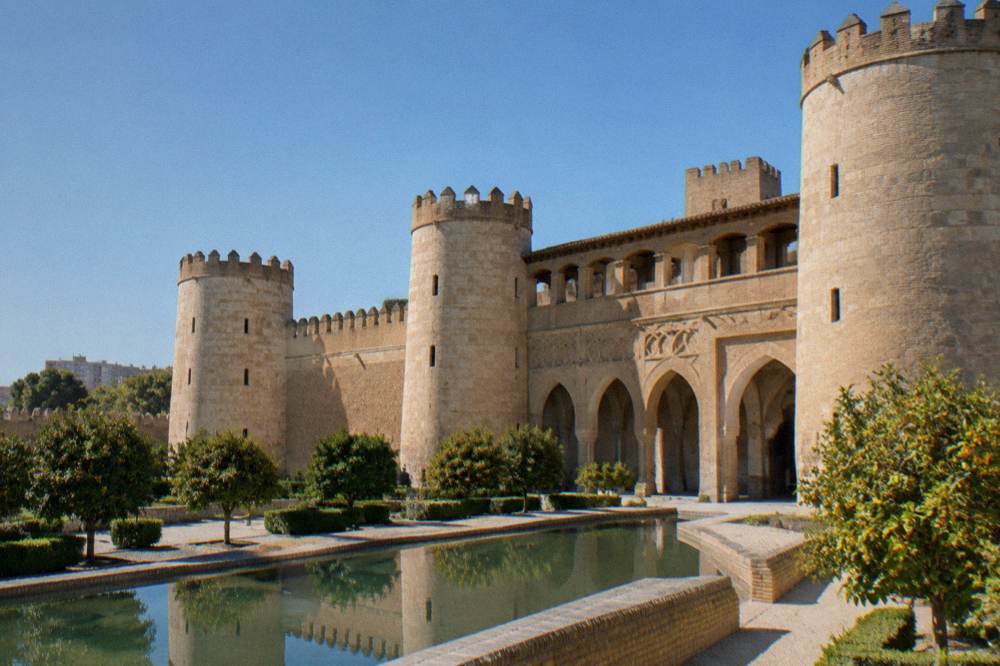
Zaragoza matters within the style because the city was the seat of the Kingdom of Aragon and its richest workshop. The Aljafería preserves Islamic palace architecture that later builders respected and copied, which is why UNESCO's listing names "the surviving Mudejar features of the Aljafería Palace" rather than the whole building. La Seo, the cathedral of San Salvador, wears a Mudejar apse, parroquieta and cimborio over a Gothic interior. San Pablo, a parish church across the centre, carries the style in its tower and brick walls. Together they give a compact, walkable lesson in centuries of Aragonese building, and the Aljafería Palace guide covers the palace itself in depth.
Which Zaragoza Buildings Are On The UNESCO Mudejar List?
Exactly three components of the UNESCO property "Mudejar Architecture of Aragon" stand in Zaragoza: the surviving Mudejar features of the Aljafería Palace, the tower and parish church of San Pablo, and the apse, parroquieta and cimborio of La Seo. The property was inscribed in 1986 and extended in 2001, holds ten components in the provinces of Teruel and Zaragoza, and the Basilica del Pilar, La Magdalena and the Torre Nueva are not part of it.
That last point matters, because plenty of travel copy calls the Pilar a Mudejar landmark or implies the whole city centre is listed. UNESCO's own record is narrower and more interesting. The listing does not cover whole buildings in Zaragoza: at the Aljafería it covers the surviving Mudejar features of the palace, and at La Seo it covers the apse, the parroquieta, the chapel corridor of the archbishops' tombs, and the cimborio, the lantern over the crossing, not the Gothic nave they wrap around.
| UNESCO component in Zaragoza | What the listing covers | Where it stands |
|---|---|---|
| The surviving Mudejar features of the Aljafería Palace | The Islamic palace fabric and its later Mudejar features | West of the centre, beside the tram on the Aljafería stop |
| The tower and parish church of San Pablo | The brick Mudejar tower and the parish church | San Pablo district, east of Plaza del Pilar |
| The apse, parroquieta and cimborio of La Seo | The Mudejar apse wall, the parroquieta corridor and the cimborio lantern | Plaza de La Seo, in the old town |
The other seven components of the property lie elsewhere in the provinces of Teruel and Zaragoza, in Teruel itself, Calatayud, Cervera de la Cañada and Tobed. A visitor based in Zaragoza can see all three city components in a day, and the La Seo Cathedral guide explains the parroquieta's tombs and the Museo de Tapices in detail.
A guided walk is the efficient way to hold the three components together, because the style rewards explanation: the brick patterns are not just pretty, they are structural and sometimes epigraphic. The 2.5-hour historical tour of the old district covers the quarter where La Seo and San Pablo sit, and its listing shows a from-price of $106.92 per person with a 5 rating from 14 reviews.
How Much Does It Cost To See The Aljafería And La Seo?
Aljafería entry is EUR 7 general, EUR 9 with a guided visit, EUR 4 if you hold a tourist bus ticket, and EUR 2 for students, visitors over 65 and Carnet Joven holders, with under-12s free. La Seo charges EUR 10 general, EUR 9 over 65, EUR 7 for students and ages 13 to 18, free under 12, and EUR 12 for general admission plus the tower, with the ticket including three museums.
Those figures come from the municipality's October monument timetable. La Seo's EUR 10 general ticket is broader than a single door: it includes the Museo de Tapices, the Museo Pilarista and the Rosario de Cristal, so the cathedral visit doubles as a museum pass. Aragon residents enter La Seo free on the 6th, 12th, 23rd and 27th of each month.
| Ticket | Aljafería | La Seo |
|---|---|---|
| General | EUR 7 | EUR 10 |
| Guided visit | EUR 9 | EUR 12 (general + tower) |
| Over 65 | EUR 2 | EUR 9 |
| Students and 13-18 | EUR 2 | EUR 7 |
| Under 12 | Free | Free |
| What the ticket includes | Palace access, 45-minute last entry | Museo de Tapices, Museo Pilarista, Rosario de Cristal |
Neither building needs a booking platform to enjoy, but a guide changes what you see. The Aljafería's own Spanish-language guided visits run at fixed times, listed below, and a ticket-and-guided-visit product from $24.76 per person, rated 4.7 from 82 reviews, bundles entry with a guide. Check availability if you would rather not depend on the Spanish-only schedule.
When Is The Aljafería Open And What Tour Times Run?
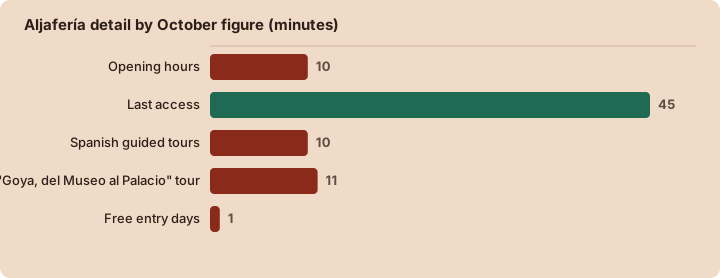
The Aljafería opens daily 10:00 to 18:00 in October, with last access 45 minutes before closing, and Spanish guided tours depart at 10:30, 12:30, 13:30, 15:00 and 16:00, with the "Goya, del Museo al Palacio" exhibition tour at 11:30. Entry is free on the first and third Sunday and Monday of each month.
The palace is also a working building: the Cortes de Aragón, the regional parliament, sits in part of it, which is why access is organised and ticketed rather than free-flowing. The October timetable is the one printed by the municipality; hours shift with the seasons, so check the palace's own ticketing page before a winter visit.
| Aljafería detail | October figure |
|---|---|
| Opening hours | Daily 10:00-18:00 |
| Last access | 45 minutes before closing |
| Spanish guided tours | 10:30, 12:30, 13:30, 15:00, 16:00 |
| "Goya, del Museo al Palacio" tour | 11:30 |
| Free entry days | 1st and 3rd Sunday and Monday of the month |
| Tickets | Online at the palace's ticketing page |
If the Spanish-only times do not fit your day, an English-language option exists: the Aljafería ticket and guided visit product, from $24.76 per person and rated 4.7 from 82 reviews, pairs entry with a guide, so check the operator's live listing for the language options on your date before you commit to the palace's own schedule.
What Should You Look At On La Seo'S Mudejar Exterior?
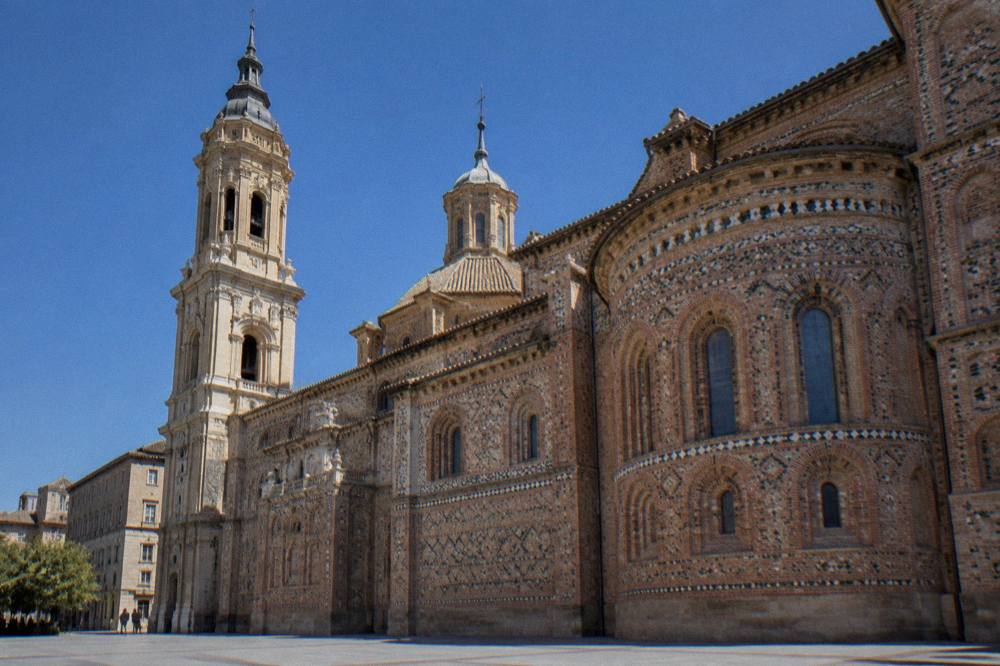
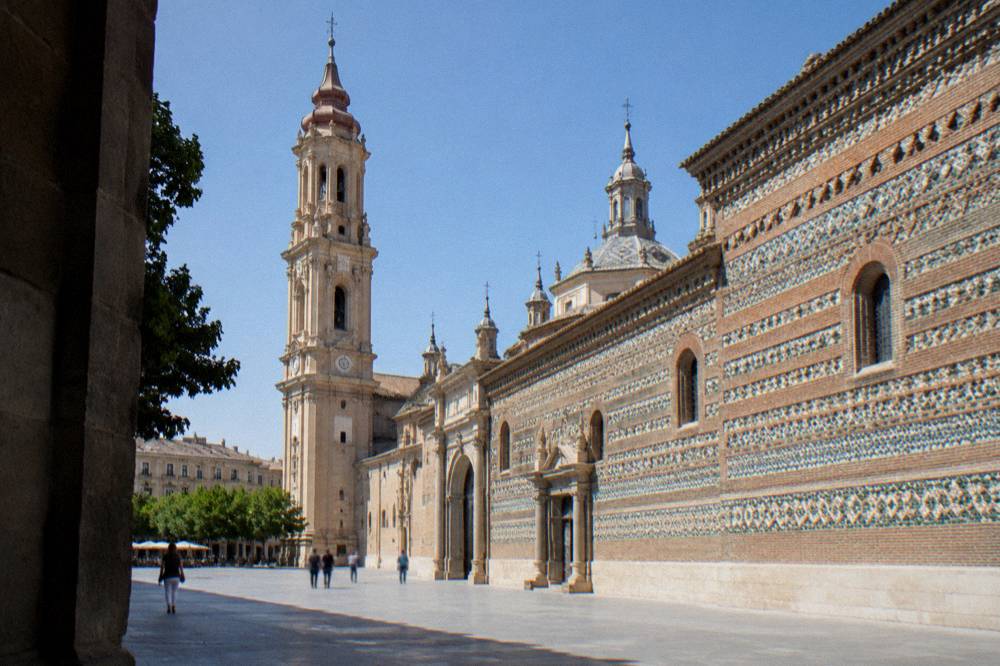
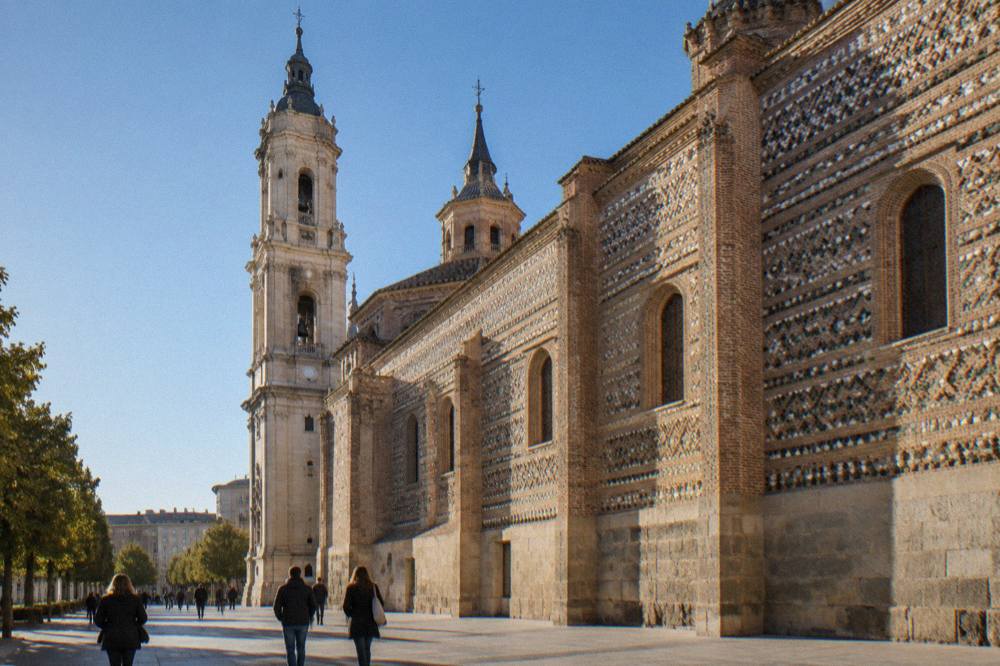
Walk the outside of La Seo's apse first: the east wall is a screen of interlacing brick arches, glazed ceramic inlay and stepped buttresses, and the cimborio above the crossing shows the same brick geometry lifted onto a Gothic body. The parroquieta, on the south side, is a narrow Mudejar corridor chapel holding the alabaster tombs of the archbishops of Zaragoza, and it is the part of the interior that most rewards slow looking.
The apse wall is the image of Aragonese Mudejar that every postcard borrows. Its brickwork alternates patterns band by band, flat panels, then arches, then a frieze of ceramic, in green, white, blue and black, so the wall reads like a page. Look for the contrast between the Gothic interior, light, vertical, stone, and the Islamic skin the builders wrapped around the liturgical east end.
The parroquieta is the quiet masterpiece. A vaulted corridor chapel, it carries a wooden Mudejar ceiling, under an interior that feels closer to a Granada courtyard than a Gothic cathedral. Your EUR 10 La Seo ticket includes it, along with the Museo de Tapices, whose medieval textile collection is one of the best in Europe, and the Basilica del Pilar guide covers the Museo Pilarista that shares the same ticket.
Where Does The San Pablo Component Fit In?
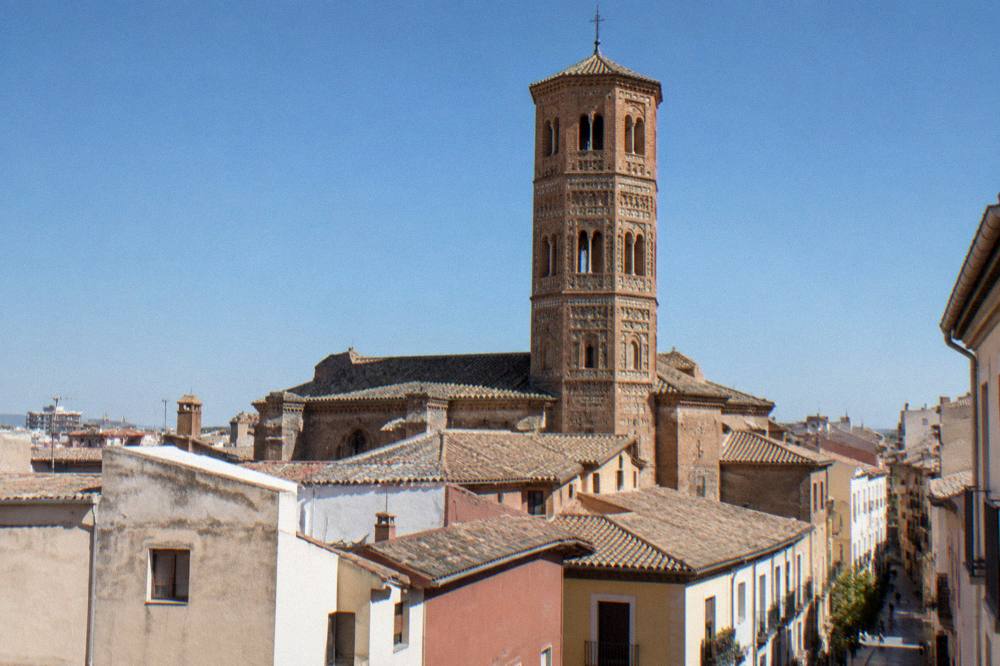
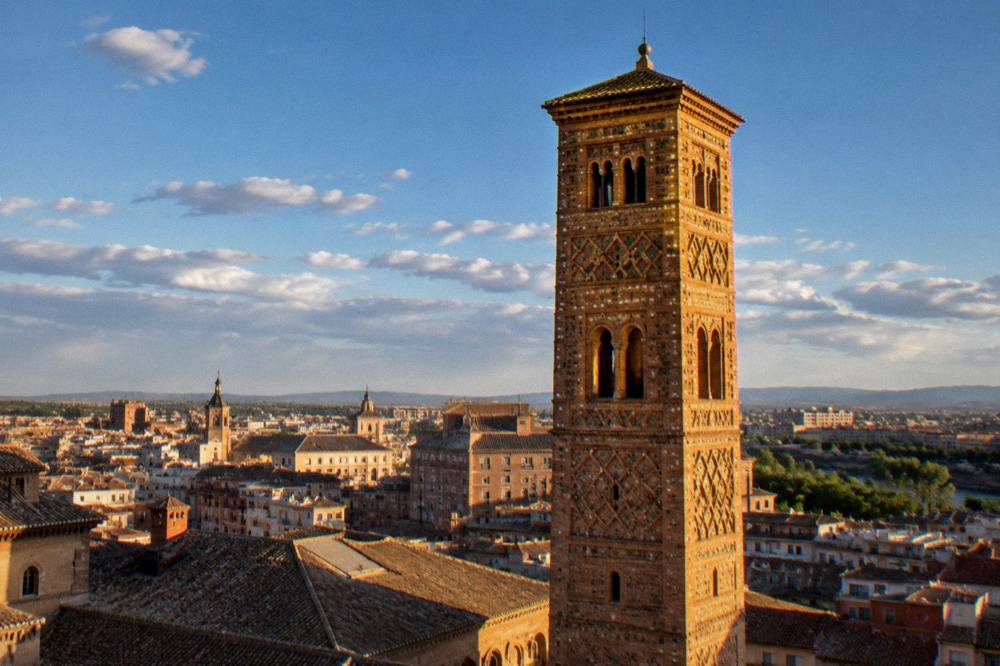
San Pablo's Mudejar tower and parish church stand in the San Pablo district east of Plaza del Pilar, and UNESCO lists "the tower and parish church of San Pablo" as the third Zaragoza component. The tower is a brick structure in the Aragonese tradition, and the parish church around it grew over centuries, so the pair reads as a single Mudejar silhouette against the neighbourhood's rooftops.
San Pablo is the least visited of the three components and the easiest to fold into a walk, because it sits between the centre and the districts east of the Ebro-side streets. The tower's brickwork uses the same palette as La Seo's apse, patterned bands, ceramic inlay, pointed openings, which makes it the best comparison piece in the city: see the apse, then see the tower, and the grammar of Aragonese Mudejar clicks into place.
The parish church is an active place of worship rather than a ticketed monument, so visit with the respect a working church asks for. Photography of the tower from the surrounding streets is unrestricted, and the late-afternoon light across the brick is the reason local photographers keep the corner in their repertoire.
How Do You Plan A Mudejar Day In Zaragoza?
Start at the Aljafería when it opens at 10:00, take the 11:30 exhibition tour or a 12:30 Spanish guided tour, then take the tram or a walk east to La Seo for the apse, parroquieta and the Museo de Tapices, and finish with the San Pablo tower in the low afternoon light. The three components sit in a straight west-to-east line across the centre, and a single day is enough for all three at a comfortable pace.
The order matters. The Aljafería is the oldest layer, an Islamic palace whose Mudejar features UNESCO lists, and it frames everything after it: you see the source, then the style applied to a Gothic cathedral, then to a parish church. La Seo's hours are 10:00 to 14:30 and 16:00 to 20:00 Monday to Saturday in October, so a late-lunch gap in the middle of the day is the natural place to eat; the El Tubo guide covers the tapas streets a few minutes away, though check current bar openings before you plan a route around them.
| Stop | What to see | Ticket | October hours |
|---|---|---|---|
| Aljafería Palace | Islamic palace, Mudejar features, Goya exhibition | EUR 7, EUR 9 guided | Daily 10:00-18:00 |
| La Seo | Mudejar apse, parroquieta, cimborio, Museo de Tapices | EUR 10 | Mon-Sat 10:00-14:30, 16:00-20:00; Sun 10:00-12:00, 16:00-20:00 |
| San Pablo | Mudejar tower and parish church exterior | Working church, no monument ticket | Street access any time |
Two free-entry levers can cut the day's cost. The Aljafería is free on the first and third Sunday and Monday of each month, and the Caesaraugusta Roman museums, a short walk from La Seo, are free on the first Sunday of the month, so a first-Sunday visit pairs Mudejar with the Roman Caesaraugusta sites at no cost.
A short guided introduction suits a first morning. The 105-minute monumental sightseeing tour, from $10.41 per person and rated 4.4 from 36 reviews, runs as an orientation before you go deeper on your own, so check the operator's live listing for departure times on your date.
For a deeper cut, a private guide can route the day around the style itself. The private custom walking tour with a local guide, from $50.65 per person and rated 5 from 86 reviews, runs two to eight hours and can weight the walk toward the Mudejar components, so ask for that emphasis when you book and confirm the route with the guide beforehand.
Common Questions About Mudejar Architecture In Zaragoza
Is the Basilica del Pilar a UNESCO site?
No. The Basilica del Pilar is not part of the UNESCO property "Mudejar Architecture of Aragon". Zaragoza's three components are the surviving Mudejar features of the Aljafería Palace, the tower and parish church of San Pablo, and the apse, parroquieta and cimborio of La Seo.
What does mudejar mean?
Mudejar comes from the Arabic mudayyan, "one allowed to stay", and names the Muslim craftsmen who remained under Christian rule in Aragon after the medieval conquest. Their style, brick construction, carved plaster, timber ceilings and glazed ceramic, applied to Christian buildings, is what the UNESCO listing recognises.
Can you see all three UNESCO Mudejar components in one day?
Yes. The Aljafería, La Seo and San Pablo sit in a west-to-east line across central Zaragoza, and a day at a comfortable pace covers all three. The Aljafería opens daily 10:00-18:00 in October, La Seo keeps split hours with a midday closure, and the San Pablo tower is visible from the street at any time.
Is the Aljafería free on certain days?
Yes. The Aljafería is free on the first and third Sunday and Monday of each month. Otherwise entry is EUR 7 general, EUR 9 with a guided visit, EUR 4 with a tourist bus ticket and EUR 2 for students, visitors over 65 and Carnet Joven holders, with under-12s free.
Are the Aljafería guided tours in English?
The palace's own guided tours are in Spanish, at 10:30, 12:30, 13:30, 15:00 and 16:00, with the "Goya, del Museo al Palacio" exhibition tour at 11:30. For English, a ticket-and-guided-visit product from $24.76 per person pairs entry with a guide; check the operator's listing for the language options on your date.
What is the parroquieta at La Seo?
The parroquieta is a narrow Mudejar corridor chapel along the south side of La Seo, with a wooden Mudejar ceiling and the alabaster tombs of the archbishops of Zaragoza. It is one of the three elements of La Seo named in the UNESCO listing, alongside the apse and the cimborio, and it is included in the cathedral's EUR 10 general ticket.
The full picture of the city's sights, from the Roman forum to the Ebro banks, sits in the things to do in Zaragoza overview, and the Zaragoza Travel Guide home page collects the itineraries that string these monuments into a longer stay.