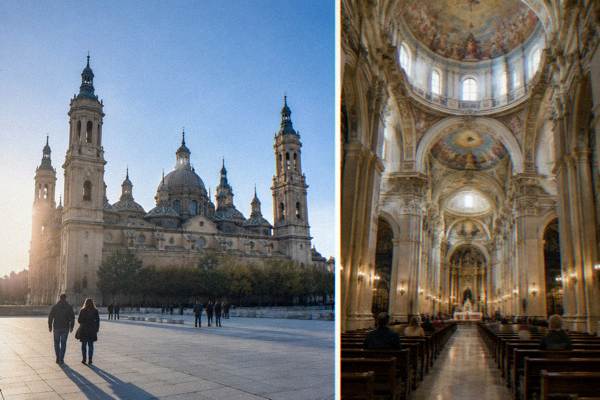
Basílica Del Pilar Zaragoza: The Complete Visitor Guide
The Basílica del Pilar is the church Zaragoza is famous for: free to enter, open all day, and standing on the Ebro where tradition says the Virgin Mary appeared to the apostle James.
Short answer
Entering the Basílica del Pilar in Zaragoza is free. The temple is open daily, with the main altar zone open from 7:30 in the morning. The tower viewpoint costs 6 EUR for an adult, and the Museo Pilarista is open daily from 10:00. A guided tour in Spanish is available from 12.38 USD per person.
The Basílica del Pilar is the building Zaragoza, the capital of Aragon on the Ebro, is known by across Spain. It is free to enter, open from early morning until late evening every day of the year, and it anchors a monumental square, Plaza del Pilar, that also holds La Seo cathedral, the Lonja and the Ayuntamiento. The basilica's own tradition places the Virgin Mary on this spot, standing on a pillar, or pilar, that gives the church its name. That claim made Zaragoza a Marian pilgrimage destination, and the building that grew around the pillar now defines the city's skyline from every approach.
This guide covers everything a visitor needs: the free entry and the opening hours, the paid tower viewpoint and what it costs, the Museo Pilarista, the dome restoration that may affect what you see, the Fiestas del Pilar that transform the square every October, and how the basilica compares with La Seo, the city's other cathedral a short walk away. The hours and prices below come from the municipality's October monument timetable, which is the schedule the basilica itself publishes for visitors.
What Is The Basílica Del Pilar In Zaragoza?
The Basílica del Pilar is a monumental baroque basilica on the west bank of the Ebro in Zaragoza, Aragon, built around a pillar that tradition says the Virgin Mary left for the apostle James. The present church took shape as a great baroque building crowned with domes and towers, and entering it is free. It shares its monumental square with La Seo, the city's medieval cathedral, and it is the devotional heart of Aragon.
The pillar itself, a small jasper column, sits in the Holy Chapel at the east end of the church, directly behind the main altar. It is the devotional heart of the building and the destination of pilgrims who have come to Zaragoza for centuries. The chapel zone around it keeps its own hours, 8:00 to 20:30 daily, and it is the one part of the interior that feels like a separate shrine rather than a nave.
The building you walk through today is baroque in plan, with towers and domes added across later building campaigns. The central dome over the Holy Chapel is richly painted, and the basilica is one of the key stops on any Goya itinerary in the city, alongside the sites covered in Goya in Zaragoza. The painter's native region surrounds the city, and Goya's name runs through Zaragoza's churches and museums.
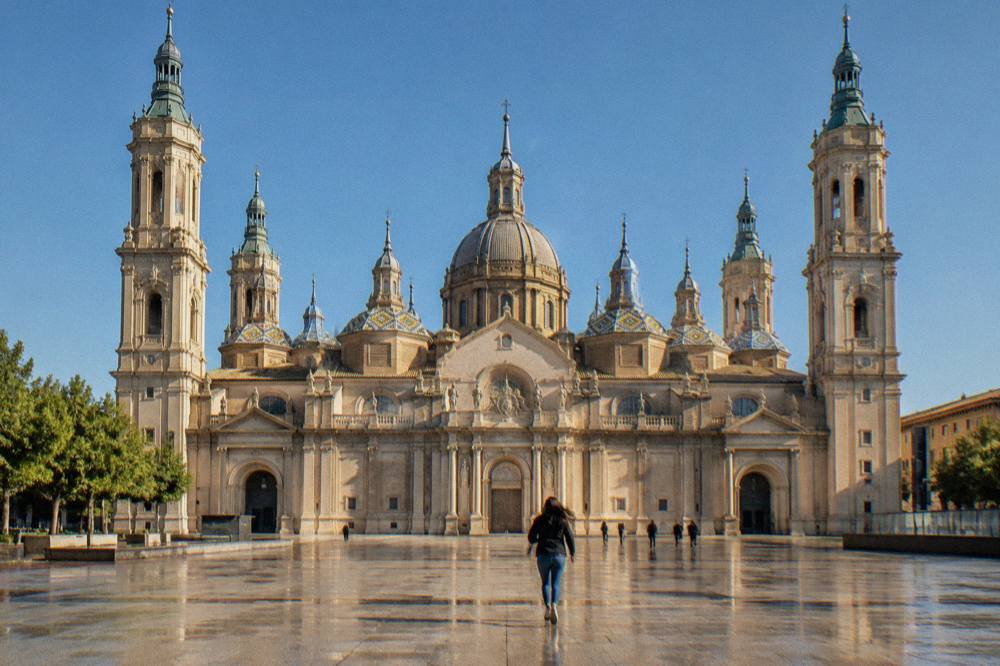
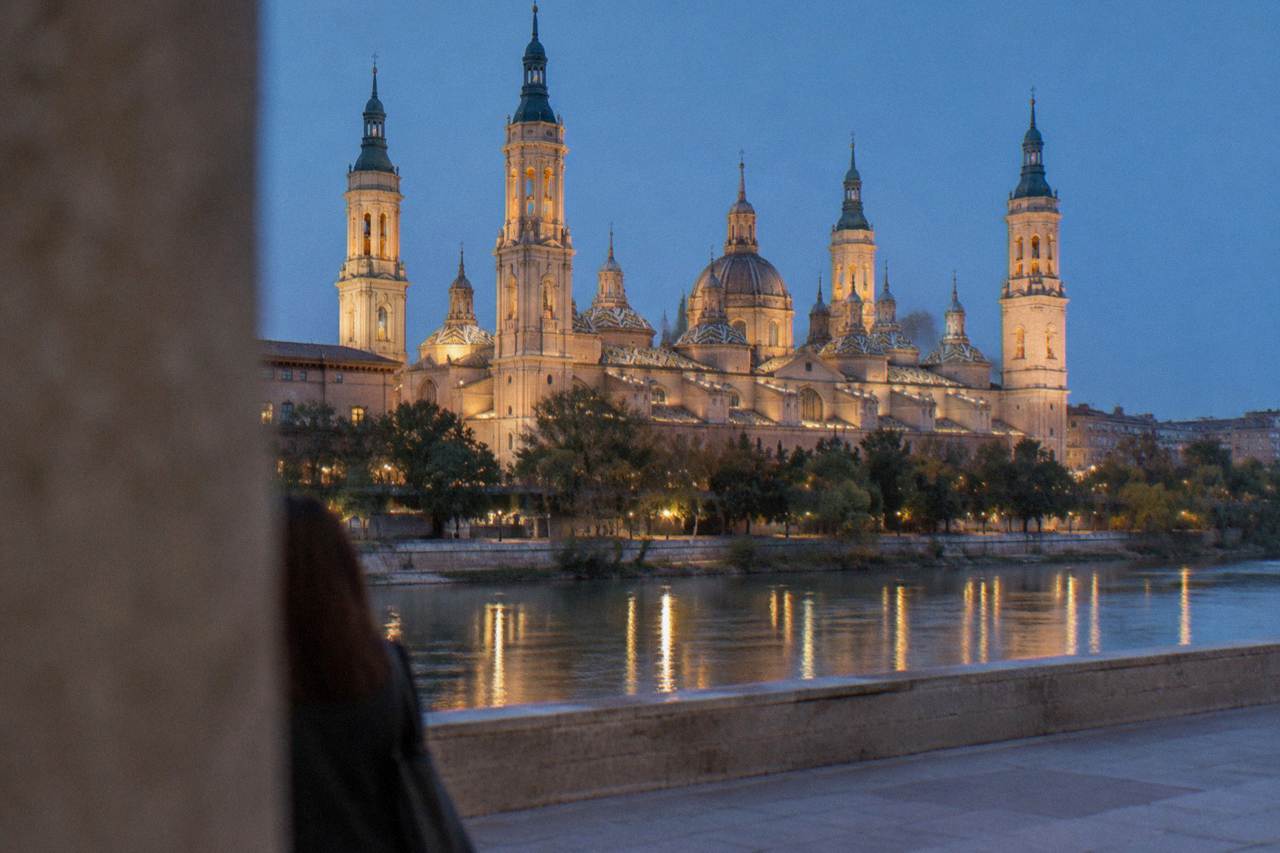
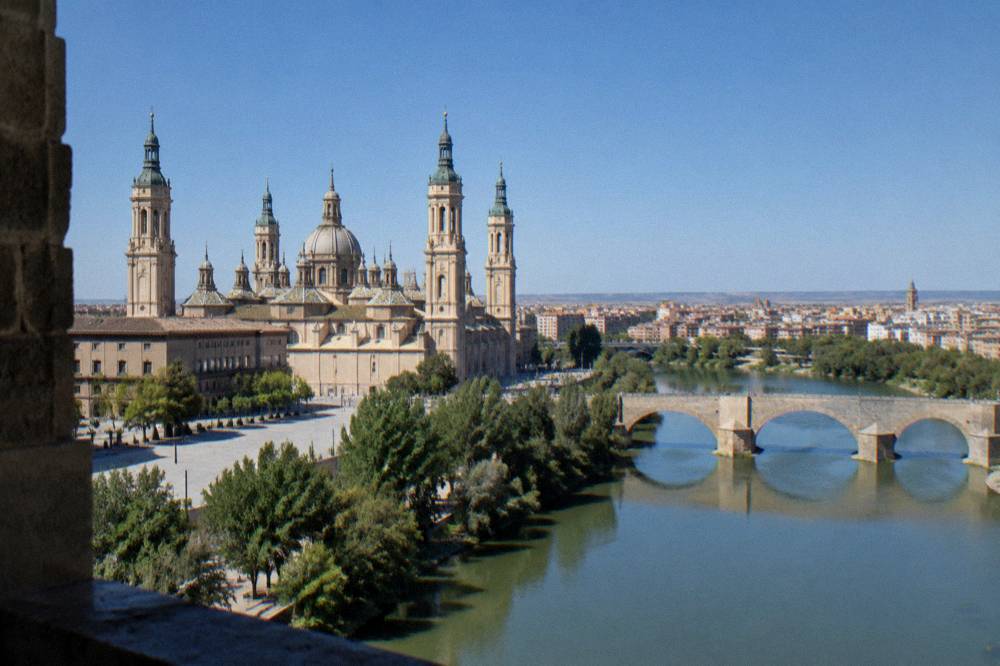
The basilica's scale surprises most first-time visitors. Zaragoza is not a large city by Spanish capital standards, and the Pilar's towers dominate the skyline from every approach, including from the Puente de Piedra, the stone bridge downstream, and from the far bank of the Ebro river walk. The classic photograph, the one on every postcard, is taken from the east bank at dusk with the whole mass of domes reflected in the river.
How Much Does It Cost To Visit The Basílica Del Pilar?
Entering the Basílica del Pilar is free, and no ticket of any kind is needed to walk into the main nave. The only paid elements inside the building are the tower viewpoint, which costs 6 EUR for an adult, and the Museo Pilarista, which is included in the La Seo general ticket rather than sold at the basilica itself. A guided tour in Spanish with the ticket arranged costs from 12.38 USD per person.
That free entry is the single most useful fact about the basilica and the one most guides bury. The municipality's October timetable states it plainly: entering the temple is free. There is no combined ticket you must buy, no timed slot for the nave, and no queue for tickets at the door. You walk in through the main entrance on Plaza del Pilar during opening hours and you stay as long as the visit allows.
The paid options are worth knowing in advance because they are sold separately and work differently. The tower viewpoint, the Torre Mirador, has its own ticket and its own access, with prices from 6 EUR down to free for children under 12. The Museo Pilarista, the basilica's own museum, is not ticketed at the basilica door at all: it is bundled into the La Seo cathedral ticket, which costs 10 EUR general and also covers the Museo de Tapices and the Rosario de Cristal. That is an unusual arrangement and it is the reason a La Seo ticket is worth buying even if your interest is the Pilar.
| What | Price | Notes |
|---|---|---|
| Entering the temple | Free | No ticket, no time slot |
| Tower viewpoint, adult | 6 EUR | Torre Mirador, last access 30 min before close |
| Tower viewpoint, over 65 or residents | 5 EUR | Proof required |
| Tower viewpoint, ages 13-18, students, groups 20+ | 4 EUR | Groups book in advance |
| Tower viewpoint, under 12 | Free | With an adult |
| Museo Pilarista | Included in La Seo ticket | La Seo general ticket 10 EUR |
| Guided tour in Spanish | From 12.38 USD | 1.5 hours, ticket arranged |
For visitors who want the building explained rather than just seen, the Spanish-language guided visit is the featured option on this page. The Basílica del Pilar Spanish guided tour runs about 1.5 hours from 12.38 USD per person and is rated 4.7 from 46 reviews. Check availability if a guided visit suits your dates.
If you would rather start with the city than the church, the free tour through the historical centre of Zaragoza covers the old town around the basilica on a tip-based walk rated 4.15 from 122 reviews, and the Aljafería guided tour in Spanish, rated 4.8 from 103 reviews, pairs well on a second day.
What Are The Basílica Del Pilar Opening Hours?
The basilica's main altar zone opens at 7:30 on Monday to Saturday and closes at 20:15, reopening after lunch from 16:30, and on Sunday it stays open until 21:30 in the evening. The Holy Chapel zone runs 8:00 to 20:30 daily. The tower viewpoint opens 10:30 to 14:30 and 16:00 to 20:00 Monday to Thursday, and 10:00 to 20:00 Friday to Sunday, with last access 30 minutes before closing.
The basilica is a working church before it is a monument, and its hours reflect that. The long morning block from 7:30 exists for mass, and the municipal timetable lists a shorter schedule on wedding Saturdays, when the main altar zone closes at 11:45 in the morning. If you arrive mid-morning on a Saturday and find the nave roped at the crossing, a wedding is the usual reason, and the side aisles and the Holy Chapel generally remain accessible.
| Zone | Monday to Saturday | Sunday |
|---|---|---|
| Main altar zone | 7:30-13:30, 16:30-20:15 | 7:30-13:30, 16:30-21:30 |
| Holy Chapel zone | 8:00-20:30 | 8:00-20:30 |
| Tower viewpoint (Mon-Thu) | 10:30-14:30, 16:00-20:00 | Use Fri-Sun hours |
| Tower viewpoint (Fri-Sun) | 10:00-20:00 | 10:00-20:00 |
| Museo Pilarista | 10:00-13:30, 16:00-20:00 | 10:00-13:30, 16:00-20:00 |
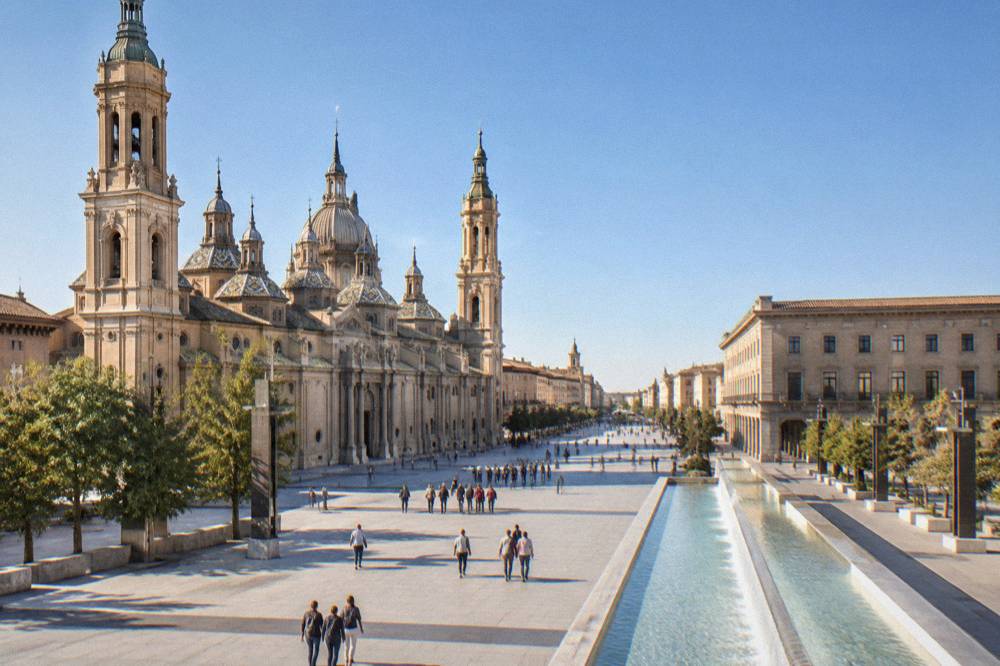
The practical reading of that table: the nave is easiest to enjoy in the first two hours after the 16:30 reopening, when mass crowds have thinned and the afternoon light comes through the domes. The tower is a separate decision, and its Friday-to-Sunday continuous 10:00 to 20:00 window makes weekends the simpler day to fit it in.
What Do You See Inside The Basílica Del Pilar?
The interior is a vast baroque nave under painted domes, with the Holy Chapel of the pillar behind the main altar, frescoes covering the vaults, and a museum of vestments and reliquaries. The dome directly over the Holy Chapel, the Regina Patriarcharum, is the subject of a restoration agreed in January 2026, so works may affect what you see on your dates.
Walk in from Plaza del Pilar and the first impression is length and light. The nave runs west to east toward the high altar, and the vaults above are covered in frescoes, the most extensive programme of religious painting in the city. Art historians treat the basilica's painted domes as one of the great baroque ceilings of Spain, and the choir dome in particular is associated with the young Francisco de Goya's earliest work in Zaragoza.
The Holy Chapel is the destination. It is a domed chamber directly behind the altar, built to frame the pillar itself, and the column is visible dressed in its mantle on the front face. The chapel's hours, 8:00 to 20:30, are the longest in the building because pilgrims come before and after the tourist day. Photography is permitted in the nave but not during mass, and the ushers at the altar rail enforce that without negotiation.
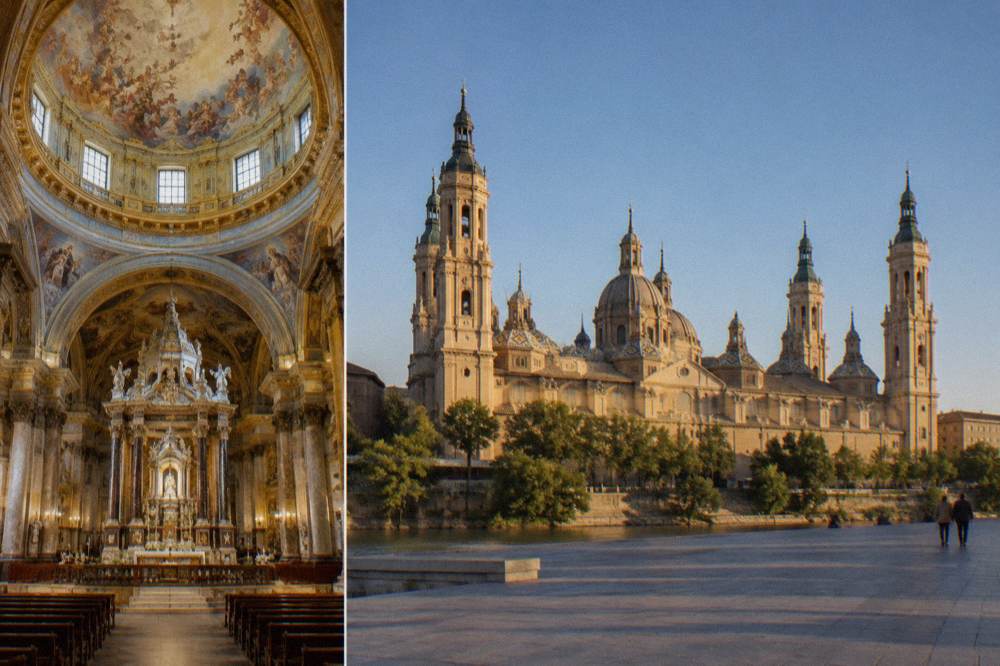
Two things regularly catch visitors out. The first is the dome restoration: the agreement to restore the Regina Patriarcharum dome, funded by Fundacion Ibercaja at 600,000 EUR, was signed on 23 January 2026, with work expected to start in February and last about six months. The basilica's own site is the place to check what is visible on your dates, because the completion of the works is not confirmed and the timetable of scaffolding is not published in advance. The second is the Museo Pilarista: it is inside the basilica complex but ticketed through La Seo, so visitors who arrive expecting to buy a museum ticket at the door need the cathedral's ticket instead.
Is The Basílica Del Pilar Tower Viewpoint Worth It?
The Torre Mirador costs 6 EUR for an adult and takes you up inside one of the basilica's towers to a viewing platform with the whole Ebro bend at your feet, open 10:30 to 14:30 and 16:00 to 20:00 Monday to Thursday and 10:00 to 20:00 Friday to Sunday. The reduced rates are 5 EUR for over 65s and residents, 4 EUR for ages 13 to 18, students and groups of 20 or more, and free under 12.
The tower is the only part of the basilica you pay for at the basilica itself, and it answers the question every visitor asks at street level: what does the skyline look like from inside it. The platform looks east over the Ebro and the Puente de Piedra, north over the Roman Caesaraugusta remains and La Seo's roofline, and south down the Paseo de la Independencia axis. On a clear evening, with the Fiestas del Pilar lights up in October, it is the best paid view in the city.
The full tower experience, its history, the lift and the platform details, has its own page in the Basílica del Pilar tower guide. The short version for planning: allow time for the ascent and the platform, go in the last window before close for the light, and buy the ticket at the tower entrance rather than in advance unless you are visiting during the Fiestas, when the whole square is busy from morning to night.
| Visitor | Tower price |
|---|---|
| Adult | 6 EUR |
| Over 65 or Zaragoza resident | 5 EUR |
| Ages 13-18, students, groups 20+ | 4 EUR |
| Under 12 | Free |
What Is In The Museo Pilarista?
The Museo Pilarista is the basilica's own museum, open daily 10:00 to 13:30 and 16:00 to 20:00, holding the vestments, jewels and offerings accumulated around the pillar over the shrine's history, and it is included in the La Seo cathedral general ticket rather than sold separately at the basilica. The La Seo ticket costs 10 EUR general, 9 EUR for over 65s, 7 EUR for students and ages 13 to 18, and is free for under 12s.
The museum sits within the basilica complex and its collection is exactly what you would expect of a shrine with centuries of royal and popular devotion: the mantles made for the pillar's image, the votive offerings, the records of the basilica's construction. It is a small museum, and its interest is devotional as much as artistic.
The ticketing is the thing to understand. The La Seo general ticket, bought at the cathedral in the same square, covers the cathedral itself, the Museo de Tapices, the Museo Pilarista and the Rosario de Cristal. Aragon residents enter La Seo free on the 6th, 12th, 23rd and 27th of each month, and the Rosario de Cristal closes for 4 to 15 October, which matters if you are coming for the Fiestas. The detail is on the La Seo cathedral page.
When Is The Best Time To Visit The Basílica Del Pilar?
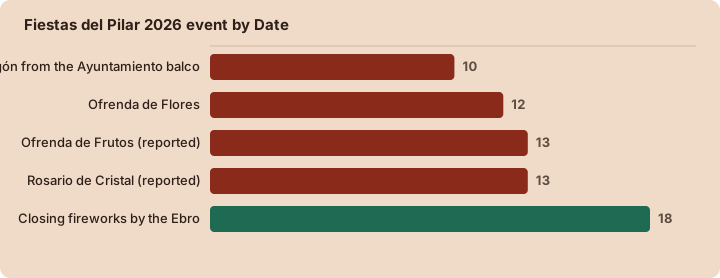
The best time to visit the Basílica del Pilar is early morning before 10:00 or after 16:30 on any normal day, and in the first week of October before the Fiestas del Pilar begin on 10 October 2026. The Fiestas, from 10 to 18 October, bring the Ofrenda de Flores on 12 October with a flower procession from the Paseo de la Independencia to Plaza del Pilar, and the basilica is the emotional centre of all of it.
The Fiestas del Pilar are the one period when the basilica stops being a monument and becomes the stage of a city festival. The municipality's programme runs 10 to 18 October, the pregón opens them from the Ayuntamiento balcony at 21:00 on the 10th, and the Ofrenda de Flores on the 12th fills the square with tens of thousands of participants laying flowers to build a vast mantle for the Virgin. The basilica's hours do not change for the Fiestas, but the square around it does completely: expect crowds from early morning, and expect the Ofrenda to make the main entrance slow for most of 12 October.
| Fiestas del Pilar 2026 event | Date |
|---|---|
| Pregón from the Ayuntamiento balcony | Saturday 10 October, 21:00 |
| Ofrenda de Flores | Sunday 12 October |
| Ofrenda de Frutos (reported) | Tuesday 13 October |
| Rosario de Cristal (reported) | Tuesday 13 October |
| Closing fireworks by the Ebro | Sunday 18 October |
Outside the Fiestas, the weather is on your side. AEMET's 1981 to 2010 normals for the Zaragoza Aeropuerto station put October at a mean maximum of 21.4 C with 36 mm of rain over about five wet days, which makes it one of the most reliable months in the city. July and August are the hot ones, with mean maxima of 32.4 C and 31.7 C, and the basilica's stone interior stays cooler than the square outside, so a midday visit in high summer is more comfortable than the street. The full month-by-month picture is in the city's climate and season pages on Zaragoza Travel Guide.
How Does The Basílica Del Pilar Compare With La Seo?
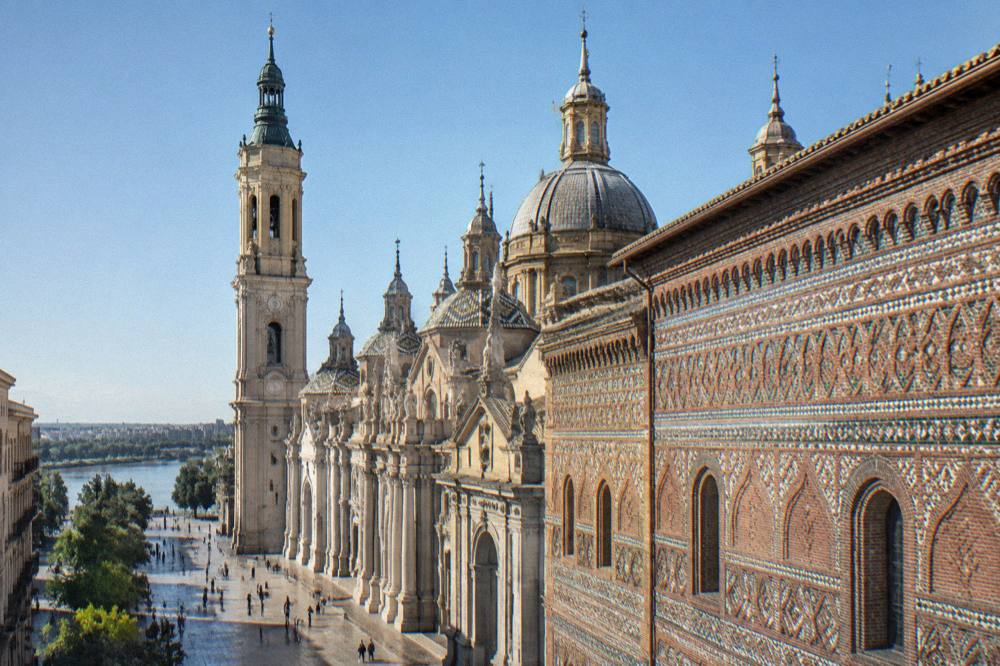
The Basílica del Pilar is the monumental, free-to-enter baroque pilgrimage church on the square, while La Seo, in the same square, is the older Gothic cathedral with a paid ticket at 10 EUR that bundles the Museo de Tapices, the Museo Pilarista and the Rosario de Cristal. The Pilar is bigger and busier; La Seo is quieter, with a Mudéjar wall and cloister the Pilar cannot match. Most visitors do both in a single morning.
Zaragoza is one of the few cities with two cathedrals within sight of each other, a legacy of the medieval split between the canons of La Seo, the older cathedral, and the Pilar, which grew from a chapel on the riverbank. The rivalry shaped both buildings. The Pilar won the scale and the pilgrimage; La Seo kept the history, the Mudéjar brickwork and the Museo de Tapices.
The practical choice is not either or. Enter the Pilar free in the morning, walk the nave and the Holy Chapel, then cross to La Seo and buy the 10 EUR ticket that covers its own interior, the Museo de Tapices, the Museo Pilarista and the Rosario de Cristal. That single ticket, in effect, is the closest thing the city has to a combined monument pass, and it turns a morning in Plaza del Pilar into a complete circuit of the city's religious core.
| Basílica del Pilar | La Seo | |
|---|---|---|
| Entry | Free | 10 EUR general ticket |
| Style | Baroque | Gothic with Mudéjar elements |
| Key feature | The pillar and Holy Chapel | Museo de Tapices and cloister |
| Ticket covers | Nave only | La Seo, Museo de Tapices, Museo Pilarista, Rosario de Cristal |
| Free entry | Always for the nave | Aragon residents on the 6th, 12th, 23rd, 27th |
What Is The Dome Restoration At The Basílica Del Pilar?
The Regina Patriarcharum, the dome directly above the Holy Chapel, is the subject of a restoration agreed on 23 January 2026, funded by Fundacion Ibercaja at 600,000 EUR, with work expected to start in February and last about six months. The completion of the works is not confirmed, and the basilica's own site is the place to check what scaffolding or closures apply on your dates before you visit.
The dome is the most painted surface in the building, the one visitors look up at from the Holy Chapel, and its restoration involves architectural repair, the paintings themselves and new artistic lighting. The agreement was signed in January 2026 between the archdiocese and the funding foundation, and the six-month estimate put the works in the middle of the 2026 visitor year. What that means for a specific week is not published in advance: the basilica announces phases on its own site, and the Holy Chapel has remained open through earlier tower and facade campaigns.
The honest planning advice is simple. Check the basilica's own site a few days before you travel, and if the Holy Chapel viewing is affected, the nave, the tower viewpoint and the rest of Plaza del Pilar are unaffected by any dome works. The basilica has run continuous restoration on its towers and domes for years, including the Tower of Santiago works completed by November 2025, and it has stayed open throughout.
What Else Is Within Walking Distance Of The Basílica Del Pilar?
Everything in Zaragoza's monumental core is within easy walking distance of the basilica: La Seo and the Roman forum museum on Plaza del Pilar itself, the Puente de Piedra and the Ebro banks to the east, the Roman theatre and river port museums a few blocks south, and the Aljafería palace further out beyond the walls. The basilica is the natural starting point for every itinerary in the city.
The square alone holds a full morning. The Roman forum museum and the river port museum are both Caesaraugusta sites a short walk from the basilica steps, each a few euros with a four-museum bono at 7 EUR, and the Roman theatre museum and baths complete the set. The Aljafería, the Islamic palace, is the one major monument that needs a deliberate walk or a tram ride, and it is covered in full in the Aljafería palace guide.
| Sight | Direction from the basilica | Entry |
|---|---|---|
| La Seo cathedral | Same square | 10 EUR general |
| Roman forum museum | Same square | 4 EUR |
| River port museum | Short walk south | 3 EUR |
| Puente de Piedra | East, over the Ebro | Free |
| Roman theatre museum | Few blocks south | 3 EUR |
| Aljafería palace | Beyond the old walls | 7 EUR general |
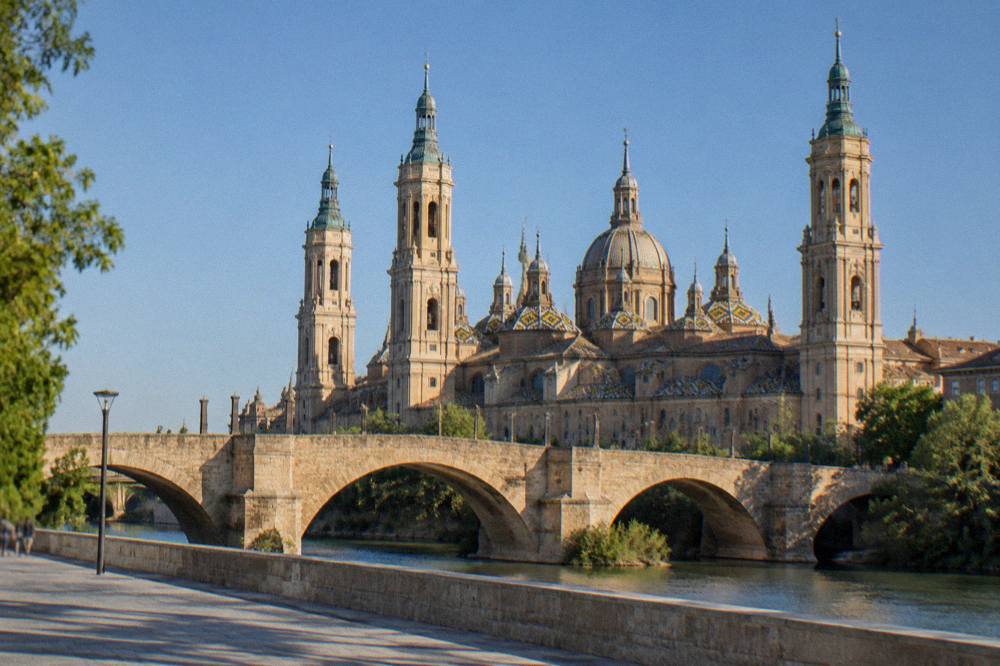
If you have a full day, the pattern that works is basilica first at opening, La Seo with its ticket mid-morning, the Caesaraugusta sites before lunch, the tower viewpoint in the late window, and the east bank of the Ebro for the photograph at dusk. The city's ready-made versions of that day are in the one, two and three day itineraries, linked from things to do in Zaragoza.
Common Questions About The Basílica Del Pilar
Is the Basílica del Pilar free to enter?
Yes. Entering the temple is free, with no ticket and no time slot, according to the municipality's October monument timetable. Only the tower viewpoint and the guided tour are paid.
Can you climb the Basílica del Pilar tower?
Yes, the Torre Mirador viewpoint is open Monday to Thursday 10:30-14:30 and 16:00-20:00, and Friday to Sunday 10:00-20:00, with last access 30 minutes before closing. An adult ticket costs 6 EUR.
What are the Basílica del Pilar opening hours?
The main altar zone is open Monday to Saturday 7:30-13:30 and 16:30-20:15, and Sunday 7:30-13:30 and 16:30-21:30. The Holy Chapel zone runs 8:00-20:30 daily. Wedding Saturdays have a shorter morning schedule.
Is the Basílica del Pilar dome under restoration?
A restoration of the Regina Patriarcharum dome was agreed on 23 January 2026, funded by Fundacion Ibercaja at 600,000 EUR, with work expected to last about six months. Completion is not confirmed, so check the basilica's own site before your visit for what is visible.
What is the pillar in the Basílica del Pilar?
The pillar is a small jasper column that tradition says the Virgin Mary left for the apostle James, kept in the Holy Chapel behind the main altar. It gives the basilica and the Plaza del Pilar their name and is the object of the city's pilgrimage.
When is the Ofrenda de Flores at the Basílica del Pilar?
The Ofrenda de Flores takes place on 12 October, within the Fiestas del Pilar that run from 10 to 18 October 2026. The flower procession runs from the Paseo de la Independencia to Plaza del Pilar, and the basilica's square is crowded for most of that day.
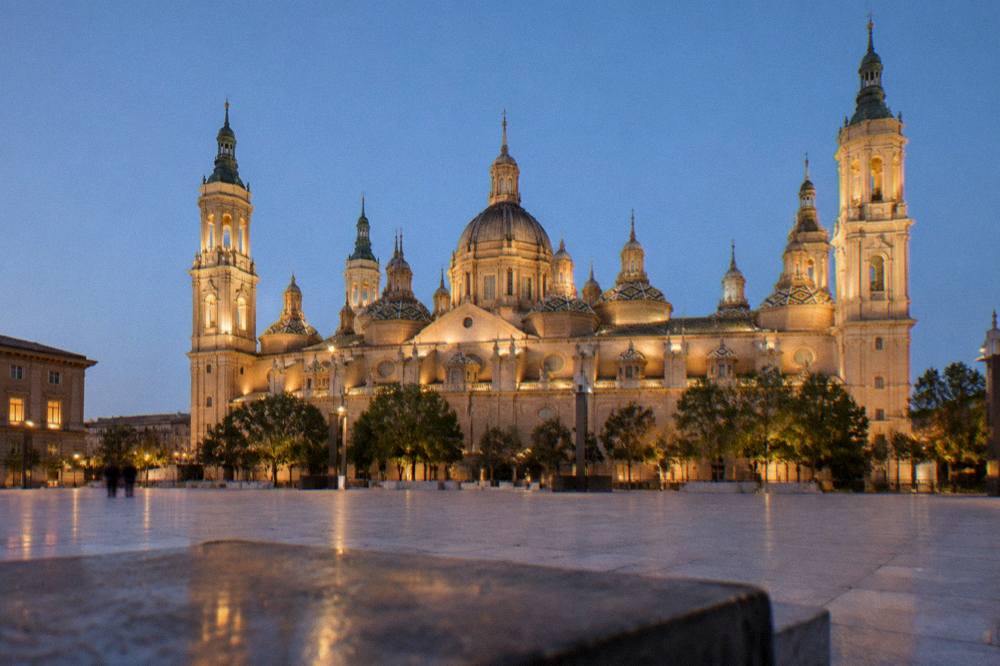
The Basílica del Pilar rewards exactly the kind of unhurried visit its free entry invites: an early walk through the nave, a look up at the domes from the Holy Chapel, a tower ticket if the sky is clear, and a slow evening on the east bank watching the towers come alive over the Ebro. Bring nothing but a modest dress code and a check of the basilica's own site for the dome works, and the church that made Zaragoza famous will do the rest.