Goya In Zaragoza: Where To See The Painter's City
Zaragoza, the capital of Aragon on the Ebro, is the city where Francisco de Goya learned to paint, and it holds more of his world than almost anywhere else in Spain.
Short answer
Goya's Zaragoza centres on the Museo Goya, which reopens on 9 October 2026 after renovation, the Aljafería's temporary Goya exhibition, and the painter's frescoes above the choir of the Basílica del Pilar, with his birthplace of Fuendetodos reachable as a day trip.
Zaragoza, the capital of Aragon on the Ebro, is the city where Francisco de Goya grew up, trained and first worked, and the traces of the painter run from the vault of the Basílica del Pilar to a palace museum that reopens on 9 October 2026 after a full renovation. For the wider picture of the city, start with things to do in Zaragoza and come back here for the painter.
Who Was Goya And Why Does Zaragoza Claim Him?
Goya was an Aragonese painter who spent his formative years in Zaragoza, trained in a local workshop, and returned to the city repeatedly to take on major commissions, including the frescoes above the choir of the Basílica del Pilar, before his career carried him to the Spanish court in Madrid and eventually to France. Zaragoza does not merely claim him, it shaped him, and the city still holds the buildings he worked in and the institutions that collect his art.
He was born in Fuendetodos, a small Aragonese village that remains a recognised day-trip destination from the city, and he moved to Zaragoza as a child when his family relocated. His apprenticeship was in a Zaragoza workshop, and his earliest paid work came from Aragonese patrons. The commissions that made his name in the region were religious: church vaults, chapel decorations and altarpieces, the kind of work that still stands in the buildings where it was painted.
The claim matters because most visitors meet Goya in Madrid, at the Prado. Zaragoza offers something different: the painter in context, in the streets and churches of the city that formed him, rather than in a national collection. That is the thread this page follows, and the Zaragoza Travel Guide covers the rest of the city in parallel pages on the Basílica del Pilar, the Aljafería and La Seo.
Where Can You See Goya'S Work In Zaragoza?
Four places in the city carry Goya material: the Museo Goya, run by Fundación Ibercaja in the Camón Aznar building, which reopens on 9 October 2026; the Aljafería palace, whose temporary exhibition "Goya, del Museo al Palacio" has its own guided tour at 11:30; the Basílica del Pilar, where his frescoes decorate the vault above the choir; and the Camón Aznar museum collection, covered on its own page on this site. A fifth stop, his birthplace, sits outside the city in Fuendetodos.
The Museo Goya is the headline. The museum's own page states it reopens on 9 October 2026 after a renovation and expansion that brings a new access route, immersive displays and larger exhibition spaces. Its hours after reopening are Tuesday to Saturday 10:00 to 20:00, Sunday and public holidays 10:00 to 14:00, closed Monday. No admission price has been published, so ask at the desk or check the museum's page before you plan a budget around it.
| Day | Museo Goya hours after 9 October 2026 |
|---|---|
| Tuesday to Saturday | 10:00 to 20:00 |
| Sunday and public holidays | 10:00 to 14:00 |
| Monday | Closed |
The Aljafería is the second stop, and it is a happy accident of timing: the palace's October programme lists an exhibition called "Goya, del Museo al Palacio", with a dedicated guided tour at 11:30 each day on top of the regular Spanish-language tours at 10:30, 12:30, 13:30, 15:00 and 16:00. The palace is open daily 10:00 to 18:00 in October, general admission EUR 7, guided visit EUR 9, and entry is free on the first and third Sunday and Monday of each month.
| Aljafería visit | Price | Notes |
|---|---|---|
| General admission | EUR 7 | Daily 10:00-18:00 in October |
| Guided visit | EUR 9 | Spanish tours at set times |
| With tourist bus ticket | EUR 4 | Show the bus ticket at the desk |
| Students, over 65s, Carnet Joven | EUR 2 | Reduced rate |
| Under 12s | Free | Accompanied children |
| First and third Sunday and Monday | Free | Monthly free-entry days |
The Pilar holds the third piece: Goya's frescoes in the vault above the choir, one of the earliest large commissions of his career, painted inside a basilica that is free to enter every day it is open. The basilica's own guide covers the building in full, including the tower viewpoint and the Pilarista museum.
A guided walk ties these together neatly. The 2.5-hour historical tour of the old district runs from $106.92 per person, is rated 5.0 from 14 reviews on its listing, and covers the historic core where all of these buildings sit.
What Does The 9 October 2026 Museo Goya Reopening Change For Visitors?
The reopening turns the Museo Goya from a closed construction site into the single most important Goya stop in Aragon, with evening hours on weekdays, a new access route and enlarged exhibition spaces, but it changes nothing about the rest of the city's Goya trail: the Pilar frescoes, the Aljafería exhibition and Fuendetodos are all reachable now, and the museum simply completes the set from 9 October 2026 onwards.
The Fundación Ibercaja museum, housed in the Camón Aznar building, states on its own site that it reopens on 9 October 2026. The renovation brought a new entrance and access layout, immersive experiences and bigger galleries. The address is in the 50003 central district, and the museum's listed phone number is 976 397 387. Hours are generous on weekdays, 10:00 to 20:00, which means an evening visit after a day of churches is realistic in every season.
Two cautions apply. First, the admission price is not published anywhere official, so do not budget a figure for it; check the museum's page or ask at the desk. Second, the reopening date is a scheduled opening, so if you travel before 9 October 2026, plan around the Aljafería exhibition and the Pilar instead, and treat the museum as the reason to come back.
The timing has a bonus. The reopening lands one day before the Fiestas del Pilar, which run from 10 to 18 October 2026, so a visit in the second week of October can combine the new museum with the biggest festival in the Aragonese calendar, including the Ofrenda de Flores on 12 October. Expect the city to be busy, and book anything guided well ahead.
Which Zaragoza Museums Are Open Around The Goya Trail?
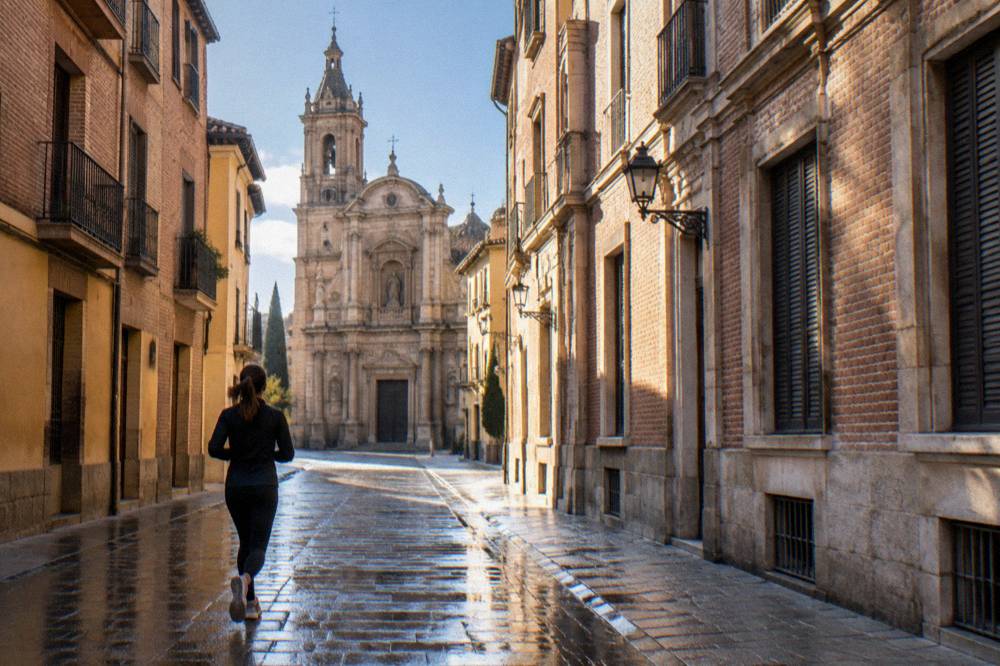
The open museums in October 2026 are the IAACC Pablo Serrano, free and open Tuesday to Saturday 10:00 to 14:00 and 17:00 to 21:00, the Torreón de la Zuda with its fifth-floor viewpoint, the Centro de Historias, the Museo del Fuego y los Bomberos at EUR 3, the Museo del Origami at EUR 3 and the Alma Mater Museum at EUR 5, while the Museo de Zaragoza's central building, the Palacio de Sastago and the Museo Pablo Gargallo are all closed.
This matters for planning because several of the closed buildings are the ones a guidebook from a few years ago would send you to. The Museo de Zaragoza at Plaza de los Sitios 6 is shut for Ministry of Culture works with no reopening date, and its Etnología and Cerámica satellites in the Parque Grande are also closed at present pending a new temporary exhibition. The Museo de Zaragoza page on this site explains the closure, and the Pablo Gargallo museum page covers a collection that is temporarily closed too.
| Museum | October 2026 status | Entry |
|---|---|---|
| Museo Goya, Fundación Ibercaja | Reopens 9 October 2026 | Ask at the desk |
| Museo de Zaragoza, Plaza de los Sitios 6 | Closed for works | Not visitable |
| Museo Pablo Gargallo | Temporarily closed | Not visitable |
| Palacio de Sastago | Closed in October | Not visitable |
| IAACC Pablo Serrano | Open, Tue-Sat 10-14 and 17-21, Sun 10-14 | Free |
| Torreón de la Zuda | Open, Mon-Sat 10-14 and 16:30-20, Sun 10-14 | Free |
| Centro de Historias | Open, Tue-Sat 10-14 and 17-21, Sun 10-14:30 | Free |
| Museo del Fuego y los Bomberos | Open, Tue-Sat 10-19, Sun 10-14 | EUR 3 |
| Museo del Origami | Open, free 1st Tuesday and Sunday | EUR 3 |
| Alma Mater Museum | Open | EUR 5 |
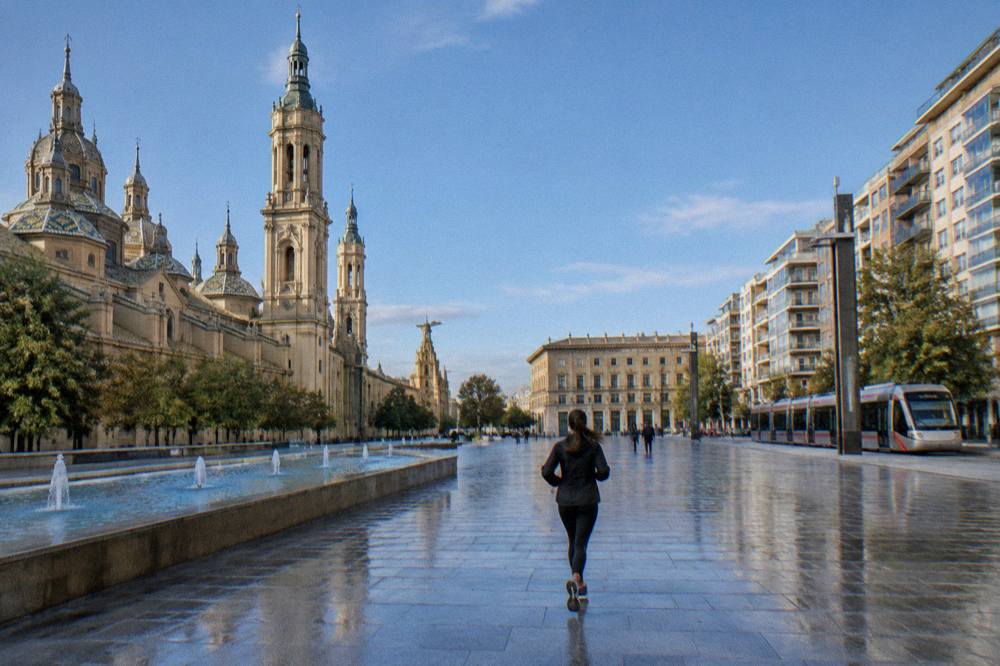
The Torreón de la Zuda is worth folding into a Goya day for a different reason: its fifth floor is the "Mirador de las cuatro culturas", a viewpoint over the city Goya knew, and it is free. The Camón Aznar museum has its own page on this site for its collection context.
What Goya Sights Sit Inside The Basílica Del Pilar?
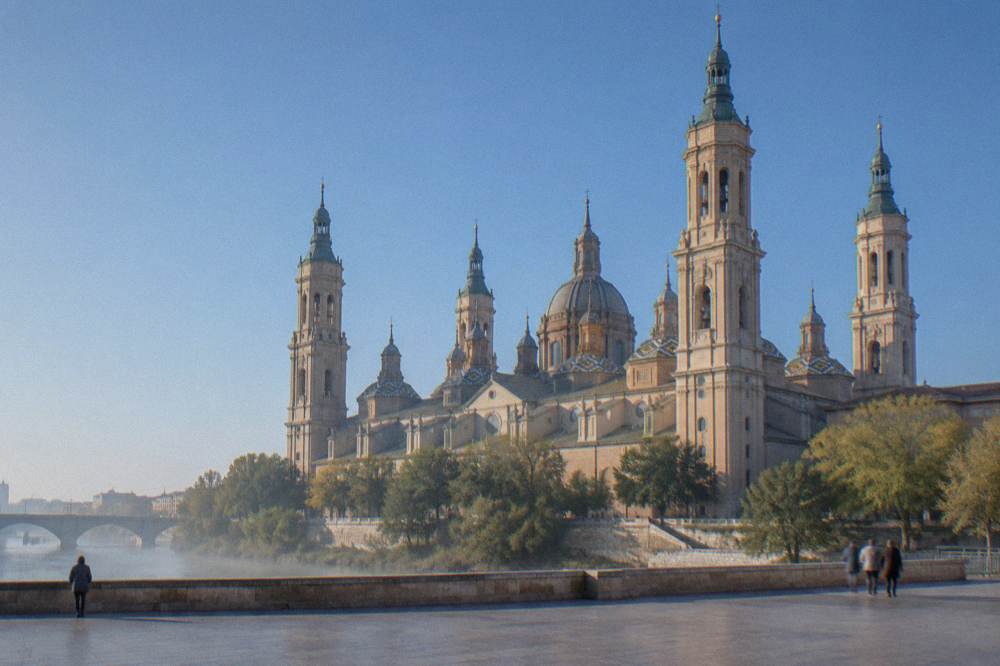
The Pilar holds Goya's frescoes in the vault above the choir, his first major decorative commission in the city, and the basilica is free to enter, open long hours every day, with the Holy Chapel zone open 8:00 to 20:30 and the main altar zone open from 7:30 on most days, so seeing the frescoes costs nothing and needs no ticket beyond arriving when the nave is open.
The basilica's October timetable lists the Holy Chapel zone from 8:00 to 20:30 and the main altar zone Monday to Saturday 7:30 to 13:30 and 16:30 to 20:15, with Sunday hours shifting the evening opening to 21:30. On wedding Saturdays the morning zone closes early, at 11:45. Entering the temple itself is free.
| Pilar zone | Hours (October timetable) |
|---|---|
| Holy Chapel | 8:00 to 20:30 |
| Main altar, Mon-Sat | 7:30 to 13:30, 16:30 to 20:15 |
| Main altar, Sunday | 7:30 to 13:30, 16:30 to 21:30 |
| Wedding Saturdays | 7:30 to 11:45, 16:30 to 20:30 |
| Tower viewpoint | Mon-Thu 10:30-14:30 and 16:00-20:00, Fri-Sun 10:00-20:00 |
The tower viewpoint costs EUR 6 for an adult, EUR 5 for over 65s and residents, EUR 4 for ages 13 to 18, students and groups of 20 or more, and is free for under 12s, with last access 30 minutes before closing. The Pilar tower page covers the climb in detail.
One honest note: the basilica's dome, the Regina Patriarcharum, has a restoration that was agreed on 23 January 2026, funded with EUR 600,000 by Fundación Ibercaja, with an execution period of roughly six months, but its completion is not confirmed, so check the basilica's own notices for scaffolding before you photograph the exterior. The same foundation is behind the Museo Goya reopening, which is why the painter and the basilica keep crossing paths in the city's cultural calendar.
A guided visit helps here, especially for the frescoes' context. The Basílica del Pilar Spanish-language tour runs from $12.38 per person, rated 4.7 from 46 reviews, over 90 minutes. Check availability
Can You See Goya At La Seo Or The Aljafería?
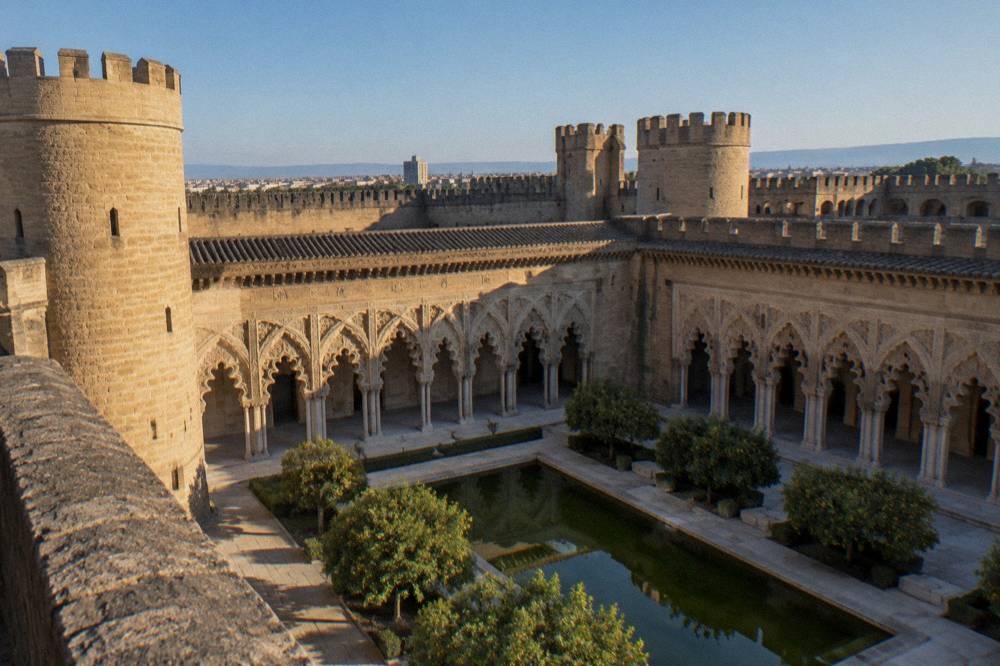
At the Aljafería, yes in a limited way: the temporary exhibition "Goya, del Museo al Palacio" is in the October programme with a guided tour at 11:30, inside a palace that costs EUR 7 to enter. At La Seo, the Goya connection is indirect, through the cathedral's own collection and its museum of hangings, which is included in the EUR 10 general ticket, so treat La Seo as a masterpiece stop on the same walk rather than a Goya destination.
La Seo is open Monday to Saturday 10:00 to 14:30 and 16:00 to 20:00, with wedding Saturdays closing the morning at 12:30, and Sunday 10:00 to 12:00 and 16:00 to 20:00. The EUR 10 general ticket includes the Museo de Tapices, the Museo Pilarista and the Rosario de Cristal, with reduced rates at EUR 9 for over 65s and EUR 7 for students and ages 13 to 18, free for under 12s, and a combined general-plus-tower ticket at EUR 12. Aragon residents enter free on the 6th, 12th, 23rd and 27th of the month. The La Seo guide has the full breakdown.
The Aljafería deserves the longer visit. It is the finest Islamic-era palace in Aragon, and the Goya exhibition gives it a second layer for the autumn of 2026. Tickets are sold through the palace's own ticketing page, last access is 45 minutes before closing, and the free days, the first and third Sunday and Monday of the month, are the budget traveller's friend.
Is Fuendetodos Worth A Goya Day Trip From Zaragoza?
Fuendetodos, the village where Goya was born, is a recognised day-trip destination from Zaragoza and the deepest Goya stop in Aragon, but the realistic options are renting a car, using regional transport checked on the day, or booking a private guide who will build the route, and the village should be planned as a half-day or full-day excursion rather than a quick stop.
The village is small and its identity is entirely the painter: the birthplace and the etching museum are the reason anyone goes, and the drive crosses the Aragonese countryside of the province. Because no distance, timetable or entry fee for Fuendetodos sits in this site's planning data, check current opening times and transport before committing a day.
There is, however, a Goya-adjacent day trip that is bookable. The olive oil tours to Belchite's old town, a five-hour product from $106.92 per person rated 5.0 from 35 reviews, cross the same southern Aragonese landscape, though they are food-and-history trips rather than painter pilgrimages.
For a city-based alternative, a private custom tour with a local guide, rated 4.9 from 70 reviews on its listing, can be shaped around Goya themes inside the city.
How Do You Plan A Goya Day In Zaragoza?
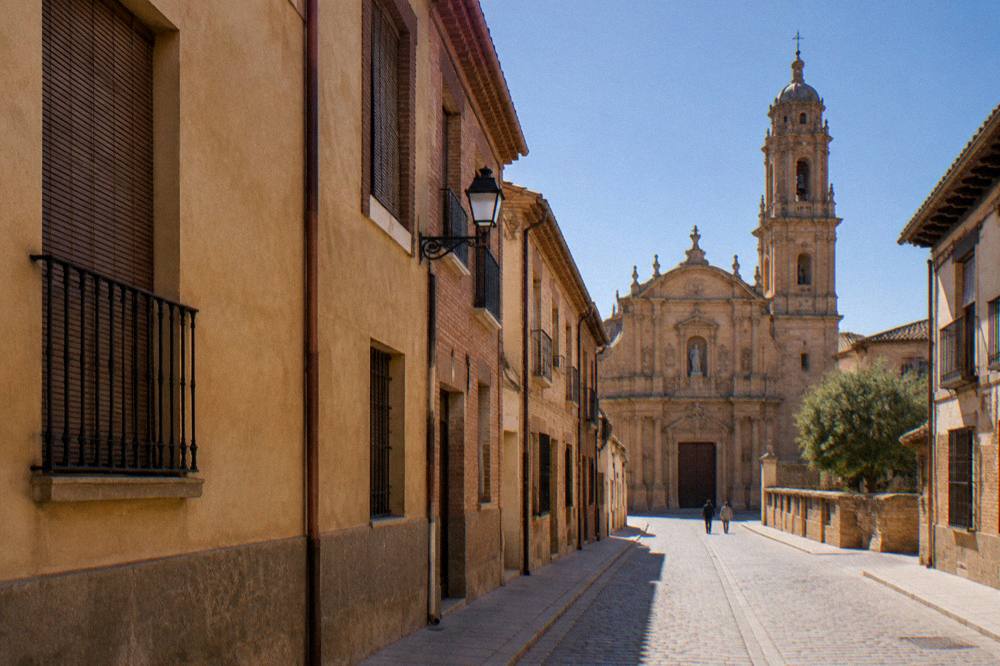
A workable Goya day starts at the Basílica del Pilar in the morning while the nave is quiet, continues to the Aljafería for the 11:30 Goya exhibition tour, uses the afternoon for La Seo and the Caesaraugusta museums or the Torreón de la Zuda viewpoint, and finishes at the Museo Goya between 17:00 and 20:00 on any weekday from 9 October 2026 onwards, when the museum's evening hours absorb the end of the day without rushing anything.
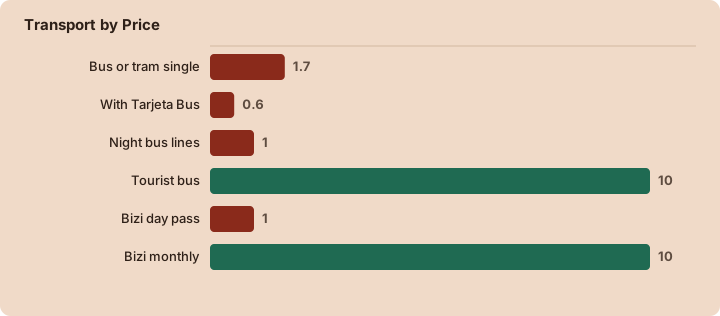
The whole trail sits in a compact old town, so the practical costs are low. The urban bus and tram single is EUR 1.70, or EUR 0.55 with a Tarjeta Bus, and the tourist bus is EUR 10 for 24 hours of hop-on hop-off across 16 stops on a 90-minute loop. Bizi bike share runs at EUR 1 for a day pass plus EUR 0.50 per trip up to 30 minutes, with a card deposit held.
| Transport | Price | Notes |
|---|---|---|
| Bus or tram single | EUR 1.70 | No transfer, 2026 fare table |
| With Tarjeta Bus | EUR 0.55 | Card costs EUR 7, valid bus and tram |
| Night bus lines | EUR 1.00 | Reduced night fare |
| Tourist bus | EUR 10 | 24 hours, 16 stops, 90-minute loop |
| Bizi day pass | EUR 1 | Plus EUR 0.50 per trip up to 30 min |
| Bizi monthly | EUR 10 | 31 days, deposit applies |
If your day falls on a first Sunday of the month, the Caesaraugusta museums are free; the four-museum bono is EUR 7 otherwise, EUR 5 reduced, with the Foro at EUR 4 and the Termas and Puerto Fluvial at EUR 3 each. The Roman Caesaraugusta guide covers those, and the Roman forum museum has its own page.
| Free-entry day | What it covers |
|---|---|
| 1st Sunday of the month | Caesaraugusta museums |
| 1st Sunday of the month | Museo del Fuego y los Bomberos |
| 1st and 3rd Sunday and Monday | Aljafería |
| 1st Tuesday and Sunday | Museo del Origami |
| 6th, 12th, 23rd, 27th monthly | La Seo, Aragon residents only |
One more caution for drivers: the city's low-emission zone in the Casco Histórico carries sanctions since 12 December 2025, active Monday to Friday 08:00 to 20:00, and requires a DGT environmental label. There is a 15-minute grace period if you enter by mistake, but the simpler answer is to leave the car and use the tram.
What About Goya Events During The Fiestas Del Pilar?
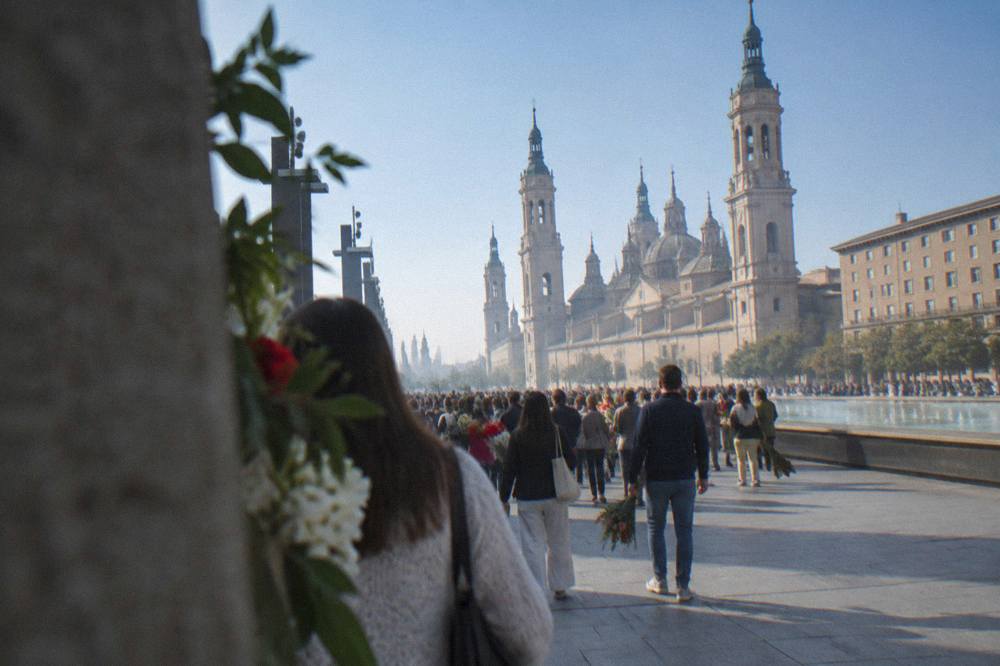
The Fiestas del Pilar 2026 run from Saturday 10 to Sunday 18 October, opening the day after the Museo Goya reopens, with the pregón from the Ayuntamiento balcony at 21:00 on 10 October, the Ofrenda de Flores on 12 October, and a fireworks programme extended across the festival, so the first week of the festival is the single best window of 2026 to see the new museum and the city celebrating at once.
The Ofrenda de Flores on 12 October is the emotional centre of the festival, with the usual route running from Paseo de la Independencia to the Plaza del Pilar, and the municipal programme lists 994 registered groups for the offering. The Ofrenda de Frutos and the Rosario de Cristal are reported for 13 October, with the crystal rosary reported to start around 19:00. The Paseo de la Independencia area around the route is the city's tapas heart, so the wait for the procession is well catered.
Venezuela is the guest country for 2026, and the concert programme includes free headline shows, with Antonio Orozco on 10 October, Dani Fernández on 11 October and Malú on 17 October. The fireworks programme has been extended, with displays after the pregón, at Parque Pignatelli, in Plaza San Francisco and at the closing by the Ebro on 18 October.
For a festival-week visit, book guided tours early. The historical tour of the old district is the natural companion to a Goya day, since the old district is where every stop on this page sits.
Common Questions About Goya In Zaragoza
Where can you see Goya in Zaragoza?
The Museo Goya reopens on 9 October 2026, the Aljafería hosts the temporary exhibition "Goya, del Museo al Palacio" with a guided tour at 11:30, and the Basílica del Pilar holds his frescoes in the vault above the choir, free to see whenever the nave is open.
When does the Museo Goya reopen?
The museum's own page states it reopens on 9 October 2026, open Tuesday to Saturday 10:00 to 20:00 and Sunday and public holidays 10:00 to 14:00, closed Mondays. No admission price has been published, so ask at the desk.
Can you see Goya's work in the Basílica del Pilar?
Yes. His frescoes decorate the vault above the choir, and entering the basilica is free. The Holy Chapel zone is open 8:00 to 20:30 and the main altar zone from 7:30 on most days, per the October timetable.
Can you visit Goya's birthplace from Zaragoza?
Fuendetodos, the village where the painter was born, is a recognised day-trip destination from the city, so check regional transport or arrange a private guide, and confirm local opening times before committing a day.
How much does it cost to follow the Goya trail in Zaragoza?
The Pilar frescoes are free, the Aljafería costs EUR 7 general admission with its Goya exhibition included, and the Museo Goya's price is not published, so ask at the desk. With bus fares at EUR 1.70 a single, a full Goya day can be done on a modest budget.
Goya's Zaragoza is a city trail that costs very little to walk and pays back in full: a free basilica with the painter's first great vault, a palace exhibition inside the finest Islamic building in Aragon, and from 9 October 2026 a reopened museum with evening hours to finish the day.