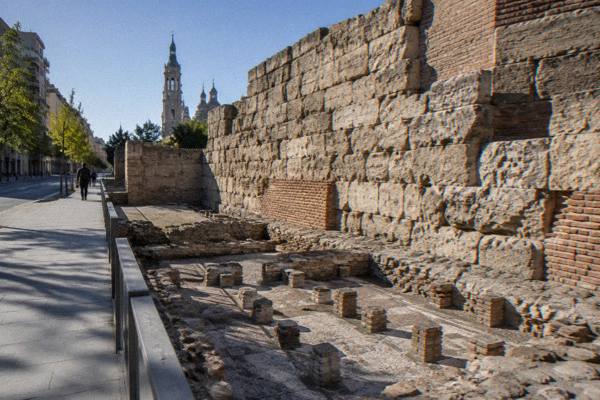
Roman River Port Museum: The Complete Guide To Zaragoza's Puerto Fluvial
The Museo del Puerto Fluvial preserves the stone quay of Roman Caesaraugusta beside the Ebro. Here is what it costs, when it opens, and how to fit it into a day in Zaragoza, the capital of Aragon.
Short answer
The Museo del Puerto Fluvial in Zaragoza, Spain costs 3 EUR for a general ticket, opens Tue-Sat 10:00-14:00 and 17:00-21:00 and Sun 10:00-14:30, and is free the first Sunday of the month. The four-museum Caesaraugusta bono at 7 EUR covers it together with the Forum, Baths and Theatre museums.
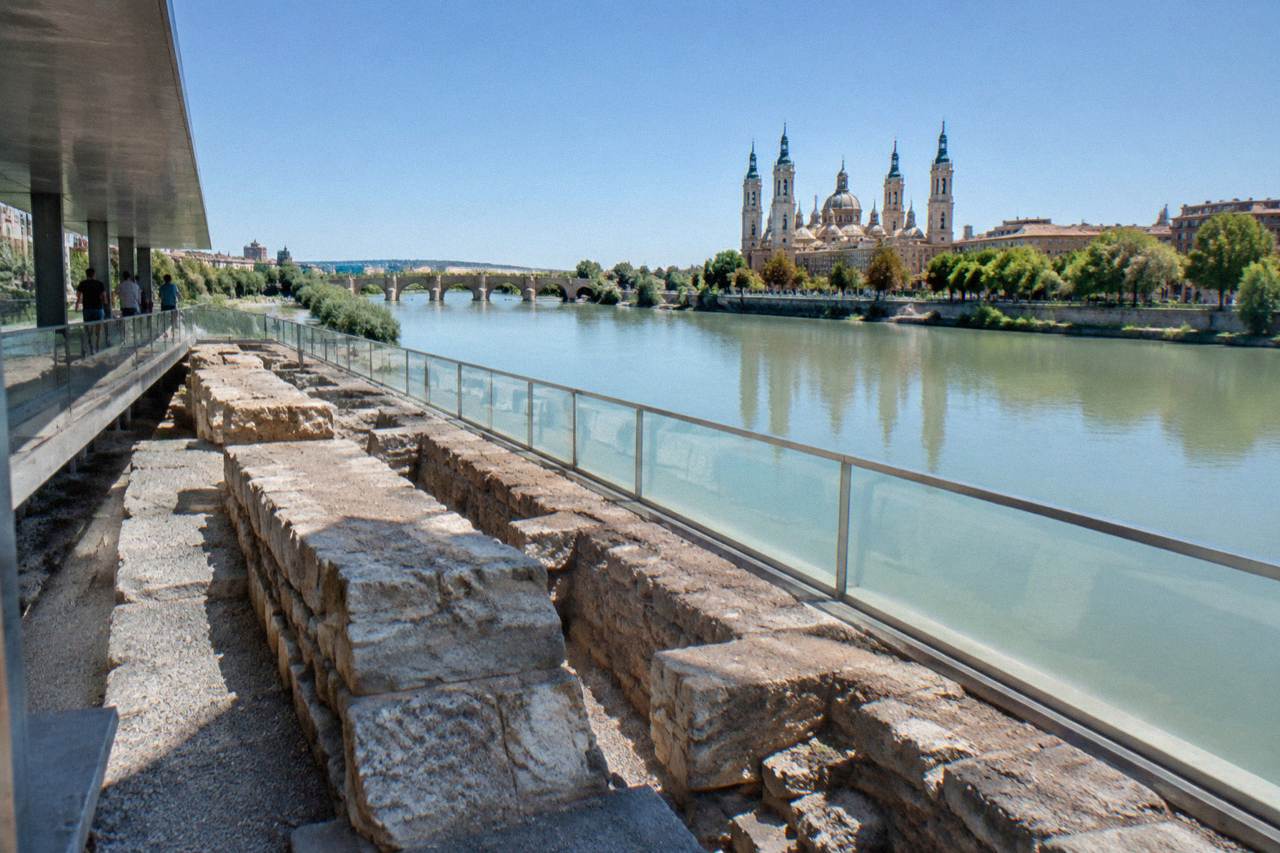
Zaragoza, the capital of Aragon on the Ebro, keeps its Roman past in plain sight, and the Museo del Puerto Fluvial is the most atmospheric piece of it. The museum preserves the stone quay of Caesaraugusta, the Roman city that stood here, in an underground gallery beside the river, and the municipal museums network runs it together with the Forum, Baths and Theatre museums as the four Caesaraugusta sites. This guide from Zaragoza Travel Guide covers the verified prices, hours and combinations for a visit, plus how the river port fits into a day in the old town.
What Is The Museo Del Puerto Fluvial In Zaragoza?
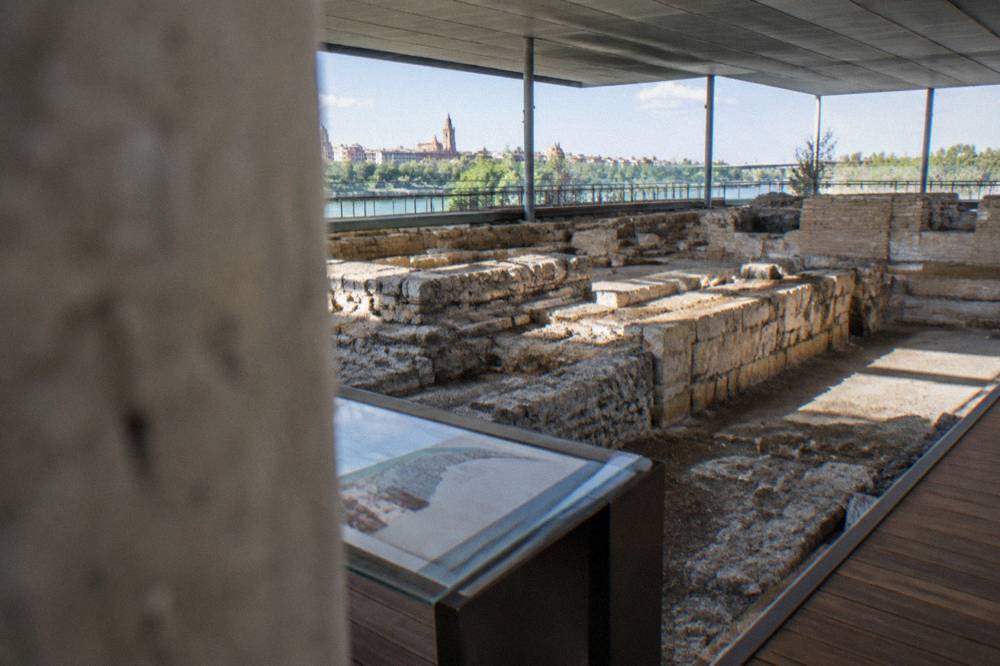
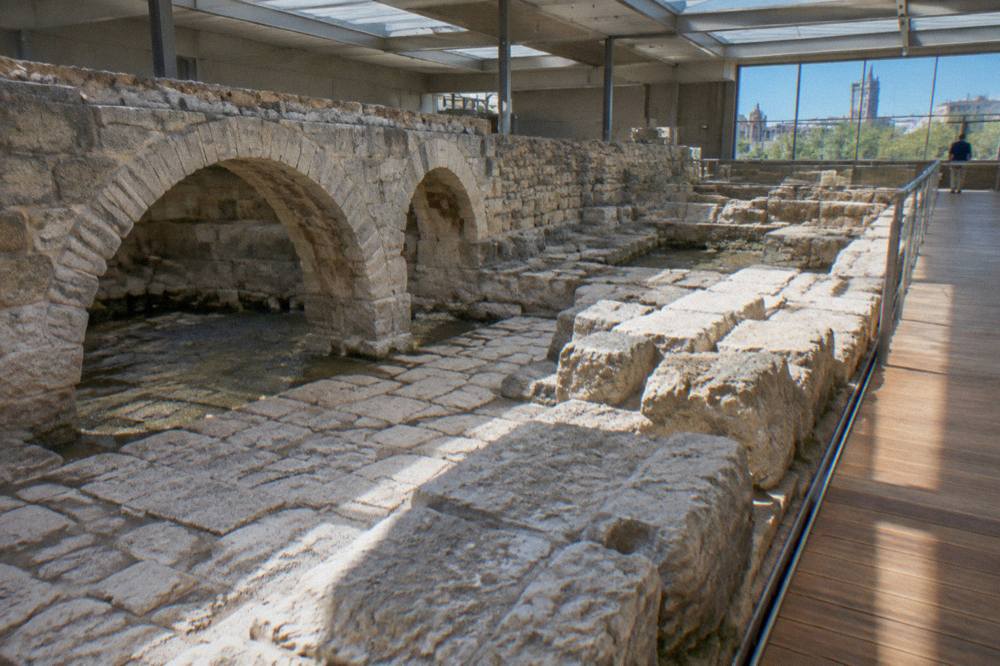
The Museo del Puerto Fluvial is one of Zaragoza's four municipal Roman museums, and it preserves the stone river bank of Caesaraugusta, the Roman settlement that became the city, in an excavated gallery beside the Ebro. The museum shows how the Roman city met its river, with the quay wall, the port structures and the layers of deposits that built up over centuries of Ebro floods. It is the smallest-ticketed of the four Caesaraugusta sites and the one that connects the Roman story directly to the water.
Caesaraugusta was a Roman city on the Ebro, and its economy ran through the river. Boats moved goods along the Ebro valley, and the port was the working edge of the town, where cargo came ashore and where the city's relationship with a sometimes-flooded river was managed in stone. The museum that holds these remains today is part of the network the municipality runs under the Caesaraugusta name, alongside the Forum museum, the Baths and Walls, and the Theatre museum. Each site protects a different layer of the Roman city, and the river port is the one that tells the water story.
The setting matters as much as the archaeology. The gallery sits close to the Ebro in the old town, within a short walk of La Seo cathedral and the Puente de Piedra, so a visit slots naturally into a circuit of the historic centre. Where the Forum museum shows the civic heart of Caesaraugusta and the Theatre its entertainment, the Puerto Fluvial shows its working waterfront, and the contrast between the three is the point of seeing more than one.
What Are The Museo Del Puerto Fluvial Opening Hours And Ticket Prices?
A general ticket to the Museo del Puerto Fluvial costs 3 EUR, and the museum opens Tuesday to Saturday from 10:00 to 14:00 and from 17:00 to 21:00, and on Sundays and public holidays from 10:00 to 14:30. Entry is free on the first Sunday of the month, and tickets are sold through the municipal museums site, museos-cultura.zaragoza.es. These are the October 2026 municipal timetable figures, so check the site before a visit in another season.
The full price structure for the Caesaraugusta museums is straightforward. The Forum museum charges 4 EUR, while the Puerto Fluvial and the Baths each charge 3 EUR, and the four-museum bono covers all four sites, including the Theatre, for 7 EUR, or 5 EUR reduced.
| Ticket | Price | What it covers |
|---|---|---|
| Puerto Fluvial general | 3 EUR | River port museum only |
| Forum museum general | 4 EUR | Forum museum only |
| Termas (Baths) general | 3 EUR | Baths museum only |
| Four-museum bono | 7 EUR | Foro, Puerto Fluvial, Termas and Teatro |
| Bono reduced | 5 EUR | Same four museums, reduced rate |
| First Sunday of the month | Free entry | All Caesaraugusta museums |
The two daily sessions matter for planning. The morning session runs to 14:00 and the evening session from 17:00, so mid-afternoon is dead time for the Roman museums, a pattern worth knowing if you are building an itinerary around the old town. The evening session, from 17:00 to 21:00, is generous, and in summer heat it is the comfortable window, since AEMET's 1981-2010 normals for the Zaragoza Aeropuerto station put July's mean maximum at 32.4 C.
| Day | Morning session | Evening session |
|---|---|---|
| Tuesday to Saturday | 10:00-14:00 | 17:00-21:00 |
| Sundays and public holidays | 10:00-14:30 | Closed |
| Mondays | Closed | Closed |
A guided walk is the easiest way to see the Roman sites without working out the session times yourself. The Must-See Attractions walking tour with a guide covers the headline sights of the old town in one organised circuit, and a private option gives you the same ground at your own pace. Check availability
Is The Roman River Port Museum Worth Visiting?
Yes, for anyone with an hour in Zaragoza's old town, the Museo del Puerto Fluvial earns its 3 EUR several times over. It is the only one of the four Caesaraugusta museums that puts you beside the Ebro with the Roman river bank in front of you, and at 3 EUR, or free on the first Sunday, it costs less than a coffee and a tapa elsewhere in Spain. The bono makes it nearly free if you are seeing the other Roman sites anyway.
The honest case against is that it is the most specialised of the four. A visitor with no particular interest in Roman archaeology will get more from the Theatre museum, whose scale speaks for itself, or the Forum, which sits directly beneath the modern city's streets. The river port asks a little more of the visitor, and gives back a picture of the Ebro as a working river rather than scenery.
The honest case for is context. Zaragoza exists because of the Ebro, and the floods, the quay and the cargo traffic the museum documents explain why the city grew where it did and why the river still shapes its festivals, its bridges and its parks. Read after a look at the Roman ruins of Zaragoza overview, the river port becomes the connecting thread of the whole Roman story.
If the guided option is not for you, the four sites are perfectly manageable alone, and the bono plus the shared session hours do most of the planning work. Either way, the river port is the site to keep on the list.
What Will You See Inside The Roman River Port Museum?
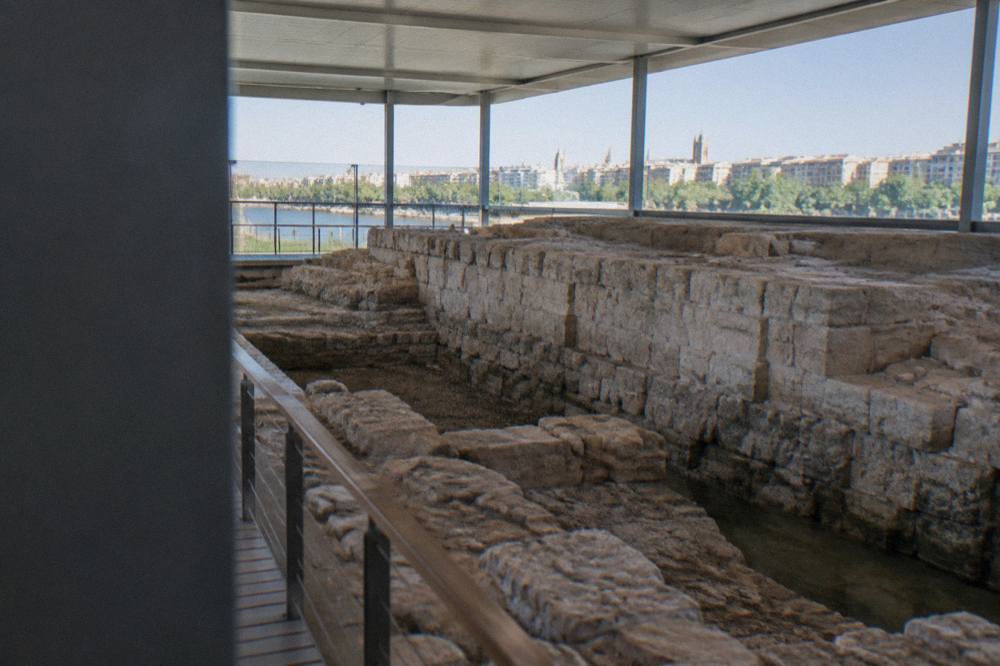
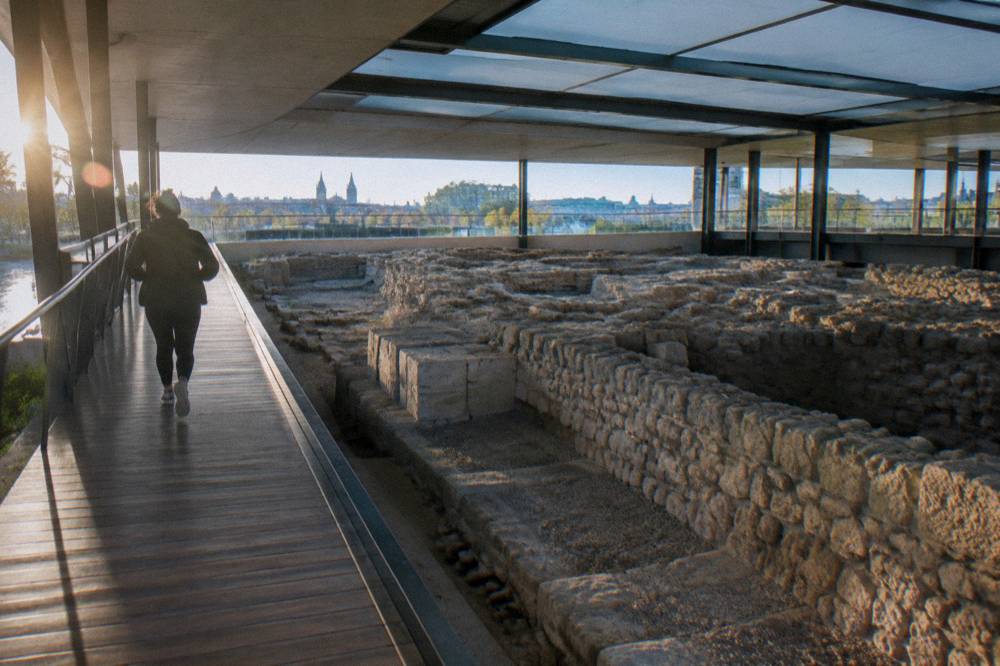
The museum's core exhibit is the excavated stone quay of Roman Caesaraugusta, displayed in situ with the port structures and the sediment layers that recorded centuries of Ebro activity. Around the remains, the displays explain river trade in the Ebro valley, how goods moved through the port, and how the relationship between the city and the river changed over time. The visit is compact, underground and close to the water, and the museum's own page and the municipal museums site carry the current exhibition details.
The museum is an in-situ site, which means the archaeology stays where it was found and the building protects it. That gives the visit a different feel from a collection museum: you stand at the level of the Roman bank, not at a display case. The layers of river deposits are part of the story, since the Ebro's floods buried and preserved the port in sequence.
That museum's central building at Plaza de los Sitios 6 is closed for Ministry of Culture works with no reopening date, and its Parque Grande sites are also shut at present, so the Caesaraugusta museums are currently the main municipal archaeology offer in the city.
How Does The Four-Museum Caesaraugusta Bono Work?
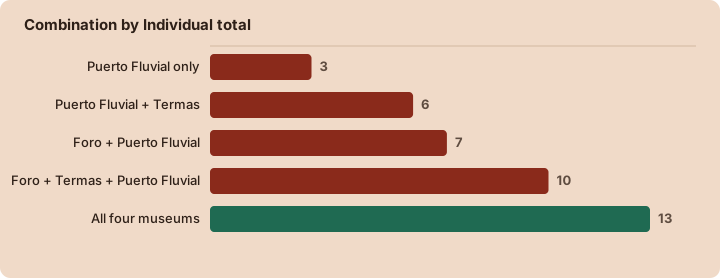
The bono costs 7 EUR general or 5 EUR reduced and covers all four Caesaraugusta museums: the Forum, the River Port, the Baths and the Theatre. Bought individually the four sites cost 13 EUR at general rates, so the bono saves 6 EUR, and it makes sense for any visitor planning to see at least the Forum and the Theatre together with the river port. Tickets are sold on the municipal museums site, museos-cultura.zaragoza.es.
The arithmetic is simple and worth doing before you buy. If the river port is your only Roman stop, the 3 EUR single ticket is the right choice. If the Theatre and the Forum are also on the list, the bono pays for itself immediately.
| Combination | Individual total | With bono | Saving |
|---|---|---|---|
| Puerto Fluvial only | 3 EUR | 3 EUR | None |
| Puerto Fluvial + Termas | 6 EUR | 7 EUR | None |
| Foro + Puerto Fluvial | 7 EUR | 7 EUR | Even |
| Foro + Termas + Puerto Fluvial | 10 EUR | 7 EUR | 3 EUR |
| All four museums | 13 EUR | 7 EUR | 6 EUR |
One planning note: the museums share the same session hours, Tuesday to Saturday 10:00-14:00 and 17:00-21:00, Sundays 10:00-14:30, so a two-session day, Forum and Baths in the morning, river port and Theatre in the evening, is the natural way to use the bono without rushing.
How Do You Get To The Museo Del Puerto Fluvial?
The Museo del Puerto Fluvial stands in Zaragoza's Casco Histórico, the old town, a short walk from Plaza del Pilar, La Seo and the banks of the Ebro beside the Puente de Piedra. From the central Paseo de la Independencia the walk crosses the old town's stone streets, and the museum's river-side position makes it easy to combine with the Puente de Piedra and the Ebro river walk in one circuit. Urban bus and tram singles cost 1.70 EUR, or 0.55 EUR with a Tarjeta Bus.
The old town is compact and the Roman sites cluster within it, so walking is the sensible mode for this part of the city. The river port's position near the water pairs naturally with the Ebro river walk, which continues along the bank past the bridges, and with a crossing of the Puente de Piedra, whose current bridge was built from 1401 and opened in 1440, on the line of an older Roman-era crossing.
The Bizi bike-share day pass is 1 EUR plus per-trip charges. Nothing else about routes or frequencies should be assumed, so if you are staying outside the centre, the municipal transport pages carry the live network.
| Transport option | Price | Notes |
|---|---|---|
| Bus or tram single | 1.70 EUR | No transfer |
| Night line single | 1.00 EUR | Night services |
| Tarjeta Bus fare | 0.55 EUR | Card costs 7 EUR, valid bus and tram |
| Bizi day pass | 1 EUR | Plus 0.50 EUR per trip up to 30 minutes |
Which Other Roman Sites Should You Combine With The River Port?
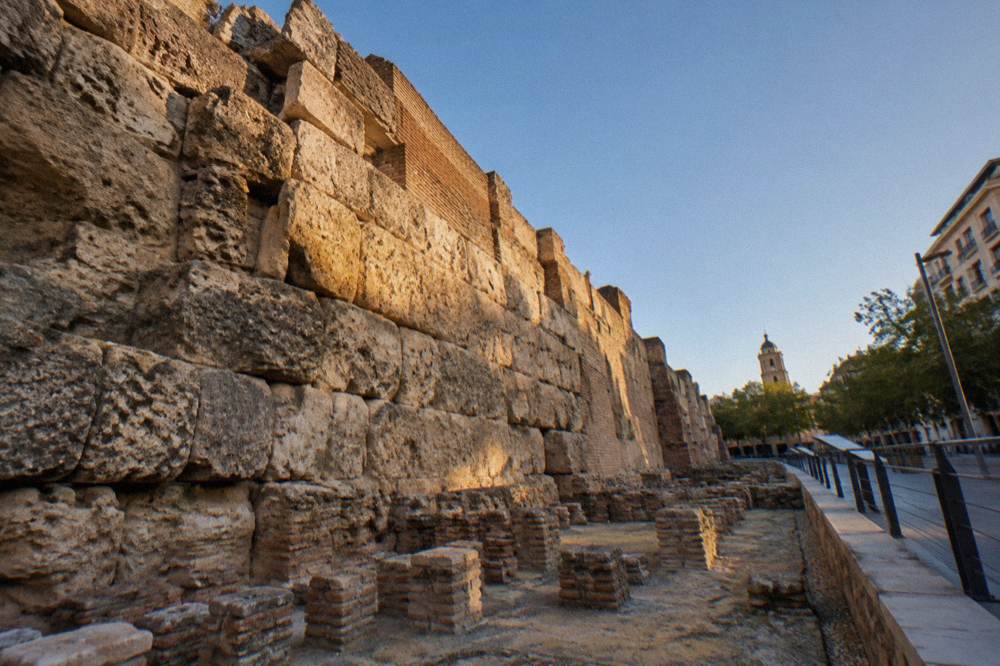
The three companion sites are the Museo del Foro de Caesaraugusta, the Museo de las Termas with the Roman walls, and the Museo del Teatro Romano, and the four-museum bono covers them all for 7 EUR. The Forum museum, at 4 EUR individually, shows the civic centre of the Roman city beneath today's streets; the Baths and Walls site, at 3 EUR, preserves the public bathing complex; and the Theatre museum completes the set with the city's entertainment quarter. All four share the same opening sessions.
Each site answers a different question about Caesaraugusta, and together they build a full picture of a Roman provincial city.
| Museum | Individual price | Roman layer it shows |
|---|---|---|
| Museo del Foro | 4 EUR | Civic centre and public square |
| Museo del Puerto Fluvial | 3 EUR | Working river port and quay |
| Museo de las Termas | 3 EUR | Public baths and city walls |
| Museo del Teatro | Included in bono | Theatre and entertainment |
The Forum museum sits under the modern city, and its position makes the most striking point of the set: Roman Zaragoza is directly beneath your feet, not outside town. The Roman Baths and Walls and the Roman Forum museum pages on this site carry the details for each, and the Roman Theatre museum completes the circuit.
A guided visit ties the four sites into one narrative. The Seo cathedral visit pairs well afterwards, since La Seo stands on the Roman forum's edge, and a private walk can route the whole morning around the river port.
What Nearby Sights Complete A Day Around The River Port?
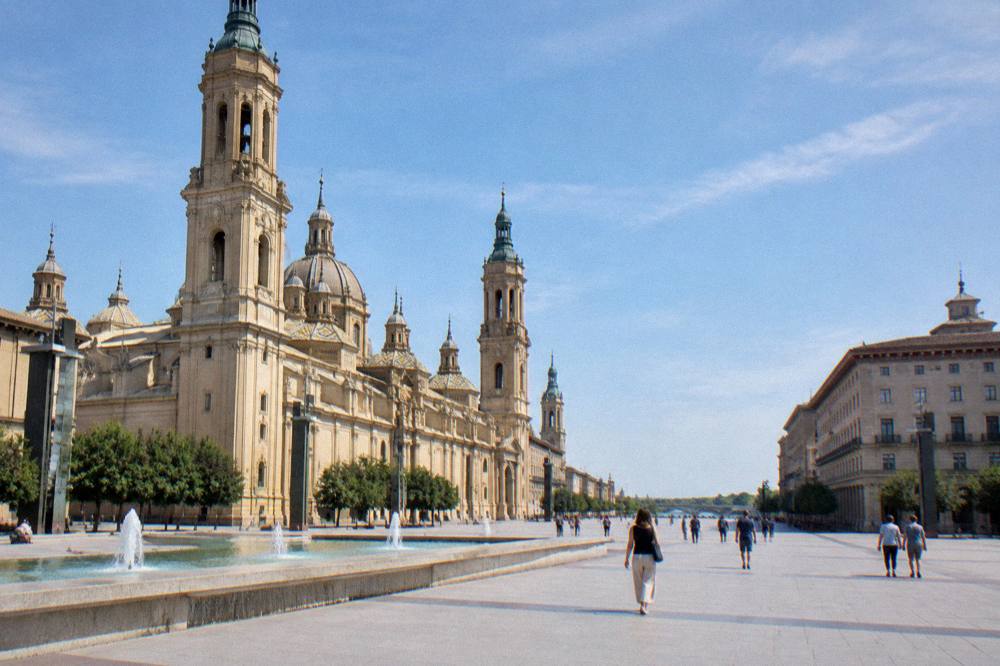
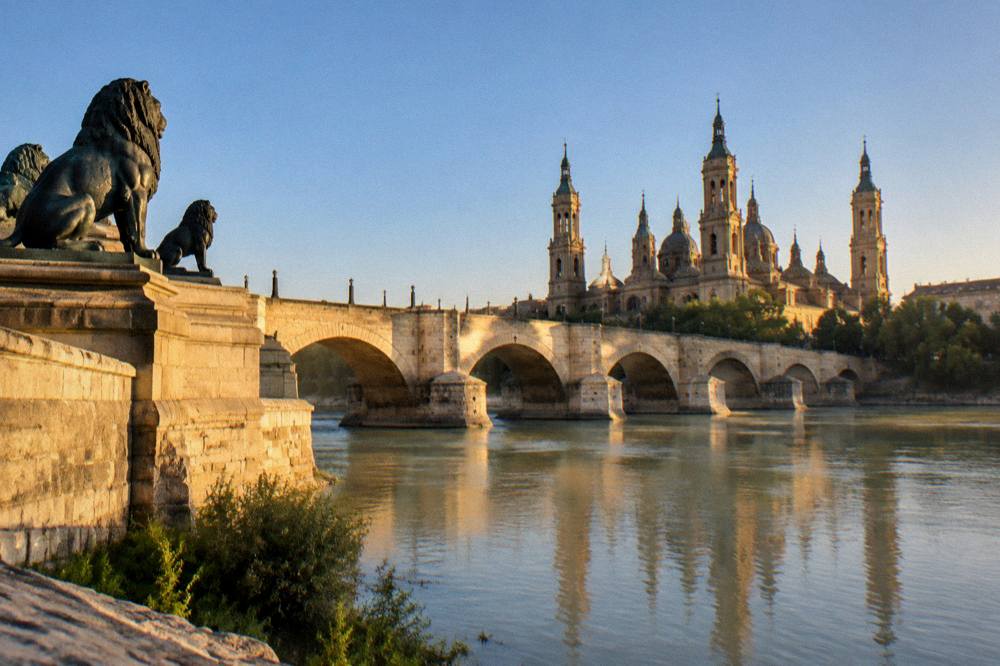
The river port sits inside a walkable cluster that takes in La Seo cathedral, the Basílica del Pilar, the Puente de Piedra and the Aljafería palace, and all of them can be covered in one long day on foot.
La Seo charges 10 EUR general, the Basílica del Pilar's temple is free to enter with its tower viewpoint at 6 EUR for adults, and the Aljafería charges 7 EUR general or 9 EUR with a guided tour, with free entry the first and third Sunday and Monday of each month.
The old town rewards a slow loop. Start at the Basílica del Pilar, cross to La Seo, descend to the river port and the Puente de Piedra, then finish at the Aljafería palace, whose Islamic palace architecture is the other great layer of Zaragoza's past alongside the Roman one.
| Nearby sight | General entry | Free or reduced conditions |
|---|---|---|
| Basílica del Pilar temple | Free | Tower viewpoint 6 EUR adult |
| La Seo cathedral | 10 EUR | Includes the Museo de Tapices and Museo Pilarista |
| Aljafería palace | 7 EUR | Free 1st and 3rd Sunday and Monday |
| Torreón de la Zuda | Free | Mirador on the fifth floor |
| Centro de Historias | Free | Tue-Sat 10-14 and 17-21 |
One caution for museum lovers: the Museo Pablo Gargallo is temporarily closed and the Palacio de Sástago is closed in October, so build the day around the Roman museums, La Seo and the Pilar rather than assuming every municipal museum is open. The Pablo Gargallo museum page carries what is known.
When Is The Best Time To Visit The Roman River Port Museum?
The evening session, from 17:00 to 21:00, is the most comfortable window in Zaragoza's hot months, because AEMET's 1981-2010 normals for the Zaragoza Aeropuerto station show July averaging a 32.4 C mean maximum and 348 hours of sunshine, while October, at a 21.4 C mean maximum with 36 mm of rain, is the mildest sightseeing month.
The first Sunday of the month brings free entry, and the Fiestas del Pilar, 10 to 18 October 2026, fill the old town with the biggest crowds of the year.
Spring and autumn are the balanced seasons. May is the wettest month in the 1981-2010 normals at 44 mm, but it comes with a 24.1 C mean maximum, and March through May spread the rain over only a handful of days each. Summer visitors should simply flip their day: museums in the 17:00 session, the river walk and the bridges after dark.
| Month | Mean max C (1981-2010) | Rain mm | Sun hours |
|---|---|---|---|
| March | 17.3 | 19 | 217 |
| May | 24.1 | 44 | 274 |
| July | 32.4 | 17 | 348 |
| October | 21.4 | 36 | 195 |
October deserves a special note. The Fiestas del Pilar run 10 to 18 October 2026, with the Ofrenda de Flores on 12 October filling the route from Paseo de la Independencia to Plaza del Pilar with flowers, and the old town around the river port is at its busiest and most festive. Museum sessions can feel crowded in that week, so book ahead and go early.
Common Questions About The Roman River Port Museum
How much does the Museo del Puerto Fluvial in Zaragoza cost?
A general ticket costs 3 EUR. The four-museum Caesaraugusta bono, which also covers the Forum, Baths and Theatre museums, costs 7 EUR general or 5 EUR reduced, and entry is free on the first Sunday of the month.
What are the Roman River Port Museum opening hours?
Tuesday to Saturday the museum opens 10:00-14:00 and 17:00-21:00, and on Sundays and public holidays 10:00-14:30. It is closed on Mondays. These are the October 2026 municipal timetable figures.
Is the Museo del Puerto Fluvial worth it?
For 3 EUR, or as part of the 7 EUR bono, it is one of the best-value stops in Zaragoza's old town, and the only Caesaraugusta site that puts the Roman city's relationship with the Ebro in front of you in situ.
Where is the Roman River Port Museum located?
It stands in Zaragoza's Casco Histórico, close to the Ebro, La Seo cathedral and the Puente de Piedra, so it fits naturally into a walking circuit of the old town.
Can you buy tickets for the Caesaraugusta museums online?
Yes, tickets are sold on the municipal museums site, museos-cultura.zaragoza.es, and buying ahead is sensible during the Fiestas del Pilar week and on free first Sundays.
Which other Roman museums are in Zaragoza?
The municipality runs four: the Forum museum, the Puerto Fluvial, the Baths and Walls, and the Theatre museum, all covered by the 7 EUR bono and all sharing the same opening sessions.
The Museo del Puerto Fluvial is a small museum with a large story to tell, and at 3 EUR, or 7 EUR with the whole Roman set, it is one of the most rewarding hours in Zaragoza's old town.