Paseo De La Independencia In Zaragoza: The City's Main Avenue Explained
The Paseo de la Independencia is Zaragoza's central boulevard, the axis that links the old town to the city's planned expansion and the street every visitor crosses within an hour of arriving.
Short answer
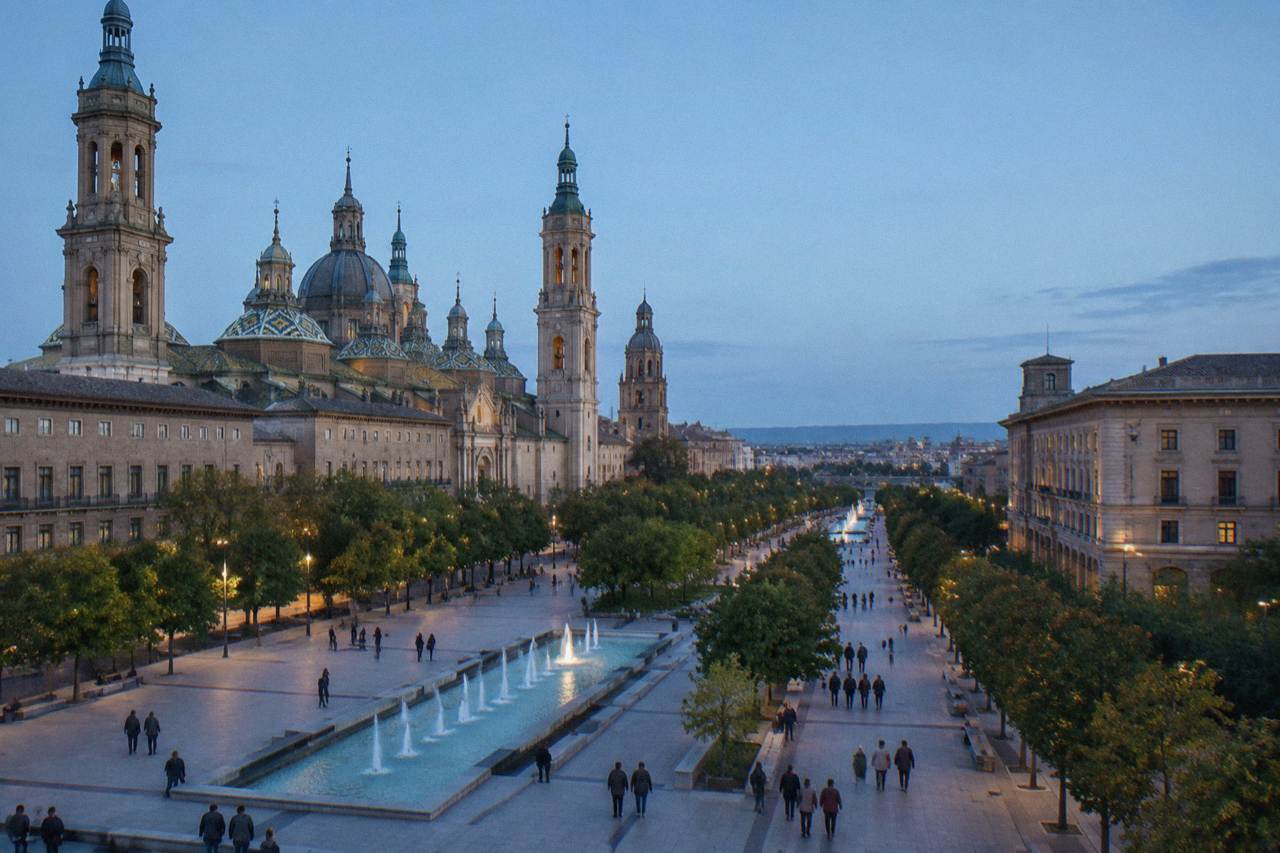
The Paseo de la Independencia is the main boulevard of Zaragoza, Spain, running from Plaza de Aragón down to Plaza de los Sitios and the historic centre. It is a free, always-open public street with a central pedestrian walkway, and it is the natural route between the Basílica del Pilar quarter and the city's museums.
The Paseo de la Independencia is the main boulevard of Zaragoza, the capital of Aragon in inland Spain, and it is the street that ties the old town to the planned grid of the modern centre. It runs from Plaza de Aragón in the north down towards Plaza de los Sitios and the edge of the Casco Histórico, the old town, with a broad central walkway that pedestrians have to themselves for most of its length. Traffic passes on either side, trams run along it, and every visitor who walks between the Basílica del Pilar and the museum district crosses it sooner or later. This guide explains what the avenue is, which sights sit on and around it, how to reach it, and which guided options cover it.
What Is The Paseo De La Independencia In Zaragoza?
The Paseo de la Independencia is Zaragoza's principal boulevard, a straight central avenue with a pedestrian spine down its middle, connecting Plaza de Aragón at the north end to Plaza de los Sitios and the old town at the south. It is a public street, open at all hours and free to walk, and it forms part of the ring of broad avenues that replaced the city's demolished northern fortifications. Today it is the axis that ties the historic quarter, the museum district and the modern centre together.
Zaragoza sits inland on the Ebro, in Aragon, and its old centre grew inside walls that were progressively demolished as the city expanded. The Paseo de la Independencia, along with the Paseo de Pamplona and the Paseo de Sagasta, forms the ring of broad avenues that took the place of the northern stretch of those fortifications. The result is a city where the medieval street plan of the Casco Histórico meets a planned grid of wide streets, and the Paseo is the seam between the two.
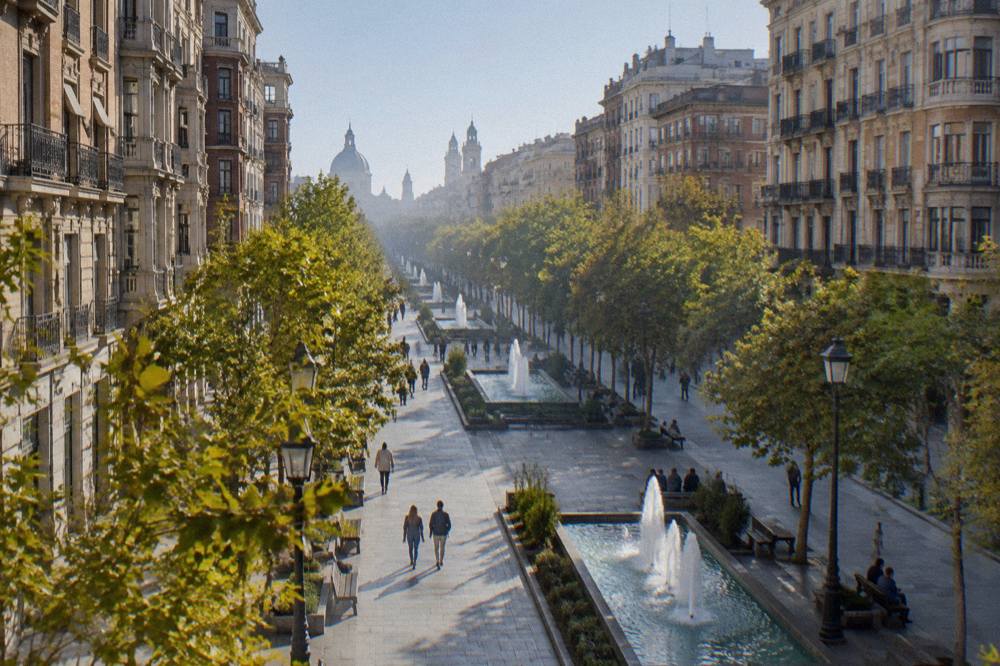
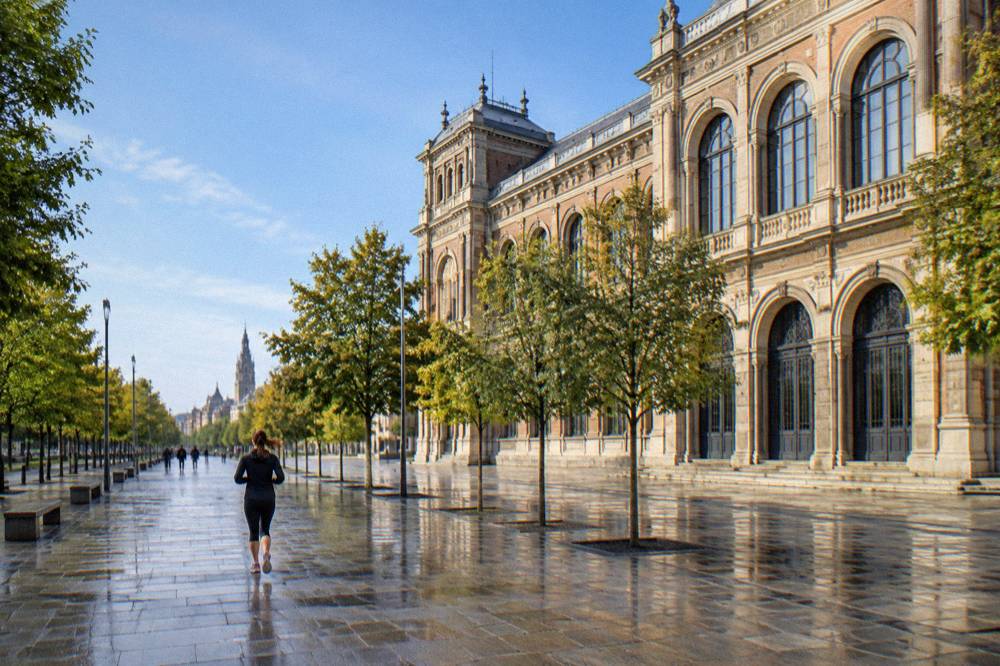
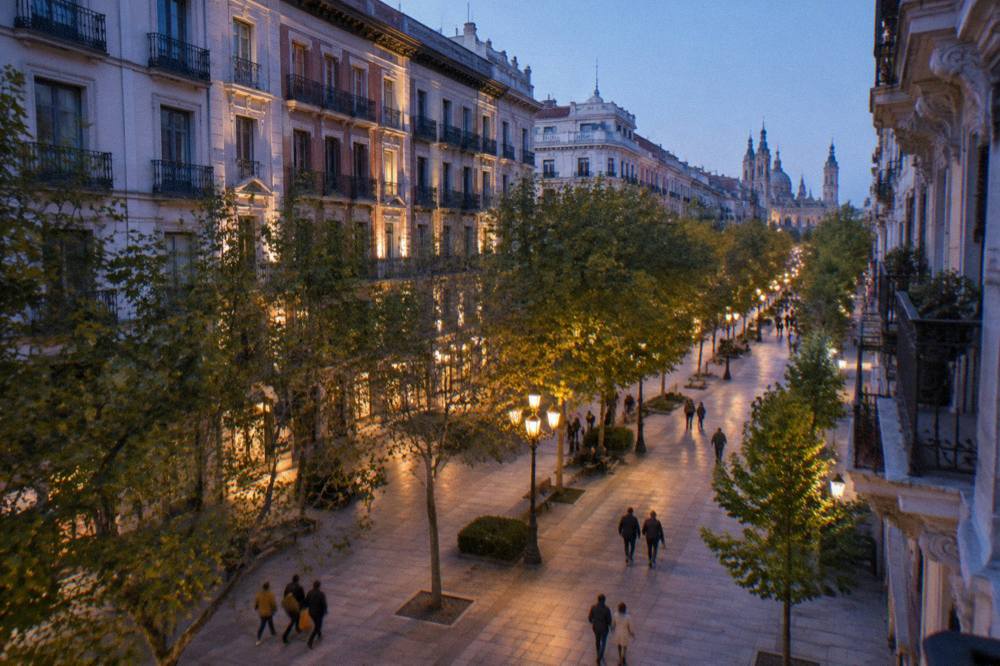
The central walkway is what makes the avenue pleasant rather than just busy. Fountains, benches, rows of trees and small garden sections separate the pedestrian spine from the traffic lanes on either side, and the tram line runs along the western side. The street is a working shopping street as well as a promenade: banks, cafés, chain stores and historic buildings share the frontages, and at its southern end the avenue opens onto the Plaza de los Sitios, the square that holds several of the city's museum buildings.
For orientation, treat the Paseo as the city's baseline. The Basílica del Pilar, La Seo and the old town lie to the south and east, the Aljafería lies to the west, and the museum quarter sits at the southern end of the avenue itself. Almost every itinerary in Zaragoza, including the one-day itinerary, crosses the Paseo at some point.
Which Sights Sit On Or Near The Paseo De La Independencia?
The avenue itself is the sight, but within a short walk of its length sit the Basílica del Pilar, La Seo, the Aljafería, the Roman Caesaraugusta museums, the IAACC Pablo Serrano and the Centro de Historias. The Pilar is free to enter, La Seo costs 10 EUR general, the Aljafería 7 EUR general, and the Caesaraugusta museums run from 3 to 4 EUR each with a 7 EUR four-museum bono.
The southern end of the Paseo is the productive end. Plaza de los Sitios, where the avenue terminates, is the museum square: the IAACC Pablo Serrano, free to enter and open Tue-Sat 10-14 and 17-21 plus Sunday mornings, stands there, and the Centro de Historias, also free, is close by. Note one standing fact of October 2026: the Museo de Zaragoza's central building on Plaza de los Sitios is closed for Ministry of Culture works, with no reopening date, so it cannot be listed as visitable even though it faces the avenue's end.
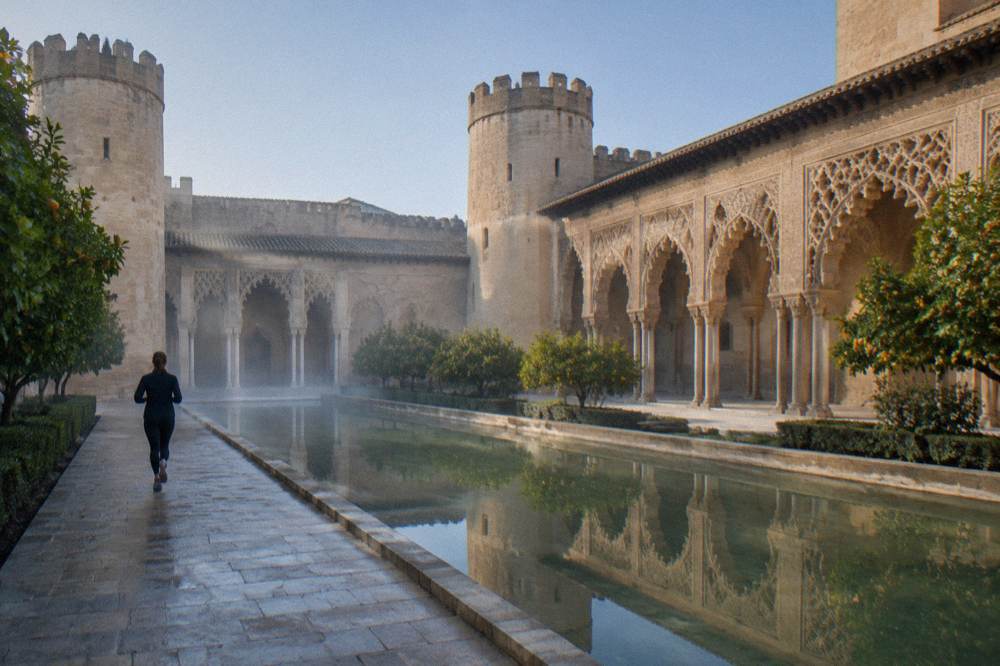
From Plaza de los Sitios it is a short level walk east into the old town and the monumental quarter. The Basílica del Pilar is free to enter, with its tower viewpoint at 6 EUR adult, and La Seo at 10 EUR general including the Museo de Tapices, Museo Pilarista and Rosario de Cristal. The Roman forum museum and the other Caesaraugusta sites sit inside the same grid of streets. To the west, the Aljafería palace, open daily 10:00-18:00 in October at 7 EUR general, is the other great monument within reach of the avenue.
If you would rather have all of this stitched together by a local, the guided options below cover exactly this territory, the Paseo and the monuments around it.
The Must-See Attractions Walking Tour is the natural fit for this street, because a two-hour private walk along the Paseo and into the old town is precisely how the avenue is best used, as the opening act before the monuments. Check availability if a private guide suits your group.
How Do You Get To The Paseo De La Independencia?
The Paseo is served by the Zaragoza tram, which runs along it, and by the urban bus network, with a single fare of 1.70 EUR or 0.55 EUR with the Tarjeta Bus. The tourist bus costs 10 EUR for a 24-hour hop-on hop-off ticket with 16 stops and a 90-minute loop. From Zaragoza-Delicias station the avenue is reachable by tram, and from the airport the 505 bus connects to the city network.
Zaragoza's tram, line 1, runs along the Paseo itself, which makes the avenue one of the easiest places in the city to reach by public transport. The 2026 Avanza fare table lists the urban single at 1.70 EUR for both bus and tram, with no transfer included, and 0.55 EUR with the rechargeable Tarjeta Bus, which costs 7 EUR and works on both bus and tram. Night lines cost 1.00 EUR.
Visitors arriving by high-speed train at Zaragoza-Delicias can connect into the tram network at the station; the municipal and operator pages describe the connection, and the tram then runs up through the modern centre to the Paseo. From Zaragoza Airport, the airport bus is line 505, at 4.65 EUR single or 2.25 EUR with a Lazo card, timed to flights and taking roughly 25 to 35 minutes into the city.
| Transport | Fare (2026) | Notes |
|---|---|---|
| Urban bus or tram single | 1.70 EUR | No transfer included |
| With Tarjeta Bus | 0.55 EUR | Card costs 7 EUR, valid bus and tram |
| Night bus lines | 1.00 EUR | Night network |
| Airport bus, line 505 | 4.65 EUR single | 2.25 EUR with Lazo card, timed to flights |
| Tourist bus | 10 EUR | 24 h hop-on hop-off, 16 stops, 90-minute loop, cash on the bus |
| Bizi day pass | 1 EUR + trips | 0.50 EUR per trip up to 30 min, deposit applies |
One planning note for drivers: Zaragoza operates a low-emission zone, the ZBE Casco Histórico, with sanctions active since 12 December 2025, Monday to Friday 08:00-20:00. Vehicles without a DGT environmental label are restricted in that first phase; labelled vehicles, B, C, ECO and 0, circulate normally. The zone covers the historic core at the southern end of the Paseo, so hotel access by car in that quarter depends on your vehicle's label. There is a 15-minute grace period if you enter by mistake, and the second phase of the zone is scheduled from 2030.
What Are The Opening Hours And Prices Around The Paseo De La Independencia?
The avenue itself is always open and free, but the sights around it run on fixed schedules: the Aljafería is open daily 10:00-18:00 in October at 7 EUR general, the Basílica del Pilar is free with the tower viewpoint at 6 EUR, La Seo charges 10 EUR general, and the Caesaraugusta museums cost 3 to 4 EUR each with a 7 EUR four-site bono. The IAACC Pablo Serrano and Centro de Historias are free.
The municipal October timetable lists the details, and the pattern is consistent: sights open mid-morning, close for the middle of the day or run straight through, and reopen late afternoon. The Aljafería, the grandest of them, opens daily 10:00-18:00, charges 7 EUR general or 9 EUR with a guided visit, 4 EUR with a tourist bus ticket and 2 EUR for students, over-65s and Carnet Joven holders, with under-12s free, and it is free on the first and third Sunday and Monday of each month. Last access is 45 minutes before closing.
| Sight | October hours | General price | Free or reduced notes |
|---|---|---|---|
| Basílica del Pilar | Main altar zones daily, see listing | Free entry | Tower viewpoint 6 EUR adult, 4 EUR ages 13-18 |
| La Seo | Mon-Sat 10:00-14:30, 16:00-20:00; Sun 10:00-12:00, 16:00-20:00 | 10 EUR | Includes Museo de Tapices, Pilarista, Rosario de Cristal; free for Aragon residents on the 6th, 12th, 23rd, 27th |
| Aljafería | Daily 10:00-18:00 | 7 EUR | Free 1st and 3rd Sunday and Monday; 4 EUR with tourist bus ticket |
| Caesaraugusta Foro | Tue-Sat 10:00-14:00, 17:00-21:00; Sun 10:00-14:30 | 4 EUR | 4-museum bono 7 EUR, 5 EUR reduced; free 1st Sunday |
| IAACC Pablo Serrano | Tue-Sat 10-14, 17-21; Sun 10-14 | Free | Free always |
| Centro de Historias | Tue-Sat 10-14, 17-21; Sun 10-14:30 | Free | Free always |
| Torreon de la Zuda | Mon-Sat 10-14, 16:30-20; Sun 10-14 | Free | Fifth-floor Mirador de las cuatro culturas |
Two closures matter for anyone planning a museum circuit from the Paseo in October 2026. The Museo de Zaragoza's central building on Plaza de los Sitios is closed for Ministry of Culture works with no reopening date, and the Palacio de Sástago is closed in October, with the Museo Pablo Gargallo temporarily closed. Plan around them: the free IAACC Pablo Serrano and Centro de Historias, plus the Caesaraugusta set, fill the same days easily.
The Museo Goya, the Fundación Ibercaja collection, reopens on 9 October 2026 after renovation, open Tue-Sat 10:00-20:00 and Sundays and holidays 10:00-14:00, closed Mondays, with the admission price not yet published. Anyone planning a Goya circuit should read the Goya in Zaragoza guide first.
When Is The Best Time To Walk The Paseo De La Independencia?
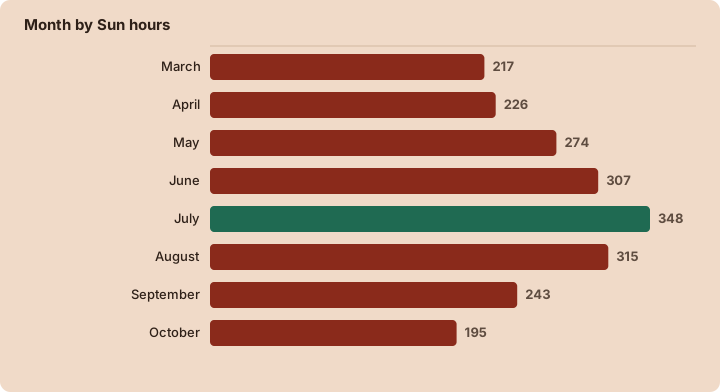
Spring and autumn are the comfortable seasons: AEMET's 1981-2010 normals for the Zaragoza Aeropuerto station show April at a 19.6 C mean maximum and October at 21.4 C, while July reaches 32.4 C, making summer afternoons the wrong time for a long open-air walk. May is the wettest month at 44 mm and July and August the driest at 17 mm, so rain is rarely the constraint, heat is.
The climate table deserves reading before generalising. Zaragoza is inland and dry, continental, with 322 mm of rain across the whole year at the airport station, which is less than many Spanish coastal cities receive in the wet season alone. July is the sunniest month at 348 hours and carries the highest mean maximum at 32.4 C; January sits at a 10.5 C mean maximum and 2.7 C mean minimum. The 1981-2010 window is the only series the station publishes, and every figure here belongs to it. The rest of the planning pages sit on Zaragoza Travel Guide.
| Month | Mean max C | Mean C | Rain mm | Sun hours |
|---|---|---|---|---|
| March | 17.3 | 11.6 | 19 | 217 |
| April | 19.6 | 13.8 | 39 | 226 |
| May | 24.1 | 18.0 | 44 | 274 |
| June | 29.3 | 22.6 | 26 | 307 |
| July | 32.4 | 25.3 | 17 | 348 |
| August | 31.7 | 25.0 | 17 | 315 |
| September | 27.1 | 21.2 | 30 | 243 |
| October | 21.4 | 16.2 | 36 | 195 |
For the walk itself, early morning and evening are the pleasant hours in summer, and the avenue's central walkway, with its trees and fountains, is the part of the centre where a hot afternoon is most survivable. The cierzo, the cold dry north-west wind of the Ebro valley, can make winter days feel sharper than the thermometer suggests; it is a qualitative feature of the valley with no published speed figure, and AEMET issues wind warnings for Aragon when it strengthens.
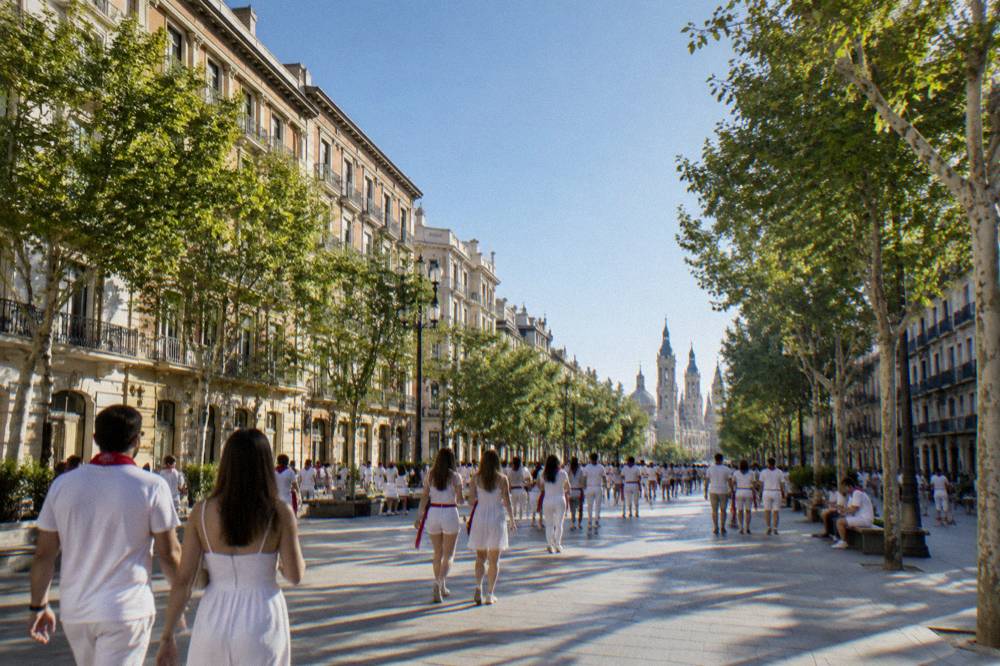
There is one date that changes the avenue entirely: the Fiestas del Pilar, from 10 to 18 October 2026, with the Ofrenda de Flores on 12 October taking its usual route from the Paseo de la Independencia up to the Plaza del Pilar. The city's own pages list the pregon at 21:00 on 10 October from the Ayuntamiento balcony, and the fireworks programme runs after the pregon, in the Parque Pignatelli, at the closing by the Ebro on 18 October, and in a new Plaza San Francisco edition. During those nine days the Paseo is not a quiet promenade but the spine of a festival. Our Fiestas del Pilar guide covers the programme in detail.
Which Guided Tours Cover The Paseo De La Independencia?
The two-hour private Must-See Attractions Walking Tour from 78.78 USD per person covers the avenue and the key monuments, the Aljafería guided visit in Spanish runs from 25.23 USD per person, and the Free Monumental Tour of Zaragoza is free and tip-based. Between them they span the full price range of guided walks in the city, from nothing at all to a private guide.
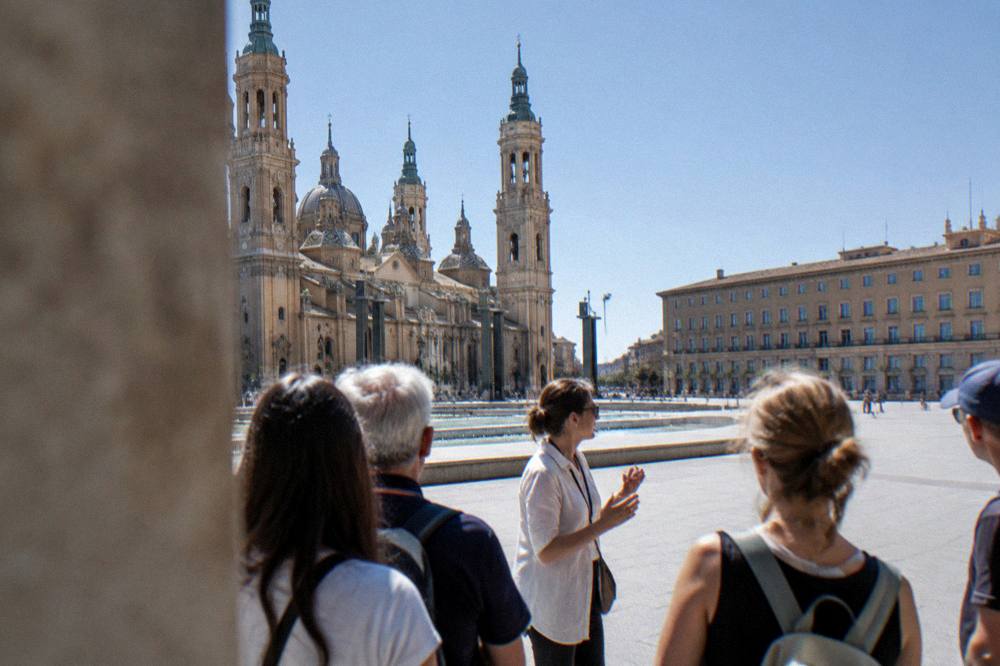
The Must-See Attractions Walking Tour is the one to pick if you want the Paseo explained rather than merely crossed: a private two-hour walk rated 4.6 from 9 reviews, it moves along the central sights and gives the avenue's place in the city plan a voice.
For the Aljafería at the western end of the walk, the guided visit in Spanish, from 25.23 USD per person and rated 4.7 from 23 reviews, pairs the palace ticket with a guided explanation. It is a Spanish-language product, so it suits visitors with the language or those who simply want the access.
At the other end of the price range, the Free Monumental Tour of Zaragoza is a free, tip-based walk rated 4.65 from 64 reviews, and it covers the monumental core the Paseo leads into. Free tours in this city run on GuruWalk, and the individual guru leading each walk is named in the tour details, which is how pay-what-you-want touring works there. Nothing is charged up front; you tip at the end.
What Is Within Walking Distance Of The Paseo De La Independencia?
The entire monumental core of Zaragoza lies within the arc the avenue opens onto: the Basílica del Pilar and its tower, La Seo, the four Caesaraugusta Roman museums, the Puente de Piedra and the Ebro riverbank, and the Aljafería to the west. The avenue's southern end at Plaza de los Sitios is the gateway to all of them, and the whole set is a compact district rather than a spread-out city.
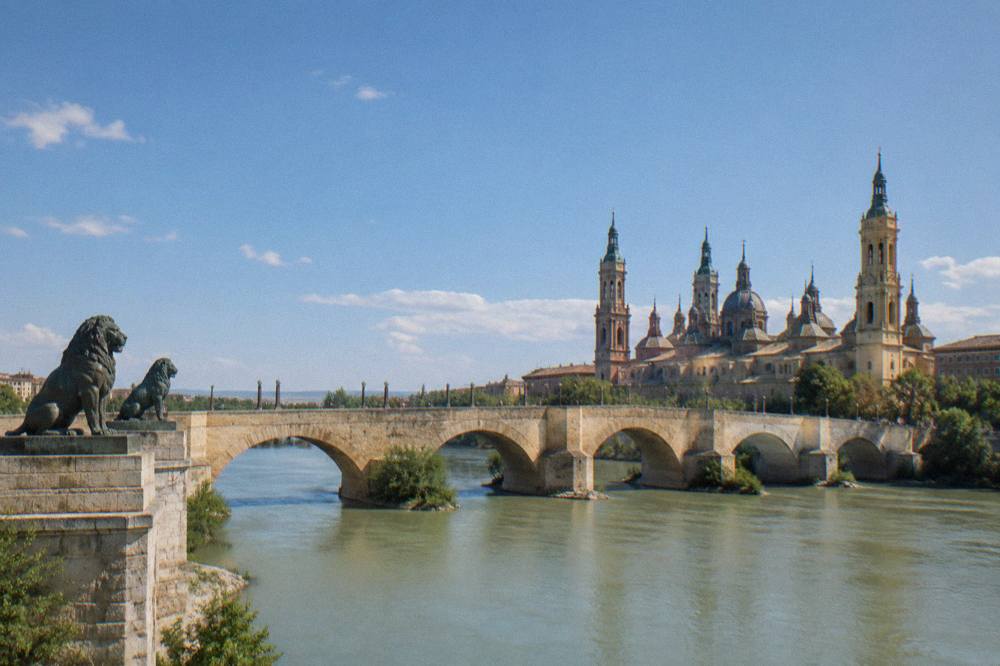
This compactness is the Paseo's real value. A visitor who bases a day on the avenue can reach the Puente de Piedra, the stone bridge of 1401 opened in 1440 with its four bronze lions added in 1991, and the Ebro river walk without transport, then return through the old town and finish on the central walkway. The Roman layer sits underneath the same grid: the forum, theatre, river port and baths museums of Caesaraugusta are all in the quarter south and east of the avenue's southern half.
| Sight | Direction from the Paseo | October status |
|---|---|---|
| Basílica del Pilar | South-east, old town | Open, free entry; tower 6 EUR |
| La Seo | South-east, old town | Open, 10 EUR general |
| Aljafería | West | Open daily 10:00-18:00, 7 EUR |
| Caesaraugusta museums | South-east | Open, 3-4 EUR each, 7 EUR bono |
| Puente de Piedra | South, at the Ebro | Open, free |
| IAACC Pablo Serrano | At Plaza de los Sitios | Open, free |
| Museo de Zaragoza central building | At Plaza de los Sitios | Closed for works, no reopening date |
| Palacio de Sástago | City centre | Closed in October |
For a fuller circuit, the things to do in Zaragoza page and the three-day itinerary place the avenue in sequence with the sights further out, including the Expo 2008 quarter and the Parque del Agua, the Luis Buñuel park of more than 120 hectares in the Ranillas meander beside the Expo site.
How Does The Paseo Fit Into A First Day In Zaragoza?
Start on the Paseo at its northern end at Plaza de Aragón, walk the central spine south to Plaza de los Sitios, visit the Aljafería in the west or the free IAACC Pablo Serrano at the square, then continue into the old town for the Basílica del Pilar, La Seo and the Roman museums, finishing at the Puente de Piedra and the Ebro. The avenue gives the first day its spine, and every stage after it is a short walk.
That order works because the geography is linear. The avenue runs roughly north to south, the museum square closes it at the south, and the monumental quarter opens immediately beyond. A first-time visitor who walks the Paseo once, in either direction, has the city's mental map for the rest of the stay: old town south and east, Aljafería west, modern centre north, river beyond.
The free things to do in Zaragoza guide is worth pairing with this plan, because so much of this circuit costs nothing: the basilica entry, the two free museums at the avenue's end, the bridge, the riverbank and the avenue itself. The paid items, the Pilar tower at 6 EUR, La Seo at 10 EUR, the Aljafería at 7 EUR, are the only fixed costs, and the Aljafería's free first and third Sundays and Mondays can be timed to match.
Common Questions About The Paseo De La Independencia In Zaragoza
Is the Paseo de la Independencia free to walk?
Yes. It is a public boulevard, open at all hours, with a central pedestrian walkway. Everything on the avenue itself, the fountains, the tree-lined spine and the squares at each end, is free; only the museums and monuments around it charge admission.
Which sights are closest to the Paseo de la Independencia?
The IAACC Pablo Serrano and Centro de Historias at Plaza de los Sitios, at the avenue's southern end, both free. Beyond them, the Basílica del Pilar, La Seo, the Caesaraugusta Roman museums and the Aljafería all sit within the same compact central district.
Does the tram run along the Paseo de la Independencia?
Yes, the tram runs along the avenue, and a single fare is 1.70 EUR, or 0.55 EUR with the Tarjeta Bus, per the 2026 Avanza fare table. The same fares apply to the urban bus network.
Is the Paseo de la Independencia open during the Fiestas del Pilar?
The avenue is public and always open, and during the Fiestas del Pilar, 10 to 18 October 2026, it becomes part of the festival: the Ofrenda de Flores on 12 October takes its usual route from the Paseo de la Independencia to the Plaza del Pilar. Expect crowds rather than a quiet stroll on those days.
Can you drive to the Paseo de la Independencia?
You can reach the surrounding streets, but Zaragoza's low-emission zone, the ZBE Casco Histórico, has been active with sanctions since 12 December 2025, Monday to Friday 08:00-20:00, and requires a DGT environmental label. There is a 15-minute grace period if you enter by mistake, and the second phase starts in 2030.
What is the best month to walk the Paseo de la Independencia?
April, May, September and October, on AEMET's 1981-2010 normals for the Zaragoza Aeropuerto station: mean maxima of 19.6 C in April, 24.1 C in May, 27.1 C in September and 21.4 C in October, against 32.4 C in July. May is the wettest month at just 44 mm, so heat, not rain, is the planning constraint.
The Paseo de la Independencia is the one street in Zaragoza that every visitor ends up knowing, the line on the map that the whole compact centre hangs from, and an hour spent walking its central spine is the cheapest orientation a trip to Aragon's capital can buy.