Ebro River Walk In Zaragoza: The Complete Guide To The Riverside Route
The Ebro gave Zaragoza its Roman name, its position and its best view, and the river walk along both banks is the single most rewarding free thing the city offers.
Short answer
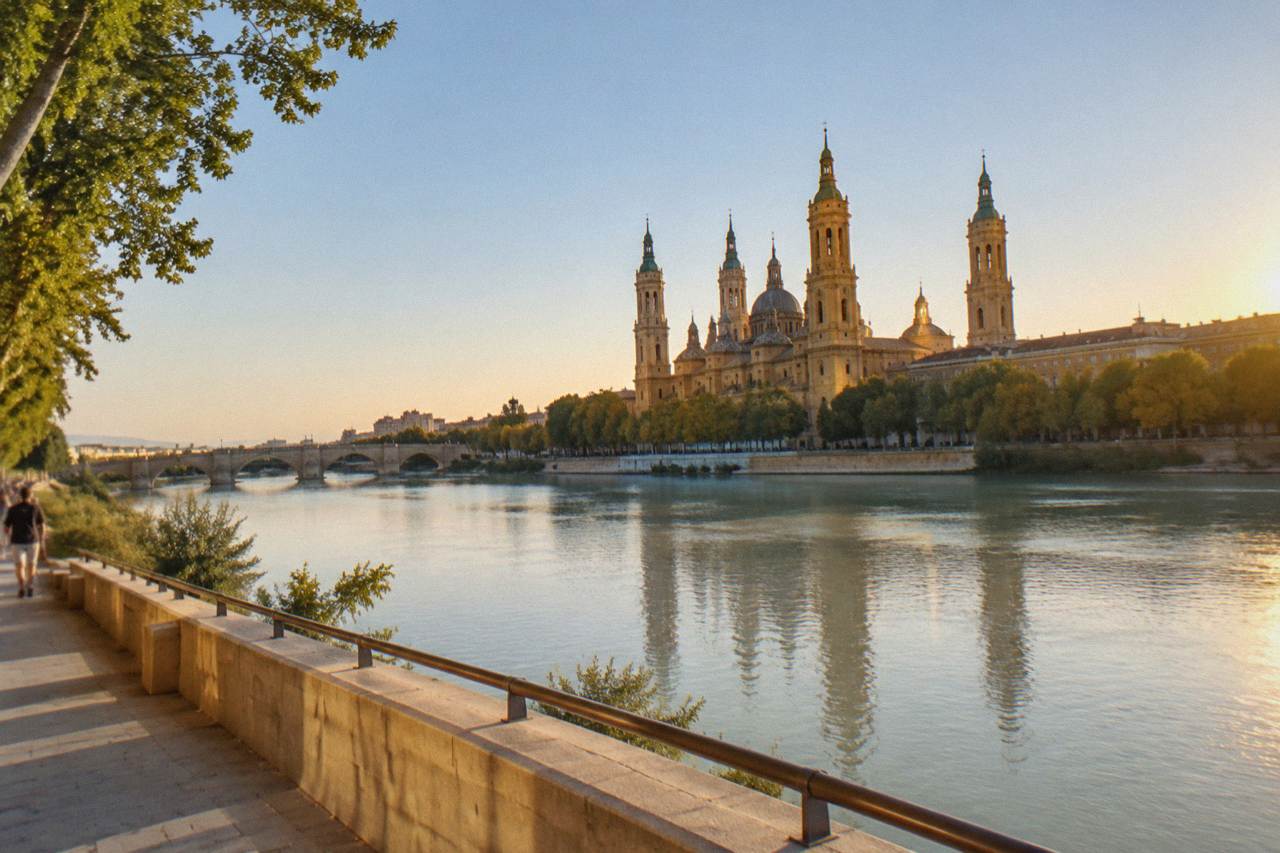
The Ebro river walk in Zaragoza runs along both banks of the Ebro between the Puente de Piedra and the Expo 2008 site, linking the Basílica del Pilar, La Seo, the Stone Bridge, the Aljafería district and the Parque del Agua, and the classic stretch between the Puente de Piedra and the Puente de Hierro takes in the city's most photographed views for free at any hour.
The Ebro is the reason Zaragoza exists. The Roman colony of Caesaraugusta was founded on its southern bank, every era of the city since has arranged itself around its water, and today the riverside path on both banks is the thread that ties the Basílica del Pilar, La Seo, the Puente de Piedra, the Aljafería district and the Expo 2008 site into a single walk. Zaragoza, the capital of Aragon, is an inland city, and the Ebro is its sea substitute, its cooling corridor in summer and the foreground of the most photographed view in eastern Spain. This guide covers the whole route: the bridges, the sights on each bank, the best times to walk it, and the guided tours that cover the riverside highlights.
What Is The Ebro River Walk In Zaragoza?
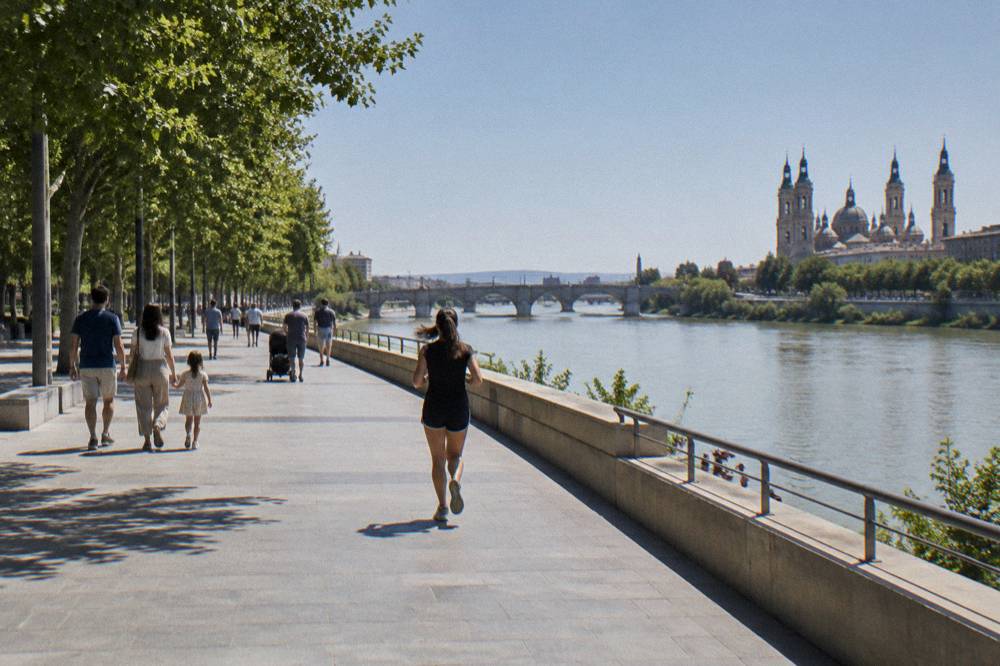
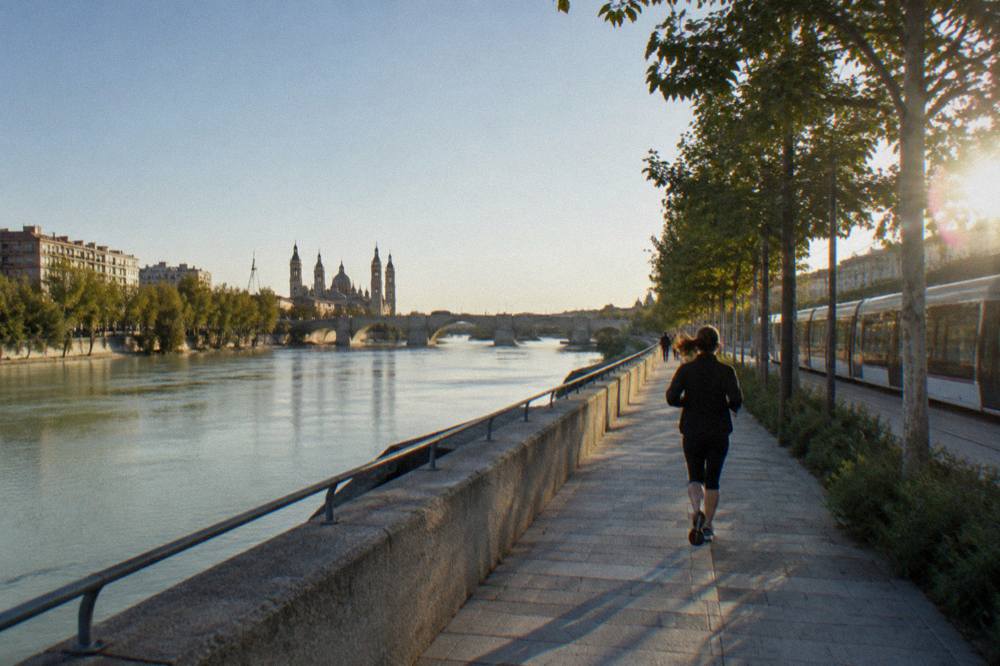
The Ebro river walk is the continuous riverside path network on both banks of the Ebro as it crosses Zaragoza, running roughly from the Puente de Piedra and the Basílica del Pilar in the historic centre out to the Parque del Agua and the Expo 2008 site in the Ranillas meander, with the classic stretch being the loop between the Puente de Piedra and the Puente de Hierro past the Aljafería. The walk is free, open at all hours and needs no ticket, and it delivers the postcard view of the Basílica del Pilar reflected in the water, the one image most visitors take home from Zaragoza.
The municipality publishes the riverside as a core part of the city's green network, and the Ebro's banks have been reshaped more than once in the city's history. The Expo 2008 site, an international exhibition themed on water and sustainable development, occupied the Ranillas meander downstream of the centre, and its legacy is a chain of bridges, parks and buildings that extends the river walk far beyond the old town. Upstream, the path passes under or beside the Puente de Piedra, the Puente de Hierro, the Santiago stone bridge and the modern Puente del Tercer Milenio.
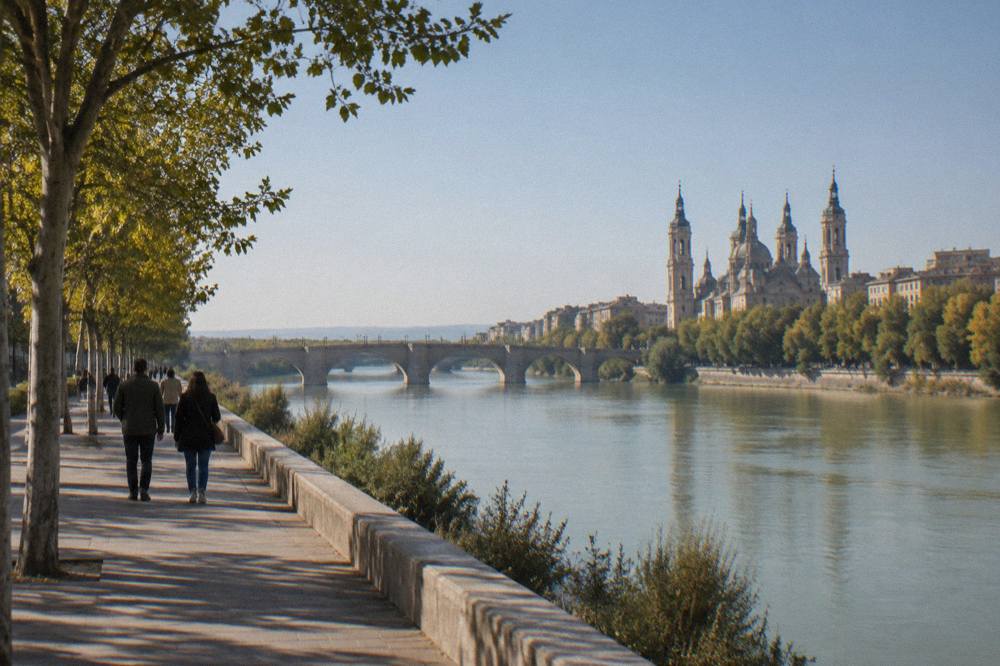
What makes the route unusual among Spanish city walks is the density of eras on display. One short stretch of the left bank carries a Roman-era crossing point, a bridge begun in 1401, a Baroque basilica, a Mudéjar cathedral tower and a 2008 exposition bridge within sight of one another. The Old Town monumental walk covers the historic end of this corridor with a guide, and it pairs well with a self-guided riverside amble before or after.
The walk also connects directly to several of the city's headline attractions, which is why so many visitors end up doing parts of it without planning to. The Basílica del Pilar and La Seo Cathedral both sit a few steps from the southern bank, the Puente de Piedra is the walk's centrepiece crossing, and the Parque del Agua is its downstream terminus.
Which Bridges Cross The Ebro On The Zaragoza River Walk?
Four bridges anchor the walk: the Puente de Piedra, the stone bridge begun in 1401 and opened in 1440 on the line of a Roman-era crossing; the Puente de Hierro near the Aljafería; the Puente de Santiago upstream of the Basílica; and the Puente del Tercer Milenio downstream at the Expo site, with the Pabellón Puente standing in the water itself. Each one changes the view, and the walk is best done as a loop that crosses at least two of them.
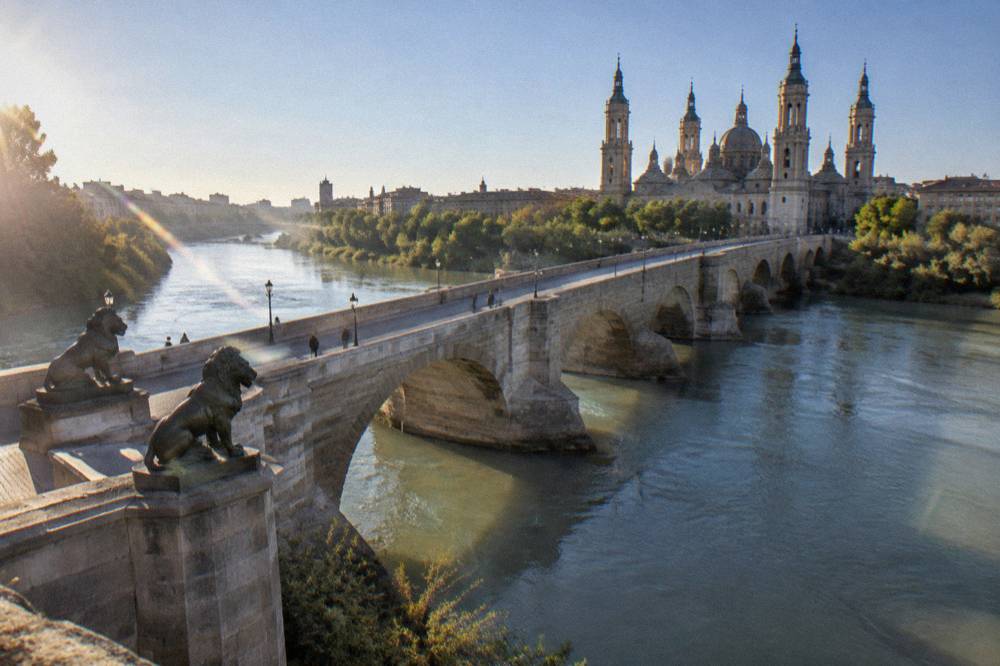
The Puente de Piedra is the emotional centre of the route. The municipality's own page records that the current bridge was built from 1401 and opened in 1440, that a Roman-era crossing predates it on the same line, that Napoleonic troops blew up one of its arches in 1813 during the Peninsular War, and that the four bronze lions that guard its approaches have stood there since 1991. From its midpoint, the view upstream to the Basílica del Pilar is the single most reproduced image of Zaragoza, and at dawn and dusk the low light turns the stone gold.
The Pabellón Puente, the braided-steel bridge pavilion built for Expo 2008, is the modern counterpoint, and the Torre del Agua stands nearby in the meander. No admission price or opening hours for either have been published in a form this site can confirm, so check the operator notices at the Expo site before planning an interior visit. The Tercer Milenio bridge carries the path across to the Actur and Expo Riberas district, where the residential side of the river begins.
| Bridge | Era | Where It Sits on the Walk | What It Gives You |
|---|---|---|---|
| Puente de Piedra | Begun 1401, opened 1440 | Historic centre, at the Basílica del Pilar | The classic Pilar view, lions at the approaches |
| Puente de Santiago | Modern, stone-clad | Upstream of the Pilar | Quiet views back over the basilica's flank |
| Puente de Hierro | Iron structure | At the Aljafería end | Views toward the palace district |
| Puente del Tercer Milenio | 2008 Expo era | Ranillas meander | Access to the Expo site and Parque del Agua |
| Pabellón Puente | 2008 Expo era | In the river at the Expo site | The most striking modern structure on the Ebro |
A sensible loop crosses at the Puente de Piedra, follows the right bank downstream past the Pilar's northern face, recrosses at the Puente de Hierro and returns along the Aljafería side. Anyone with more time continues downstream to the Expo bridges and the park.
What Sights Sit Along The Ebro In Zaragoza?
The riverside corridor packs the Basílica del Pilar, La Seo Cathedral, the Puente de Piedra, the Aljafería district, the Roman river port museum, the Expo 2008 site, the Parque del Agua and the Acuario de Zaragoza into one walkable line, with the Pilar and the Stone Bridge forming the historic cluster and the Expo meander forming the modern one. Almost every headline sight in the city is either on the bank or within five minutes of it.
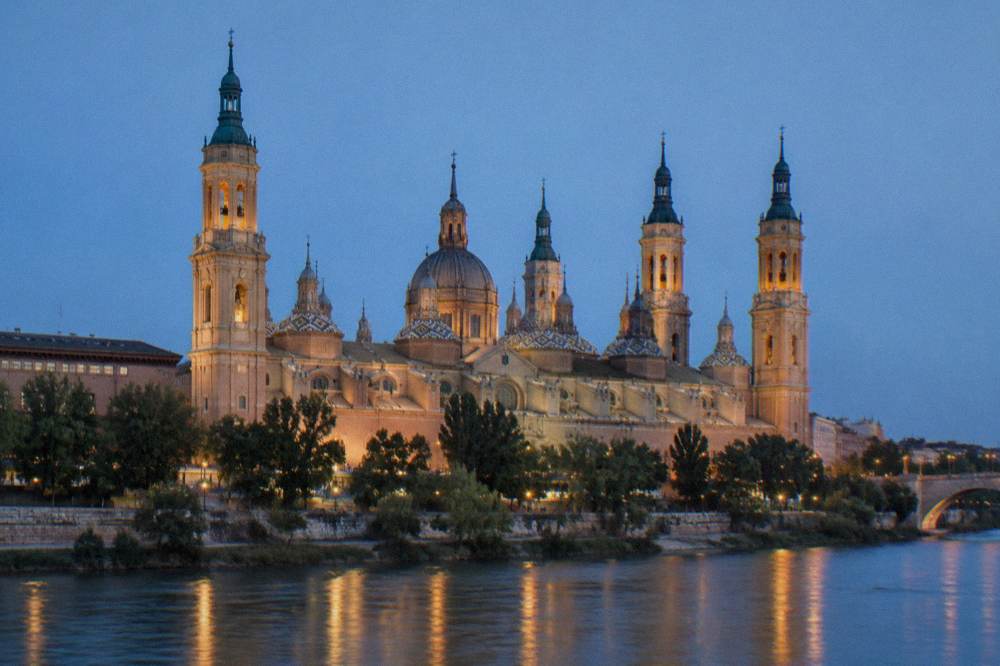
Start at the historic cluster. The Basílica del Pilar stands with its towers directly over the water, and its tower viewpoint gives the reverse view, looking down the Ebro over the roofs of the old town. Entering the basilica itself is free, and the municipal October timetable lists the Holy Chapel zone as open 8:00 to 20:30. La Seo, the Mudéjar cathedral a few streets inland, faces the river from its own small square, and its Museo de Tapices is included in the general ticket.
The Roman layer sits close to the water too, because Caesaraugusta was a river port. The Roman river port museum preserves the stone quay where goods were unloaded, and it belongs to the four-site Caesaraugusta circuit alongside the forum, the theatre and the baths and walls. The municipal timetable lists the river port and baths at 3 EUR each, the forum at 4 EUR and a four-museum bono at 7 EUR, free on the first Sunday of the month.
Downstream, the modern cluster takes over. The Expo 2008 site preserves the exhibition's bridges and pavilions, the Parque del Agua Luis Buñuel spreads more than 120 hectares across the meander with running circuits of 5 and 10 kilometres, and the Acuario de Zaragoza, described on its own site as the largest river aquarium in Europe with more than 5,000 specimens, sits beside the water at the park's edge.
| Sight | Bank | Admission | Verified Detail |
|---|---|---|---|
| Basílica del Pilar | Right (historic) | Free to enter | Tower viewpoint 6 EUR adult, 4 EUR ages 13-18 |
| La Seo + Museo de Tapices | Right (historic) | 10 EUR general | Includes Museo Pilarista and Rosario de Cristal |
| Roman river port museum | Right (historic) | 3 EUR | Part of the 7 EUR four-museum bono |
| Aljafería | Left, near Puente de Hierro | 7 EUR general, 9 EUR guided | Free 1st and 3rd Sunday and Monday |
| Parque del Agua | Left (Ranillas) | Open green space | 120-plus hectares, 5 and 10 km circuits |
| Acuario de Zaragoza | Left (Ranillas) | 20 EUR general, 14 EUR child 4-14 | Family pack 55 EUR online, 2 adults + 2 children |
One caution for museum planners: the Museo de Zaragoza's central building on Plaza de los Sitios is closed for Ministry of Culture works with no reopening date, so do not build a riverside-plus-museums day around it. The Aljafería, by contrast, is open daily 10:00 to 18:00 in October, and its guided tour pairs naturally with the bridge walk since the palace sits a short stroll from the Puente de Hierro.
When Is The Best Time To Walk The Ebro In Zaragoza?
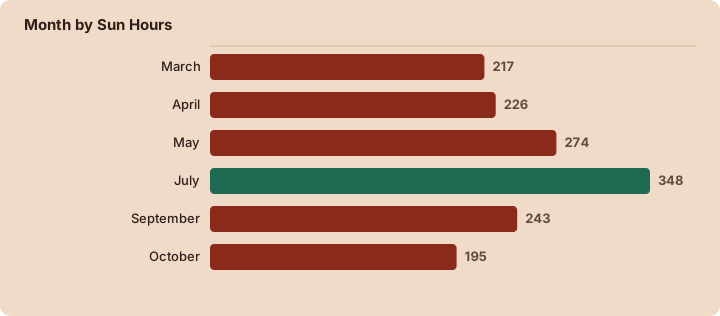
The best months for the Ebro river walk are April, May, October and early November, when AEMET's 1981-2010 normals for the Zaragoza Aeropuerto station show mean maximum temperatures of 19.6 to 24.1 C in spring and 21.4 C in October against only 36 mm of October rain, while July and August, with mean maxima of 32.4 C and 31.7 C, make early morning and evening the only comfortable walking hours. Zaragoza is a dry continental city, and the river corridor is the coolest place in it on a hot afternoon.
The same normals put July as the sunniest month at 348 hours and July and August as the driest at 17 mm each, which is why summer walkers get reliable light but punishing midday heat. May is the wettest month at 44 mm, though that still averages out to fewer than seven days with a millimetre or more of rain. In winter the mean maximum drops to 10.5 C in January, and the cierzo, the cold, dry north-west wind that funnels down the Ebro valley, can make the exposed banks feel far colder than the thermometer says; AEMET publishes no wind figures for the station, so treat the cierzo as qualitative, but treat it seriously. Other pages covering the same trip are gathered on Zaragoza Travel Guide.
| Month | Mean Max C | Mean Min C | Rain mm | Sun Hours |
|---|---|---|---|---|
| March | 17.3 | 5.8 | 19 | 217 |
| April | 19.6 | 7.9 | 39 | 226 |
| May | 24.1 | 11.8 | 44 | 274 |
| July | 32.4 | 18.3 | 17 | 348 |
| September | 27.1 | 15.2 | 30 | 243 |
| October | 21.4 | 11.0 | 36 | 195 |
All figures are AEMET 1981-2010 climate normals for the Zaragoza Aeropuerto station, the only averaging window the station page publishes.
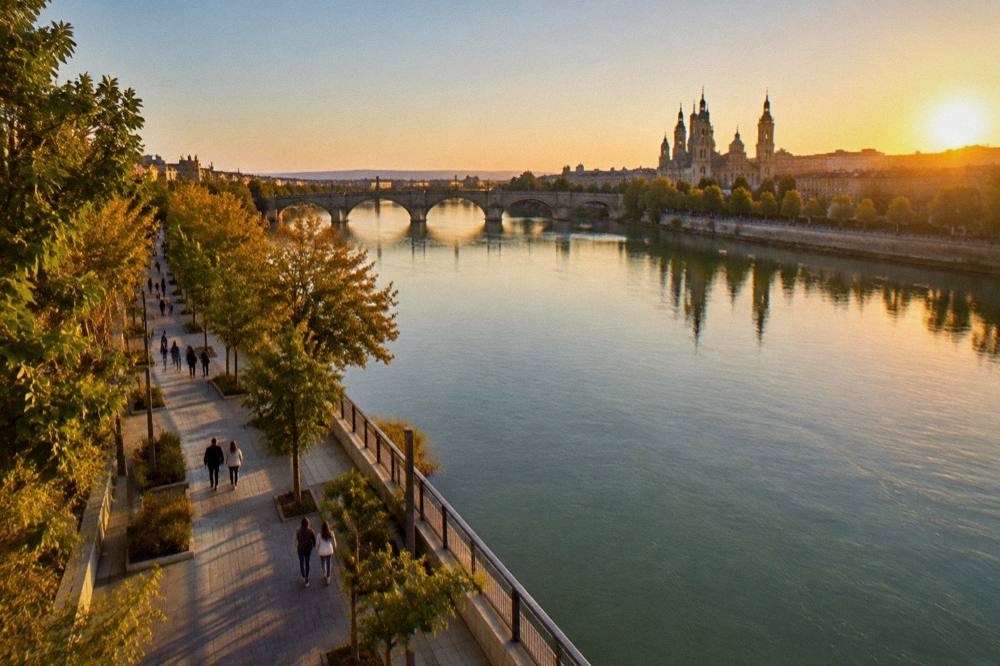
For photographers, the two golden windows matter more than the season. The Pilar faces roughly north-west from the far bank, so late afternoon and early evening light warms its stone, and the riverside path on the left bank is where the tripod crowd gathers. At dawn the river is often calmest and the banks emptiest.
One October timing note belongs here rather than in a weather section: the Fiestas del Pilar run from 10 to 18 October 2026, with the Ofrenda de Flores on 12 October processing from the Paseo de la Independencia to the Plaza del Pilar. The riverside is busy and festive throughout, and the fireworks programme includes a closing spectacle by the Ebro on 18 October, so expect crowds on the banks that week.
How Does The River Walk Connect To The Rest Of Zaragoza?
The Ebro river walk links directly to the tram line along the left bank, the urban bus network at 1.70 EUR a single or 0.55 EUR with the Tarjeta Bus per the 2026 Avanza fare table, and the Zaragoza Bus Turístico, whose 10 EUR ticket gives 24 hours of hop-on hop-off access across 16 stops on a 90-minute loop, so the walk can be started, abandoned and resumed anywhere along its length. You never need a car for any of it.
The tram runs close to the Aljafería and along the Expo side, which makes the downstream stretch the easiest to sample in sections. The Bus Turístico, on the municipality's own listing, takes cash only on the vehicle, a small detail worth knowing before boarding. Cyclists can use the Bizi share scheme, whose 2026 tariff sheet lists a 1 EUR day pass plus 0.50 EUR for the first 30 minutes of each trip, with a card deposit held.
| Way to Travel | Cost | Good For |
|---|---|---|
| On foot | Free | The full riverside experience |
| Urban bus or tram | 1.70 EUR single, 0.55 EUR with Tarjeta Bus | Reaching either end of the route |
| Zaragoza Bus Turístico | 10 EUR, 24 hours, 16 stops | An overview with hop-off freedom |
| Bizi day pass | 1 EUR plus 0.50 EUR per first 30 min | Riding the bank between bridges |
Drivers should note the low-emission zone: the ZBE Casco Histórico has been active with sanctions since 12 December 2025, Monday to Friday 8:00 to 20:00, and vehicles without a DGT environmental label are restricted in the historic centre the walk passes through. There is a 15-minute grace period if you enter by mistake, but the simplest answer is to arrive by tram or train and walk.
Which Guided Tours Cover The Ebro Riverside In Zaragoza?
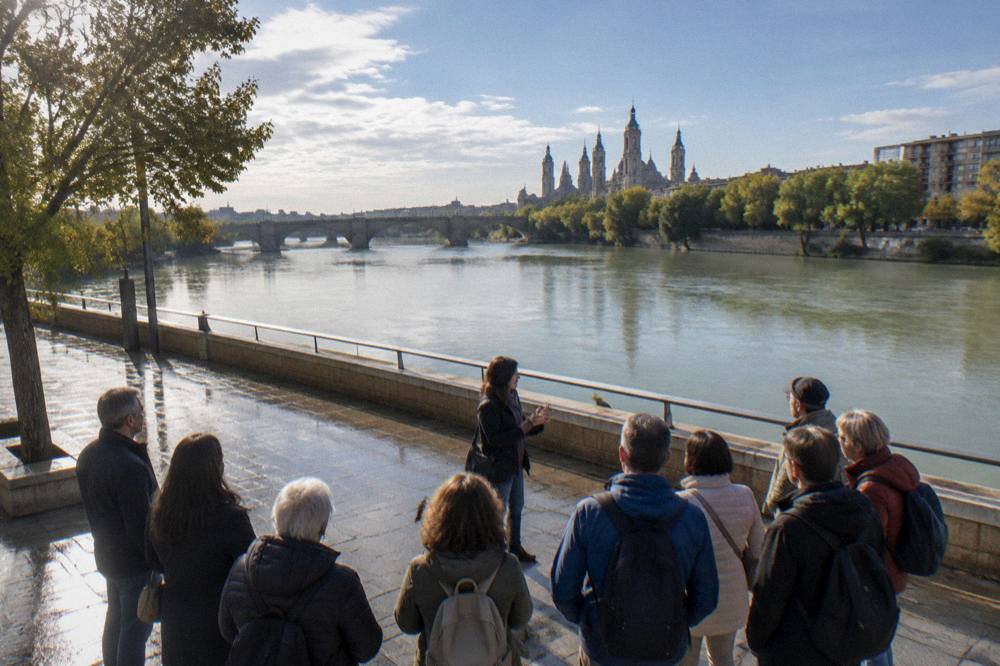
The guided options that cover the riverside landmarks are the Monumental Walking Tour in Old Town of Zaragoza, a $97.47 per person walk rated 4.9 from 15 reviews that takes in the riverside historic cluster, the Aljafería Palace ticket and guided visit at $24.76 rated 4.7 from 82 reviews, and the Free Monumental Tour of Zaragoza, a tip-based GuruWalk covering the headline monuments with no fixed price. All three start in the city and cross or border the Ebro corridor.
The Monumental Walking Tour in Old Town of Zaragoza is the natural companion to the river walk, because it covers the Pilar, La Seo and the Stone Bridge end of the route with a licensed guide who can put dates to the stone. Check availability if you want the riverside's history explained rather than just admired.
The Aljafería pairing works because of geography: the palace sits near the Puente de Hierro, so a morning in the Islamic-era palace and an afternoon on the left-bank path combine into one arc. The palace's own timetable lists Spanish guided tours at 10:30, 12:30, 13:30, 15:00 and 16:00, and the "Goya, del Museo al Palacio" exhibition tour at 11:30.
The free option deserves its name in full. The Free Monumental Tour of Zaragoza runs on the GuruWalk platform with a local guru leading it on a pay-what-you-want basis, rated 4.65 from 64 reviews, and it is the budget answer for visitors who want the monument stories without a fixed fee. Never print a price for a GuruWalk, because there isn't one: the tip is the transaction.
For evening walkers, the riverside changes character after dark, and a guided night option covers the legends side of the old town that the river once guarded. The Pilar's towers are lit, the Stone Bridge is quieter, and the left-bank path becomes the city's informal evening promenade.
Common Questions About The Ebro River Walk In Zaragoza
Is the Ebro river walk in Zaragoza free?
Yes. The riverside paths on both banks are public and open at all hours with no ticket. The sights along it charge separately: entering the Basílica del Pilar is free, its tower viewpoint is 6 EUR for an adult, and the Parque del Agua is open green space.
How long does the Ebro river walk take?
The classic loop between the Puente de Piedra and the Puente de Hierro, taking in the Pilar views and the Aljafería district, is a comfortable stroll of a couple of hours with photo stops. Extending downstream to the Expo 2008 site and the Parque del Agua, which covers more than 120 hectares with 5 and 10 km running circuits, turns it into a half-day outing.
Where is the best view of the Basílica del Pilar from the river?
From the left bank opposite the basilica, reached by crossing the Puente de Piedra and walking a short way downstream. Late afternoon and evening light warm the basilica's stone from that angle, and the Stone Bridge itself appears in the foreground of the classic photograph.
Can you walk along the Ebro at night in Zaragoza?
The riverside promenade is a popular evening route, particularly between the Puente de Piedra and the Puente de Santiago, and the lit Pilar towers are the city's night-time signature. As with any city at night, keep to the populated stretches; the municipality publishes no separate night-safety guidance.
Is the Ebro river walk suitable for bikes and pushchairs?
The main promenade stretches are paved and level, and the Bizi share scheme's 2026 tariff lists a 1 EUR day pass plus 0.50 EUR for the first 30 minutes of each trip, with a card deposit held. The gravel edges of the Parque del Agua circuits are looser underfoot but still rideable on a city bike.
The Ebro made Zaragoza, and the river walk is the one route where the whole city can be read in order, from the Roman quay to the Baroque basilica to the Expo bridges, all for the price of a pair of comfortable shoes.