Water Tower (Torre Del Agua) In Zaragoza: What To See At The Expo Site
The Water Tower, the Torre del Agua, is the most recognisable silhouette left on the Expo 2008 riverbank in Zaragoza, the inland capital of Aragon, and this guide covers how to reach it, what surrounds it, and what a visit realistically involves.
Short answer
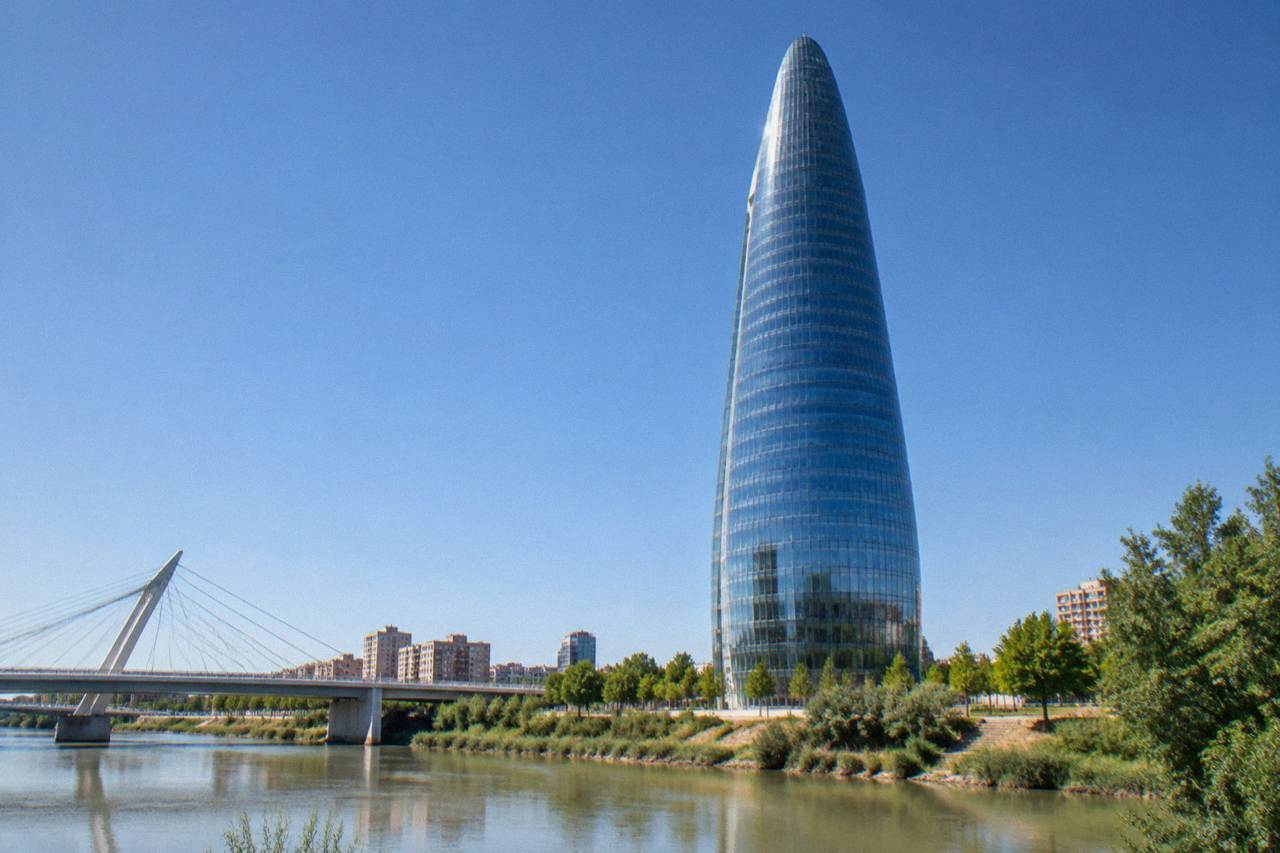
The Torre del Agua stands in the Ranillas meander on the Ebro beside the Expo 2008 site in Zaragoza, next to the Parque del Agua Luis Bunuel and the Pabellon Puente. No admission price or opening hours for the tower itself can be given here, so check the operator's page before you go; the surrounding park and riverside are freely walkable.
The Water Tower, the Torre del Agua, is the tall landmark that anchors the Ranillas meander of the Ebro on the north-western edge of Zaragoza, the capital of Aragon in north-eastern Spain. It was built as part of the ground the city prepared for the International Expo 2008, and while the world's fair is long gone, the tower, the Pabellon Puente and the Parque del Agua Luis Bunuel remain as the riverside quarter that fair left behind. Zaragoza sits inland on the Ebro, with a dry continental climate and no coast, and this corner of the city is where the river feels widest and most open.
This guide from Zaragoza Travel Guide covers what the tower is, how to get there by tram, bus or bike, what surrounds it on the Expo site, what the nearby attractions cost, and which guided tours pair well with a visit. One thing to know at the outset: the tower's own admission arrangements change, so treat nothing here as a ticket promise and check the operator's notice before you set out.
What Is The Water Tower (Torre Del Agua) In Zaragoza?
The Torre del Agua is the vertical landmark of Zaragoza's Expo 2008 riverbank, standing in the Ranillas meander of the Ebro beside the Parque del Agua Luis Bunuel and the Pabellon Puente. It was conceived as part of the Expo 2008 site, and after the fair ended the surrounding ground was turned into permanent parkland. No admission price, opening hours or height figure for the tower is published here, so check the operator's page or ask at the site before you plan an ascent.
The Expo 2008 site occupies the Ranillas meander, a wide loop of the Ebro to the north-west of the historic centre. The Water Tower and the Pabellon Puente were the two structures that framed the fair's riverfront, one vertical and one horizontal, and both are still standing landmarks of a quarter that has quietly become one of the city's most pleasant open spaces. Zaragoza is not a city of high-rise viewpoints in the way Barcelona is, so a tall structure on flat river meadow carries visual weight far beyond its footprint.
What the tower does today is harder to summarise than what it is. The building has served different functions since the fair, and its interior arrangements, whether a viewing platform, exhibition space or something else, change over time. The honest planning position is to treat the tower as a landmark you walk to, photograph and orient by, and to check current access arrangements on the operator's own page before promising yourself a climb. The surrounding park, by contrast, is unambiguously open and generous.
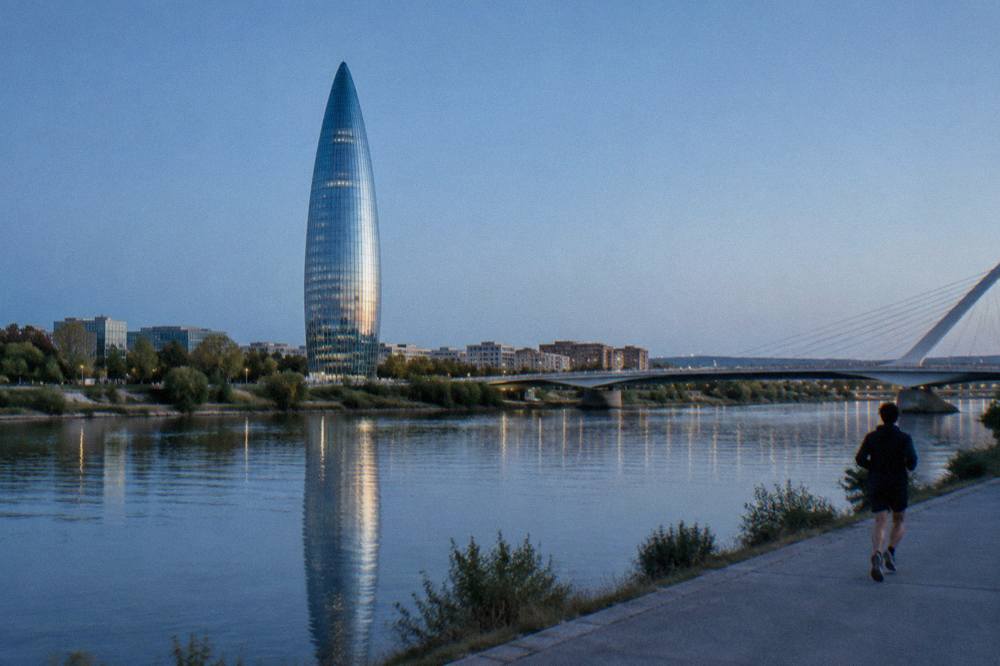
The tower's setting is the real draw. The Ranillas meander floods by design, the park was engineered to take high water safely, and the Ebro here runs broad and slow between gravel banks and poplars. On a clear evening the light comes down the valley and the tower's silhouette stands against the Moncayo foothills to the north-west, the same horizon the city has looked at since Roman times. Few visitors make it out here, which is precisely why those who do tend to stay longer than planned.
How Do You Get To The Torre Del Agua And The Expo Site?
From Zaragoza's historic centre, the Expo riverbank is reached by tram and by urban bus, with a single ticket costing 1.70 EUR or 0.55 EUR with the Tarjeta Bus. The Bizi bike-share offers a day pass at 1 EUR plus 0.50 EUR for the first 30 minutes of each trip, and the flat riverside path makes cycling the pleasantest option. Allow a tram or bike ride, not a walk, from Plaza del Pilar.
The tram is the backbone of this journey. Zaragoza's Line 1 tram runs on the same fare system as the city buses, and the 2026 Avanza fare table lists the single at 1.70 EUR with no transfer, or 0.55 EUR when loaded onto a Tarjeta Bus, which itself costs 7 EUR and works on both tram and bus. Night lines cost 1.00 EUR. The tram's north-western stretch serves the Expo corridor, and the riverside stops put you within easy walking distance of the tower and the park.
| Option | Single fare | With Tarjeta Bus | Notes |
|---|---|---|---|
| Urban bus | 1.70 EUR | 0.55 EUR | Night lines 1.00 EUR |
| Tram Line 1 | 1.70 EUR | 0.55 EUR | Same fare system as bus |
| Bizi day pass | 1 EUR + 0.50 EUR per trip up to 30 min | not applicable | 50 EUR card deposit held |
| Tourist bus | 10 EUR general | not applicable | 24 h hop-on hop-off, 16 stops, 90-minute loop |
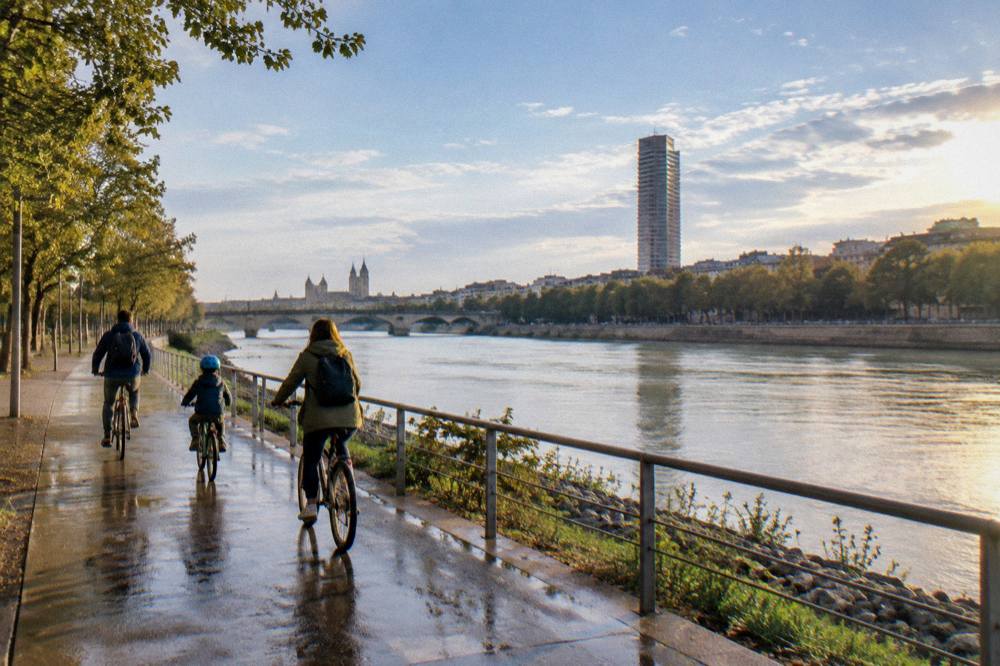
Cycling is the option that suits this quarter best. The Bizi 2026 tariffs run at 1 EUR for a day pass plus 0.50 EUR for the first 30 minutes of each trip, with monthly passes at 10 EUR and annual at 60 EUR, and a 50 EUR card deposit held on day, month and single-trip options. The Ebro riverside path is flat, continuous and separated from traffic, and the Ebro river walk page covers the full route from the Puente de Piedra out to the Expo meander.
If you are driving, note that Zaragoza operates a low-emission zone, the ZBE Casco Historico, active Monday to Friday from 08:00 to 20:00, in which vehicles without a DGT environmental label are restricted and sanctioned; the zone's first phase covers the historic centre, and the Expo quarter sits outside it, but the rule matters for anyone routing through the middle of town. The city's tourist bus, at 10 EUR for a 24-hour hop-on hop-off ticket over 16 stops on a 90-minute loop, is another way to cover the riverside without a car, and it is cash only on the bus.
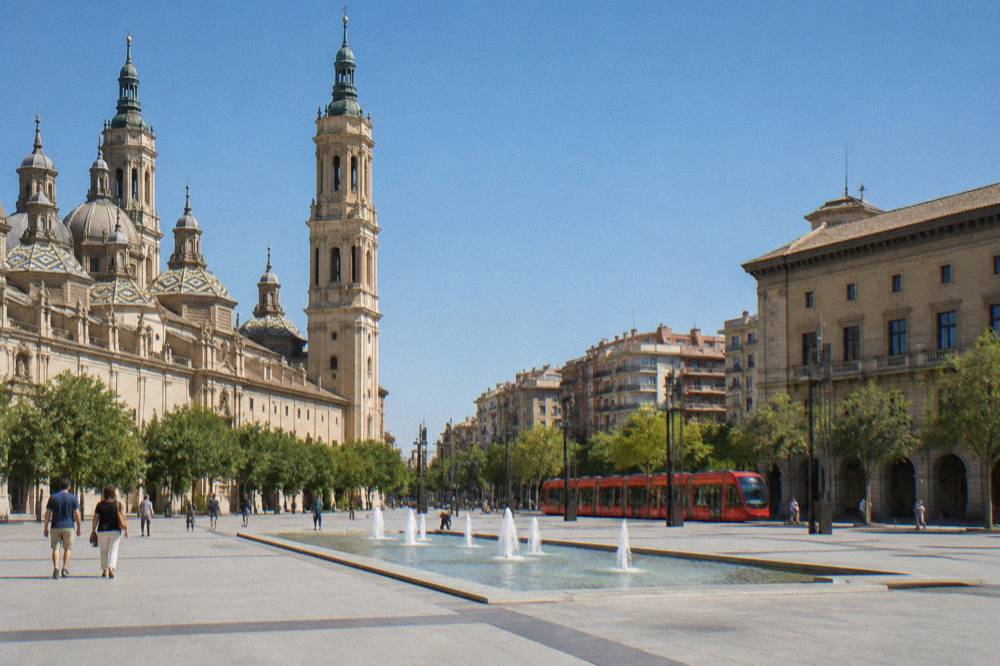
A practical rhythm for the day pairs the old town in the morning with the Expo riverbank in the late afternoon, when the heat drops and the riverside path fills with runners. The two quarters are different cities in feel: one compressed Roman, Moorish and Mudéjar stone into a tight grid. Doing both in one day is not just possible, it is the clearest way to understand what the city became after 2008.
What Can You See Around The Water Tower In Zaragoza?
The Water Tower stands at the centre of a cluster of Expo-era landmarks: the Pabellon Puente, the bridge-pavilion that carries pedestrians across the Ebro, the Parque del Agua Luis Bunuel of more than 120 hectares, and the Acuario de Zaragoza, which its own site calls the largest river aquarium in Europe with more than 5,000 specimens. General aquarium admission is 20 EUR, children 4 to 14 and seniors 14 EUR, under 4 free, and an online family pack is 55 EUR.
Start with the Pabellon Puente, the covered bridge that spans the Ebro beside the tower. Like the tower itself, its interior arrangements have changed since the fair, and no admission price or hours for the pavilion can be stated here, so check the operator's notice before planning an interior visit. The bridge's exterior, though, is free to appreciate: it is one of the most photographed pieces of contemporary engineering in Aragon, and crossing it on foot is simply part of walking the meander.
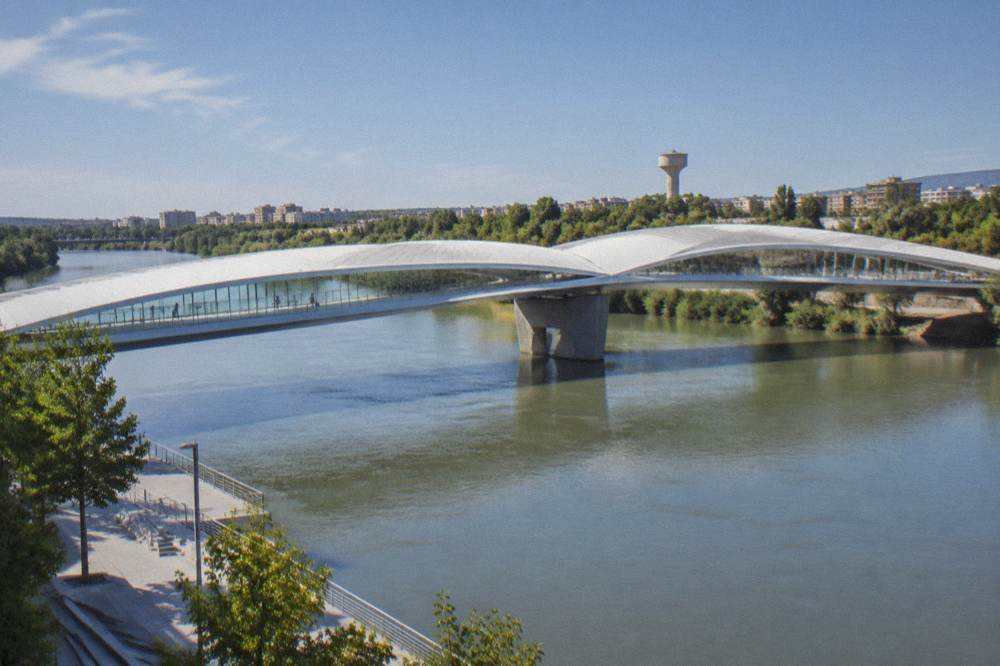
The Parque del Agua Luis Bunuel is the lasting gift of the Expo. The municipality publishes it as more than 120 hectares of green space in the Ranillas meander, designed to flood safely in big Ebro rises, with two running circuits of 5 and 10 kilometres, and described as the first European green space to hold the Green Globe certification. For a city whose historic centre is all stone and shade, this park is the opposite register: open sky, water and long sightlines. The Parque del Agua page covers it in detail.
| Expo-site sight | What it is | Admission position |
|---|---|---|
| Torre del Agua | Expo-era vertical landmark in the Ranillas meander | Check the operator's page before you go |
| Pabellon Puente | Covered pedestrian bridge across the Ebro | Crossing on foot is open; interior access varies |
| Parque del Agua Luis Bunuel | More than 120 ha of parkland, 5 km and 10 km circuits | Public green space |
| Acuario de Zaragoza | River aquarium, 5,000-plus specimens | 20 EUR general, 14 EUR child 4-14 and senior, 55 EUR family pack online |
| Tercer Milenio bridge | Road and footbridge downstream on the Ebro | Open bridge, no ticket |
The aquarium deserves its own paragraph because it is the one paid attraction here with a published price card. Its own site bills it as the largest river aquarium in Europe, housing more than 5,000 specimens across freshwater river habitats, which fits Zaragoza's identity as an Ebro city better than any sea-themed aquarium would. The price table below is from the aquarium's own listing; the daily opening hours are published as an image calendar, so check the site's calendar for the day you plan to come rather than relying on a general figure.
| Acuario de Zaragoza ticket | Price |
|---|---|
| General | 20 EUR |
| Child 4 to 14 | 14 EUR |
| Senior | 14 EUR |
| Ages 0 to 3 | free |
| Family pack online, 2 adults and 2 children | 55 EUR |
Downstream, the Tercer Milenio bridge completes the set of contemporary river crossings, and the riverside path links the whole quarter back towards the centre, past gravel beaches and rowing clubs. If you are building a full riverside day, the things to do in Zaragoza overview puts the Expo site in sequence with the old-town sights.
How Does The Expo Riverbank Connect To Old Zaragoza?
The Expo site is the newest chapter of a city whose centre holds Roman forum and theatre remains, the Aljafería Moorish palace, the Mudéjar apse and parroquieta of La Seo, and the towers of the Basílica del Pilar. Zaragoza's UNESCO listing, Mudejar Architecture of Aragon, covers exactly three components in the city: the surviving Mudéjar features of the Aljafería, the tower and parish church of San Pablo, and the apse, parroquieta and cimborio of La Seo. The Water Tower belongs to a different, modern layer.
Understanding that layering is what turns a riverside stroll into a real visit. Zaragoza was Caesaraugusta, a Roman colony on the Ebro, and the Roman Caesaraugusta remains, the forum, the theatre, the river port museum and the baths, sit a tram ride from the Expo meadow. The Aljafería, the Moorish palace whose surviving Mudéjar features are one of the three UNESCO components in the city, stands between the two, closer to the centre. The Aljafería Palace page covers its October hours and ticket options.
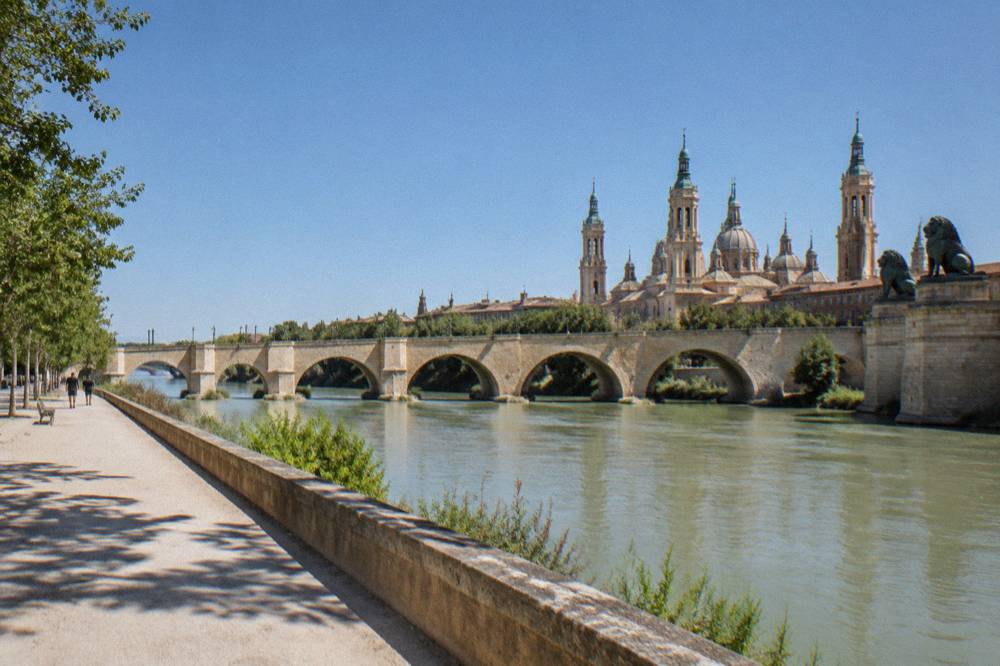
The old anchor of the riverside walk is the Puente de Piedra, the stone bridge the municipality dates to a 1401 build opened in 1440, on the line of a Roman-era crossing, with its four bronze lions added in 1991 and one arch blown up by Napoleonic troops in 1813. Walking from the Puente de Piedra out to the Expo meadow along the Ebro is the single best way to feel the city's whole timeline under your feet, from Roman crossing to Expo tower. The Puente de Piedra page covers the bridge itself.
For visitors who want the old-city layer explained rather than merely walked, the Historical Tour of the Old District with a Guide is a 2.5-hour guided walk rated 5 from 14 reviews, from 106.92 USD per person, and it covers the district whose river the Expo site sits on. It pairs naturally with an afternoon on the Expo riverbank, and you can Check availability alongside the internal page.
When Is The Best Time To Visit The Expo Site In Zaragoza?
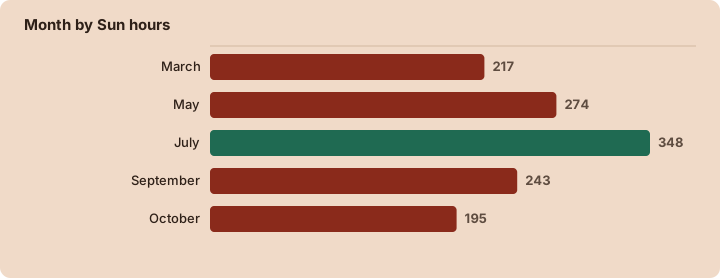
AEMET's 1981 to 2010 normals for the Zaragoza Aeropuerto station show the city at its most generous in May and June and again in September, with mean maxima of 24.1, 29.3 and 27.1 degrees, while July is the hottest month at a 32.4 degree mean maximum and the sunniest at 348 hours. Rain is modest all year, 322 mm annually over 51.1 days of 1 mm or more, with May the wettest month at 44 mm.
The Expo riverbank is an exposed, horizontal landscape, so the weather matters more here than in the stone lanes of the old town. In July and August the meadow offers little shade in the middle of the day, and the cierzo, the cold dry north-west wind of the Ebro valley, can make a winter walk bracing; AEMET publishes no wind figures for the station, but the wind is a qualitative fact of valley life and the forecast will name it when it blows. Spring and early autumn are the sweet spots.
| Month | Mean max C | Mean C | Rain mm | Sun hours |
|---|---|---|---|---|
| March | 17.3 | 11.6 | 19 | 217 |
| May | 24.1 | 18.0 | 44 | 274 |
| July | 32.4 | 25.3 | 17 | 348 |
| September | 27.1 | 21.2 | 30 | 243 |
| October | 21.4 | 16.2 | 36 | 195 |
All figures in the table are AEMET 1981 to 2010 averages for the Zaragoza Aeropuerto station. October is a special case: the Fiestas del Pilar run from 10 to 18 October 2026, with the Ofrenda de Flores on 12 October, and the city fills with visitors, concerts and processions. The Expo meander stays calm relative to the centre during those days, which makes it a good pressure valve if you are in Zaragoza for the fiesta and need an hour of open sky. The Fiestas del Pilar guide covers the programme.
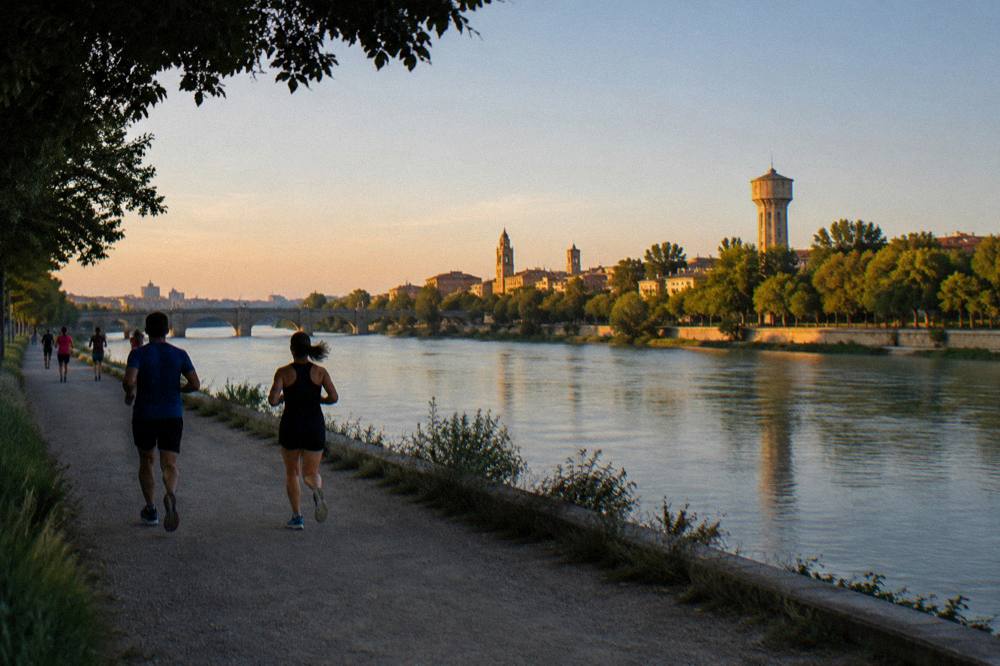
Timing within the day matters as much as timing within the year. The park's two running circuits, 5 and 10 kilometres, are busiest in the early morning and after work; midday in summer belongs to the shade-seekers and the cicadas. Photographers get the best tower silhouettes in the last hour before sunset, when the light comes down the valley from the north-west and the Ebro surface flattens to a mirror.
What Does A Visit To The Torre Del Agua Cost In Zaragoza?
The tower itself carries no stated admission price or hours on this page, because none can be given, so budget instead for what surrounds it: the Parque del Agua is public green space, the Acuario charges 20 EUR general and 14 EUR for children 4 to 14 and seniors, and the tram or bus in costs 1.70 EUR single or 0.55 EUR with a Tarjeta Bus. A full Expo afternoon can therefore cost very little or a modest amount, depending on the aquarium.
A realistic budget splits into three lines: transport, the aquarium, and everything else. Transport is fixed and cheap, the aquarium is the one discretionary ticket, and the rest, the park, the riverside path, the bridges and the tower's exterior, costs nothing to enjoy. If you want a structured version of the city instead of self-directing, the guided options start low: the Monumental Sightseeing Tour, a 105-minute introduction, runs from 10.41 USD per person, rated 4.4 from 36 reviews.
| Budget line | Low | High |
|---|---|---|
| Return tram fare, 2 singles | 1.10 EUR with Tarjeta Bus | 3.40 EUR cash singles |
| Bizi day pass | 1 EUR + 0.50 EUR first 30 min | 1 EUR + per-trip beyond 30 min |
| Acuario, one adult | 20 EUR | 20 EUR |
| Acuario, family pack online | 55 EUR, 2 adults and 2 children | 55 EUR |
| Parque del Agua, riverside, bridges | 0 EUR | 0 EUR |
The budget lines above are planning ranges built from the published fare and ticket tables cited in this guide, not operator promises, and prices change, so check the live listings before you go. One cost you will not face is a tourist tax: Aragon's regional government explicitly ruled one out in September 2026, so your hotel bill carries no visitor levy.
What Tours Pair Well With The Expo Site In Zaragoza?
The strongest pairing is a morning guided walk of the old district followed by a self-directed afternoon on the Expo riverbank, and the tours that suit this page best are the Historical Tour of the Old District, from 106.92 USD, the Basílica del Pilar guided visit in Spanish, from 12.38 USD, and the Free Monumental Tour of Zaragoza, a tip-based walk. The Basílica's own tower viewpoint costs 6 EUR for an adult, with reduced rates below.
The logic of the pairing is geographic. The Expo meander is the city's periphery, and the guided tours concentrate on the centre, so a tour fills the morning with context and the afternoon fills itself with river. The Basílica del Pilar is the emotional centre of that old city, and its Torre Mirador viewpoint, 6 EUR adult, 5 EUR for over-65s and residents, 4 EUR for ages 13 to 18, students and groups of 20 or more, free under 12, gives the one old-city panorama that competes with anything on the Expo riverbank. Note that a restoration of the basilica's Regina Patriarcharum dome, funded with 600,000 EUR by Fundacion Ibercaja, was agreed in January 2026, and its completion is not confirmed, so works may affect what you see; check the basilica's own site.
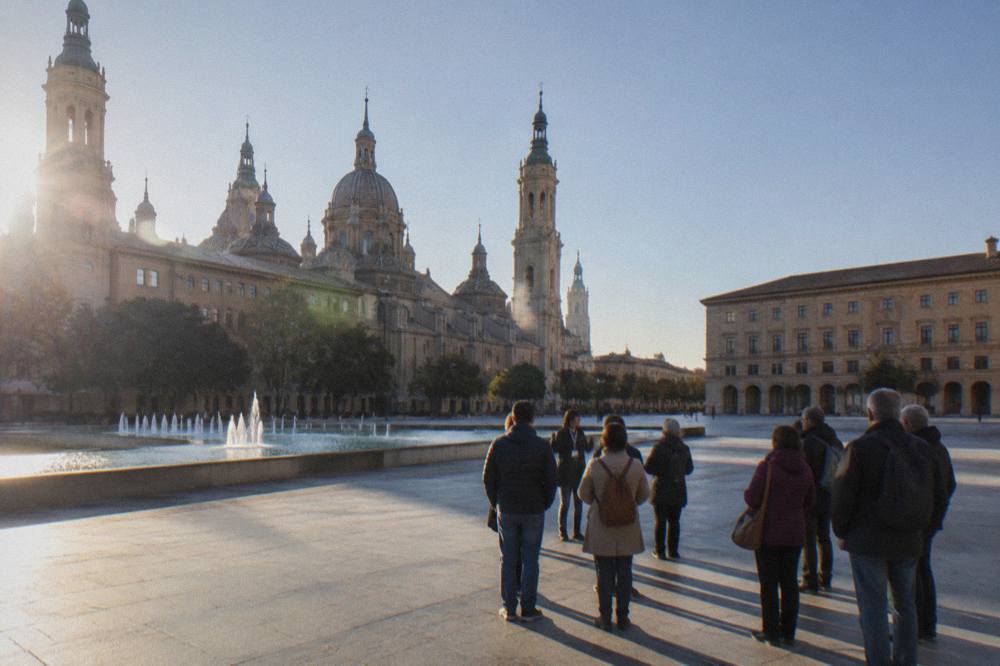
For a first-day orientation, the Free Monumental Tour of Zaragoza is a tip-based walk rated 4.65 from 64 reviews, and the Indispensable Zaragoza Free Tour of the Old Town, run on GuruWalk with the guru leading, is free and tip-based too, rated 4.97 from 576 reviews. GuruWalk walks are pay-what-you-want by design, so never print a price for one; you tip the guru what the walk was worth to you. Between them, the two free walks and the paid 105-minute introduction cover most orientation needs.
If you prefer to move at your own pace but still want structure, the Self-Guided City Walking Tour and Scavenger Hunt, from 5.73 USD per person and rated 4.5 from 37 reviews, turns the centre into a puzzle, and it leaves the Expo afternoon entirely yours. Families with children tend to do well combining that with the aquarium, since the scavenger hunt's game structure and the aquarium's river habitats keep two very different attention spans busy in one day.
Common Questions About The Water Tower (Torre Del Agua) In Zaragoza
Can you go up the Water Tower (Torre del Agua) in Zaragoza?
No admission price, opening hours or viewing-platform arrangement for the tower can be stated here, because none is published on a page this guide can point to. Check the operator's own notice before you go, or ask at the site. The tower's exterior, the park around it and the riverside path are freely accessible regardless.
How do I get to the Torre del Agua from Zaragoza city centre?
Take the tram or an urban bus towards the Expo riverbank; a single costs 1.70 EUR, or 0.55 EUR with a Tarjeta Bus, on the 2026 Avanza fare table. The Bizi bike-share, 1 EUR day pass plus 0.50 EUR for the first 30 minutes of a trip, suits the flat riverside path best.
What else is next to the Water Tower in Zaragoza?
The Pabellon Puente across the Ebro, the Parque del Agua Luis Bunuel with more than 120 hectares and 5 km and 10 km running circuits, and the Acuario de Zaragoza, which its own site calls the largest river aquarium in Europe with more than 5,000 specimens. General aquarium admission is 20 EUR, children 4 to 14 and seniors 14 EUR, and an online family pack is 55 EUR.
Is the Parque del Agua free to enter?
Yes, the Parque del Agua Luis Bunuel is public green space in the Ranillas meander, designed to flood safely in big Ebro rises, with two running circuits of 5 and 10 kilometres. The municipality describes it as the first European green space to hold the Green Globe certification.
When is the best time of year to visit the Expo site in Zaragoza?
AEMET's 1981 to 2010 normals for the Zaragoza Aeropuerto station show May, June and September as the most comfortable months, with mean maxima of 24.1, 29.3 and 27.1 degrees. July is the hottest at a 32.4 degree mean maximum, and the annual total is just 322 mm of rain over 51.1 days of 1 mm or more, so rain rarely dictates plans.
The Water Tower is the quietest of Zaragoza's landmarks, and that is its value: a contemporary silhouette on a river meadow, a short tram ride from a Roman, Moorish and Mudéjar old town, surrounded by the greenest ground the city owns. Check the operator's page for the tower's current access, buy your aquarium ticket online if the family pack fits, and give the riverside more time than the tower alone would ever need.