Bridge Pavilion In Zaragoza: The Expo 2008 Crossing Over The Ebro
The Bridge Pavilion is the covered crossing over the Ebro at the Ranillas meander, the structure the international exposition of 2008 left behind as one of Zaragoza's most photographed landmarks.
Short answer
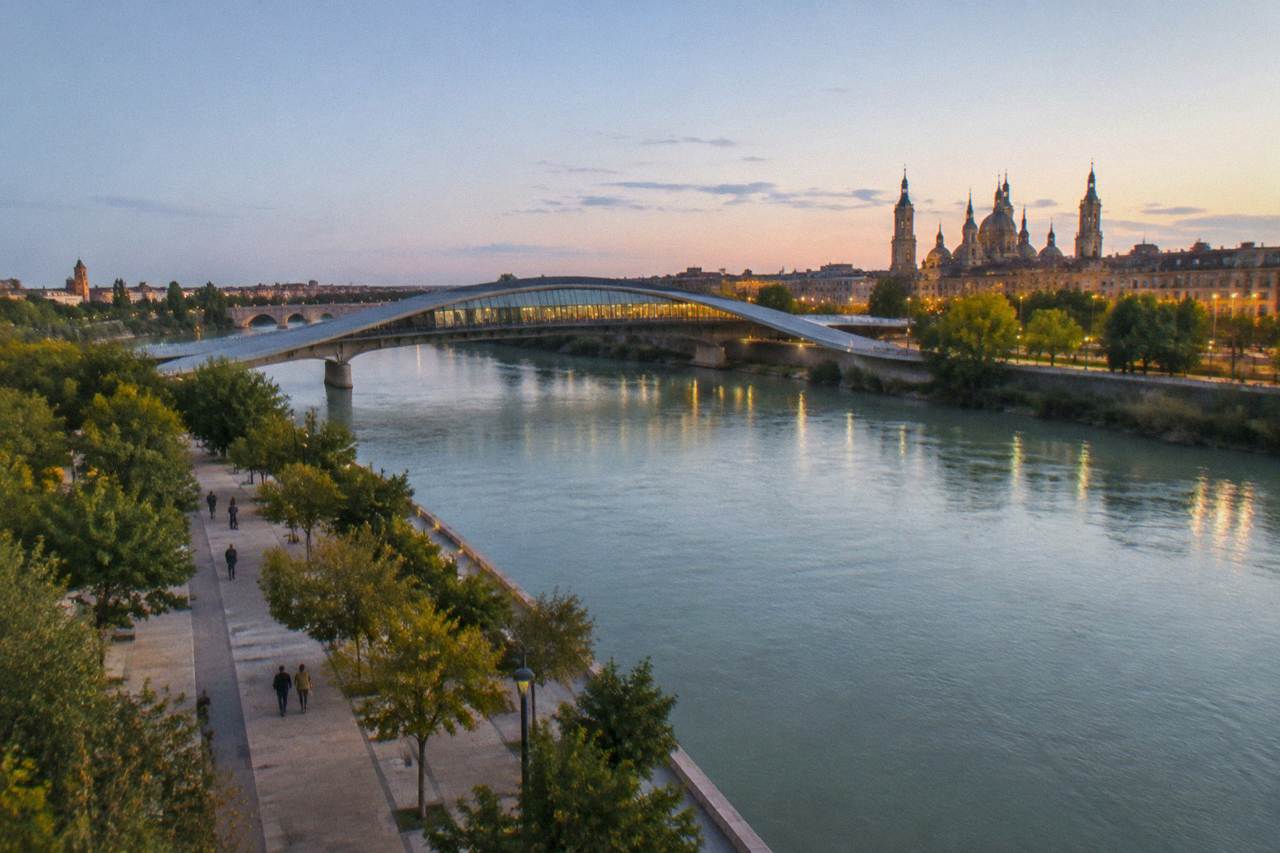
The Bridge Pavilion is a bridge that is also a building, crossing the Ebro in the Ranillas meander in northern Zaragoza. It was built for the international exposition of 2008 and today stands beside the Parque del Agua and the Expo site as one of the city's signature modern landmarks.
The Bridge Pavilion crosses the Ebro in Zaragoza, the capital of Aragon, a covered crossing that functions as a bridge and a building at once. It was the emblematic structure of the international exposition that Zaragoza hosted in 2008, and it still stands today in the Ranillas meander, the great river bend in the city's north where the exposition site, the Parque del Agua Luis Buñuel and the Acuario de Zaragoza cluster together. Visitors who arrive by high-speed train know the skyline of this quarter before they know the Aljafería, because the modern riverside is what the approach tracks show first.
This page covers what the Bridge Pavilion is, how to reach the Ranillas meander, what the surrounding Expo quarter offers, and how the crossing fits into a city that also owns a Roman-era ford, a Gothic stone bridge and a fan of modern river crossings. The short version: the pavilion is a landmark to see from the banks and from the water's edge, and the meander around it rewards half a day on its own.
What Is The Bridge Pavilion In Zaragoza?
The Bridge Pavilion is a covered crossing over the Ebro that works as both a bridge and a building, raised for the international exposition Zaragoza hosted in 2008 in the Ranillas meander. It links the two banks of the river at the exposition site, and after the exposition closed it remained as one of the city's most recognisable pieces of contemporary architecture, standing beside the Parque del Agua and the water tower of the same site.
The 2008 exposition was organised around water and sustainable development, a theme that fits a city built on a river as dry as the Ebro valley. The site occupied the Ranillas meander, a wide bend north of the historic centre, and the pavilion was conceived as its gateway: a structure people crossed rather than merely looked at, a building whose floor plan is the river itself. That double nature is what still makes it interesting. Most exposition pavilions became offices, sheds or demolition sites; this one kept a civic job, because a bridge cannot be mothballed.
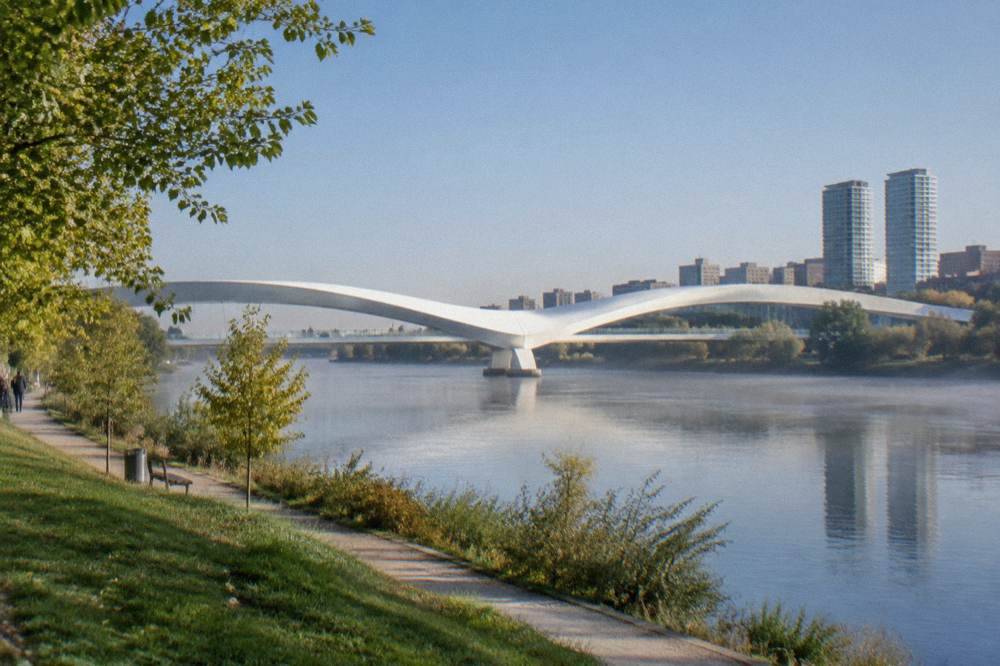
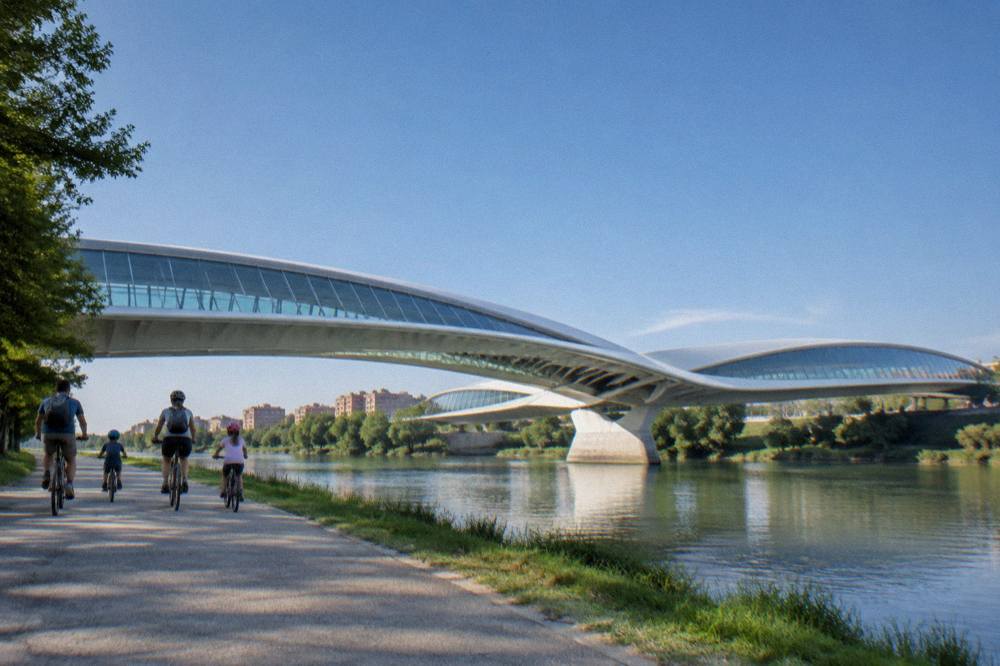
The building's silhouette is what most visitors remember: a long, sweeping form that seems to peel off the bank and land on the far side without breaking its line. From the Paseo de los Monegros on the Actur bank, or from the gravel paths of the Parque del Agua, the crossing reads as a single gesture across the water, and at dusk the contrast with the floodlit towers of the Aljafería and the Basílica del Pilar downstream is the sharpest in the city. For orientation, the meander sits in the same quarter as the Expo 2008 site, and the whole area is flat, paved and easy to walk.
What the pavilion is not is a conventional museum. It carries no permanent collection of the kind you queue for at the Acuario de Zaragoza next door, and its role today is architectural rather than curatorial. Treat it as a piece of the city's fabric: something you cross, photograph and walk around, not something you book a time slot for. If you want the full picture of what the exposition left behind, pair it with the Parque del Agua, which the municipality describes as more than 120 hectares of designed green space in the same meander.
How Do You Get To The Bridge Pavilion In Zaragoza?
The Bridge Pavilion sits in the Ranillas meander in northern Zaragoza, reachable by tram and urban bus. The meander is also a straightforward walk or cycle from the Actur district, and the whole Expo quarter is flat, so every approach is easy on foot once you arrive.
Zaragoza's tram line runs through the modern districts north of the centre, and the Expo quarter is served by the same network as the rest of the city, with the fare identical on bus and tram. The card itself costs 7 EUR and works on both, which matters if you plan several rides across a weekend. The 2026 fare table lists the night lines at 1.00 EUR, and the airport bus is a separate animal entirely: line 505, at 4.65 EUR single or about 2.25 EUR with the Lazo card, running 25 to 35 minutes between the terminal and the city, timed to flights.
| Transport | Single fare | With card | Notes |
|---|---|---|---|
| Urban bus and tram | 1.70 EUR | 0.55 EUR with Tarjeta Bus | Card costs 7 EUR, valid on bus and tram |
| Night bus lines | 1.00 EUR | 0.55 EUR with Tarjeta Bus | Late-evening network |
| Airport bus, line 505 | 4.65 EUR | About 2.25 EUR with Lazo card | 25 to 35 minutes, timed to flights |
| Tourist bus | 10 EUR | Discounts available | 24 hours hop-on hop-off, 16 stops, 90-minute loop |
| Bizi day pass | 1 EUR fixed plus 0.50 EUR per trip up to 30 minutes | Monthly 10 EUR, annual 60 EUR | 50 EUR card deposit held |
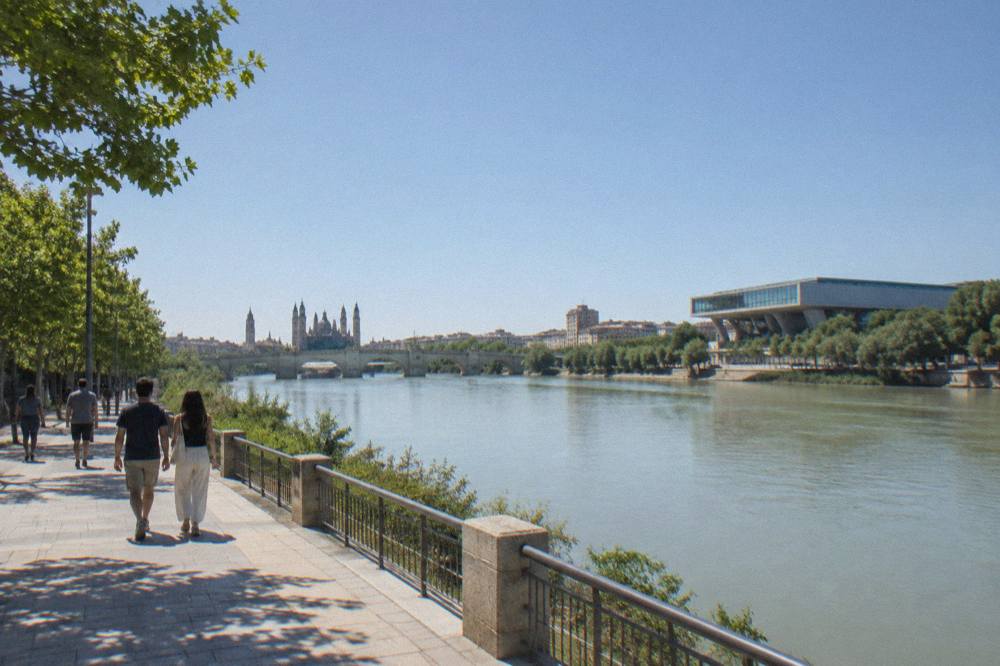
Cyclists should look at Bizi, the municipal bike-share: the 2026 tariff sheet lists a day pass at a fixed 1 EUR plus 0.50 EUR for each trip up to 30 minutes, with a 50 EUR deposit held on the card. The riverbank path network connects the meander to the centre, and the Ebro river walk is the scenic way to arrive, following the water past the Puente de Piedra and the stone face of the old town before the banks open out into the exposition quarter.
Drivers have one thing to check before setting out: the low-emission zone. The ZBE Casco Histórico applies to the historic centre, Monday to Friday from 08:00 to 20:00, with sanctions in force since 12 December 2025 and vehicles without a DGT environmental label restricted. The Expo quarter itself sits outside that first phase, but if your route crosses the centre, plan the label question first. There is no tourist tax anywhere in Aragon, a point the regional government confirmed in September 2026 when it publicly ruled one out.
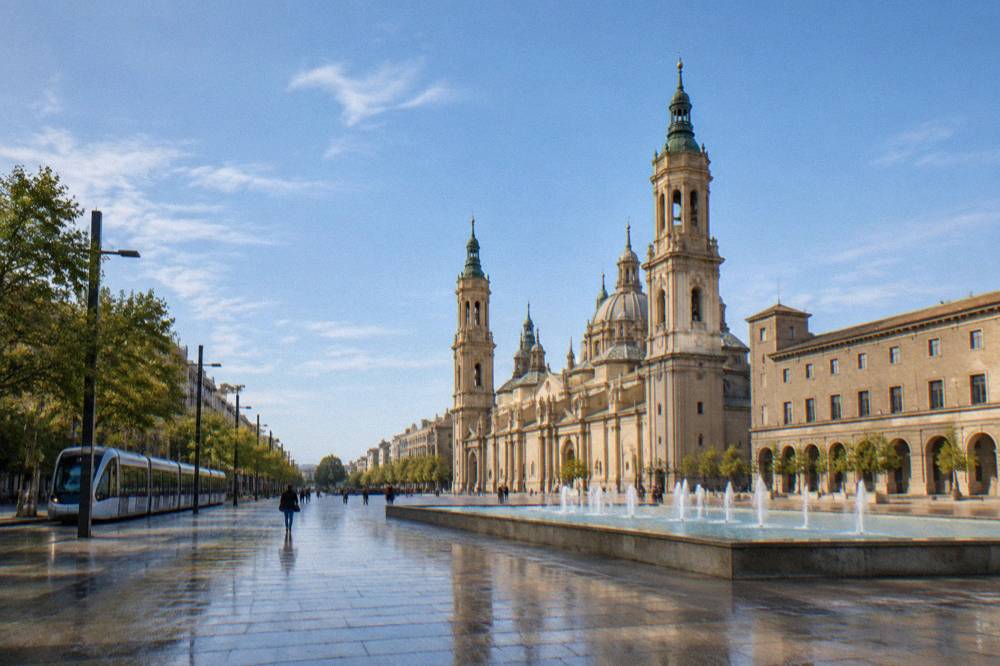
A guided walk is the most efficient way to tie the two halves of the city together, because the riverside modern quarter and the Roman and Mudéjar old town are further apart than a map suggests. The Zaragoza Must-See Attractions Walking Tour covers the essential monuments in a two-hour private format, from $78.78 per person with a 4.6 rating, and it pairs well with a self-guided afternoon in the meander. Check availability if a guided first morning appeals.
What Can You See Around The Bridge Pavilion?
Around the Bridge Pavilion the Ranillas meander holds the Parque del Agua Luis Buñuel, more than 120 hectares of green space with 5 km and 10 km running circuits, the Acuario de Zaragoza with 5,000-plus specimens, and the water tower of the 2008 exposition, all within flat walking distance of one another on both banks of the Ebro.
The Parque del Agua is the quiet star of the quarter. The municipality's own page describes it as the first European green space to hold the Green Globe certification, designed to flood safely when the Ebro rises, with two marked running circuits of 5 and 10 kilometres threading the meander. On a normal morning it belongs to joggers, families and dog walkers, and its gravel loops give the best ground-level views of the pavilion from the east bank. The Torre del Agua rises over the same site, the exposition's vertical landmark, visible from most of the park.
The Acuario de Zaragoza calls itself the largest river aquarium in Europe, with more than 5,000 specimens arranged around river ecosystems rather than the sea, which suits an inland city with no coast. Its own site lists general admission at 20 EUR, children aged 4 to 14 and seniors at 14 EUR, under-4s free, and an online family pack at 55 EUR for two adults and two children. The opening calendar is published as an image on the site, so check the current dates there before you set out.
| Sight in the Ranillas quarter | Admission | Notes from the operator or municipality |
|---|---|---|
| Parque del Agua Luis Buñuel | Open public park | More than 120 hectares, 5 km and 10 km circuits, Green Globe certified |
| Acuario de Zaragoza | General 20 EUR, child 4-14 and senior 14 EUR, 0-3 free | Family pack online 55 EUR, two adults and two children |
| Bridge Pavilion | Landmark crossing | Exterior viewing from both banks and the river paths |
| Torre del Agua | Check on site | Standing landmark of the 2008 exposition site |
| Expo 2008 site | Public space | Former exposition grounds, now an open riverside district |
The pavilion itself is best appreciated slowly. Walk the bank on the Actur side in the late afternoon, when the sun sits behind the structure and its long form goes dark against the water, then cross to the park side for the reflected view. Photographers get the strongest compositions from downstream, where the crossing frames the water tower behind it, and from the pedestrian deck of the Tercer Milenio bridge further south, which adds a second modern silhouette to the same frame.
How Does The Bridge Pavilion Compare To Zaragoza'S Other Bridges?
Zaragoza's most historic crossing is the Puente de Piedra, begun in 1401 and opened in 1440 on the line of a Roman-era ford, guarded by four bronze lions added in 1991, and scarred by an arch Napoleonic troops blew up in 1813. The Bridge Pavilion is its opposite: a modern, covered crossing built for an exposition rather than for trade or defence, and the two together span six centuries of the city's relationship with the Ebro.
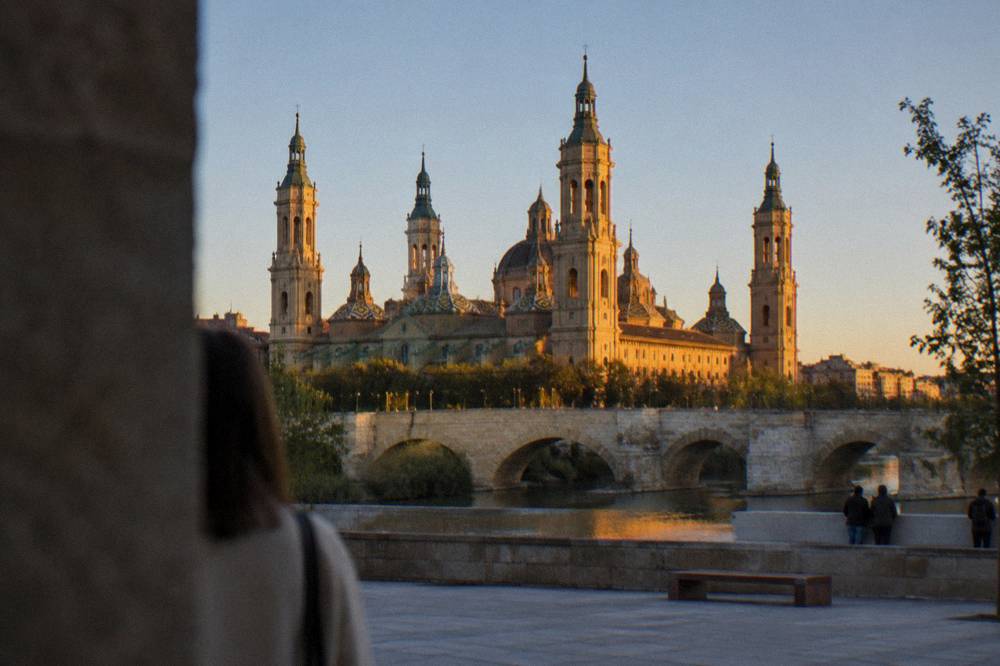
The Puente de Piedra is the bridge every visitor photographs first, because it carries the classic view of the Basílica del Pilar rising over the water. The municipality's page records its dates plainly: built from 1401, opened in 1440, a Roman-era crossing predating it, an arch destroyed by Napoleonic troops in 1813, and the four bronze lions placed in 1991. It is a working stone bridge in the middle of the old town, and it belongs to the same walk as the Basílica del Pilar and La Seo.
| Crossing | Era | What the record says |
|---|---|---|
| Puente de Piedra | Begun 1401, opened 1440 | Roman-era ford predates it, four bronze lions since 1991, an arch blown up by Napoleonic troops in 1813 |
| Bridge Pavilion | 2008 exposition | Covered crossing doubling as a building, the emblematic structure of the exposition |
| Tercer Milenio bridge | Modern riverside Zaragoza | Pedestrian and road crossing downstream, part of the same riverside walk |
The contrast is the point. Zaragoza has always been a city defined by its river crossing: the Roman colony of Caesaraugusta grew around the ford, the medieval bridge carried pilgrims and trade, and the 2008 exposition restated the relationship in contemporary form. Walking from the Puente de Piedra north along the bank, past the Roman river port museum and the stone embankments, you cover the whole argument in about an hour of flat riverside: six centuries of engineering, ending at a crossing that refuses to look like a bridge at all.
The comparison also settles a practical question. The old-town bridges are sights you visit; the pavilion is a sight you walk through. Give the Puente de Piedra your first morning, when the old town is quiet, and save the Ranillas meander for the afternoon or a second day, when the park is at its liveliest and the light across the water is at its best.
When Is The Best Time Of Year To See The Bridge Pavilion?
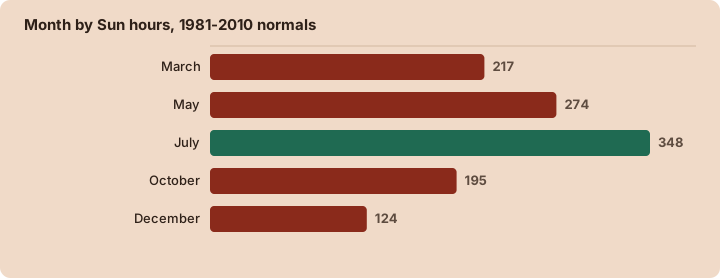
The most comfortable months to visit the Expo quarter are May, June, September and October, when AEMET's 1981 to 2010 normals for the Zaragoza Aeropuerto station show mean maximum temperatures between 21.4 and 29.3 C and the lowest rain days of the year, with July the sunniest month at 348 hours of sunshine but also the hottest at a 32.4 C mean maximum.
Zaragoza is an inland city with a dry, continental climate, and the numbers matter for a quarter that is entirely outdoors. The AEMET 1981 to 2010 normals for the Zaragoza Aeropuerto station put July and August as the driest months at 17 mm of rain each, but with mean maximums of 32.4 C and 31.7 C, which is punishing on the unshaded stretches of the riverbank. May is the wettest month at 44 mm, though spread over only 6.4 days of rain of 1 mm or more, and it arrives with a 24.1 C mean maximum and 274 hours of sun. The rest of the planning pages sit on Zaragoza Travel Guide.
| Month | Mean max C | Mean min C | Rain mm | Sun hours, 1981-2010 normals |
|---|---|---|---|---|
| March | 17.3 | 5.8 | 19 | 217 |
| May | 24.1 | 11.8 | 44 | 274 |
| July | 32.4 | 18.3 | 17 | 348 |
| October | 21.4 | 11.0 | 36 | 195 |
| December | 10.8 | 3.2 | 21 | 124 |
October deserves special mention, for one reason: the Fiestas del Pilar. The 2026 edition runs from Saturday 10 to Sunday 18 October, with the Ofrenda de Flores on 12 October bringing 994 registered groups and about 99,980 participants along the route from the Paseo de la Independencia to the Plaza del Pilar. The meander is not the centre of the fiesta, but the city fills completely, and the contrast between the crowds downtown and the calm of the Parque del Agua is one of October's quiet pleasures. The pregón opens the fiesta at 21:00 on 10 October from the balcony of the Ayuntamiento, and the fireworks programme for 2026 includes a closing display by the Ebro on 18 October.
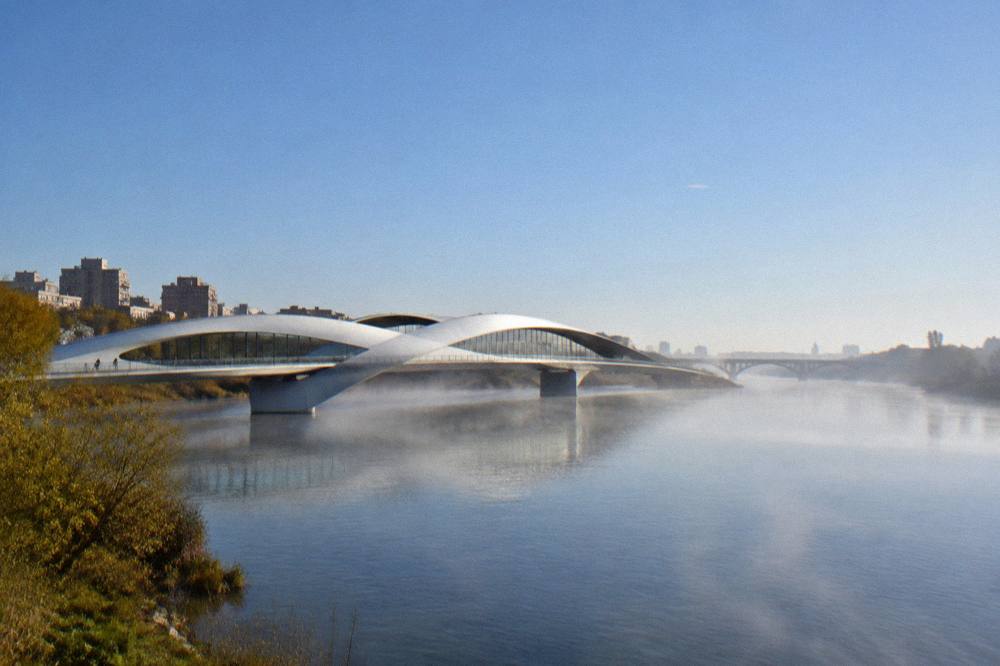
Winter is the season nobody recommends and nobody regrets. December's mean maximum of 10.8 C is brisk but walkable, the park's circuits stay open, and the pavilion's dark form over grey water is arguably at its most photogenic. The same normals record 23.1 frost days and 21.3 fog days across the year at the airport station, and a foggy morning on the Ebro bank, with the crossing appearing and disappearing downstream, is a sight the summer crowds never see.
What Else Is There To Do Near The Expo Site In Zaragoza?
The Expo quarter sits in the same flat north of Zaragoza as the Actur district and the Parque del Agua, and its museums and viewpoints include the IAACC Pablo Serrano, free and open Tuesday to Saturday 10:00 to 14:00 and 17:00 to 21:00, and the Torreón de la Zuda viewpoint, free and open Monday to Saturday 10:00 to 14:00 and 16:30 to 20:00, per the municipal October timetable.
The municipal October timetable lists a set of free and cheap museums that make good companions to a riverside day. The IAACC Pablo Serrano is free, open Tuesday to Saturday 10:00 to 14:00 and 17:00 to 21:00 and Sundays 10:00 to 14:00. The Torreón de la Zuda, in the centre rather than the north, is also free and carries the "Mirador de las cuatro culturas" on its fifth floor, open Monday to Saturday 10:00 to 14:00 and 16:30 to 20:00 and Sundays 10:00 to 14:00. The Centro de Historias is free too, Tuesday to Saturday 10:00 to 14:00 and 17:00 to 21:00, Sundays 10:00 to 14:30.
| Museum or viewpoint | Admission | Hours from the municipal October timetable |
|---|---|---|
| IAACC Pablo Serrano | Free | Tue-Sat 10:00-14:00 and 17:00-21:00, Sun 10:00-14:00 |
| Torreón de la Zuda | Free | Mon-Sat 10:00-14:00 and 16:30-20:00, Sun 10:00-14:00 |
| Centro de Historias | Free | Tue-Sat 10:00-14:00 and 17:00-21:00, Sun 10:00-14:30 |
| Museo del Fuego y los Bomberos | 3 EUR | Tue-Sat 10:00-19:00, Sun 10:00-14:00, free 1st Sunday |
| Museo del Origami | 3 EUR | Free 1st Tuesday and 1st Sunday of the month |
| Alma Mater Museum | 5 EUR | See the museum's own page for current hours |
Two closures matter for October planning. The Museo de Zaragoza's central building at Plaza de los Sitios 6 is closed for works run by the Ministry of Culture, with no reopening date, and its Etnología and Cerámica sites in the Parque Grande are also shut at present pending a new temporary exhibition. The Palacio de Sástago is closed in October and the Museo Pablo Gargallo is temporarily closed. None of these belongs in an October itinerary; the open list above is what the municipal timetable actually supports.
The Goya story, meanwhile, is about to improve. The Museo Goya collection of the Fundación Ibercaja reopens on 9 October 2026 after renovation, Tuesday to Saturday 10:00 to 20:00 and Sundays and holidays 10:00 to 14:00, closed Mondays, with the admission price not yet published. Goya was born in Fuendetodos in Aragon and the city holds major collections of his work, so a Goya morning in the centre followed by an afternoon in the meander is a genuinely Aragonese day.
For the old-town half of the day, the Aljafería rewards a guide. The palace, open daily 10:00 to 18:00 in October at 7 EUR general or 9 EUR with a guided visit, free the 1st and 3rd Sunday and Monday of each month, is the finest Islamic-era building in the city, and the guided tour in Spanish from $25.23 per person, rated 4.7 from 23 reviews, covers it properly. Check availability on the operator's live listing if your Spanish is up to it.
Is The Expo Quarter Worth Visiting With Kids?
Yes, the Ranillas meander is one of the most child-friendly parts of Zaragoza: the Parque del Agua offers more than 120 hectares of open space with 5 km and 10 km circuits, the Acuario de Zaragoza charges children aged 4 to 14 a 14 EUR ticket with under-4s free, and the whole quarter is flat, car-light and built around water, which is exactly what a family day needs.
The aquarium is the anchor. River ecosystems rather than open sea mean freshwater fish, wetland exhibits and a layout built around the Ebro's own logic, and the family pack at 55 EUR online for two adults and two children takes the edge off the ticket price. Check the current opening calendar on the aquarium's own page before you go, because it is published as an image and the dates shift with the season.
The park does the rest. The municipality describes the Parque del Agua as designed to flood safely in big Ebro rises, which tells you how much of it is soft ground, gravel loop and water margin rather than formal garden: good for scooters, ball games and tired parents. The running circuits double as safe family bike loops, and the Bizi day pass at 1 EUR fixed plus 0.50 EUR per half-hour trip covers older children who want to ride rather than walk.
For a rainy-day alternative, the Zaragoza rainy day guide collects the indoor options, and the Caesaraugusta museums in the centre are a strong backup: the Foro at 4 EUR, the Termas and the river port museum at 3 EUR each, or the four-museum bono at 7 EUR, free the 1st Sunday of the month, open Tuesday to Saturday 10:00 to 14:00 and 17:00 to 21:00 and Sundays 10:00 to 14:30. The Roman Caesaraugusta set gives children a tangible city under the city, and it sits inside the old town, so it pairs with lunch rather than a second expedition.
Can You See The Bridge Pavilion On A Guided Tour Of Zaragoza?
Guided walking tours of Zaragoza concentrate on the old town, where the Roman ruins, the Aljafería, La Seo and the Basílica del Pilar cluster together, so the Bridge Pavilion is usually something you reach yourself afterwards by tram, bike or a riverside walk, though a private guide can build the modern quarter into a custom route on request.
The economics explain the geography. A two-hour group walk covers the monumental core comfortably, and that core is where the things to do in Zaragoza list concentrates. Private options have more reach: the private custom walking tours on this site run from about $50.65 per person for two to eight hours, rated 5 from 86 reviews, and a custom route can stitch the old town, the riverbank and the meander into one long day. For the standard formats, plan the meander as your own afternoon.
The budget-friendly option is the free, tip-based walk. The Free Tour through the Historical Center of Zaragoza, rated 4.15 from 122 reviews, runs on the GuruWalk platform with a local guru leading a pay-what-you-want route through the old town; it is a good first morning that leaves your afternoon free for the river. The Indispensable Zaragoza Free Tour of the old town, also on GuruWalk and rated 4.97 from 576 reviews, is the higher-rated alternative with the same tip-based model. Neither covers the Expo quarter, which is precisely why they pair well with a self-guided afternoon in the meander.
If you would rather have the modern riverside explained than the medieval centre, the Legends and Ghosts Night Tour, from $15.76 per person, takes a different angle on the city after dark, and the evening tapas walks from $106.92 per person, rated 4.9 from 62 reviews, finish in the old town's bar streets. The pavilion at night, floodlit over black water, is a short tram ride from any of them.
Common Questions About The Bridge Pavilion In Zaragoza
What Is The Bridge Pavilion in Zaragoza?
The Bridge Pavilion is a covered crossing over the Ebro that works as both a bridge and a building, built for the international exposition Zaragoza hosted in 2008. It stands in the Ranillas meander, the river bend in the city's north, beside the Parque del Agua and the Expo site.
How Do You Get To The Bridge Pavilion?
Take the tram or an urban bus toward the Actur and Expo quarter; a single costs 1.70 EUR, or 0.55 EUR with the Tarjeta Bus, per the 2026 Avanza fare table. The meander is also an easy riverside walk or Bizi bike ride from the centre along the Ebro bank.
What Is There To See Near The Bridge Pavilion?
The Parque del Agua Luis Buñuel, more than 120 hectares with 5 km and 10 km circuits, the Acuario de Zaragoza with more than 5,000 specimens, and the water tower of the 2008 exposition, all within flat walking distance on both banks.
When Is The Best Time To Visit The Expo Quarter?
May, June, September and October are the most comfortable months, with mean maximums between 21.4 and 29.3 C on the AEMET 1981 to 2010 normals for the Zaragoza Aeropuerto station. July is the sunniest month at 348 hours but the hottest at a 32.4 C mean maximum.
Is The Bridge Pavilion The Same As The Puente De Piedra?
No. The Puente de Piedra is the Gothic stone bridge in the old town, built from 1401 and opened in 1440, with four bronze lions since 1991. The Bridge Pavilion is the modern covered crossing in the Ranillas meander, built for the 2008 exposition.
Can You See The Bridge Pavilion With A Guide?
Standard group walks focus on the old town, but private custom walking tours, from about $50.65 per person for two to eight hours, can build the modern riverside into a custom route. Otherwise reach the meander yourself by tram, bus or bike.
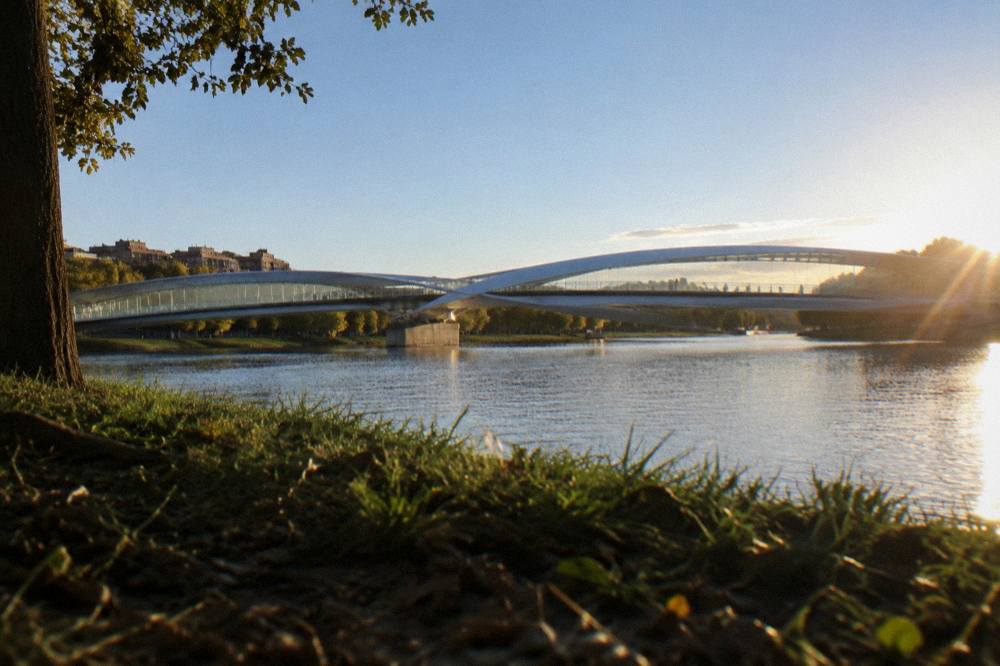
The Bridge Pavilion is the piece of 2008 that Zaragoza kept in daily use, and the meander around it, park, aquarium and all, is the city at its most relaxed. Walk it in the late afternoon, when the locals are out on the circuits and the crossing goes dark against the water, and you will understand why Zaragoza, an inland capital on a dry river, chose water as the theme of its one great modern spectacle.