Expo 2008 Site In Zaragoza: What To See There Today
The international exposition of 2008 left Zaragoza a riverside quarter of landmark architecture and one of the largest parks in the city. Here is what stands there now, what it costs and how to reach it.
Short answer
The Expo 2008 site sits in the Ranillas meander of the Ebro in Zaragoza, Spain. Today its centrepieces are the Parque del Agua Luis Bunuel, the Acuario de Zaragoza and the Expo-era bridges. Parque del Agua is a public green space; the Acuario charges 20 EUR general admission.
The Expo 2008 site occupies the Ranillas meander of the Ebro in Zaragoza, the capital of Aragon in Spain, inland and a long way from any coast. The city hosted its international exposition there in 2008, and the grounds were never bulldozed afterwards. What remains is a district of landmark buildings, a river aquarium and a park of more than 120 hectares, all of it folded into the everyday life of the Actur and Expo Ribera neighbourhoods that grew up around it. This page sets out what is actually there now, what the verified prices are, and how to reach it by tram, bus or bike.
What Is The Expo 2008 Site In Zaragoza Now?
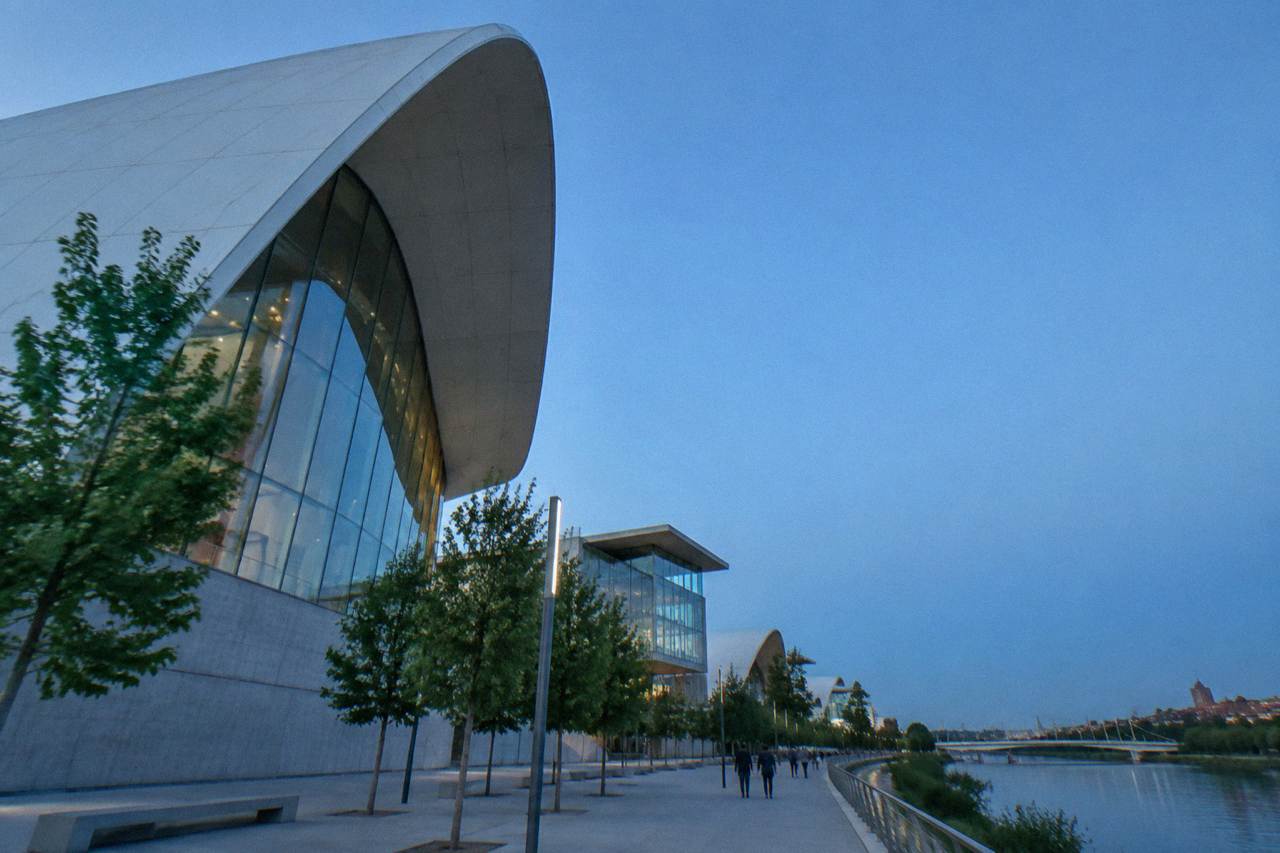
The Expo 2008 site is a permanent riverside quarter in the Ranillas meander of the Ebro in Zaragoza, Spain, not a demolished fairground. Its three surviving anchors are the Parque del Agua Luis Bunuel, a public park of more than 120 hectares, the Acuario de Zaragoza, which its own site calls the largest river aquarium in Europe, and a set of Expo-era bridges that now carry ordinary traffic and pedestrians across the Ebro. None of it requires a ticket to walk through.
The exposition gave Zaragoza something few host cities keep: a whole piece of riverbank rebuilt at once. The municipality publishes the Parque del Agua as the green legacy of the event, designed to flood safely when the Ebro rises and described as the first European green space to hold the Green Globe certification. Around it stand the pavilions and towers that served the fair, now used as offices, event spaces and landmarks that give the district its skyline.
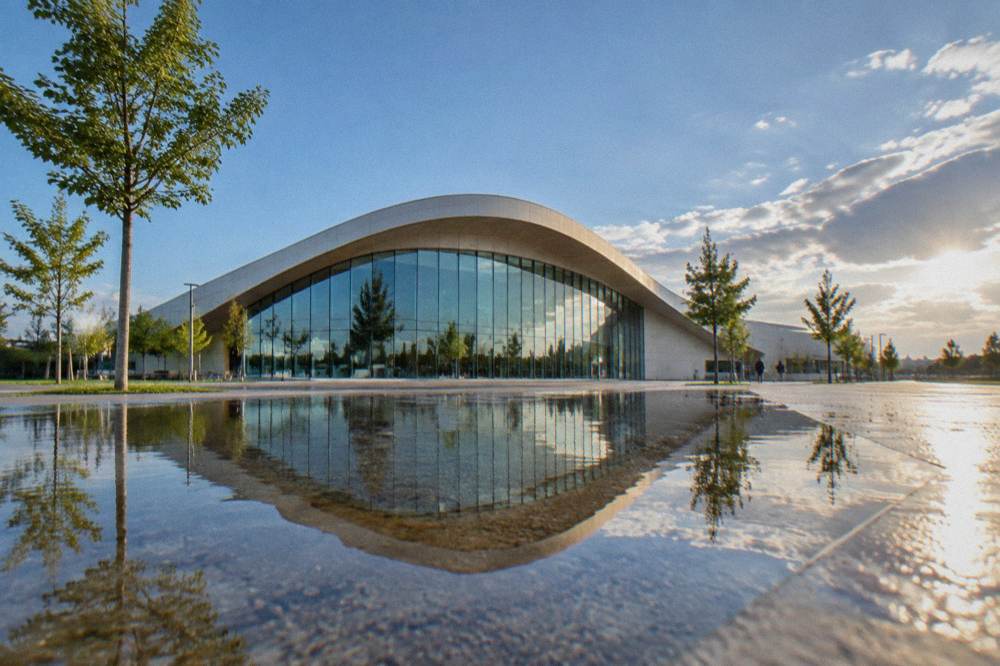
Two structures in particular still define the view. The Torre del Agua, the slender tower of the exposition, and the Pabellón Puente, the covered bridge-building that spans the Ebro, both remain in place. Neither is a conventional museum, and neither publishes admission details that can be stated here, so check the operator's notice before planning a visit inside either one. The bridges themselves, including the Pabellón Puente and the Tercer Milenio bridge, can be crossed on foot at any time, and they give some of the best views of the meander.
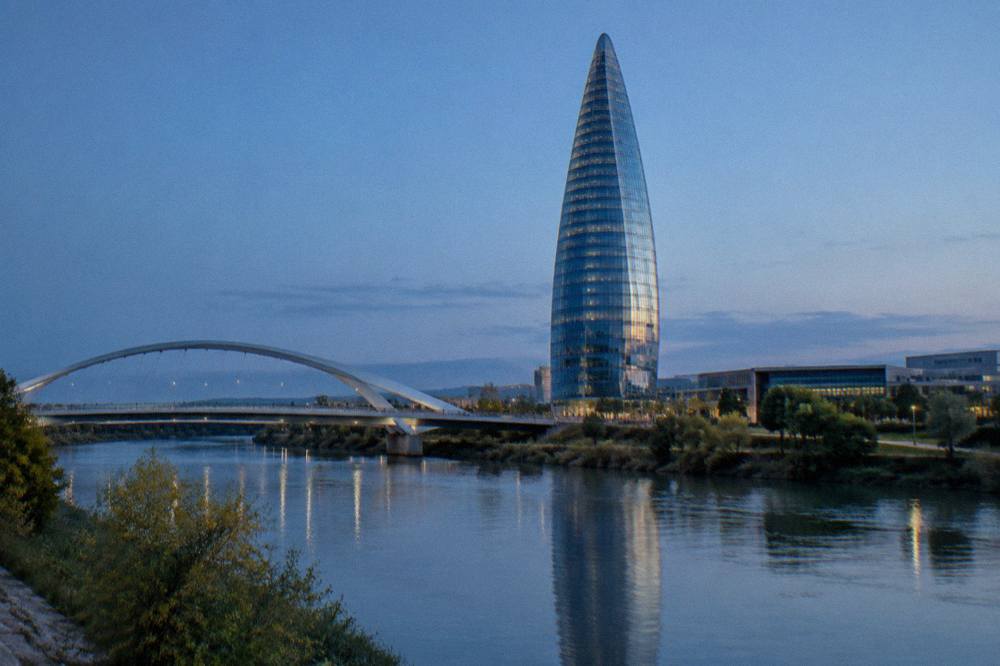
The district is not a museum piece. It sits beside the Actur and Expo Ribera neighbourhoods, and the Actur and Expo Ribera area guide covers where the site sits in the wider city. Locals run its circuits, take children to its playgrounds and use its lawns on weekends, which changes how a visitor should plan a visit: the park is busiest and most alive in the late afternoon, and quietest early in the morning.
What Can You Actually See At The Expo 2008 Site Today?
Four things make the trip worthwhile today: the Parque del Agua Luis Bunuel with its 5 km and 10 km running circuits, the Acuario de Zaragoza with more than 5,000 specimens and a 20 EUR general ticket, the Expo-era bridges that carry pedestrians across the Ebro, and the riverside walk that connects the whole meander to the historic centre. Only the aquarium charges admission among these.
Start with the park, because it is the largest single element and the one the municipality documents in most detail. Parque del Agua Luis Bunuel covers more than 120 hectares in the Ranillas meander, laid out to take floodwater from the Ebro without damage, and it holds two marked running circuits of 5 and 10 kilometres. It is free, open as a public park, and flat, which makes it one of the easiest places in Zaragoza for a long walk with children or a bicycle.
| Element of the Expo 2008 site | What it is | Verified detail |
|---|---|---|
| Parque del Agua Luis Bunuel | Public park in the Ranillas meander | More than 120 ha, 5 km and 10 km circuits, Green Globe certified |
| Acuario de Zaragoza | River aquarium | More than 5,000 specimens, general ticket 20 EUR |
| Torre del Agua | Expo-era tower landmark | Standing structure; admission details not published |
| Pabellón Puente | Covered bridge over the Ebro | Crossable on foot; interior access details not published |
| Tercer Milenio bridge | Road and footbridge over the Ebro | Open crossing with views over the meander |
The aquarium deserves more of your time than its size suggests. Its own site calls it the largest river aquarium in Europe, and its collection is built around river life rather than the usual sharks and coral. The full price list is set out further down this page. The Aquarium of Zaragoza guide goes deeper on the collection itself, and the Water Tower guide and Bridge Pavilion guide cover the two landmark structures in detail.
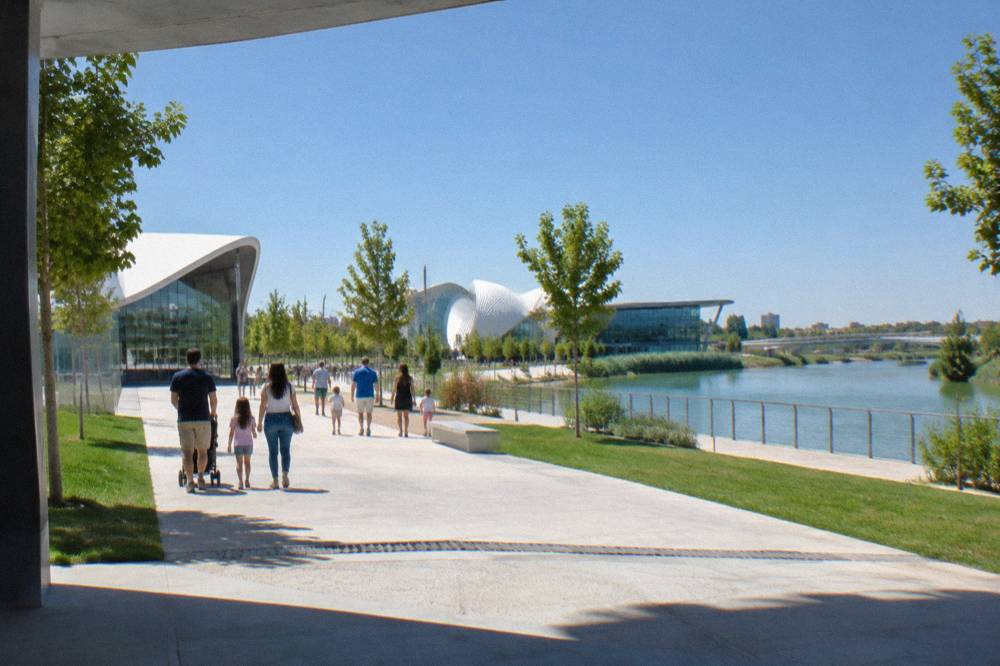
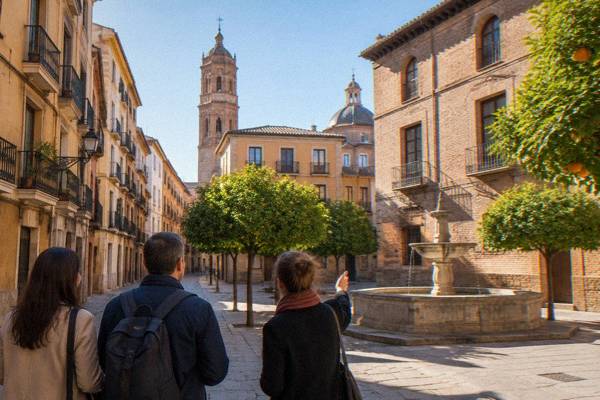
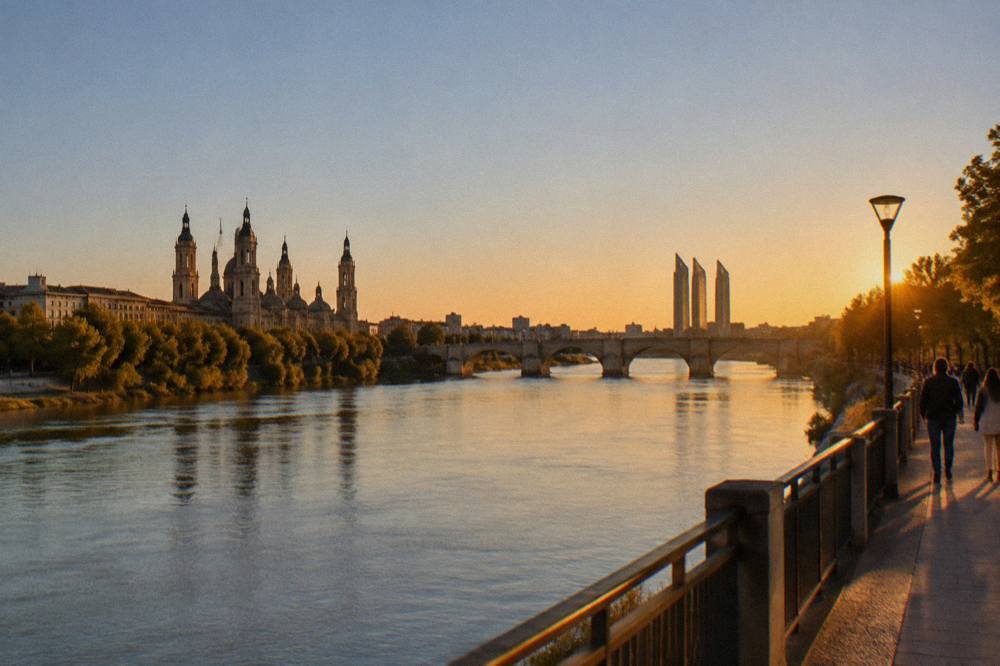
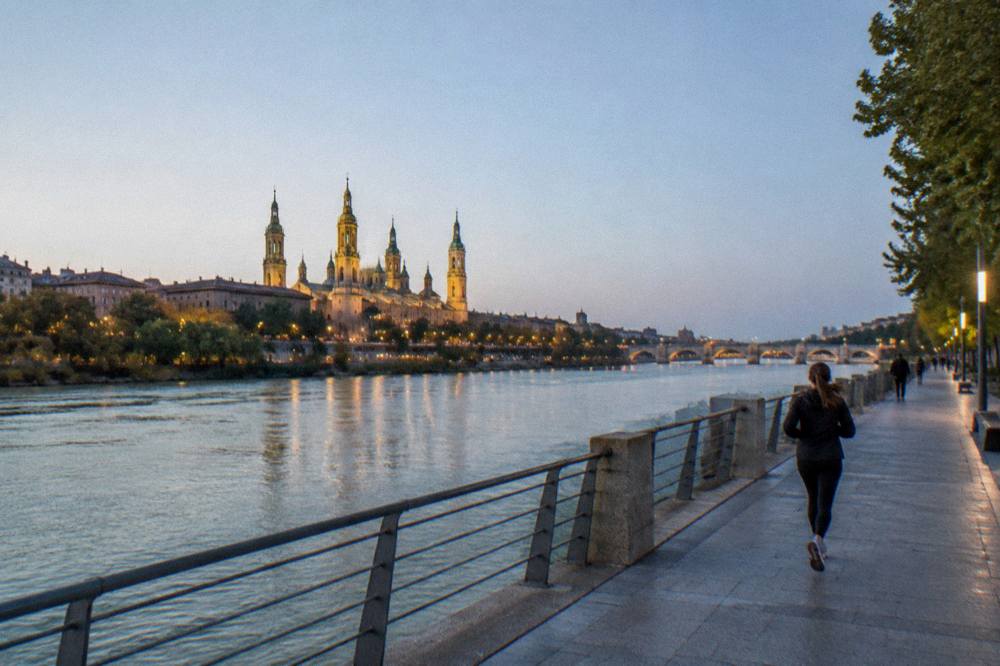
For the bridges, no ticket is needed at all. The Ebro river walk runs through the meander and links the Expo quarter to the Puente de Piedra and the Basílica del Pilar upstream, a route covered in the Ebro river walk guide. Walking it one way gives you the modern skyline at your back and the Mudéjar towers of the old city ahead, two Zaragozas in a single stretch of riverbank.
If you would rather have the historic centre explained than walk it unguided, the Old Town Monumental Walk, a 2.5 to 3 hour guided walk rated 4.9 from 15 reviews, covers the monuments that the Expo site's architecture answers, and Check availability before you commit to a day.
The guided options above all start in the city centre rather than at the Expo site, which is the right way round: most visitors do the historic core with a guide in the morning and the Expo quarter under their own steam in the afternoon, when the park is at its liveliest.
How Much Does The Acuario De Zaragoza Cost?
A general adult ticket to the Acuario de Zaragoza costs 20 EUR, with children aged 4 to 14 and seniors at 14 EUR and ages 0 to 3 free. The aquarium's own site also lists an online family pack at 55 EUR covering two adults and two children. Daily opening hours are not published in a readable form, so check the aquarium's calendar before setting out.
That family pack is the one genuine saving in the price list, and it only exists online. There is no combined ticket with the park, because the park is free, and no verified city pass that bundles the aquarium with other sights, so treat any claim of one with caution.
| Acuario de Zaragoza ticket | Price |
|---|---|
| General adult | 20 EUR |
| Child 4 to 14 | 14 EUR |
| Senior | 14 EUR |
| Ages 0 to 3 | Free |
| Online family pack, 2 adults + 2 children | 55 EUR |
The aquarium's opening calendar is published as an image rather than a text table, which is why no daily hours appear on this page. The practical advice is simple: check the calendar on the aquarium's own site for the specific date you plan to visit, especially around the Fiestas del Pilar, which in 2026 run from 10 to 18 October and fill the whole city.
What Is Parque Del Agua Luis Bunuel?
Parque del Agua Luis Bunuel is a public park of more than 120 hectares in the Ranillas meander beside the Expo 2008 site, laid out to flood safely when the Ebro rises. It holds two marked running circuits of 5 and 10 kilometres, and the municipality describes it as the first European green space to receive the Green Globe certification. Entry is free and it functions as an ordinary city park.
The flood design is the interesting part. The meander is meant to take water: in a big Ebro rise the park absorbs the flood that would otherwise press on the city's defences, which is why its lawns sit lower than the surrounding streets and why its planting is chosen for inundation rather than ornament. Nothing about it reads as engineered, though. It is a wide, flat, open landscape of grass and water, closer in feel to a river delta than to a plaza. Other pages covering the same trip are gathered on Zaragoza Travel Guide.
The two circuits make it the city's running ground. The 5 km loop suits a casual walk with a pram; the 10 km circuit is the one local runners use for distance work. Both are flat, both stay inside the park, and neither needs a map after the first few hundred metres, because the loops are signed. The Parque del Agua guide covers the park on its own page in more detail.
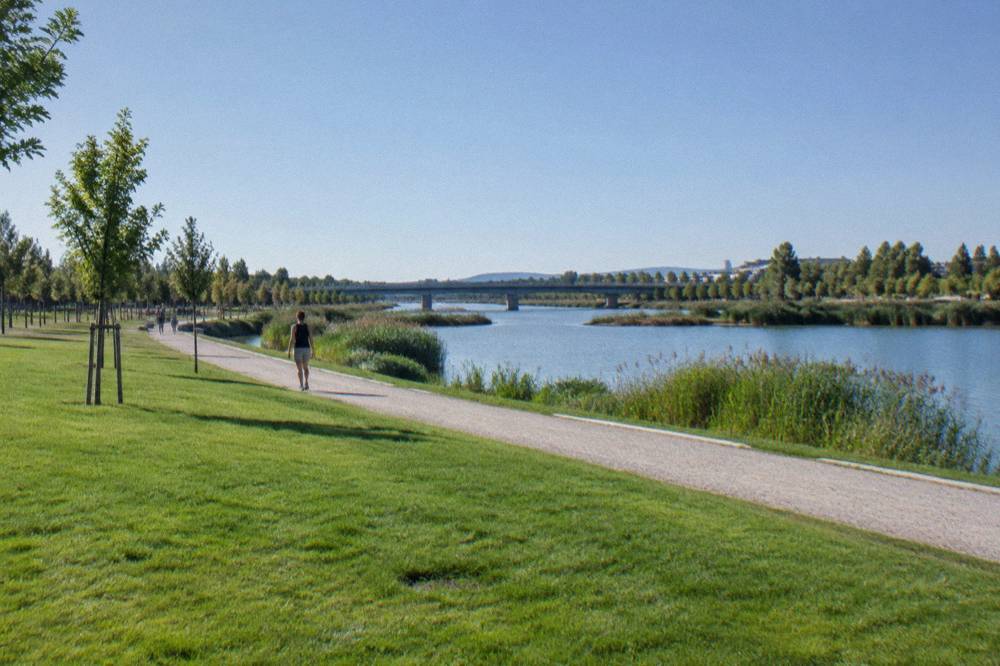
For families this is the most reliable part of Zaragoza for a free afternoon. There is space, there is water to look at, and there is shade in the warmer months, when AEMET's 1981 to 2010 normals for the Zaragoza Aeropuerto station put the average July maximum at 32.4 C. In those months the park is best before midday or after about six in the evening.
How Do You Get To The Expo 2008 Site In Zaragoza?
The urban tram and bus single fare in Zaragoza is 1.70 EUR, or 0.55 EUR with a Tarjeta Bus card that costs 7 EUR and works on both. The tram serves the Actur district beside the Expo site, and the airport bus is line 505 at 4.65 EUR single, timed to flights and taking roughly 25 to 35 minutes. The Tourist Bus covers the Expo area on its 16-stop, 24-hour hop-on hop-off circuit at 10 EUR.
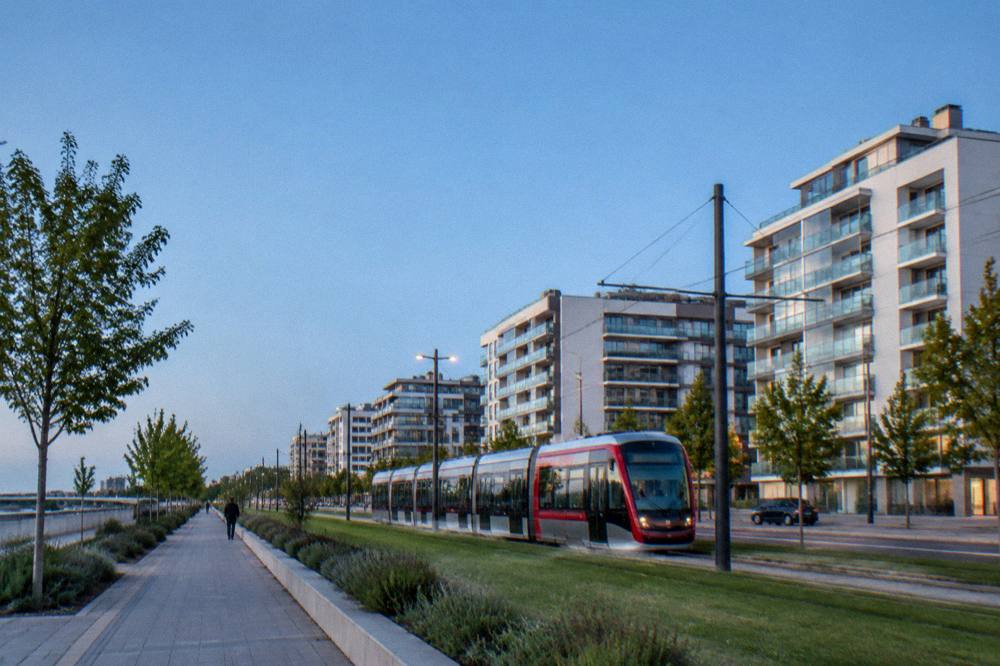
The tram is the simplest option from the centre. The 2026 Avanza fare table lists the single at 1.70 EUR with no transfer, 1.00 EUR on night lines, and 0.55 EUR with the Tarjeta Bus; the card itself costs 7 EUR and is valid on bus and tram alike. A visitor making more than a couple of journeys a day will not recover the card cost unless staying several days, so most short-stay visitors should simply pay the single fare.
| Zaragoza transport | 2026 fare |
|---|---|
| Bus or tram single | 1.70 EUR |
| Night lines single | 1.00 EUR |
| Tarjeta Bus discounted single | 0.55 EUR |
| Tarjeta Bus card | 7 EUR |
| Airport bus line 505 single | 4.65 EUR |
| Airport bus with Lazo card | 2.25 EUR |
| Tourist Bus, 24 h hop-on hop-off | 10 EUR |
| Bizi day pass plus first 30 min trip | 1 EUR + 0.50 EUR |
Cyclists have the cheapest option of all. The Bizi share scheme's 2026 tariffs list a day pass at a fixed 1 EUR plus 0.50 EUR for the first 30 minutes of each trip, with a 50 EUR card deposit held for day, month and single-trip passes. The Ebro riverbank is flat and continuous, and riding from the Puente de Piedra out to the Expo meander is one of the few city rides in Spain with no climb in it.
Drivers should note one restriction that has nothing to do with the Expo site itself. Zaragoza operates a low-emission zone in the Casco Histórico, with sanctions since 12 December 2025, active Monday to Friday from 08:00 to 20:00, and vehicles without a DGT environmental label are restricted there. The Expo district is outside that zone, so parking near the park is unaffected, but if your route back into the old town crosses it, the label rules apply.
When Is The Best Time Of Year To Visit The Expo Site?
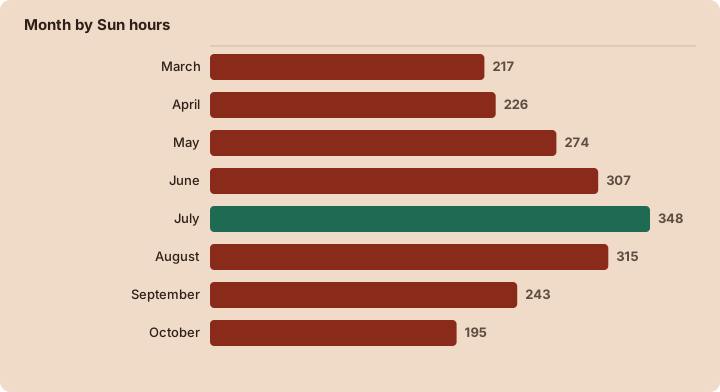
The best months for the Expo 2008 site are April, May, September and October, when AEMET's 1981 to 2010 normals for the Zaragoza Aeropuerto station show average maximum temperatures between 19.6 C and 27.1 C and the park is at its greenest. July and August average 32.4 C and 31.7 C respectively, with only 17 mm of rain each, which makes the open meander harsh at midday.
Zaragoza's climate is dry continental, and the numbers behind that are worth planning around. May is actually the wettest month of the year at 44 mm on the 1981 to 2010 normals, which surprises visitors who expect a rainless summer city, while July and August are the driest at 17 mm each. October, when the Fiestas del Pilar fill the city, averages a mean maximum of 21.4 C, warm enough for the park in a T-shirt.
| Month | Mean max C (1981-2010) | Mean C | Rain mm | Sun hours |
|---|---|---|---|---|
| March | 17.3 | 11.6 | 19 | 217 |
| April | 19.6 | 13.8 | 39 | 226 |
| May | 24.1 | 18.0 | 44 | 274 |
| June | 29.3 | 22.6 | 26 | 307 |
| July | 32.4 | 25.3 | 17 | 348 |
| August | 31.7 | 25.0 | 17 | 315 |
| September | 27.1 | 21.2 | 30 | 243 |
| October | 21.4 | 16.2 | 36 | 195 |
The Fiestas del Pilar deserve a special mention because they change the character of the whole city, this district included. In 2026 the fiestas run from Saturday 10 to Sunday 18 October, with the Ofrenda de Flores on 12 October, when close to a hundred thousand participants, 994 groups by the city's inscription figure, walk from Paseo de la Independencia to Plaza del Pilar. The Expo park becomes the escape valve: locals head there to breathe between events.
There is one more seasonal fact worth knowing, and it is a money fact rather than a weather one: Aragon has no tourist tax. The regional government explicitly ruled one out in September 2026 on the grounds that it would discourage visitors, so your hotel bill in Zaragoza carries no per-night visitor levy of the kind now common in other Spanish cities.
What Else Should You Pair With The Expo Site?
The natural pairing is the historic centre, a short tram or riverside walk away, where the Basílica del Pilar is free to enter, the Torre Mirador viewpoint costs 6 EUR, La Seo cathedral costs 10 EUR including three museums, and the Aljafería charges 7 EUR general or 9 EUR with a guided tour. All four sit within the compact old district the Expo quarter looks across the river at.
The contrast is the point of the day. The Expo site is the Zaragoza of this century, all glass, concrete and engineered landscape; the old town is the city the exposition was built to show off. The Basílica del Pilar guide and the Aljafería Palace guide cover the two headline monuments, and the La Seo cathedral guide covers the third.
| Old-town sight | General price | Verified detail |
|---|---|---|
| Basílica del Pilar, temple entry | Free | Holy Chapel zone 08:00-20:30 |
| Pilar Torre Mirador viewpoint | 6 EUR | Under 12 free, last access 30 min before close |
| La Seo cathedral | 10 EUR | Includes Museo de Tapices, Museo Pilarista, Rosario de Cristal |
| Aljafería palace | 7 EUR | Guided tour 9 EUR, under 12 free |
| Caesaraugusta four-museum bono | 7 EUR | Foro, Puerto Fluvial, Termas, Teatro |
Free-entry days stretch a budget further if your dates are flexible. The Aljafería is free on the first and third Sunday and Monday of each month, the Caesaraugusta museums are free on the first Sunday, and the Museo del Fuego y los Bomberos follows the same first-Sunday rule. None of these need booking far ahead outside the Pilar fortnight.
The Aljafería rewards a guide more than most Spanish palaces, because its layered Islamic, Mudéjar and royal history is easy to walk through without noticing. The Aljafería ticket and guided visit, from 24.76 USD per person and rated 4.7 from 82 reviews, is the straightforward way to see it with someone who can read the building for you.
For a first-day orientation that costs almost nothing, the free tour through the historical centre of Zaragoza, tip based and rated 4.15 from 122 reviews, covers the old district in a couple of hours and leaves the afternoon free for the Expo quarter. It is a GuruWalk free tour, tip based rather than priced, so what you pay is what you choose to give the guru at the end.
If you want a short paid introduction before exploring alone, the 105-minute monumental sightseeing tour, from 10.41 USD and rated 4.4 from 36 reviews, does exactly that job, covering the headline monuments in under two hours and leaving the rest of the day open.
One museum warning belongs here because it catches visitors out. The Museo de Zaragoza's central building at Plaza de los Sitios 6 is closed for Ministry of Culture works, with no reopening date, so do not build an itinerary around it; the wider museum landscape is covered in the things to do in Zaragoza overview. The Museo Goya, by contrast, reopens on 9 October 2026 after renovation, open Tuesday to Saturday 10:00 to 20:00 and Sundays 10:00 to 14:00, with its admission price not yet published.
Common Questions About The Expo 2008 Site In Zaragoza
Is the Expo 2008 site in Zaragoza worth visiting?
Yes, for the Parque del Agua, the Acuario de Zaragoza and the Expo-era bridges. The park is free and covers more than 120 hectares, the aquarium holds more than 5,000 specimens with a 20 EUR general ticket, and the whole meander links into the Ebro river walk towards the historic centre.
How much does the Acuario de Zaragoza cost?
General admission is 20 EUR, children 4 to 14 and seniors pay 14 EUR, ages 0 to 3 are free, and an online family pack covering two adults and two children costs 55 EUR. Daily opening hours are published only as an image calendar, so check the aquarium's own site for your date.
Can you go inside the Torre del Agua or the Pabellón Puente?
Both structures stand on the Expo site and the Pabellón Puente can be crossed on foot as a bridge, but no admission prices or interior visiting details for either are published in a form that can be relied on here. Check the operator's notice before planning an interior visit.
How do you get to the Expo 2008 site from Zaragoza city centre?
The tram serves the Actur district beside the site, at a single fare of 1.70 EUR or 0.55 EUR with the 7 EUR Tarjeta Bus. The Ebro river walk also reaches the meander on foot or by Bizi bike, with the day pass at 1 EUR plus 0.50 EUR for the first 30 minutes of each trip.
Is Parque del Agua free?
Yes. Parque del Agua Luis Bunuel is a public park of more than 120 hectares with free entry, two running circuits of 5 and 10 km, and a design that lets it flood safely in big Ebro rises.
When is the best time of year for the Expo site?
April, May, September and October, when AEMET's 1981 to 2010 normals for the Zaragoza Aeropuerto station put average maximum temperatures between 19.6 C and 27.1 C. July averages 32.4 C, so in high summer use the park before midday or in the evening.
The Expo 2008 site is the part of Zaragoza where the city shows what it built for the world and then kept for itself, and a morning in the meander followed by an afternoon among the Mudéjar towers of the old town is the fullest version of the city a visitor can walk in a single day.