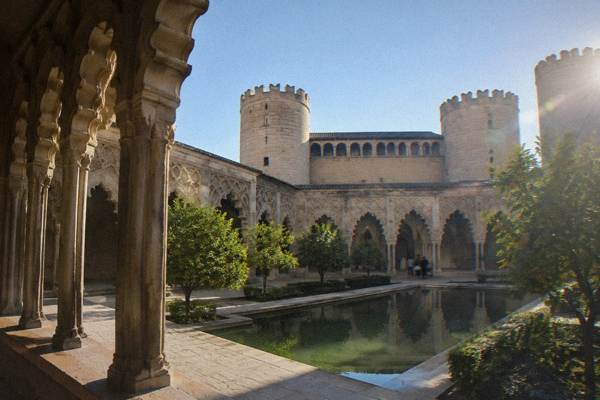
Zaragoza On A Rainy Day
Rain in Zaragoza, the inland capital of Aragon on the Ebro, is lighter than most of Spain expects, but when it arrives this guide keeps the day full: Roman museums under cover, two cathedrals, tapas streets with awnings and a palace that swallows whole afternoons.
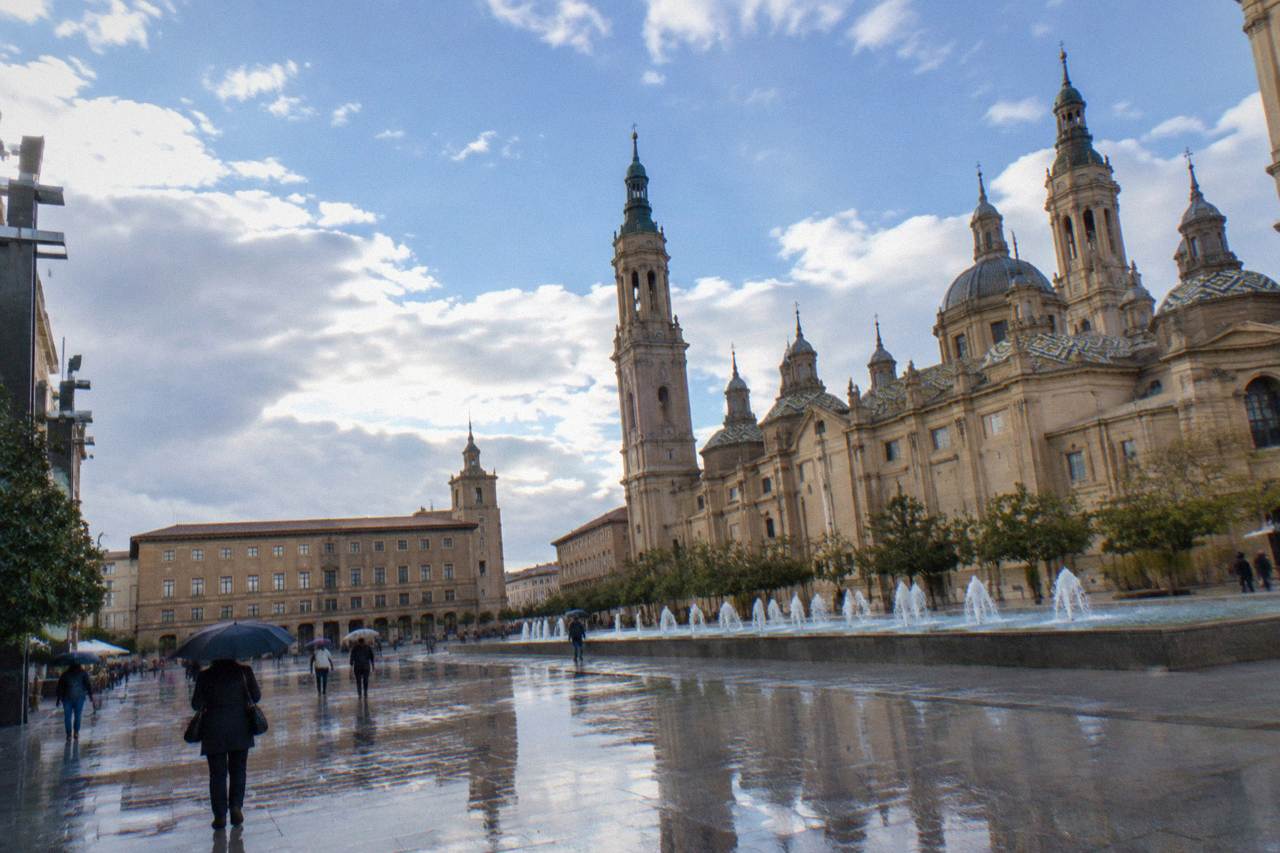
Short answer
A rainy day in Zaragoza works best indoors at the Caesaraugusta museums, La Seo, the Aljafería and the Acuario, with tapas in the old town between stops. AEMET's 1981-2010 averages give the city just 322 mm of rain a year, so a fully wet day is rare, but the indoor line-up is deep enough to fill one.
Rain rarely defines a visit to Zaragoza, the capital of Aragon, an inland city on the Ebro with a dry continental climate and no coast to soften it. AEMET's 1981-2010 normals for the Zaragoza Aeropuerto station record an average of just 322 mm of rain across the whole year, spread over 51.1 days with 1 mm or more. That is a genuinely dry city by Spanish standards. But October, one of the most popular months to visit thanks to the Fiestas del Pilar, averages 36 mm over 5.4 rain days, and November carries 30 mm, so a grey, dripping afternoon will find some visitors eventually. The good news is that Zaragoza's indoor line-up is unusually deep for a city of its size: four Roman museums, two cathedrals, an Islamic-era palace and a river aquarium, most of them within a short walk of one another in the compact old town. For the broader picture of the city's sights, start with things to do in Zaragoza.
How Much Does It Actually Rain In Zaragoza?
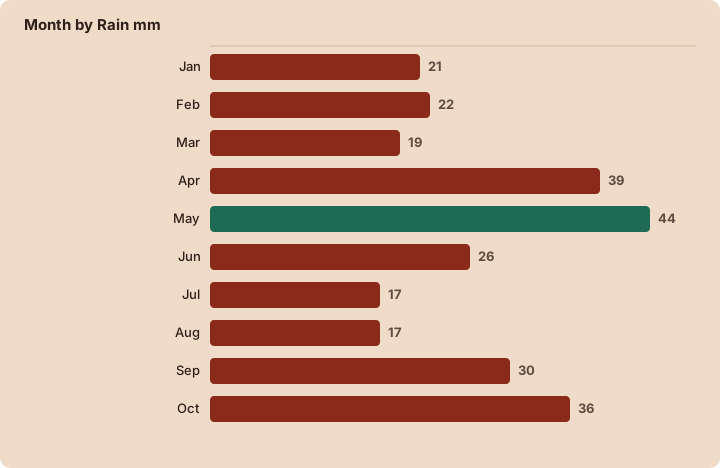
AEMET's 1981-2010 averages for the Zaragoza Aeropuerto station give Zaragoza 322 mm of rain per year over 51.1 days of 1 mm or more, making it one of Spain's driest provincial capitals. May is the wettest month at 44 mm, July and August the driest at 17 mm each, and October averages 36 mm over 5.4 rain days. Rain here is usually a matter of hours, not days.
The table below carries the full monthly picture from the same 1981-2010 series. Read it before packing: the numbers show why locals treat rain as an interruption rather than a season. The city also records 2,693 sunshine hours per year and 81.6 clear days, against 23.1 frost days and 21.3 fog days, so the grey days stand out in memory more than in the statistics.
| Month | Mean max C | Mean min C | Rain mm | Days with 1 mm or more |
|---|---|---|---|---|
| Jan | 10.5 | 2.7 | 21 | 4.0 |
| Feb | 13.1 | 3.3 | 22 | 3.9 |
| Mar | 17.3 | 5.8 | 19 | 3.7 |
| Apr | 19.6 | 7.9 | 39 | 5.7 |
| May | 24.1 | 11.8 | 44 | 6.4 |
| Jun | 29.3 | 15.8 | 26 | 4.0 |
| Jul | 32.4 | 18.3 | 17 | 2.6 |
| Aug | 31.7 | 18.3 | 17 | 2.3 |
| Sep | 27.1 | 15.2 | 30 | 3.2 |
| Oct | 21.4 | 11.0 | 36 | 5.4 |
| Nov | 14.8 | 6.3 | 30 | 5.1 |
| Dec | 10.8 | 3.2 | 21 | 4.8 |
Every figure above is the 1981-2010 AEMET average for the Zaragoza Aeropuerto station, the only window the station page publishes. There is no days-above-30 C row in that series, so no claim about heat belongs here either. What the table does show is a pattern: spring and autumn carry the rain, midsummer barely has any, and even the wettest months average well under 50 mm. If you are choosing when to come, the best time to visit Zaragoza guide works through the same numbers against the festival calendar.
One more climate note that matters on a wet day. The cierzo, the cold, dry north-west wind that funnels down the Ebro valley, can make a grey day feel sharper than the thermometer suggests. It is a real feature of the valley's weather, but no speed or frequency figure exists in the published normals, so treat it as qualitative: bring a windproof layer, not just an umbrella.
Which Indoor Museums Can You Visit On A Wet Afternoon?
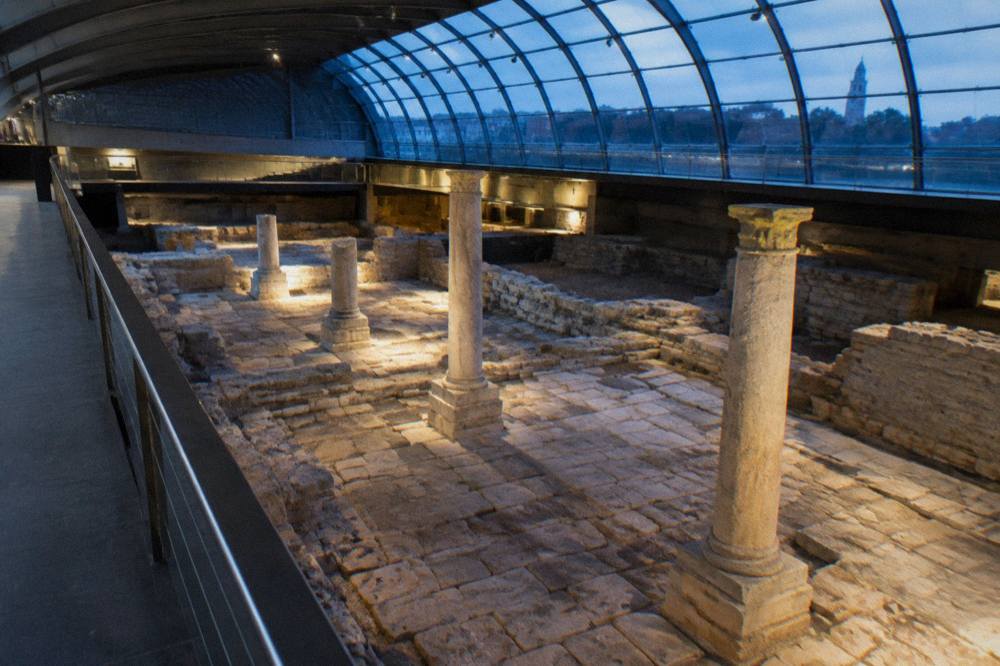
The four Caesaraugusta museums are Zaragoza's best rainy-day spine: the Foro, the Teatro, the Termas and the Puerto Fluvial, all indoor, all in the old town, open Tuesday to Saturday 10:00-14:00 and 17:00-21:00 and Sundays 10:00-14:30. The Foro costs EUR 4, the Termas and the Puerto Fluvial EUR 3 each, and a four-museum bono costs EUR 7, or EUR 5 reduced, with free entry the first Sunday of the month.
That bono is the single best rainy-day purchase in the city. Four separate Roman sites, each under cover, each a few minutes' walk from the next, for less than the price of a single cathedral tower ticket elsewhere. The Foro preserves the forum of Roman Caesaraugusta beneath Plaza de la Seo; the Teatro is the largest of the four and holds the Roman theatre's remains; the Termas show the public baths; the Puerto Fluvial, beside the Ebro, displays the river port that made the city rich. The municipal October timetable lists those hours exactly, and the ticketing page for the museums sells the bono. The deeper background on all four sites sits in the Roman Caesaraugusta guide.
| Museum | Subject | Price | Hours Tue-Sat | Sunday hours |
|---|---|---|---|---|
| Foro de Caesaraugusta | Roman forum remains | EUR 4 | 10:00-14:00, 17:00-21:00 | 10:00-14:30 |
| Museo del Teatro | Roman theatre | EUR 4 (bono item) | 10:00-14:00, 17:00-21:00 | 10:00-14:30 |
| Termas Públicas | Roman baths | EUR 3 | 10:00-14:00, 17:00-21:00 | 10:00-14:30 |
| Puerto Fluvial | Roman river port | EUR 3 | 10:00-14:00, 17:00-21:00 | 10:00-14:30 |
Beyond the Roman four, several municipal museums are free and indoor. The IAACC Pablo Serrano, open Tuesday to Saturday 10:00-14:00 and 17:00-21:00 and Sundays 10:00-14:00, charges nothing. The Centro de Historias is free too, with the same Tuesday-to-Saturday rhythm. The Torreón de la Zuda, free, Monday to Saturday 10:00-14:00 and 16:30-20:00, puts a covered viewpoint on its fifth floor, the Mirador de las Cuatro Culturas, a good place to watch rain move across the Ebro without standing in it. The Museo del Fuego y los Bomberos costs EUR 3, and the Museo del Origami, also EUR 3, is a genuinely unusual small collection that suits a wet hour with children.
Two closures matter, and both are permanent enough to plan around rather than wait out. The Museo de Zaragoza's central building at Plaza de los Sitios 6 is closed for Ministry of Culture works, with no reopening date published, so it cannot be part of any itinerary. The Palacio de Sastago is closed in October, and the Museo Pablo Gargallo is temporarily closed. The Museo Goya, by contrast, reopens on 9 October 2026 after renovation, open Tuesday to Saturday 10:00-20:00 and Sundays and holidays 10:00-14:00, Monday closed, though its admission price has not been published.
Can You Visit The Basílica Del Pilar And La Seo In The Rain?
Yes, and they are the two best large indoor spaces in the city. Entering the Basílica del Pilar is free, with the main altar zone open Monday to Saturday 7:30-13:30 and 16:30-20:15 and Sundays until 21:30. La Seo charges EUR 10 general admission, EUR 9 over 65, EUR 7 for students and ages 13-18, free under 12, and the ticket includes the Museo de Tapices, the Museo Pilarista and the Rosario de Cristal.
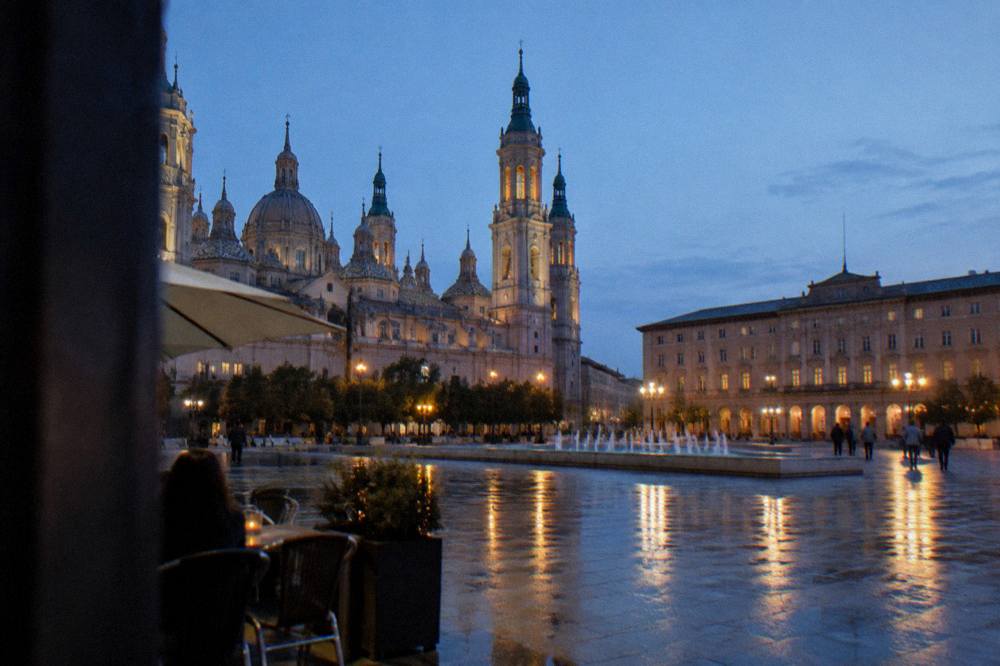
The Pilar is the obvious shelter, and it earns the reputation. The basilica's interior is vast enough that an hour disappears inside it without effort: the main altar, Goya's frescoes, the Holy Chapel, and the Museo Pilarista, open daily 10:00-13:30 and 16:00-20:00, are all under one roof. The tower viewpoint, the Torre Mirador, costs EUR 6 for an adult, but on a wet day the interior is the point, and the interior is free. The full sight-by-sight breakdown is in the Basílica del Pilar guide.
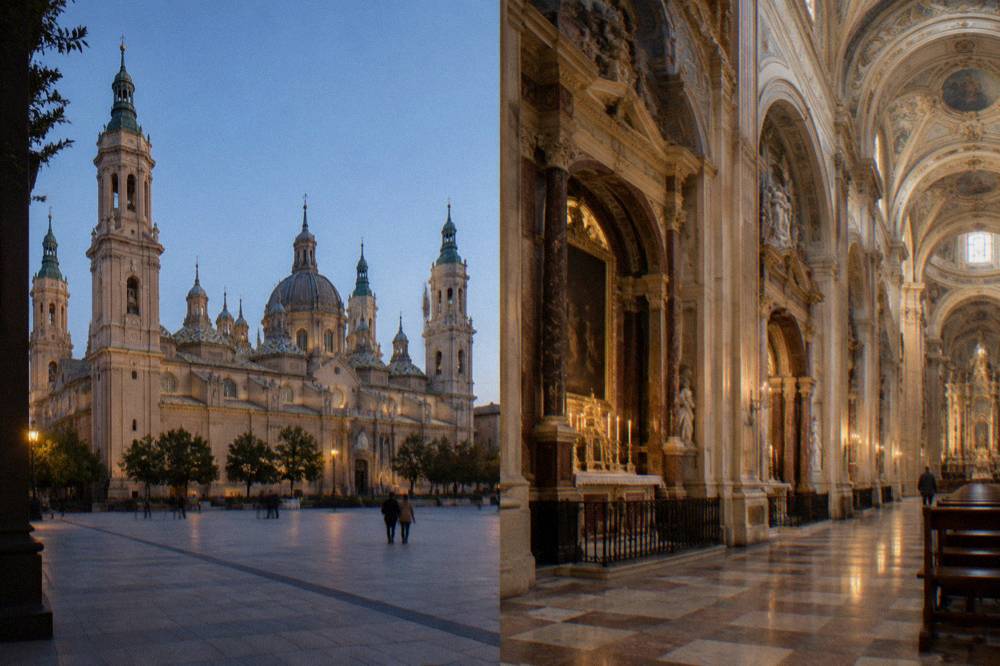
La Seo, the cathedral of San Salvador, sits a couple of streets away and is arguably the better rainy-day building because the ticket is a bundle. The EUR 10 general admission includes the Museo de Tapices, the textile collection, and the Rosario de Cristal, the crystal rosary carried in the October processions, so one door takes care of three collections. Hours run Monday to Saturday 10:00-14:30 and 16:00-20:00, with wedding Saturdays shortening the morning to 12:30, and Sundays 10:00-12:00 and 16:00-20:00. Aragon residents enter free on the 6th, 12th, 23rd and 27th of the month. The La Seo Cathedral guide covers what to look at once you are inside.
| Sight | General price | Reduced prices | Free entry |
|---|---|---|---|
| Basílica del Pilar, temple | Free | Free | Always |
| Pilar tower viewpoint | EUR 6 | EUR 5 over 65 and residents, EUR 4 ages 13-18 | Under 12 |
| La Seo, with three museums | EUR 10 | EUR 9 over 65, EUR 7 students and 13-18 | Under 12; Aragon residents on the 6th, 12th, 23rd, 27th |
| La Seo general plus tower | EUR 12 | Varies by category | Under 12 |
A guided walk knits the two cathedrals and the old town together efficiently when the weather is poor, because a guide keeps you moving between covered stops instead of wandering. The Zaragoza Must-See Attractions Walking Tour With A Guide runs about two hours, costs from $44.72 per person, and holds a 5 rating from 3 reviews on its listing; the operator's live listing carries the current departure times. Check availability
The same tour doubles as a weather hedge in another sense: because it is short and starts in the old town, it can slot into a dry window between showers rather than committing your whole day to one forecast. Book it for the morning and keep the museums for the afternoon, or the reverse, depending on what the sky is doing when you wake up.
Where Can You Eat Well Without Getting Soaked?
The old town's tapas streets keep almost everything under awnings and arcades, and the classic wet-weather move is a long lunch in the area around the Basílica del Pilar and La Seo, where bar after bar sits within a few doors of one another. The evening tapas walking tours in the city run about 3 hours and cost from $106.92 per person, with the top-rated option holding 4.9 from 62 reviews.
Spanish lunch timing helps here. The main meal of the day runs early to mid-afternoon, so the natural rainy-day rhythm is museum in the morning, long lunch, second museum, and the rain has often thinned by the time coffee arrives. The old town around the cathedral pair is compact enough that the distance between stops is measured in doorways, not blocks; the old town casco histórico guide maps the quarter. For a self-directed version, the Zaragoza tapas crawl itinerary strings the same streets together at your own pace.
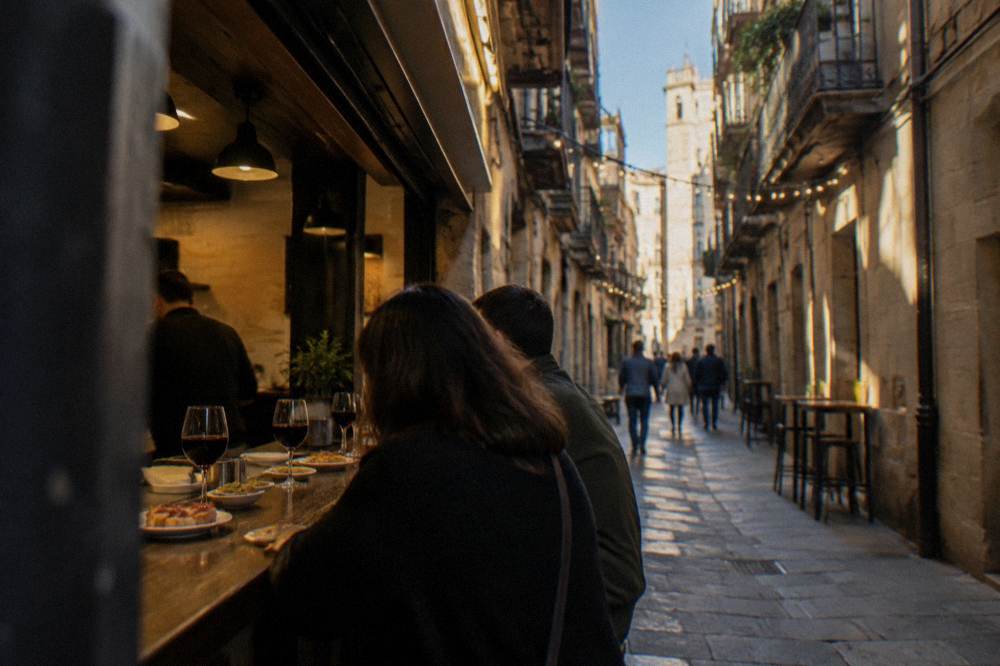
If you would rather have the route decided for you, three guided options stand out. The Evening Tapas Walking Tour in the Old Town, 3 hours from $106.92, rated 4.9 from 62 reviews, moves through the historic centre at night. The Midday Market and Tapas Tour, also 3 hours from $106.92, pairs the Central Market with old-town bars and holds a 5 rating from 9 reviews. The Tapas Sightseeing Tour, 3 hours from $50.65, rated 5 from 7 reviews, mixes sights with stops. All three are city-based and indoor-heavy, which is exactly what a wet evening wants. The El Tubo guide covers the famous tapas lane itself, though check each bar's current opening before you set out.
A quieter alternative is the Midday Market Tour and Spanish Cooking Class, from $113.53, rated 5 from 41 reviews, which turns a wet afternoon into a kitchen rather than a street. The Central Market is under cover, the class is indoors, and the whole block of the day disappears productively. The rest of the planning pages sit on Zaragoza Travel Guide.
Is The Aljafería A Good Rainy-Day Option?
The Aljafería is one of the best rainy-day buildings in Spain, an Islamic-era palace open daily 10:00-18:00 in October, with general admission at EUR 7, guided visits at EUR 9, EUR 2 for students, over 65s and Carnet Joven holders, and free entry for under 12s and on the first and third Sunday and Monday of each month. Last access is 45 minutes before closing, and Spanish guided tours run at 10:30, 12:30, 13:30, 15:00 and 16:00.
The palace is a single roof over an enormous amount of history: the Islamic-era courtyard, the oratory with its honeycomb plasterwork, the Catholic Monarchs' additions and the Goya exhibition tour at 11:30. Because everything of interest is inside the walls, weather is almost irrelevant to the visit, and the building is large enough that two hours pass easily. The discount detail worth knowing is that the tourist bus ticket brings admission down to EUR 4, which pairs the palace with the hop-on service below. The full architectural walkthrough is in the Aljafería Palace guide.
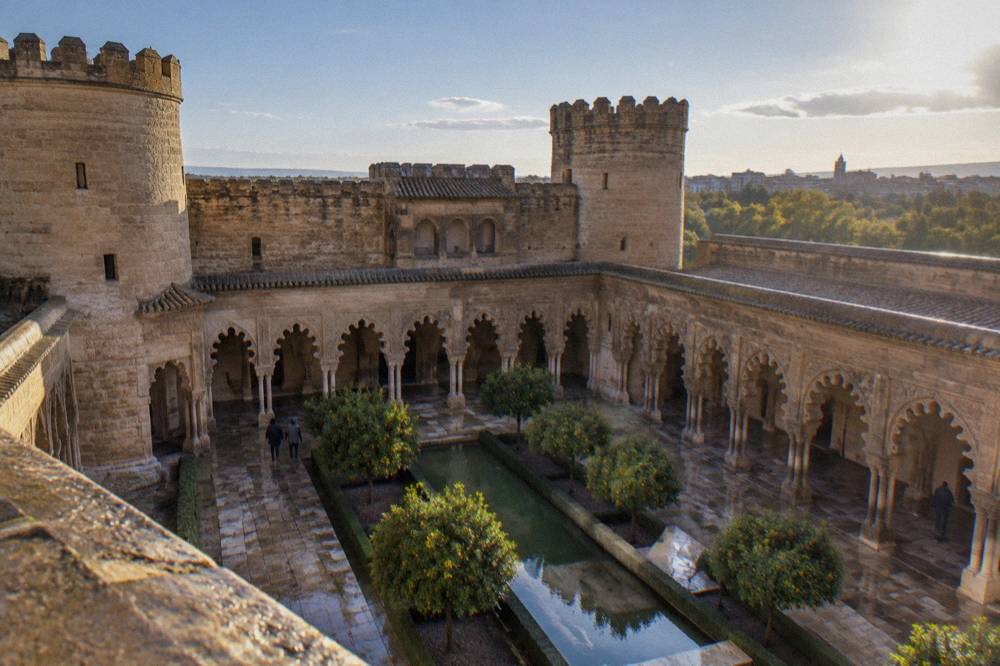
Two guided products cover the palace directly. The Aljafería Palace the best guided tour in Spanish with ticket, from $24.76, rated 4.8 from 103 reviews, includes entry and a 2-hour Spanish-language visit. Aljaferia Palace: Ticket and Guided Visit, from $24.76, rated 4.7 from 82 reviews, covers the same ground for visitors who book the combined format. Both are indoor experiences from the first minute, and the palace's own ticketing page sells direct entry for anyone going independently.
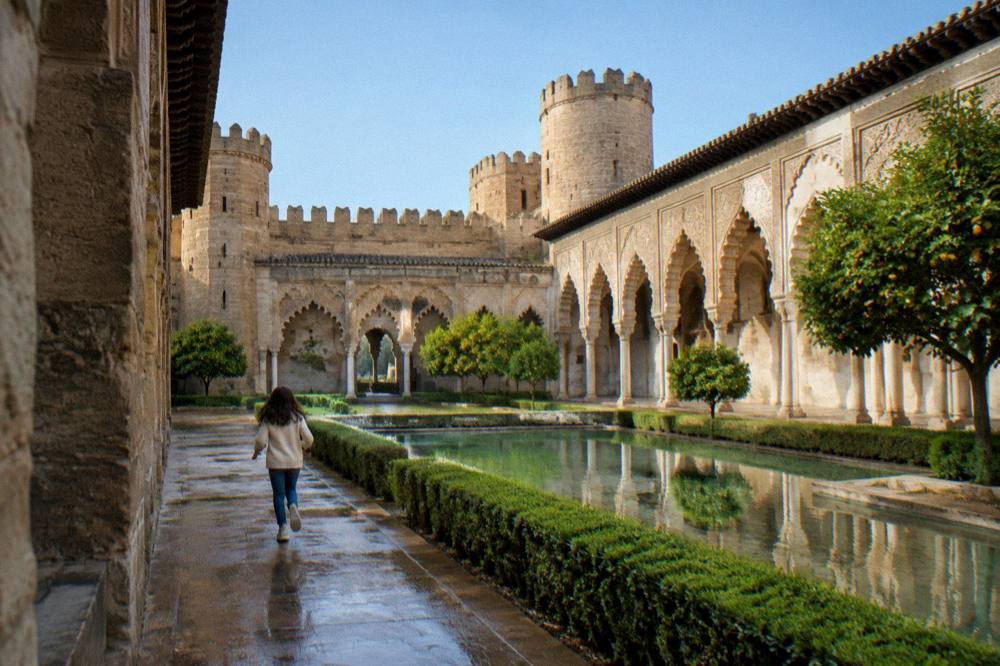
The one caveat is distance. The Aljafería sits west of the old town, a tram or bus ride rather than a doorway hop, and the tram and urban bus single fare is EUR 1.70, or EUR 0.55 with a Tarjeta Bus. On a day of heavy rain, that short ride is the only exposed stretch of an otherwise dry itinerary, and the tram runs frequently enough that waiting under a shelter is a short business.
What If The Rain Clears Later In The Day?
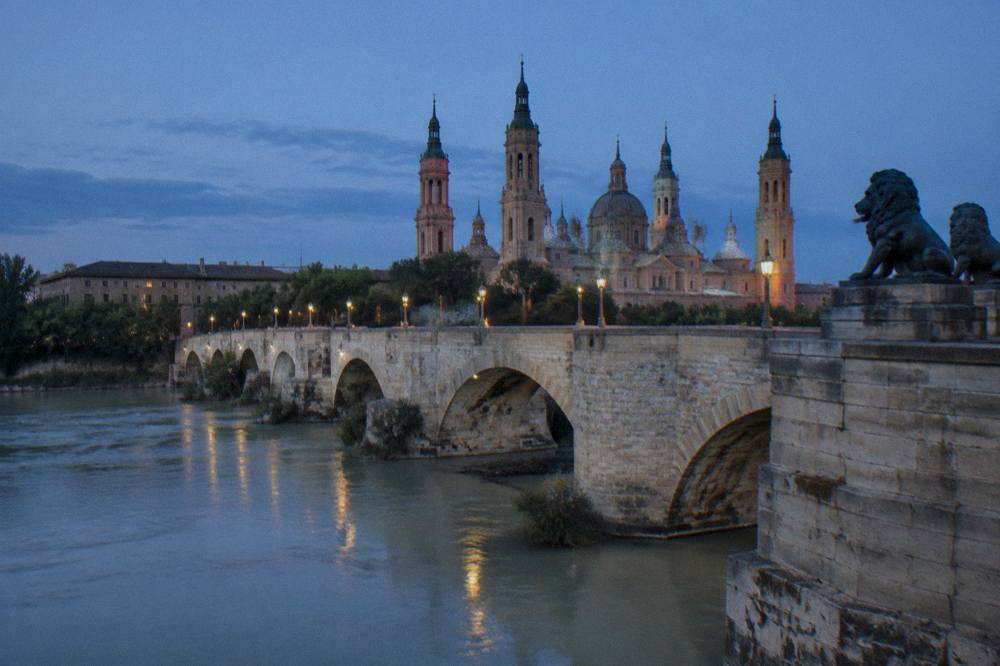
Zaragoza's rain often arrives in short bursts rather than all-day fronts, and the 1981-2010 averages show even the wettest months rarely exceed six rain days, so a clearing afternoon is the more likely outcome. The best post-rain walk is the Ebro riverside past the Puente de Piedra, the stone bridge built from 1401 and opened in 1440, followed by the Acuario, which charges EUR 20 general, EUR 14 for children 4-14 and seniors, free under 4.
The riverside is at its best just after rain, when the Ebro runs fuller and the stone of the Puente de Piedra darkens. The bridge's history rewards a pause: a Roman-era crossing predates it, and Napoleonic troops blew up one arch in 1813 before it was rebuilt. The four bronze lions have watched the river from the bridge since 1991. The Puente de Piedra guide tells that story properly. If the sky is still uncertain, the Acuario de Zaragoza, which markets itself as the largest river aquarium in Europe with more than 5,000 specimens, is entirely indoors and sits in the same Ranillas meander as the Parque del Agua, so a half-clear afternoon can pair the two with an easy retreat under the aquarium roof if the rain returns. An online family pack at EUR 55 covers two adults and two children.
For the evening, the Zaragoza at night itinerary picks up where the wet afternoon ends. The Legends and Ghosts Night Tour, from $15.76, runs about 2 hours and is rated 5 from its single review; it works rain or shine because so much of it is storytelling between covered stops, though check the operator's weather notice before you go. A private walk is the other flexible option: the Private Walking Tour with a Local, from $54.02 per person for 2 to 6 hours, rated 4.7 from 86 reviews, can be reshaped around the forecast on the day, and the Private Custom Walking Tour with a Local Guide, from $50.65 for 2 to 8 hours, rated 5 from 86 reviews, offers the same adaptability at a lower floor price.
A Full Zaragoza Rainy-Day Plan, Hour By Hour
A workable wet-day shape is the Caesaraugusta museums in the morning, a long old-town lunch at Spanish hours, La Seo and its three bundled museums in the mid-afternoon, the Pilar's free interior before dinner, and tapas in the evening, with the Aljafería or the Acuario swapped in for any block if the rain eases. Everything in the sequence is indoors except the short walks between stops, and the whole day costs under EUR 30 per person in entry fees at general rates.
The hour-by-hour version below assumes an October-style day, when the city's monuments run their autumn timetable. Adjust the start time to the rain forecast rather than the clock: the museums' 17:00-21:00 evening block on weekdays gives the plan a second chance if the morning is a washout.
| Time | Activity | Indoor? | Cost at general rate |
|---|---|---|---|
| 10:00-11:30 | Foro de Caesaraugusta | Yes | EUR 4 |
| 11:30-13:00 | Museo del Teatro Caesaraugusta | Yes | Included in EUR 7 bono |
| 13:00-15:30 | Long lunch, old town | Yes | Varies by bar |
| 15:30-17:00 | La Seo, Museo de Tapices, Rosario de Cristal | Yes | EUR 10 |
| 17:00-18:30 | Basílica del Pilar interior and Museo Pilarista | Yes | Free |
| 18:30-19:00 | Termas or Puerto Fluvial | Yes | EUR 3 |
| 20:00 onward | Tapas evening, or ghost tour | Mostly | From $15.76 for the tour |
Two refinements make the plan cheaper. The Caesaraugusta bono at EUR 7 covers all four Roman museums, so buying it at the first stop saves money the moment you enter the third. And the free-entry days, the first Sunday of the month for the Caesaraugusta museums and the Museo del Fuego y los Bomberos, the first and third Sunday and Monday for the Aljafería, and the first Tuesday and Sunday for the Museo del Origami, can zero out most of the day if the calendar cooperates.
If the day is truly lost to weather and you have a car or a booked excursion, the region's indoor options extend outward. The Monasterio de Piedra, with its covered walkways behind waterfalls, is the classic wet-weather day trip from the city; the Monasterio de Piedra guide covers it. Closer to hand, the Zaragoza with kids and Zaragoza 2-day itinerary pages both build in indoor fallbacks, and the Zaragoza 3-day itinerary shows how a single wet day fits inside a longer stay without losing anything.
Common Questions About A Rainy Day In Zaragoza
Does it rain a lot in Zaragoza?
No. AEMET's 1981-2010 normals for the Zaragoza Aeropuerto station give the city 322 mm of rain per year over 51.1 days of 1 mm or more, making it one of Spain's driest provincial capitals. May is the wettest month at 44 mm and July and August the driest at 17 mm each.
What are the best indoor things to do in Zaragoza?
The four Caesaraugusta museums, La Seo with its bundled Museo de Tapices and Rosario de Cristal collections, the free interior of the Basílica del Pilar, the Aljafería and the Acuario are the core indoor sights. The IAACC Pablo Serrano and Centro de Historias are free municipal museums, and the Museo Goya reopens on 9 October 2026.
Is the Basílica del Pilar free to enter?
Yes, entering the temple is free, with the main altar zone open Monday to Saturday 7:30-13:30 and 16:30-20:15 and Sundays until 21:30. The tower viewpoint costs EUR 6 for an adult, and the Museo Pilarista is open daily 10:00-13:30 and 16:00-20:00.
Can you do a rainy day in Zaragoza without a car?
Yes. The Caesaraugusta museums, La Seo, the Pilar and the tapas streets of the old town are all within walking distance of one another, and the tram and bus single fare is EUR 1.70, or EUR 0.55 with a Tarjeta Bus, for the ride out to the Aljafería.
Are guided tours a good idea in bad weather?
A guided walking tour keeps the route tight between covered stops, which is the main advantage on a grey day. The Zaragoza Must-See Attractions Walking Tour With A Guide runs about 2 hours from $44.72 per person, and private options from $50.65 can be reshaped around the forecast on the day.
A wet afternoon in Zaragoza is not a lost afternoon; it is the one condition under which the city's Roman basements, textile rooms and palace corridors feel exactly as full as they deserve to, and with the 1981-2010 averages putting most months under 40 mm, the odds are good that the rain clears before the tapas do.