Zaragoza With Kids: A Family Guide To Aragon's Capital
Zaragoza, the capital of Aragon in northern Spain, is a compact, walkable city on the Ebro where most child-friendly sights sit within twenty minutes of each other, entry to the Basílica del Pilar is free, and the tram costs 1.70 EUR a ride.
Short answer
Yes. Zaragoza works well with kids: the basilica is free to enter, the Pilar tower charges children aged 13 to 18 EUR 4 and admits under-12s free, the Aljafería palace has gardens to run in, the Acuario is Europe's largest river aquarium, and the tram and bus cost 1.70 EUR per single trip.
Zaragoza, the capital of Aragon in north-eastern Spain, is one of the country's easiest city breaks with children. The city sits inland on the Ebro, dry and bright, with a compact historic core where the Basílica del Pilar, La Seo, the Aljafería and the Roman museums of Caesaraugusta are all close enough to walk between. Entry to the basilica itself is free, the tower viewpoint has a child price band, and the municipal museums include several that cost nothing at all.
Is Zaragoza A Good City To Visit With Kids?
Yes, and for reasons that are structural rather than lucky. Zaragoza is a compact inland city on the Ebro whose main sights cluster within a walkable historic core, its basilica is free to enter, its palace has courtyards and gardens, and its tram and bus single fare is 1.70 EUR. The official October monument timetable publishes child price bands for the tower, the cathedral and the Aljafería, so a family can budget the day before leaving the hotel.
Three things make the city unusually relaxed for families. First, scale: the Casco Histórico, the old town, holds the Pilar, La Seo, the Puente de Piedra and the Caesaraugusta museum sites in one tight area, so no single day needs a long transit with tired children. Second, price: the municipal timetable lists under-12s as free at the Pilar tower, La Seo and the Aljafería, and the Caesaraugusta four-museum bono costs 7 EUR with a 5 EUR reduced rate. Third, the free layer: the IAACC Pablo Serrano, the Torreón de la Zuda with its fifth-floor viewpoint, and the Centro de Historias all cost nothing.
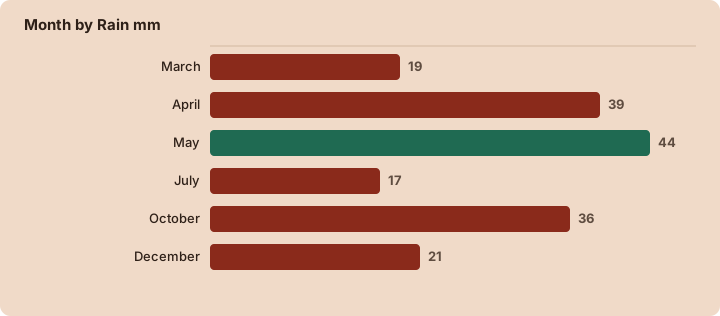
The climate helps too. AEMET's 1981 to 2010 normals for the Zaragoza Aeropuerto station show a mean maximum of 21.4 C in October and 348 hours of sun in July, the sunniest month. Rain is modest by Spanish city standards, 322 mm across the whole year, though May is actually the wettest month at 44 mm, not a winter month as many visitors assume. The one weather factor to respect with small children is the cierzo, the cold, dry north-west wind that funnels down the Ebro valley; it is a real feature of the city's climate but has no published speed figure, so just pack a windproof layer.
For a first sense of how the days fit together, the one-day itinerary covers the core loop, and the wider things to do in Zaragoza roundup adds the neighbourhoods beyond it.
What Is The Best Day-By-Day Plan For Zaragoza With Kids?
A three-day split works best: day one on the Pilar, the Puente de Piedra and the Ebro bank, day two on the Aljafería and the Caesaraugusta Roman museums, and day three on the Parque del Agua and the Acuario in the Ranillas meander. Each day mixes one paid anchor sight with free running-around space, which is the ratio that keeps children cooperative.
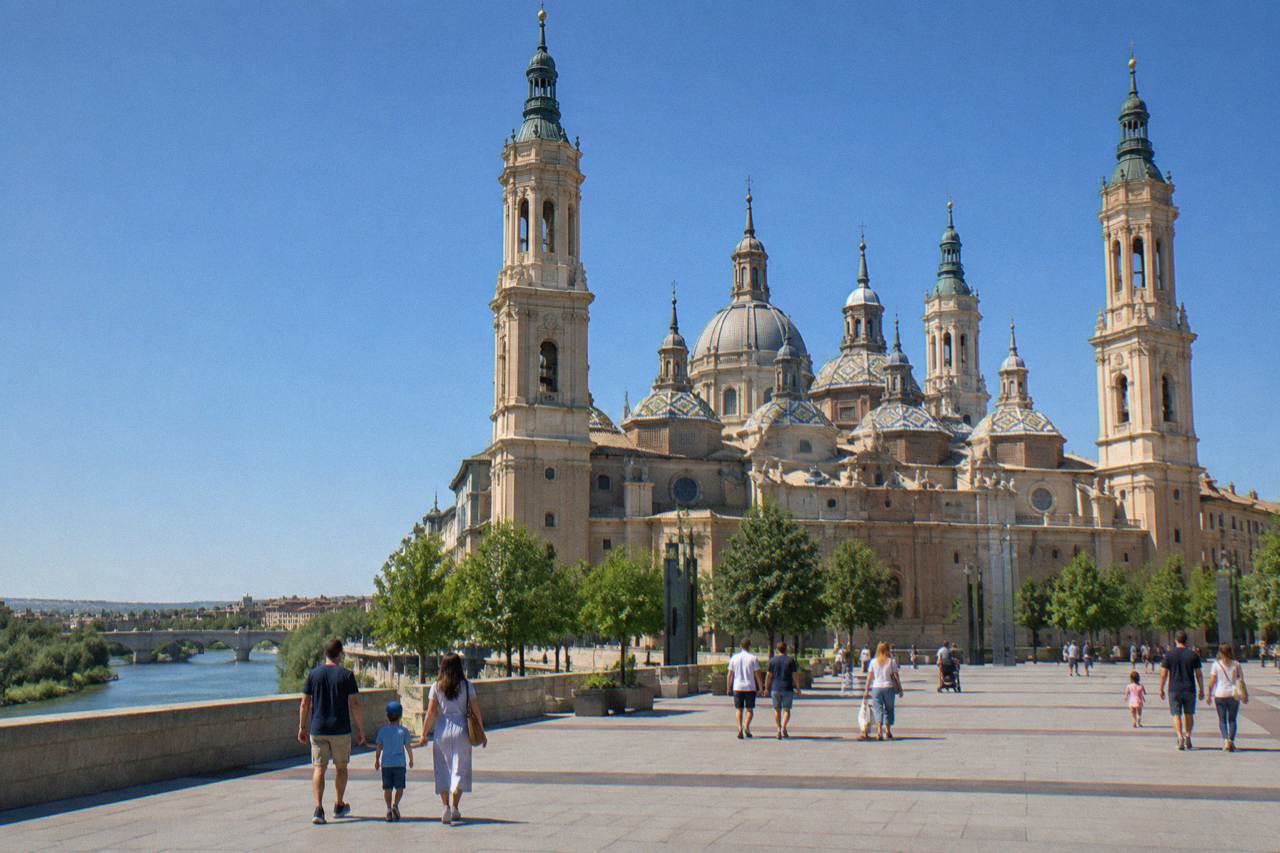
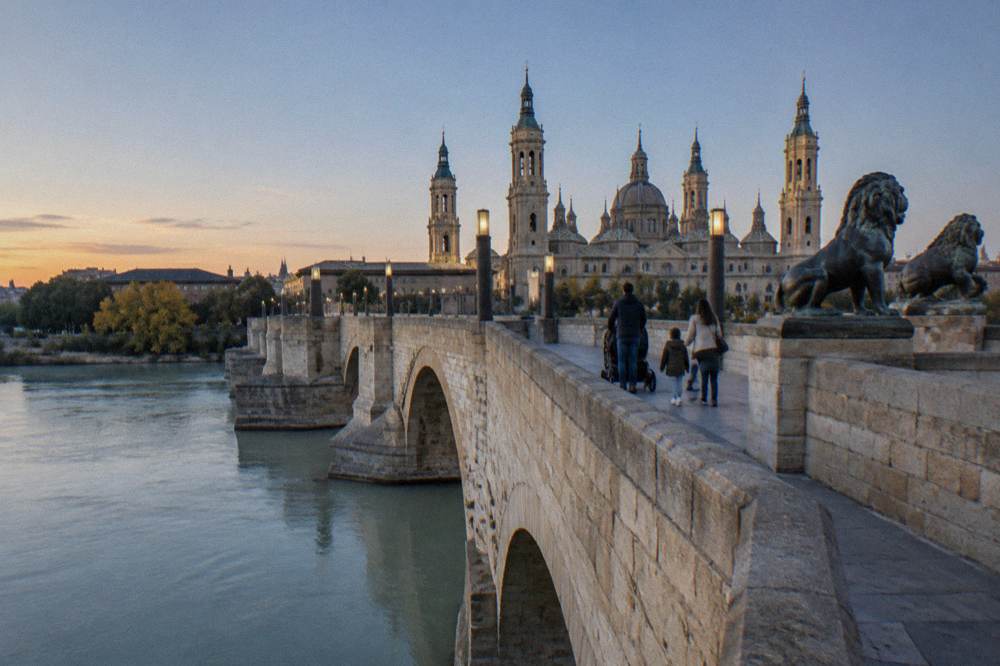
Day one starts where the city starts. The Basílica del Pilar is free to enter, and the October timetable lists the tower viewpoint at 6 EUR for adults, 4 EUR for ages 13 to 18, and free for under-12s, with last access 30 minutes before closing. After the tower, walk five minutes to the Puente de Piedra: the current bridge was built from 1401 and opened in 1440, a Roman-era crossing predates it, the four bronze lions date from 1991, and Napoleonic troops blew up an arch in 1813. Children like the lions; the story of the exploded arch gives the walk a plot. The Ebro bank below is flat and stroller-friendly.
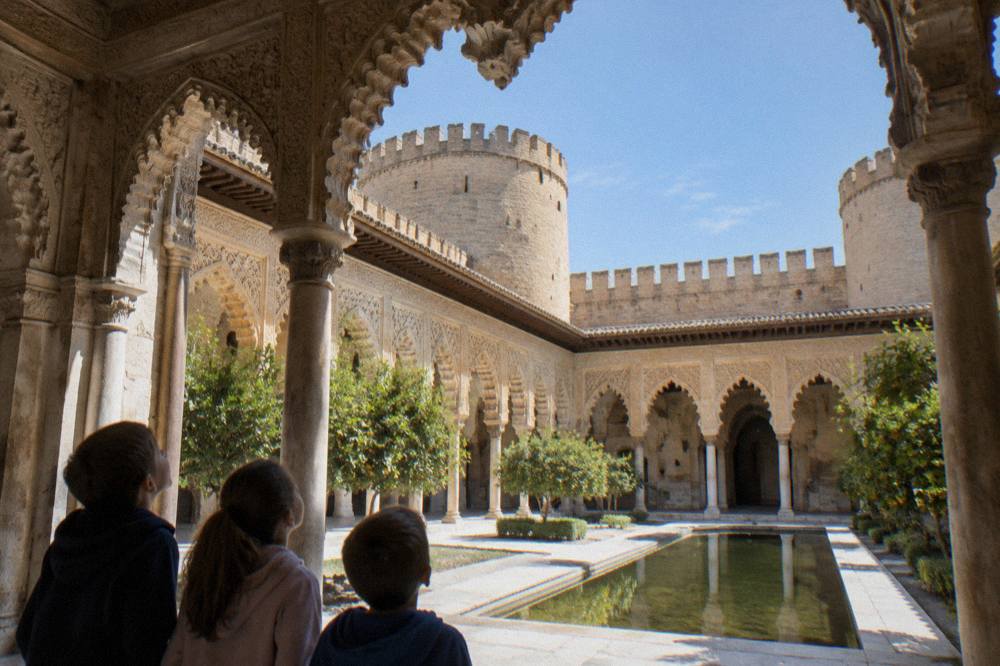
Day two goes to the Aljafería palace, whose October hours run 10:00 to 18:00 with last access 45 minutes before closing. General entry is 7 EUR, guided 9 EUR, students, over-65s and Carnet Joven holders 2 EUR, and under-12s free. The Islamic courtyards and gardens are the part children remember. In the afternoon, pick two of the four Caesaraugusta sites: the Foro at 4 EUR, the Termas and the Puerto Fluvial at 3 EUR each, or the 7 EUR bono covering all four. The river-port museum, with its excavated quay, tends to hold attention longest.
Day three is the outdoor day. The Parque del Agua Luis Buñuel covers more than 120 hectares in the Ranillas meander beside the Expo 2008 site, with two marked running circuits of 5 and 10 km, and it was the first European green space to carry the Green Globe certification. Pair it with the Acuario de Zaragoza, which markets itself as the largest river aquarium in Europe with more than 5,000 specimens: general admission is 20 EUR, children aged 4 to 14 and seniors pay 14 EUR, under-4s are free, and the online family pack of two adults and two children costs 55 EUR.
| Day | Morning | Afternoon | Child price notes |
|---|---|---|---|
| Day 1 | Basílica del Pilar and tower | Puente de Piedra and Ebro bank | Basilica free; tower under-12s free, 13-18 EUR 4 |
| Day 2 | Aljafería palace and gardens | Two Caesaraugusta Roman museums | Aljafería under-12s free; bono EUR 7, reduced EUR 5 |
| Day 3 | Parque del Agua circuits | Acuario de Zaragoza | Ages 4-14 EUR 14; under-4s free; family pack EUR 55 |
A guided walk can carry the first morning instead of doing it yourself. The self-guided scavenger hunt turns the old town into a puzzle, from 5.73 USD per person, and a private guide can set the pace for younger legs.
The scavenger-hunt format suits families precisely because it removes the museum-shuffle problem: children move, solve and observe instead of standing still. Check availability before you travel, since the listing carries the current starting points.
Which Zaragoza Museums And Sights Hold A Child'S Attention?
The Aljafería, the Caesaraugusta Roman sites, the Acuario and the small free municipal museums are the reliable child-pleasers. The Aljafería charges under-12s nothing, the four-site Roman bono costs 7 EUR, the Museo del Origami charges 3 EUR with free entry the first Tuesday and Sunday of the month, and the Torreón de la Zuda's fifth-floor Mirador de las Cuatro Culturas is free.
The Aljafería deserves its half-day. The palace has horseshoe arches, a courtyard with a sunken garden and water channels that children can trace with their eyes, and the October timetable lists Spanish guided tours at 10:30, 12:30, 13:30, 15:00 and 16:00, plus an exhibition tour, "Goya, del Museo al Palacio", at 11:30. The palace is free on the first and third Sunday and Monday of each month, which is worth building a trip around. The Aljafería guide covers what is inside room by room.
The Caesaraugusta circuit is genuinely child-friendly because each site is small and excavated: you look down into the Roman forum, baths, theatre and river port rather than walking through endless galleries. Hours are Tuesday to Saturday 10:00-14:00 and 17:00-21:00, Sunday and holidays 10:00-14:30, with free entry the first Sunday of the month. The theatre is the most dramatic space; the Puerto Fluvial explains how Roman ships docked in a city that today feels far from any sea.
Two closures matter for planning. The Museo de Zaragoza's central building at Plaza de los Sitios 6 is closed for Ministry of Culture works with no reopening date, and its Etnología and Cerámica sections in the Parque Grande are also shut pending a new temporary exhibition. The Palacio de Sastago is closed in October and the Museo Pablo Gargallo is temporarily closed. Build the museum day around what is open.
One reopening changes autumn plans: the Museo Goya, Fundación Ibercaja's collection, reopens on 9 October 2026 after renovation, open Tuesday to Saturday 10:00-20:00 and Sunday and holidays 10:00-14:00, closed Mondays. Its admission price has not been published, so check the museum's own page before promising children a visit.
| Sight | Adult price | Child price | Free entry |
|---|---|---|---|
| Basílica del Pilar | Free entry | Free entry | Entry always free |
| Pilar tower viewpoint | EUR 6 | EUR 4 ages 13-18, free under 12 | Under 12 |
| La Seo with Museo de Tapices | EUR 10 | EUR 7 ages 13-18, free under 12 | Aragon residents on 6th, 12th, 23rd, 27th |
| Aljafería | EUR 7 | EUR 2 students, free under 12 | 1st and 3rd Sunday and Monday |
| Caesaraugusta bono, 4 sites | EUR 7 | EUR 5 reduced | 1st Sunday of month |
| Acuario de Zaragoza | EUR 20 | EUR 14 ages 4-14 | Ages 0-3 |
| Museo del Origami | EUR 3 | EUR 3 | 1st Tuesday and Sunday |
How Much Does A Family Day In Zaragoza Cost?
A family of two adults and two children aged under 12 can spend as little as the tram fares and lunch, because basilica entry, the Puente de Piedra, the Torreón de la Zuda viewpoint and the Centro de Historias are all free, and under-12s enter the Pilar tower, La Seo and the Aljafería free. With one paid anchor sight per day, the official prices put a typical sightseeing day at roughly 20 to 30 EUR for the family.
The arithmetic is transparent because the municipal timetable publishes every band. Two adults up the Pilar tower cost 12 EUR with both children free; two adults into the Aljafería cost 14 EUR with children free; the Caesaraugusta bono for two adults is 14 EUR, or 10 EUR at the reduced rate. Add the 1.70 EUR tram single for each journey, or 0.55 EUR per trip with a Tarjeta Bus, and a full day of sightseeing and transport stays under 40 EUR for four people before food.
The tourist bus is a splurge that can double as a rest. The Zaragoza Bus Turístico costs 10 EUR for a general ticket, valid 24 hours, hop-on hop-off across 16 stops on a 90-minute loop, and it is cash only on the bus. For families with children old enough to enjoy the commentary, it saves legs on day two.
Food costs are the variable. A market-and-cooking experience exists on the guided-options list, the Midday Market Tour and Spanish Cooking Class, from 113.53 USD per person, but with children the simpler move is the Mercado Central for fruit, bread and jamón, eaten on the Ebro bank. The Zaragoza tapas crawl page covers the evening version for parents who keep energy after the children sleep.
| Item | Adult | Child under 12 | Notes |
|---|---|---|---|
| Tram or bus single | EUR 1.70 | EUR 1.70 | EUR 0.55 with Tarjeta Bus, card costs EUR 7 |
| Night bus single | EUR 1.00 | EUR 1.00 | Listed on the Avanza fare table |
| Tourist bus, 24 h | EUR 10 | EUR 10 general ticket | 16 stops, 90-minute loop, cash only |
| Bizi day pass | EUR 1 + EUR 0.50 per first 30 min | Same tariff | EUR 50 card deposit held |
| Airport bus, line 505 | EUR 4.65 | EUR 4.65 | EUR 2.25 with Lazo card, 25-35 min |
Where Can Children Run Around Outdoors In Zaragoza?
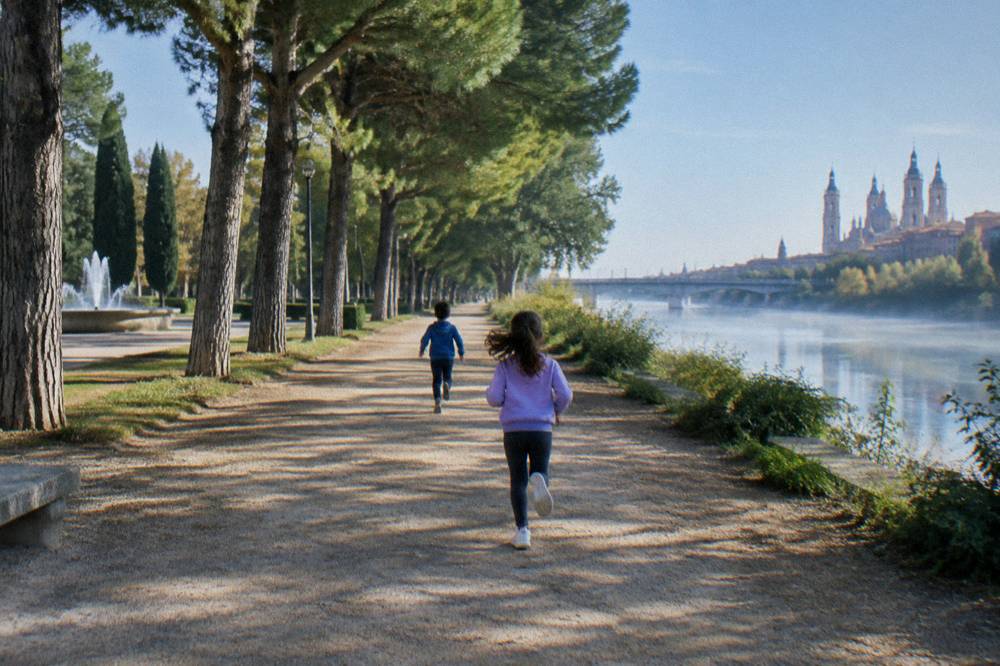
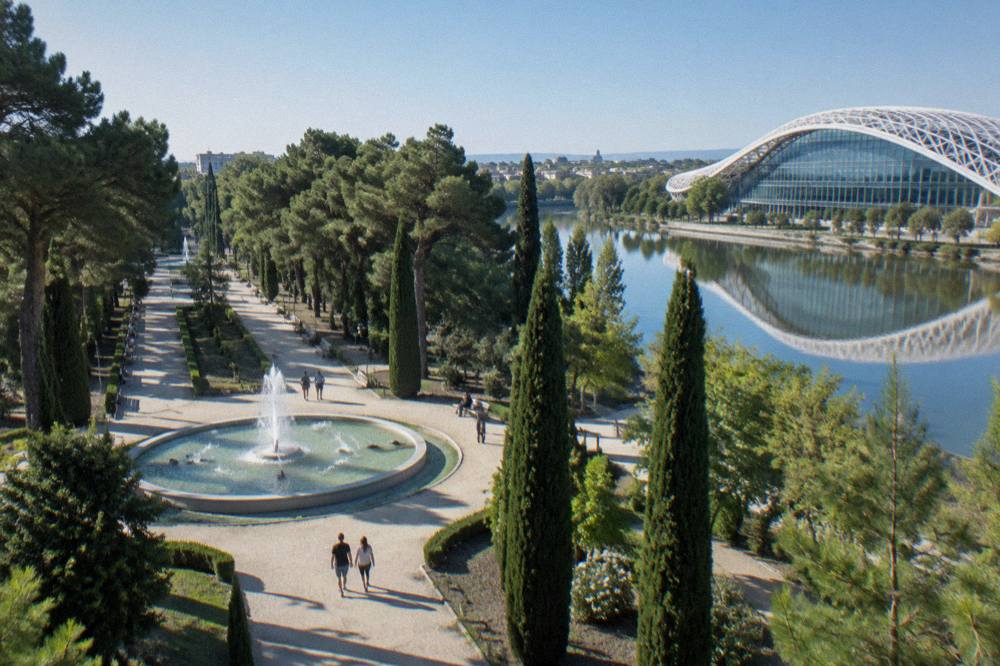
The Parque del Agua Luis Buñuel is the big outdoor answer: more than 120 hectares of green space in the Ranillas meander with marked running circuits of 5 and 10 km, the first European green space to earn the Green Globe certification. Closer to the centre, the Ebro riverbank paths below the Puente de Piedra and the Pilar are flat, and the Parque Grande holds the city's largest classic parkland.
The Parque del Agua is the destination for a full half-day. It was built beside the Expo 2008 site in the Ranillas meander, floods safely in big Ebro rises by design, and its two circuits give older children a measurable challenge while toddlers get open lawn. Reach it by tram and plan the Acuario for the same trip, since both sit in the same meander. The rest of the planning pages sit on Zaragoza Travel Guide.
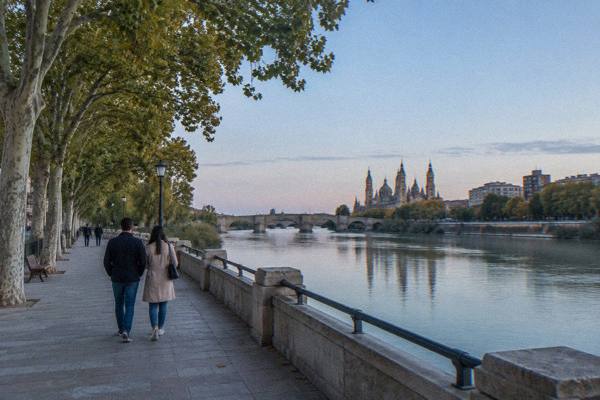
The Ebro bank in the centre is the everyday option. The walk between the Puente de Piedra and the modern bridges gives children the river, the lions on the bridge, the basilica's domes from below, and flat paving throughout. On the far bank the view back across the water to the Pilar is the city's postcard, and the Ebro river walk guide appears in the wider sightseeing roundup.
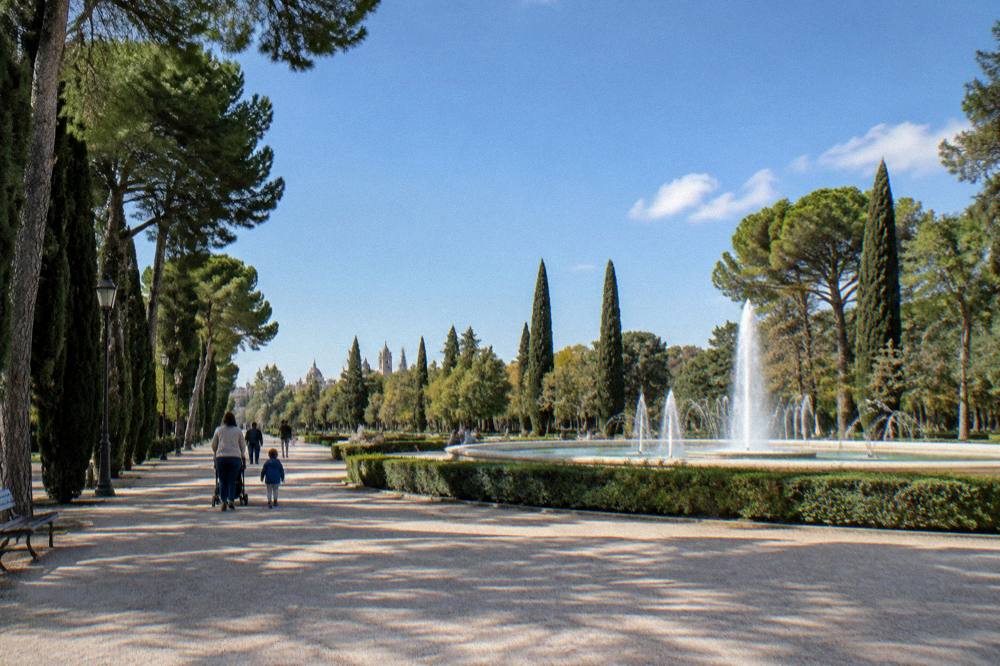
The Parque Grande, Jose Antonio Labordeta park, is the classic local park with fountains and sculpture-lined avenues; note that the Etnología and Cerámica museum buildings inside it are currently closed pending a new temporary exhibition, so treat the park as a park, not a museum day.
Weather shapes the outdoor plan. AEMET's 1981 to 2010 normals for the Zaragoza Aeropuerto station put the July mean maximum at 32.4 C, so summer afternoons belong indoors or in water-adjacent shade, while October's 21.4 C mean maximum is close to ideal for walking. The best time to visit and Zaragoza weather pages carry the full monthly breakdown.
What Do You Do In Zaragoza With Kids On A Rainy Day?
The rainy-day list is short but solid: the Caesaraugusta Roman museums, La Seo with its Museo de Tapices, the Aljafería, the Acuario, and the free municipal museums, the IAACC Pablo Serrano, the Centro de Historias and the Torreón de la Zuda. The Museo de Zaragoza's central building, the Palacio de Sastago and the Museo Pablo Gargallo are closed, so do not build a wet afternoon around them.
Rain in Zaragoza is rarely a whole-day problem. The 1981 to 2010 AEMET normals show 36 mm across October and 30 mm across November, with October averaging 5.4 days of 1 mm or more, so a wet day is a real possibility in autumn but rarely a washout. When it comes, the Caesaraugusta sites are the best fit: they are excavated spaces under cover, each small enough for a 45-minute visit, and the bono spreads them across the day.
La Seo works in the rain because one ticket covers the cathedral and the Museo de Tapices: general entry is 10 EUR, ages 13 to 18 pay 7 EUR, under-12s are free, and a general-plus-tower combination costs 12 EUR. The Museo de Tapices' woven pieces are the kind of thing children either love in five minutes or ignore entirely; the cathedral's Mudéjar walls are the kind they photograph. The La Seo guide covers the layout.
The Acuario is the failsafe full-afternoon answer, with more than 5,000 specimens in a river-themed building. Its opening calendar is published as an image on its own site, so check the current dates before setting out. The rainy day itinerary expands this list with the full indoor plan.
| Indoor sight | Price | Hours (October timetable) | Status |
|---|---|---|---|
| Caesaraugusta Foro | EUR 4 | Tue-Sat 10-14, 17-21 | Open |
| Caesaraugusta Termas | EUR 3 | Tue-Sat 10-14, 17-21 | Open |
| Caesaraugusta Puerto Fluvial | EUR 3 | Tue-Sat 10-14, 17-21 | Open |
| IAACC Pablo Serrano | Free | Tue-Sat 10-14, 17-21 | Open |
| Torreón de la Zuda | Free | Mon-Sat 10-14, 16:30-20 | Open |
| Centro de Historias | Free | Tue-Sat 10-14, 17-21 | Open |
| Museo Goya | Not published | Tue-Sat 10-20 from 9 Oct 2026 | Reopens 9 October 2026 |
| Museo de Zaragoza, central building | Closed | Closed | Closed for works |
| Museo Pablo Gargallo | Closed | Closed | Temporarily closed |
Is Zaragoza Easy To Get Around With Children?
Yes. The tram and urban bus single is 1.70 EUR, or 0.55 EUR with a rechargeable Tarjeta Bus that costs 7 EUR and works on both, the airport is served by line 505 at 4.65 EUR single, and the historic core is walkable end to end. High-speed trains connect Zaragoza-Delicias to Madrid and Barcelona in about 1.5 to 2 hours, which makes the city a low-stress rail destination with children.
The tram is the family transport of choice: it runs through the centre, level boarding suits strollers, and the fare table is simple. The Avanza tariff page lists the single at 1.70 EUR, night lines at 1.00 EUR, and the Tarjeta Bus trip at 0.55 EUR. Buy the card once at 7 EUR and every subsequent journey costs less than a third of the cash fare, which matters on a week of family trips.
Arriving by air, the airport bus is line 505, never 44 or 501: 4.65 EUR single, 2.25 EUR with a Lazo card, 25 to 35 minutes, timed to flights. Arriving by rail, Zaragoza-Delicias is the station; treat Madrid and Barcelona timings as about 1.5 to 2 hours and check live times when booking, since the exact fare and service tables vary by operator and date.
One driving rule matters if you rent a car. Zaragoza's low-emission zone, the ZBE Casco Histórico, has been active with sanctions since 12 December 2025, Monday to Friday 08:00 to 20:00, and requires a DGT environmental label; there is a 15-minute grace period if you enter by mistake. If you stay outside the old town and use the tram, the question never arises.
Bikes are an option with older children. Bizi, the city's bike-share, charges a 1 EUR day pass plus 0.50 EUR for the first 30 minutes of each trip, with a 50 EUR card deposit held. The flat riverbank makes this safer than it sounds, but the cierzo wind days are not the days to try it.
A private must-see walk, from 78.78 USD per person, suits a first morning when you want the orientation done for you; the operator's live listing carries current guide availability for your dates.
Is Zaragoza'S Food Scene Workable With Children?
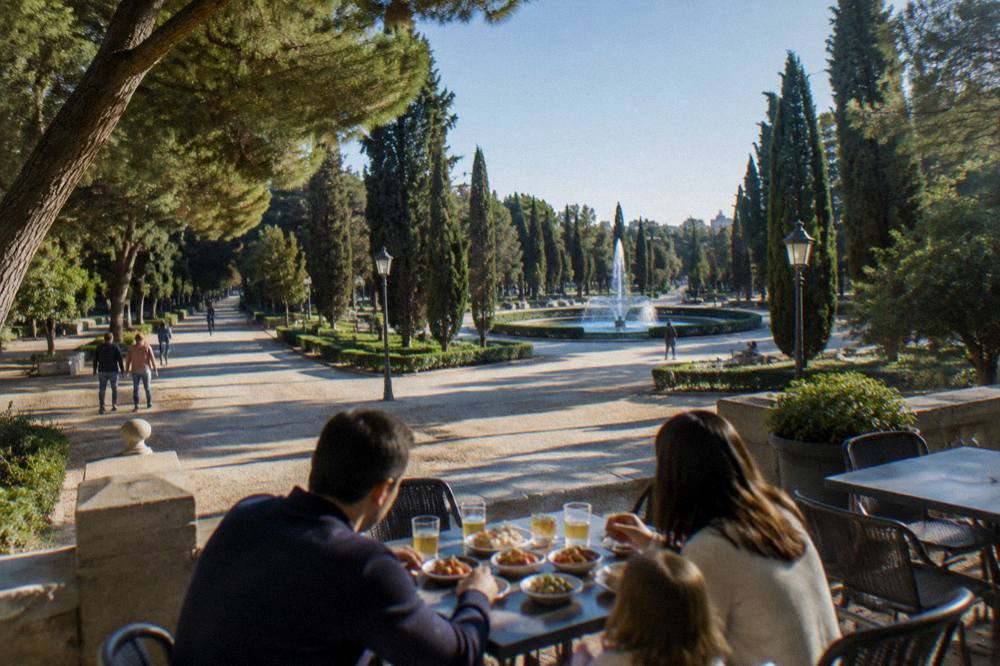
Yes, and the structure of Aragonese eating suits families: tapas portions are child-sized by design, the Mercado Central is a free sensory stop, and the local dishes, ternasco lamb, migas aragonesas and the region's sweets, are simple food that fussy eaters tolerate. The guided food options include an evening tapas walk from 106.92 USD per person, best kept for parents while children are with a sitter or grandparents.
The tapas format is the practical answer with children. Small plates arrive fast, nothing has to be finished, and everyone can try without commitment. The Zaragoza food guide and the tapas crawl itinerary cover the evening routes through the old town's bar streets.
Lunch is the family meal to plan. The Mercado Central in the morning, fruit and bread in hand, followed by a menu del día, is the pattern local families follow. For a hands-on version, the Midday Market Tour and Spanish Cooking Class, from 113.53 USD per person and rated 5 from 41 reviews, teaches the shopping-and-cooking loop; it suits teenagers more than toddlers.
If your children are older and your evenings free, the 3-Hour Evening Tapas Walking Tour in the Old Town, from 106.92 USD per person and rated 4.9 from 62 reviews, is the parents' version of the same city. The Zaragoza at night page has the non-food evening alternatives.
The free historical-center tour, run on the GuruWalk platform and free with tips for the guru, is a low-commitment way to test how your children handle a walking tour before paying for one. Never count on a set price; the model is pay what you think the walk was worth.
When Should A Family Visit Zaragoza?
October is the standout month for families, because the Fiestas del Pilar run from 10 to 18 October 2026 with the Ofrenda de Flores on 12 October, and the 1981 to 2010 AEMET normals give October a mean maximum of 21.4 C. Spring is the second window, with April at 19.6 C and May at 24.1 C mean maximum, though May is the wettest month at 44 mm.
The Fiestas del Pilar are the city's great family week. The 2026 edition runs Saturday 10 to Sunday 18 October, the pregón opens it at 21:00 on 10 October from the Ayuntamiento balcony, and the Ofrenda de Flores on 12 October brings the famous flower parade from Paseo de la Independencia to Plaza del Pilar, with 994 groups registered in the 2026 edition. Reported additions include the Ofrenda de Frutos and the Rosario de Cristal on 13 October and fireworks after the pregón, at Parque Pignatelli and at the closing by the Ebro on 18 October.
Go expecting crowds. A city that registers nearly a thousand parade groups is a city at full capacity, and the Ofrenda route fills hours before the first group. With small children, pick a spot early or watch from a side street, and use the tram rather than driving anywhere near the Casco Histórico, which is also the low-emission zone.
The rest of the year is quieter. July and August mean a 32.4 C and 31.7 C mean maximum and only 17 mm of rain each, hot but dry; December and January are cool at 10.8 C and 10.5 C mean maximum. The Fiestas del Pilar coverage in the sightseeing roundup carries the full festival detail.
| Month | Mean max C | Mean min C | Rain mm | Family verdict |
|---|---|---|---|---|
| March | 17.3 | 5.8 | 19 | Mild, good walking |
| April | 19.6 | 7.9 | 39 | Pleasant, some showers |
| May | 24.1 | 11.8 | 44 | Warm but the wettest month |
| July | 32.4 | 18.3 | 17 | Hot afternoons, plan indoors |
| October | 21.4 | 11.0 | 36 | Ideal, plus the Fiestas |
| December | 10.8 | 3.2 | 21 | Cool, atmospheric |
All figures are AEMET's 1981 to 2010 climate normals for the Zaragoza Aeropuerto station.
Common Questions About Visiting Zaragoza With Kids
Is Zaragoza good for kids?
Yes. The historic core is compact and walkable, the Basílica del Pilar is free to enter, under-12s enter the Pilar tower, La Seo and the Aljafería free, the Parque del Agua has 120 hectares of open space, and the tram costs 1.70 EUR a single.
How many days do you need in Zaragoza with kids?
Three days is the comfortable fit: one for the Pilar and the Ebro, one for the Aljafería and the Roman museums, one for the Parque del Agua and the Acuario. Two days work if you drop the Ranillas meander.
Is the Basílica del Pilar free for children?
Entry to the basilica is free for everyone. The tower viewpoint charges adults 6 EUR, ages 13 to 18 pay 4 EUR, and under-12s go up free, with last access 30 minutes before closing.
What is the best month to visit Zaragoza with children?
October, when the 1981 to 2010 mean maximum is 21.4 C and the Fiestas del Pilar run from 10 to 18 October 2026. April and May are the spring alternative, though May is the wettest month at 44 mm.
Are the Zaragoza museums open every day?
The Caesaraugusta museums are closed Mondays, the Aljafería opens daily in October, and the Museo de Zaragoza's central building is closed for works with no reopening date. The Museo Goya reopens on 9 October 2026, closed Mondays.
Do children pay on the Zaragoza tram?
The tram and urban bus single is 1.70 EUR for all riders, or 0.55 EUR per trip with a Tarjeta Bus that costs 7 EUR. Night lines are 1.00 EUR. No separate child tariff appears on the published fare table.
Zaragoza rewards families who keep the days simple: one anchor sight, one stretch of open space, and the tram home. Follow that rhythm and the capital of Aragon is one of the easiest city breaks in Spain to do with children.