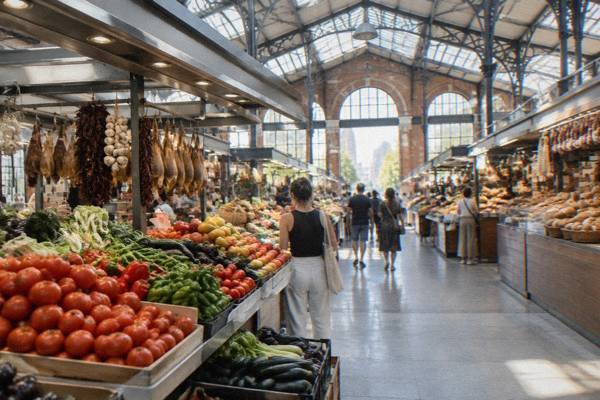
Mercado Central In Zaragoza: The City's Food Market Explained
Mercado Central is Zaragoza's great central food market, the place where the city's cooks shop for Aragon lamb, river vegetables, olive oil and wine, and the natural starting point for a food-focused visit to the city.
Short answer
Mercado Central is Zaragoza's main covered food market in the old town, a working market rather than a tourist attraction, best combined with a tapas walk, a cooking class or a wine tasting, and reached for 1.70 EUR on the city's tram or bus network.
Zaragoza, the capital of Aragon on the Ebro, keeps its food culture in one place above all others: Mercado Central, the covered market where the city's restaurants, families and tapas bars have shopped for generations. This is a working market first and a sight second. The stalls sell the raw material of Aragonese cooking, ternasco lamb, borraja, olive oil from the region's groves and wine from Carinena, and the cooks who buy there in the morning are the same cooks serving the old town's bars at night. A visit makes most sense as the first stop of a food day, followed by the tapas bars of El Tubo or a guided walk that connects the two.
What Is Mercado Central In Zaragoza?
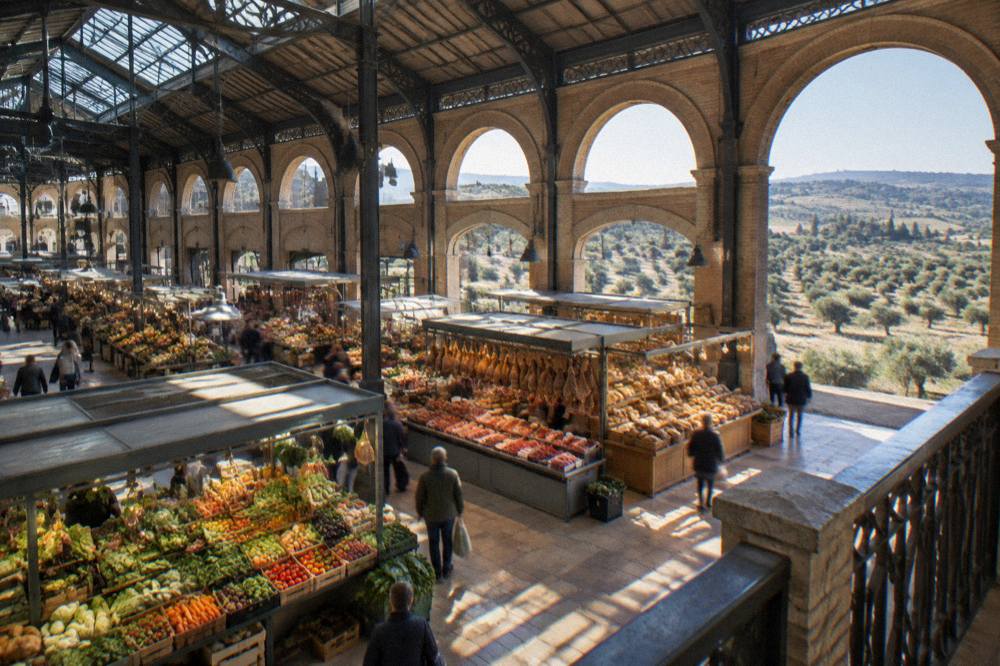
Mercado Central is the main covered food market of Zaragoza, the capital of Aragon, a working market hall in the old town where the city's cooks and households buy Aragonese produce rather than a purpose-built tourist attraction. It has no ticket, no guided route and no fixed itinerary. You walk in, you look, you buy what looks good, and you eat it there or carry it out, which is exactly how the locals use it.
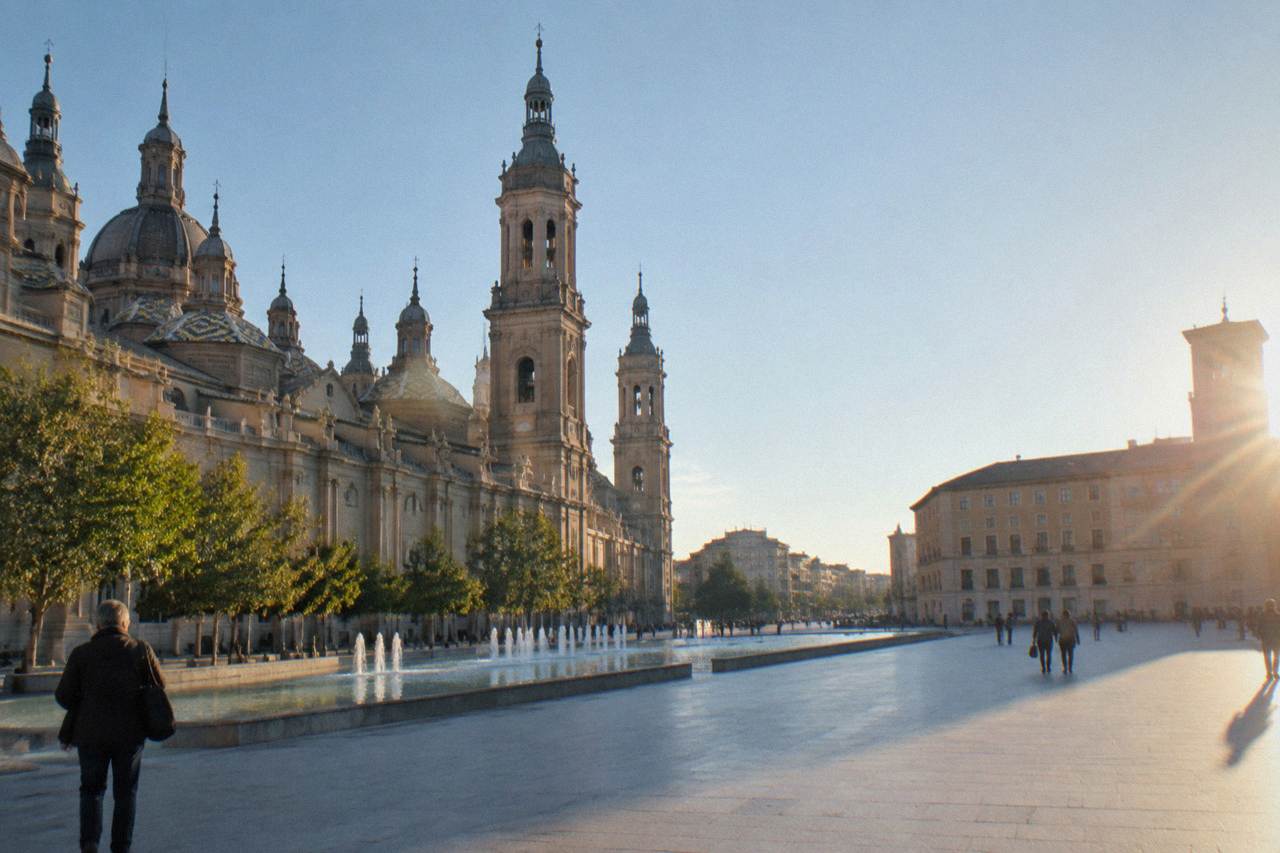
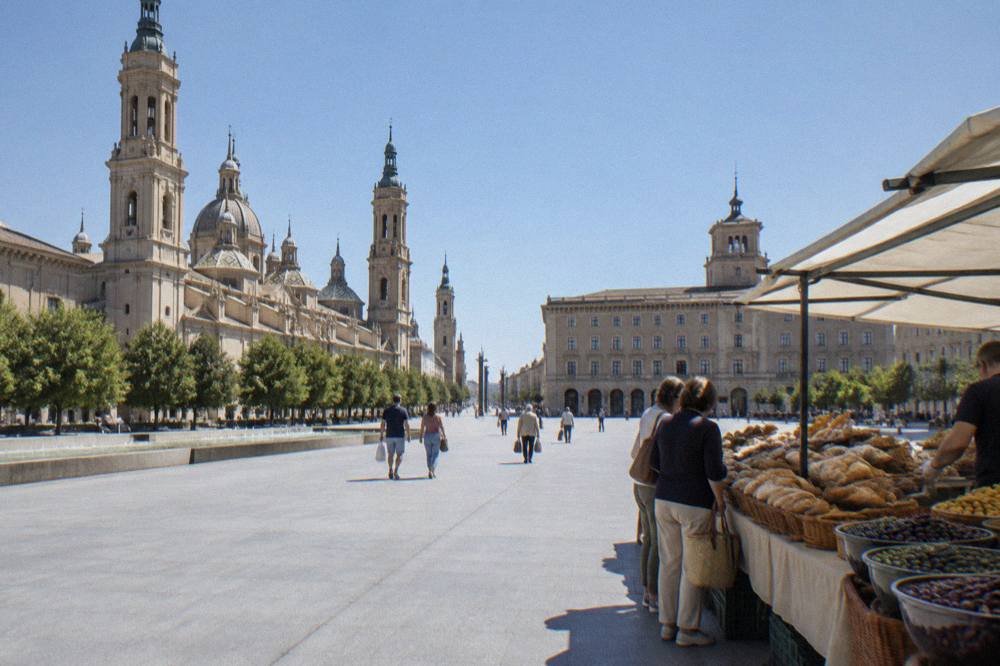
That working character is the whole point. The market is where Zaragoza's food chain is visible in one room: the lamb that becomes ternasco, the peppers and thistle that fill Aragonese stews, the bread, the cheese, the oil and the wine. It sits inside the Casco Histórico, the old town that also holds the Basílica del Pilar, La Seo and the Roman remains of Caesaraugusta, so a market stop slots easily into a day of sightseeing. The old town of Zaragoza is small enough that everything worth seeing sits within a short walk of everything else, and the market is a natural mid-morning pause between churches and ruins.
The market also anchors the city's tapas culture. Zaragoza's bars buy their produce in the morning and serve it in the evening, and the distance between the two is a few streets. The evening tapas walk in the old town, this site's featured tour for the market, is built on exactly that connection: the raw ingredients of the market become the cooked tapas of the night, and a guided walk joins the two halves of the day.
What Can You Buy At Mercado Central Zaragoza?
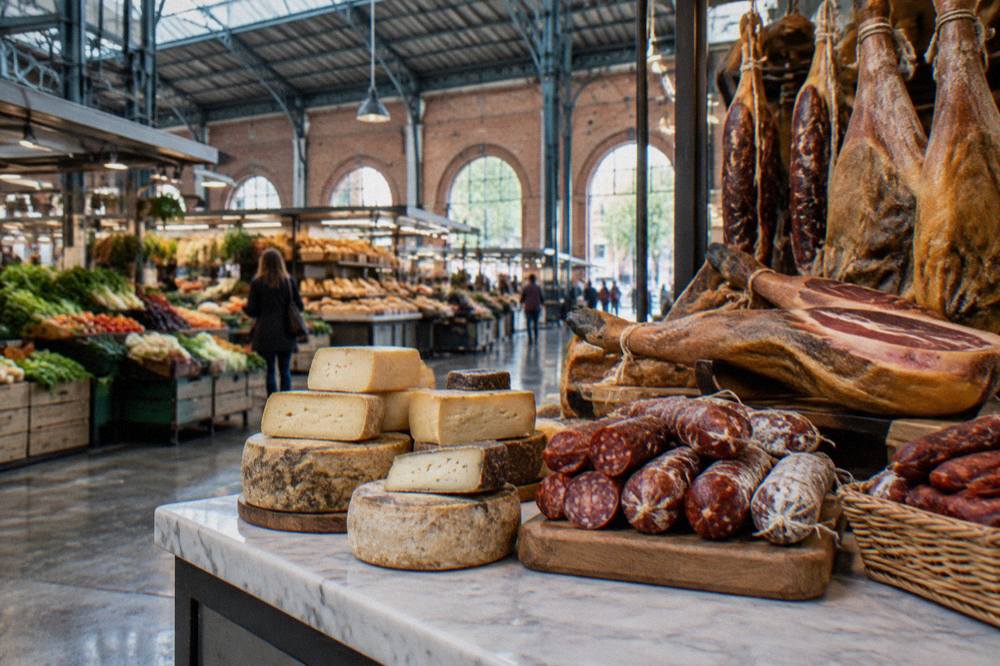
The stalls of Mercado Central sell the produce of Aragon: ternasco de Aragon lamb, borraja and other river-vegetables, olive oil, cheese, bread, cured meats, fruit and vegetables, and wine from the Carinena region, alongside general grocery stalls for fish, meat and dry goods. Nothing about the produce is exotic to the region. It is the same shopping list an Aragonese household has cooked from for centuries, sold by weight and by the piece.
Ternasco de Aragon is the one product worth naming before any other. It is the region's signature lamb, traditionally roasted with potatoes, and it appears on nearly every menu in the old town. Migas aragonesas, fried breadcrumbs with grapes, chorizo or pork, is the other pillar dish, a shepherd's meal that has become a restaurant staple. Neither needs a number attached: they are traditions, not statistics, and the market is where you see their raw material before it is cooked.
The general shape of a market visit is simple. Walk the aisles once to see the range, then buy what looked best. A picnic lunch of bread, cheese, olives and fruit is the classic move, eaten outside by the Ebro or in one of the old town's squares. The Ebro river walk is close enough that a market picnic can end on the riverbank with the Puente de Piedra in view.
A tapas crawl through the old town is the other classic pairing, and a guided one saves you the guesswork of which bar serves what. The guided options below cover the market-to-table arc, from a midday market visit to an evening walk through the tapas bars.
The produce of Aragon is not confined to the city. The olive oil that appears on market stalls comes from groves across the region, and the Belchite olive oil tour pairs a tasting with a visit to the Civil War ruin of old Belchite, one of Aragon's most sobering sites. Closer to home, the midday market tour and cooking class turns a market shop into a full Spanish meal cooked under instruction, which is the most direct way to learn what to do with everything the stalls sell.
Where Is Mercado Central And How Do You Get There In Zaragoza?
Mercado Central sits in Zaragoza's old town, the Casco Histórico, within walking distance of the Basílica del Pilar and La Seo, and the city's tram and bus network covers the rest. A single ticket on either costs 1.70 EUR, or 0.55 EUR with the rechargeable Tarjeta Bus, which itself costs 7 EUR and works on both bus and tram. If you are already in the centre, you walk.
The fare structure comes from the 2026 Avanza tariff table for the Zaragoza network, and it is flat: the same single ticket covers the tram and the urban buses, night lines cost 1.00 EUR, and the Tarjeta Bus cuts every journey to 0.55 EUR. For a visitor making more than a handful of trips, the card pays for itself quickly, and it is the same card the locals use.
| Ticket | Price | Notes |
|---|---|---|
| Bus or tram single | 1.70 EUR | Flat fare, no transfer included |
| Night line single | 1.00 EUR | Night bus network |
| Tarjeta Bus journey | 0.55 EUR | Rechargeable card |
| Tarjeta Bus itself | 7 EUR | Valid on bus and tram |
One driving caveat matters in the old town. Zaragoza operates a low-emission zone, the ZBE Casco Histórico, with sanctions active since 12 December 2025, running Monday to Friday from 08:00 to 20:00. Vehicles without a DGT environmental label are restricted, and the zone covers exactly the streets a market visitor would be driving into. There is a 15-minute grace period if you enter by mistake, but the simpler answer is to arrive by tram, bus or on foot and leave the car outside the zone.
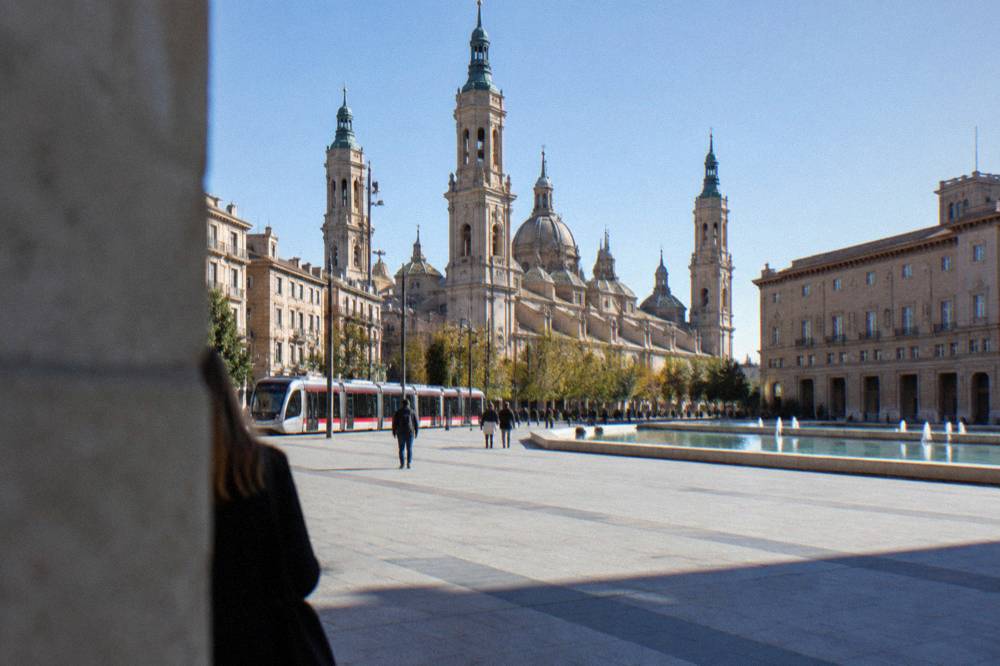
If the market visit is the start of a longer food day, the evening tapas walk is the natural continuation, and it starts from the same neighbourhood. The operator's live listing shows free cancellation and pay-later options, so it can be booked before the itinerary is final.
The walk itself is a three-hour route through the old town's tapas bars, rated 4.9 from 62 reviews, and it is the version of a Zaragoza food evening that needs no planning at all.
What Is The Best Time Of Year To Visit Zaragoza'S Market?
The best months for a Zaragoza food trip are May, June, September and October, and October is the standout, because the Fiestas del Pilar run from 10 to 18 October 2026 and the city fills with food stalls, concerts and the Ofrenda de Flores on 12 October. AEMET's 1981 to 2010 normals for the Zaragoza Aeropuerto station put October at a 16.2 C mean, with 36 mm of rain across 5.4 days, so the weather holds for market days and evenings outdoors.
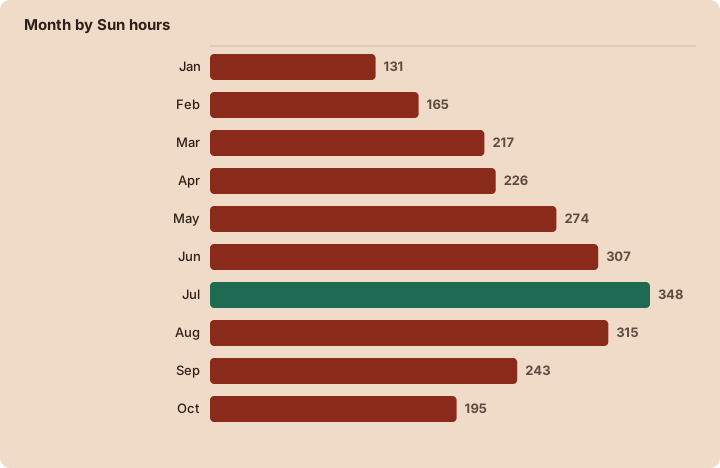
The climate table below is the whole argument. Zaragoza is inland on the Ebro with a dry continental semi-arid climate: hot summers, cool winters, and modest rain in every month of the year. July is the hottest month at a 25.3 C mean and 32.4 C mean maximum, and also the sunniest at 348 hours. May is, against the intuition of most visitors, the wettest month at 44 mm, while July and August tie as the driest at 17 mm each.
| Month | Mean C | Mean max C | Rain mm | Rain days | Sun hours |
|---|---|---|---|---|---|
| Jan | 6.6 | 10.5 | 21 | 4.0 | 131 |
| Feb | 8.2 | 13.1 | 22 | 3.9 | 165 |
| Mar | 11.6 | 17.3 | 19 | 3.7 | 217 |
| Apr | 13.8 | 19.6 | 39 | 5.7 | 226 |
| May | 18.0 | 24.1 | 44 | 6.4 | 274 |
| Jun | 22.6 | 29.3 | 26 | 4.0 | 307 |
| Jul | 25.3 | 32.4 | 17 | 2.6 | 348 |
| Aug | 25.0 | 31.7 | 17 | 2.3 | 315 |
| Sep | 21.2 | 27.1 | 30 | 3.2 | 243 |
| Oct | 16.2 | 21.4 | 36 | 5.4 | 195 |
| Nov | 10.6 | 14.8 | 30 | 5.1 | 148 |
| Dec | 7.0 | 10.8 | 21 | 4.8 | 124 |
Every figure in that table is a 1981 to 2010 average from the Zaragoza Aeropuerto station, the only window AEMET publishes for the station. The annual totals tell the same story: 322 mm of rain over 51.1 days across the whole year, 2,693 hours of sunshine, 81.6 clear days. Zaragoza is a dry, sunny city, and the market is a place built for that climate, a covered hall for the hot afternoons and a short walk from anywhere in the centre for the rest of the day.
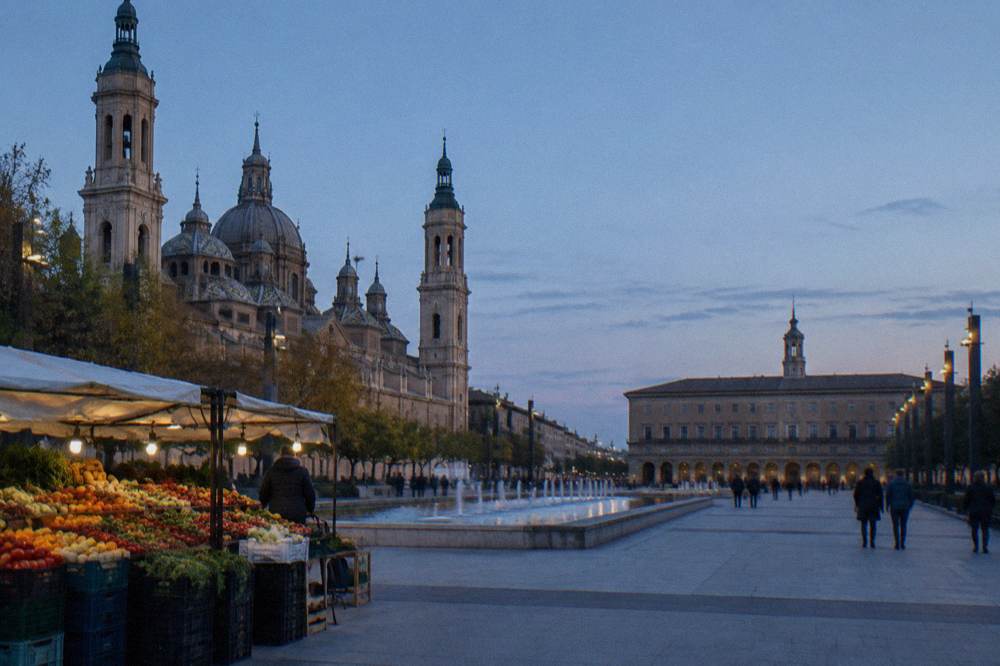
If you time a visit for the Fiestas del Pilar, book everything early. The 2026 edition runs Saturday 10 to Sunday 18 October, the pregón opens it from the balcony of the Ayuntamiento at 21:00 on the 10th, and the Ofrenda de Flores brings flower-offering processions along the Paseo de la Independencia to the Plaza del Pilar on 12 October. The Ofrenda de Frutos and the Rosario de Cristal are reported for 13 October. The full picture is on the Fiestas del Pilar guide, and the food angle of the festival pairs naturally with a market visit.
What Food Tours In Zaragoza Start From A Market?
Zaragoza's bookable food tours that build around a market visit include a midday market and tapas tour from 106.92 USD per person, a midday market tour with a Spanish cooking class from 113.53 USD per person, and an evening tapas walk through the old town from 106.92 USD per person. Each connects the market's raw produce to the city's cooked food, and each is led by a guide who does the choosing for you.
The table below is the practical comparison. Prices are per person from the operator's live listings, ratings are the listing's own, and durations are as the listings state them.
| Tour | From | Rating | Duration |
|---|---|---|---|
| Evening Tapas Walking Tour in the Old Town | 106.92 USD | 4.9 from 62 reviews | 3 hours |
| Midday Market and Tapas Tour | 106.92 USD | 5 from 9 reviews | 3 hours |
| Midday Market Tour and Spanish Cooking Class | 113.53 USD | 5 from 41 reviews | not stated |
| Wine Tasting and Tapas | 106.92 USD | 5 from 21 reviews | 3 hours |
| Tapas Sightseeing Tour | 50.65 USD | 5 from 7 reviews | 3 hours |
| Evening Traditional Tapas Walk, Old Centre | 108.94 USD | 5 from 22 reviews | 3 hours |
The choice between them is really a choice of time of day. A midday tour catches the market at its most active and ends at a table. An evening tour starts after the shopping is done and follows the produce into the bars. The cooking class is the deepest version: you shop, you cook, you eat, and you leave with the technique rather than just the meal. Other pages covering the same trip are gathered on Zaragoza Travel Guide.
The wine angle deserves its own mention. Aragon's Carinena wine region is the historic source of the bottles on the old town's tables, and a guided tasting in the city is the low-effort way to learn the local labels before a market picnic or a tapas evening. The Carinena wine region guide covers the region itself for anyone who wants to go further, and the on-site tasting below is the city version.
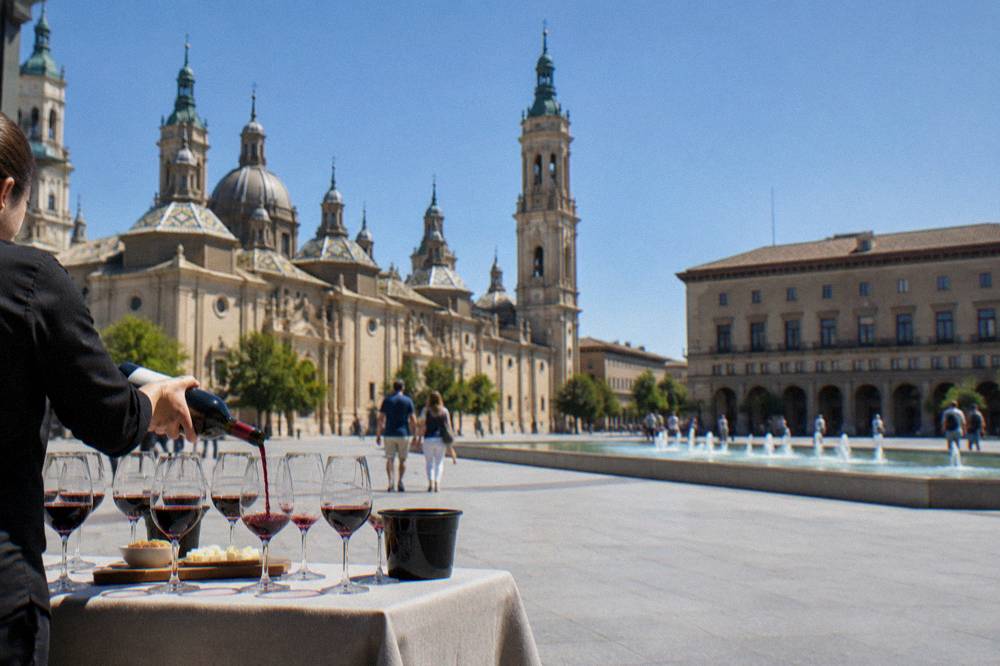
For a fuller survey of everything bookable, the Zaragoza tours guide ranks the guided options across the city, and the things to do in Zaragoza page places the food tours in the wider context of monuments, museums and day trips.
What Else Is Near Mercado Central In Zaragoza?
Everything in Zaragoza's old town is near the market: the Basílica del Pilar, whose interior is free to enter, La Seo cathedral at 10 EUR general admission including three museums, the Aljafería palace at 7 EUR or 9 EUR with a guided tour, and the four Caesaraugusta Roman museums covered by a 7 EUR combined ticket. The old town is compact, and a market visit can be bracketed by a morning of monuments and an afternoon of ruins without any transport at all.
The table below is the verified sightseeing data for the neighbourhood, all from the municipal October timetable. Prices are per adult.
| Sight | Entry | Hours (October) |
|---|---|---|
| Basílica del Pilar, temple | Free | Main altar Mon-Sat 7:30-13:30, 16:30-20:15 |
| Basílica del Pilar, Torre Mirador | 6 EUR | Mon-Thu 10:30-14:30, 16:00-20:00; Fri-Sun 10:00-20:00 |
| La Seo, general ticket | 10 EUR | Mon-Sat 10:00-14:30, 16:00-20:00 |
| Aljafería, general | 7 EUR | Daily 10:00-18:00 |
| Aljafería, guided | 9 EUR | Spanish tours 10:30, 12:30, 13:30, 15:00, 16:00 |
| Caesaraugusta four-museum bono | 7 EUR | Tue-Sat 10:00-14:00, 17:00-21:00 |
| Foro Romano, single | 4 EUR | Tue-Sat 10:00-14:00, 17:00-21:00 |
Two warnings sit inside that table. The Museo de Zaragoza's central building on Plaza de los Sitios is closed for Ministry of Culture works with no reopening date, so it does not belong on any itinerary for now.
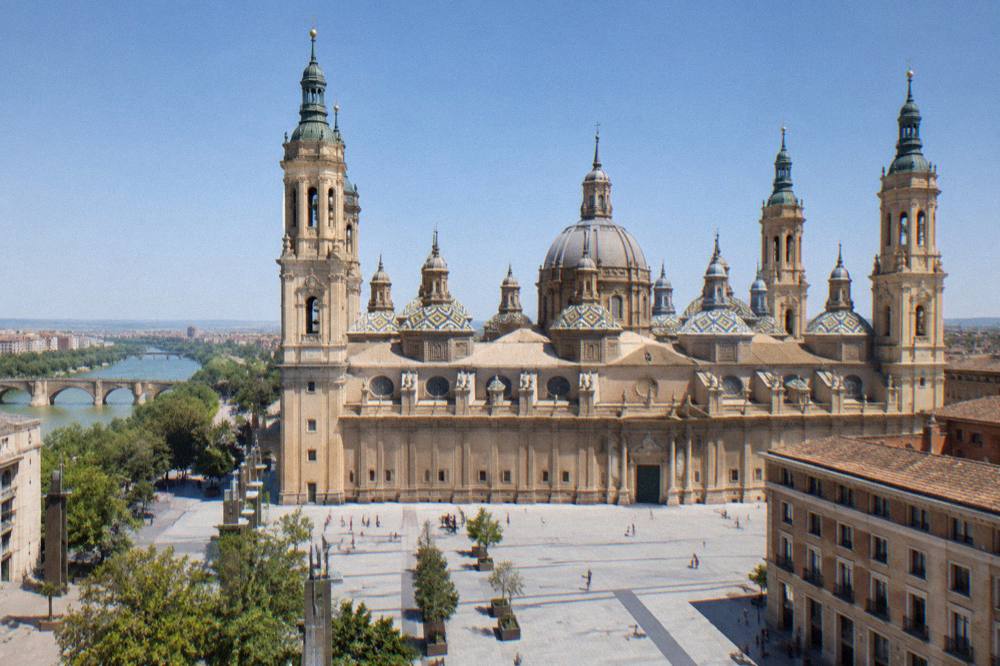
The natural walking loop from the market runs through the Basílica del Pilar, across the Puente de Piedra for the river view, back through the Roman remains of Caesaraugusta, and ends among the tapas bars. The one day itinerary for Zaragoza sequences all of it, and the tapas crawl guide covers the evening half in detail.
How Much Should You Budget For A Food Day In Zaragoza?
A food day in Zaragoza can cost almost nothing or the price of a guided tour depending on how much structure you want. The market itself costs nothing to enter, a picnic from its stalls costs whatever you buy, the tram to get there is 1.70 EUR, and the guided food tours run from 50.65 USD for a tapas sightseeing walk to 113.53 USD for a market tour with a cooking class. The spread is wide enough to fit any budget.
The guided options below are the mid-to-upper end of that range, and they are the version of a Zaragoza food day that needs no planning at all: the guide picks the stalls, the bars and the dishes.
The free end of the spectrum is real too. Zaragoza has no tourist tax, a fact the Aragonese regional government confirmed when it explicitly ruled one out in September 2026, and the city's free-entry days are generous. The Caesaraugusta museums are free on the first Sunday of the month, the Aljafería on the first and third Sunday and Monday, and the IAACC Pablo Serrano, the Centro de Historias and the Torreón de la Zuda are free outright. The free things to do in Zaragoza guide lists all of them.
| Free-entry sight | Free day | Regular price |
|---|---|---|
| Caesaraugusta museums | 1st Sunday of month | 3-4 EUR single, 7 EUR bono |
| Aljafería | 1st and 3rd Sunday and Monday | 7 EUR |
| Museo del Fuego y los Bomberos | 1st Sunday of month | 3 EUR |
| Museo del Origami | 1st Tuesday and Sunday | 3 EUR |
| IAACC Pablo Serrano | Always | Free |
| Centro de Historias | Always | Free |
| Torreón de la Zuda | Always | Free |
One museum reopening belongs in any October 2026 plan: the Museo Goya, the Fundación Ibercaja collection, reopens on 9 October 2026 after renovation, open Tuesday to Saturday 10:00-20:00 and Sunday 10:00-14:00, closed Mondays, with admission not yet published. The Goya in Zaragoza guide covers the painter's whole presence in the city, and a morning of Goya pairs well with a market lunch.
Should You Combine Mercado Central With A Day Trip Into Aragon?
Yes, if you have the time, because the market is the city end of a food chain that runs deep into rural Aragon, and the bookable day trips cover both halves. An olive oil tour with a visit to the old town of Belchite runs from 106.92 USD per person for five hours, a half-day winery trip from 166.28 USD, and a full-day Somontano wine excursion with Alquézar from 280.95 USD. Each starts from Zaragoza and returns the same day.
The olive oil tour is the one most directly connected to the market's own shelves. It pairs a tasting with a walk through Belchite, the village destroyed in the Civil War and left standing as a ruin, and it deserves a sober visit rather than a photo stop. The Belchite guide gives the history in full.
The wine trips run to the Somontano and Carinena country south of the city, and the Pyrenees day trip guide covers the non-food alternative for anyone whose interests run to mountains rather than cellars. Whichever direction you choose, the market remains the reference point: everything you tasted in the countryside is sold in the city the next morning, and a final market visit on your last day is the natural way to buy the edible souvenirs, oil, wine, cheese and sweets, before the train home. Zaragoza is about 1.5 to 2 hours from both Madrid and Barcelona by high-speed train, so a last-morning shop still makes the afternoon departure.
Common Questions About Mercado Central In Zaragoza
What is Mercado Central in Zaragoza?
Mercado Central is the main covered food market of Zaragoza, the capital of Aragon, a working market hall in the old town where locals and restaurant cooks buy Aragonese produce including ternasco lamb, river vegetables, olive oil, cheese and wine.
How much does it cost to visit Mercado Central Zaragoza?
Nothing to enter. The market is a working shopping venue, not a ticketed attraction, and you pay only for whatever you buy from the stalls.
How do I get to Mercado Central in Zaragoza?
The market sits in the old town within walking distance of the Basílica del Pilar and La Seo. A single ticket on the Zaragoza tram or bus costs 1.70 EUR, or 0.55 EUR with the rechargeable Tarjeta Bus, which costs 7 EUR and works on both networks.
Can I drive to Mercado Central in Zaragoza?
The old town sits inside Zaragoza's low-emission zone, active with sanctions since 12 December 2025, Monday to Friday 08:00 to 20:00. Vehicles without a DGT environmental label are restricted, with a 15-minute grace period for mistakes, so tram, bus or walking is the better option.
What food tours in Zaragoza visit the market?
A midday market and tapas tour runs from 106.92 USD per person, a midday market tour with a Spanish cooking class from 113.53 USD, and an evening tapas walk through the old town from 106.92 USD, all bookable on the operators' live listings.
When is the best time to visit Zaragoza for its food scene?
October stands out: the Fiestas del Pilar run from 10 to 18 October 2026, and AEMET's 1981 to 2010 normals for the Zaragoza Aeropuerto station put the month at a 16.2 C mean with 36 mm of rain. May, June and September are also comfortable.
A market visit is the most honest introduction to Zaragoza there is: no ticket, no queue, no interpretive panel, just the city shopping for its own dinner. Go hungry, buy what the cooks are buying, and let the evening tapas bars of the old town finish what the market stalls started.