Carinena Wine Region Day Trip From Zaragoza
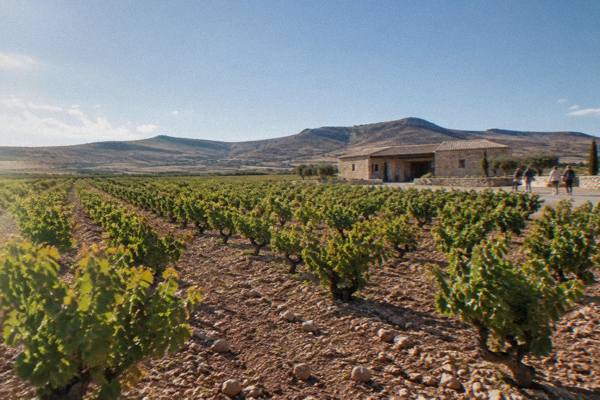
The campo de cariñena is the wine country that begins south of Zaragoza, Spain, an inland landscape of old garnacha vines and dry continental air, and it works best as a day trip planned from the Aragonese capital.
Short answer
The Carinena wine region lies south of Zaragoza in Aragon, Spain, and is best visited as a booked winery day trip from the city: the options are a half-day winery tour from Zaragoza, an olive oil and winery combination, and a full-day Somontano and Alquezar excursion, alongside in-city wine tasting options.
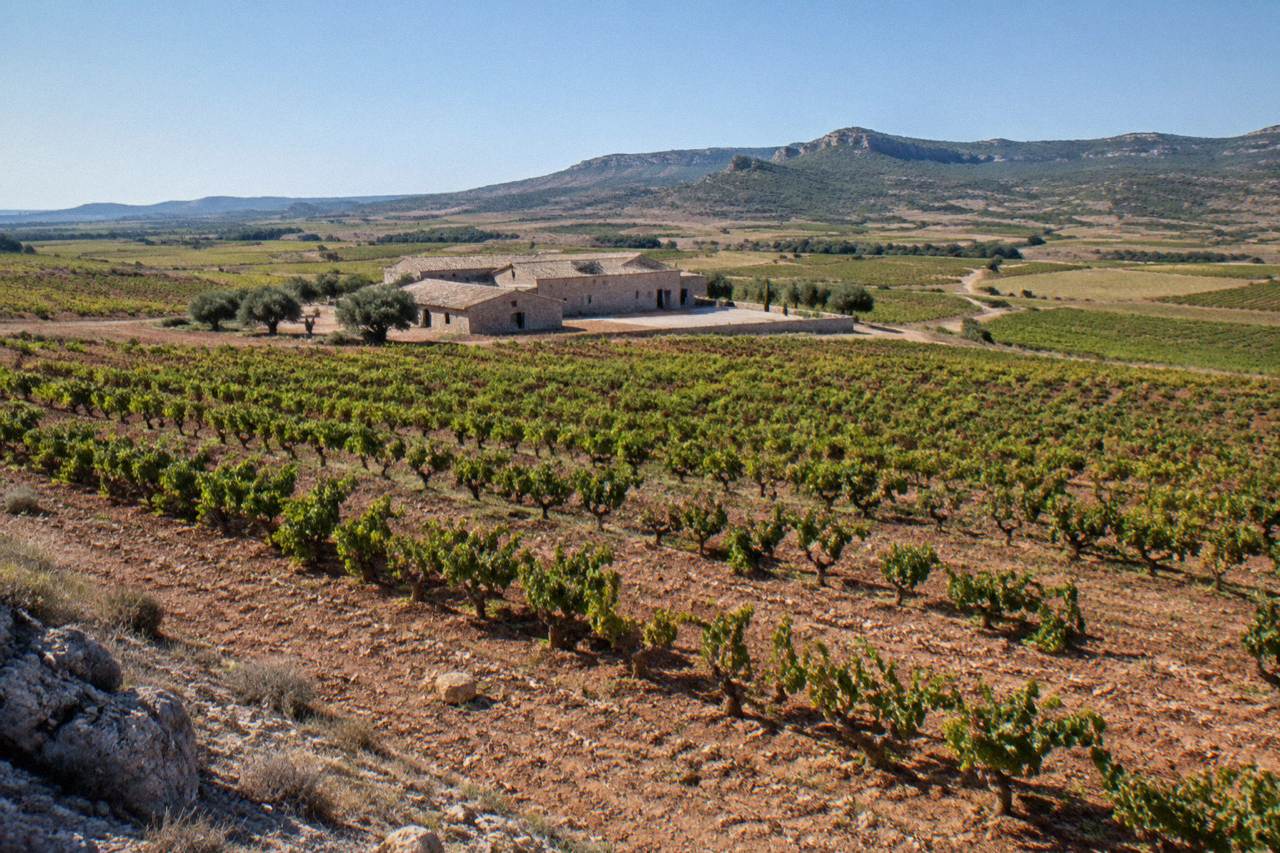
The campo de cariñena is the wine country that spreads south of Zaragoza, the capital of Aragon, an inland region of low hills, dry continental air and old vineyards that belongs to the same Ebro valley world as the city itself. Zaragoza sits on the Ebro, far from any coast, and the countryside around it is built on heat, wind and thin rainfall, conditions that shape both the city's architecture and the wine grown in the fields beyond it. A day trip into the Cariñena wine region is one of the most natural excursions from the Aragonese capital, because the vineyards and the city share the same climate and the same culinary tradition, and because the guided options that leave from Zaragoza handle the driving, the bookings and the language.
What Is The Campo De Cariñena?
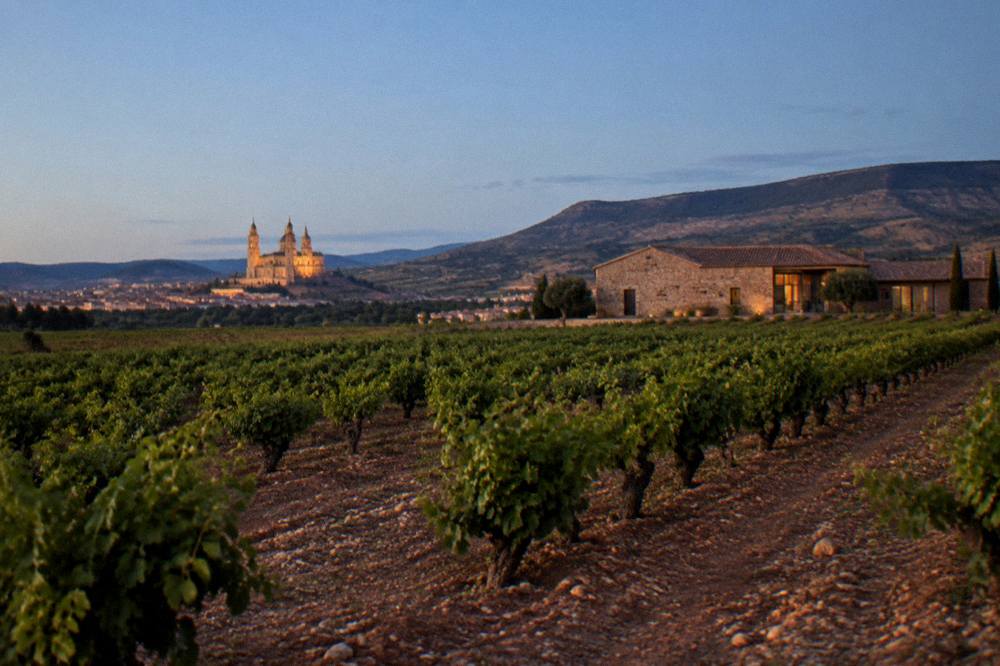
The campo de cariñena is the wine-growing countryside of the Cariñena area, south of Zaragoza in Aragon, Spain, a dry inland region where old garnacha vines dominate the landscape and where the wine tradition is inseparable from Aragonese food. It is not a coastal playground or a green river valley. It is high, dry, sun-heavy country, part of the same continental climate zone that AEMET's 1981 to 2010 normals for the Zaragoza Aeropuerto station record, a series that shows just 322 mm of rain across a whole year and July and August as the driest months at 17 mm each. Those conditions, hard on people, are kind to old vines.
The region's name travels inside the wine world. The cariñena grape, known elsewhere in Spain as mazuelo and in France as carignan, carries the name of this Aragonese countryside, which tells you how old and how central the local tradition is. No production figure, founding date or regulatory milestone belongs on this page, because none was verified for it, and a wine region does not need invented numbers to be worth the drive. What is verifiable is simpler: Aragon is lamb country and wine country together, and a day in the Cariñena vineyards pairs naturally with the dishes the region is known for, above all ternasco de Aragon, the roast lamb that appears on menus across Zaragoza.
Planning the trip from Zaragoza rather than trying to base yourself in the countryside makes sense for most visitors. The city holds the hotels, the train station at Zaragoza-Delicias, the airport bus and the overwhelming majority of the dining, and the wine region works as an out-and-back excursion. The Zaragoza Travel Guide day-trip collection covers the other excursions that radiate from the city, from Fuendetodos, Goya's birthplace village, to the stone towns of Calatayud and Daroca, and the Cariñena vineyards slot into that same network of half-day and full-day options.
Which Wine Tours From Zaragoza Reach The Wineries?
The guided wine options that start in Zaragoza include a half-day winery tour from the city, an olive oil and winery combination, and a full-day Somontano excursion that adds the village of Alquezar, while in-city wine tasting runs from around $106.92 per person. The half-day winery tour from Zaragoza is listed from $166.28 per person with a 5 rating from 21 reviews, the olive oil and winery combination from $172.01 per person with a 5 rating from 4 reviews, and the full-day Somontano and Alquezar excursion from $280.95 per person with a 5 rating from 14 reviews. Each listing carries its own current price and calendar.
The half-day winery tour is the closest fit for the Cariñena theme, because it is built around a winery visit with cava, the Aragonese sparkling category, in its decision name. The olive oil and winery combination suits a visitor who wants the region's two liquid products in one day, since Aragon's olive oil country and its vineyards overlap, and the full-day Somontano excursion is the grand version: Somontano is Aragon's other great wine name, and Alquezar is one of the most photographed villages in the region. All three are day trips that leave from Zaragoza rather than activities inside the city, which is exactly what a campo de cariñena itinerary wants.
For anyone who would rather taste than travel, the in-city options are strong. Wine tasting and tapas in the ancient town of Zaragoza is listed from $108.94 per person with a 5 rating from 75 reviews, and the Zaragoza wine tasting and tapas experience runs from $106.92 per person with a 5 rating from 21 reviews. These walk you through the old town with Aragonese wine in the glass, which is the easiest way to taste the region's output without leaving the city walls.
| Experience | Type | From (per person) | Rating | Duration |
|---|---|---|---|---|
| Half-day winery tour from Zaragoza | Winery day trip | $166.28 | 5 from 21 reviews | Half day |
| Olive oil and winery tour from Zaragoza City | Combined day trip | $172.01 | 5 from 4 reviews | Full day |
| Full-day Somontano excursion and Alquezar | Wine day trip | $280.95 | 5 from 14 reviews | Full day |
| Wine tasting and tapas in the ancient town | In-city tasting | $108.94 | 5 from 75 reviews | Around 3 hours |
| Zaragoza wine tasting and tapas | In-city tasting | $106.92 | 5 from 21 reviews | 3 hours |
Book the winery day trip early in your stay rather than on your last day, because wine days are the ones most worth protecting on a short visit. If the winery outing fills or the weather turns, the in-city tasting tours cover the same ground in miniature, and the city's own monument schedule, which never stops, fills the rest.
How Do You Plan Transport For A Carinena Day Trip?
A booked winery tour removes transport entirely, and if you drive yourself, the facts that matter are Zaragoza's: the urban bus and tram single is 1.70 EUR, the Tarjeta Bus brings that to 0.55 EUR, the card itself costs 7 EUR, and the airport bus is line 505 at 4.65 EUR a single.
The city side of the journey is fully documented. Zaragoza's 2026 Avanza fare table lists the bus and tram single at 1.70 EUR, with the rechargeable Tarjeta Bus cutting a ride to 0.55 EUR and the card itself at 7 EUR, valid on both bus and tram. The airport bus is line 505, never 501 or 44, at 4.65 EUR for a single and around 2.25 EUR with a Lazo card, running roughly 25 to 35 minutes and timed to flights. The Zaragoza Bus Turistico costs 10 EUR for a 24-hour hop-on hop-off loop of 16 stops, cash only on the bus. For cyclists, the Bizi share system charges a 1 EUR day pass plus 0.50 EUR for the first 30 minutes of each trip, with a 50 EUR card deposit held.
| Transport in Zaragoza | 2026 fare | Notes |
|---|---|---|
| Bus or tram single | 1.70 EUR | No transfer; night lines 1.00 EUR |
| With Tarjeta Bus | 0.55 EUR | Card costs 7 EUR, valid bus and tram |
| Airport bus, line 505 | 4.65 EUR single | Around 2.25 EUR with Lazo card; 25 to 35 minutes |
| Bus Turistico | 10 EUR | 24 hours, 16 stops, 90-minute loop, cash on the bus |
| Bizi day pass | 1 EUR | Plus 0.50 EUR per first 30 minutes; 50 EUR deposit |
One planning note matters more than any fare. Zaragoza operates a low emission zone, the ZBE Casco Histórico, with sanctions active since 12 December 2025, running Monday to Friday from 08:00 to 20:00, and vehicles without a DGT environmental label are restricted inside it, with a 15-minute grace period if you enter by mistake. Anyone renting a car for a wine day trip should confirm the vehicle's label before driving into the historic centre, and should ask the rental desk about the ZBE by name. The rest of the drive, out of the city and into the vineyards, is ordinary open Aragonese road.
What Does The Cariñena Region Actually Grow?
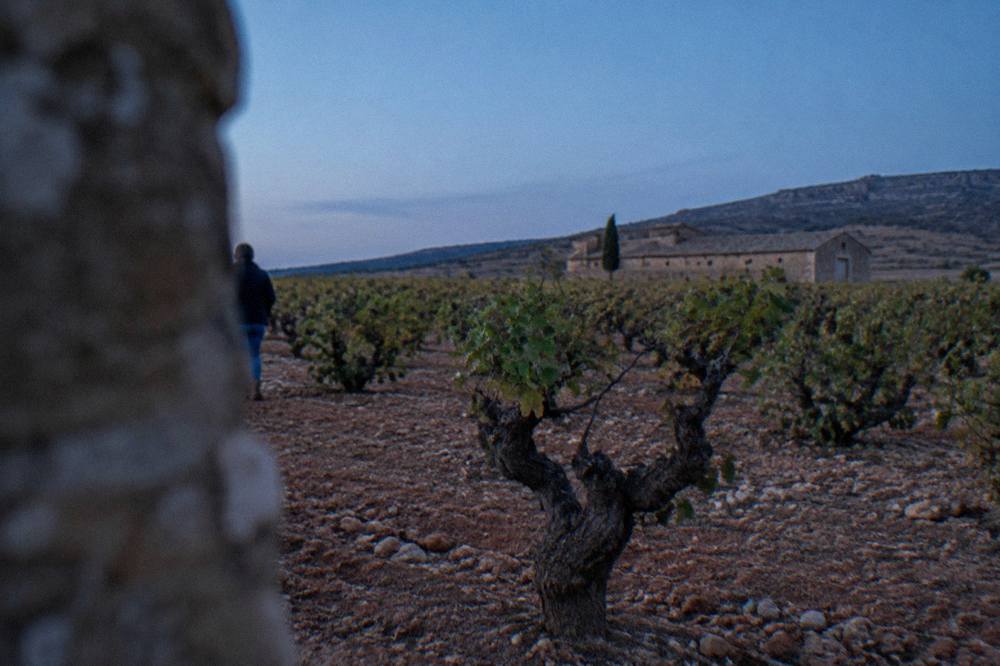
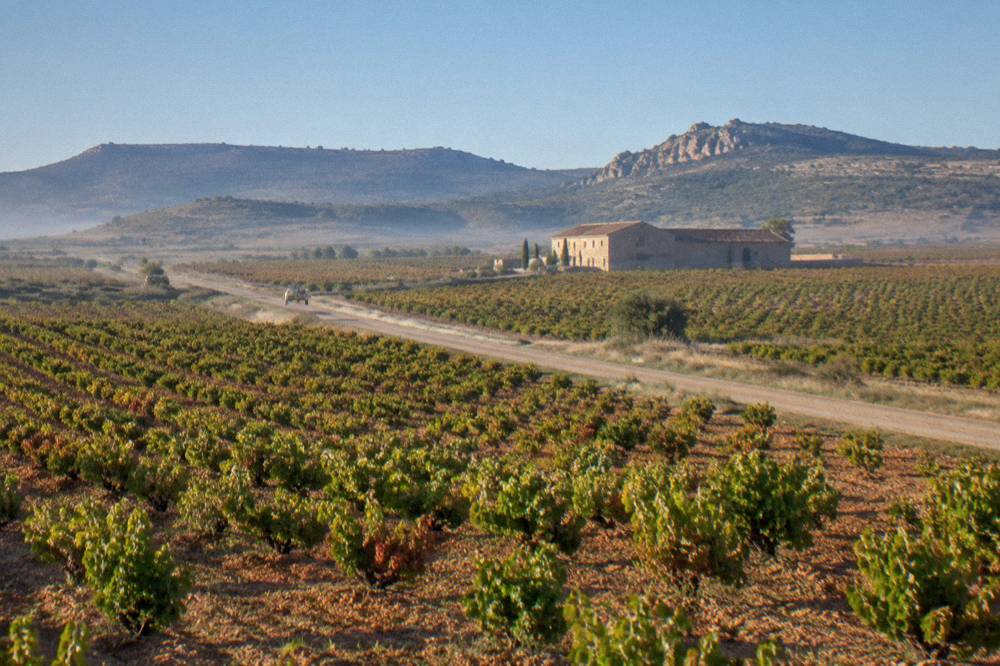
Old garnacha is the signature of the Cariñena countryside: dry-farmed bush vines, some of them decades old, plus the cariñena grape itself, growing in a continental climate whose nearest measured series, the Zaragoza Aeropuerto normals, records a yearly average of 15.5 C and 322 mm of rain. Low rainfall, cold winters and hot summers are the recipe. The vines are trained low to the ground to survive the wind and the heat, and the resulting wines lean towards ripe red fruit and structure rather than delicacy, which is why they stand up to Aragonese lamb.
The pairing is not marketing, it is agriculture. The same dry inland conditions that ripen garnacha also suit the sheep that produce ternasco de Aragon, and the region's tables have always put the two together. A winery lunch in the Cariñena country, or an evening back in Zaragoza after a winery morning, follows the same logic: a substantial red, roast lamb, and the flat, dry landscape that produced both. Nothing was verified about any individual winery, restaurant or tasting room in the region, so this page names none and prices none; the bookable experiences in the tables above are the ones with published listings.
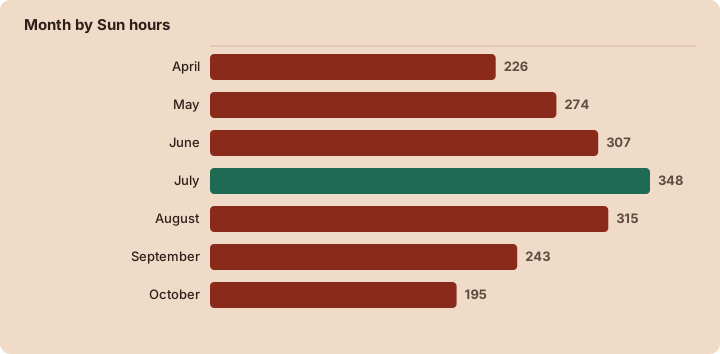
For context on the seasons, the only measured climate series published for the immediate area is AEMET's 1981 to 2010 normals for the Zaragoza Aeropuerto station, and it shows the pattern a vineyard visitor should expect: July and August are the hottest and driest months, with mean maximums of 32.4 C and 31.7 C and just 17 mm of rain each, while May is the wettest month at 44 mm. October, the month of the grape harvest and of the Fiestas del Pilar, averages a mean maximum of 21.4 C with 36 mm of rain over 5.4 rain days. The table below is that series, labelled to its station and its window, and it is the only climate data this page will state.
| Month | Mean max C | Mean C | Mean min C | Rain mm | Sun hours |
|---|---|---|---|---|---|
| April | 19.6 | 13.8 | 7.9 | 39 | 226 |
| May | 24.1 | 18.0 | 11.8 | 44 | 274 |
| June | 29.3 | 22.6 | 15.8 | 26 | 307 |
| July | 32.4 | 25.3 | 18.3 | 17 | 348 |
| August | 31.7 | 25.0 | 18.3 | 17 | 315 |
| September | 27.1 | 21.2 | 15.2 | 30 | 243 |
| October | 21.4 | 16.2 | 11.0 | 36 | 195 |
When Is The Best Time To Visit The Cariñena Vineyards From Zaragoza?
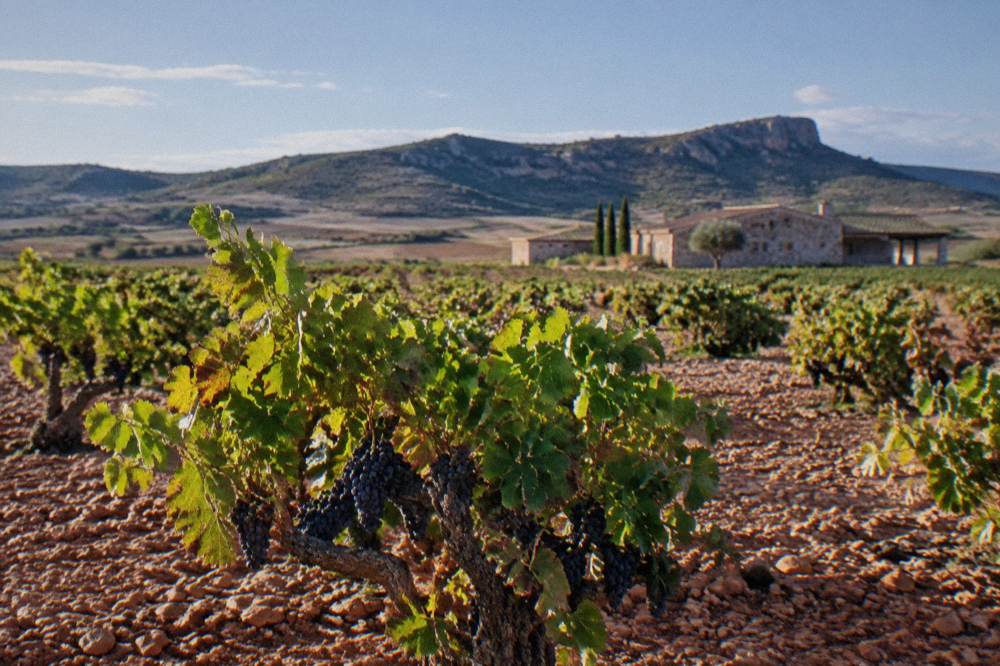
October is the standout month, because it combines the grape harvest with the Fiestas del Pilar, which run from 10 to 18 October 2026 with the Ofrenda de Flores on 12 October, while the AEMET 1981 to 2010 normals show a mean maximum of 21.4 C and 195 sun hours for the month. Spring runs it close: May averages 24.1 C as a mean maximum but carries the year's heaviest rain at 44 mm, and April is cooler still at 19.6 C. July and August are the months to treat with respect, with mean maximums above 31 C and the least rain of the year.
Harvest time is the romantic answer and the practical one. The vineyards are at their most photogenic, the wineries are at their busiest, and Zaragoza itself is transformed by the Fiestas del Pilar, the city's great annual festival, whose 2026 edition the municipality publishes as 10 to 18 October with the Ofrenda de Flores, the flower offering to the Virgin of the Pilar, on 12 October along the route from Paseo de la Independencia to Plaza del Pilar. A wine day trip bolted onto the Fiestas gives you two Aragons in one week: the vineyard countryside and the city at its loudest. The Ofrenda de Flores deserves its own planning, because central Zaragoza is crowded and the day runs from early morning.
Summer visits are possible but should be built around the mornings and evenings. The same normals that give July its 348 sun hours also give it a mean minimum of 18.3 C, so days start warm and finish late, and Aragonese summer life shifts to the evening in any case. Winter, with January mean maximums of 10.5 C, is quiet, grey-brown and occasionally frosty, with 23.1 frost days in the annual series, and while the vineyards are dormant, the city's museums and tapas bars are not.
What Should You Combine With A Carinena Wine Day Trip?
The strongest combinations pair the vineyards with Zaragoza's own monuments on the same trip: the Aljafería Palace, open daily 10:00 to 18:00 in October at 7 EUR general or 9 EUR with a guided tour, the Basílica del Pilar, free to enter with the tower viewpoint at 6 EUR, and La Seo at 10 EUR including three further sites. A wine morning or afternoon leaves the rest of the day for the city, and the city's headline monuments are close enough together that a half day covers a satisfying amount. The full monument schedule below comes from the municipality's own October timetable.
| Monument | October hours | Admission |
|---|---|---|
| Basílica del Pilar, temple | Mon-Sat 7:30-13:30 / 16:30-20:15, Sun until 21:30 | Free |
| Basílica del Pilar, tower viewpoint | Mon-Thu 10:30-14:30 / 16:00-20:00, Fri-Sun 10:00-20:00 | 6 EUR adult, 5 EUR over 65, 4 EUR 13-18 |
| La Seo and Museo de Tapices | Mon-Sat 10:00-14:30 / 16:00-20:00, Sun 10:00-12:00 / 16:00-20:00 | 10 EUR general, includes three further sites |
| Aljafería Palace | Daily 10:00-18:00 | 7 EUR general, 9 EUR guided, free 1st and 3rd Sunday and Monday |
| Caesaraugusta museum route | Tue-Sat 10:00-14:00 / 17:00-21:00 | Foro 4 EUR, others 3 EUR, 4-museum bono 7 EUR |
The Aljafería is the natural bookend to a wine day. It is the greatest of Zaragoza's Islamic-period buildings, a palace whose carved plaster and arcaded courtyard belong to the same centuries in which the Ebro valley's agriculture took the shape it still holds, and the Aljafería Palace ticket and guided visit, listed from $24.76 per person with a 4.7 rating from 82 reviews, bundles entry with a guide. Check availability before locking your wine date, because the palace's Spanish guided tours run at fixed times, 10:30, 12:30, 13:30, 15:00 and 16:00, and a booked slot keeps your afternoon intact.
Beyond the city, the day-trip network fans out in every direction, and several destinations sit in the same dry inland world as the vineyards. Fuendetodos is Goya's birthplace, Belchite preserves the ruins of its Civil War destruction and should be written and read soberly, and Calatayud and Daroca are Mudéjar stone towns to the southwest. For the wider picture of what the city itself holds, start with things to do in Zaragoza and work outwards.
Where Can You Taste Cariñena Wines Without Leaving Zaragoza?
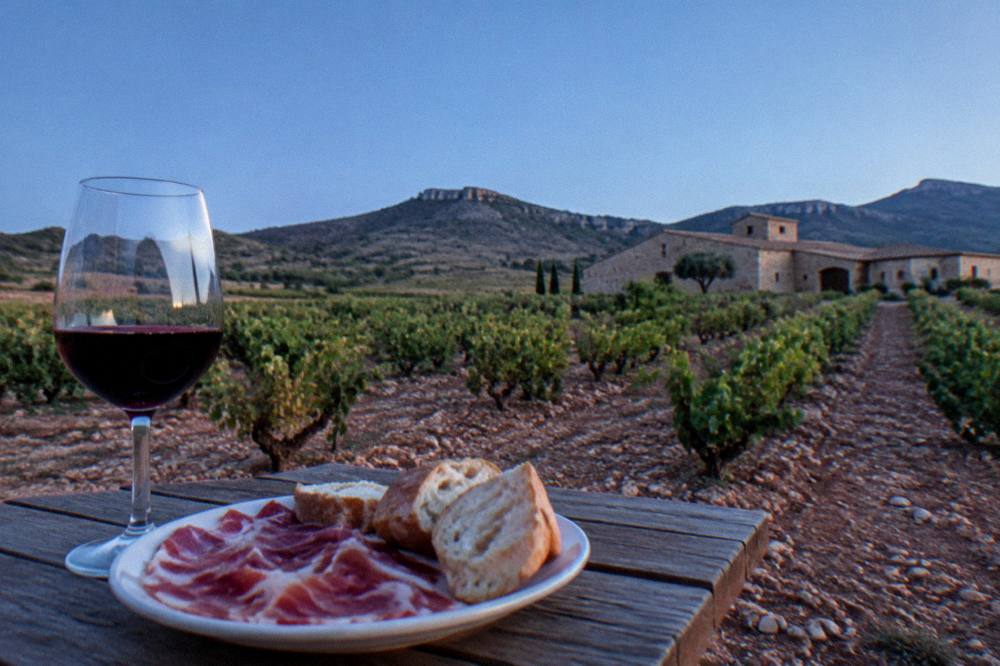
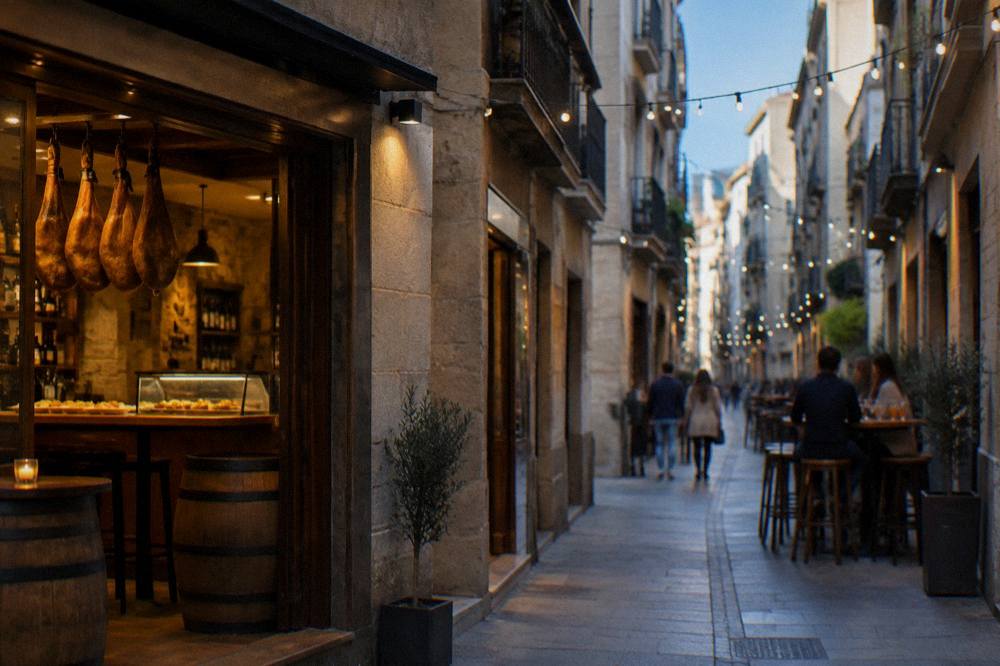
In-city tasting covers the region without a drive: the tapas and wine walks run from $50.65 to $108.94 per person, the wine tasting and tapas experience in the ancient town is listed from $108.94 with a 5 rating from 75 reviews, and the evening tapas walk in the old town runs from $106.92 with a 4.9 rating from 62 reviews. The old town is where these tours live, the tight lanes around Plaza del Pilar and the Basílica, and a guided tasting there puts Aragonese wine in context with the food it was always meant to accompany.
The choice between them is about shape rather than quality. The evening tapas walk is a three-hour circuit built for the Spanish dinner rhythm, and the midday market and tapas versions, listed from $106.92 and $108.94 per person, work the other end of the day, pairing a market visit with the tasting. For a visitor whose main event is a winery day trip, an in-city tasting the evening before is the efficient way to calibrate your palate: you learn what the local garnacha tastes like before you stand in the vineyard that grew it. The tapas sightseeing tour, from $50.65 per person, splits the difference with a shorter format.
| In-city tasting option | From (per person) | Rating | Duration |
|---|---|---|---|
| Wine tasting and tapas in the ancient town | $108.94 | 5 from 75 reviews | Around 3 hours |
| Zaragoza wine tasting and tapas | $106.92 | 5 from 21 reviews | 3 hours |
| Evening tapas walk in the old town | $106.92 | 4.9 from 62 reviews | 3 hours |
| Midday market and tapas tour | $106.92 | 5 from 9 reviews | 3 hours |
| Tapas sightseeing tour | $50.65 | 5 from 7 reviews | 3 hours |
One cultural note that no fare table captures: tapas in Zaragoza is an evening institution, and the old town fills progressively from about eight onwards. A tasting tour solves the standing-and-choosing problem for a first-time visitor, and it ends within walking distance of the Pilar, whose illuminated towers after dark are the city's best free closing act.
What Does A Full Carinena And Zaragoza Itinerary Look Like?
A workable plan is three nights in Zaragoza with one booked winery day: a first day on the Aljafería and the Pilar, a second day in the vineyards on a half-day or full-day winery tour, and a final evening on a tapas and wine walk, with the Fiestas del Pilar from 10 to 18 October 2026 as the wildcard that rearranges everything. The city's compactness is what makes this work. The Pilar, La Seo, the Aljafería and the Roman Caesaraugusta sites sit close enough together that a single well-planned day clears the monumental core, leaving the second day free for the countryside.
The Fiestas change the arithmetic. During the festival, the Ofrenda de Flores on 12 October takes over the centre from early morning, the pregón opens the festival from the Ayuntamiento balcony at 21:00 on 10 October, and the programme adds concerts, jota competitions and fireworks, including displays after the pregón and at the closing beside the Ebro on 18 October. A wine day trip during the Fiestas is entirely possible, but it should be booked with the festival schedule in mind, because the evenings are the festival's best hours and a full-day excursion returns late. Note also that October brings closures: Palacio de Sastago is closed for the month and Museo Pablo Gargallo is temporarily shut, while the Museo Goya reopens on 9 October 2026 with Tuesday to Saturday hours of 10:00 to 20:00, Sundays 10:00 to 14:00, and Mondays closed, its admission price not yet published.
Free-entry days reward a flexible planner. The Caesaraugusta museum route is free on the first Sunday of the month, the Aljafería on the first and third Sunday and Monday, and the Museo del Fuego y los Bomberos on the first Sunday. None of these needs booking through this page; the municipal timetable is the authority, and the guided tours that bundle tickets are for visitors who would rather not queue or plan at that level of detail.
Common Questions About The Carinena Wine Region
What is the campo de cariñena?
The campo de cariñena is the wine-growing countryside of the Cariñena area south of Zaragoza in Aragon, Spain, a dry inland region of old garnacha vines best visited as a day trip from the Aragonese capital.
How much do wine tours from Zaragoza cost?
The half-day winery tour is listed from $166.28 per person, the olive oil and winery combination from $172.01, the full-day Somontano and Alquezar excursion from $280.95, and in-city wine tasting options from around $106.92, all per person.
What wine is the Carinena region known for?
Old-vine garnacha is the region's signature, alongside the cariñena grape itself, which carries the region's name. The wines are structured, ripe and built for Aragonese dishes such as ternasco de Aragon lamb.
When is the best month for a Carinena wine day trip?
October combines the harvest with the Fiestas del Pilar, which run from 10 to 18 October 2026 with the Ofrenda de Flores on 12 October. The AEMET 1981 to 2010 normals for the Zaragoza Aeropuerto station give October a mean maximum of 21.4 C.
Do you need to book winery tours in advance?
Yes, and the earlier in your trip the better. Wine days fill first on short visits, and the operator's live listing carries the current calendar, price and cancellation terms before you commit.
A Cariñena wine day is the excursion that best explains Zaragoza itself: the same dry air, the same hard light, the same lamb-and-red-wine table, just without the city walls around it. Book the winery day, keep the Aljafería or the Pilar for the hours the vineyards do not need, and let the evening tapas walk close the trip where the wine country's output is poured a few steps from the Ebro.