Daroca: The Walled Medieval Town Day Trip From Zaragoza
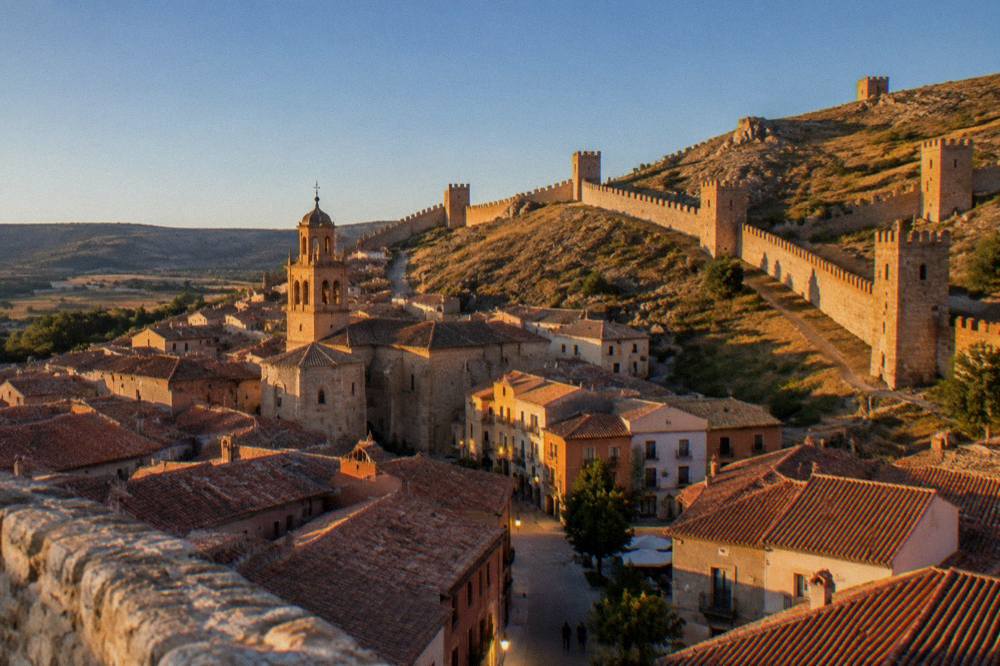
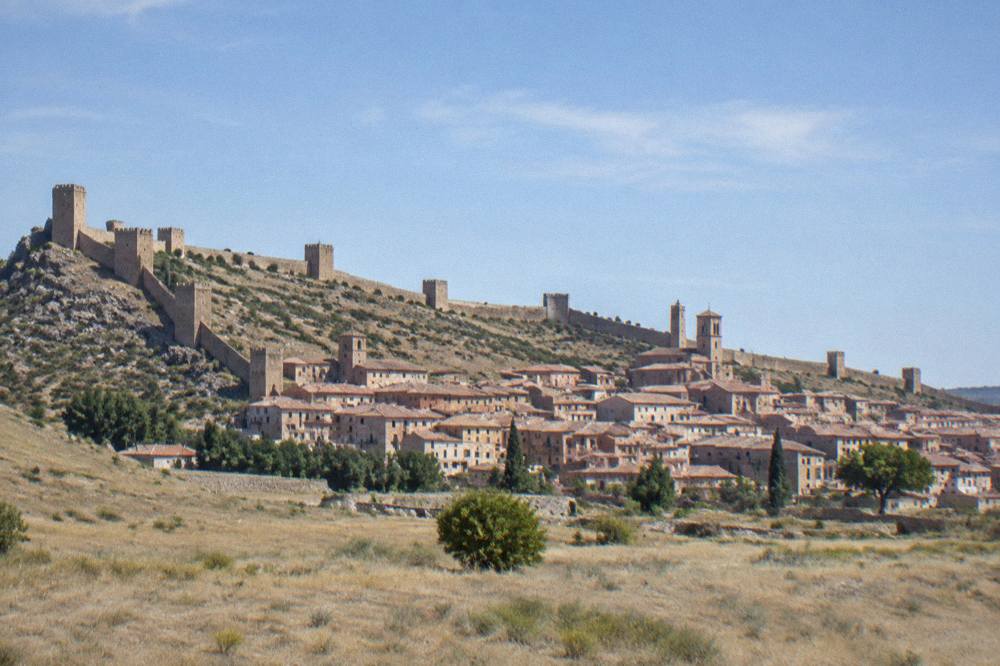
Daroca is a walled medieval town in the province of Zaragoza, in Aragon, Spain, standing on a hillside above the Jiloca valley south-west of the regional capital. Its long curtain wall, its two great gate towers and its collegiate church make it one of the most complete old towns within easy day-trip range of Zaragoza, and it is quiet enough that a single day there feels unhurried.
Short answer
Daroca is a medieval walled town in the Zaragoza province of Aragon, Spain, best visited as a full-day trip from the city of Zaragoza. The essentials are the Puerta Baja and Puerta de Teruel gate towers, the walkable ramparts, the Colegiata de Santa María and the steep lanes of the old judería. No train, bus timetable, entry fee or opening hour for Daroca itself is verified here, so check current schedules before you commit to a date.
Daroca is a walled medieval town in the province of Zaragoza, in Aragon, Spain, set on a hillside above the Jiloca valley to the south-west of the regional capital. It is one of those Aragonese towns whose history is written in stone you can still walk through: a curtain wall that climbs the slope in long arcs, gate towers that once closed the road to Teruel and the road to Zaragoza, a collegiate church stacked above the rooftops, and lanes that keep the plan of a frontier town that grew rich defending the southern edge of the medieval kingdom. For a visitor based in Zaragoza it makes a full, quiet day out, with enough walking, viewpoints and cake shops to fill the hours without a single museum queue.
This page gathers what matters for planning a Daroca day trip from Zaragoza: what the town is, what to see inside the walls, how to think about getting there, how it compares with the other day trips on offer from the city, and when to go. Where a practical detail such as a bus timetable, an entry fee or an opening hour has not been verified, the page says so plainly and tells you what to check, rather than printing a guess. For the wider picture of the city itself, the companion piece on things to do in Zaragoza covers the monuments you will leave behind for the day.
Where Is Daroca And What Kind Of Day Trip Is It From Zaragoza?
Daroca sits in the south-west of the province of Zaragoza, in Aragon, Spain, in the Jiloca valley on the historic road that linked Zaragoza with Teruel and the Levante coast. It is an inland hill town, dry and continental in climate, built along a slope under a long medieval wall. The day it makes from Zaragoza is a walking-and-looking day: ramparts, gate towers, church interiors and views, with no sea, no beach and no nightlife to plan around.
The town belongs to the comarca of Campo de Daroca, a high rolling plateau of cereal fields, sheep pasture and holm oak that feels closer to Castile than to the irrigated Ebro valley around Zaragoza. That contrast is part of the point of the trip. Zaragoza is a wide river city of Mudéjar brick and imperial Roman remains; Daroca is a compressed stone town where the street plan still follows the ridge it was built to defend. The two experiences sit well together in one holiday, and the change of scale is refreshing after a couple of days among the big monuments.
Historically Daroca mattered because of the road. Whoever held the town held the corridor between the Ebro valley and the lands to the south, and the town's walls, its gates and its fortified churches all answer to that job. The result for a modern visitor is a town whose main sights are not scattered across suburbs but stacked within a fifteen-minute walk of each other, which is what makes it work as a day trip. You park or step off the bus, walk in through a gate, and the whole visit unfolds on foot.
What Should You See Inside Daroca'S Walls?
The four essentials inside Daroca's walls are the Puerta Baja gate tower, the Puerta de Teruel gate, the Colegiata de Santa María with its museum, and the walk along the ramparts themselves, all reachable on foot within the compact old town. Add the Plaza de España, the main square, and the steep lanes of the old judería, the former Jewish quarter, and you have a full day. Check each sight's current arrangements before you go.
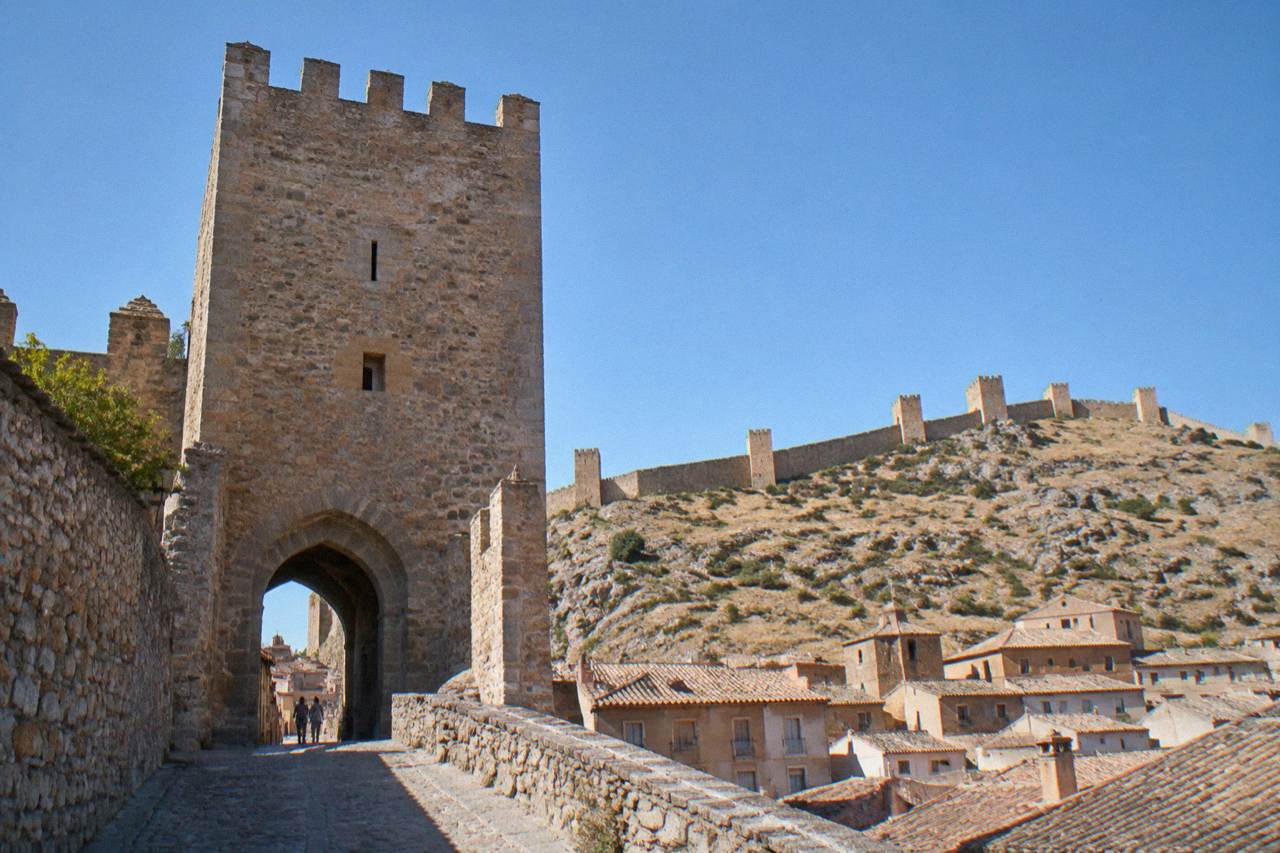
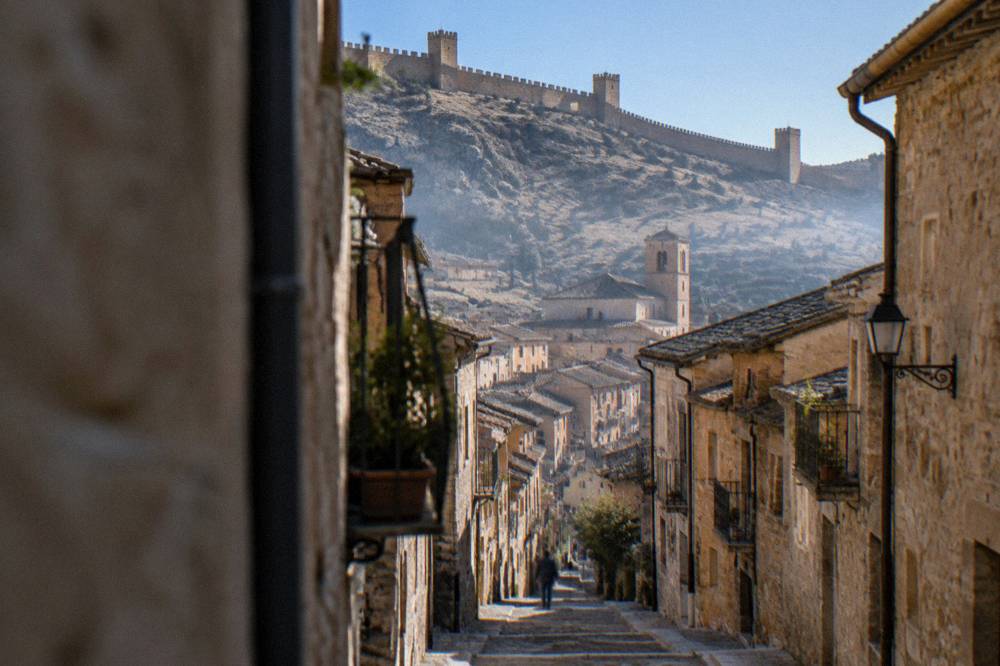
The Puerta Baja is the town's signature image: two great Albarrana towers joined by an arch, closing the western approach, with the wall marching up the hill behind them. It is one of the most photographed fortification pieces in Aragon, and it earns the attention, because you can read its whole defensive logic from the road below. The Puerta de Teruel at the other end of the old town is the other great gate, and walking the length of the historic centre between the two gates is the natural spine of a visit.
The Colegiata de Santa María de los Sagrados Corporales sits above the town and holds the relic that made Daroca a pilgrimage stop in the Middle Ages. The building layers Gothic and later work, and its museum keeps the town's treasury. As with every church in this article, check the parish or town information for current visiting arrangements, because opening hours in small Aragonese towns change with the seasons and with the availability of the people who keep the keys.
| Sight | What it is | Why it earns a stop |
|---|---|---|
| Puerta Baja | Twin-towered main gate on the western wall | The town's emblem, and the clearest example of medieval gate engineering in the province |
| Puerta de Teruel | Fortified gate on the old road south | The counterweight to the Puerta Baja, framing the Teruel corridor |
| Colegiata de Santa María | Collegiate church with a relic treasury | Gothic architecture, museum and the town's medieval importance in one stop |
| Ramparts walk | Path along and beside the curtain wall | The best views over the rooftops and the Jiloca valley |
| Plaza de España | Main arcaded square | Coffee, cake shops and the social centre of the town |
| Judería lanes | Steep streets of the former Jewish quarter | The quietest, most atmospheric walking in town |
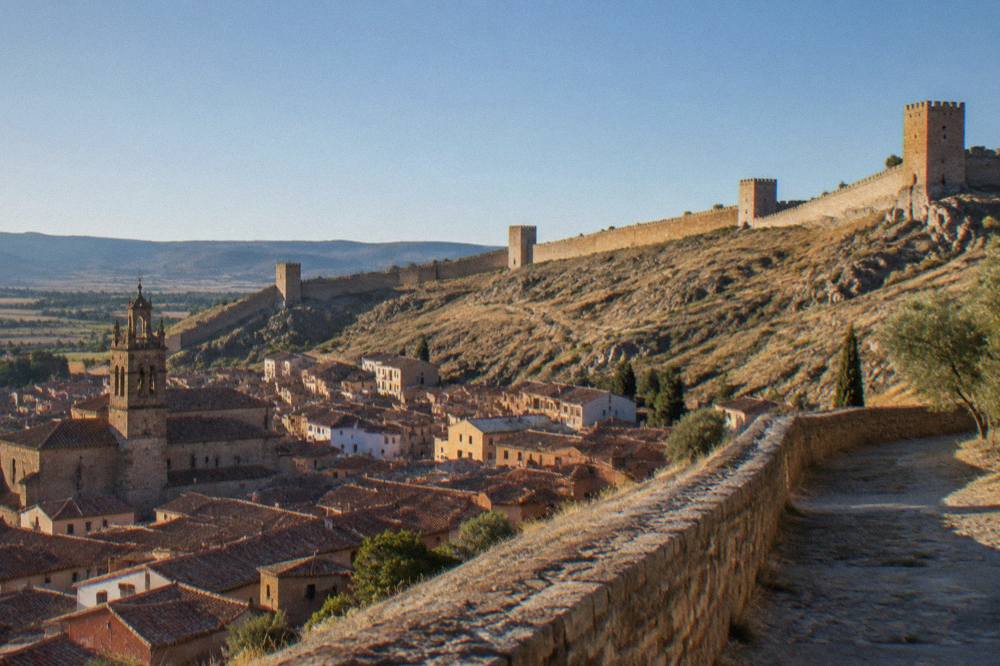
The wall itself deserves more time than most visitors give it. It runs for a long stretch of the hillside, and sections of it can be followed on foot, giving views back over the tiled roofs and out across the Campo de Daroca plateau. Wear proper shoes: the paths are stone and unpaved in places, and the slope is real. The town is small enough that getting lost is not a risk, but steep enough that the return leg of any walk is felt in the calves.
For a sense of what else the region holds, the neighbouring day-trip pages on Calatayud and Teruel cover two more stops on the same southern corridor from Zaragoza, each with a different character: Calatayud with its Mudéjar towers and Mudejar-influenced churches, Teruel with the densest concentration of Mudéjar brickwork in Aragon.
If you would rather have a guided experience than a self-planned one, the options below are the bookable day trips that start from Zaragoza and reach comparable country.
How Do You Get To Daroca From Zaragoza Without A Car?
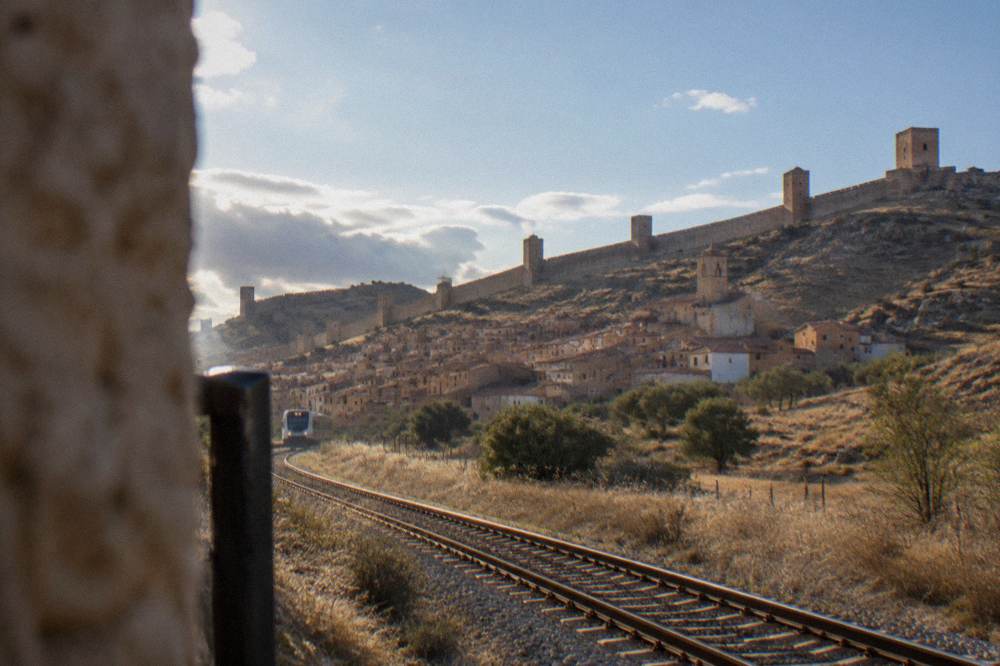
Daroca is reached from Zaragoza by road along the corridor that runs south-west towards Teruel, and by rail on the Zaragoza to Teruel line, which serves the town's station below the hill. No timetable, frequency, fare or journey time for that route is verified on this page, so treat the rail option as a possibility to check, not a plan to rely on. A hired car is the flexible alternative, and the drive itself crosses attractive high plateau country.
The honest planning advice is that Daroca is a small-town destination on a secondary rail line, and small-town rail services in Spain do not always line up with a neat day-trip schedule. Before you build a day around the train, look up the current Zaragoza to Teruel services and confirm that a same-day return exists on the day you want to travel. If it does, the station sits below the old town, and the walk up to the walls is part of the arrival.
If you drive, the route leaves Zaragoza heading south-west and crosses the Campo de Cariñeno and Campo de Daroca plateau. Note that Zaragoza itself operates a low-emission zone in the Casco Histórico with restrictions on unlabelled vehicles on weekday daytime hours, which matters for where you leave the city, not for the open road beyond it. Parking in a town the size of Daroca is normally a matter of the streets and small lots near the gates rather than a single formal car park, so arrive with the assumption that you will walk the last stretch.
The verified urban fares that frame any day of local transport in Zaragoza are set out in the table below.
| Transport item in Zaragoza | Fare | Notes |
|---|---|---|
| Urban bus or tram single | 1.70 EUR | No transfer included |
| Same trip with Tarjeta Bus | 0.55 EUR | The card itself costs 7 EUR and works on bus and tram |
| Night bus lines | 1.00 EUR | Per the 2026 Avanza fare table |
| Airport bus, line 505 single | 4.65 EUR | About 2.25 EUR with a Lazo card, timed to flights |
| Tourist bus, 24-hour ticket | 10 EUR | Hop-on hop-off, 16 stops, cash on the bus |
One planning note that saves a wasted morning: whatever your mode of travel, build your Daroca day around the middle of the day. The collegiate church, the wall paths and the square all sit within a few minutes of each other, but the town's rhythm is Spanish, which means the square is quiet in the early afternoon and livelier towards evening in the warmer months. Arriving mid-morning and leaving after a late lunch is the shape that fits the place.
Is Daroca Worth Visiting Compared With Other Aragonese Day Trips?
Daroca earns its place among the best day trips from Zaragoza if what you want is a complete walled medieval town with almost no modern intrusion, and it compares well with Calatayud and Tarazona on architecture while being quieter than any of them. It is weaker than the Pyrenees options for scenery and weaker than Monasterio de Piedra for a single headline attraction, so the choice comes down to whether walls and lanes or mountains and waterfalls matter more to you.
The honest comparison is easier with a table. The entries below describe the character of each destination and the kind of day it makes from Zaragoza; no distance, drive time or entry fee for any of them is verified on this page, and the guided-option column reflects only the tours that actually exist as bookable products from Zaragoza.
| Day trip from Zaragoza | Direction from the city | Character of the day | Guided option from Zaragoza |
|---|---|---|---|
| Daroca | South-west | Walled medieval town, ramparts, collegiate church | None listed on a bookable product |
| Calatayud | South-west | Mudéjar towers, castle ruins, spa town | None listed on a bookable product |
| Tarazona | North-west | Cathedral city below Moncayo, old quarter | Yes, a guided excursion exists |
| Monasterio de Piedra | South-west | Waterfall park and monastery in a green gorge | None listed on a bookable product |
| Belchite | South-east | Civil War ruin, sobering and unforgettable | Yes, an olive-oil and Belchite excursion exists |
| Canfranc and Jaca | North | Pyrenean valleys and the great international station | Yes, a full-day excursion exists |
The comparison that matters most is Daroca against Tarazona, because both are compact historic towns reachable from Zaragoza for a day. Tarazona has the grander single monument in its cathedral with the curious double inclination of its tower, and it sits under Moncayo, which gives it a mountain backdrop. Daroca has the more complete wall and the more dramatic gate towers, and the walk along its ramparts is the better physical experience. If you only do one, choose Daroca for the walls and Tarazona for the cathedral; if you have two days, they make a satisfying pair.
Belchite deserves a separate word, because it is not a comparison in any light sense. The old town was destroyed in the Spanish Civil War and left as it stood, and a visit there is a sober historical experience rather than a pleasant one. The Belchite page treats it in that spirit, and the olive-oil excursions that combine the site with a local mill visit are the most practical way to reach it from Zaragoza.
What Does A Sensible Day In Daroca Look Like?
A sensible day in Daroca runs gate to gate: enter by the Puerta Baja, walk the spine of the old town to the Puerta de Teruel, climb to the Colegiata de Santa María, descend through the judería lanes to the Plaza de España for lunch, then finish with the ramparts walk while the light is low. That order front-loads the climbing into the cool part of the day and saves the flat square for the hot hours, which is how the town itself lives.
Start at the Puerta Baja and take ten minutes to look at it from outside before walking through it. The towers are built as separate Albarrana structures, standing slightly apart from the wall so defenders could fire along its face, and once you have seen the geometry you will recognise the same idea in other Aragonese fortifications. Inside the gate the street rises gently through the oldest quarter, and the wall keeps pace above the rooftops on your left. The rest of the planning pages sit on Zaragoza Travel Guide.
The collegiate church is the high point of the walk in both senses. Its treasury holds the relic of the Sagrados Corporales, the object that put Daroca on the medieval pilgrimage map, and the building itself carries the town's wealth in its stonework. Treat the visiting arrangements as a thing to confirm: collegiate museums in small towns keep short hours and close for lunch, and the sacristan's schedule is not something to argue with.
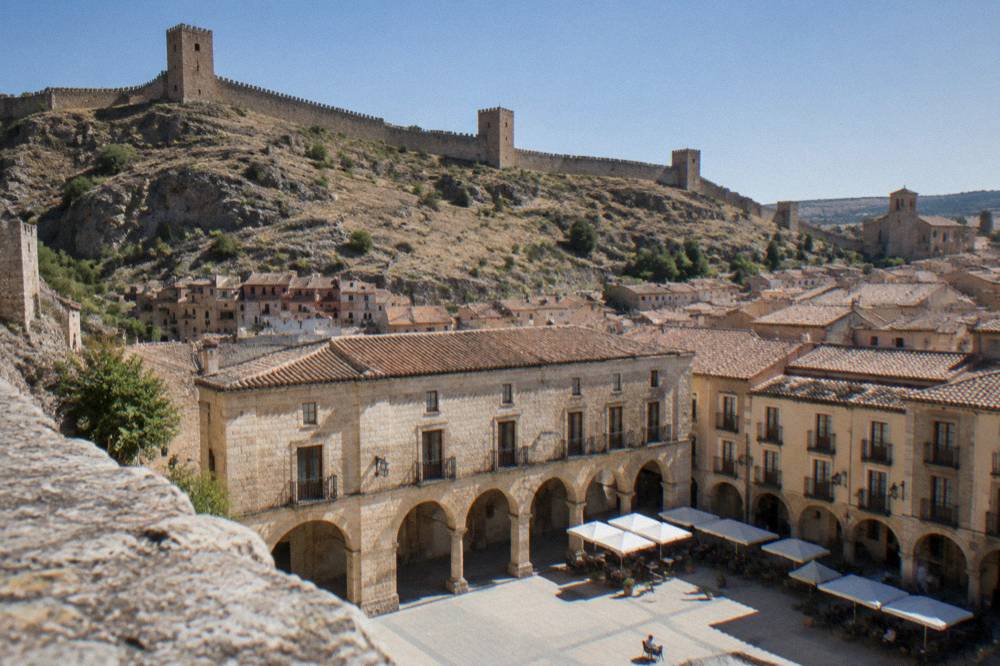
For lunch, the Plaza de España and the streets around it hold the town's bars and restaurants, and the local cooking is the cooking of the Campo de Daroca: lamb from the plateau, the hams and sausages of the neighbouring Teruel country, and the sturdy soups and stews of inland Aragon. Expect a Spanish timetable, with a long mid-afternoon pause, and do not plan a rapid turnaround after the meal.
| Time of day | Where to be | What you are doing |
|---|---|---|
| Mid-morning | Puerta Baja and the lower town | Arrival, photographs, first walk up the spine |
| Late morning | Colegiata de Santa María | Church, treasury, the view from the upper town |
| Midday | Judería lanes, descending | The steepest, quietest streets, taken downhill |
| Lunch and after | Plaza de España | A long Spanish lunch, then coffee under the arcades |
| Late afternoon | Ramparts walk | The wall paths and the evening light over the valley |
| Before leaving | Puerta de Teruel | The second gate, closing the day at the far end |
The ramparts walk is the finish it deserves. The wall follows the hillside in long curves, and from its higher stretches the whole tiled bowl of the town sits below you with the plateau beyond. On a clear evening the light across the Campo de Daroca is the best thing in the day, and the walk back down to whichever gate you left from is short.
What And Where Should You Eat Around Daroca?
Eating around Daroca means the food of the Campo de Daroca and the Teruel border: lamb raised on the plateau, cured pork from the Sierra de Albarracín country to the south, river trout on some menus, and the almond and pastry sweets that Aragonese towns of this size almost always keep in a cake shop near the main square. The Plaza de España and the streets between the two gates hold most of the town's restaurants, and the midday menú del día is the reliable choice.
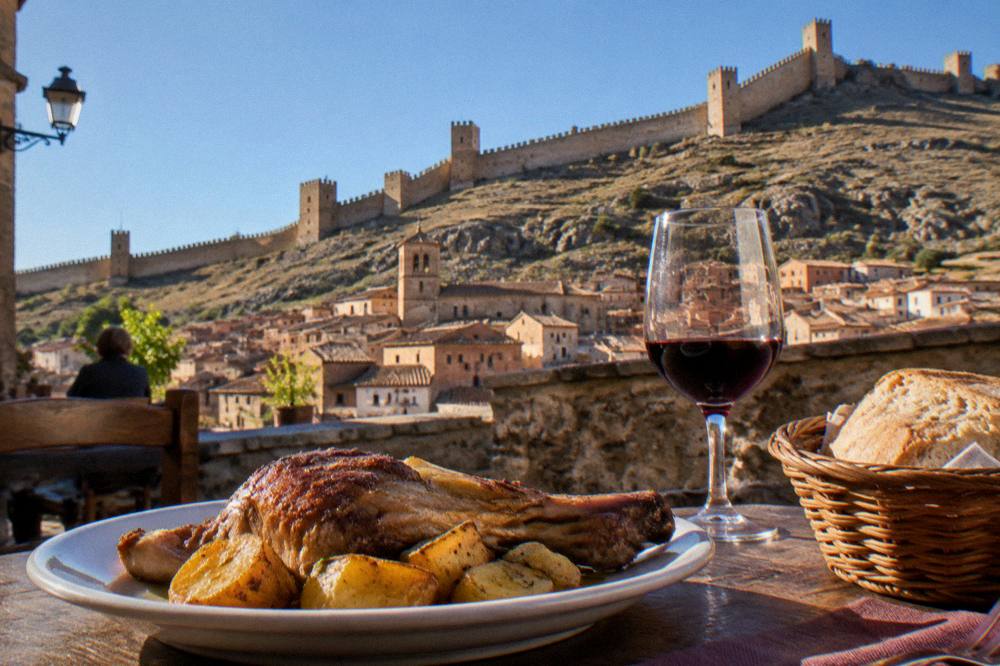
The single most useful eating instruction for inland Aragon is to order what the region does well. Ternasco, the young milk-fed lamb of Aragon, is the regional dish, roasted with potatoes, and the further from the coast you are the better it tends to be. The hams of Teruel, whose production area begins not far south of Daroca, appear on every serious menu in the district. If a restaurant offers a menú del día at midday, take it, because it is the cheapest way to eat the local cooking properly and it is what the town itself eats.
Sweets matter here more than visitors expect. Aragon is the land of the calanda peach and the candied fruit of Calatayud, and every town of Daroca's age keeps a pastelería whose window is worth five minutes. Ask what is local rather than reaching for the familiar, and carry some of it up to the wall for the afternoon walk.
For the fuller food picture, the Teruel day-trip page covers the jamón country to the south, and the Cariñena wine region page covers the DO whose vineyards sit on the road back towards Zaragoza. A car trip that takes in Daroca at midday and a Cariñena bodega in the late afternoon is one of the better food days available from the city.
When Is The Best Time Of Year To Visit Daroca?
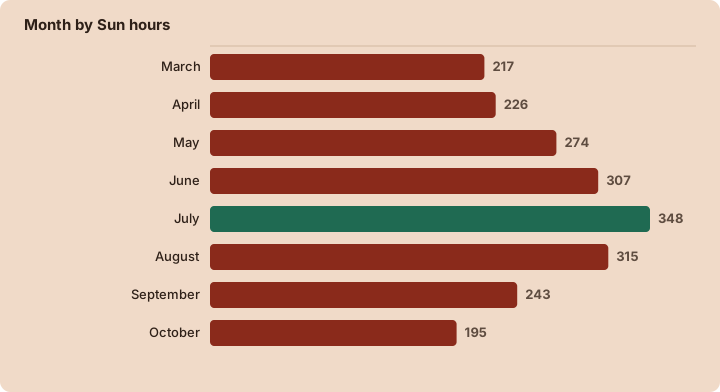
The best months to visit Daroca are May, June, September and early October, when the inland Aragonese climate is warm without the July and August peak heat. The only verified climate figures available are the AEMET 1981 to 2010 normals for the Zaragoza Aeropuerto station, which show July the hottest month at a 32.4 C mean maximum and May the wettest at 44 mm of rain. Daroca sits higher than Zaragoza and is a degree or two cooler in practice.
The table below is the AEMET 1981 to 2010 average for the Zaragoza Aeropuerto station, the only published window for the area, and it is the right planning basis for any inland Aragon day trip. The high plateau around Daroca is exposed country, hot in July and August and cold in winter, with the cold dry cierzo wind a known feature of the Ebro corridor.
| Month | Mean max C | Mean min C | Rain mm | Sun hours |
|---|---|---|---|---|
| March | 17.3 | 5.8 | 19 | 217 |
| April | 19.6 | 7.9 | 39 | 226 |
| May | 24.1 | 11.8 | 44 | 274 |
| June | 29.3 | 15.8 | 26 | 307 |
| July | 32.4 | 18.3 | 17 | 348 |
| August | 31.7 | 18.3 | 17 | 315 |
| September | 27.1 | 15.2 | 30 | 243 |
| October | 21.4 | 11.0 | 36 | 195 |
Two seasonal notes shape the choice. First, the Fiestas del Pilar run in Zaragoza from 10 to 18 October 2026, with the Ofrenda de Flores on 12 October, and that week is the one time when the city is fuller than usual and a quiet day in Daroca makes a perfect counterweight to the crowds. Second, winter on the plateau is genuinely cold, with frost a normal feature of the zone, and the wall paths are less inviting in a north wind. Spring and autumn give the town at its best.
Which Guided Tours From Zaragoza Reach Comparable Country?
No bookable guided tour from Zaragoza currently reaches Daroca itself, so the town is a self-guided destination, but guided excursions from the city cover the same inland and mountain country, including a full-day Pyrenees excursion to Canfranc, Jaca and Sallent de Gállego and a seven-hour guided trip to the historic town of Tarazona below Moncayo. If you want a guided day in old Aragonese towns rather than a self-planned one, those are the products that exist.
The Pyrenees excursion is the strongest single guided day out of Zaragoza: it runs to Canfranc, Jaca and Sallent de Gállego, three stops in the high valleys, and it is a long day at eleven hours, priced from $67.66 per person on the operator's live listing. It is a different landscape from Daroca, mountains rather than plateau, but the same principle applies: a town-and-landscape day out of Zaragoza with the logistics handled.
The Tarazona trip is the closer comparison, because it is a historic town under a mountain, exactly the shape of a Daroca day. The seven-hour excursion, from $209.33 per person, takes in the town the local press has made famous as the excommunicated and cursed place of Aragonese legend, with food included. It is a story-led tour, and the stories are part of the appeal.
For a day that stays inside Zaragoza itself, the complete five-hour tour with wine and tapas covers the city's monuments and then sits down to the region's food, from $212.71 per person. It is the product for the day before or the day after a Daroca trip, when you want the city explained rather than another bus ride.
| Guided product from Zaragoza | Length | From, per person | Rating |
|---|---|---|---|
| Canfranc, Jaca and Sallent de Gállego tour | 11 hours | $67.66 | 5 from 2 reviews |
| Excommunicated and cursed town excursion, with food | 7 hours | $209.33 | 4.7 from 6 reviews |
| Discover Zaragoza complete tour with wine and tapas | 5 hours | $212.71 | 4.9 from 7 reviews |
If a guided day in the mountains appeals, the Canfranc station and Jaca pages cover the two headline stops of the Pyrenees excursion in depth, and the Moncayo natural park page covers the mountain massif that stands over Tarazona.
What Should You Check Before You Go To Daroca?
Before you go, check three things: the current Zaragoza to Teruel rail times if you are taking the train, because no same-day return schedule is verified here; the visiting arrangements of the Colegiata de Santa María museum, whose hours are short and seasonal; and the weather forecast for the plateau, which turns hot in July and August and cold in winter. With those three confirmed, Daroca needs no further planning, because the town's whole attraction is that it is walkable, quiet and unchanged.
The practical checklist is short, and the table below keeps it honest about what is known and what must be checked on the day.
| Item to check | Where to check | Why it matters |
|---|---|---|
| Same-day return rail times from Zaragoza | The operator's own timetable pages | No schedule for the line is verified here |
| Colegiata museum opening hours | The parish and town information | Small-town church hours are short and seasonal |
| Lunch stop in the Plaza de España | Any listing of the town's restaurants | Midday is the reliable meal; evening can be thin |
| Weather for the plateau | The general forecast for the province | Wall walking in July heat or a winter wind is no fun |
| Parking near the gates | Signs on arrival | The town has no single formal visitor car park |
Daroca rewards the traveller who wants the Aragon that sits behind the big city: stone, walls, lamb and a square under arcades, all within an hour's radius of Zaragoza but a world away in feel. Take the day slowly, walk the wall in the evening light, and the town will justify the trip without a single queue.
Common Questions About Daroca
Where is Daroca?
Daroca is a town in the province of Zaragoza, in Aragon, Spain, in the Jiloca valley south-west of the regional capital, on the historic road between Zaragoza and Teruel. It is an inland hill town with a dry continental climate, not a coastal resort of any kind.
What is Daroca famous for?
Daroca is famous for its medieval walls and gate towers, above all the Puerta Baja, and for the Colegiata de Santa María, which holds the relic of the Sagrados Corporales that made the town a medieval pilgrimage stop. Its preserved old town is among the most complete in the province of Zaragoza.
Can you visit Daroca as a day trip from Zaragoza?
Yes, Daroca works as a full-day trip from Zaragoza, either by rail on the Zaragoza to Teruel line or by road. No timetable or fare for the route is verified here, so check the current schedules before committing, and build the day around the middle hours when the town is liveliest.
Is there a guided tour of Daroca from Zaragoza?
No bookable guided tour from Zaragoza to Daroca itself is listed, so the town is a self-guided destination. Guided excursions from Zaragoza do exist for comparable country, including the Pyrenees excursion to Canfranc, Jaca and Sallent de Gállego and the historic-town trip to Tarazona.
What is the best time of year to visit Daroca?
May, June, September and early October are the best months, using the AEMET 1981 to 2010 normals for the Zaragoza Aeropuerto station as the planning basis: July is the hottest month at a 32.4 C mean maximum and May the wettest at 44 mm of rain. The town sits on an exposed plateau, so winter days can be cold and the summer midday hot.
What should you eat in Daroca?
Order what inland Aragon does well: ternasco lamb roasted with potatoes, the cured hams of the Teruel country to the south, and the almond pastries from a cake shop near the Plaza de España. The midday menú del día is the reliable way to eat the local cooking properly.