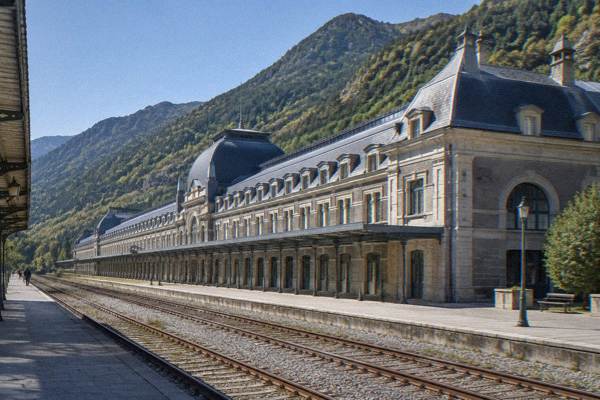
Canfranc Station: The Grand Pyrenees Day Trip From Zaragoza
Canfranc Station is a monumental former international railway station in the Aragonese Pyrenees, reached on a day trip heading north from Zaragoza through Jaca towards the Somport pass and the French border.
Short answer
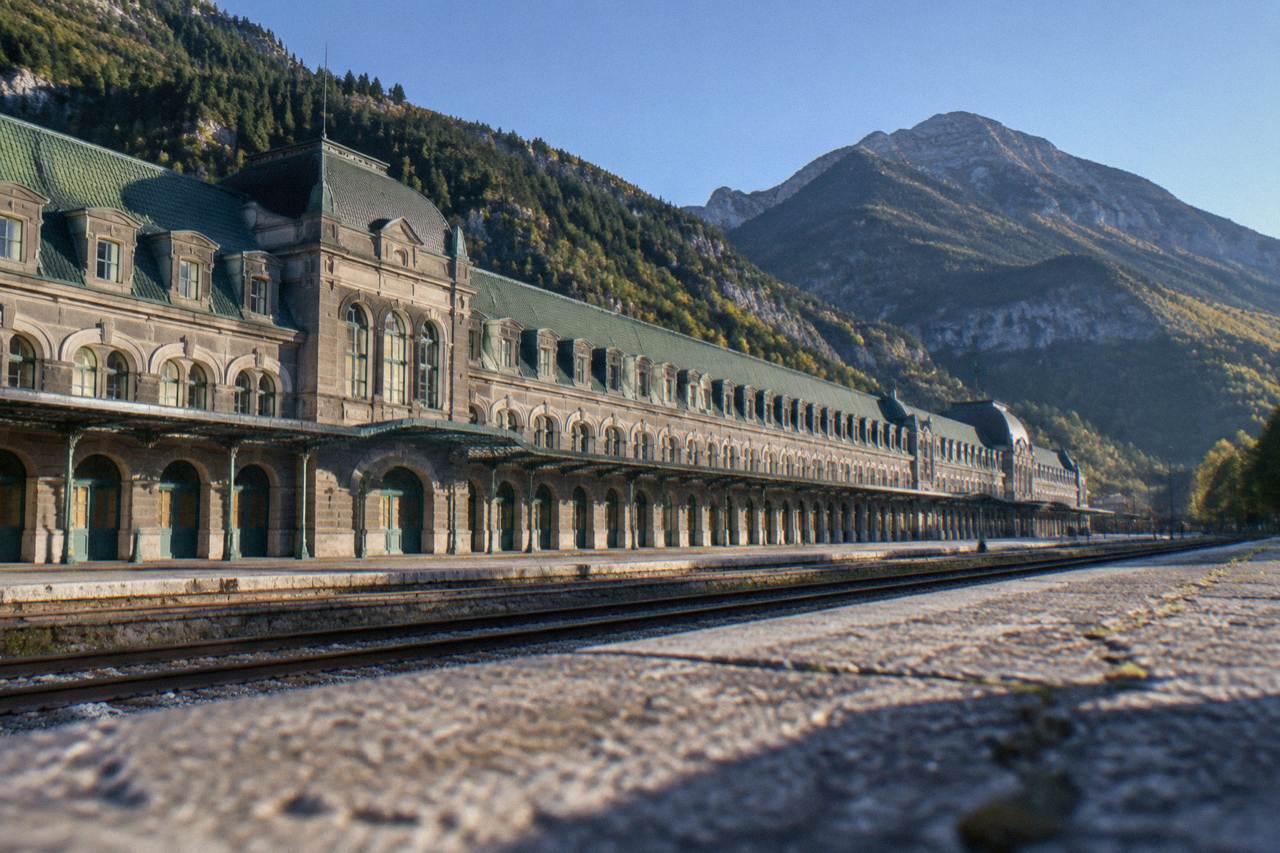
Canfranc Station is a vast, palace-like former international railway station in the Aragonese Pyrenees, north of Zaragoza near the Somport pass on the Spanish side of the French border. It is the centerpiece of one of the most rewarding day trips from Zaragoza, usually combined with Jaca and the Tena Valley, and it can be visited on an 11-hour guided excursion from the city.
Canfranc Station is a monumental former international railway station in the Aragonese Pyrenees, the mountain range that rises north of Zaragoza, the capital of Aragon, in inland Spain. The building sits in the village of Canfranc, high in the Aragon valley, on the historic rail route towards the Somport pass and the French border, and its sheer scale in such a remote mountain setting is what makes it one of the most remarkable sights in the whole region. For travellers basing themselves in Zaragoza, it is the natural flagship of the Pyrenees day trips, and it pairs naturally with the historic town of Jaca and the Tena Valley village of Sallent de Gállego.
What Is Canfranc Station?
Canfranc Station is a huge, palace-like railway station building in the Aragonese Pyrenees, built to serve international trains between Spain and France across the nearby Somport border crossing, and it stands in the small mountain village of Canfranc north of Zaragoza in Aragon. Its long facade, tiled roofs and rows of arched windows were designed for a border terminal handling two countries' customs, police and rail operations at once, which is why the building resembles a grand hotel more than a provincial halt.
The station was conceived as an international border terminal, the Spanish end of a mountain railway that crossed under the Pyrenees towards Pau in France. Everything about the complex was sized for that function: the immense platform hall, the customs and dispatch offices, the hotel wings, the sheer length of the stone facade. A station of this scale would look imposing in a capital city. In a valley village surrounded by peaks, it is almost surreal, and that contrast is precisely why it has become a destination in its own right rather than a footnote in railway history.
The site's modern fame rests on two things. First, the building itself, which has been photographed, filmed and written about endlessly for its stranded grandeur. Second, its story as a border station whose international traffic ended and whose halls then stood largely silent for decades, a story that gives the place a haunting quality visitors consistently mention. The station sits at the end of the Spanish branch line through the Aragon valley, so arriving by rail means travelling up from Jaca through some of the most dramatic scenery in the region.
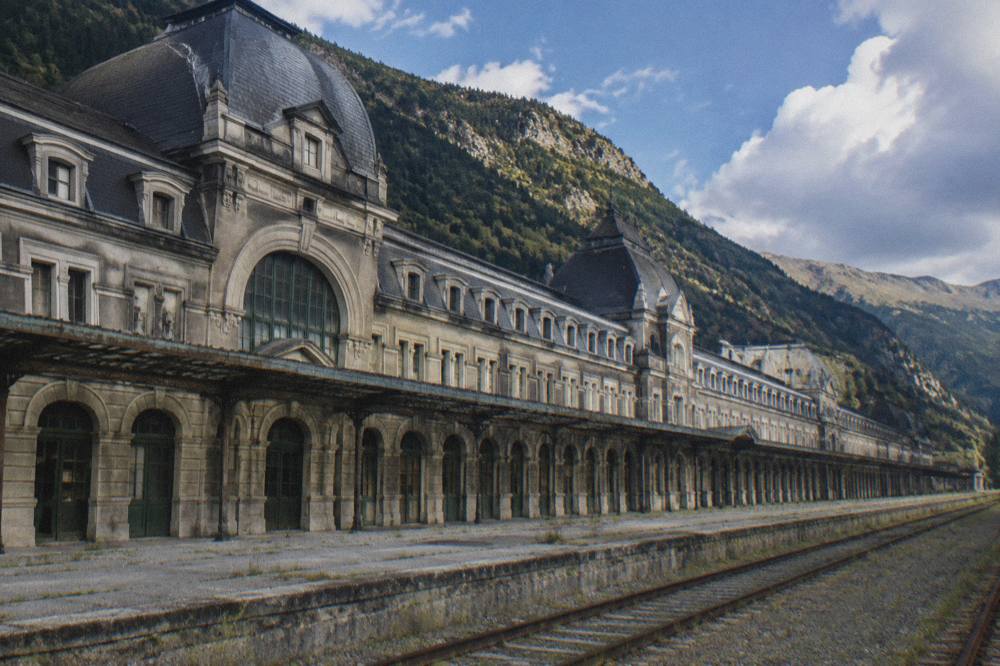
For context, the village of Canfranc itself is small, a mountain settlement of stone houses on the route towards the Somport pass, one of the historic crossings between Spain and France. The station dominates the lower end of the village. Visitors who come on a guided day trip typically spend their time walking the exterior, taking in the facade and the platform area, and hearing the border-station story from a guide, before continuing into the high Pyrenees. The Canfranc, Jaca and Sallent de Gállego excursion from Zaragoza structures the day exactly that way, and its listing says the full day runs 11 hours with a live guide.
Why Does Canfranc Station Make Such A Good Day Trip From Zaragoza?
Because it delivers the two things Zaragoza cannot: high mountain scenery and a one-of-a-kind monument, both reachable on a single long day out. Zaragoza itself sits on the dry Ebro plain, and within one day trip you can stand in front of one of the most photographed buildings in the Pyrenees, walk a historic mountain town, and look up at peaks that belong to an entirely different landscape. The excursion from Zaragoza costs from $66.40 per person and runs 11 hours door to door.
That price and duration come from the operator's listing, and they frame the decision honestly. This is a full-day commitment, an early start and a late return, but it converts a Zaragoza city break into a Pyrenees experience without a rental car, without mountain driving and without working out rural transport. The listing rates the excursion 4.7 from 10 reviews, and the companion Canfranc, Jaca and Sallent de Gallego Tour from the same family of products rates 5 from 2 reviews at from $67.66 per person.
The other reason is variety. A day built around Canfranc is not just a station visit. The standard route from Zaragoza runs through Jaca, the historic capital of the Jacetania region with its Romanesque cathedral and old walled centre, and on to Sallent de Gállego, a stone village in the Tena Valley beside a turquoise reservoir under high peaks. You get architecture, history and alpine landscape in one loop. Very few day trips from a Spanish city pack that range into a single outing.
How Do You Get From Zaragoza To Canfranc Station?
The simplest way from Zaragoza is the guided coach excursion, which picks up in the city and handles the whole 11-hour loop to Canfranc, Jaca and Sallent de Gállego. Independent travellers can reach the area by regional transport towards Jaca and connect up the Aragon valley, but no timetable or fare for that route is confirmed here, so check Renfe and the regional coach operators for live times before committing. Driving yourself means mountain roads and winter conditions to plan around.
If you are travelling independently, the honest advice is to verify the rail and coach options close to your travel date. The Spanish rail network reaches the Aragon valley, and Zaragoza-Delicias is the city's main station for both high-speed and regional services, but exact times, fares and frequencies for the Zaragoza to Jaca to Canfranc route were not read on an operator page here, so do not rely on any number you see quoted in a forum. The Zaragoza-Delicias station guide covers the station itself, the departure experience and the connections to Madrid and Barcelona, both about 1.5 to 2 hours away by high-speed train.
For the excursion option, the practicalities are simpler because the operator handles them. The listing for the 11-hour Canfranc, Jaca and Sallent de Gállego excursion from Zaragoza states pickup from Zaragoza, with the day spent on a guided loop into the Pyrenees. Check the operator's live listing for the exact pickup point and start time before you book, because those details vary by season. Check availability
Once you are in Zaragoza, moving around the city itself is cheap and easy, and these figures come from the 2026 Avanza fare table: the urban bus and tram single is 1.70 EUR, or 0.55 EUR with the Tarjeta Bus travel card. The municipal tourist bus, the hop-on hop-off Bus Turístico, costs 10 EUR for a 24-hour ticket covering 16 stops on a 90-minute loop, useful if you want to fill a spare half-day in the city before or after the mountains.
| Transport in Zaragoza | Fare | Notes |
|---|---|---|
| Urban bus or tram single | 1.70 EUR | No transfer included, 2026 Avanza fare table |
| Same trip with Tarjeta Bus | 0.55 EUR | Card costs 7 EUR and works on bus and tram |
| Night bus lines | 1.00 EUR | 2026 Avanza fare table |
| Bus Turístico hop-on hop-off | 10 EUR | 24 hours, 16 stops, 90-minute loop, cash on the bus |
| Airport bus, line 505 | 4.65 EUR single | About 2.25 EUR with a Lazo card, timed to flights |
What Do You Actually See At Canfranc Station?
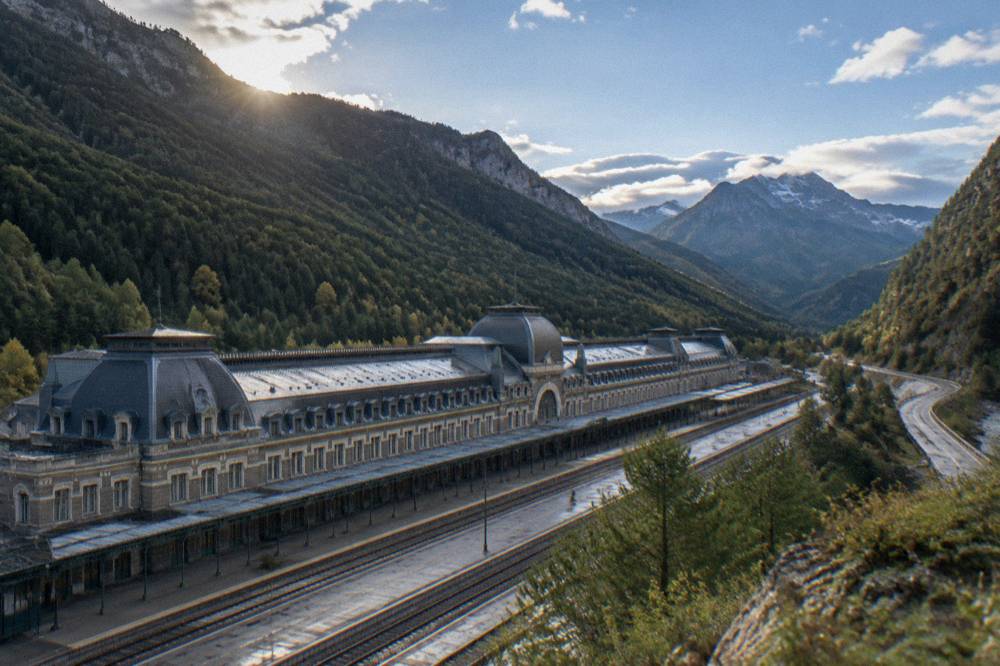
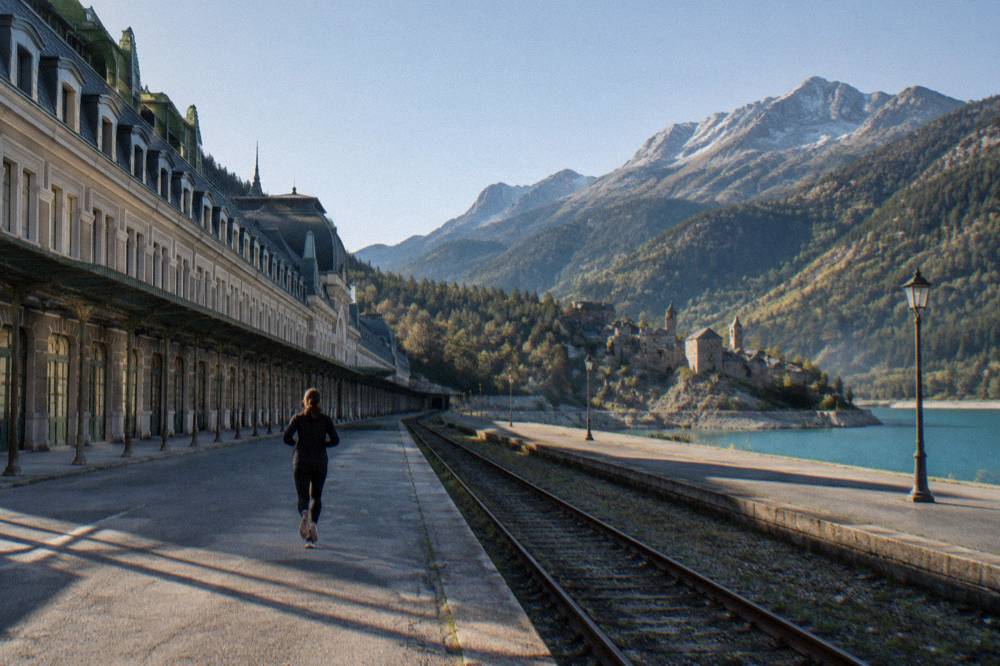
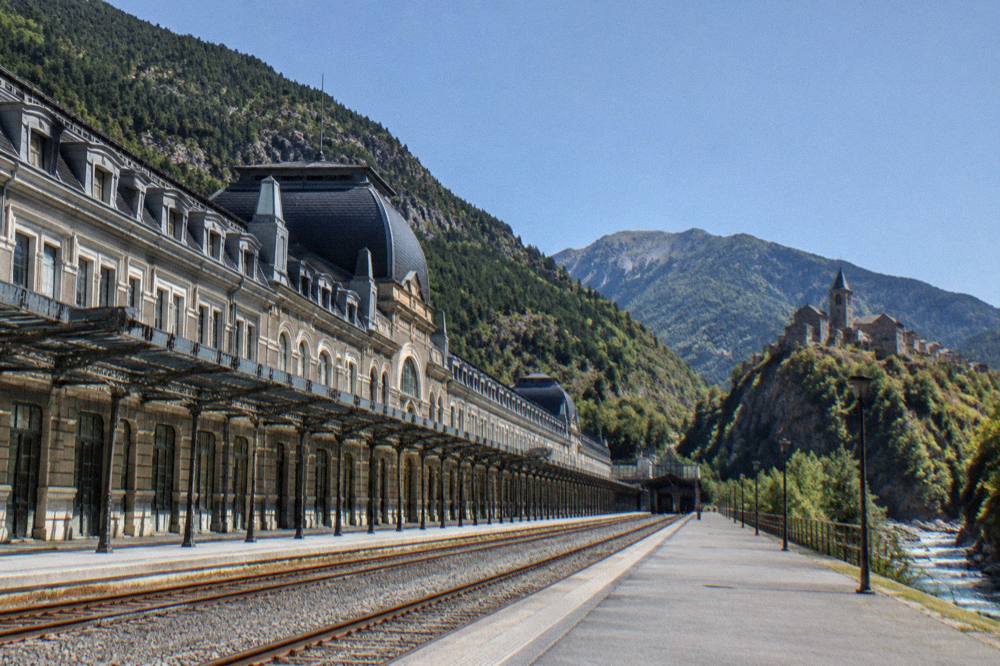
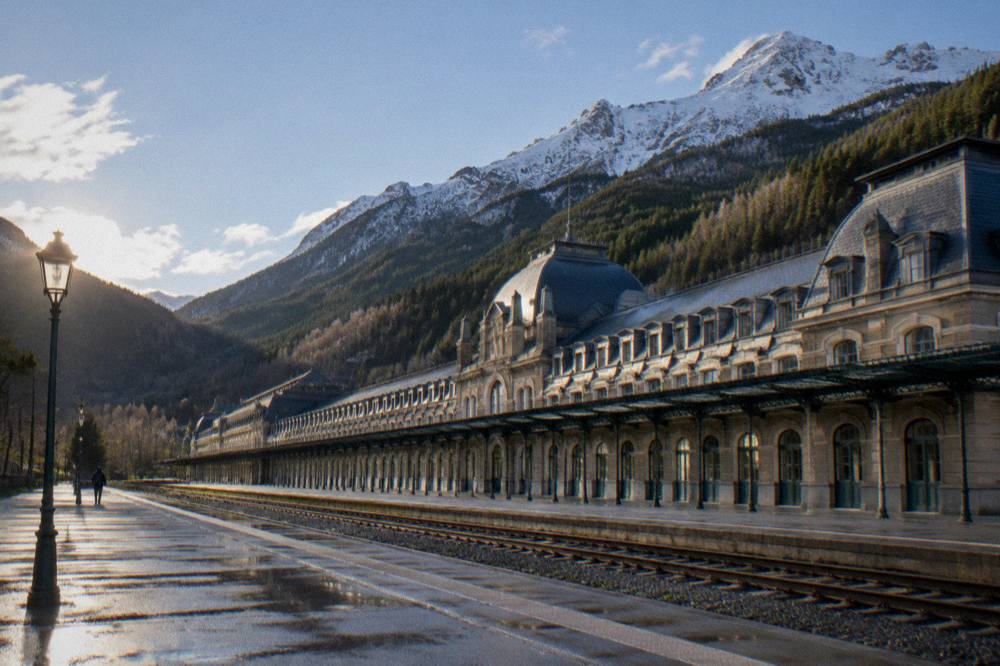
The main sight is the station building itself: an enormous, symmetric stone facade with a green tiled roof and long rows of arched windows, fronting platform structures built for international traffic. Visitors walk the exterior and the station area, see the scale of the platform canopy, and hear the story of the border terminal, the cross-border trains, and the decades the halls stood silent. The village of Canfranc and the mountain valley around it complete the picture.
Photographically, the building rewards the long view. The facade runs far longer than almost any rural station in Spain has any right to, and the mountain backdrop means the composition changes completely with the light and the season. In snow, the tiled roof and pale stone against white peaks is one of the defining images of the Aragonese Pyrenees. In summer, the valley greens and the river gives the scene a softer frame. There is no verified entry fee or interior opening schedule for the station, so check the operator's notice or the local tourism information before assuming you can go inside on any given day.
The story a guide will tell you is the heart of a visit. The station was built for trains between Spain and France, with customs and border formalities carried out on site, and for a time it was one of the most important rail crossings in the Pyrenees. The international link later ceased, and the building entered its long, famous decline, standing roofed and mostly unused while the world photographed it. That arc, from border gateway to monument of stranded ambition, is what people come for.
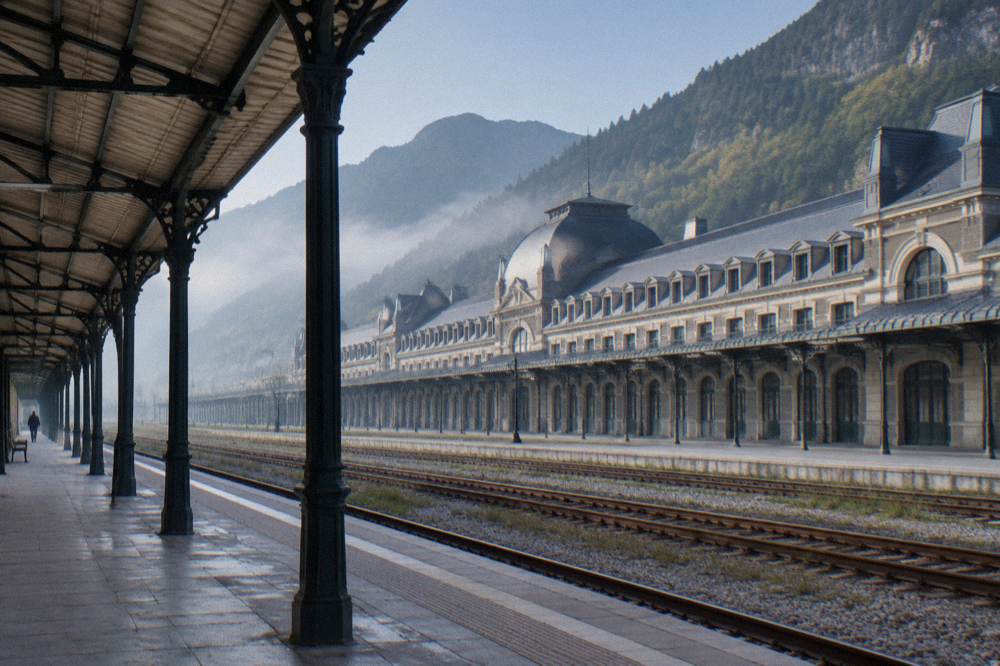
Around the station, the village of Canfranc offers stone architecture, mountain air and a handful of places to eat, and the valley road continues up towards the Somport pass, the historic crossing point between the two countries. If your day is self-planned, budget real time at the station rather than treating it as a photo stop: the building's scale only lands on you after a few minutes of walking its length.
Can You Combine Canfranc, Jaca And Sallent De Gállego In One Day?
Yes, and that combination is exactly what the standard guided excursion from Zaragoza does: an 11-hour loop that visits the station at Canfranc, the historic town of Jaca, and Sallent de Gállego in the Tena Valley, with transport and guiding included. It costs from $66.40 per person, is rated 4.7 from 10 reviews, and it is the most efficient way for a Zaragoza visitor to see all three without a car.
Jaca is the natural anchor of the middle of the day. It is the historic capital of its region, known above all for its Romanesque cathedral, one of the most significant early Romanesque buildings in Spain, plus a fortified citadel, stone streets and a setting where the Pyrenean foothills begin in earnest. The Jaca day-trip guide covers the town in depth, including its role as the region's mountain capital and how it pairs with other destinations in the same corner of Aragon.
Sallent de Gállego is the high point, in both senses. The village sits in the Tena Valley under serious peaks, with a stone core, a riverside setting and a reservoir whose turquoise water is one of the most shared images of the Aragonese Pyrenees. Walking its streets and looking up at the surrounding summits is the moment most visitors remember from the day. The listing for the excursion describes all three stops, with the exact time at each stop set by the operator, so treat the itinerary as a sequence rather than a fixed timetable. More of these guides are collected on Zaragoza Travel Guide.
For comparison, here are the three guided Pyrenees options from the site's day-trip selection, with prices and ratings exactly as their listings state them:
| Guided Pyrenees Day Trip From Zaragoza | Duration | From (per person) | Rating |
|---|---|---|---|
| Excursion to Canfranc, Jaca and Sallent de Gállego | 11 hours | $66.40 | 4.7 from 10 reviews |
| Canfranc, Jaca and Sallent de Gallego Tour | Not stated | $67.66 | 5 from 2 reviews |
| Ordesa Day Sightseeing Tour: Aínsa, Torla and Sorrosal Waterfall | 11 hours | $66.40 | 5 from 3 reviews |
What Other Pyrenees Day Trips Can You Take From Zaragoza?
The strongest alternative to Canfranc is the Ordesa day sightseeing tour, an 11-hour excursion from $66.40 per person rated 5 from 3 reviews, which loops through Aínsa, Torla and the Sorrosal waterfall on the way to the Ordesa valley, the most famous of Aragon's high mountain landscapes. Beyond that, the other headline mountain destinations reachable from Zaragoza on a day trip include the Ordesa valley, Aínsa and Alquézar, each covered in its own guide on this site.
Ordesa is the landscape counterpart to Canfranc's architecture. Where the station day is about a building and a story, the Ordesa day is about limestone cliffs, waterfalls and the high valley that made Aragon's Pyrenees internationally known. The excursion's listing names Aínsa, with its hilltop old town and plaza, Torla, the gateway village, and the Sorrosal waterfall, and it runs the same 11-hour format from Zaragoza. If your trip to Zaragoza allows only one mountain day and you care more about scenery than railway history, this is the honest comparison to make. The Ordesa National Park guide, the Aínsa guide and the Alquézar guide cover those destinations in depth.
Further east, Alquézar sits above the Vero river canyons with one of the most spectacular village settings in Spain, and the full-day Somontano wine excursion that visits Alquézar, from $280.95 per person and rated 5 from 14 reviews, combines it with the region's wineries. Closer to the Canfranc route, the San Juan de la Peña guide covers the dramatic monastery set into a rock face south of Jaca, and the Huesca guide covers the provincial capital that sits on the way to the mountains. The Sos del Rey Católico guide and the Moncayo Natural Park guide round out the northern and western options, each a different flavour of Aragonese day out.
For a change of direction entirely, the southern and eastern day trips, Monasterio de Piedra with its waterfalls, Albarracín with its reddish walled town, and Teruel with its Mudéjar towers, are covered in their own guides and make a useful contrast if your Zaragoza stay is long enough for several day trips.
When Is The Best Time Of Year To Visit Canfranc Station?
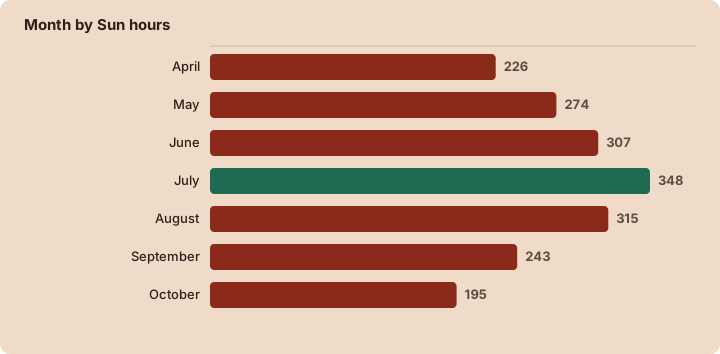
Late spring through early autumn is the safest window for the full excursion, because the high Pyrenees carry snow and ice well into spring and the mountain road towards the Somport direction demands winter caution. For planning your days in Zaragoza itself before you head north, AEMET's 1981 to 2010 normals for the Zaragoza Aeropuerto station show July as the hottest and sunniest month, at a 32.4 C mean maximum and 348 sun hours, while May is the wettest month at 44 mm.
The mountain weather is a different regime from the plain, and no climate table for Canfranc is given here, so treat the Zaragoza figures as your city-side planning baseline and pack for the mountains separately. Layers are the standard advice for any Pyrenean day trip at any time of year: valley heat and summit cold can coexist within a single excursion, and the guided days include standing time at photo stops.
| Month | Mean max C | Mean C | Rain mm | Sun hours |
|---|---|---|---|---|
| April | 19.6 | 13.8 | 39 | 226 |
| May | 24.1 | 18.0 | 44 | 274 |
| June | 29.3 | 22.6 | 26 | 307 |
| July | 32.4 | 25.3 | 17 | 348 |
| August | 31.7 | 25.0 | 17 | 315 |
| September | 27.1 | 21.2 | 30 | 243 |
| October | 21.4 | 16.2 | 36 | 195 |
All figures are AEMET 1981 to 2010 normals for the Zaragoza Aeropuerto station, the only window that station page publishes. One timing note that matters for October visitors: the Fiestas del Pilar run from 10 to 18 October 2026, with the Ofrenda de Flores on 12 October, and the city is at its busiest and liveliest that week. Combining a Pilar-festival city stay with a Pyrenees excursion in the same week is a superb itinerary, but book the excursion early, because the whole region travels that fortnight.
What Does A Guided Excursion From Zaragoza Actually Cost?
The Canfranc, Jaca and Sallent de Gállego excursion starts at $66.40 per person for an 11-hour guided day, the sister Canfranc tour starts at $67.66 per person, and the Ordesa alternative starts at $66.40 per person, all prices as stated on the operators' live listings. That is the full transport-plus-guide cost of the day, with no verified entry fees for the station itself to add on top, and no tourist tax applies anywhere in Aragon.
The no-tax point is worth knowing because it is unusual in Spain right now: the Aragon regional government discarded a visitor tax in September 2026 on the grounds that it would discourage arrivals, so your day trip carries no local levy on top of the ticket. What the listings do not all state is what food is included, so assume meals are at your own expense unless the listing you are booking says otherwise, and budget for lunch in Jaca or the Tena Valley.
If you are building a whole Aragon week, the cost logic is straightforward: the Pyrenees excursions are the premium days of a Zaragoza-based trip, and the city itself is cheap to fill, with free entry to the Basílica del Pilar's temple, the IAACC Pablo Serrano and the Centro de Historias among the municipal offerings, and a free-walk option through GuruWalk's Indispensable Zaragoza Free Tour of the Old Town, tip based and rated 4.97 from 576 reviews, where the guru walks you through the Casco Histórico for whatever you choose to pay at the end.
| Day-Tip Option From Zaragoza | Type | From (per person) | Rating |
|---|---|---|---|
| Canfranc, Jaca and Sallent de Gállego excursion | Guided Pyrenees coach day, 11 hours | $66.40 | 4.7 from 10 reviews |
| Canfranc, Jaca and Sallent de Gallego tour | Guided Pyrenees day | $67.66 | 5 from 2 reviews |
| Ordesa, Aínsa, Torla and Sorrosal waterfall day | Guided Pyrenees coach day, 11 hours | $66.40 | 5 from 3 reviews |
| Full-day Somontano wine excursion with Alquézar | Guided wine and village day | $280.95 | 5 from 14 reviews |
| Indispensable Zaragoza Free Tour: Old Town (GuruWalk) | Free, tip-based city walk, 2 hours | Tip based | 4.97 from 576 reviews |
How Do You Plan The Day Around The Excursion?
Book the excursion for a day with the most stable weather forecast, start early, keep the evening in Zaragoza free, and treat the city as your base rather than trying to overnight in the mountains. The excursion returns to Zaragoza at the end of an 11-hour day, so a late tapas dinner in the old town is the natural finish, and the city's roundup of things to do covers how to fill any remaining half-days in town.
A few practical points make the day smoother. Eat a proper breakfast before pickup, because the mountain roads come first and the main lunch stop falls in the middle of the day. Charge your camera or phone fully: between the station facade, Jaca's old streets and the Tena Valley, this is one of the most photographed days a Zaragoza trip offers. Carry a layer even in July, because standing at altitude in cloud differs sharply from the Zaragoza plain, where the same afternoon can sit above 30 C. The things to do in Zaragoza roundup is the place to plan the city half of the trip.
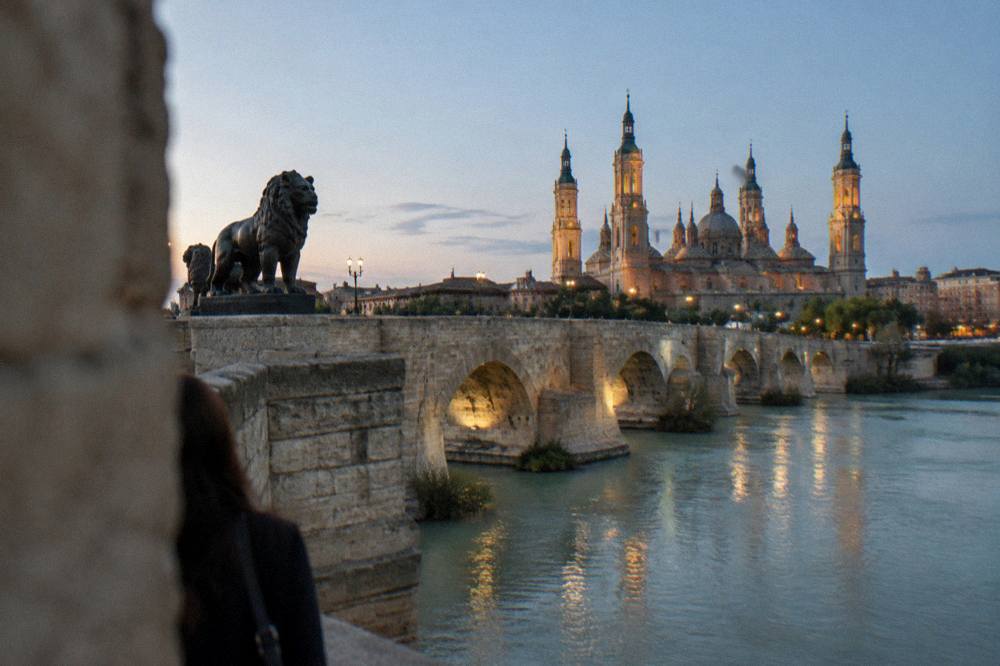
If you have energy left on returning, the evening tapas walking tour of the old town, from $106.92 per person and rated 4.9 from 62 reviews, is the classic way to close a heavy sightseeing day in Zaragoza, letting the city's food scene do the work after the mountains have done the spectacle. Alternatively, a gentler option is simply to walk the Ebro riverside by the Puente de Piedra, the stone bridge whose current span was built in 1401 and opened in 1440, and let the day settle.
For a two-day version of the idea, some travellers take the Pyrenees excursion on day one and a city walking tour on day two, such as the 2.5-hour historical tour of the old district, from $106.92 per person and rated 5 from 14 reviews, which covers the Casco Histórico's monuments and layers in one guided loop. That pairing gives you Aragon's two faces, the mountain frontier and the Ebro capital, without ever moving hotels.
Common Questions About Canfranc Station
Is Canfranc Station worth visiting from Zaragoza?
For most travellers, yes. It is one of the most striking buildings in the Pyrenees, a former international border station of palace-like scale in a small mountain village, and the 11-hour guided excursion from Zaragoza pairs it with Jaca and Sallent de Gállego for a day that combines architecture, history and high mountain scenery.
Can you visit Canfranc Station without a tour?
Yes, the station and village can be visited independently using regional transport towards Jaca and the Aragon valley, but no timetable or fare for that route is confirmed here, so check Renfe and the regional coach operators for live times before you plan. The guided excursion from Zaragoza, from $66.40 per person, removes all of that planning.
How long does the Canfranc day trip from Zaragoza take?
The Excursion to Canfranc, Jaca and Sallent de Gállego from Zaragoza runs 11 hours in total, according to its listing, covering all three stops with a guide. It is a full day with an early start and an evening return.
What else do you see on the Canfranc excursion?
The standard route visits Jaca, the historic mountain town known for its Romanesque cathedral and citadel, and Sallent de Gállego, a stone village in the Tena Valley beside a turquoise reservoir under high peaks. The station at Canfranc is the signature stop.
Is Canfranc Station the same as the Canfranc village?
They are two things in one place. Canfranc is a small mountain village in the Aragon valley near the Somport pass, and the station is the monumental former international railway terminal at its edge, the reason most visitors come. A visit covers both without any extra effort.
Canfranc Station is the day trip that shows a different Aragon from the one the Ebro plain gives you, and pairing it with Jaca and Sallent de Gállego turns a single long day into the mountain half of a complete Zaragoza trip.