Albarracin Day Trip From Zaragoza
Albarracin is the red hill town of the Sierra de Albarracin, one of the most photographed medieval enclaves in Spain and a natural day out from Zaragoza, the capital of Aragon on the Ebro.
Short answer
Albarracin lies south of Zaragoza in the Sierra de Albarracin, near Teruel. It is a walled medieval town of pink and terracotta houses above the Guadalaviar river gorge, best visited as a full-day trip with time for the old town, the walls and the surrounding pine forest.
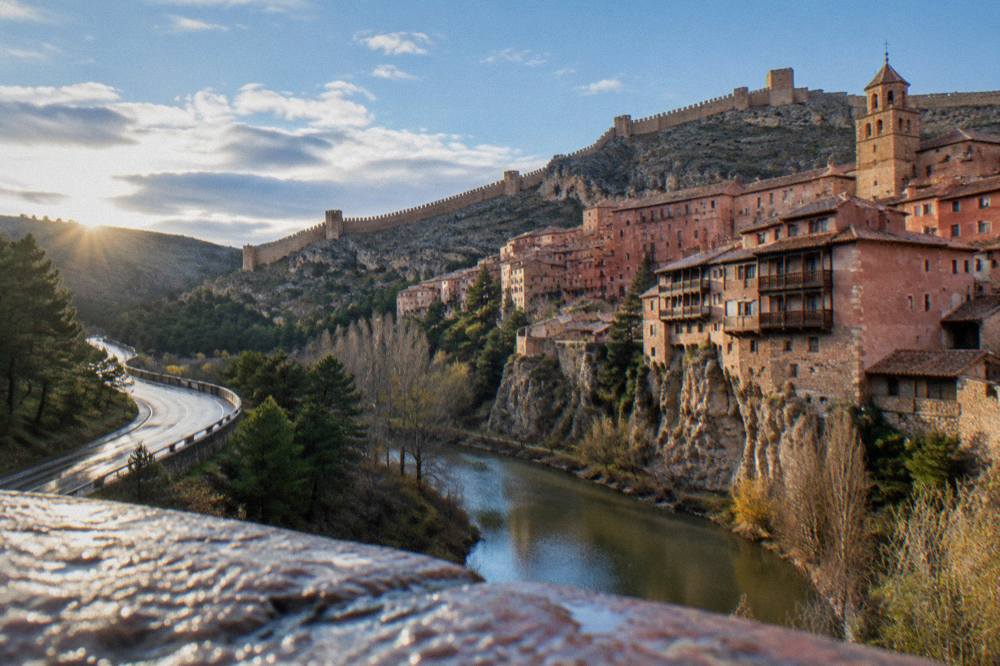
Albarracin is the one Aragonese village that appears on Spanish shortlists of the country's most beautiful towns, and it sits within a long but rewarding day's reach of Zaragoza, the capital of Aragon on the Ebro. The town is a dense cluster of pink, red and ochre houses stacked up a hillside above the gorge of the Guadalaviar river, ringed by a medieval wall and crowned by the stump of an old castle, all of it wrapped in a protected pine forest that gives the Sierra de Albarracin its character. Zaragoza visitors who want a day of stone lanes, river air and mountain light rather than another museum morning will find few better uses of a day out, and this page from Zaragoza Travel Guide sets out how the trip works, what the town offers in every season, and which guided options from Zaragoza make sense alongside it.
What Is Albarracin And Why Does It Work As A Zaragoza Day Trip?
Albarracin is a small walled medieval town in the Sierra de Albarracin, in the province of Teruel, south of Zaragoza in Aragon, Spain. It is famous for its pink and terracotta houses, its hilltop walls above the Guadalaviar river gorge and its surrounding pine forest, and it is regularly named among the most beautiful villages in Spain. A day trip from Zaragoza swaps the city's Mudéjar towers for mountain silence and stone lanes.
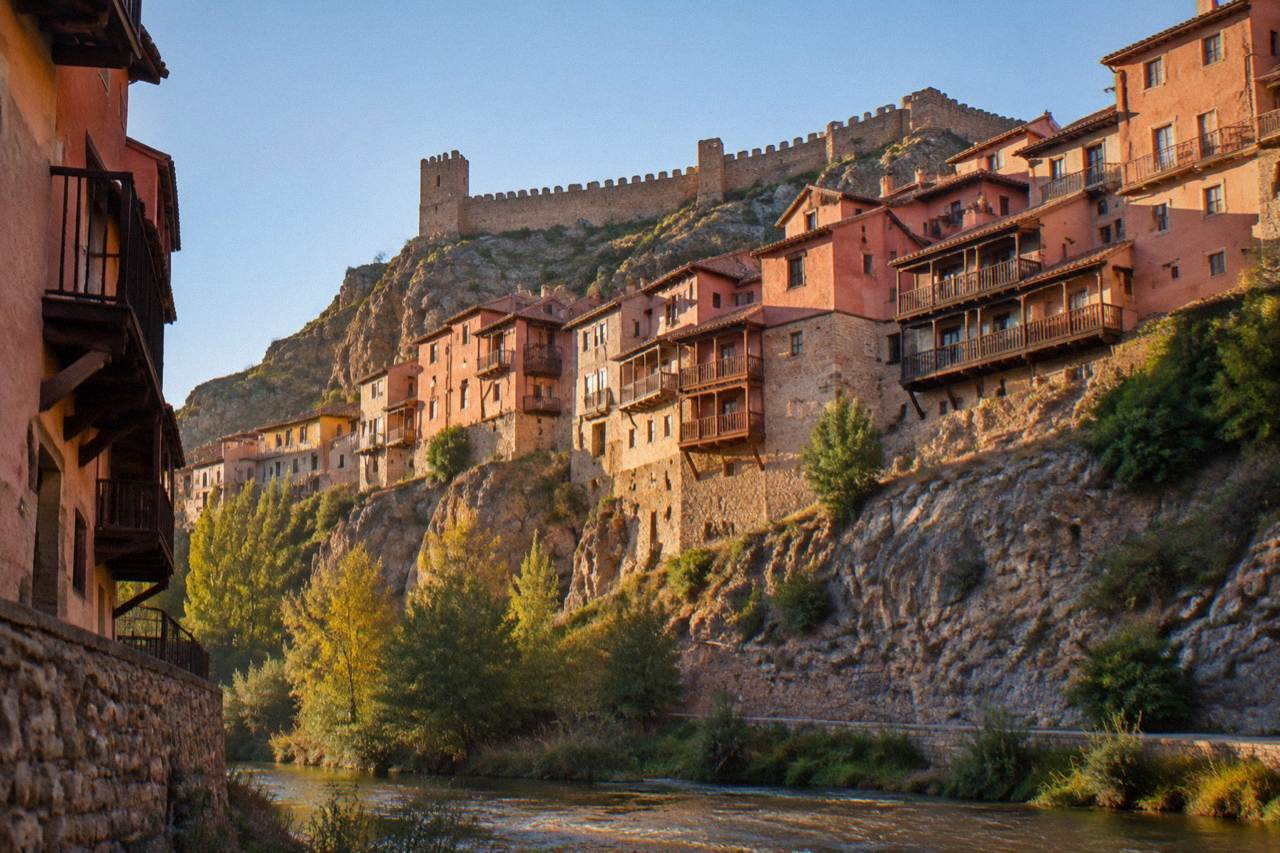
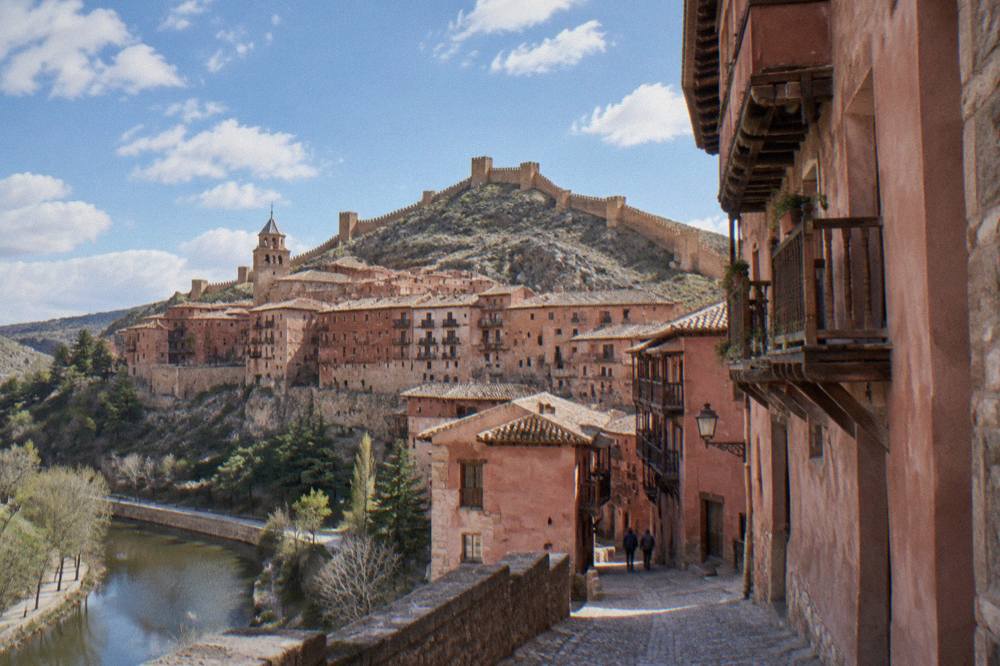
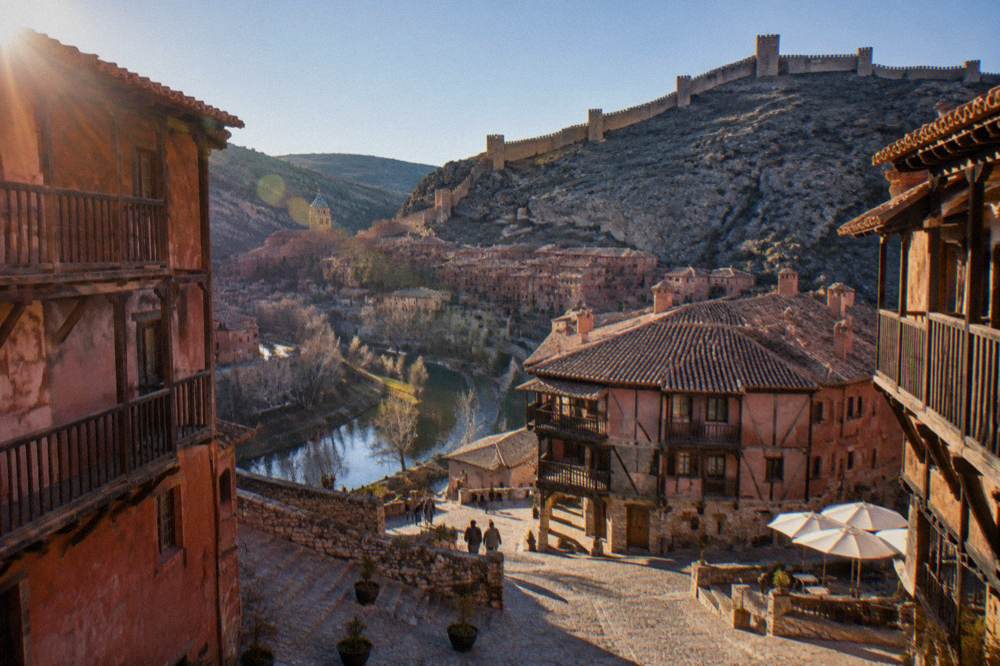
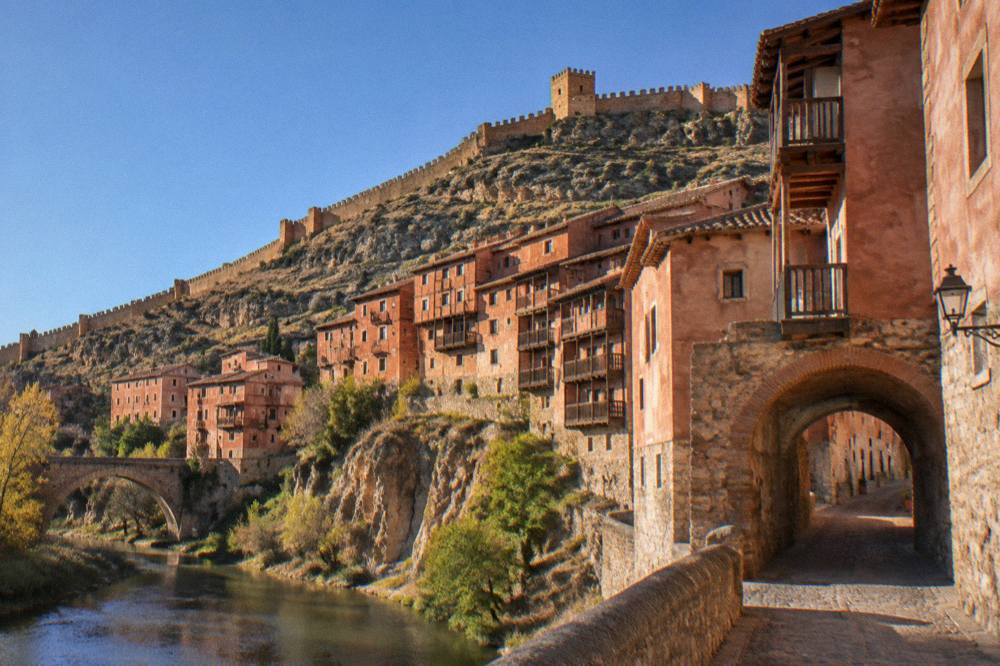
The town's colour is its signature. The houses are built from local timber, gypsum and rubble rendered in shades that run from pale rose to deep rust, and the whole ensemble glows differently through the day: flat and cool in the morning, blazing at midday, soft again in the late afternoon. That palette, together with the overhanging wooden balconies and the steep alleys that thread between the houses, is what photographers come for, and it is earned rather than staged. The town was declared a national monument area decades ago and its historic core is tightly protected, so the fabric a visitor walks through is genuinely old rather than reconstructed.
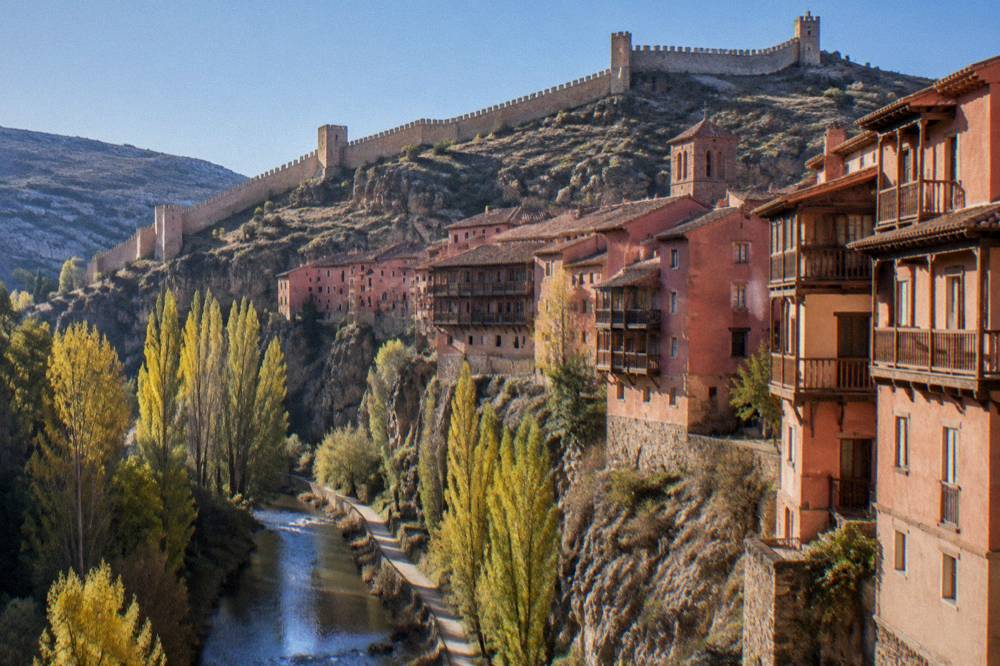
The setting matters as much as the streets. Albarracin stands on a rocky spur almost encircled by the Guadalaviar, whose narrow gorge cuts a green line of water and poplars through dry pine country below the town. Above the houses rise the remains of the medieval wall, walkable in stretches, and the ruined castle on the high ground. The surrounding pine forest, the Pinar de Albarracin, is a protected site notable for its ancient resin-tapped trees, some of them centuries old with bark scarred by decades of resin extraction, a landscape detail that gives the woods a strange, sculpted look found in few other Spanish forests.
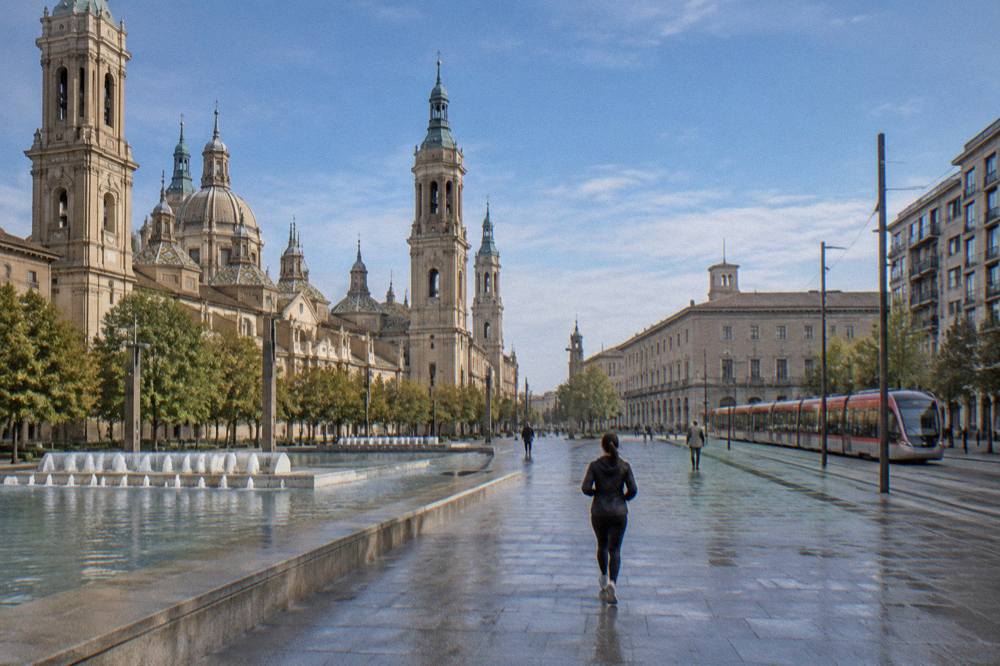
For a visitor based in Zaragoza, the appeal is contrast. Zaragoza is a big working city of Basílica del Pilar, La Seo and the Aljafería, wide avenues, tram lines and a dry Ebro valley light; Albarracin is a village where the loudest sound at midday is swifts around the church tower. The pairing works best as a full day rather than a half, because the town rewards slow hours: the walls at opening light, a long lunch, the river path in the afternoon when the heat has left the gorge.
How Do You Get From Zaragoza To Albarracin?
The realistic way to reach Albarracin from Zaragoza is by car, heading south through Aragon toward Teruel province, with the route leaving the Ebro valley plain and climbing into the Iberian mountain system. There is no high-speed rail link to the town, and public-transport connections are thin, so most visitors drive or join an organised excursion. No single verified timetable applies, so check current services before committing.
Driving is the flexible option. The route runs south from Zaragoza out of the Ebro valley, and the last stretches are mountain road rather than motorway, winding through the sierra as the country turns from dry cereal plain to pine and rock. A hire car from Zaragoza gives you the freedom to stop en route, and the region between the two towns carries several of Aragon's quieter attractions worth breaking the journey for. The Daroca day trip from Zaragoza is one such stop, a walled town with Mudéjar churches on the southern road, and the Carinena wine region sits in the plains south of Zaragoza if you want a cellar visit on the way back.
Public transport exists but demands planning. Albarracin is served by regional bus connections through Teruel rather than by any direct line from Zaragoza, and timetables in rural Aragon change with the seasons. If you plan to go without a car, work the day around the Teruel connection and treat the Teruel day trip guide as the companion page, since Teruel's Mudéjar towers are the natural anchor for any southern Aragon itinerary and the two can be combined on an ambitious day.
The third option is a guided excursion. Bookable day trips from Zaragoza exist as cards for the Pyrenees, Tarazona and Moncayo, Alquezar and the wine country, and the guided options below cover the ones that run from the city. Albarracin itself is usually an independent, self-drive destination, which is worth knowing before you plan: the town rewards a car and punishes a tight timetable.
If a guided day from Zaragoza appeals more than the wheel, the excursion to Canfranc, Jaca and Sallent de Gallego is the strongest long-day card on offer: an eleven-hour trip from Zaragoza into the Pyrenees that pairs the famous international station of Canfranc with the mountain town of Jaca and the village of Sallent de Gallego, from $66.40 per person and rated 4.7 from 10 reviews on the operator's listing. It goes north rather than south, so think of it as the mountain alternative to Albarracin's sierra, on a day when you would rather ride than drive. Check availability if the Pyrenees version of the day fits your dates.
What Should You See In Albarracin'S Old Town?
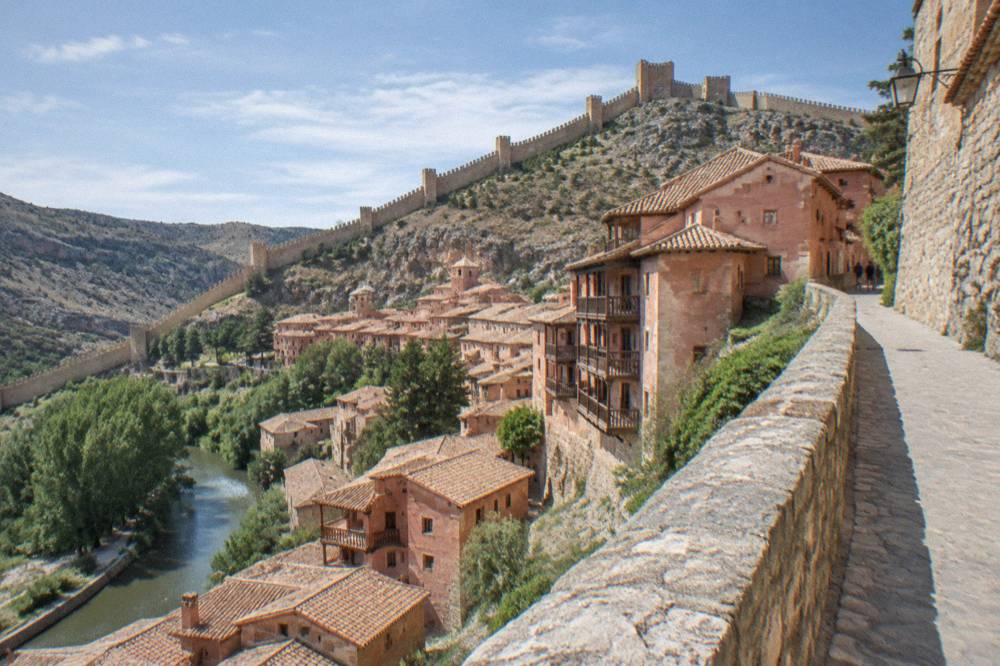
The essential sights are the wall walk above the town, the Plaza Mayor with its timber-framed town hall, the narrow alleys of the old quarter, the ruined castle on the high spur, and the river path along the Guadalaviar gorge below the houses. Everything sits within a compact hillside core, so the whole list is walkable in a slow day without transport inside the town.
Start high. The wall of Albarracin survives in long stretches on the northern flank of the town, and the walk along it delivers the postcard view of red roofs stacked above the green line of the river. The masonry is rough limestone rubble, pierced by square towers, and it reads as military architecture from the town's medieval frontier period, when Albarracin was the capital of an independent taifa, a short-lived Islamic lordship that took its name from the Banu Razin dynasty. That political footnote is the town's claim to historical importance: for a stretch of the medieval period this was the seat of a small sovereign state, and the walls and castle are its residue.
The Plaza Mayor is the social centre, a sloping square of houses with deep overhanging eaves and the town hall projecting over the street on timber corbels, a construction detail that makes the building look as if it is leaning out to watch the square. From here the alleys divide: upward toward the castle and the church of Santa Maria, downward toward the river gate and the gorge path. The old quarter retains the layout of the medieval town rather than a grid, so getting lost is the correct technique, and the lanes are narrow enough that two people with cameras must negotiate.
Below the town, the river path is the quiet hour of the day. A track follows the Guadalaviar through the gorge under the houses, crossing and recrossing the water, with the walls overhead and poplars along the bank. In the pine forest above and beyond the town, waymarked walks reach viewpoints and the resin-tapped pines of the protected Pinar, and the terrain is gentle enough for families. The Monasterio de Piedra day trip makes a good companion if river-and-rock scenery is what drew you to the sierra, since its waterfalls and canyon are the region's most famous water landscape.
When Is The Best Time Of Year To Visit Albarracin From Zaragoza?
The best months are late spring, from April to June, and early autumn, September and October, when the Zaragoza region's 1981 to 2010 AEMET normals show mild mean temperatures of roughly 14 to 25 degrees and the mountain light is at its best. Midsummer is hot even in the sierra and midwinter can put snow on the high country, so shoulder seasons give the most comfortable walking weather for the walls and gorge path.
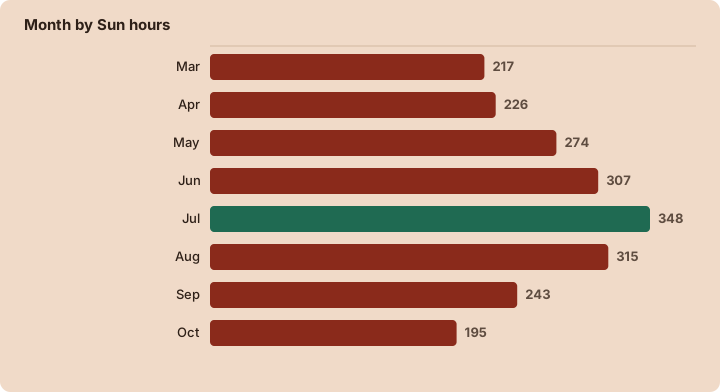
Zaragoza's own climate data, AEMET's 1981 to 2010 normals for the Zaragoza Aeropuerto station, gives the planning baseline for any day out from the city, and Albarracin, higher and greener, runs a few degrees cooler than the plain. The table below shows what the Zaragoza figures look like month by month; read them as the floor for the sierra, not the ceiling.
| Month | Mean C (Zaragoza station) | Mean max C | Rain mm | Sun hours |
|---|---|---|---|---|
| Mar | 11.6 | 17.3 | 19 | 217 |
| Apr | 13.8 | 19.6 | 39 | 226 |
| May | 18.0 | 24.1 | 44 | 274 |
| Jun | 22.6 | 29.3 | 26 | 307 |
| Jul | 25.3 | 32.4 | 17 | 348 |
| Aug | 25.0 | 31.7 | 17 | 315 |
| Sep | 21.2 | 27.1 | 30 | 243 |
| Oct | 16.2 | 21.4 | 36 | 195 |
Two patterns matter for the trip. First, May is the wettest month in the 1981 to 2010 series at 44 mm and July and August the driest at 17 mm each, so summer days are reliable but hot, and spring days are gorgeous but carry a real chance of a wet afternoon in the mountains. Second, October, at a 21.4 C mean maximum in Zaragoza, is arguably the sweet spot: the light on the terracotta walls is low and warm, the gorge poplars turn, and the walking is comfortable.
Winter is a different product. The sierra is genuinely cold, snow sits on the high pine country some years, and the town is quiet midweek. If a winter day trip appeals, the dry continental character of the region means clear, crisp days are common, but pack for mountain cold rather than Zaragoza's milder Ebro valley.
What Should You Eat In Albarracin And The Sierra?
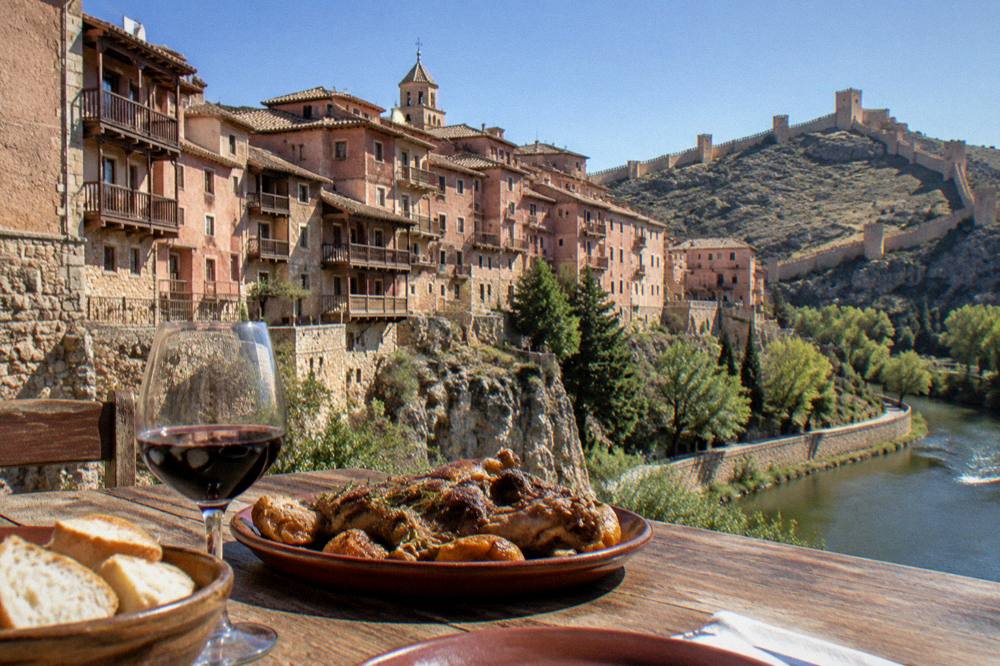
The Sierra de Albarracin table is mountain Aragon cooking: roast lamb, especially ternasco, thick soups and stews, river trout, cured meats, wild mushrooms in season, and the almond and honey sweets of rural Aragon. Restaurants in the town serve traditional menus rather than the tapas-bar culture of Zaragoza, so plan a proper sit-down lunch, the largest meal of the Spanish day, rather than a moving crawl.
Ternasco de Aragon, the region's protected young lamb, is the flagship dish of the whole province, and the sierra's restaurants roast it in wood ovens the old way. In a mountain village the sensible structure of the day is a late, long lunch: the walls and gorge path in the morning, a table at midday, and the drive back to Zaragoza in the late afternoon. The Zaragoza food guide covers the city side of Aragonese eating if you want to compare the versions.
The cured and preserved side of the sierra larder is worth seeking out in the small shops of the old town: local honey, which has a long history in these dry mountain valleys, almond sweets, and the cured sausages of rural Teruel. Wild mushrooms appear on menus in the autumn months when the pine woods give them up, and river trout from streams like the Guadalaviar is the classic local fish dish, usually pan-fried with ham.
For a food-first day out from Zaragoza with a guide rather than a steering wheel, the city's tapas and wine cards are strong. The Zaragoza Wine Tasting and Tapas tour runs three hours in the old town from $106.92 per person, rated 5 from 21 reviews, and pairs Aragonese wines with the city's bar culture. It makes a good evening either side of an Albarracin day, and it introduces the Cariñena and Somontano labels you will see on mountain menus.
| Sierra Dish or Product | What It Is | When It Shines |
|---|---|---|
| Ternasco asado | Oven-roasted young Aragonese lamb | Year-round, best on a cold day |
| Trucha a la pastora | River trout fried with ham | Spring and summer |
| Sopas de ajo y huevo | Mountain garlic and egg soup | Autumn and winter |
| Setas del pinar | Wild pine-forest mushrooms | Autumn, in season |
| Mieles de la sierra | Local mountain honey, almond sweets | Year-round, good to carry home |
Should You Visit Albarracin Independently Or With A Guided Tour From Zaragoza?
Albarracin itself is best visited independently, by car, because the town is a walkable hillside village with no guided product from Zaragoza in the current offering. Guided day trips from Zaragoza run instead to the Pyrenees, to Tarazona and Moncayo, to Alquezar and to the wine country, so the honest choice is between a self-drive sierra day and a guided mountain day in a different direction.
That split is worth being clear about. The town needs no guide: the walls, the plaza, the alleys and the gorge path are all open-air and self-explanatory, and the pleasure of the place is precisely its slowness. A car lets you set the pace, linger over lunch and stop in Daroca or the Cariñena cellars on the way back. The trade-off is the driving, on mountain roads in the final stretches, and the need to arrange parking outside the old core, since the lanes inside are narrow and largely reserved for residents.
The guided cards answer a different question: they suit the visitor who wants a mountain day without the wheel, and Zaragoza's offering of those is genuinely good. Alongside the Pyrenees excursion, the seven-hour "only excommunicated and cursed town with witches in Spain" tour from $209.33 per person, rated 4.7 from 6 reviews, heads to Tarazona and the Moncayo country with food included, a folkloric route through the far west of the province. It is a strange, memorable day out and the closest guided product in spirit to a sierra excursion.
| Guided Day Trip From Zaragoza | Area | Duration | From (per person) | Rating |
|---|---|---|---|---|
| Canfranc, Jaca and Sallent de Gallego excursion | Pyrenees | 11 hours | $66.40 | 4.7 from 10 reviews |
| Ordesa, Ainsa and Torla sightseeing tour | Pyrenees | 11 hours | $66.40 | 5 from 3 reviews |
| Cursed town and witches tour with food | Tarazona and Moncayo | 7 hours | $209.33 | 4.7 from 6 reviews |
| Full-day Somontano wine excursion and Alquezar | Somontano and Sierra de Guara | Full day | $280.95 | 5 from 14 reviews |
| Olive oil tour and Belchite old town | Belchite | Half day | $108.94 | 4.8 from 18 reviews |
The wine excursions deserve a word for the food-minded. The full-day Somontano excursion pairs a wine region with the stone village of Alquezar, covered in depth on the Alquezar day trip page, and the half-day winery card from $166.28 per person, rated 5 from 21 reviews, keeps the day shorter. If your interest in Albarracin is really an interest in Aragon's villages and landscapes generally, these guided cards cover the same appetite in a different corner of the region.
How Do You Plan The Practical Side Of An Albarracin Day From Zaragoza?
Plan a full day out, leave Zaragoza early, and structure the visit around a long sierra lunch, because the town is a destination rather than a stop. Wear proper shoes for stone lanes and the gorge path, carry water, and expect a quiet, small-town rhythm with limited services in the low season. Check current opening arrangements for the wall and castle before you go, as small-town monuments run seasonal hours.
Footwear first: the alleys are steep, cobbled and worn smooth, and the wall walk and river path are unpaved. The town is compact, so you do not cover great distances, but the gradients are real. In summer the sierra is cooler than Zaragoza's plain but the midday sun on south-facing stone is fierce, so the local rhythm, walls in the morning, lunch at midday, river in the afternoon, is also the sensible one.
Money and services are simple. Albarracin is a small town with a resident population of only a few hundred people, so it swells with visitors in high season and empties midweek in winter; restaurants and shops thin out accordingly in the cold months. Cards are widely accepted in the town's bars and restaurants, but carrying some cash is prudent in rural Aragon. There is no tourist tax anywhere in Aragon, the regional government having explicitly ruled one out in September 2026, so the price of the day is fuel, food and any entry fees at the monuments you choose.
If you are combining the trip with time in Zaragoza itself, the city's transport is cheap and simple: the urban bus and tram single is 1.70 EUR, or 0.55 EUR with the Tarjeta Bus, and the hop-on hop-off tourist bus is a 10 EUR general ticket for 24 hours over 16 stops. The city's museums also run free-entry days worth knowing if your budget is tight, summarised below.
| Free-Entry Day in Zaragoza | What It Covers |
|---|---|
| First Sunday of the month | Caesaraugusta museums, Museo del Fuego y los Bomberos |
| First and third Sunday and Monday | Aljafería |
| First Tuesday and Sunday | Museo del Origami |
For the drive back, two stops make the day rounder. The Belchite day trip passes through the same southern country if you take the eastern loop, and the ruined old village there, destroyed in the Spanish Civil War and left standing as a memorial, deserves a sober visit rather than a photo stop. Closer to Zaragoza, the Fuendetodos trip, Goya's birthplace village, is a quiet cultural counterpoint to the sierra's medieval stones.
Which Other Day Trips From Zaragoza Pair Well With A Sierra Interest?
The strongest pairings for a visitor who liked Albarracin's combination of stone villages and mountain country are Teruel for Mudéjar architecture, Daroca for walled streets, Alquezar for a gorge village with canyoning country, the Ordesa and Jaca excursions for high Pyrenees, and Moncayo Natural Park for the closest big mountain forest to Zaragoza. Each makes a different kind of day, from architecture to walking to wine.
A second sierra day is easy to justify. The Moncayo Natural Park day trip is the nearest big mountain to Zaragoza, a massif of pine and beech on the western edge of the province, while the Huesca day trip and the Loarre Castle day trip push into the pre-Pyrenees, where Loarre's Romanesque fortress is one of the best-preserved castles in Europe. The Ordesa National Park page covers the grandest walking of the region, and the guided excursion there, an 11-hour sightseeing tour from $66.40 per person rated 5 from 3 reviews, is the card to check if you want the high mountains without driving.
| Day Trip From Zaragoza | Direction From the City | The Kind of Day It Makes |
|---|---|---|
| Albarracin | South, into the Sierra de Albarracin | Medieval hill town, walls, river gorge |
| Teruel | South | Mudéjar towers, old city, mountain food |
| Daroca | South-west | Walled town, Mudéjar churches, quiet lanes |
| Moncayo Natural Park | West | Mountain forest, big views, cool air |
| Alquezar | North-east | Gorge village, canyon country, wine nearby |
| Loarre Castle | North | Romanesque fortress, pre-Pyrenees villages |
| Belchite | South-east | Civil War ruins, memorial site, sober history |
The pattern across all of them is the one that makes Aragon rewarding for a visitor based in Zaragoza: a big, confident capital with the Basílica del Pilar, La Seo and the Aljafería, surrounded by empty, beautiful country where the villages are stone and the roads are quiet. Albarracin is the most spectacular of those villages, but it is one of a set, and a week in Zaragoza can string several of them together without ever repeating the drive.
Common Questions About Albarracin
Is Albarracin worth a day trip from Zaragoza?
Yes, for most visitors. It is regularly listed among the most beautiful villages in Spain, and its combination of terracotta houses, walkable walls, a river gorge and pine forest is unlike anything within a day's range of Zaragoza. The trip works best as a full day with a long lunch, not a rushed half.
How do you get to Albarracin without a car?
With difficulty and planning. There is no direct rail line, and regional bus connections run through Teruel with limited timetables. Most independent visitors drive; the alternative is to build the day around Teruel, or to take a guided excursion from Zaragoza in a different direction, such as the Pyrenees or Tarazona cards.
What is Albarracin famous for?
Its pink and terracotta medieval houses stacked above the Guadalaviar river gorge, its surviving town walls and castle ruins, its protected ancient pine forest, and its history as the capital of an independent medieval taifa. It is one of Spain's most photographed small towns.
Can you walk along the walls of Albarracin?
Yes, stretches of the medieval wall are walkable and give the classic view over the red roofs and the river below. The walk is unpaved and steep in places, so wear proper shoes, and check current access arrangements locally before you go, as small-town monuments run seasonal hours.
What is the best month to visit Albarracin?
May and October are the strongest months: the AEMET 1981 to 2010 normals for Zaragoza show mild mean maxima of 24.1 C in May and 21.4 C in October, and the sierra runs a few degrees cooler. October also pairs well with Zaragoza's Fiestas del Pilar, which run 10 to 18 October in 2026.
Is there a guided tour from Zaragoza to Albarracin?
No guided excursion from Zaragoza to Albarracin appears in the current offering, so the town is a self-drive or independent destination. Guided day trips from Zaragoza run to the Pyrenees, Tarazona and Moncayo, Alquezar and the wine regions, and the cards above cover those options.
Albarracin earns its reputation one lane at a time, and a day there from Zaragoza is the single best way to understand why rural Aragon keeps turning up on lists of Spain's most beautiful corners.