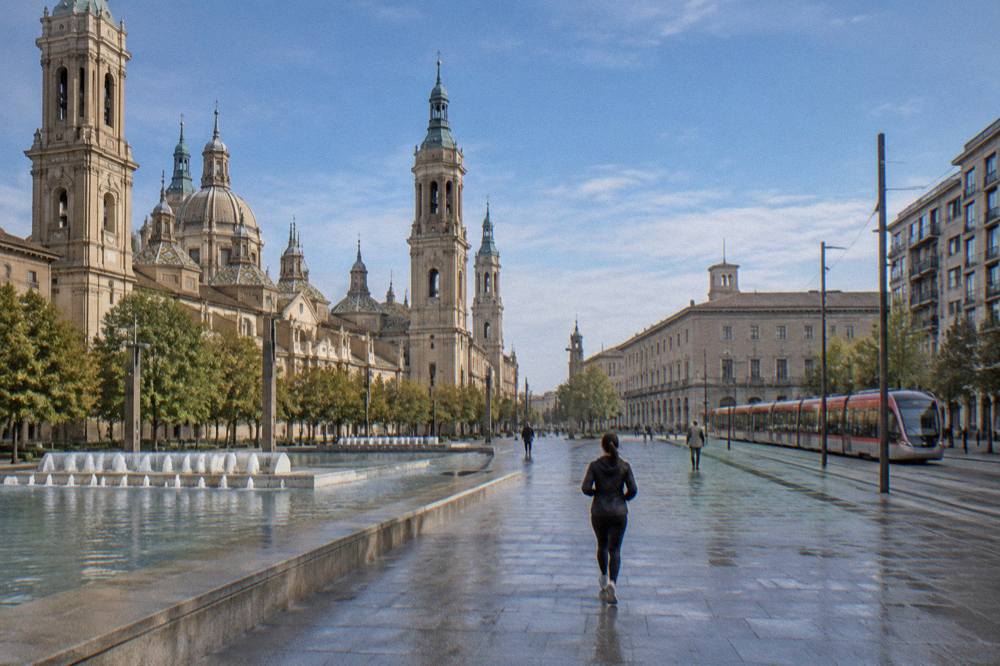
Huesca Day Trip From Zaragoza: What To See In Aragon's Mountain Capital
Huesca is the small provincial capital that sits in the foothills north of Zaragoza, the city that anchors every Pyrenees excursion in this part of Aragon. This guide covers what the town itself holds, which guided day trips from Zaragoza pass through its mountains, and how to plan the day without inventing a single number.
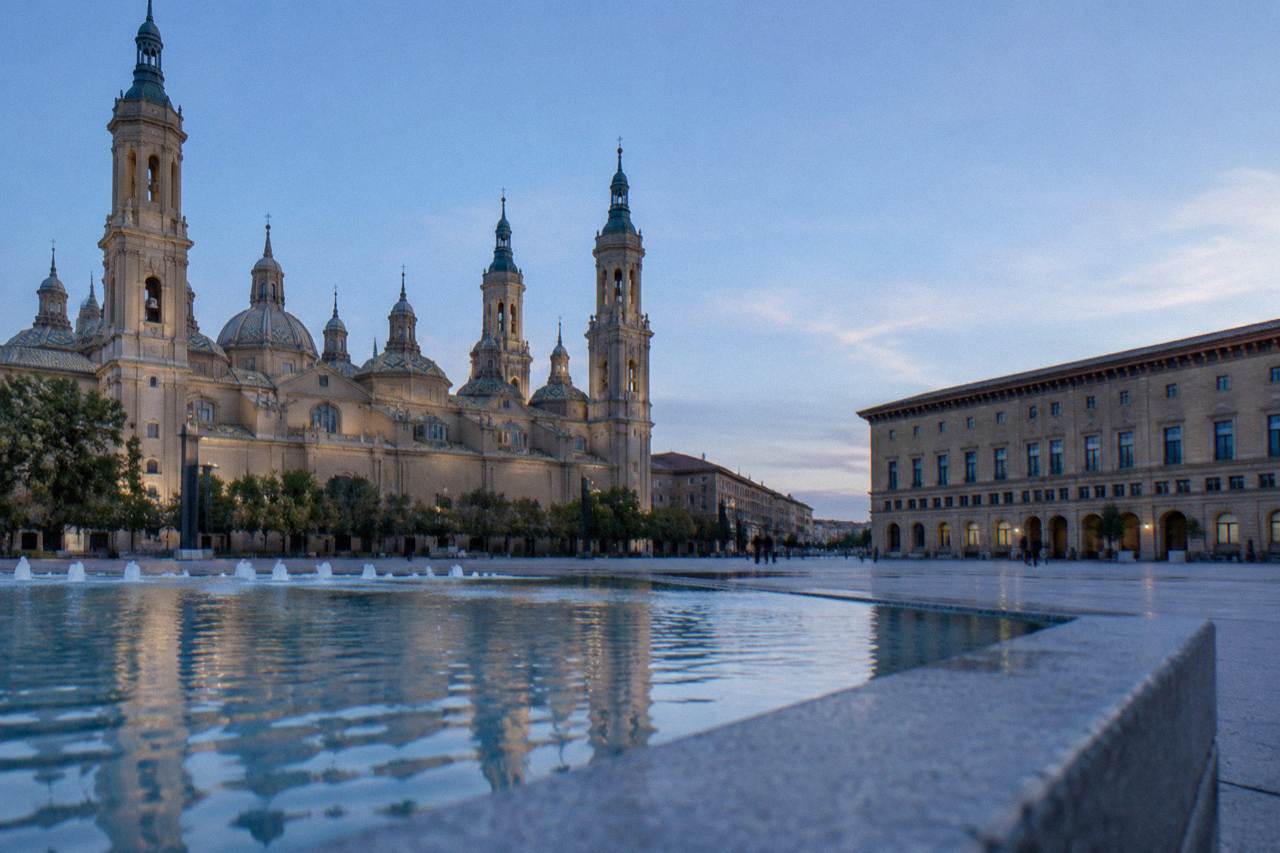
Short answer
Huesca is the capital of its own province within Aragon, lying north of Zaragoza in the foothills of the Pyrenees. It makes a compact day trip built around a Gothic cathedral, the Romanesque church of San Pedro el Viejo and a small, steep old town, and it shares its mountain country with guided excursions from Zaragoza to Loarre, Ordesa, Jaca and Canfranc.
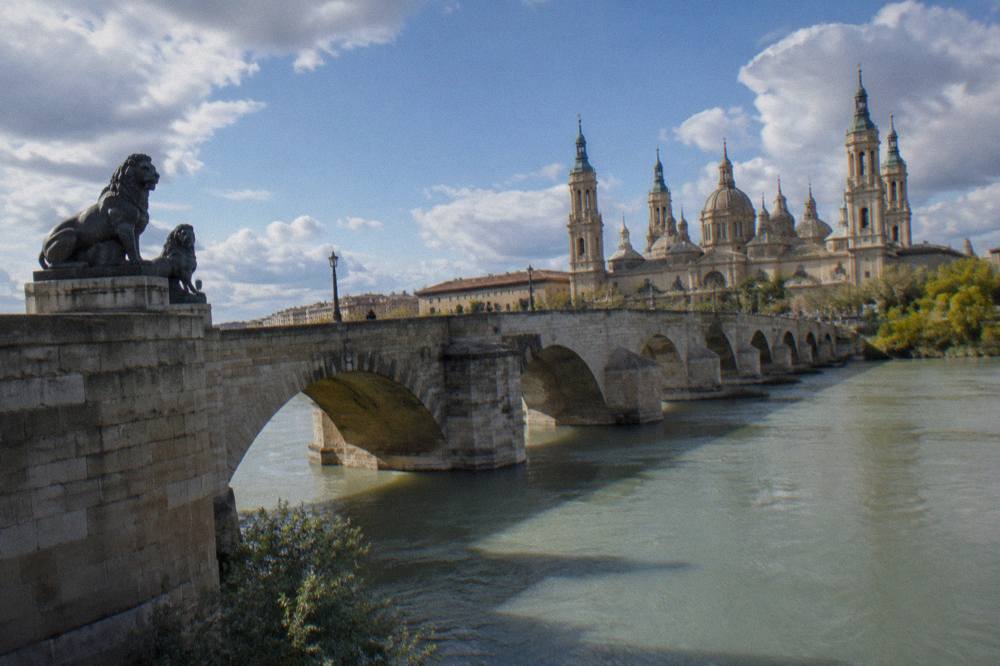
Zaragoza, Spain, the capital of Aragon on the Ebro, is the natural base for exploring the whole region, and one of the most rewarding directions to leave it in is north, towards Huesca. Huesca is a small city in its own right, the capital of the province that carries its name, sitting where the dry Ebro basin begins to climb into the foothills of the Pyrenees. It is a different Aragon from the one around the Basílica del Pilar and the Aljafería: smaller, quieter, greener, with a cathedral built in a single Gothic campaign and a Romanesque church whose cloister ranks among the finest in Spain. This guide lays out what a day there holds, which guided excursions from Zaragoza run through the same mountain country, and how to plan the trip honestly, with no invented timetables and no invented prices.
Where Is Huesca And What Kind Of Day Trip Is It?
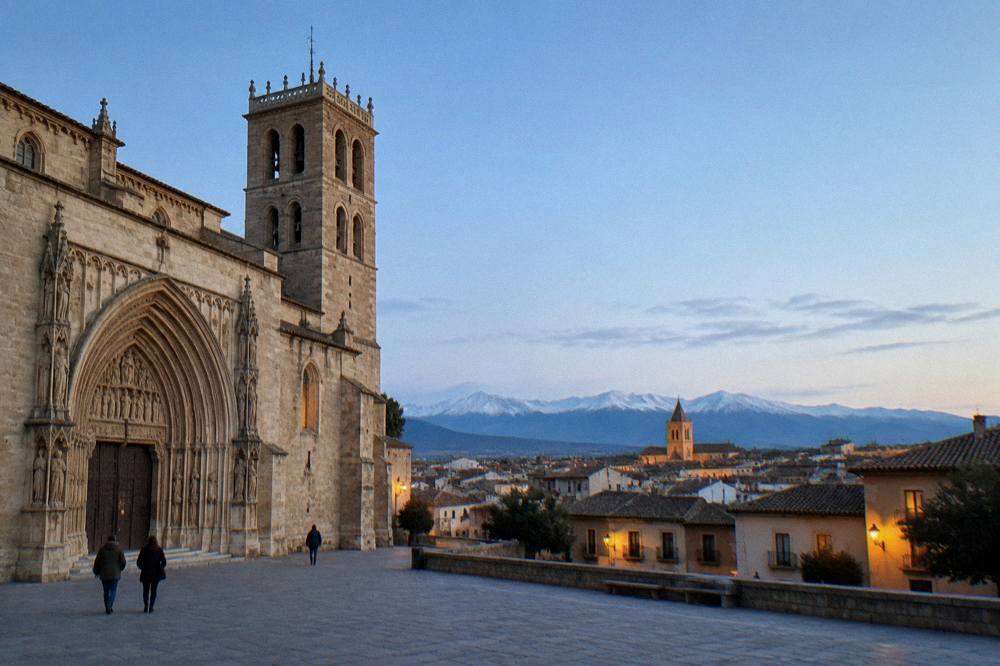
Huesca is the capital of the province of Huesca, one of the three provinces of Aragon, and it lies north of Zaragoza in the foothills of the Pyrenees. It is a small, walkable city built on a rise, with a Gothic cathedral, the Romanesque abbey church of San Pedro el Viejo, a network of steep old lanes and a university atmosphere, and it makes a slow, compact day trip rather than a checklist of major monuments.
The relationship between the two cities matters for planning. Zaragoza is the regional capital, the transport hub where the high-speed lines from Madrid and Barcelona arrive at Zaragoza-Delicias, and the place where nearly every bookable excursion in this part of Aragon starts. Huesca is the smaller sibling: the provincial capital of the mountains, the administrative centre for a territory that runs from the dry Monegros plain up to the highest Pyrenean summits of Aragon. A visitor based in Zaragoza reaches Huesca's world either by travelling to the town itself or, more commonly on a short stay, by taking a guided excursion into the province that surrounds it.
The character of the place is the reason to go. Zaragoza's old town is built on Roman Caesaraugusta and Mudéjar brickwork; Huesca's is built of stone, with the cathedral and the abbey church close together on the upper slopes of the town, and lanes falling away below them towards the plain. The scale is intimate. There is no single sight here that rivals the Basílica del Pilar, and that is the point: a day in Huesca is a day of small squares, stone façades, mountain light and long views, not a day of queueing.
The province around the town is where the big names sit. Loarre Castle, the Romanesque fortress that films and guidebooks have made famous, stands in the sierra to the west of the city. The Ordesa valley, one of the great glacial valleys of the Pyrenees, lies to the northeast. Jaca, the old capital of the mountain kingdom of Aragon, and the monumental railway station of Canfranc sit on the route that runs up the Aragón valley towards France. All of these are covered in their own pages on this Zaragoza Travel Guide site, and several of them appear on guided excursions that leave from Zaragoza itself.
Which Guided Day Trips From Zaragoza Cover Huesca'S Mountain Country?
Three verified excursions leave from Zaragoza and run into the province of Huesca: an 11-hour trip to Canfranc, Jaca and Sallent de Gállego from $66.40 per person, an 11-hour Ordesa sightseeing tour taking in Aínsa, Torla and the Sorrosal waterfall, also from $66.40, and a Canfranc, Jaca and Sallent de Gállego tour from $67.66. None of them stops in the city of Huesca itself, but all three cross the province that Huesca governs.
That distinction is worth stating plainly, because search results blur it constantly. The guided products that start in Zaragoza and touch Huesca's territory are mountain excursions: they go to the high valleys, the old mountain towns and the railway station at Canfranc, and they treat the city of Huesca as the province you pass through or around, not as a stop. A visitor who specifically wants to walk Huesca's old town should travel to the city independently and treat the excursions as a separate day, or as an alternative day.
The flagship option is the excursion to Canfranc, Jaca and Sallent de Gállego, an 11-hour day from $66.40 per person, rated 4.7 from 10 reviews. It bundles the three most photogenic stops on the Aragón valley route: the abandoned international station at Canfranc, the Romanesque citadel town of Jaca, and the stone village of Sallent de Gállego under the high peaks. The listing for each departure carries the current price and the pickup point, and the operator's live listing is the only place to confirm the day's timing. You can check availability on Check availability, or read more in the site's page on Canfranc Station and Jaca.
The Ordesa day sightseeing tour covers the other half of the province's fame: Aínsa, Torla and the Sorrosal waterfall, from $66.40 per person with a 5 rating from 3 reviews, also 11 hours. It is the closest a Zaragoza-based visitor gets to the Ordesa valley without driving. The third option, the Canfranc, Jaca and Sallent de Gallego tour from $67.66, rated 5 from 2 reviews, covers similar ground with a different operator. The two Canfranc products are not the same tour, and the listings differ in what is included, so read both before choosing.
| Guided excursion from Zaragoza | Kind | From (per person) | Rating | Duration |
|---|---|---|---|---|
| Excursion to Canfranc, Jaca and Sallent de Gállego | Pyrenees day trip | $66.40 | 4.7 from 10 reviews | 11 hours |
| Ordesa Day Sightseeing Tour: Aínsa, Torla and Sorrosal Waterfall | Pyrenees day trip | $66.40 | 5 from 3 reviews | 11 hours |
| Canfranc, Jaca and Sallent de Gallego Tour | Pyrenees day trip | $67.66 | 5 from 2 reviews | Not stated |
| Only excommunicated and cursed town with witches in Spain and food (Tarazona and Moncayo) | Tarazona and Moncayo day trip | $209.33 | 4.7 from 6 reviews | 7 hours |
The fourth row is included for contrast rather than comparison: the Tarazona and Moncayo excursion runs southwest from Zaragoza into a completely different landscape, and it is described here only so the table above shows the honest range of bookable days out. Full write-ups of the mountain destinations sit on the site's pages for Ordesa National Park, Aínsa and Loarre Castle.
What To See In Huesca Old Town On Foot?
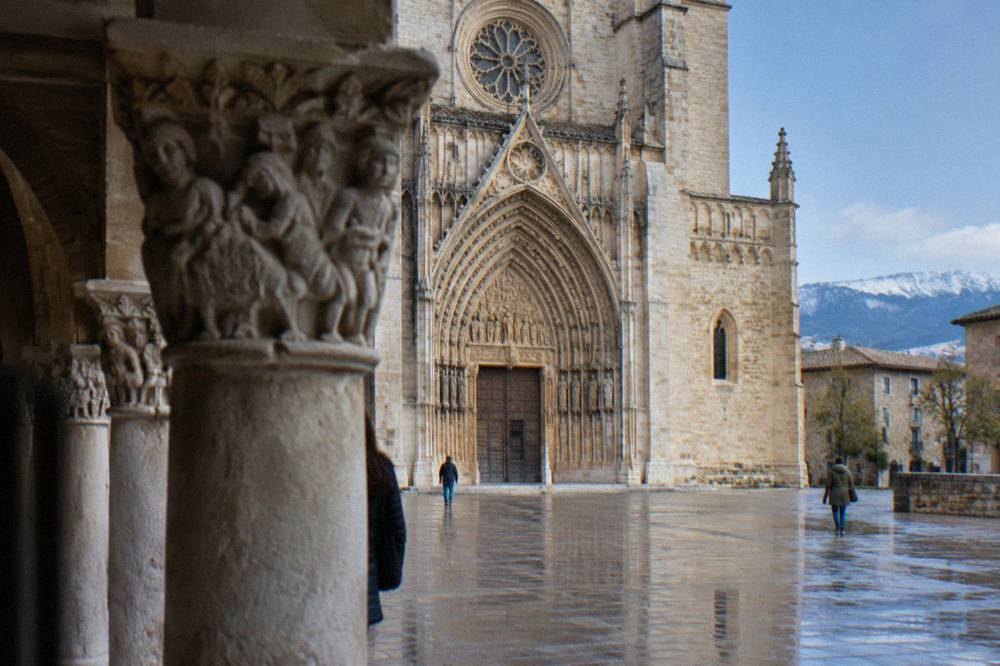
The old town of Huesca is compact enough to walk in a morning, and it holds four things worth the trip: the Gothic Cathedral of Santa María, the Romanesque church and cloister of San Pedro el Viejo, the arcaded Plaza de la Catedral around them, and the views from the upper slopes over the plain towards the Pyrenean sierras. Everything sits within a few minutes' walk of everything else, and the streets between them are steep, stone-built and quiet.
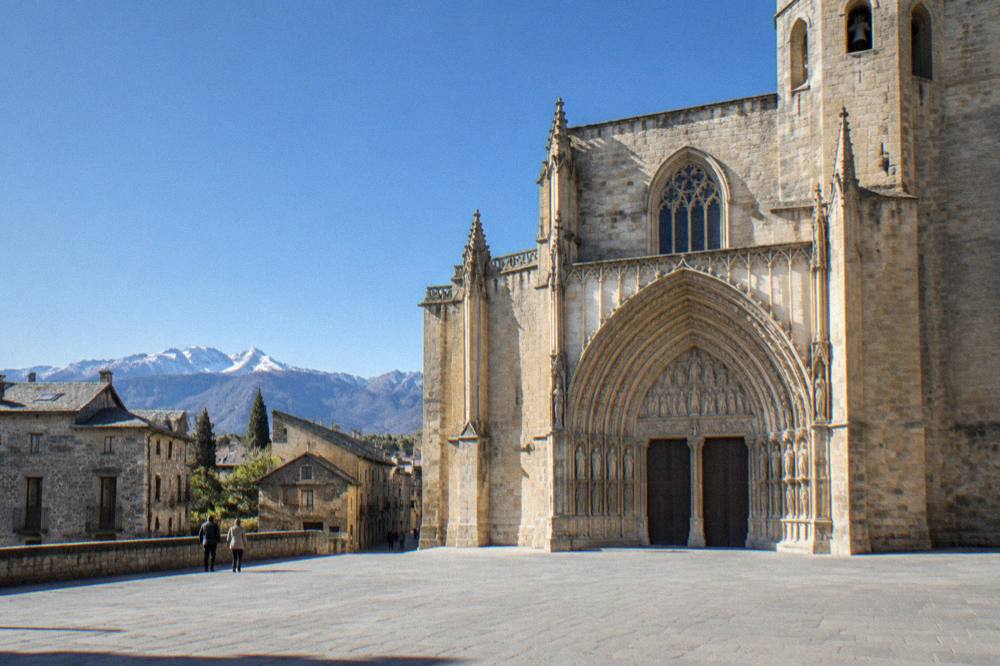
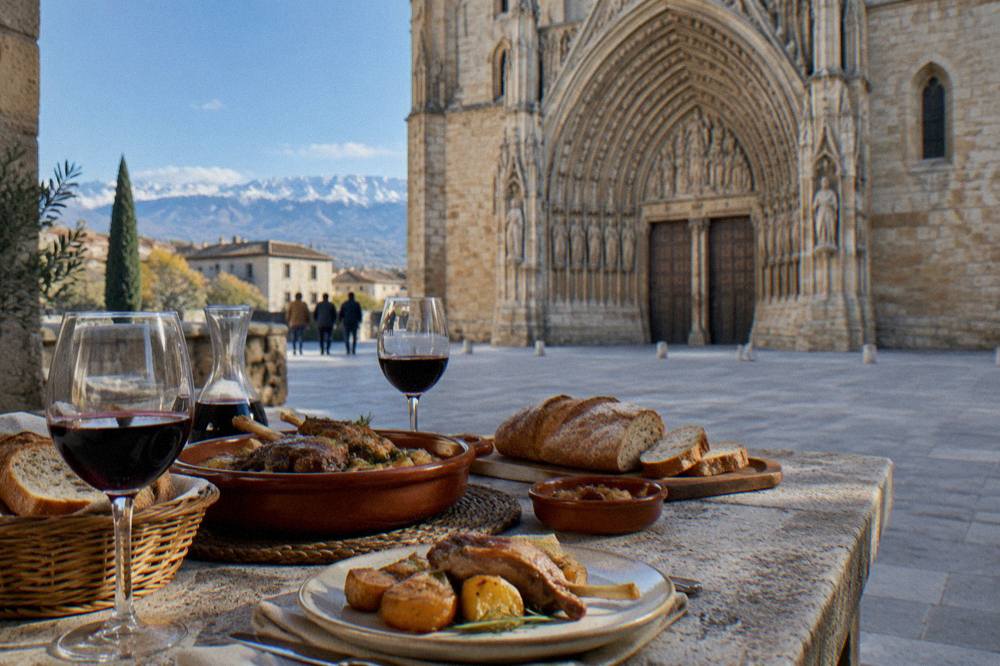
The cathedral is the anchor. It was built as a Gothic church in a single, unusually unified campaign, which gives it a coherence that few Aragonese churches share: one style, one plan, one silhouette. The interior is famously austere, and its altarpiece is the work of a major Aragonese sculptor whose carving also appears in the great churches further south. The cathedral's own ticket arrangements and opening times are published by the diocese, and they change with the season and with services, so check the notice at the door rather than any secondhand figure.
San Pedro el Viejo is the other essential stop. It is a Romanesque abbey church, rebuilt on the site of an earlier royal abbey, and its cloister is the reason people come: carved capitals, worn and weathered, arranged around a quiet courtyard. The church also holds royal tombs of the early kingdom of Aragon, which makes it one of the earliest royal burial sites in the kingdom. Between the two churches, the lanes of the upper town fall away in terraces, and the views open north across the plain to the first sierras.
Below the churches, the town spreads out into a small modern city with a university, a set of parks along the watercourses that cross it, and the usual Aragonese rhythm of morning streets, a long lunch and a late-evening paseo. The Plaza de Navarra, with its casino building, and the streets around the market are the everyday Huesca rather than the monumental one, and they are where the town stops being a set of postcards and starts being a place. Allow the afternoon for them; the morning belongs to the hill.
Is Huesca A Good Base For Loarre, Ordesa And The Pyrenees?
Yes, and that is its main strategic role: the province of Huesca contains Loarre Castle, the Ordesa and Monte Perdido National Park, the Sierra de Guara canyons, Jaca, Canfranc, Aínsa and Alquézar, so the city of Huesca is the natural lowland staging point for all of them. Zaragoza-based visitors reach the same country on the guided excursions listed above; visitors who want several mountain days in a row base themselves in or near Huesca instead.
The choice is really between one mountain day and several. A traveller with two or three days in Zaragoza can spare one for a guided excursion into the Pyrenees and see Canfranc, Jaca and Sallent de Gállego, or Aínsa and the Ordesa approach, without any planning beyond the booking. A traveller who wants Loarre and Ordesa and Guara and the high valleys, or who wants to walk rather than sightsee, needs nights in the mountains, and Huesca is where that itinerary starts. The two approaches are not rivals; they suit different lengths of stay.
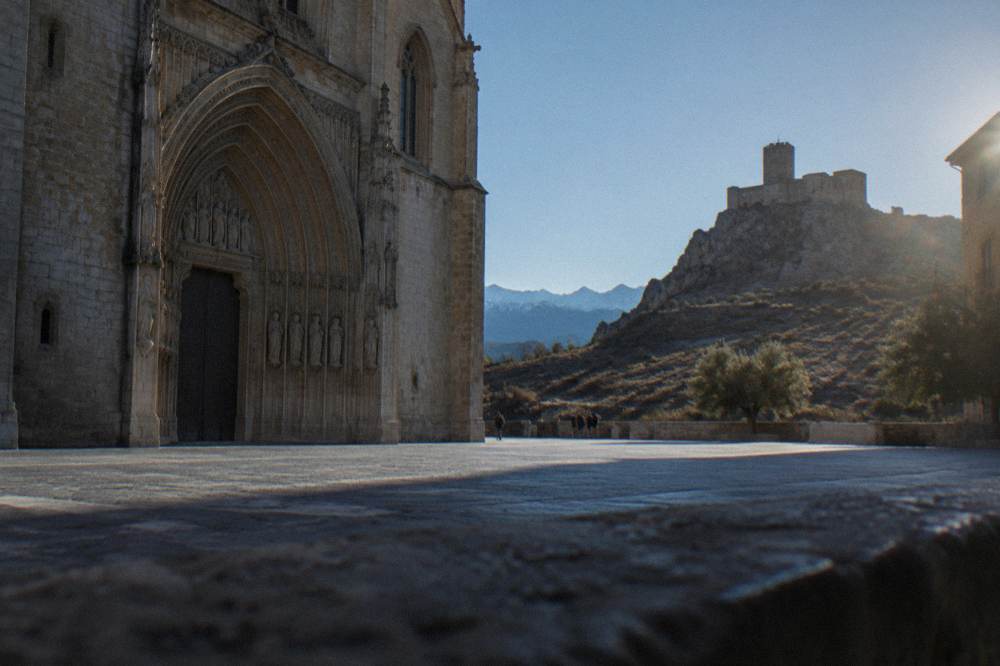
Loarre Castle is the province's single most famous monument after the Ordesa valley itself: a Romanesque fortress standing complete on a rocky ridge, one of the best-preserved military buildings of its era in Europe. It lies west of Huesca, in the sierra of Loarre, and the site's own page publishes its opening calendar and admission arrangements, which vary by season. The site's dedicated write-up on Loarre Castle covers what the fortress holds and how a day there fits with a Huesca visit.
The Ordesa country is the other pole. The valley itself is a glacial canyon of the Monte Perdido massif, and the national park that protects it is one of Spain's oldest. The guided Ordesa day from Zaragoza reaches the valley's gateway towns, Aínsa and Torla, and the Sorrosal waterfall, from $66.40 per person. Independent travellers base themselves in the valley villages and walk; the site's page on Ordesa National Park covers the walking country, and the pages on Aínsa and Alquézar cover the two stone towns that anchor the region's southern and western approaches.
When Is The Best Time Of Year For A Huesca Day Trip?
Late spring, early summer and early autumn are the best windows: the mountain country around Huesca is in leaf from May to June, the high valleys are fully accessible in July and August, and September and October bring clear air and colour to the foothills, while winter puts the high road passes under snow and makes the valley towns, not the summits, the realistic day trip.
For climate figures, the nearest verified series is the AEMET 1981 to 2010 normals for the Zaragoza Aeropuerto station, which describe the departure city rather than Huesca itself, and they show the pattern that governs the whole Ebro basin: a dry continental climate, with May the wettest month at 44 mm, July and August the driest at 17 mm each, and July the sunniest at 348 hours. Huesca, being further north and higher, runs a little cooler and a little greener than these figures, but the seasonal shape is the same: hot, dry, sunny summers, cool winters, and the bulk of the rain in spring and autumn. Other pages covering the same trip are gathered on Zaragoza Travel Guide.
| Month | Mean max C | Mean C | Mean min C | Rain mm | Sun hours |
|---|---|---|---|---|---|
| March | 17.3 | 11.6 | 5.8 | 19 | 217 |
| May | 24.1 | 18.0 | 11.8 | 44 | 274 |
| July | 32.4 | 25.3 | 18.3 | 17 | 348 |
| October | 21.4 | 16.2 | 11.0 | 36 | 195 |
Every figure above is the 1981 to 2010 average for the Zaragoza Aeropuerto station, and it should be read as the climate of the basin you travel through, not a forecast for the mountains. Two practical notes follow from it. First, the summer months are hot on the plain but the high valleys stay walkable, which is why the Pyrenees excursions run through the middle of the year. Second, October is a genuinely good month for the foothills: 195 hours of sunshine on the plain, 36 mm of rain, and the Fiestas del Pilar in Zaragoza from 10 to 18 October give the city a reason to be lively before or after the mountain day.
The wind deserves a mention because it shapes the region. The cierzo, the cold, dry northwesterly wind of the Ebro valley, blows down the basin towards Zaragoza, and it is a qualitative fact of Aragonese life rather than a number: no wind speed appears in the verified climate series, and AEMET issues wind warnings for Aragon when it strengthens. In Huesca's province the effect is gentler than on the open plain, but a spring day on a Loarre ridge can still be raw.
How Do You Get To Huesca From Zaragoza?
Huesca is reached from Zaragoza by road and rail north out of the Ebro basin, but no timetable, frequency or fare for the specific Zaragoza to Huesca journey was verified for this guide, so check the operator's own site before planning around a departure time. What is verified is the Zaragoza end of the day: the urban bus and tram single is 1.70 EUR, and high-speed trains from Madrid and Barcelona reach Zaragoza-Delicias in about 1.5 to 2 hours.
The road runs north through the Monegros fringe of the basin and into the foothills; the rail line parallels the same corridor. Both are operated by companies whose own sites publish the current schedules, and those schedules change often enough that a figure copied here would be wrong by the time it was read. Check the operator, book the ticket, and plan the day around the arrival time the operator gives you, not around a number from a search result.
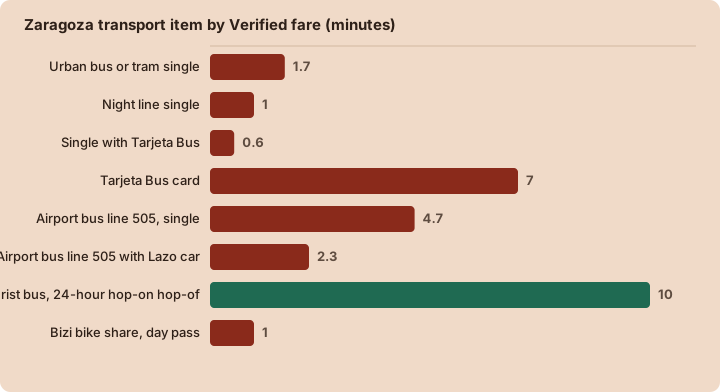
The Zaragoza end of the day is better documented. If you arrive in Zaragoza by air, the airport bus is line 505, at 4.65 EUR single or about 2.25 EUR with a Lazo card, timed to flights and taking roughly 25 to 35 minutes into the city. If you arrive by train, Zaragoza-Delicias is the station, and the fastest high-speed services from Madrid and Barcelona take about 1.5 to 2 hours. Within the city, the bus and tram network charges 1.70 EUR for a single, 1.00 EUR on night lines, and 0.55 EUR with the Tarjeta Bus, which itself costs 7 EUR and works on both bus and tram.
| Zaragoza transport item | Verified fare |
|---|---|
| Urban bus or tram single | 1.70 EUR |
| Night line single | 1.00 EUR |
| Single with Tarjeta Bus | 0.55 EUR |
| Tarjeta Bus card | 7 EUR |
| Airport bus line 505, single | 4.65 EUR |
| Airport bus line 505 with Lazo card | about 2.25 EUR |
| Tourist bus, 24-hour hop-on hop-off | 10 EUR |
| Bizi bike share, day pass | 1 EUR plus 0.50 EUR for the first 30 minutes |
One driving note for anyone hiring a car: Zaragoza operates a low-emission zone, the ZBE Casco Histórico, with sanctions active since 12 December 2025, running Monday to Friday from 08:00 to 20:00, and vehicles without a DGT environmental label are restricted in that first phase. The zone covers the historic centre of Zaragoza, not the roads north to Huesca, but a hire car without the right label complicates the return leg. The site's page on Zaragoza car rental and parking covers the label system in full.
How Much Does A Huesca Day Trip Cost?
A guided Pyrenees excursion from Zaragoza into Huesca's province costs from $66.40 to $67.66 per person for the two 11-hour mountain tours, while an independent day in the city of Huesca itself is a budget of transport plus food plus any cathedral or castle admission the sites publish on the day, and Aragon charges no tourist tax, so no nightly visitor levy enters the calculation either way.
The guided end of the scale is fixed and bookable. The Canfranc, Jaca and Sallent de Gállego excursion starts at $66.40 per person, the Ordesa sightseeing tour also starts at $66.40, and the alternative Canfranc tour starts at $67.66. Those are per-person starting prices taken from the listings, and the listing is where the final price for your date appears. What the tours include differs: the Ordesa product names Aínsa, Torla and the Sorrosal waterfall as its stops, the Canfranc products name the station, Jaca and Sallent de Gállego.
The independent end of the scale is looser, and the honest way to budget it is to say what is verified and stop. Transport to Huesca is an operator price, not a verified figure here. Food in Huesca follows Aragonese norms: the province's cooking runs to ternasco lamb, migas, and the mountain stews of the upper valleys, and the site's food pages cover what to expect on the plate in the Zaragoza food guide and on ternasco de Aragón. Admissions at Loarre Castle and the Huesca cathedral are published by the sites themselves and vary by season.
What can be stated with certainty is the regional backdrop. Aragon has no tourist tax: the regional government explicitly ruled one out in September 2026 on the grounds that it would discourage visitors, so unlike Barcelona or some Basque cities, no per-night levy applies anywhere in the region. And Zaragoza, the base city, is inexpensive by Spanish-city standards: the free sights include the Basílica del Pilar's nave, the IAACC Pablo Serrano, the Centro de Historias and the Torreon de la Zuda viewpoint, while the paid highlights are cheap, as the table below shows.
| Zaragoza sight | Adult admission | Notes |
|---|---|---|
| Basílica del Pilar, nave | Free | Tower viewpoint 6 EUR |
| La Seo cathedral | 10 EUR | Includes Museo de Tapices, Museo Pilarista and Rosario de Cristal |
| Aljafería palace | 7 EUR | 9 EUR with guided tour, free 1st and 3rd Sunday and Monday |
| Caesaraugusta four-museum bono | 7 EUR | 5 EUR reduced, free 1st Sunday of the month |
| IAACC Pablo Serrano | Free | Tue-Sat 10-14 and 17-21, Sun 10-14 |
What Else Combines With Huesca On An Aragon Itinerary?
The natural pairings are the other day trips that fan out from Zaragoza across Aragon: Monasterio de Piedra to the southwest, Albarracín and Teruel to the south, Tarazona and the Moncayo to the west, and the Ebro-basin wine country of Cariñena, with the Pyrenees excursions through Huesca's province as the northern arm of the set. A week based in Zaragoza can rotate through all of them without repeating a landscape.
The logic is geographic. Zaragoza sits at the centre of Aragon with the three provinces arranged around it, and each day-trip direction offers a different Aragon: the desert badlands of the Bardenas Reales to the southeast, the black-and-red gorge country of Albarracín to the south, the waterfalls and monastery of Piedra to the southwest, the volcanic Moncayo massif to the west, and the high Pyrenees of Huesca to the north. The site's pages on Monasterio de Piedra, Albarracín and Teruel cover the southern options, and Tarazona and the Moncayo the western ones.
North of the city lie Jaca and Canfranc on the French border route, and Sallent de Gállego in the high Tena valley. To the east lie Aínsa and Alquézar and the Sierra de Guara canyons. To the west, Loarre and, further on, the monastery of San Juan de la Peña hanging under its cliff, and the perfectly preserved stone village of Sos del Rey Católico, birthplace of the king who united Aragon and Castile. Each has its own page on this site: San Juan de la Peña, Sos del Rey Católico.
A realistic split for a Zaragoza-based visitor with limited time is one mountain day and one lowland day. The mountain day is a booked excursion: Canfranc and Jaca, or Ordesa and Aínsa, chosen from the listings above. The lowland day is Zaragoza itself, the Basílica del Pilar, La Seo, the Aljafería and the Roman museums of Caesaraugusta, all of them covered in the site's one-day itinerary. Trying to do Huesca's city and its mountains in one day from Zaragoza is the one planning mistake worth avoiding: the distances and the mountain roads make it a rushed day at best.
What Should You Book Ahead And What Can Wait?
Book ahead: the Pyrenees excursions, the Canfranc and Ordesa products, and any Zaragoza accommodation during the Fiestas del Pilar. Leave open: the city walks of Huesca, the cathedral and San Pedro el Viejo, whose tickets are bought at the door, and the free sights of Zaragoza, which need no booking at all. The dividing line is capacity: mountain excursions have seats and dates, stone churches do not.
The excursions are the clear booking priority. The three Pyrenees products from Zaragoza run on set dates with limited seats, the 11-hour format means one departure a day, and the listings show live availability. Free cancellation is the standard reassurance on these products, so booking early costs nothing if plans change, but the operator's own listing states the exact cancellation window for each date. The same logic applies in October, when the whole region's attention turns to Zaragoza for the Pilar festivities and the city fills.
The Huesca end of the day needs almost no booking. The old town is a walk, the cathedral and San Pedro el Viejo sell admission at the door, and the restaurants of the old quarter operate on Aragonese hours, a long midday service and an evening one that starts late. The only thing to book in the city is a table if a specific restaurant matters, and the only thing to check in advance is the opening calendar of Loarre Castle, which is seasonal and published by the site itself.
Common Questions About A Huesca Day Trip
Is Huesca worth visiting from Zaragoza?
Yes, for a specific kind of day: a quiet stone old town, a unified Gothic cathedral, one of Spain's finest Romanesque cloisters and a staging point for the Pyrenees. It does not have the monument density of Zaragoza, so visitors with only one or two days in the region usually stay in Zaragoza and take a mountain excursion instead.
How far is Huesca from Zaragoza?
Huesca lies north of Zaragoza, in the foothills of the Pyrenees, but this site publishes no distance or drive time for the journey because none was verified. The road and rail corridor runs north through the Ebro basin; check the operator's own site for the current schedule and fare.
Can you do Huesca and the Pyrenees in one day from Zaragoza?
Not comfortably. The guided excursions from Zaragoza run 11 hours and cover the high country, Canfranc, Jaca, Sallent de Gállego, Aínsa and Torla, without stopping in the city of Huesca. A day in Huesca's old town is its own trip, best paired with Loarre Castle rather than with the high valleys.
What is the best month to visit Huesca?
May and June bring the province into leaf with the year's highest rainfall on the plain, July and August put the high valleys in full season, and September and October offer clear air in the foothills. Winter suits the valley towns and Loarre rather than the high passes. Every climate figure on this page is the 1981 to 2010 average for the Zaragoza Aeropuerto station.
Do any guided tours from Zaragoza visit Huesca itself?
The verified excursion products from Zaragoza that cross Huesca's province are mountain tours: the Canfranc, Jaca and Sallent de Gállego excursion from $66.40, the Ordesa sightseeing tour from $66.40, and the Canfranc tour from $67.66. None lists the city of Huesca as a stop, so a visit to the old town means independent travel.
The short version is this: Huesca rewards the traveller who gives it its own slow day, and it serves the rest as the gateway to the finest mountain country within reach of Zaragoza. Book the excursion that matches your dates, keep the old town for a day with no schedule, and let the province do the rest.