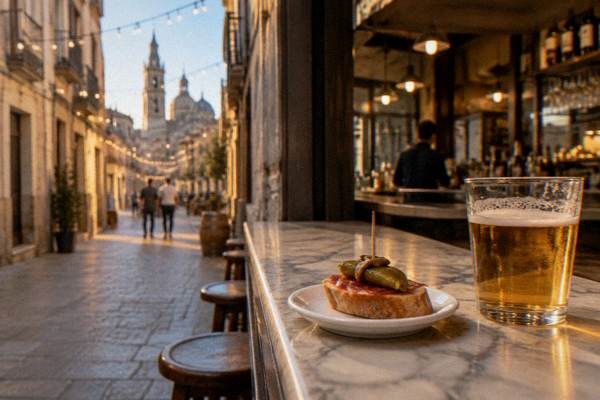
Ternasco De Aragon: Zaragoza's Signature Lamb Dish Explained
Ternasco de Aragon is the roast lamb dish that defines eating in Zaragoza, the capital of Aragon in north-east Spain, and this guide covers what it is, how it is cooked, and how to build a food trip around it.
Short answer
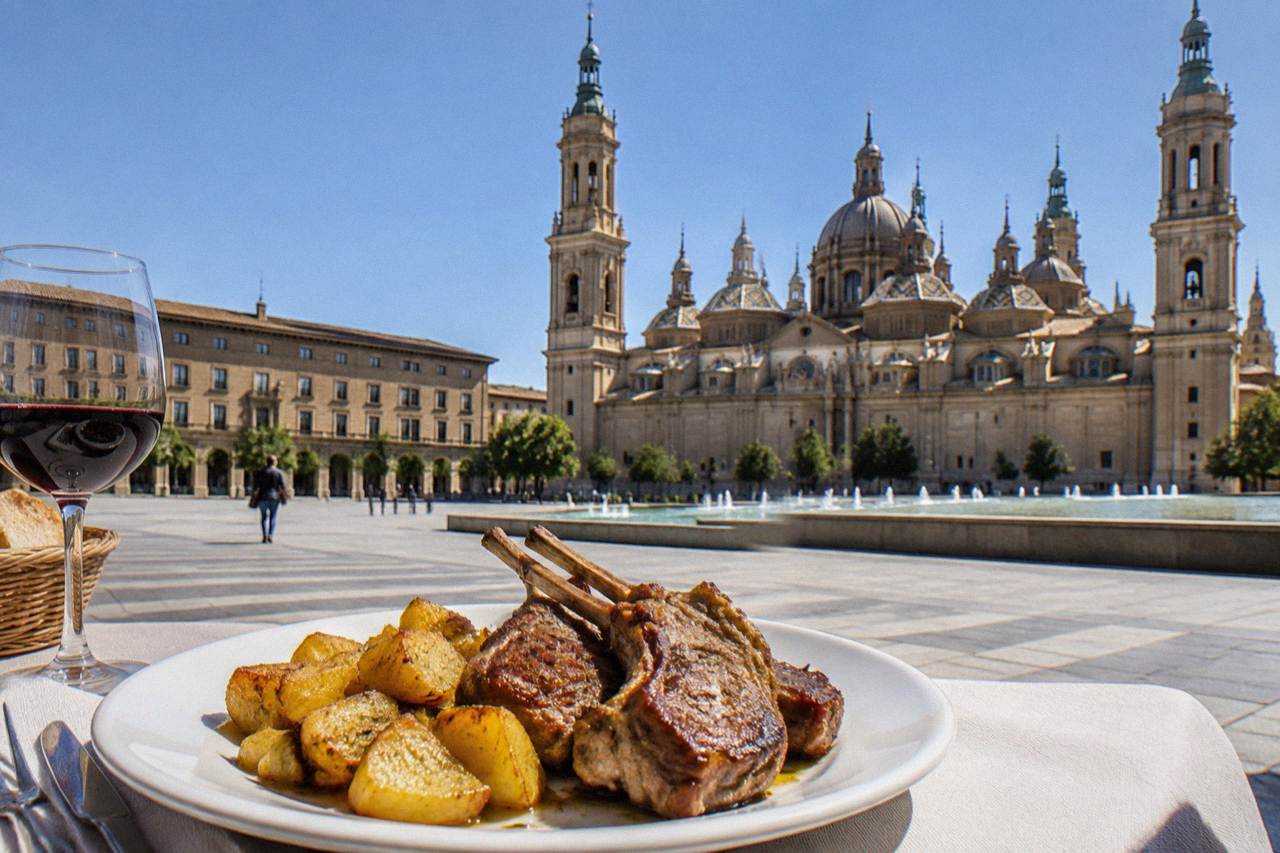
Ternasco de Aragon is a roast lamb dish from the Aragon region, made from young lamb cuts, typically chops and leg, slow-cooked with potatoes. It is the signature dish of Zaragoza and appears on menus across the old town.
Ternasco de Aragon is the roast lamb dish that sits at the centre of eating in Zaragoza, the capital of Aragon, an inland region in north-east Spain. The city lies on the Ebro, far from any coast, and its food culture reflects that: lamb, river vegetables, olive oil and wine rather than seafood. This guide explains what ternasco actually is, how kitchens in Zaragoza cook it, which cuts arrive at the table, and how to build a visit around it, including the guided market and tapas experiences that put the dish in its context.
What Is Ternasco De Aragon?
Ternasco de Aragon is the signature meat dish of Aragon: cuts from a young lamb, most often the chops, shoulder and leg, roasted slowly with potatoes so the fat renders into the meat and the potatoes. It is not a stew and not a grilled chop, it is an oven dish, and in Zaragoza it is the plate most locals will name if you ask what to eat in the city. The name refers both to the animal, a young lamb, and to the finished dish.
The word itself matters. Ternasco denotes a young animal, and the dish's character comes from that youth: the meat is mild and tender, closer to milk-fed lamb than to the stronger-flavoured mutton of older animals. The rest of the name is the region. Aragon is the autonomous community whose capital is Zaragoza, and the dish is eaten across the region, but the city is where most visitors encounter it first, usually in the old town's restaurants or as the main course of a Sunday family lunch.
The dish needs no sauce and no complication. That restraint is the point. Aragonese cooking is famously direct, and ternasco shows it: good lamb, potatoes, olive oil, salt, and time in the oven. Garlic and a little white wine appear in some kitchens, but the meat carries the plate. If a menu in Zaragoza lists ternasco asado, that is the classic form, roasted ternasco, and it is the version to order first.
How Is Ternasco Cooked And Served In Zaragoza?
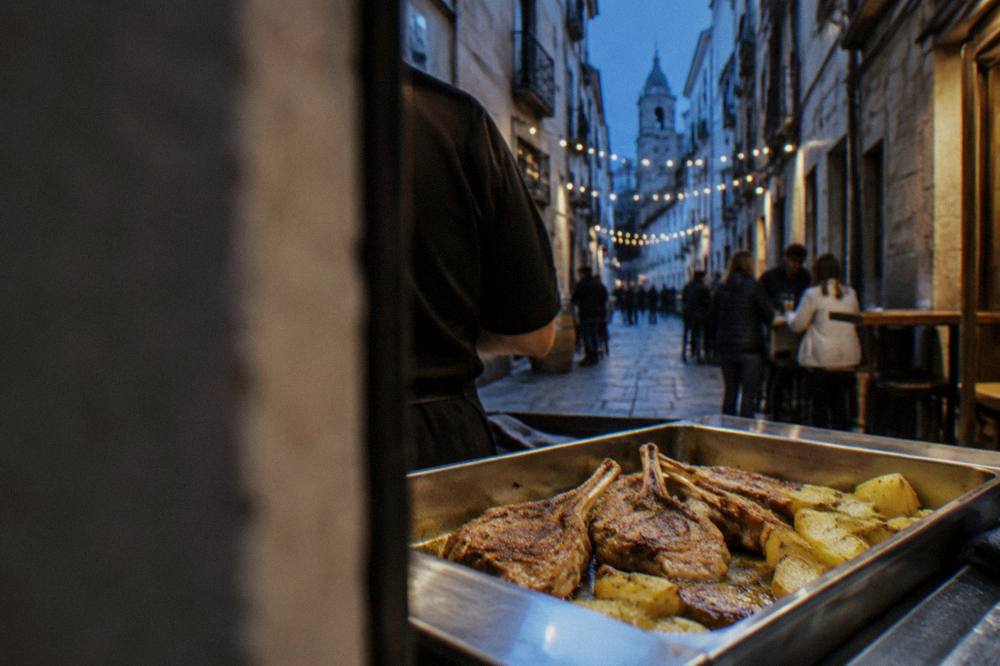
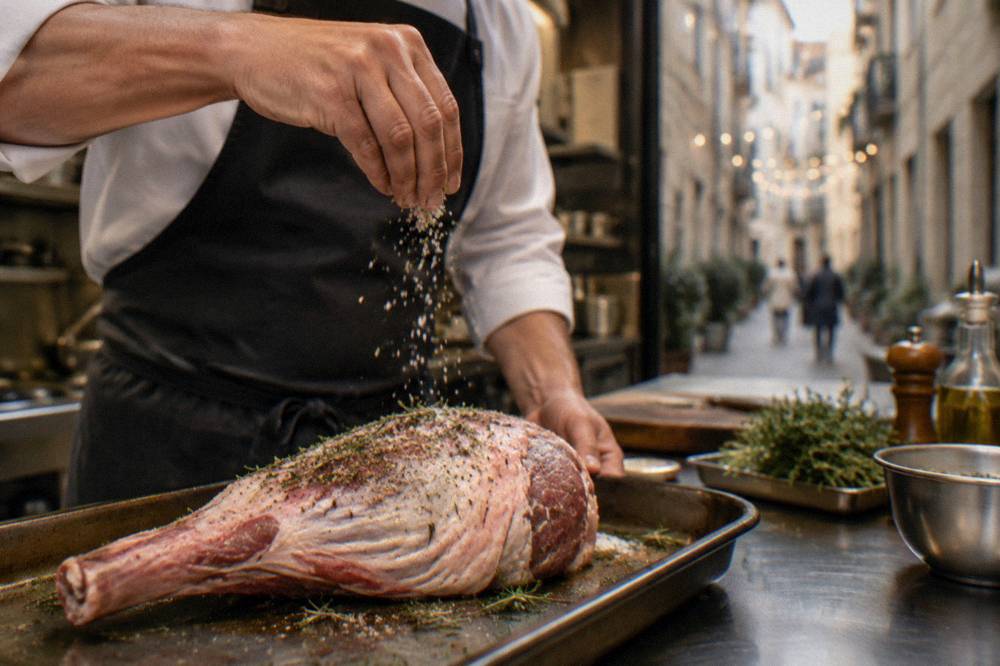
Kitchens in Zaragoza roast ternasco in a hot oven with potatoes cut thick beneath the meat, so the drippings baste the potatoes as the lamb cooks. The dish is served as a main course, usually for two or more people sharing, with the chops, shoulder or leg arriving on a single platter. It is a lunch-and-dinner dish rather than a tapa, and Sunday is its natural home, when families eat long meals together.
The cooking method is the reason the dish works. Young lamb carries enough fat to self-baste, and the potatoes underneath absorb it, which is why ternasco potatoes taste of lamb even though they are only potatoes. Some kitchens start the joint at a high temperature to brown the surface and then lower the heat, others cook it long and slow throughout, but the result aimed for is the same: meat that comes away from the bone and potatoes with crisp edges and a soft interior.
Serving style is communal. A ternasco order typically arrives as a platter for the table, not as individual plates, and it is a dish that rewards a group. In a city whose tapas culture is strong, ternasco is the counterpoint, the sit-down centrepiece rather than the standing bite. Visitors who want to understand Zaragoza food culture fully should do both: the tapas crawl through the old town, covered in the Zaragoza food guide, and at least one proper seated meal with ternasco at its centre.
For travellers who want the food culture explained rather than just eaten, guided experiences do that work well. The midday market and tapas walk pairs the central market's produce with old-town stops, and it is the natural first food booking of a Zaragoza trip.
Which Cuts Of Lamb Make Up A Ternasco Meal?
A ternasco meal in Zaragoza is built from three principal cuts: the rack of chops (chuletas), the shoulder (paletilla) and the leg (pierna or pata). The chops are the most ordered, the shoulder is the most forgiving to cook, and the leg is the cut for larger groups. All three come from the same young animal, and all three are roasted rather than fried or grilled.
The table below sets out the cuts and their roles. It is a planning guide for reading a menu, not a recipe, and quantities vary by kitchen.
| Cut | Spanish name | Character | Best for |
|---|---|---|---|
| Rack of chops | Chuletas | Individual cutlets with bone, crispest fat | First-time orders, two people |
| Shoulder | Paletilla | Small joint, tender, renders well | Small groups, slower meals |
| Leg | Pierna / pata | Large joint, slices for sharing | Families and bigger tables |
Menus sometimes list the cuts separately and sometimes offer a mixed platter. If the choice is open, the chops are the safest introduction: they show the dish's character most clearly, with the browned exterior and the mild, juicy interior that defines good ternasco. The shoulder suits a slow, long lunch, and the leg is the celebration cut, the one that appears when a table of six sits down for a Sunday meal.
What never changes is the animal's age. Older lamb is a different dish with a different name, and a kitchen serving ternasco is serving young lamb by definition. Ask the server which cut the kitchen does best, and order that; in a city with this many restaurants, the kitchen's own preference is the most reliable guide.
How Do You Taste Ternasco As A Visitor To Zaragoza?
The most reliable way to taste ternasco as a visitor is to book a guided food experience that includes it or to order it as a main course at a seated meal in the old town. Guided options in Zaragoza include market and tapas walks, evening tapas tours and Spanish cooking classes, with prices from about $50.65 per person on the live listings. A cooking class is the only format that shows the dish being made.
Nothing about any individual restaurant in Zaragoza can be recommended here with a price, an address or a ranking, because no venue detail was verified for this page. What can be said is structural: the old town, the Casco Histórico, holds the densest cluster of eating places, and the dish appears on menus across the city rather than in one district. A guided walk solves the selection problem, because the guide takes the table to the kitchen rather than leaving the choice to a search.
The bookable options below come from the live listings, and the figures are the listings' own.
| Experience | Decision name | From (per person) | Rating | Duration |
|---|---|---|---|---|
| Midday market and tapas walk | 3-Hour Midday Market Tapas | $106.92 | 5 from 9 reviews | 3 hours |
| Evening tapas walk, old town | 3-Hour Evening Tapas Walk | $106.92 | 4.9 from 62 reviews | 3 hours |
| Market tour and cooking class | Market Tour, Cooking Class | $113.53 | 5 from 41 reviews | not stated |
| Wine tasting and tapas | 3-Hour Wine Tasting, Tapas | $106.92 | 5 from 21 reviews | 3 hours |
The cooking class deserves the emphasis for ternasco specifically. A tapas walk shows the city's small-plate culture, which is essential, but a cooking class is where the oven, the cut and the technique become visible, and where a visitor leaves able to cook the dish at home. The class listed above starts from a market tour, so the produce selection comes first and the cooking second.
Between the class and the tapas walk, the midday market format is the one that connects the two: it covers the produce side that the class then cooks, and it doubles as an old-town orientation. Booking both across two days gives the full arc, market to table, without repeating the same stops.
What Should You Drink With Ternasco In Zaragoza?
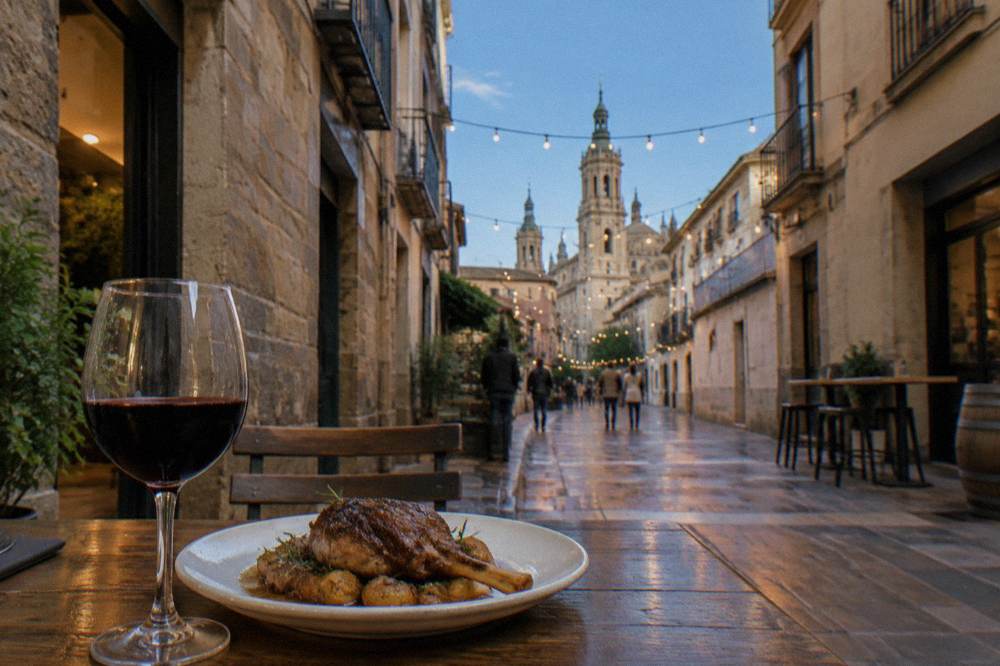
The classic pairing for ternasco in Aragon is a red wine from the region's own vineyards, above all the wines of the Cariñena area south of Zaragoza, whose garnacha-based reds carry enough fruit to stand up to roast lamb. A young red served slightly cool is the everyday choice, and a fuller red suits a celebration meal. Water on the table is standard, and the pairing logic is simple: lamb wants red, and Aragon grows its own.
Aragon is wine country, and the city sits within reach of several producing areas. The Cariñena wine region is the historic name nearest the city, and its reds are the traditional companions to the region's lamb. White wine is not wrong, but it is not the local instinct with roast lamb, and a visitor ordering as the locals do will order red.
For visitors who want the pairing taught rather than guessed, guided wine experiences in the city cover it directly. The wine tasting and tapas experience in the old town is built around exactly this kind of matching, and the listings carry its figures. The rest of the planning pages sit on Zaragoza Travel Guide.
| Experience | Decision name | From (per person) | Rating |
|---|---|---|---|
| Wine tasting and tapas, old town | 3-Hour Wine Tasting, Tapas | $106.92 | 5 from 21 reviews |
| Wine tasting and tapas, ancient town | Wine Tasting, Tapas, Old Town | $108.94 | 5 from 75 reviews |
| Complete tour with wine and tapas | 5-Hour Complete Tour, Wine Tapas | $212.71 | 4.9 from 7 reviews |
| Half-day winery trip from the city | Half-Day Winery, Cava Trip | $166.28 | 5 from 21 reviews |
The half-day winery trips leave the city, and they belong to the wine-and-food side of a Zaragoza visit rather than to a strictly urban day. The in-city tastings, by contrast, fit an evening between sightseeing, and they are the format that most directly answers the question of what to drink with Aragon's lamb.
When Is The Best Time To Eat Ternasco In Zaragoza?
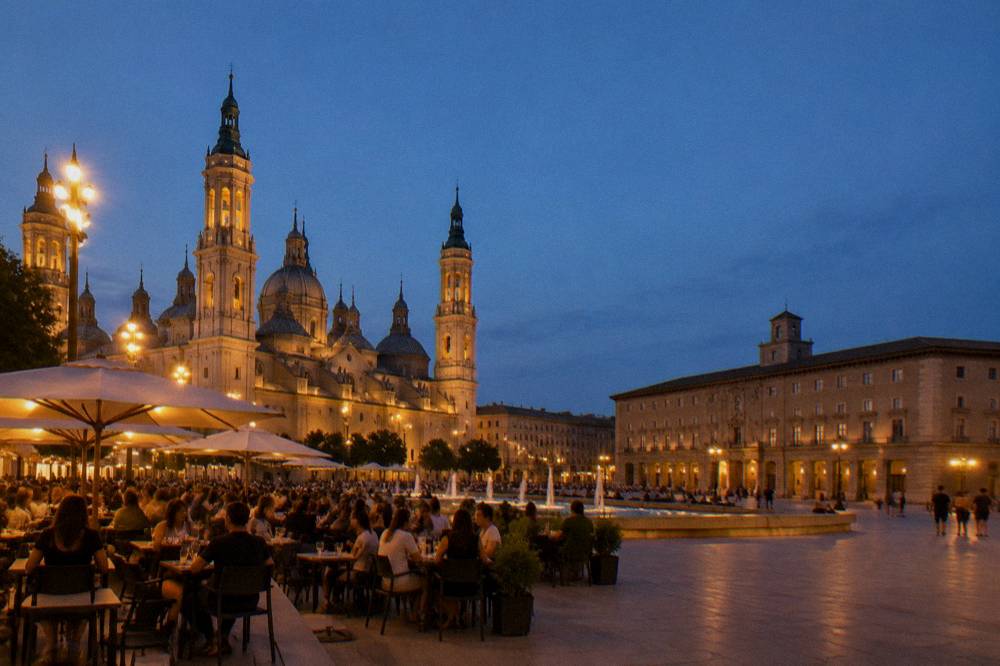
The best time to eat ternasco in Zaragoza is at lunch, especially Sunday lunch, which is the meal Aragonese families build around a roast. For the visit itself, October stands out: the Fiestas del Pilar run from 10 to 18 October 2026, the city is at its fullest, and the long family meals of the festival period are when the dish is most itself. Spring and autumn suit it too, since a roast belongs to cooler weather.
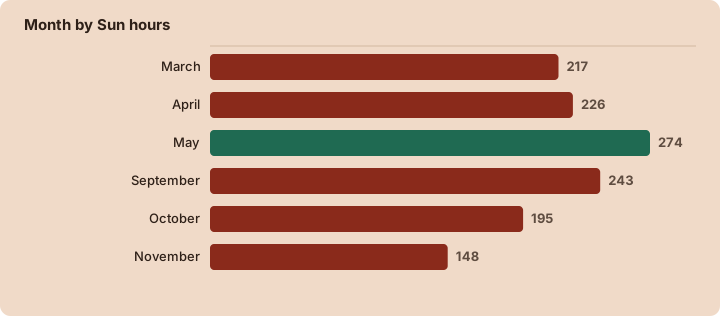
The climate data backs the seasonal instinct. AEMET's 1981 to 2010 averages for the Zaragoza Aeropuerto station put the mean maximum at 21.4 C in October against 32.4 C in July, and July and August are the driest months at 17 mm of rain each. A hot July afternoon is not oven-dish weather, and locals do not pretend otherwise; the roast returns when the evenings cool.
| Month | Mean max C (1981-2010) | Mean C | Rain mm | Sun hours |
|---|---|---|---|---|
| March | 17.3 | 11.6 | 19 | 217 |
| April | 19.6 | 13.8 | 39 | 226 |
| May | 24.1 | 18.0 | 44 | 274 |
| September | 27.1 | 21.2 | 30 | 243 |
| October | 21.4 | 16.2 | 36 | 195 |
| November | 14.8 | 10.6 | 30 | 148 |
October carries one more argument: the Fiestas del Pilar, covered in detail in the Fiestas del Pilar guide, run from 10 to 18 October 2026, with the Ofrenda de Flores on 12 October. The city fills with visitors and with Aragonese families, and the restaurants of the old town run at full tilt. Booking ahead in that week matters more than at any other time of year. For the broader picture of when to come, the best time to visit Zaragoza guide carries the full comparison.
How Does Ternasco Fit Into A Wider Zaragoza Food Trip?
Ternasco is the anchor of a Zaragoza food trip, not the whole of it: the city's eating culture runs from morning market produce through tapas and Aragonese stews to the roast itself, and a good food visit sequences them. Plan a market visit or market walk first, tapas in the evening, and one seated meal with ternasco as the centrepiece. The guided options cover each stage, from $5.73 self-guided walks to $212.71 full-day combinations.
The wider Aragonese table gives the roast its company. Migas aragonesas, the breadcrumb dish, appears alongside it, and river vegetables, olive oil from the region's groves and the region's red wines fill out the meal. A visitor who eats only ternasco misses the point, which is that Aragon's cooking is a coherent tradition, and the roast is its largest single statement.
The guided formats span a wide range, and the table shows the spread.
| Format | Example from the listings | From (per person) | Rating |
|---|---|---|---|
| Self-guided | Self-Guided Scavenger Hunt | $5.73 | 4.5 from 37 reviews |
| Free walk | Free Old Town Tour (GuruWalk, tip based) | free | 4.97 from 576 reviews |
| Intro walking tour | 105-Minute Monumental Intro | $10.41 | 4.4 from 36 reviews |
| Tapas walk | 3-Hour Tapas Sightseeing | $50.65 | 5 from 7 reviews |
| Complete tour | 5-Hour Complete Tour, Wine Tapas | $212.71 | 4.9 from 7 reviews |
The free walk deserves a note: it runs on GuruWalk with a named guru, it is free and tip based, and it is the cheapest possible introduction to the old town's layout before a food visit. It is not this site's product and carries no price, but as a first hour in the city it is hard to argue with.
Sequencing is the practical skill. A visitor with two evenings might run a tapas walk on the first, learning the old town's small-plate geography, and book the seated ternasco meal for the second, once the district makes sense. A visitor with one evening should choose the roast and return for the tapas, because a slow roast is the harder thing to find again elsewhere in Spain.
Where Does Ternasco Sit Among Aragon'S Other Dishes?
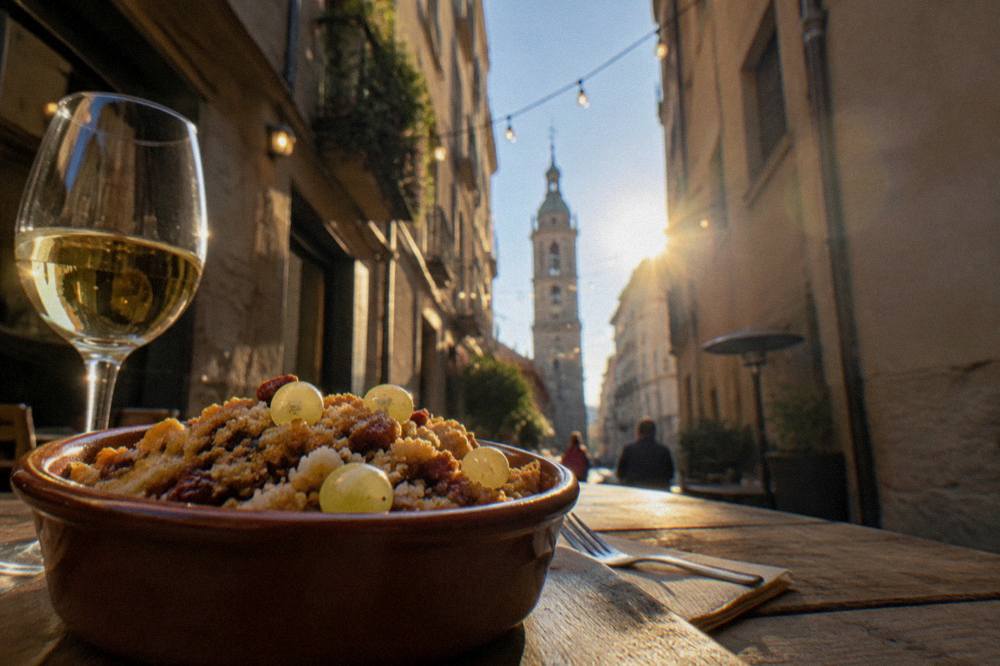
Ternasco is the flagship of Aragonese cooking, but it shares the table with migas aragonesas, a breadcrumb dish served with grapes or pork, and with the region's vegetable stews and river produce. The dish's standing is simple to state: if Aragonese food has one name recognised across Spain, it is this one, and in Zaragoza it functions as the region's culinary signature the way paella does for Valencia.
That comparison is an opinion framed from verifiable features, not a ranking, and it is worth being clear about why the dish earns it. Lamb suits Aragon's inland geography, the Ebro valley and its dry continental climate, in a way that coastal dishes cannot; the region has no sea, and its cooking never pretends otherwise. The olive oil that seasons the roast comes from the same inland landscape, and the wine that accompanies it grows on the same slopes.
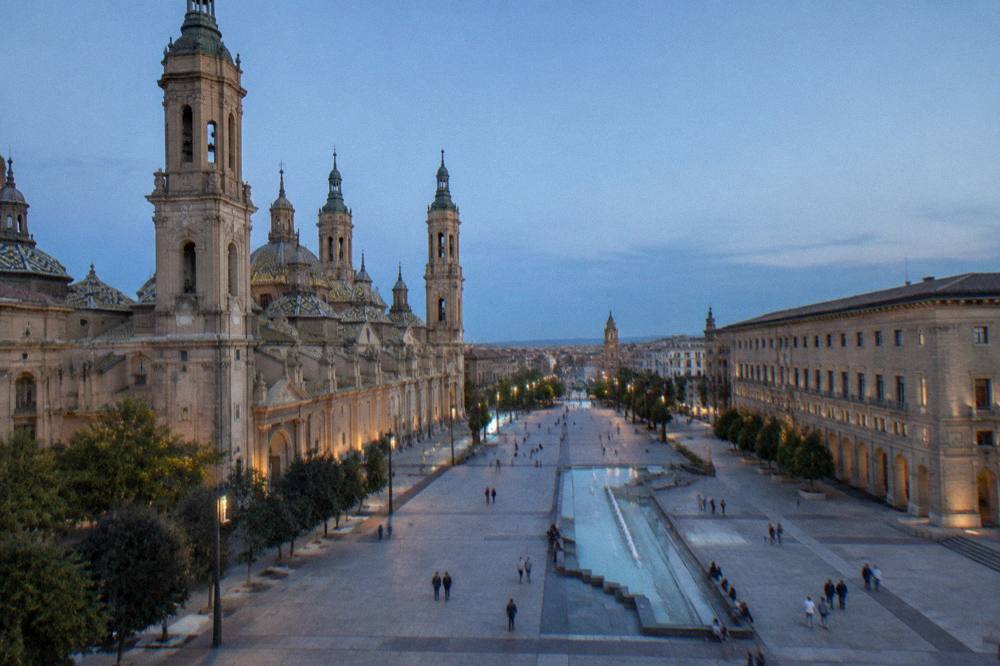
For a visitor planning the full food picture, the things to do in Zaragoza overview places the food experiences among the city's monuments and museums, and the Zaragoza food guide covers the wider table dish by dish. The Roman sites, the Basílica del Pilar and the Aljafería fill the hours between meals, and a food trip that ignores them is only half a visit.
Can You Cook Ternasco At Home After Visiting Zaragoza?
Yes, and the guided cooking class format in Zaragoza is built for exactly that: the market tour and Spanish cooking class starts from the central market's produce and moves to the kitchen, so a visitor leaves with the technique as well as the memory. The class lists from $113.53 per person and carries a 5 rating from 41 reviews on its listing. The dish itself is home-cooking by origin, an oven, a joint of young lamb and potatoes, so nothing in it requires restaurant equipment.
The technique travels well. Young lamb, thick-cut potatoes, olive oil, salt, a hot oven and patience are the whole of it, and the class teaches the proportions that a written recipe approximates. The cut matters most: ask a butcher for chops or a small shoulder from a young animal, and the rest of the dish follows.
For visitors who want the full arc, market to table, the midday market and tapas tour and the cooking class are the two bookings that deliver it, and they pair naturally across two days.
The olive oil and Belchite option in that set leaves the city, and it belongs to the same food tradition: the oil that seasons Aragon's lamb comes from groves like the ones that trip visits, and Belchite itself is a Civil War ruin best approached soberly. It is a food trip with history attached, and it suits a visitor with a third day.
Common Questions About Ternasco De Aragon
What is ternasco de Aragon?
Ternasco de Aragon is the signature roast lamb dish of Aragon, made from cuts of young lamb, typically chops, shoulder or leg, roasted slowly with potatoes. It is the dish most associated with Zaragoza, the capital of Aragon.
Is ternasco the same as regular lamb?
No. Ternasco specifically denotes a young lamb, which gives the meat a mild, tender character distinct from older lamb. The dish's name refers to that youth as much as to the cooking method.
Where should I eat ternasco in Zaragoza?
Ternasco appears on menus across the city, most densely in the old town, and no individual venue can be recommended here with a verified address or price. A guided market and tapas experience, or a seated meal in the Casco Histórico, is the most reliable approach for a first visit.
What do you drink with ternasco?
Red wine, above all the garnacha-based reds of the Cariñena region south of Zaragoza. Lamb wants red in the Aragonese tradition, and the region grows its own.
When is the best time of year to eat ternasco in Zaragoza?
Sunday lunch is the dish's natural slot, and October is the standout month: the Fiestas del Pilar run from 10 to 18 October 2026, and the city's restaurants run at their fullest. Cooler spring and autumn days suit an oven dish better than a July afternoon, when the 1981 to 2010 average maximum sits at 32.4 C.
Can I learn to cook ternasco in Zaragoza?
Yes. The midday market tour and Spanish cooking class listed on this site starts from the market's produce and moves to the kitchen, from $113.53 per person with a 5 rating from 41 reviews on its listing.
Ternasco de Aragon is one dish, but it opens the whole of Aragonese cooking: the market, the olive oil, the wine and the long table. Order the chops, ask for the kitchen's best cut, and let the rest of the city fill the hours between meals.