Monasterio De Piedra: The Waterfall Day Trip From Zaragoza
Monasterio de Piedra combines a medieval Cistercian monastery with a landscaped park of waterfalls along the Río Piedra, and it makes one of the most distinctive day trips you can take from Zaragoza, the capital of Aragon on the Ebro.
Short answer
Monasterio de Piedra is a former Cistercian monastery set in a park of waterfalls and gardens in the province of Zaragoza. It lies to the south-west of the city, and it makes a full day out: monastery, park, waterfalls and a long walk through greenery that is unusual in Aragon's dry interior.
Zaragoza, the capital of Aragon on the Ebro, sits in one of the driest corners of inland Spain, and that is exactly why Monasterio de Piedra surprises people. The name means the Monastery of Stone, and the stone in question is both the medieval Cistercian house itself and the rock through which the Río Piedra has carved a park of cascades, pools and fern-lined paths. For visitors basing themselves in Zaragoza it offers the kind of green, wet, shaded landscape the city itself cannot supply, and it does so within a single day out. This page explains what the place is, how a day there works, when to go and how it compares with the other day trips available from the Aragonese capital.
What Is Monasterio De Piedra?
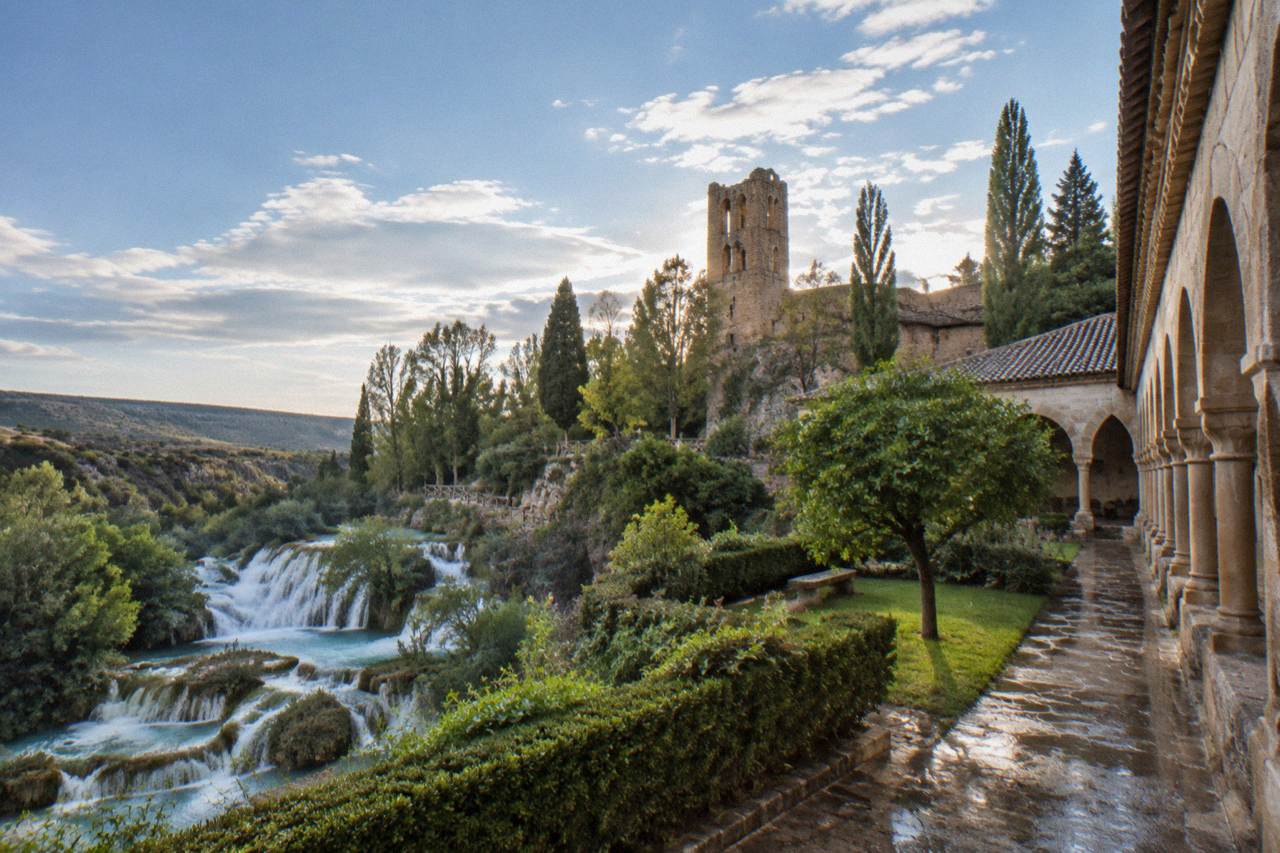
Monasterio de Piedra is a former Cistercian monastery in the province of Zaragoza, founded by monks of an order that built in plain stone and remote valleys, and today it is best known for the landscaped park that surrounds it, where the Río Piedra drops through a series of waterfalls, caves and pools. The monastery buildings and the park together form one single destination, and the combination of monastic architecture and dense water gardens is what sets it apart from every other day trip from the city.
The Cistercians chose their sites deliberately: water, seclusion and land to work. Piedra gave them all three, and the river that powered the community's mills now powers the park's main attraction. The monastery church, cloister and monastic rooms are open to visitors, and the interpretive displays cover the daily rhythm of a medieval religious house as well as the later history of the site, which includes a period as a textile factory before its reimagining as a garden. That reimagining is the key to what you see today. The owners of the estate laid out paths, bridges and viewing points around the river's cascades in the spirit of the landscape-garden fashion of their day, and the park has been a visitor attraction ever since, one of the oldest of its kind in Spain.
The name Piedra, meaning stone, refers to the Río Piedra, the tributary of the Jalón that rises in the nearby hills and cuts through a limestone gorge on the monastery's land. The gorge is what makes the park feel almost subtropical: the spray from the falls and the shade of the ravine keep the vegetation green through the summer, when the plains around it are brown. The site lies near the small village of Nuévalos, in the south-west of the province of Zaragoza, on the Aragonese slope of the Sistema Ibérico, the mountain chain that separates the Ebro basin from the Meseta. For a traveller coming from Zaragoza the drive crosses first flat irrigated farmland and then increasingly broken, hilly country, and the change in landscape is part of the pleasure of the day.

How Do You Get To Monasterio De Piedra From Zaragoza?
Monasterio de Piedra is reached by road, travelling south-west from Zaragoza through the province towards Nuévalos, and there is no direct urban transport link, so the realistic options are a hire car, a private driver or a coach excursion booked from the city. No train serves the site directly, and the drive crosses farmland and then the hills of the Sistema Ibérico. Check the current road conditions and the site's own notice before you set out, especially in winter.
The site sits away from the main rail network, so a self-drive day is the most common plan for visitors staying in Zaragoza. If you are renting a car, the planning guide on this site covers renting and parking in Zaragoza, and the same logic applies to a day trip: leave early, keep the fuel topped up once you leave the Ebro corridor, and expect the last stretch to be on smaller regional roads rather than motorway. The route leaves the dry plain behind and climbs into country where the villages are stone-built and the valleys narrow, which is a good part of the reason to make the drive at all.
For travellers without a car, a guided excursion is the practical alternative, and the bookable day trips from Zaragoza concentrate on the destinations where a guided product genuinely adds value. The Pyrenees excursions are the strongest example: the Canfranc, Jaca and Sallent de Gállego tour from Zaragoza runs a full day into the Aragonese high mountains, with an 11-hour itinerary that covers the famous international station at Canfranc and the mountain town of Jaca. Check availability if a guided day suits you better than a self-drive one; the listing carries the current dates and the meeting point.
One planning point worth stating plainly: this site publishes no drive time or distance for Monasterio de Piedra, because no verified figure exists in the sources behind it, and a wrong number is worse than none. What can be said is the direction, the character of the route and the fact that it is a full day out, not a half-day errand. Set out in the morning, plan lunch in the park or in Nuévalos, and give the park walk the middle of the day, when the light reaches into the gorge.
What Makes The Park At Monasterio De Piedra Worth The Trip?
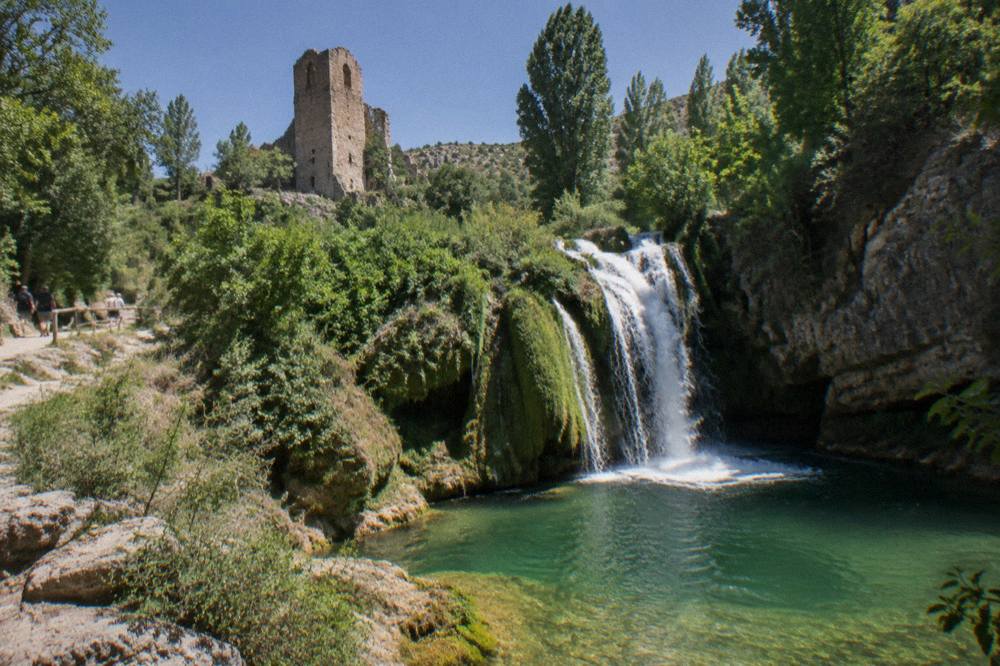
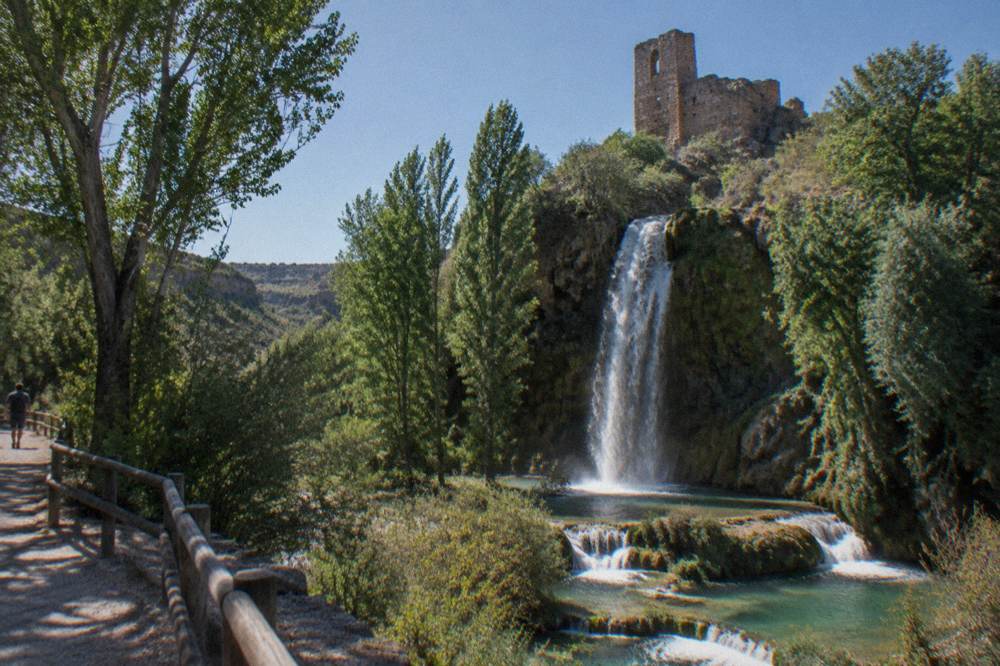
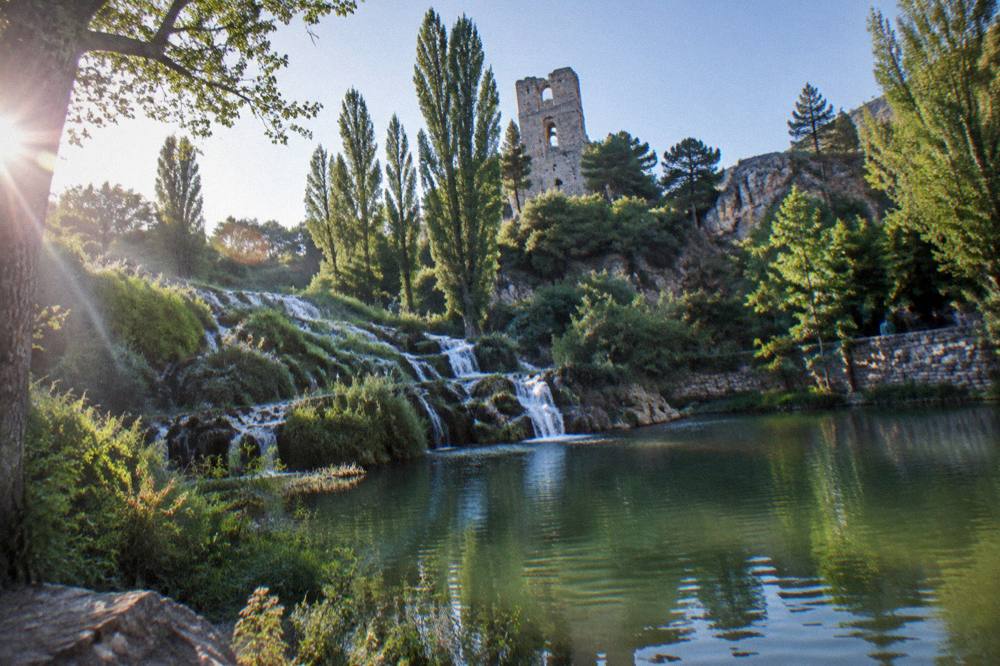
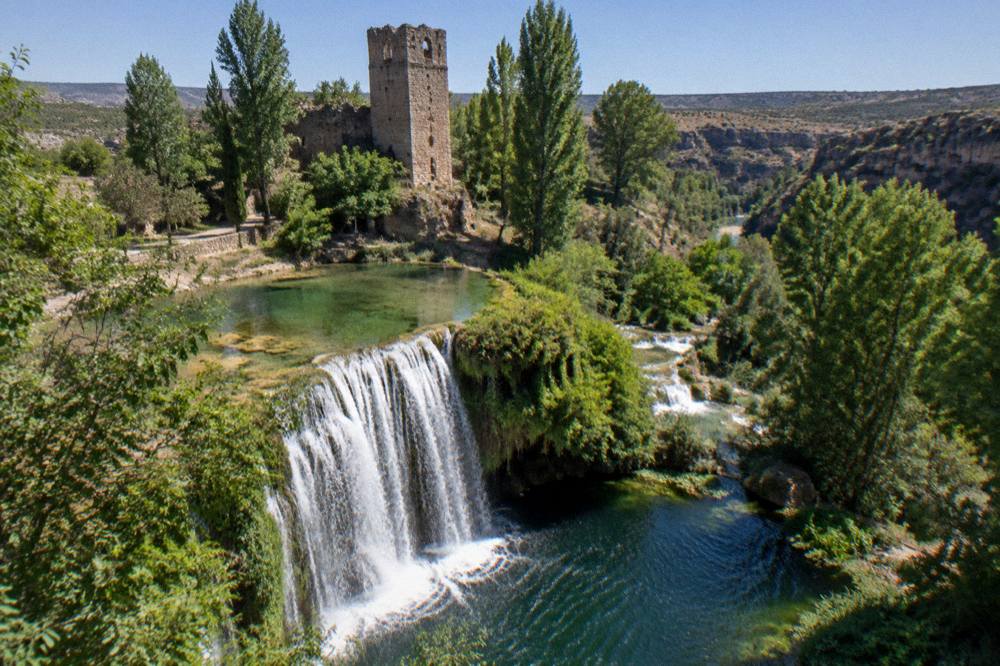
The park's draw is water in a dry region: a sequence of waterfalls, including the park's signature cascade, drops through a shaded limestone gorge, and the walking route passes behind one of the falls, through a cave and along pools where the spray keeps ferns and moss green through the hottest months. The monastery buildings, the gardens and the bird-of-prey displays complete a day that combines architecture, horticulture and geology in one walkable circuit.
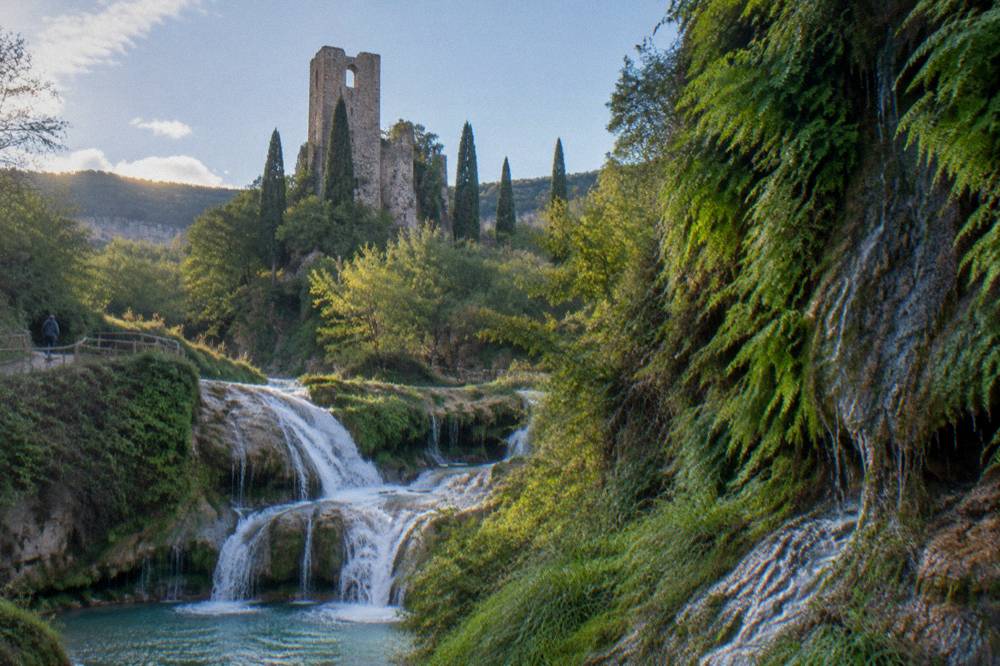
The gorge walk is the heart of the visit. The Río Piedra enters the park at the monastery's upper end and descends through a chain of small falls and larger cascades, each with its own name and viewing platform, and the paths are engineered so that the visitor descends with the river rather than fighting it. The most photographed moment is the waterfall you can walk behind, where the path cuts into the rock face and the water curtains down in front of you. The spray zone around the falls supports vegetation that looks nothing like the surrounding countryside: think of the Ebro valley's steppe, then think of its opposite, and you have the contrast the park trades on.
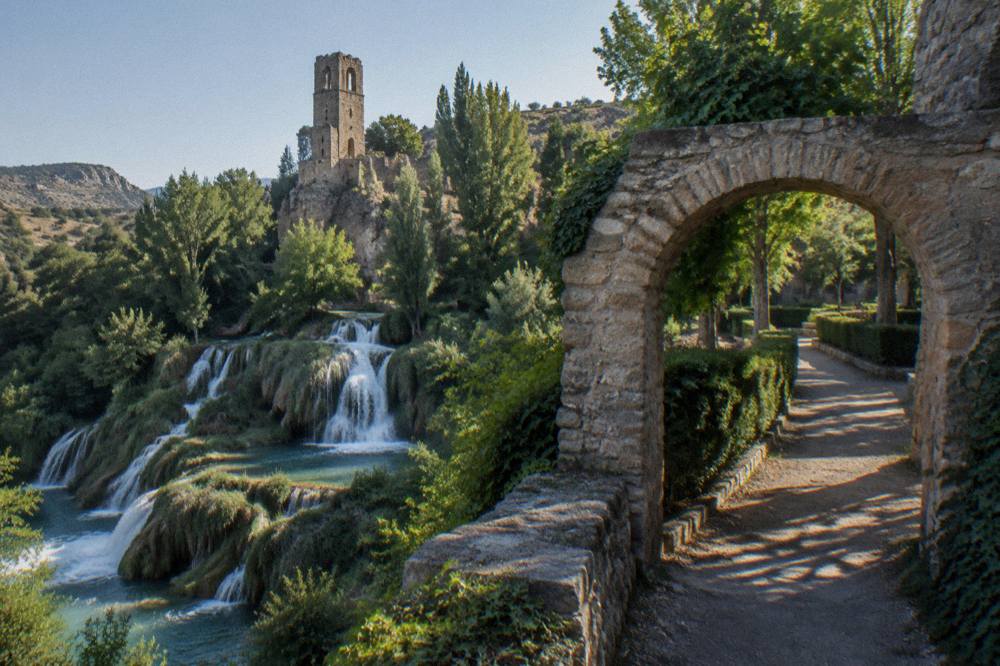
The monastery itself deserves more than a glance on the way past. The Cistercian order built with a discipline that later, richer orders abandoned, and the church and cloister show it: clean stone, restrained carving, proportions meant for contemplation rather than display. The later industrial chapter, when the buildings housed a textile mill, is part of the story too, and it explains some of the structural changes you notice inside. After the landscape-garden conversion the grounds gained ornamental gardens, ponds and shaded avenues, and today the site mixes three eras: monastic, industrial and landscaped. Families should note the park also runs displays of birds of prey, which are scheduled through the day, so check the notice board on arrival and plan the gorge walk around them if you want both.
For travellers who enjoy this kind of mixed day out, the guided options from Zaragoza cover several other flavours of Aragon. The olive-oil and Belchite excursion below pairs a working mill with a sobering visit to a Civil War ruin, and it suits anyone who wants a day built around food and history rather than scenery.
What Does A Day At Monasterio De Piedra Actually Look Like?
A sensible day splits into three parts: the monastery buildings in the cooler morning, the gorge and waterfall walk in the middle hours when the light reaches down into the ravine, and the ornamental gardens and viewpoints to finish, with lunch either in the park's own facilities or in Nuévalos. Arriving early matters in summer, when the gorge walk is the part of the day you want to do before the heat builds, and the walk itself is the longest single block of the visit.
Start with the monastery. The buildings open before the full heat of the day, and the interior of a stone church stays cool whatever the season, so the monastic section works well as a first hour. The displays inside cover the Cistercian period and the later factory era, and the cloister is the quiet centrepiece: walk it slowly, because the geometry is the point. From the monastery the route drops into the gorge, and this is where the day's real walking happens. The path follows the river downstream past the successive falls, and the spray zones between them are the greenest part of the park, so allow more time than the distance suggests, because you will stop, and you should.
Lunch divides visitors into two camps: those who eat in the park and those who drive into Nuévalos or the surrounding villages. The park's own facilities handle the summer crowds, while the village offers the quieter, more local version of an Aragonese lunch. If you eat in the park, aim for the early side of the midday window and then use the afternoon for the ornamental gardens, the ponds and the viewpoints above the gorge, where the light in mid-afternoon is at its best for photographs. Finish with the birds-of-prey display if the day's schedule allows, and then take the return drive while the sun is still up, since the regional roads are more comfortable in daylight.
The table below is a planning aid, not a timetable: it splits the day into its natural blocks so you can see the shape of it at a glance.
| Part of the day | Where | What you do | Why this order works |
|---|---|---|---|
| Morning | Monastery buildings | Church, cloister, interpretive displays | Stone interiors are cool, and the site is quietest early |
| Middle hours | The gorge and waterfalls | The descending river walk, the fall you can walk behind, the cave | The light reaches into the ravine around midday |
| Lunch | Park facilities or Nuévalos | Aragonese lunch, then a short rest | Splits the walking into two manageable halves |
| Afternoon | Ornamental gardens and viewpoints | Ponds, shaded avenues, elevated views over the gorge | Softer walking to finish, best light for photos |
| Late afternoon | Birds-of-prey display, then return | Scheduled display, then the drive back to Zaragoza | Daylight on the regional roads |
When Is The Best Time Of Year To Visit Monasterio De Piedra?
Spring and autumn are the best seasons, because the Río Piedra carries more water after the winter and spring rain, the gorge vegetation is at its greenest, and the walking is comfortable. AEMET's 1981 to 2010 normals for the Zaragoza Aeropuerto station put May's mean maximum at 24.1 C and October's at 21.4 C, against 32.4 C in July, the hottest month. Summer suits visitors who start early and use the gorge's shade.
The climate table below comes from AEMET's 1981 to 2010 normals for the Zaragoza Aeropuerto station, the only series the station publishes, and it describes Zaragoza itself rather than the hills around Monasterio de Piedra, which run a little cooler and wetter. Use it as a planning range, not a forecast. The months with the most rain are May, at 44 mm on average, and April and October, at 39 mm and 36 mm, and those same months sit in the comfortable middle of the temperature range, which is why they are the classic window for a walking-heavy day trip. July and August are the driest months at 17 mm each, and July is also the sunniest at 348 hours, which cuts both ways: reliable weather, but a gorge walk you will want to start early. Other pages covering the same trip are gathered on Zaragoza Travel Guide.
| Month | Mean max C | Mean min C | Rain mm | Days 1mm+ | Sun hours |
|---|---|---|---|---|---|
| March | 17.3 | 5.8 | 19 | 3.7 | 217 |
| April | 19.6 | 7.9 | 39 | 5.7 | 226 |
| May | 24.1 | 11.8 | 44 | 6.4 | 274 |
| June | 29.3 | 15.8 | 26 | 4.0 | 307 |
| July | 32.4 | 18.3 | 17 | 2.6 | 348 |
| August | 31.7 | 18.3 | 17 | 2.3 | 315 |
| September | 27.1 | 15.2 | 30 | 3.2 | 243 |
| October | 21.4 | 11.0 | 36 | 5.4 | 195 |
Two seasonal notes carry real weight. First, the waterfalls are at their most dramatic after wet months, so a spring visit after a rainy stretch beats a late-August one for sheer volume of water, even though August guarantees the sun. Second, the gorge is the park's natural air conditioning: on a July day in Zaragoza, when the mean maximum sits at 32.4 C, the shaded ravine is the one part of the region where midday walking stays pleasant. The site's own notices should be checked before any winter visit, when ice and high water can affect the gorge paths.
If you are timing a wider Aragon trip, the city's own calendar matters too: the Fiestas del Pilar run from 10 to 18 October, and the Ofrenda de Flores fills the centre on 12 October, so a day trip in that window competes with the biggest festival in the region. Some travellers do both, the city in the morning and the falls on another day, and the Ofrenda de Flores guide explains what the 12th of October involves if you want to weigh the two against each other.
How Does Monasterio De Piedra Compare With Other Day Trips From Zaragoza?
Monasterio de Piedra is the water-and-greenery option among Zaragoza's day trips, where the Pyrenees excursions are the mountain option, the wine routes are the food option and the stone villages of Albarracín and Tarazona are the history option; no other destination within a day's reach combines a monastery, a gorge and waterfalls in one site. Choose it when you want shade, walking and photography rather than altitude, tasting or ruins.
The comparison table below lists the main day-trip destinations covered by this site, with the direction each lies from Zaragoza and the kind of day it makes. No distances or drive times are given, because none are verified for these routes, and the honest version of a comparison is character, not kilometres.
| Destination | Direction from Zaragoza | The kind of day it makes |
|---|---|---|
| Monasterio de Veruela | South, towards the Moncayo massif | A Cistercian monastery in wine country, a quieter monastic day |
| Tarazona | North-west, under the Moncayo | A Mudéjar cathedral town with a Renaissance core |
| Albarracín | South, in the Sierra de Albarracín | A medieval hill village, red stone walls, photography |
| Calatayud | South-west, along the Jalón | Mudéjar churches and a Bilbilis Roman past |
| Belchite | South-east, on the steppe | A preserved Civil War ruin, visited soberly |
| The Pyrenees (Canfranc, Jaca, Ordesa) | North, into the high mountains | High scenery, mountain towns, long guided excursions |
Two of these deserve a direct word. Monasterio de Veruela is the natural sibling of Piedra: another Cistercian house, this one in the shadow of the Moncayo and surrounded by the Campo de Borja wine district, so the pairing of monastery and wine is the Veruela version of the pairing of monastery and water. If Piedra is fully booked or you want a second monastic day, Veruela is the answer. Belchite is the opposite case: it is a village destroyed in the Spanish Civil War and left as it stood, and it is not an entertainment but a memorial site. Treat it as such, and read the Belchite guide before deciding whether it belongs in your itinerary.
For the days you spend in the city itself, the things to do in Zaragoza page collects the full range, from the Basílica del Pilar to the Roman museums, and the food pages cover what to eat when you get back, including ternasco de Aragón, the lamb dish that anchors most Aragonese restaurant menus.
What Should You Know Before Leaving Zaragoza For The Day?
Leave early, carry water and shoes with grip, and sort your city logistics the night before: the urban bus and tram single is 1.70 EUR, or 0.55 EUR with a Tarjeta Bus, and the Zaragoza Bus Turístico costs 10 EUR for 24 hours of hop-on hop-off across 16 stops. No tourist tax applies anywhere in Aragon, and the low-emission zone in the historic centre restricts unlabelled vehicles on weekdays from 08:00 to 20:00, so a labelled hire car is the safe choice.
The practical details of getting around the city before and after a day trip are worth having in one place.
| Transport in Zaragoza | Fare | Notes |
|---|---|---|
| Urban bus or tram, single | 1.70 EUR | No transfer included |
| Same, with Tarjeta Bus | 0.55 EUR | The card itself costs 7 EUR |
| Night bus lines | 1.00 EUR | Single fare |
| Airport bus, line 505 | 4.65 EUR | About 2.25 EUR with a Lazo card |
| Zaragoza Bus Turístico | 10 EUR | 24 hours, 16 stops, cash on the bus |
| Bizi bike share, day pass | 1 EUR plus per-trip charge | 0.50 EUR up to the first 30 minutes |
Two further points matter for day-trippers. First, if you are driving out of the city in the morning, note the ZBE low-emission zone in the Casco Histórico: sanctions apply on weekdays from 08:00 to 20:00 to vehicles without a DGT environmental label, so a hire car is the safe option, and the rental will carry a label. Second, the museum situation in the city changes: the Museo Goya reopens on 9 October 2026 after its renovation, open Tuesday to Saturday from 10:00 to 20:00 and Sundays from 10:00 to 14:00, with Monday closed, while the Museo de Zaragoza's central building at Plaza de los Sitios 6 is closed for Ministry of Culture works with no reopening date, so plan any museum time around those two facts.
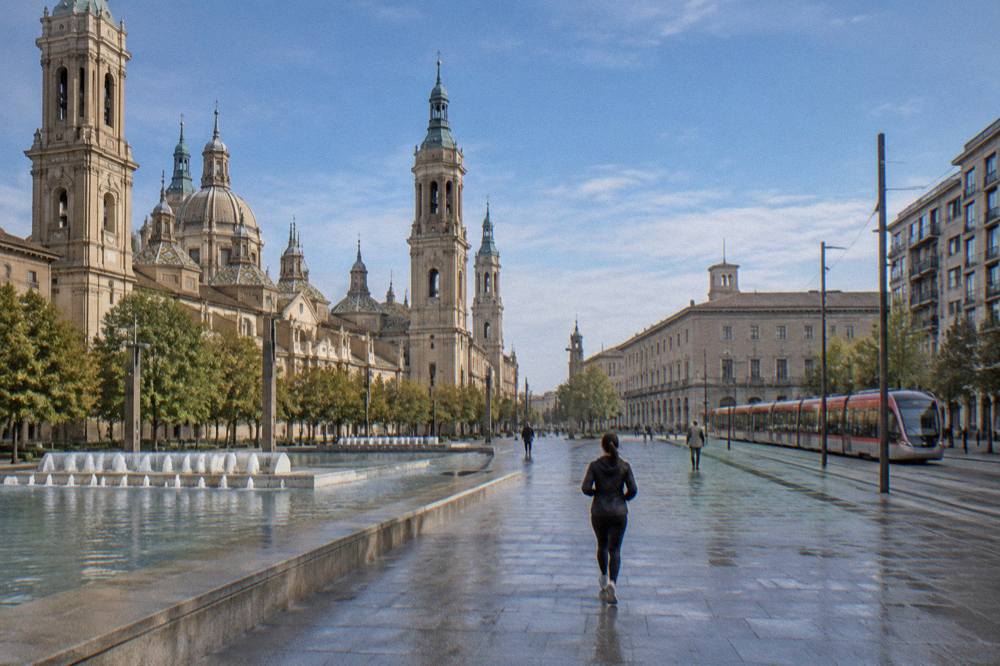
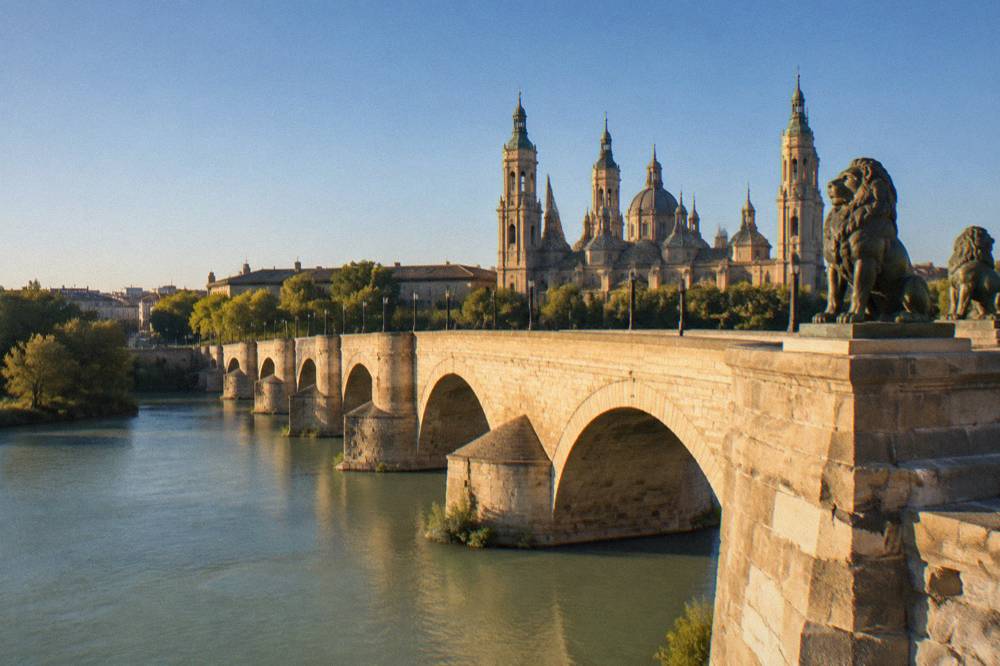
Back in the city, an evening walk is the natural way to end a day out, and the Puente de Piedra, the stone bridge over the Ebro with its four bronze lions, gives the classic view of the Pilar reflected in the river at dusk. If the day has left you with energy, the ghost-and-legends night tour below is the city's after-dark option.
Which Guided Day Trips From Zaragoza Are Worth Booking?
The strongest guided excursions from Zaragoza are the Pyrenees days to Canfranc, Jaca and Sallent de Gállego, the Tarazona and Moncayo trip built around the region's folklore, and the wine and tapas experiences in the old town, and each suits a different traveller: mountains for scenery, Tarazona for history and legend, wine for the evening. The tours below are the bookable options that start in Zaragoza, and the trio covers the range from high mountains to old-town tastings.
The Pyrenees excursion is the headline product. The Canfranc, Jaca and Sallent de Gállego tour from Zaragoza is rated 5 from 2 reviews and runs a full day into the Aragonese high country, taking in the restored international railway station at Canfranc, the cathedral town of Jaca and the mountain village of Sallent de Gállego. The Tarazona-and-witches excursion, rated 4.7 from 6 reviews, is the folklore option, a seven-hour day that pairs the Mudéjar town under the Moncayo with the region's stranger stories, and it suits travellers who found Monasterio de Piedra's monastic history the best part of the day.
A note on what these products are and are not: none of them is a guided tour of Monasterio de Piedra itself, and this site does not imply otherwise. The waterfall park is a self-guided destination, visited at your own pace, and the bookable excursions cover the places where a guide, a driver and a fixed itinerary genuinely change the day. If your trip is built around Zaragoza itself rather than the countryside, the things to do in Zaragoza page is the fuller starting point, and the evening tapas and wine walks in the old town are the city-based products that pair well with a day of driving.
Common Questions About Monasterio De Piedra
What is Monasterio de Piedra?
It is a former Cistercian monastery in the province of Zaragoza, near the village of Nuévalos, surrounded by a landscaped park where the Río Piedra drops through a gorge of waterfalls, caves and pools. The monastery and the waterfall park together form a single visitor destination.
How far is Monasterio de Piedra from Zaragoza?
It lies to the south-west of Zaragoza, in the hills of the Sistema Ibérico, and it is a full day trip rather than a half-day outing. This site publishes no kilometre or minute figure for the route because no verified number exists in its sources; check a current mapping service before you drive.
Can you walk behind the waterfall at Monasterio de Piedra?
Yes, the gorge route includes a section where the path passes behind one of the park's waterfalls, and it is the most photographed feature of the visit. Expect spray, so carry something for your camera and wear shoes with grip.
When is the best time of year to visit?
Spring and autumn, when the river carries more water and the temperatures sit in the comfortable range. AEMET's 1981 to 2010 normals for the Zaragoza Aeropuerto station put May's mean maximum at 24.1 C and October's at 21.4 C, against 32.4 C in July. Summer visits work best with an early start, using the gorge's shade in the middle of the day.
Is Monasterio de Piedra suitable for children?
Yes, the gorge walk, the waterfalls and the park's birds-of-prey displays make it one of the more family-friendly day trips from Zaragoza. The paths are engineered and maintained, but they include steps and spray zones, so small children need supervision near the water.
Are there guided tours of Monasterio de Piedra from Zaragoza?
The bookable excursions from Zaragoza concentrate on the Pyrenees, Tarazona and the wine country rather than the waterfall park, which is normally visited independently. A hire car or a private driver is the standard way to reach the site from the city.
Monasterio de Piedra earns its place on a Zaragoza itinerary by offering what the capital of Aragon cannot: shade, falling water and a green gorge in the middle of one of Spain's driest regions, wrapped around a monastery that has been a religious house, a factory and a garden in turn. Plan it for spring or autumn, give the gorge the middle of the day, and pair it with the city's own monuments and kitchens on the days either side.