Ofrenda De Flores In Zaragoza: The Complete Guide To The 12 October Flower Offering
The Ofrenda de Flores is the emotional centre of the Fiestas del Pilar in Zaragoza, Spain: on 12 October, hundreds of groups in regional dress walk from Paseo de la Independencia to Plaza del Pilar and build a vast mantle of flowers for the Virgen del Pilar.
Short answer
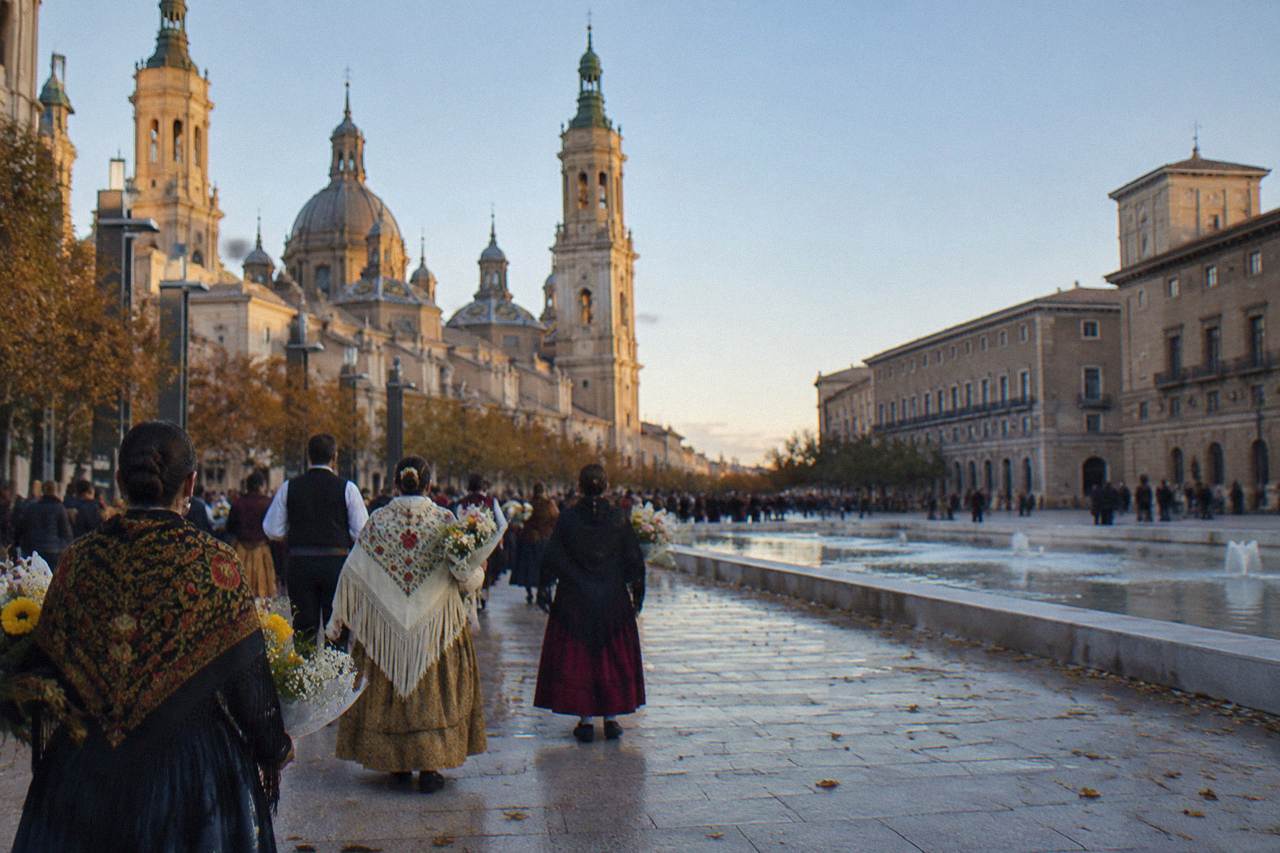
The Ofrenda de Flores takes place on 12 October 2026, the great day of the Fiestas del Pilar in Zaragoza, Spain. Groups in traditional Aragonese dress leave from Paseo de la Independencia from about 06:30 and walk to Plaza del Pilar, where their bouquets are assembled into a giant floral mantle for the Virgen del Pilar.
The Ofrenda de Flores is the single most moving spectacle in the Zaragoza calendar, and it happens on one date only: 12 October, the great day of the Fiestas del Pilar in Zaragoza, the capital of Aragon on the Ebro. On that morning, groups in traditional Aragonese dress leave from Paseo de la Independencia from about 06:30 and walk the usual route to Plaza del Pilar, where each bouquet is placed on a structure that grows, over roughly ten hours, into a vast mantle of flowers for the Virgen del Pilar. The city's official fiestas page records 994 registered groups for the 2026 offering, which gives a sense of scale: this is not a parade you watch in ten minutes, it is a river of people that flows from dawn into the evening.
What Is The Ofrenda De Flores In Zaragoza?
The Ofrenda de Flores is an annual flower offering to the Virgen del Pilar, held on 12 October in Zaragoza, Spain, in which registered groups in regional dress walk from Paseo de la Independencia to Plaza del Pilar and hand over bouquets that are assembled, on a large structure in the square, into a giant floral mantle for the Virgin. For 2026 the city lists 994 participating groups, with the first groups setting off from about 06:30.
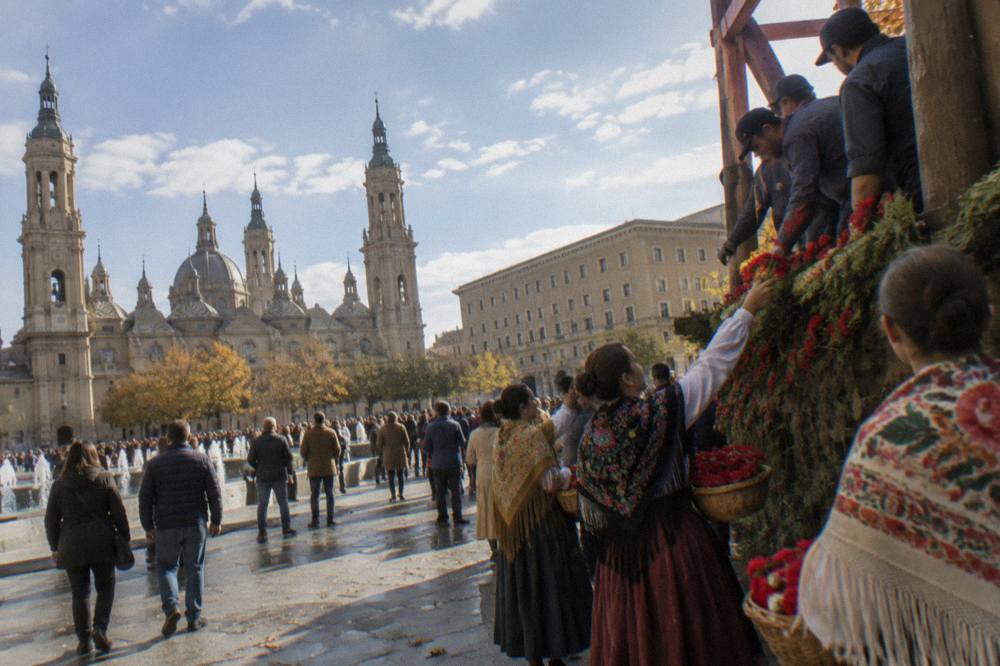
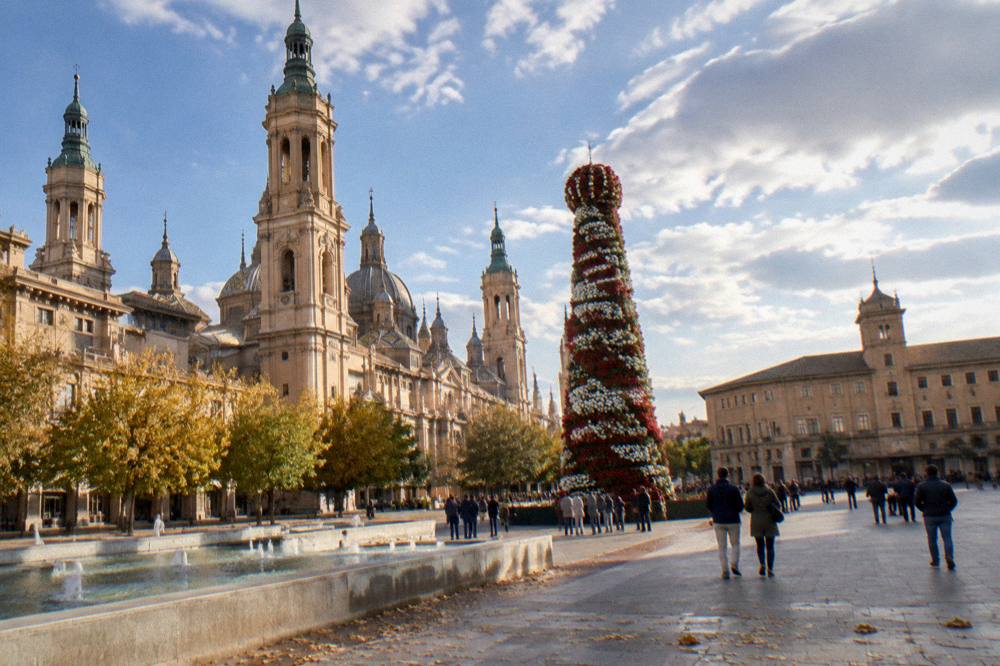
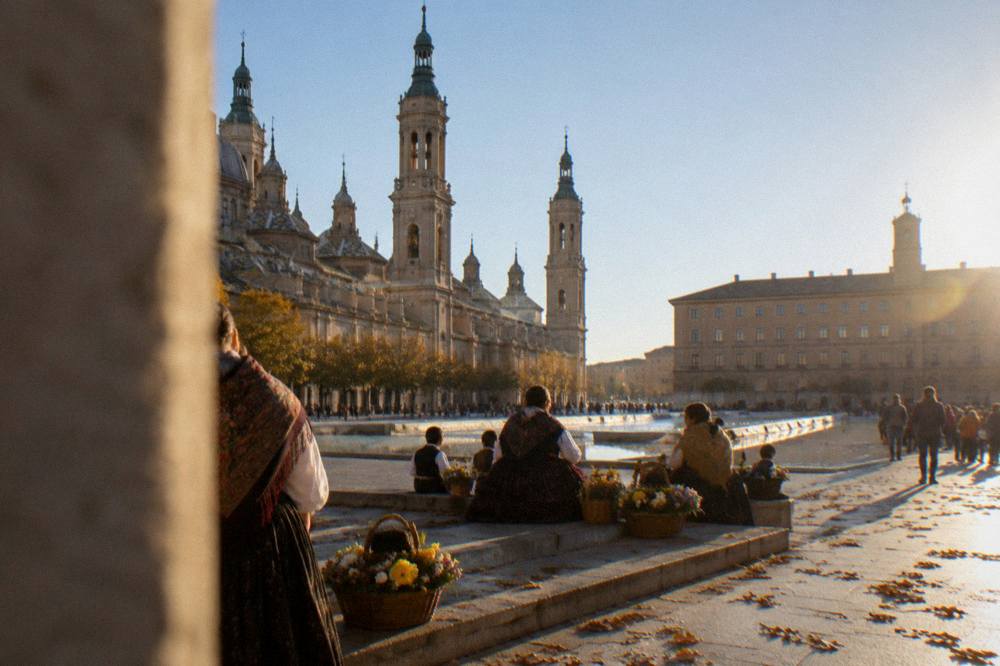
The word "ofrenda" means offering, and the mechanics are simple once you see them. Each group, often a village association, a dance group, a peña or a school, walks the route in costume, usually carrying a banner and baskets of flowers. At the end of the route the flowers are passed up to workers on a metal structure facing the Basílica del Pilar, and the structure is dressed, cluster by cluster, until the Virgin's mantle is a solid sheet of colour. Because the mantle is built live, the square changes appearance hour by hour: visitors who come at 09:00 and again at 17:00 see two different spectacles.
The offering is also the emotional heart of the Fiestas del Pilar, the city's main festival, which the municipality dates to 10 to 18 October 2026. Twelve October carries a double weight: it is the day of the Virgen del Pilar, the patroness of Zaragoza, of Aragon and, by extension for many, of the Hispanic world, and it is also Spain's national day. The result is that Plaza del Pilar on 12 October is part religious act, part civic celebration and part family reunion, with the whole city pouring through it.
For context on the festival as a whole, including the pregón, the concerts and the fireworks programme, read the companion guide to the Fiestas del Pilar, and for how the day fits into a wider trip, see things to do in Zaragoza.
When And Where Does The Ofrenda De Flores Take Place In 2026?
The Ofrenda de Flores 2026 takes place on Sunday 12 October 2026 in central Zaragoza, Spain, as the central act of the Fiestas del Pilar, which run from Saturday 10 to Sunday 18 October. The offering starts from about 06:30 near Paseo de la Independencia and follows the usual route to Plaza del Pilar, where the flower mantle is assembled through the day.
The official fiestas page of the Ayuntamiento de Zaragoza publishes the festival window, 10 to 18 October 2026, and the offering date, 12 October, together with the registered participation figures. Local press additionally reports, and the city's own notices echo, that the first groups step off at about 06:30, which is why the square is already busy by mid-morning even though the last groups arrive in the evening. The usual route runs along Paseo de la Independencia and into Plaza del Pilar, so the whole spectacle unfolds in the compact centro and Paseo de la Independencia area, the same district that holds the basilica, La Seo and the old town.
Here is the verified framework of the festival week, with the offering in its place:
| Date (2026) | What happens | Status |
|---|---|---|
| Sat 10 Oct | Fiestas del Pilar begin; pregón reported at 21:00 from the Ayuntamiento balcony | Official dates; pregón reported |
| Sun 12 Oct | Ofrenda de Flores, from about 06:30, Paseo de la Independencia to Plaza del Pilar | Official |
| Mon 13 Oct | Ofrenda de Frutos and Rosario de Cristal, reported by local press | Reported |
| Sun 18 Oct | Festival closes; fireworks closing show reported at the Ebro | Official dates; closing show reported |
Two practical notes follow from the date itself. First, 12 October falls on a Sunday in 2026, so the offering coincides with the weekend peak of the festival and with the basilica's Sunday timetable. Second, the city's October monument timetable shortens some Saturday access for weddings, so if your visit spans the whole week, check each day against the timetable rather than assuming a single schedule.
Where Should You Stand To Watch The Ofrenda De Flores?
The two workable strategies are the route itself, best along Paseo de la Independencia where groups pass in costume and you can photograph them in motion, and Plaza del Pilar, where the flower mantle is built and the atmosphere is densest. Arrive early for either: the offering begins from about 06:30, and by late morning both the avenue and the square are extremely full.
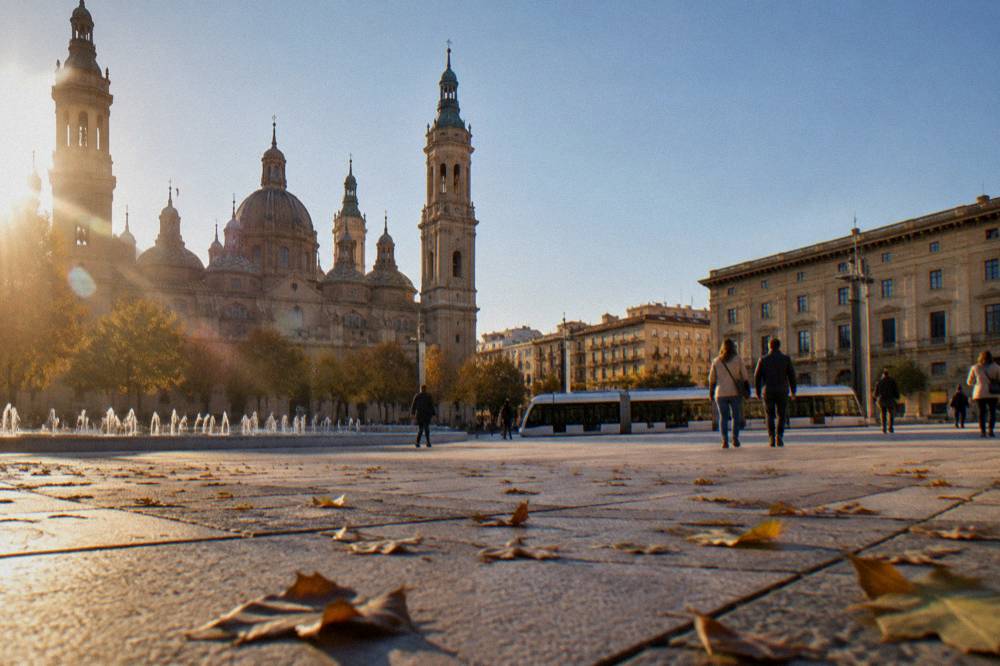
Along Paseo de la Independencia you see the groups as they walk: the banners, the dance troupes stopping to perform, the regional costumes of Aragon and of guest delegations. The avenue is wide, which spreads the crowd, and the walk to the square afterwards is short. In Plaza del Pilar you see the payoff, the mantle taking shape against the Baroque face of the Basílica del Pilar, but the square is the most crowded place in Aragon on this day, and moving through it takes patience.
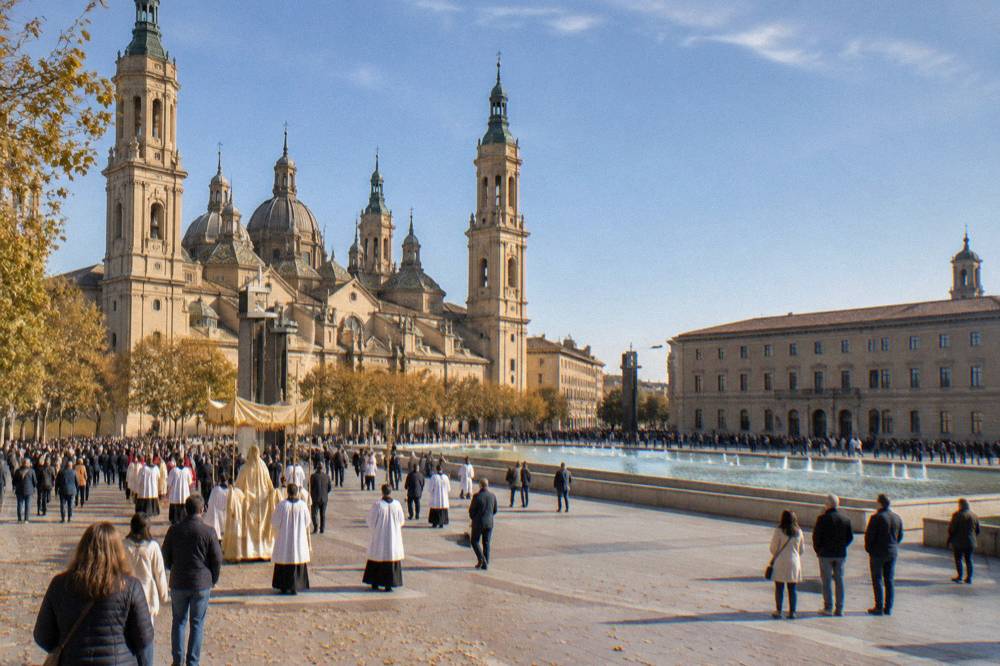
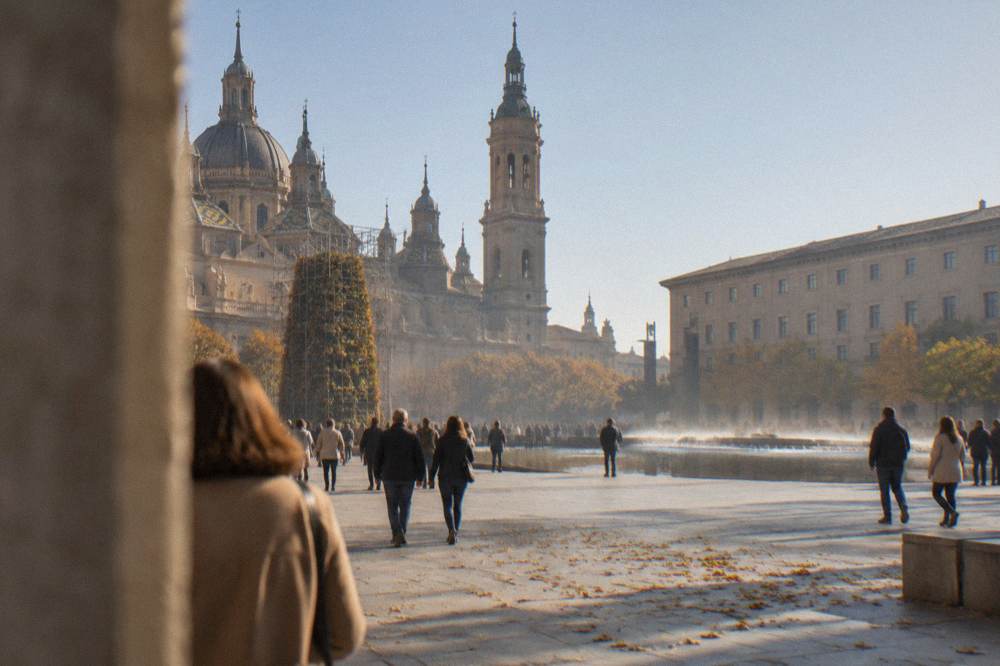
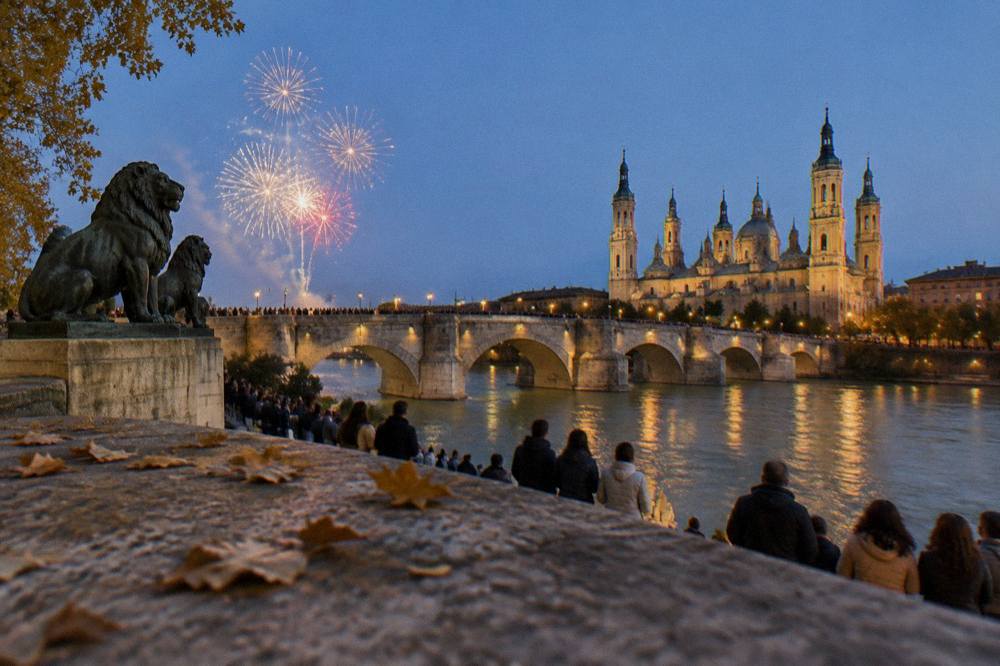
A middle path suits most visitors. Watch the first hours along the avenue, when the light is soft and the groups are fresh, then move toward the Ebro and the Puente de Piedra, whose far bank gives a raised, open view back across the river toward the basilica towers. The current stone bridge was built from 1401 and opened in 1440, on the line of a Roman-era crossing, and its lions have watched over the Ebro since 1991; as a viewpoint it costs nothing and never fills the way the square does.
For visitors who want the layers of the square explained rather than just seen, a guided walk earns its price on this day. The Most Complete Tour of Zaragoza, with its mysteries, photo stops and surprises, is built around exactly these streets, and the operator's listing shows a candy tasting among its stops; it runs from $25.23 per person and is rated 4.9 from 14 reviews. Check availability for the days around the offering, because the old town is at its fullest and a guide who knows the side streets saves real time.
Can You Enter The Basílica Del Pilar On 12 October?
Yes, entering the temple of the Basílica del Pilar is free, and the basilica's October timetable keeps the main altar zone open on Sundays from 7:30 to 13:30 and from 16:30 to 21:30, with the Holy Chapel zone open 8:00 to 20:30, but expect dense crowds on 12 October and note that the tower viewpoint and museum run their own separate schedules.
The basilica is a working church first and a monument second, and on the Virgin's day it is full of worshippers, musicians and visitors at once. The timetable the municipality publishes for October gives the main altar zone on Monday to Saturday from 7:30 to 13:30 and 16:30 to 20:15, and on Sunday from 7:30 to 13:30 and 16:30 to 21:30; the Holy Chapel zone runs 8:00 to 20:30 daily. On wedding Saturdays the main altar zone shortens, which matters for the festival weekend only if a wedding is scheduled, so check the basilica's own notices.
The tower viewpoint (Torre Mirador) and the Museo Pilarista are separate from the temple and carry their own arrangements:
| Part of the basilica | Admission | October hours |
|---|---|---|
| Temple (main church) | Free | Main altar zone Sun 7:30-13:30, 16:30-21:30 |
| Holy Chapel zone | Free | Daily 8:00-20:30 |
| Torre Mirador viewpoint | 6 EUR adult; 5 EUR over 65 and residents; 4 EUR ages 13-18, students, groups of 20+; free under 12 | Mon-Thu 10:30-14:30, 16:00-20:00; Fri-Sun 10:00-20:00, last access 30 min before close |
| Museo Pilarista | Included with the La Seo general ticket | Daily 10:00-13:30, 16:00-20:00 |
One caveat belongs here plainly. A restoration of the Regina Patriarcharum dome, funded by Fundación Ibercaja at 600,000 EUR, was agreed on 23 January 2026, with work expected to start in February and last about six months; its completion is not confirmed, so works may affect what you see of the exterior, and the basilica's own site is the place to check before you go.
What Is The Weather Like In Zaragoza On 12 October?
AEMET's 1981 to 2010 normals for the Zaragoza Aeropuerto station show October averaging a mean maximum of 21.4 C, a mean of 16.2 C, a mean minimum of 11.0 C, with 36 mm of rain over 5.4 days of 1 mm or more and 195 hours of sunshine, so 12 October typically calls for layers: mild in the sun, cool in the early morning when the offering starts and again after dark.
The offering's dawn start makes the day feel colder than the averages suggest. Groups assemble before 06:30 and the last light of the evening concerts comes long after the afternoon maximum, so a jacket over whatever you wear for the midday sun is the standard local solution. The same normals put November's mean maximum at only 14.8 C, a reminder that mid-October sits at the pleasant edge of the transition to winter. More of these guides are collected on Zaragoza Travel Guide.
| Month | Mean max C | Mean C | Mean min C | Rain mm | Rain days 1mm+ | Sun hours |
|---|---|---|---|---|---|---|
| September | 27.1 | 21.2 | 15.2 | 30 | 3.2 | 243 |
| October | 21.4 | 16.2 | 11.0 | 36 | 5.4 | 195 |
| November | 14.8 | 10.6 | 6.3 | 30 | 5.1 | 148 |
All figures are the 1981 to 2010 averages for the Zaragoza Aeropuerto station, the only window the station page publishes, and they are planning numbers, not a forecast: check the live forecast for your specific day. The full picture, including the dry continental character of the Ebro valley and the qualitative cierzo wind, is in the companion guides to Zaragoza weather and the best time to visit Zaragoza.
How Do You Get To The Ofrenda De Flores Route?
Zaragoza is about 1.5 to 2 hours from both Madrid and Barcelona by high-speed train to Zaragoza-Delicias, and the Ofrenda route in the historic centre is reached from the station by tram or urban bus at a single fare of 1.70 EUR, or 0.55 EUR with a Tarjeta Bus, though on 12 October the streets around Paseo de la Independencia and Plaza del Pilar are closed to traffic and walking is the only realistic last leg.
The practical advice is to arrive by rail and not by car. The city operates a low-emission zone in the Casco Histórico, with sanctions since 12 December 2025, active Monday to Friday from 08:00 to 20:00, and vehicles without a DGT environmental label are restricted in the first phase, with a second phase from 2030. On the offering day itself the centre belongs to the procession, so even a labelled car is a poor plan. The guide to getting to Zaragoza, the Madrid to Zaragoza and Barcelona to Zaragoza pages cover the rail options, and the Zaragoza-Delicias station guide covers the arrival end.
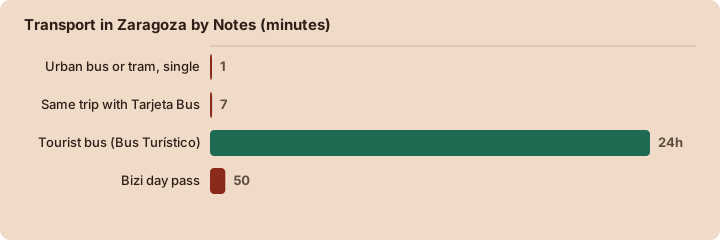
| Transport in Zaragoza | Fare | Notes |
|---|---|---|
| Urban bus or tram, single | 1.70 EUR | No transfer; night lines 1.00 EUR |
| Same trip with Tarjeta Bus | 0.55 EUR | Card costs 7 EUR, valid on bus and tram |
| Tourist bus (Bus Turístico) | 10 EUR | 24 h hop-on hop-off, 16 stops, 90-minute loop, cash only on the bus |
| Bizi day pass | 1 EUR + 0.50 EUR per trip up to 30 min | 50 EUR card deposit held on day, monthly and single passes |
For staying overnight, the where to stay in Zaragoza guide explains the districts: the centro puts you on the route itself, while Delicias trades a short tram ride for quieter nights and often lower rates. Book early for the festival week, when the whole city fills.
What Else Can You See Around The Route On The Same Day?
Within walking distance of the Ofrenda route you can visit La Seo cathedral, open on Sundays from 10:00 to 12:00 and 16:00 to 20:00 with a 10 EUR general ticket that includes the Museo de Tapices, Museo Pilarista and Rosario de Cristal, and the Aljafería palace, open daily 10:00 to 18:00 at 7 EUR general or 9 EUR with a guided tour, plus the free Caesaraugusta-adjacent sights of the old town.
The offering route runs through the densest monumental quarter in Aragon, so the day can hold far more than the parade. La Seo, the cathedral of San Salvador, stands a few minutes from Plaza del Pilar; its general ticket of 10 EUR drops to 9 EUR for over 65s and 7 EUR for students and ages 13 to 18, with under 12s free, and Aragon residents enter free on the 6th, 12th, 23rd and 27th of the month, which includes the offering day itself. The Aljafería, the Islamic palace that gives the city its most striking medieval interior, lies a longer walk or short tram ride west; it is free on the first and third Sunday and Monday of each month, and in October 2026 the first Sunday is 4 October, the week before the festival.
| Sight near the route | Admission | Free-entry day |
|---|---|---|
| La Seo + Museo de Tapices | 10 EUR general; free under 12 | Aragon residents on the 6th, 12th, 23rd, 27th |
| Aljafería | 7 EUR general, 9 EUR guided, 2 EUR students and over 65 | 1st and 3rd Sunday and Monday of each month |
| Museo del Fuego y los Bomberos | 3 EUR | 1st Sunday |
| Museo del Origami | 3 EUR | 1st Tuesday and Sunday |
| IAACC Pablo Serrano | Free | Always free |
| Centro de Historias | Free | Always free |
One closure matters for festival week: the Palacio de Sástago is closed in October, and the Museo Pablo Gargallo is temporarily closed. The Museo Goya (Fundación Ibercaja) reopens on 9 October 2026, the day before the festival begins, with Tuesday to Saturday hours of 10:00 to 20:00 and Sunday hours of 10:00 to 14:00; its admission price has not been published, so check before you go. For eating, the Zaragoza food guide covers the tapas streets of the centre, and for a deeper walk through the old town's layers, the free tour through the historical centre of Zaragoza on GuruWalk, a tip-based walk rated 4.15 from 122 reviews, follows the same streets the procession uses.
How Much Does A Trip For The Ofrenda De Flores Cost?
A visitor faces no tourist tax in Aragon, the regional government having explicitly ruled one out, and the offering itself is free to watch, so the main costs are transport, a bed for the festival week, food and optional tickets: the basilica tower at 6 EUR, La Seo at 10 EUR, the Aljafería at 7 EUR and the tourist bus at 10 EUR, with the tram or bus at 1.70 EUR a ride.
The festival's free core is worth stating plainly: the offering, the square, the basilica's temple and the street atmosphere cost nothing. What you pay for is comfort and depth. A rough planning frame for a two-night stay, using only the verified prices above:
| Item | Planning figure |
|---|---|
| Watching the Ofrenda de Flores | Free |
| Basilica temple entry | Free |
| Torre Mirador viewpoint | 6 EUR adult |
| La Seo general ticket | 10 EUR |
| Aljafería general entry | 7 EUR |
| Tourist bus, 24 hours | 10 EUR |
| Urban transport single | 1.70 EUR |
| Tourist tax | None in Aragon |
Guided products run alongside these. The historical tour of the old district with a guide runs from $106.92 per person for 2.5 hours, and the private custom tour with a local guide, rated 4.9 from 70 reviews, offers a walk shaped around whatever you most want to see, which on festival days usually means the procession streets and the viewpoints that avoid the worst of the crush.
What Should You Know About The Rest Of The Fiestas Del Pilar Week?
The Fiestas del Pilar 2026 run from Saturday 10 to Sunday 18 October, with the pregón reported at 21:00 on 10 October from the Ayuntamiento balcony, the Ofrenda de Frutos and Rosario de Cristal reported for 13 October, fireworks reported after the pregón, in Parque Pignatelli and at the Ebro closing on 18 October, and Venezuela reported as guest country, so the offering is the peak of nine days rather than a one-off event.
Treat the reported items as reported: they come from local press and the city's news notices rather than the festival's own dated programme page, and details can shift. What the official page fixes is the window, 10 to 18 October, and the offering, 12 October. Around them the city runs jota competitions, concerts on the new stages and family activities, and the programme's concert names and stage locations are the part of the festival most likely to change between the September announcements and the days themselves, so the municipality's programme is the document to check in the week before you travel.
If the festival convinces you to return in another season, the city's calendar holds Semana Santa from 21 to 28 March 2027, with Palm Sunday on 21 March and Good Friday on 26 March, the Christmas lights from 20 November 2026 until about 7 January 2027, and the Cincomarzada on 5 March. Each is a different Zaragoza: quieter, colder by the same AEMET normals, and much easier to book into.
Is The Ofrenda De Flores Worth Planning A Trip Around?
Yes: the Ofrenda de Flores is one of the largest participatory flower offerings in Spain, with 994 registered groups in 2026, and it transforms Zaragoza's monumental centre for a full day in a way no other event does, but it rewards planning, an early start, a bed in the centre and a willingness to share the square with the better part of the city.
The case against going blind is simply the crowd. The square and the avenue are at capacity for most of the daylight hours, the restaurants near the route fill by 13:00, and the emotional payoff of the mantle, which is real and considerable, belongs to those who position themselves well and give the day time. The case for going is that nothing else in Aragon looks like it: a working city turning out in historic costume to hand flowers to a statue, in a square framed by one of the largest Baroque churches in Spain.
For the fullest version of the day, the Most Complete Tour of Zaragoza pairs the monumental square with the stories and hidden corners most visitors walk past, and it is the featured walk for this page.
Common Questions About The Ofrenda De Flores In Zaragoza
When is the Ofrenda de Flores in Zaragoza?
The Ofrenda de Flores takes place on 12 October 2026, the central day of the Fiestas del Pilar, which run from 10 to 18 October. The first groups are reported to set off from about 06:30.
Where does the Ofrenda de Flores route go?
The usual route runs from Paseo de la Independencia to Plaza del Pilar, ending at the structure where the bouquets are assembled into the Virgen del Pilar's flower mantle.
How many people take part in the Ofrenda de Flores?
The city's fiestas page lists 994 registered groups for the 2026 offering, with the participation figure published on the official festival page.
Is the Ofrenda de Flores free to watch?
Yes. The offering is a public street event and watching it costs nothing, as does entering the basilica's temple. The tower viewpoint, La Seo and the Aljafería carry separate admissions.
Can you enter the Basílica del Pilar on 12 October?
Yes, entry to the temple is free and the October timetable keeps the Sunday main altar zone open 7:30 to 13:30 and 16:30 to 21:30, with the Holy Chapel zone open 8:00 to 20:30. Expect very dense crowds on the Virgin's day.
What is the weather like for the Ofrenda de Flores?
AEMET's 1981 to 2010 normals for Zaragoza Aeropuerto give October a mean maximum of 21.4 C and a mean minimum of 11.0 C, with 36 mm of rain across the month, so dress in layers for a dawn start and a late finish.
The offering ends when the last bouquet is placed and the mantle stands complete against the basilica, and that finished wall of flowers, visible from across the Ebro by the Puente de Piedra, is the image most visitors take home from Zaragoza in October.