Centro And Plaza De España: Zaragoza's Paseo De La Independencia Area Explained
The Centro is the spine of Zaragoza, Spain: the Paseo de la Independencia running from the Puerta del Carmen down to Plaza de España, where the Fuente de la Hispanidad sits between the Basílica del Pilar and La Seo.
Short answer
The Centro and Paseo de la Independencia area is Zaragoza's main commercial and monumental axis, running from the Puerta del Carmen gate down to Plaza de España, where the fountain of the Hispanidad faces the Basílica del Pilar and La Seo across the Ebro-side old town.
The Centro of Zaragoza, the capital of Aragon on the Ebro, is the strip of city most visitors walk without ever naming it: the Paseo de la Independencia, the broad, tree-lined promenade that runs from the Puerta del Carmen gate down to Plaza de España, where the Fuente de la Hispanidad stands in full view of both the Basílica del Pilar and La Seo. This is an inland city with a dry continental climate, not a coastal one, and its centre reflects that: stone, shade, wide pavements and a river crossing rather than a seafront. The area is the hinge between the commercial boulevard city and the Roman and Mudéjar old town, and almost every route you will walk in Zaragoza passes through it at least once.
What Is The Centro And Paseo De La Independencia Area Of Zaragoza?
The Centro is Zaragoza's central commercial and monumental axis, a roughly straight corridor that starts at the Puerta del Carmen, one of the city's surviving gates, and runs down the Paseo de la Independencia to Plaza de España, the open square where the Fuente de la Hispanidad faces the Basílica del Pilar and La Seo. Everything in between is shops, cafes, banks and the boulevard street plan, and everything behind Plaza de España is the old town.
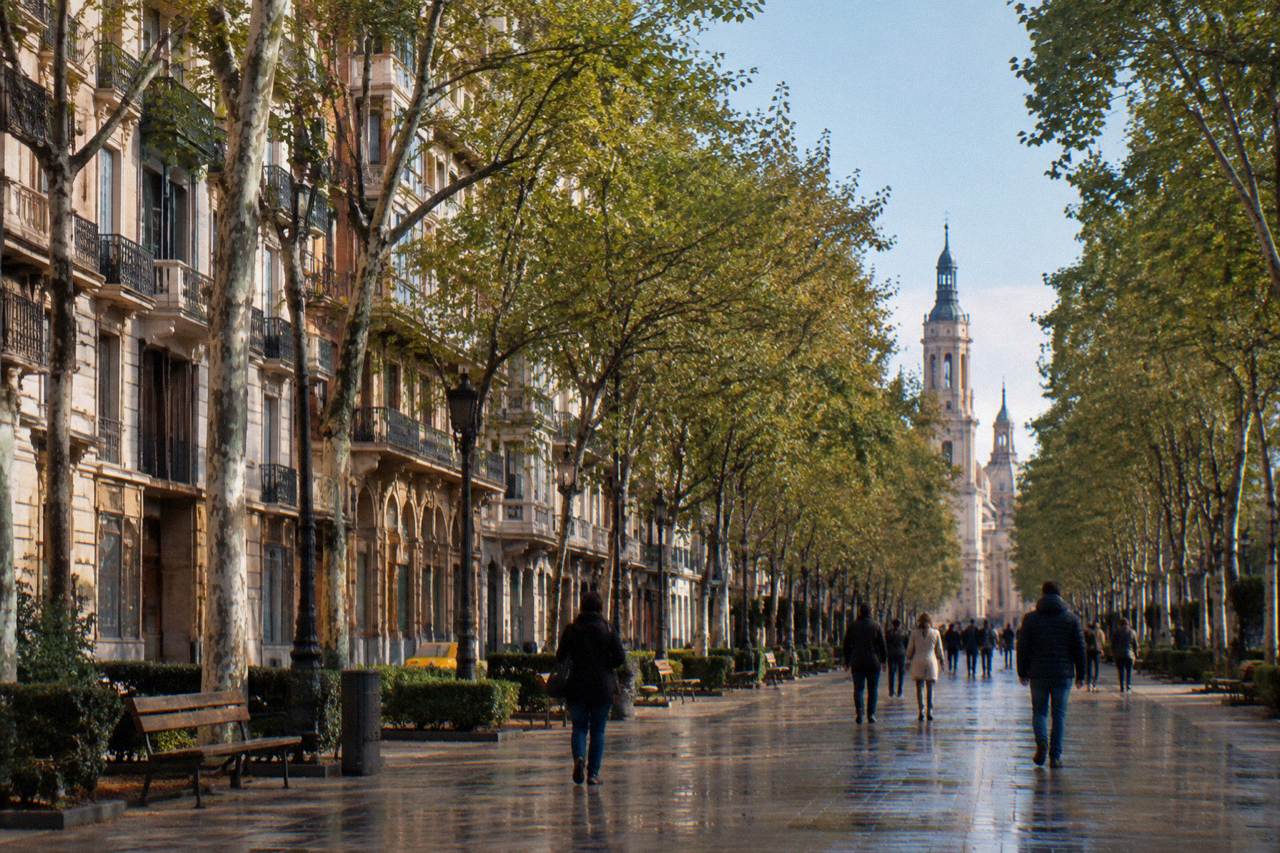
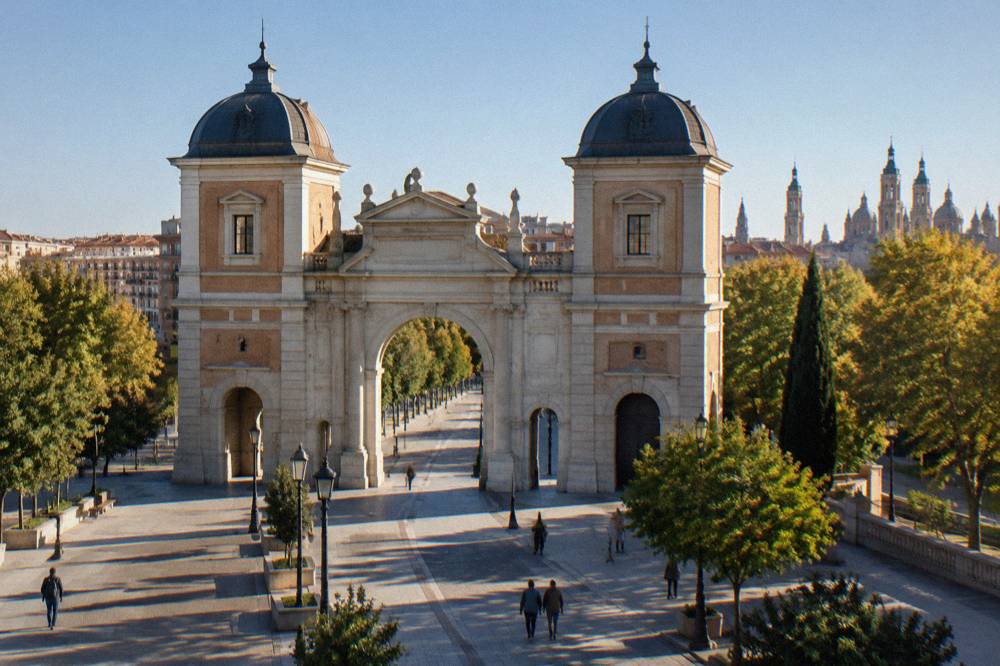
The Paseo de la Independencia is the spine. It is the street locals mean when they say "el Paseo", and it carries the city's main shopping traffic under a double row of trees. At its northern end stands the Puerta del Carmen, a neoclassical gate that survived the demolition of the old city walls. At its southern end the street opens into the roundabout of Plaza de España, which is less a square in the classical sense than a generous urban hinge: the point where the modern boulevard city hands over to the medieval one.
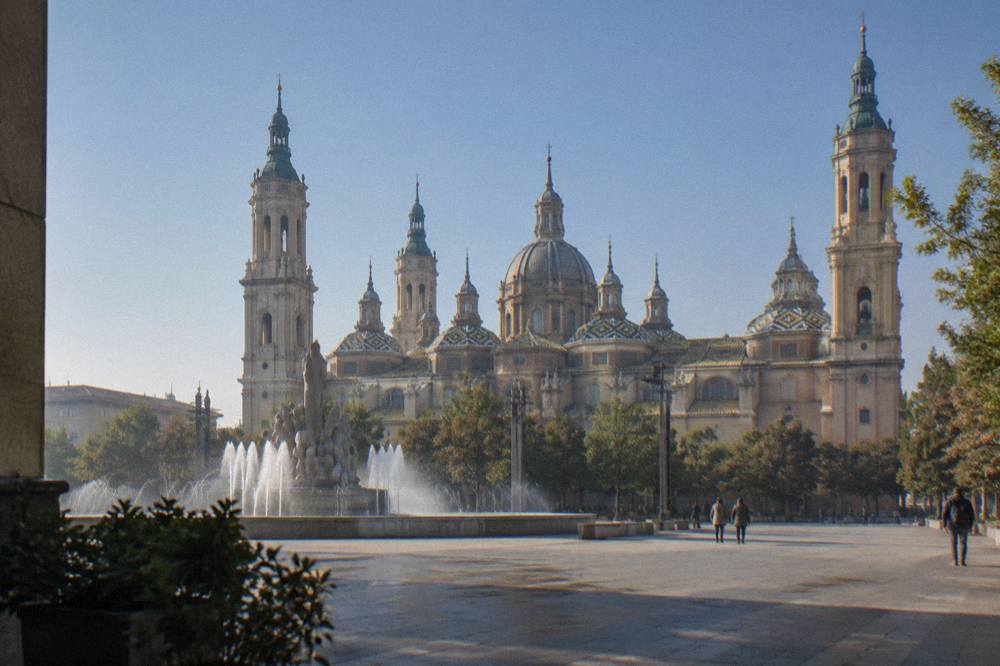
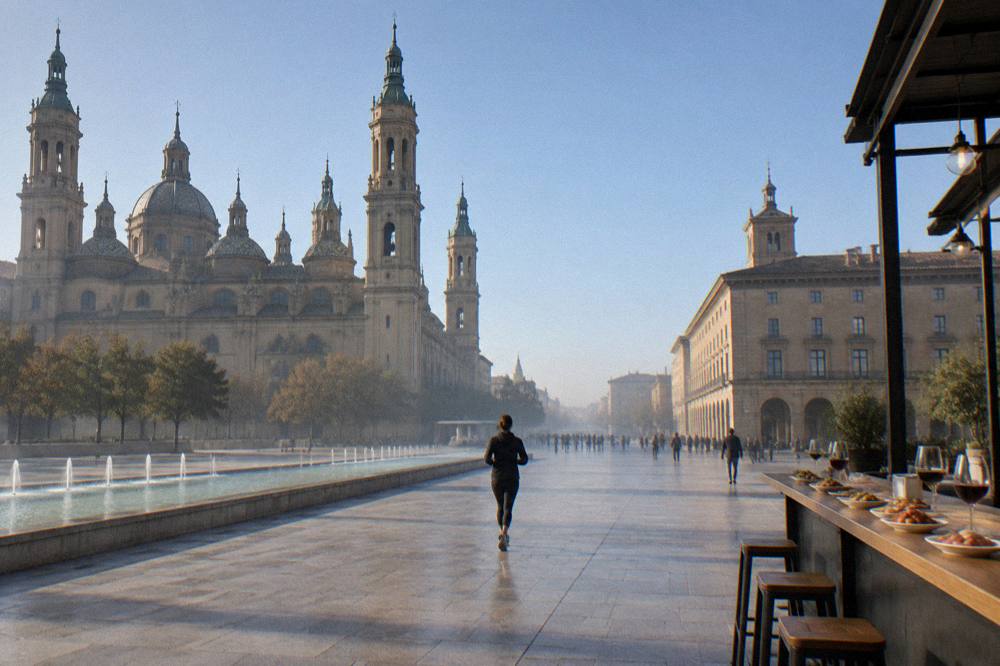
Plaza de España is best known for the Fuente de la Hispanidad, the sculptural fountain whose concrete forms reference the meeting of cultures that shaped the city, Roman, Moorish, Jewish and Christian. From its edge you can see the towers of the Basílica del Pilar directly ahead and the bulk of La Seo, the cathedral of San Salvador, a short walk into the old town. The square is also the traditional staging point for the Ofrenda de Flores route each October, which assembles along the Paseo before winding to the basilica.
The area rewards a slow walk because it compresses the whole city into a kilometre or so of street. You pass department stores and modern shopfronts, then the Teatro Principal, then suddenly the ground drops into the tight lanes of the old town. The contrast is the point: Zaragoza's Centro is not a museum district kept separate from daily life, it is the working heart of the city, and the monumental old town is simply its continuation.
What Should You See Walking From Puerta Del Carmen To Plaza De España?
The walk from the Puerta del Carmen down the Paseo de la Independencia to Plaza de España takes in the gate itself, the Teatro Principal, the shopping stretch of the Paseo, the side streets with the Central Market, and finishes at the Fuente de la Hispanidad with views of the Basílica del Pilar and La Seo. The whole route is flat, continuous and needs no transport, and every landmark sits on the same straight line.
Start at the Puerta del Carmen, the only gate of the old walls still standing in this part of the city. It is a stone arch with flanking columns, built as a ceremonial entrance, and it marks where the Paseo begins. From there the street runs south under plane trees. The Teatro Principal, the city's historic theatre, sits a short way down on the side streets, and the Central Market, Zaragoza's main food market hall, lies just off the axis, worth a detour for the produce stalls.
Halfway down, the Paseo is pure commerce: national chains, local shops, cafes with terrace tables, and the constant flow of people that makes this the busiest pedestrian environment in Aragon. Branch streets lead east toward the Coso, the long curving street that follows the line of the old Roman wall, and west toward the Plaza del Pilar.
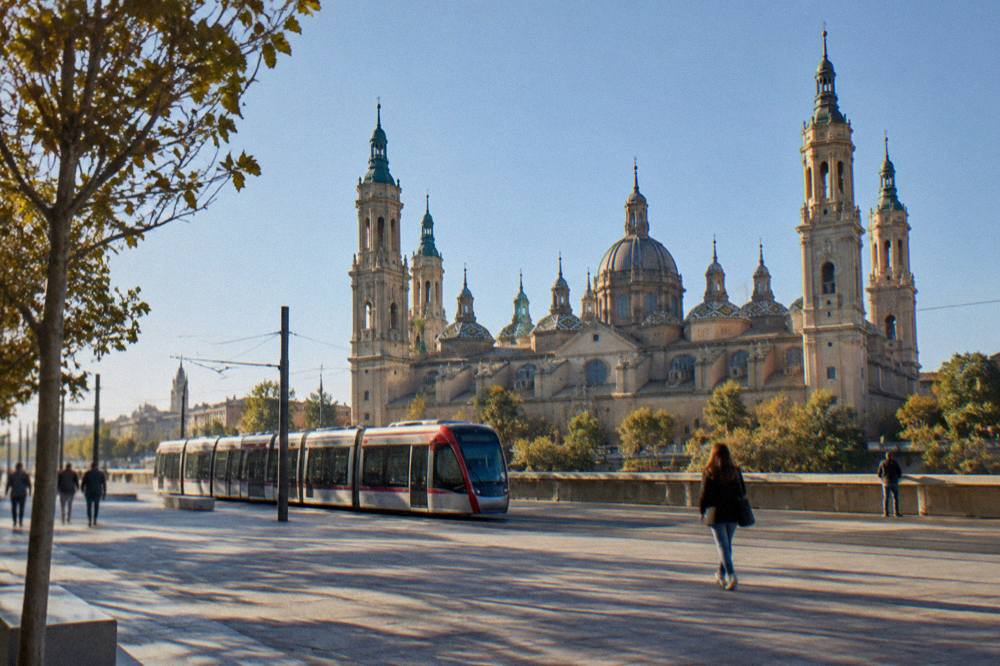
The route ends at Plaza de España. The Fuente de la Hispanidad is the square's signature, and from its edge the view north is one of the most photographed in the city: the basilica's domes and towers framed by open space. La Seo sits a few minutes' walk to the east, and the Puente de Piedra, the stone bridge over the Ebro, continues the line across the river.
A guided walk is the efficient way to absorb this axis if your time is short. The free tour through the historical centre, run on GuruWalk with a local guru and tip-based pricing, covers the central streets and the old town in one loop, and it is rated 4.15 from 122 reviews on the platform. It costs nothing up front, you tip what you consider fair at the end, and it pairs well with an afternoon of independent wandering once you know the geography.
Which Monuments Sit On Or Just Off Plaza De España Zaragoza?
Three first-rank monuments sit within a few minutes of Plaza de España: the Basílica del Pilar directly north, La Seo cathedral to the east across the old town edge, and the Puente de Piedra continuing the axis over the Ebro. La Seo charges 10 EUR general admission, which includes the Museo de Tapices, the Museo Pilarista and the Rosario de Cristal, while entering the basilica itself is free.
The Basílica del Pilar dominates every view from the square. Entry to the temple is free, and the municipal October timetable lists the Holy Chapel zone open 8:00 to 20:30 and the main altar zone open in morning and evening sessions, with Sunday evening hours extending to 21:30. The tower viewpoint, the Torre Mirador, costs 6 EUR for an adult, 5 EUR for over-65s and residents, 4 EUR for ages 13 to 18, students and groups of 20 or more, and is free for children under 12, with hours of 10:30 to 14:30 and 16:00 to 20:00 Monday to Thursday and 10:00 to 20:00 Friday to Sunday, last access 30 minutes before closing.
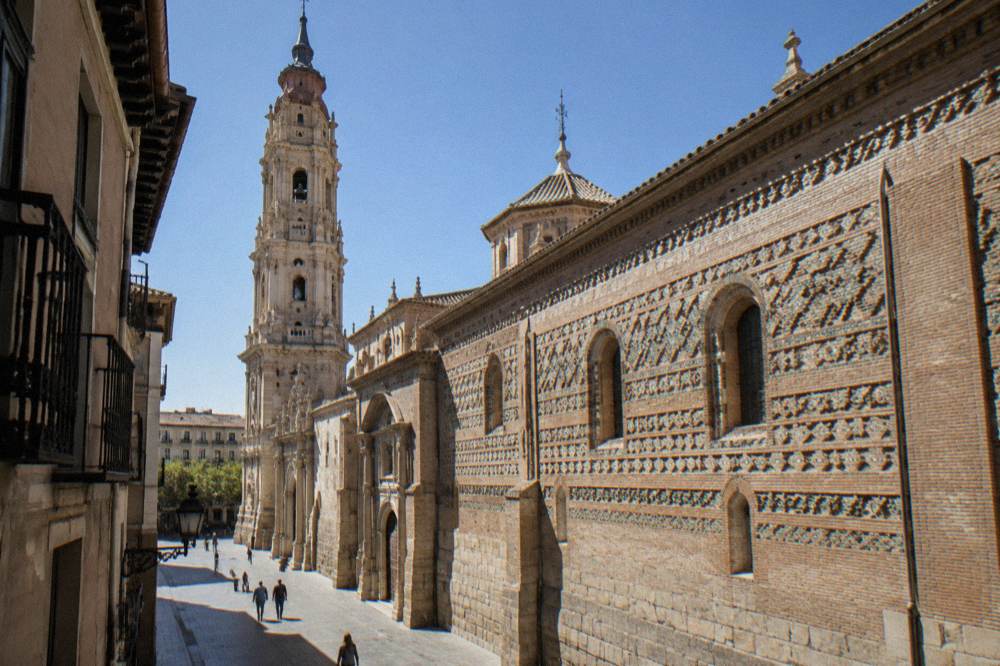
La Seo, the cathedral of San Salvador, is the quieter of the two great churches and many visitors rate its interior the more surprising. The October municipal timetable lists Monday to Saturday 10:00 to 14:30 and 16:00 to 20:00, with wedding Saturdays shortened to 10:00 to 12:30 and 16:00 to 20:00, and Sundays 10:00 to 12:00 and 16:00 to 20:00. The general ticket at 10 EUR is unusually generous, since it bundles the Museo de Tapices, the Museo Pilarista and the Rosario de Cristal; over-65s pay 9 EUR, students and ages 13 to 18 pay 7 EUR, under-12s enter free, and a general-plus-tower combination costs 12 EUR. Aragon residents enter free on the 6th, 12th, 23rd and 27th of the month.
| Monument | Entry cost | October hours (municipal timetable) |
|---|---|---|
| Basílica del Pilar, temple | Free | Holy Chapel 8:00-20:30; main altar Mon-Sat 7:30-13:30 and 16:30-20:15, Sun 7:30-13:30 and 16:30-21:30 |
| Basílica del Pilar, Torre Mirador | 6 EUR adult, 5 EUR over 65/resident, 4 EUR 13-18/student/group, free under 12 | Mon-Thu 10:30-14:30 and 16:00-20:00, Fri-Sun 10:00-20:00, last access 30 min before close |
| La Seo cathedral | 10 EUR general, 9 EUR over 65, 7 EUR student/13-18, free under 12, 12 EUR with tower | Mon-Sat 10:00-14:30 and 16:00-20:00, Sun 10:00-12:00 and 16:00-20:00 |
| Museo Pilarista | Included in La Seo general ticket | Daily 10:00-13:30 and 16:00-20:00 |
| Rosario de Cristal | Included in La Seo general ticket | Mon-Sun 11:00-14:30 and 16:00-18:30, closed 4-15 Oct |
The Puente de Piedra, the stone bridge at the end of the axis, was built from 1401 and opened in 1440 on the line of a Roman-era crossing, and its four bronze lions, added in 1991, have become an unofficial symbol of the city. Napoleonic troops blew up one of its arches in 1813, and the bridge you cross today carries that history in its rebuilt span. From the middle of the bridge the view back toward the basilica is the classic Zaragoza photograph.
If you would rather have a guide than a map, a must-see walking tour with a guide covers the central monuments in a single led walk. The listing shows it from 44.72 USD per person with a 5 rating from 3 reviews, and it is a sensible option when you want the stories attached to the stones rather than just the stones.
Between the led walks and the free format there is room for a middle path: a booked tour with a fixed route and a professional guide removes the variability of a tip-based walk while keeping the storytelling, and for a first visit that combination is often what turns a pleasant stroll into the part of the trip you remember. The must-see walk above is the natural candidate, since its route mirrors exactly what this section covers, the basilica, La Seo and the streets between them.
How Does The Centro Connect To The Old Town And El Tubo?
The Centro hands over to the old town at Plaza de España with no visible boundary: the streets behind the Fuente de la Hispanidad narrow into the medieval grid, where El Tubo, a dense lattice of tapas bars, sits between the Paseo and the Basílica del Pilar, and the Roman museum route of Caesaraugusta runs beneath the same blocks. The whole transition happens within a few minutes' walk.
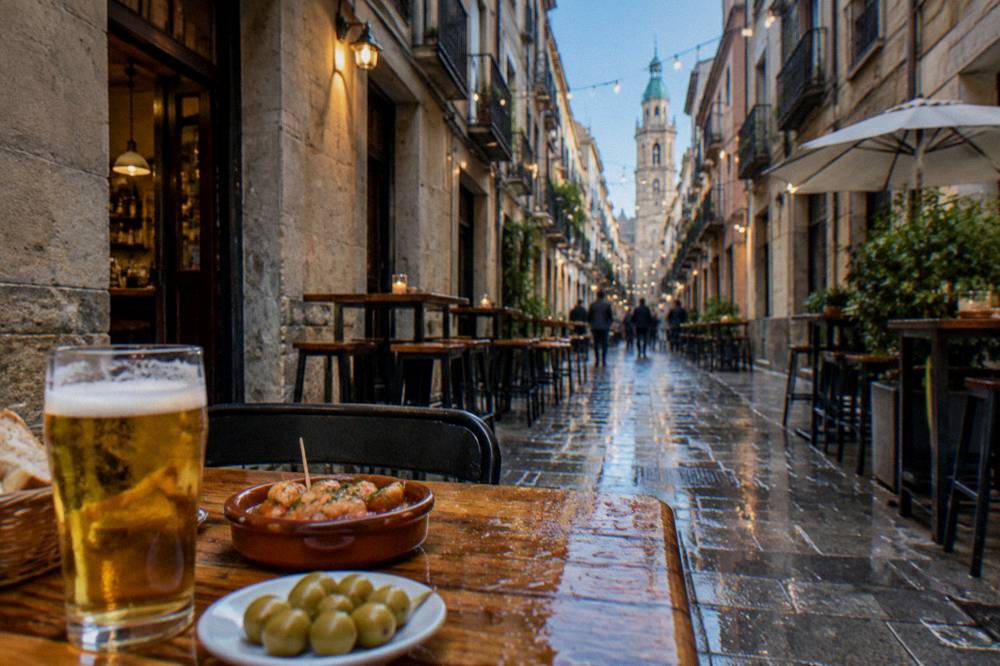
El Tubo is the name locals give to the tight network of lanes behind the basilica, and its character is simple to describe: a dense old-town street grid packed with tapas bars, one of the most concentrated eating strips in Aragon. The bars spill onto the pavement in the evenings and the area works on a crawl logic, one bar, one or two specialities, then move on. The El Tubo lanes sit directly between the Paseo axis and the river, so a Centro walk naturally ends in them at dinner time.
Beneath the same blocks lies the Roman city. Caesaraugusta, the Roman settlement that gave Zaragoza its name, survives in four museum sites, and the Roman Forum Museum is the easiest to reach from the Centro. The municipal timetable lists the Caesaraugusta museums open Tuesday to Saturday 10:00 to 14:00 and 17:00 to 21:00, and Sundays and holidays 10:00 to 14:30. The Forum costs 4 EUR, the River Port Museum and the Baths 3 EUR each, and a four-museum bono costs 7 EUR, or 5 EUR reduced, with free entry on the first Sunday of the month.
| Caesaraugusta museum | Admission | Hours (municipal timetable) |
|---|---|---|
| Foro | 4 EUR | Tue-Sat 10:00-14:00 and 17:00-21:00, Sun and holidays 10:00-14:30 |
| Puerto Fluvial | 3 EUR | Same as Foro |
| Termas | 3 EUR | Same as Foro |
| Four-museum bono | 7 EUR, 5 EUR reduced | Valid across all four sites, free first Sunday of the month |
The old town beyond El Tubo spreads east toward La Seo and the La Magdalena quarter, and west toward the San Pablo district. Each of these has its own character, and the Centro is the natural base for exploring all of them on foot. Nothing in the central strip requires a vehicle, and the whole area from the Puerta del Carmen to the far side of the old town is a comfortable walk.
Where Should You Eat And Drink In The Centro?
The Centro's eating runs in two registers: the Paseo's terrace cafes and traditional dining rooms for sit-down meals, and El Tubo's tapas-bar lattice for an evening crawl, with the Central Market for daytime produce and simple counter food. Guided tapas and wine walks in this part of the city run from about 50.65 USD per person for a three-hour sightseeing-and-tapas combination to 106.92 USD for a dedicated evening tapas walk.
The Paseo itself is the terrace belt. Its cafes fill at mid-morning for coffee and at aperitif hour before lunch, the Spanish vermouth hour being a genuine institution in Zaragoza, and the side streets hold the older dining rooms serving Aragonese cooking. Ternasco de Aragon, the region's roast lamb, and migas aragonesas, the breadcrumb dish, anchor most traditional menus, and the ternasco tradition is the one dish visitors should recognise by name before ordering.
El Tubo is the crawl. The logic is a few tapas per bar, standing or perched at the counter, moving between rooms that each specialise in one or two things. No official source has been read on individual bar names or their histories, so treat El Tubo as a district to explore rather than a list to tick, and let the busiest counter be your guide. A crawl here pairs naturally with the tapas crawl guide and with an evening walk along the Ebro.
Guided options remove the guesswork. The tapas sightseeing tour runs 3 hours from 50.65 USD per person, rated 5 from 7 reviews. The evening tapas walking tour in the old town runs 3 hours from 106.92 USD, rated 4.9 from 62 reviews, and the midday market and tapas tour, also 3 hours from 106.92 USD, is rated 5 from 9 reviews and suits visitors who want the market and the bars in daylight. The wine tasting and tapas option, 3 hours from 106.92 USD with a 5 rating from 21 reviews, adds Aragonese wine to the route. The wider set of guides lives on Zaragoza Travel Guide.
| Guided food walk | Duration | From price | Rating |
|---|---|---|---|
| Tapas sightseeing tour | 3 hours | 50.65 USD per person | 5 from 7 reviews |
| Evening tapas walk, old town | 3 hours | 106.92 USD per person | 4.9 from 62 reviews |
| Midday market and tapas tour | 3 hours | 106.92 USD per person | 5 from 9 reviews |
| Wine tasting and tapas | 3 hours | 106.92 USD per person | 5 from 21 reviews |
| Complete tour with wine and tapas | 5 hours | 212.71 USD per person | 4.9 from 7 reviews |
How Do You Get To The Centro And Move Around It?
The Centro is served by the city's tram and bus network at a flat 1.70 EUR single fare, 0.55 EUR with the Tarjeta Bus card, and the hop-on hop-off tourist bus costs 10 EUR for 24 hours across 16 stops on a 90-minute loop. From Zaragoza Airport the connection is line 505 at 4.65 EUR single, and high-speed trains from Madrid or Barcelona reach Zaragoza-Delicias in about 1.5 to 2 hours.
The tram runs through the central area and is the simplest way to arrive from the Delicias station side of the city. The 2026 Avanza fare table lists the single at 1.70 EUR with no transfer, 0.55 EUR with the Tarjeta Bus, and the card itself costs 7 EUR and is valid on both bus and tram. Night lines cost 1.00 EUR. For a visitor staying anywhere near the axis, the honest answer is that you will walk almost everything and use the tram mainly to arrive.
The tourist bus, the Zaragoza Bus Turistico, is a different product: a 10 EUR general ticket buys 24 hours of hop-on hop-off across 16 stops on a 90-minute loop, with discounts available and payment in cash on the bus. It is a reasonable orientation device on a first day, though the Centro's own geography is so linear that the walk from the Puerta del Carmen to Plaza de España teaches the layout faster than any loop.
From the airport, the connection is line 505, never the urban 44: the fare table lists 4.65 EUR single, about 2.25 EUR with a Lazo or Ciudadana card, a 25 to 35 minute journey, and departures timed to flights. From Madrid or Barcelona, high-speed services reach Zaragoza-Delicias in about 1.5 to 2 hours; treat any specific time or fare as something to check on the operator's own pages before booking.
| Transport | Fare | Notes |
|---|---|---|
| Bus or tram single | 1.70 EUR | No transfer; night lines 1.00 EUR |
| With Tarjeta Bus | 0.55 EUR | Card costs 7 EUR, valid on bus and tram |
| Tourist bus | 10 EUR | 24 h hop-on hop-off, 16 stops, 90-minute loop, cash on the bus |
| Airport line 505 | 4.65 EUR single | About 2.25 EUR with Lazo/Ciudadana card, 25-35 min, timed to flights |
| Bizi day pass | 1 EUR plus per-trip | First 30 min 0.50 EUR per trip, deposit applies |
One planning note for drivers: Zaragoza operates a low-emission zone in the Casco Histórico, with sanctions in force since 12 December 2025, active Monday to Friday 08:00 to 20:00, and vehicles without a DGT environmental label are restricted, with a 15-minute grace period if you enter by mistake. The Centro's edge sits at the boundary of this zone, so check your vehicle's label before driving into the old-town side.
When Is The Best Time To Walk The Centro?
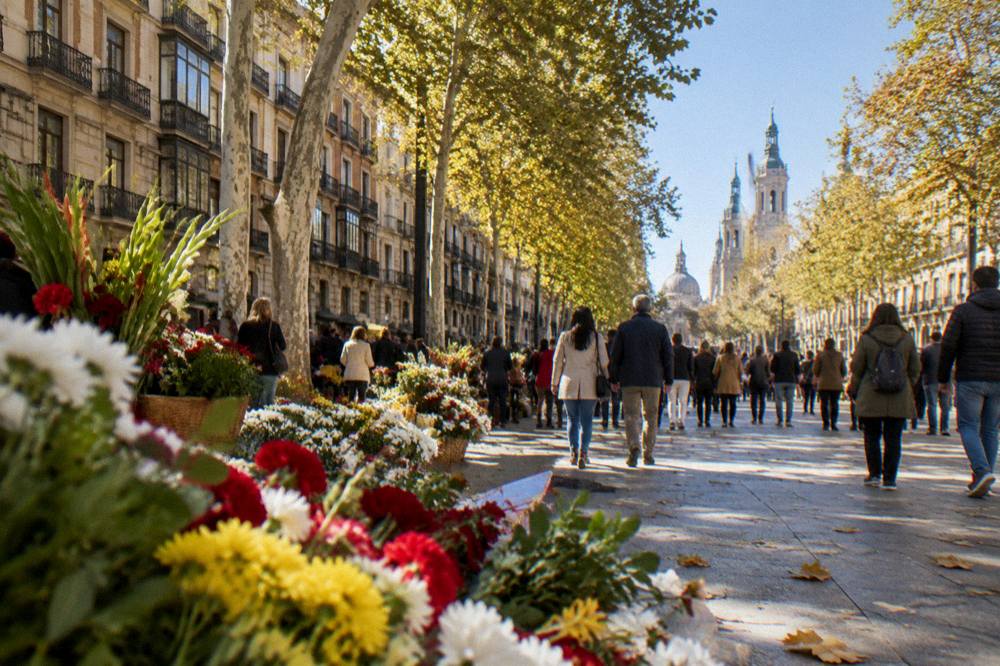
October is the standout month to walk the Centro, with a 1981 to 2010 average high of 21.4 C and the Fiestas del Pilar running 10 to 18 October 2026, including the Ofrenda de Flores on 12 October along the Paseo route. Spring runs close behind, with May averaging 24.1 C highs, while July and August are the hottest and driest months at 32.4 C and 31.7 C mean highs with only 17 mm of rain each.
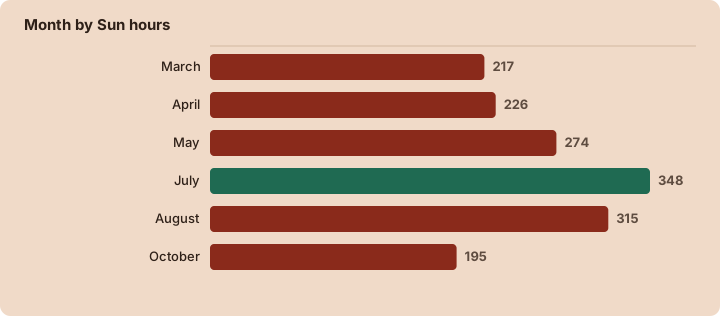
AEMET's 1981 to 2010 normals for the Zaragoza Aeropuerto station give the year its shape. July is the sunniest month at 348 hours and the hottest at a 32.4 C mean maximum, with August fractionally behind at 31.7 C; both are the driest months at 17 mm of rain. May, at 44 mm, is actually the wettest month of the year, though that still averages only 6.4 days with a millimetre or more of rain. October brings 36 mm over 5.4 rain days but comfortable walking temperatures, and winter months sit in the 10 to 13 C range for daytime highs.
| Month | Mean high C | Mean C | Rain mm | Sun hours |
|---|---|---|---|---|
| March | 17.3 | 11.6 | 19 | 217 |
| April | 19.6 | 13.8 | 39 | 226 |
| May | 24.1 | 18.0 | 44 | 274 |
| July | 32.4 | 25.3 | 17 | 348 |
| August | 31.7 | 25.0 | 17 | 315 |
| October | 21.4 | 16.2 | 36 | 195 |
Figures are 1981 to 2010 averages for the Zaragoza Aeropuerto station, the only window the station publishes.
The Fiestas del Pilar change the Centro completely. The 2026 fiestas run from Saturday 10 to Sunday 18 October, with the pregón opening them from the Ayuntamiento balcony at 21:00 on the 10th, and the Ofrenda de Flores on 12 October following its usual route from the Paseo de la Independencia to the Plaza del Pilar, with the city listing 994 groups and about 99,980 registered participants. Fireworks follow the pregón, run at Parque Pignatelli during the week, and close at the Ebro on the 18th, with Venezuela as guest country. If you want the city at its loudest and most crowded, come for those nine days; if you want it quiet, come any other week of the year.
Which Guided Tours Cover The Centro Best?
The Centro is covered by three main guided formats: a free, tip-based GuruWalk tour of the historical centre rated 4.15 from 122 reviews, a must-see walking tour with a guide from 44.72 USD, and a mysteries-and-stories sightseeing tour from 22.28 USD rated 4.6 from 41 reviews, which includes a churro tasting and photo stops. Each covers the Paseo to Plaza de España axis differently, and all start in the city centre.
The free tour through the historical centre is the entry-level option. It runs on GuruWalk with a local guru, it costs nothing to join and you tip at the end, and its 4.15 rating from 122 reviews reflects the format's variability: the guru you get shapes the walk. It is the cheapest way to get the geography and the headline stories in one pass.
The must-see attractions walking tour with a guide, from 44.72 USD per person and rated 5 from 3 reviews, is the led, ticketed equivalent, covering the central monuments with a professional guide. The Best of Zaragoza sightseeing tour, from 22.28 USD per person and rated 4.6 from 41 reviews over 2.5 hours, takes a lighter angle, mysteries, photo stops and a churro tasting, and suits families and visitors who want entertainment with their orientation. A longer version, The Most Complete Tour of Zaragoza, runs from 25.23 USD with a 4.9 rating from 14 reviews and adds hidden corners and a candy tasting.
For visitors who prefer to set their own pace, the self-guided scavenger hunt, from 5.73 USD rated 4.5 from 37 reviews, turns the same streets into a game, and the app-guided Roman-walls-to-Renaissance walk costs from 7.99 USD. The tours overview compares every option in the city side by side.
The Best of Zaragoza walk deserves its own mention because it is the one most likely to hold a child's attention through the whole Centro: the mysteries angle gives the Paseo and Plaza de España a narrative, and the churro stop lands at exactly the moment younger walkers need it. Check availability for your dates, since these walks run on schedules that shift with the season.
How Does The Centro Fit Into A One-Day Zaragoza Itinerary?
A one-day visit works naturally in this order: walk the Paseo from the Puerta del Carmen to Plaza de España in the morning, enter the Basílica del Pilar and La Seo before lunch, eat a tapas crawl in El Tubo at midday or in the evening, cross the Puente de Piedra in the afternoon light, and finish with the Roman museum route or the Ebro river walk. Every element sits on the same axis, and no leg of the day needs transport.
Morning light on the Paseo is at its best before the shops open, when the street belongs to locals and the terrace cafes are filling. The basilica's free entry means no ticket planning, though the Torre Mirador viewpoint needs its 6 EUR ticket and a half-hour slot for the lift and the view. La Seo pairs best with the basilica in one block, since the 10 EUR ticket already includes the Museo de Tapices and the Rosario de Cristal.
Lunch in El Tubo or on the Paseo breaks the day, and the afternoon belongs to the river. The Puente de Piedra crossing and the Ebro river walk give the city its best afternoon photographs, and the Roman sites sit on the return path into the old town. The one-day itinerary sequences all of this hour by hour, and the Basílica del Pilar and La Seo pages carry the detail for each church.
For a first visit, the Centro asks very little: comfortable shoes, water in July and August, and a willingness to keep walking past the point where the boulevard becomes the old town. The reward is a city that reveals its whole history, Roman gate to Mudéjar tower to promenade, in a single straight line.
Common Questions About The Centro And Plaza De España
What is Plaza de España in Zaragoza?
Plaza de España is the square at the southern end of the Paseo de la Independencia where the modern boulevard city meets the old town, best known for the Fuente de la Hispanidad fountain and its direct view of the Basílica del Pilar and La Seo.
Is the Basílica del Pilar free to enter from Plaza de España?
Yes. Entering the temple is free. The tower viewpoint, the Torre Mirador, costs 6 EUR for an adult, 5 EUR for over-65s and residents, 4 EUR for ages 13 to 18, students and groups of 20 or more, and is free for children under 12.
How much does La Seo cathedral cost?
The general ticket is 10 EUR and includes the Museo de Tapices, the Museo Pilarista and the Rosario de Cristal. Over-65s pay 9 EUR, students and ages 13 to 18 pay 7 EUR, under-12s enter free, and a general-plus-tower ticket costs 12 EUR.
What is El Tubo?
El Tubo is the dense old-town grid of tapas bars between the Paseo de la Independencia axis and the Basílica del Pilar, working on a crawl logic of one or two specialities per bar.
How much is the bus or tram in the Centro?
A single ticket on the urban bus or tram costs 1.70 EUR with no transfer, or 0.55 EUR with the Tarjeta Bus card, which itself costs 7 EUR and is valid on both networks.
When does the Ofrenda de Flores pass along the Paseo?
The Ofrenda de Flores takes place on 12 October, following its usual route from the Paseo de la Independencia to the Plaza del Pilar, as part of the Fiestas del Pilar that run 10 to 18 October in 2026.
The Centro and Plaza de España are where Zaragoza stops being a name on a map and becomes a walkable, checkable place, and no other part of the city packs as much into a single straight line.