Zaragoza In One Day: The Perfect 1-Day Itinerary
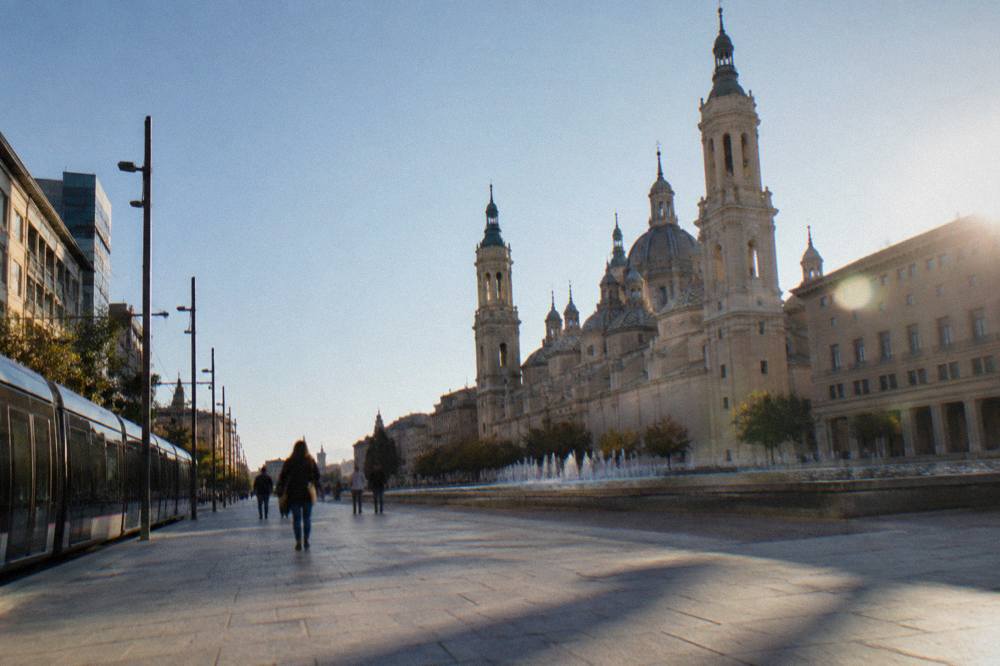
One day in Zaragoza, the capital of Aragon on the Ebro, covers the Basílica del Pilar, La Seo, the Aljafería and the Roman city, with time left for tapas after dark.
Short answer
Yes. Zaragoza's core sights sit within a walkable old town: enter the Basílica del Pilar free of charge, pay EUR 10 at La Seo, EUR 7 at the Aljafería and EUR 7 for the four Caesaraugusta museums, then finish with the Ebro riverbank and an evening tapas walk.
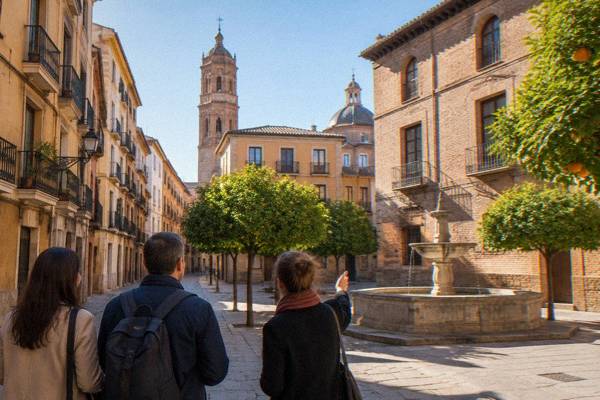
Zaragoza, the capital of Aragon, packs five civilizations into a compact old town on the Ebro, and one well-planned day is enough to see its headline sights without rushing. The Basílica del Pilar, La Seo cathedral, the Aljafería palace and the Roman city of Caesaraugusta all sit within a walkable radius, and the city's dry continental climate means October days averaging 21.4 C by the AEMET 1981-2010 normals for the Zaragoza Aeropuerto station are made for walking. This itinerary runs from the Pilar at opening time to tapas after dark, with verified hours and prices at every stop, and it is built for a first visit, the kind that answers the question of what Zaragoza is famous for in a single loop of the old town.
Is One Day Really Enough For Zaragoza?
One day covers the essential Zaragoza: the Basílica del Pilar, La Seo, the Puente de Piedra, the Aljafería and one or two Caesaraugusta museums, all inside a walkable old town. It does not cover the Museo de Zaragoza, whose central building is closed for Ministry of Culture works, or the day trips to Moncayo, the Pyrenees or Monasterio de Piedra. Two days add comfort; three add the region.
The geometry of the city does the favour. The Pilar, La Seo, the Roman forum and the river all stand within a few minutes of each other, and the Aljafería is one short tram or bus ride west, at a single fare of EUR 1.70 per the 2026 Avanza fare table. A visitor who starts at the Pilar at 10:00 and finishes with tapas at 21:00 sees the city's four cultures, Roman, Moorish, Mudéjar and baroque, in one unbroken walk.
What one day cannot absorb is the closure list. The Museo de Zaragoza central building at Plaza de los Sitios 6 is closed for works with no reopening date, the Palacio de Sastago is closed in October, and the Museo Pablo Gargallo is temporarily closed, so none of the three belongs on a tight schedule. The Museo Goya, meanwhile, reopens on 9 October 2026 with hours of 10:00 to 20:00 Tuesday to Saturday, which makes it a plausible late-afternoon add-on for anyone visiting after that date.
How Should You Spend The Morning In Zaragoza?
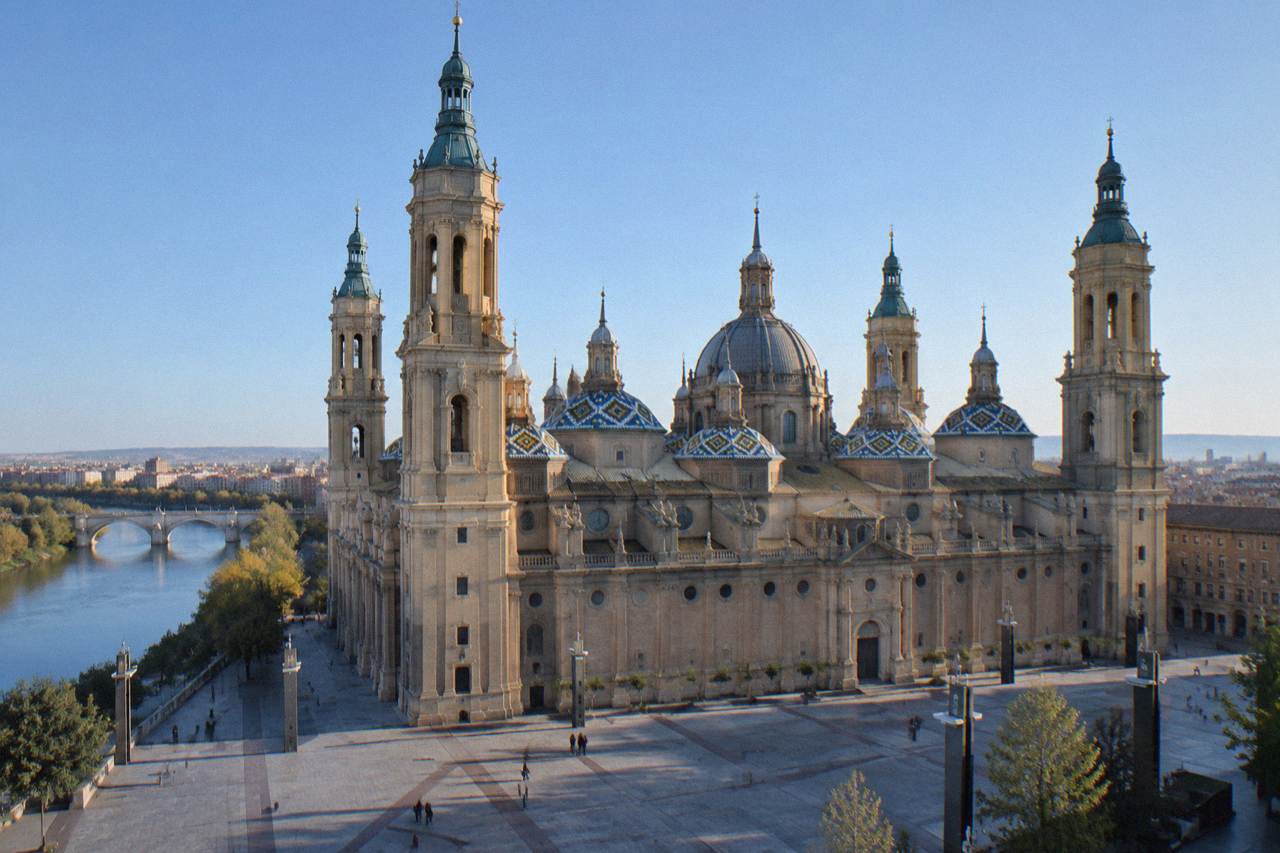
Start at the Basílica del Pilar at 10:00, where entering the temple is free and the tower viewpoint costs EUR 6 for an adult, then walk to La Seo cathedral, where a EUR 10 general ticket includes the Museo de Tapices, the Museo Pilarista and the Rosario de Cristal. Finish the morning in the Roman forum museum, open 10:00 to 14:00 and 17:00 to 21:00 Tuesday to Saturday, at EUR 4.
The Pilar rewards the early start. The municipal October timetable lists the tower viewpoint, the Torre Mirador, at 10:30 to 14:30 and 16:00 to 20:00 Monday to Thursday and 10:00 to 20:00 Friday to Sunday, with last access 30 minutes before closing, and an adult ticket at EUR 6, seniors and residents at EUR 5, ages 13 to 18 and students at EUR 4, and free entry under 12. The view from the top takes in the Ebro, the Puente de Piedra and the domes below, and it is the single best orientation point in the city. The basilica's own page states that entering the temple is free, which makes the tower the only compulsory spend.
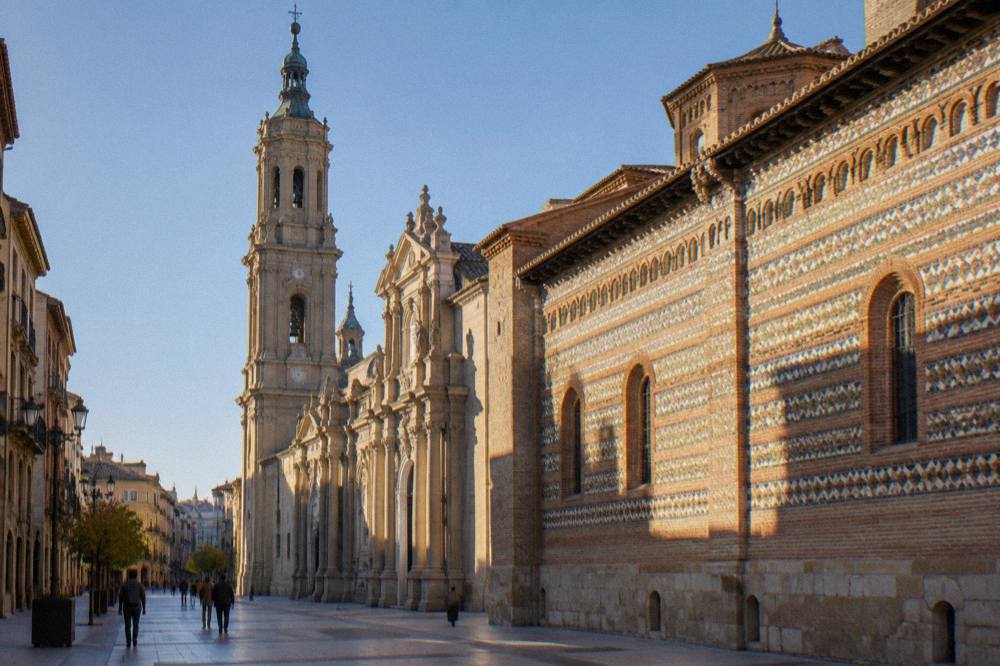
From the Pilar it is a short walk along the plaza to La Seo, the cathedral of San Salvador, whose full history is covered on the La Seo guide. The October timetable lists La Seo at 10:00 to 14:30 and 16:00 to 20:00 Monday to Saturday, 10:00 to 12:00 and 16:00 to 20:00 on Sundays, with the general ticket at EUR 10 including three associated museums, seniors at EUR 9, students and ages 13 to 18 at EUR 7, under 12s free, and a combined general-plus-tower ticket at EUR 12. Aragon residents enter free on the 6th, 12th, 23rd and 27th of each month.
A guided introduction saves time on the first morning, and the 105-minute monumental sightseeing tour does exactly that, from $10.41 per person and rated 4.4 from 36 reviews. It loops the old town's headlines in under two hours, which leaves the whole afternoon free.
What Should You Do At Midday In Zaragoza?
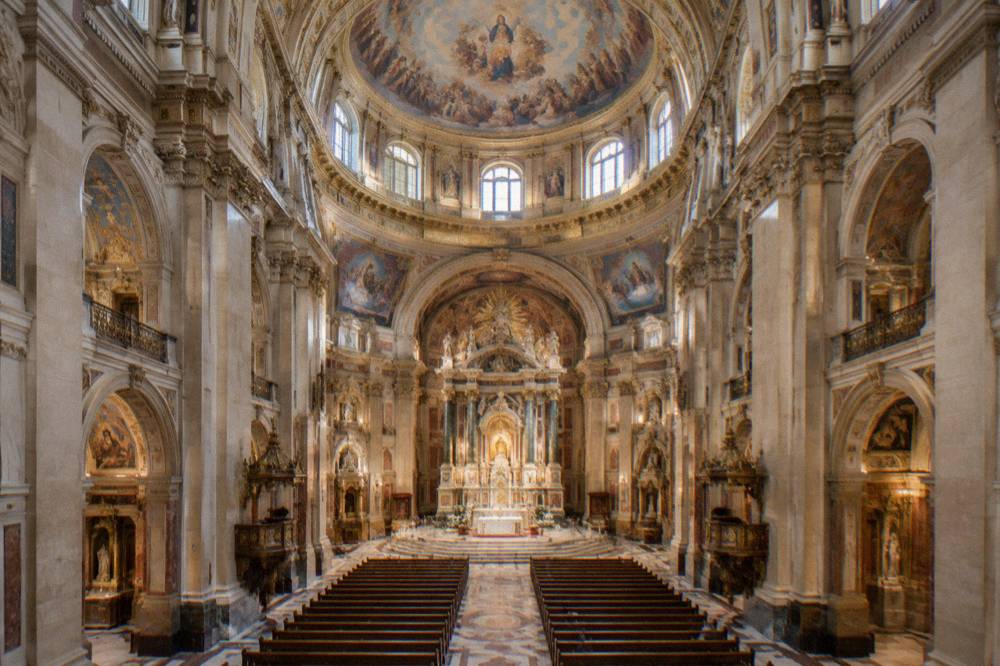
Take the tram or bus west to the Aljafería palace, open 10:00 to 18:00 daily in October with a general ticket at EUR 7 and a guided visit at EUR 9, then return to the centre for the Caesaraugusta route, where a EUR 7 bono covers the forum, the river port museum, the baths and the theatre museum.
The Aljafería is the finest Islamic palace surviving in Spain outside Andalusia, a taifa palace that later served the Catholic Kings, and its story is told in full on the Aljafería guide. The October timetable lists daily hours of 10:00 to 18:00, a general ticket at EUR 7, a guided visit at EUR 9, EUR 4 with the tourist bus ticket, EUR 2 for students, seniors and Carnet Joven holders, and free entry for under 12s. The palace is free on the first and third Sunday and Monday of each month, and last access is 45 minutes before closing. Spanish-language guided tours run at 10:30, 12:30, 13:30, 15:00 and 16:00, and the exhibition "Goya, del Museo al Palacio" has its own tour at 11:30.
Back in the centre, the Roman city of Caesaraugusta gives the afternoon its spine, and the Roman Caesaraugusta guide details all four sites. The municipal timetable lists the Foro, Puerto Fluvial, Termas and Teatro museums at 10:00 to 14:00 and 17:00 to 21:00 Tuesday to Saturday, 10:00 to 14:30 on Sundays and holidays, with the Foro at EUR 4, the Termas and Puerto at EUR 3 each, a four-museum bono at EUR 7 or EUR 5 reduced, and free entry on the first Sunday of the month. If one day only allows two, the theatre museum and the forum are the pair that best explain the Roman colony under the modern streets.
How Should You Spend The Afternoon In Zaragoza?
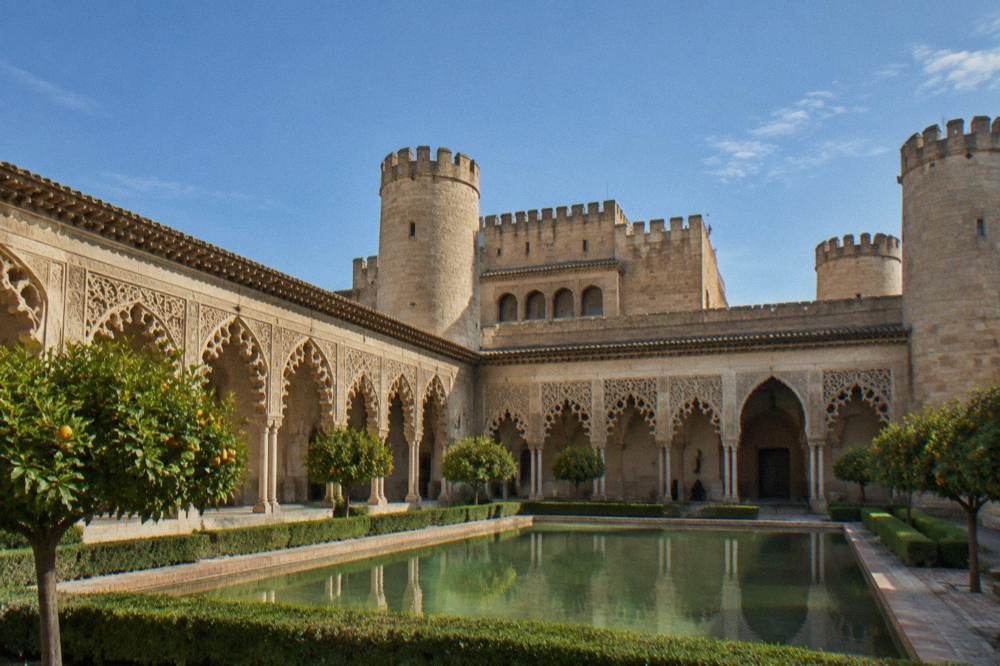
Walk the Ebro riverbank from the Puente de Piedra, the stone bridge first built in 1401 and opened in 1440, then cross to the right bank for the classic view of the Pilar's domes, and finish with a green hour in the Parque del Agua, the first European park to hold the Green Globe certification, at more than 120 hectares in the Ranillas meander.
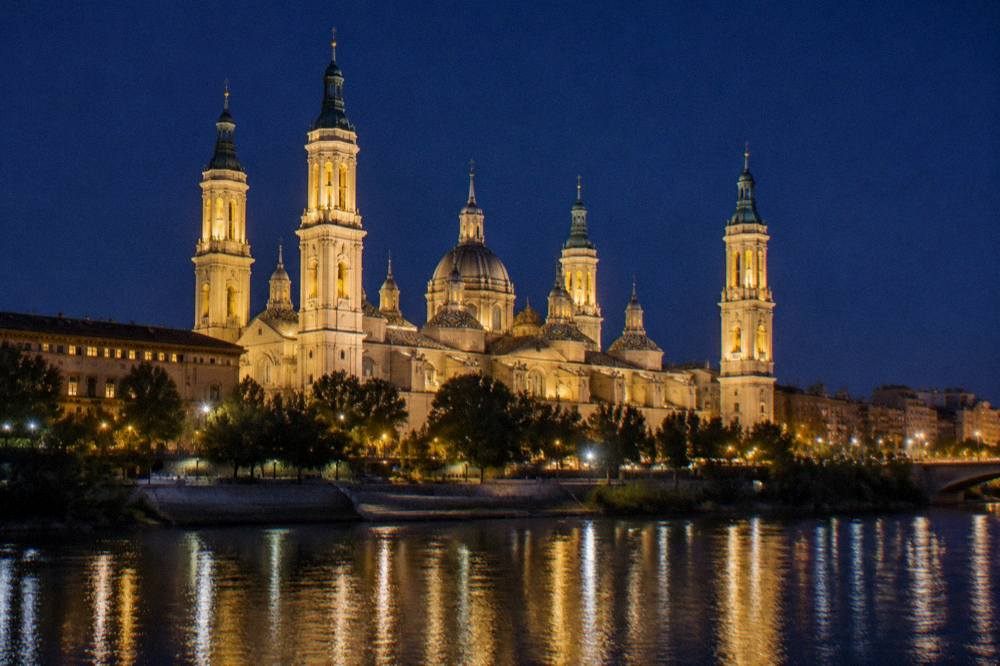
The Puente de Piedra is the afternoon's free centrepiece. The municipality's own page records that the current bridge was built from 1401 and opened in 1440, that a Roman-era crossing predates it, that Napoleonic troops blew up one of its arches in 1813, and that its four bronze lions have guarded the entrance since 1991. From the middle of the bridge the Pilar rises in full, which is the photograph every visitor takes, and the Ebro river walk itinerary extends the same line east past the Expo 2008 site.
The Parque del Agua Luis Buñuel, in the Ranillas meander beside the Expo site, holds two running circuits of 5 and 10 km and floods safely in big Ebro rises, per the municipality's page on the park. It is a genuine destination rather than a filler: the Expo 2008 site guide covers what remains of the pavilions. For a shorter afternoon, the rainy day itinerary swaps the riverbank for the covered museums, and the Caesaraugusta bono is the backbone of that plan too.
Where Should You Eat And Drink In The Evening?
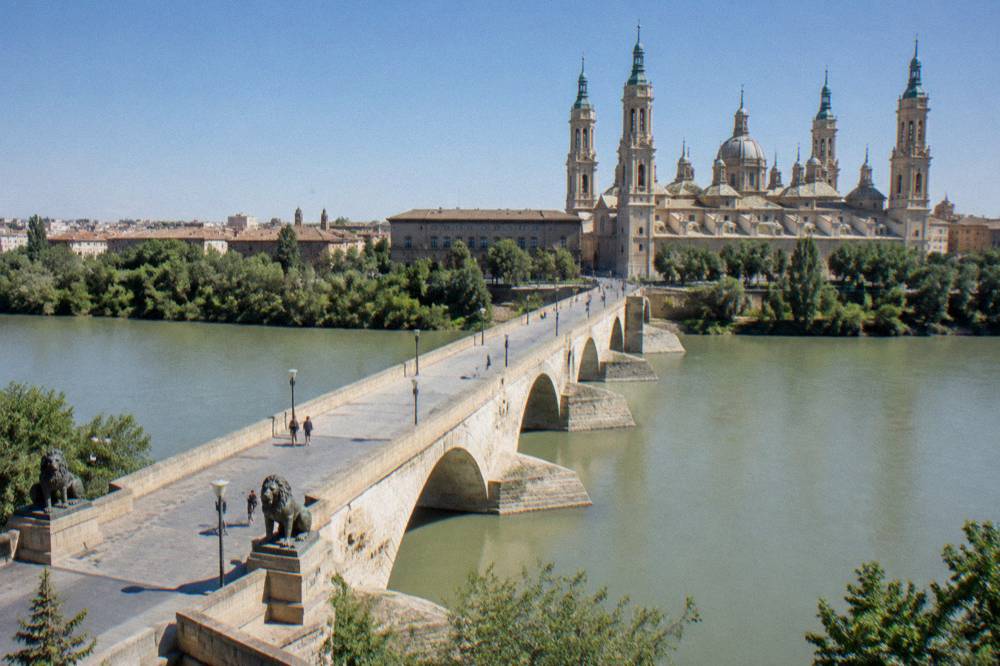
Plan the evening around a guided tapas walk or a self-directed crawl: a three-hour evening tapas walking tour in the old town runs from $106.92 per person rated 4.9 from 62 reviews, a three-hour tapas sightseeing tour from $50.65 rated 5 from 7 reviews, and the tapas-crawl itinerary lays out a route through the old town's lanes that costs whatever you order at the bar.
Zaragoza evenings are spent standing up. The tapas crawl itinerary covers the practical route, and the El Tubo guide covers the celebrated lane of small bars at the heart of it. The guided options remove the guesswork: the listing for the three-hour evening tapas walking tour in the old town shows a 4.9 rating from 62 reviews at from $106.92 per person, and the three-hour tapas sightseeing tour shows a perfect 5 from 7 reviews at from $50.65. Both walk the same historic streets a visitor has been crossing all day, but with the kitchens and the counters explained.
The free-walk layer also works at night. The Legends and Ghosts Night Tour, from $15.76 per person and rated 5 from a single review on its listing, runs two hours of the old town's darker stories, and it pairs naturally with a late dinner, since Aragonese kitchens serve late by northern European habit. The Zaragoza at night itinerary assembles the full evening, from the Pilar floodlit to the last bars.
What Does One Day In Zaragoza Cost?
A single day in Zaragoza costs roughly EUR 30 to 40 per person in sightseeing and transport before food: EUR 6 for the Pilar tower, EUR 10 for La Seo, EUR 7 for the Aljafería, EUR 7 for the Caesaraugusta bono and EUR 3.40 in tram fares, with free entry to the Pilar temple, the IAACC Pablo Serrano, the Torreón de la Zuda and the Centro de Historias bringing the total down further.
There is no tourist tax in Aragon, the regional government having explicitly discarded the idea in September 2026, and no confirmed city pass exists, so every ticket below is bought individually at the monument. The fare table is simple: the 2026 Avanza tariff lists the urban bus and tram single at EUR 1.70, or EUR 0.55 with the Tarjeta Bus, which itself costs EUR 7 and works on both networks. The tourist bus, a 24-hour hop-on hop-off over 16 stops on a 90-minute loop, is EUR 10, cash only on board.
| Item | Price | Notes |
|---|---|---|
| Basílica del Pilar, temple entry | Free | Per the basilica's own page |
| Pilar tower viewpoint, adult | EUR 6 | Under 12 free, seniors EUR 5 |
| La Seo, general ticket | EUR 10 | Includes three museums |
| Aljafería, general | EUR 7 | Guided visit EUR 9 |
| Caesaraugusta four-museum bono | EUR 7 | EUR 5 reduced |
| Tram or bus single | EUR 1.70 | EUR 0.55 with Tarjeta Bus |
| Tourist bus, 24 hours | EUR 10 | 16 stops, 90-minute loop |
The free layer is unusually thick. The IAACC Pablo Serrano is free, the Torreón de la Zuda with its fifth-floor viewpoint of the four cultures is free, and the Centro de Historias is free, all per the municipal October timetable. The Caesaraugusta museums, the Museo del Fuego y los Bomberos and the Aljafería all have free days, listed in the table below, so a visitor whose one day lands on a first or third Sunday or Monday pays materially less.
| Site | Standard price | Free entry when |
|---|---|---|
| Caesaraugusta museums | EUR 3 to 4 each, bono EUR 7 | First Sunday of the month |
| Aljafería | EUR 7 | First and third Sunday and Monday |
| Museo del Fuego y los Bomberos | EUR 3 | First Sunday |
| Museo del Origami | EUR 3 | First Tuesday and Sunday |
| IAACC Pablo Serrano | Free | Always |
| Centro de Historias | Free | Always |
How Do You Get Around Zaragoza In One Day?
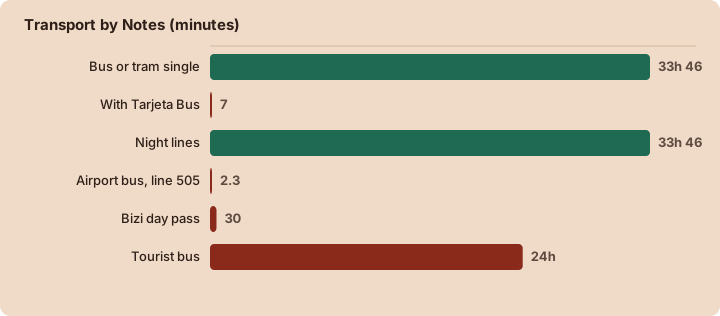
On foot for everything in the old town, and by tram or bus only for the Aljafería: the single fare is EUR 1.70, or EUR 0.55 with the EUR 7 Tarjeta Bus, the airport bus is line 505 at EUR 4.65 single timed to flights, and the Bizi bike share runs at EUR 1 for a day pass plus EUR 0.50 for each trip up to 30 minutes.
The one ride most visitors need is the Aljafería leg, and the tram covers it at the standard EUR 1.70 single. The 2026 Avanza fare table lists night lines at EUR 1.00, which matters for anyone finishing a late tapas crawl.
Cyclists get the cheapest day out. The Bizi 2026 tariffs list a day pass at EUR 1 fixed plus EUR 0.50 for the first 30 minutes of each trip, a monthly pass at EUR 10, an annual at EUR 60, and a EUR 50 card deposit held on day, month and single passes. The riverbank and the Parque del Agua circuits make the bike worthwhile, and the getting around guide covers the networks in full.
| Transport | Price | Notes |
|---|---|---|
| Bus or tram single | EUR 1.70 | No transfer, per 2026 Avanza table |
| With Tarjeta Bus | EUR 0.55 | Card costs EUR 7, bus and tram |
| Night lines | EUR 1.00 | Per 2026 Avanza table |
| Airport bus, line 505 | EUR 4.65 | About EUR 2.25 with Lazo card |
| Bizi day pass | EUR 1 + EUR 0.50 per trip | First 30 minutes, EUR 50 deposit |
| Tourist bus | EUR 10 | 24 hours, 16 stops |
When Should You Take This One-Day Route?
October is the strongest single month for this itinerary: the AEMET 1981-2010 normals for the Zaragoza Aeropuerto station give October a mean maximum of 21.4 C over 36 mm of rain, and the Fiestas del Pilar run 10 to 18 October 2026 with the Ofrenda de Flores on 12 October, though the fiestas also mean crowds. Spring runs close behind, with May the wettest month at 44 mm and July and August the driest at 17 mm but the hottest at 32.4 C mean maximum.
The climate table decides the rest of the year. Winter days average a mean maximum of 10.5 C in January with 2.7 C nights, which is fine for monuments and short for riverbank walking. Summer is the hard one: July averages 32.4 C maximum and 348 hours of sun, the sunniest month of the year, so the itinerary should flip, with the Aljafería and the Caesaraugusta museums in the heat of the day and the Ebro at dusk. The full month-by-month picture, including what the cierzo wind means for the valley, sits on the best time to visit guide.
| Month | Mean max C | Rain mm | Sun hours |
|---|---|---|---|
| January | 10.5 | 21 | 131 |
| April | 19.6 | 39 | 226 |
| July | 32.4 | 17 | 348 |
| October | 21.4 | 36 | 195 |
Fiestas week needs its own warning. The 2026 fiestas run 10 to 18 October, the pregón opens them at 21:00 on 10 October from the Ayuntamiento balcony, and the Ofrenda de Flores brings its procession to Plaza del Pilar on 12 October. It is the city at its most alive and its most crowded, and the Ofrenda's usual route runs along Paseo de la Independencia, so the morning leg of this itinerary becomes a spectator event rather than a quiet one.
Should You Extend One Day Into Two Or Three?
Yes, if the schedule allows: the two-day itinerary adds the Museo Goya from 9 October 2026, the Expo riverbank and a relaxed second tapas evening, and the three-day version adds a day trip, with Pyrenees excursions to Canfranc, Jaca and Sallent de Gállego running 11 hours from Zaragoza and the Somontano wine and Alquézar trip a full day.
The two-day itinerary and the three-day itinerary each split the same core differently. Day trips multiply the options: the listing for the Canfranc, Jaca and Sallent de Gállego excursion shows an 11-hour day rated 4.7 from 10 reviews, the Ordesa day with Aínsa and Torla shows 11 hours rated 5 from 3 reviews, and the full-day Somontano wine excursion with Alquézar shows a full day rated 5 from 14 reviews. All of them start in Zaragoza, most from the Delicias pickup, and the Pyrenees day trip guide covers the mountain options in depth.
Visitors arriving from the capitals should also read the day trip from Madrid and the day trip from Barcelona pages: high-speed trains from both cities take about 1.5 to 2 hours, which is exactly why this one-day route exists, since a single day in Zaragoza is a realistic add-on to either capital.
For a private pace, the private walking tour with a local runs 2 to 6 hours from $54.02 per person, rated 4.7 from 86 reviews, and it is the version of this itinerary that bends around one day's exact constraints. Check availability
Common Questions About A One-Day Zaragoza Itinerary
Can you see Zaragoza in one day?
Yes. The Basílica del Pilar, La Seo, the Puente de Piedra, the Aljafería and the Caesaraugusta museums all fit in one walking day, with the Pilar temple free to enter and the four-museum Roman bono at EUR 7.
What is the best one-day itinerary for Zaragoza?
Start at the Pilar at 10:00, climb the EUR 6 tower, walk to La Seo at EUR 10, take the tram to the Aljafería at EUR 7, return for the Roman museums on the EUR 7 bono, cross the Puente de Piedra at sunset and finish with tapas in the old town.
How much does one day in Zaragoza cost?
Roughly EUR 30 to 40 per person in tickets and transport before food: EUR 6 for the Pilar tower, EUR 10 for La Seo, EUR 7 for the Aljafería, EUR 7 for the Roman bono and EUR 3.40 in tram fares, with no tourist tax in Aragon.
Is Zaragoza a good day trip from Madrid or Barcelona?
Yes. High-speed trains from Madrid and Barcelona take about 1.5 to 2 hours, and this itinerary is designed to work within a single day's visit from either capital.
Do you need a guided tour for one day in Zaragoza?
No, but a 105-minute monumental sightseeing tour from $10.41 per person, rated 4.4 from 36 reviews, or a free tip-based GuruWalk old town walk, covers the orientation in one loop and leaves the afternoon clear.
What should you skip if you only have one day?
Skip the Museo de Zaragoza, whose central building is closed for Ministry of Culture works, the Palacio de Sastago, which is closed in October, and the temporarily closed Museo Pablo Gargallo, and save the day trips to the Pyrenees or Moncayo for a second visit.
One day in Zaragoza, walked this way, ends where it began, at the Pilar, this time floodlit from the far bank of the Ebro, with the whole Roman, Moorish, Mudéjar and baroque city crossed in between, and the Zaragoza Travel Guide holds the two-day and three-day versions for anyone whose schedule stretches further.