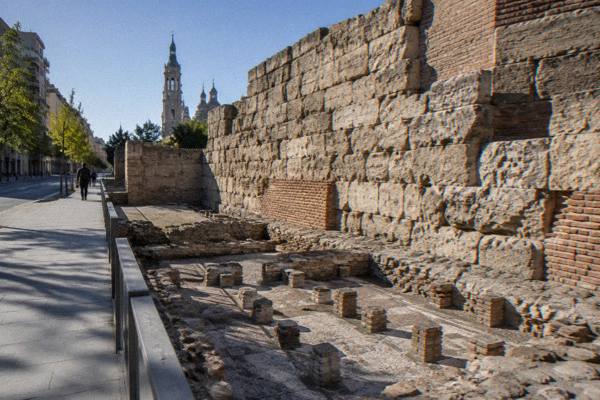
Puerta Del Carmen: Zaragoza's Surviving City Gate
The Puerta del Carmen is one of the few surviving gates of the old walls that once enclosed Zaragoza's Casco Histórico, standing where the walled town met the road out towards the west. This guide covers how to reach it, what it costs, what to see within a short walk, and which guided tours pass it.
Short answer
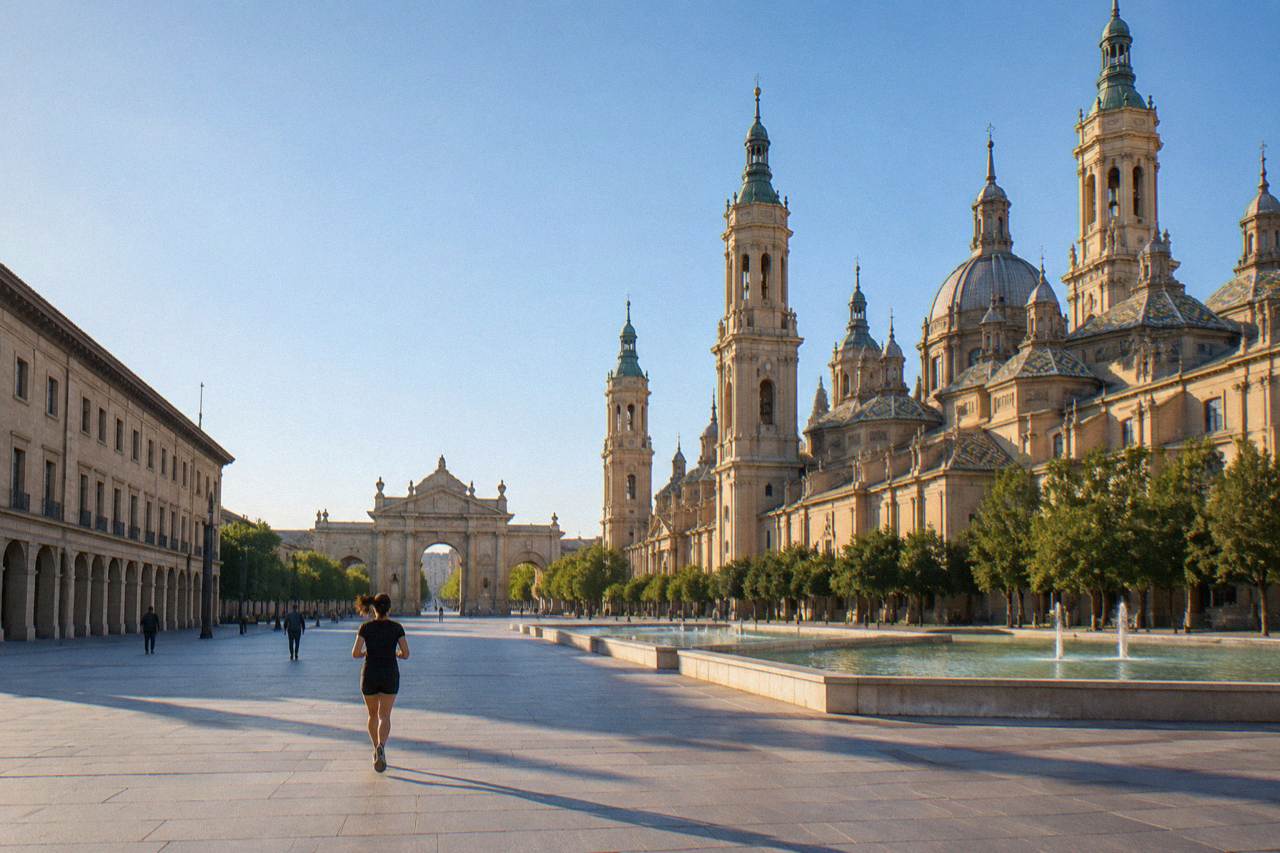
The Puerta del Carmen is a historic stone gate in Zaragoza, Spain, one of the few surviving entrances of the old city walls. It stands on the edge of the Casco Histórico, can be reached on foot, by tram or by urban bus, and costs nothing to see from the street at any hour.
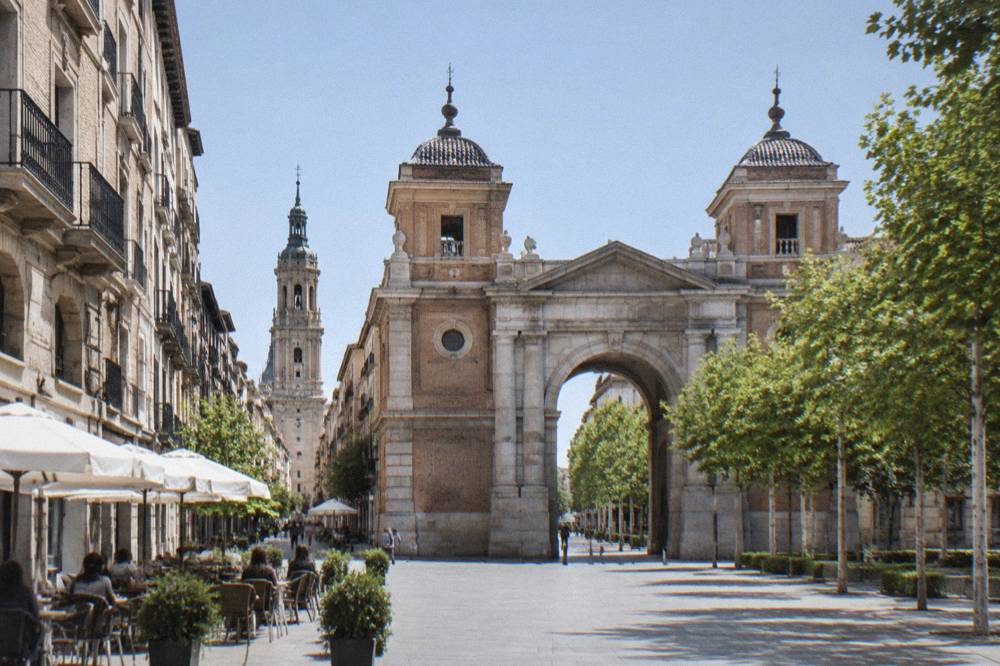
Zaragoza, the capital of Aragon on the Ebro, keeps very little of the wall that once closed its old town around the Basílica del Pilar and La Seo. What does survive includes the Puerta del Carmen, a stone gate that once controlled one of the historic entrances into the walled city and that still stands in the street today, traffic and pedestrians passing where guards once checked who came and went. It is a small monument, the kind of sight you can walk through in a minute, but it anchors a whole stretch of the city: the western edge of the Casco Histórico, the Paseo de la Independencia corridor, and a cluster of museums and churches that most visitors reach without ever learning the gate's name. This page from Zaragoza Travel Guide pulls together what the gate is, how to get there, what it costs, and what to build around it.
What Is The Puerta Del Carmen In Zaragoza?
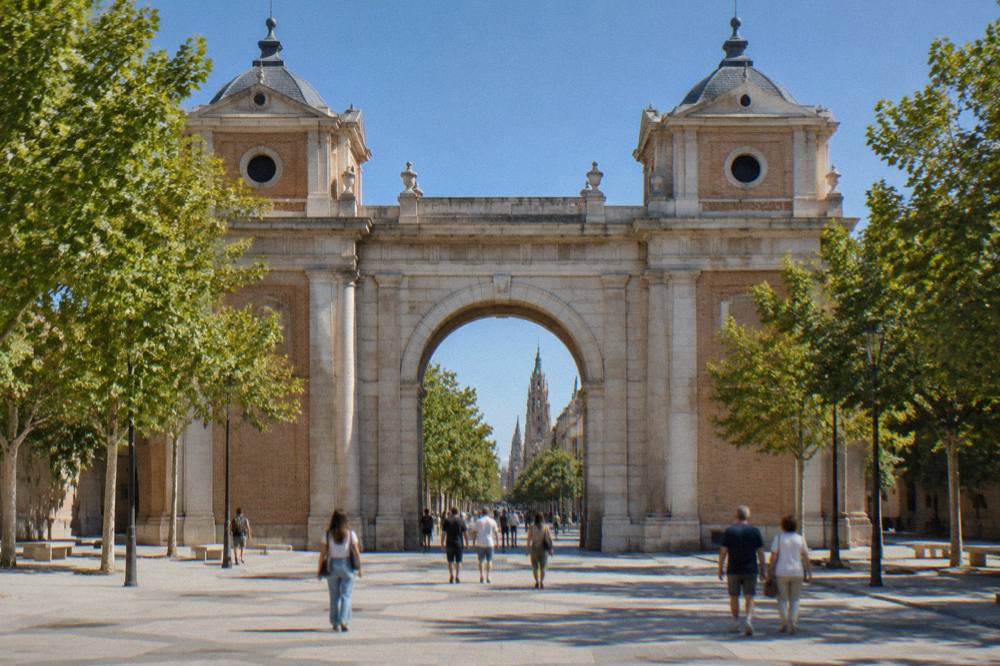
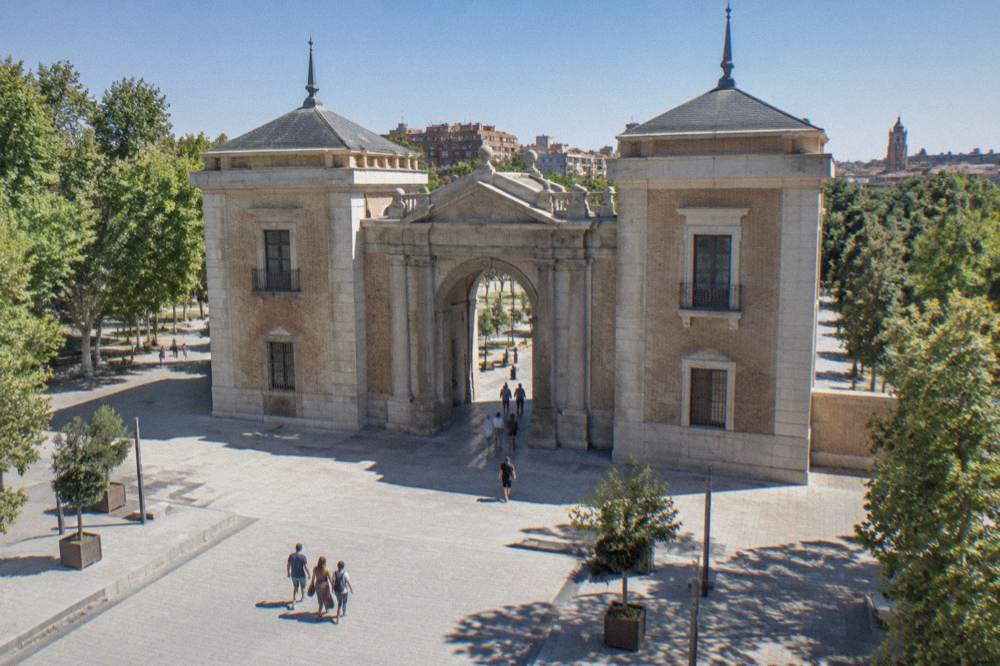
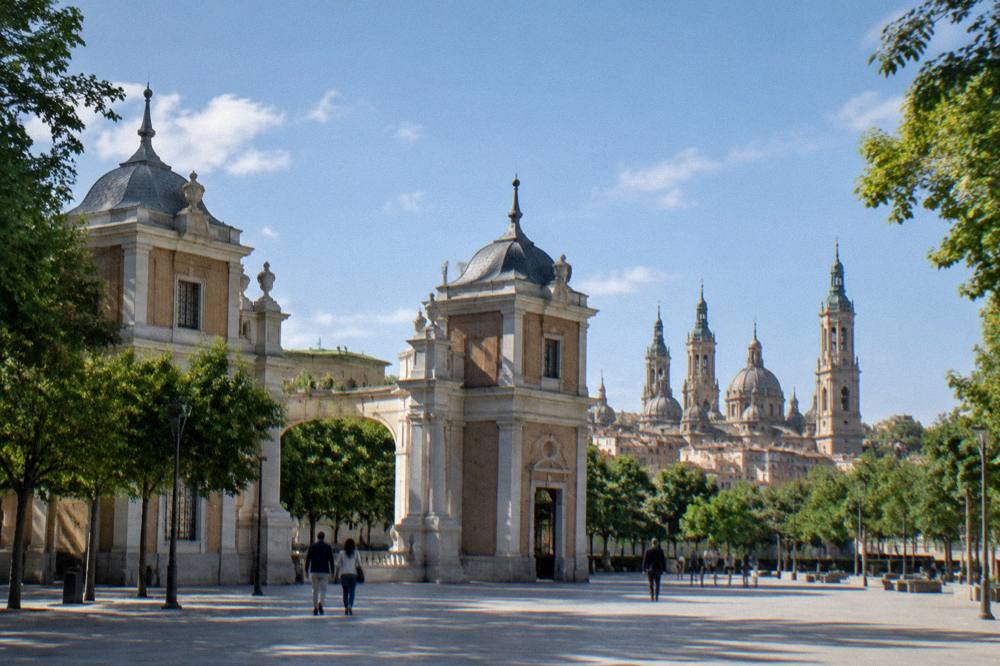
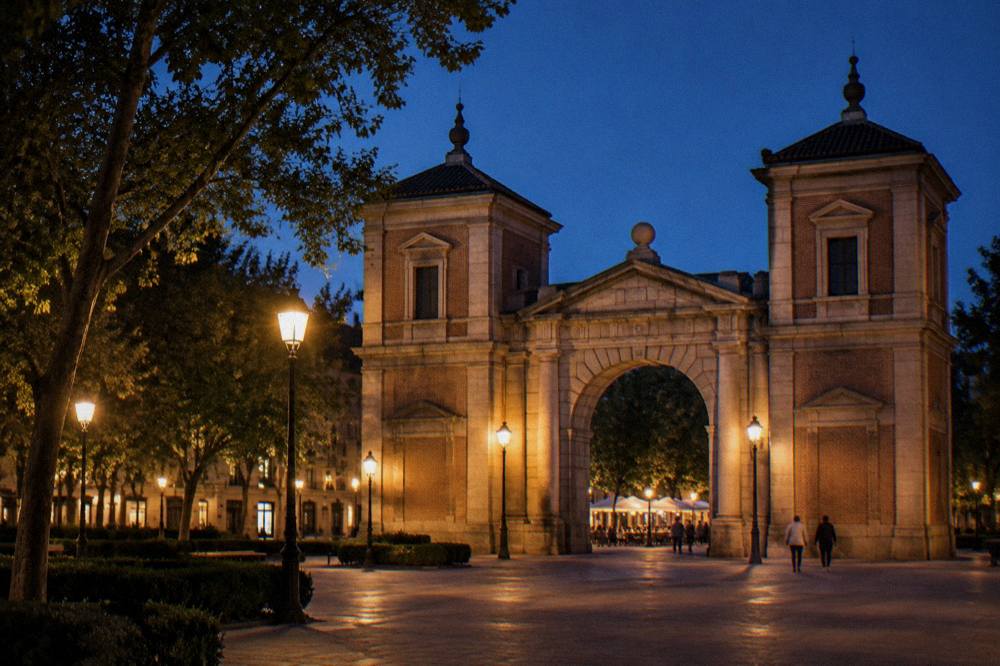
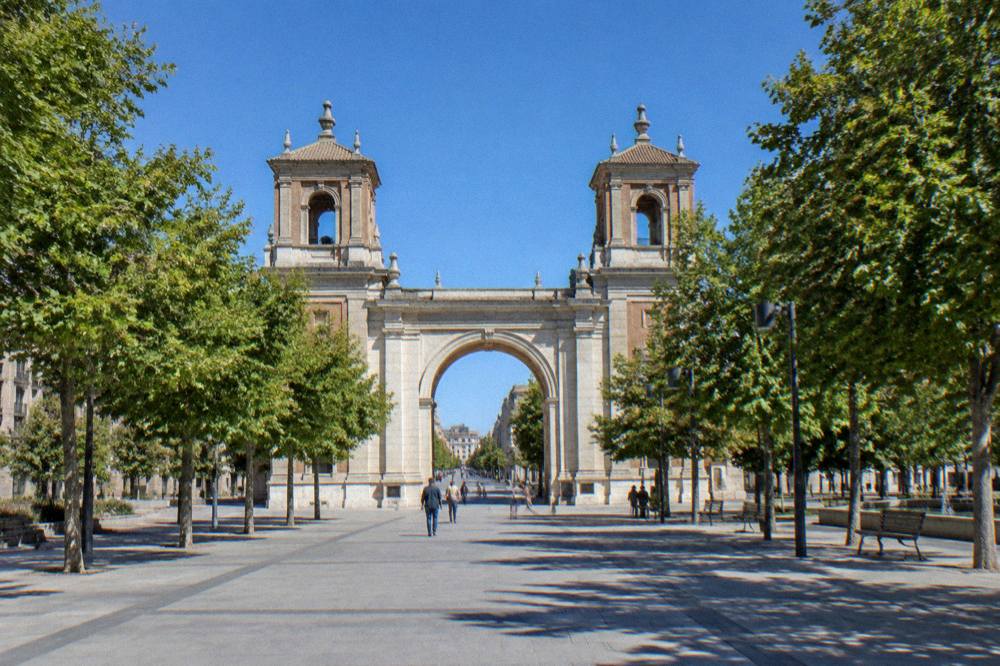
The Puerta del Carmen is a historic stone city gate in Zaragoza, Spain, one of the few surviving entrances of the walls that once enclosed the old town. It takes its name from the Carmelite presence historically associated with this western side of the city, and today it functions as a street monument rather than a ticketed attraction: you walk under or around it freely, and its value is as architecture and as a marker of where the walled city ended.
Most Spanish cities of Zaragoza's age pulled their walls down as they modernised, and Zaragoza was no exception. The wall that once ringed the Casco Histórico is gone except for fragments, and the Puerta del Carmen is one of the pieces that stayed standing while the streets around it were rebuilt. That survival is the whole reason it matters now. It is not a museum, there is no counter, no ticket and no queue, and the experience is simply the arch itself, cut stone, a formal pediment, and the odd contrast of a monument sitting in the middle of a working street.
The gate rewards a bit of context more than it rewards time. Ten unhurried minutes is enough to look at it properly, but the surrounding quarter is where a visit actually happens: the Roman walls and baths survive elsewhere in the old town, the Plaza del Pilar sits a short walk to the north-east, and the gate sits right on the seam between the historic core and the boulevards that replaced the defences. Understanding that seam is what turns the gate from a photo stop into a piece of the city's story.
A useful comparison is the Aljafería, the great Islamic-era palace on the same broad western side of the city. The palace was itself fortified, and together with the surviving gate and wall fragments it gives you the outline of medieval Zaragoza's defensive ring. The Aljafería palace is the headline monument of that story and the gate is a footnote to it, but footnotes are free, central and quick, which is exactly what makes it worth planning around.
Where Is The Puerta Del Carmen And How Do You Get To It?
The Puerta del Carmen stands on the western edge of Zaragoza's Casco Histórico, close to the Paseo de la Independencia corridor and within easy walking distance of the Plaza del Pilar. Urban buses and tram line 1 both serve the area: the 2026 Avanza fare table lists a single bus or tram ticket at 1.70 EUR, or 0.55 EUR with a Tarjeta Bus, and the rechargeable card itself costs 7 EUR and works on both networks.
In practice, most visitors reach the gate on foot without noticing they have done any planning at all. The old town of Zaragoza is compact, and the gate sits on the natural line you cross when walking from the centre out towards the Aljafería or the Gran Via, so it tends to appear mid-journey rather than as a destination in its own right. If you are coming from further out, the tram and the urban bus network are the practical options, and both charge the same fares.
| Transport option | 2026 fare | Notes from the fare table |
|---|---|---|
| Urban bus single | 1.70 EUR | No transfer included |
| Tram single | 1.70 EUR | Same fare as the bus |
| Night bus single | 1.00 EUR | Night lines only |
| Tarjeta Bus trip | 0.55 EUR | Requires the rechargeable card |
| Tarjeta Bus itself | 7 EUR | Valid on bus and tram |
| Tourist bus day ticket | 10 EUR | 24 h hop-on hop-off, 16 stops, 90-minute loop |
One point matters if you are driving rather than riding. The gate stands at the edge of the Casco Histórico, and the Casco Histórico is a low-emission zone: the municipal ZBE rules apply Monday to Friday from 08:00 to 20:00, with sanctions active since 12 December 2025, and vehicles without a DGT environmental label are restricted, although the city allows a short grace window if you enter by mistake. Park outside the zone and walk in, or arrive outside those hours.
If you would rather have someone else hold the map, the guided options below all operate in the city and cover the old-town ground the gate belongs to.
The free walking tour in that list is tip-based rather than priced, which suits travellers who want an introduction to the old town before deciding what to pay for. The paid walks fix a route and a schedule, which suits anyone who prefers certainty.
What Can You See Near The Puerta Del Carmen?
Within a short walk of the gate you can reach the Plaza del Pilar with the Basílica del Pilar and La Seo, the El Tubo tapas quarter, and a run of small museums including the free Centro de Historias, the free IAACC Pablo Serrano, the Torreón de la Zuda viewpoint and the Museo del Fuego y los Bomberos at 3 EUR. The gate sits close enough to all of them that it costs almost no extra time to fold into the same walk.
This is the real argument for visiting the gate: it is a natural waypoint on a loop through the western old town. Start at the gate, drift north-east towards the Plaza del Pilar, and you will pass through the streets where Zaragoza's Roman, Moorish and Christian layers sit on top of one another. The basilica is free to enter, and its tower viewpoint charges 6 EUR for an adult ticket, with reduced rates for over-65s, residents, students and under-18s, and free entry for under-12s.
The museums around the old town are small, cheap and, in several cases, free. The municipal October timetable lists the following, and it is worth checking each one's own notice before you set out, because closures do move.
| Sight | Entry | Hours from the municipal timetable |
|---|---|---|
| Centro de Historias | Free | Tue-Sat 10:00-14:00 and 17:00-21:00, Sun 10:00-14:30 |
| IAACC Pablo Serrano | Free | Tue-Sat 10:00-14:00 and 17:00-21:00, Sun 10:00-14:00 |
| Torreón de la Zuda | Free | Mon-Sat 10:00-14:00 and 16:30-20:00, Sun 10:00-14:00 |
| Museo del Fuego y los Bomberos | 3 EUR | Tue-Sat 10:00-19:00, Sun 10:00-14:00 |
| Museo del Origami | 3 EUR | Free the 1st Tuesday and Sunday of the month |
| Alma Mater Museum | 5 EUR | Listed in the municipal timetable |
Two cautions from the same timetable. The Museo de Zaragoza's central building on Plaza de los Sitios is closed for Ministry of Culture works with no reopening date, so do not plan around it, and the Museo Pablo Gargallo is temporarily closed. The Museo Goya, further along the old town, reopens on 9 October 2026 after renovation, open Tuesday to Saturday 10:00-20:00 and Sunday 10:00-14:00, with Monday closed; its admission price has not been published, so check the museum's own page before you go.
Food is never far from any of this. The El Tubo lane of tapas bars sits inside the same old-town block, and an evening tapas walk is the standard way to end a day that began with monuments. If you want the eating organised for you, the must-see attractions walking tour covers the headline sights with a guide, and you can Check availability for your dates.
Is The Puerta Del Carmen Free To Visit?
Yes, the Puerta del Carmen itself costs nothing to see: it is a public street monument with no ticket, no counter and no restricted access, open at any hour because it is simply part of the pavement. What can cost money is everything around it, from the 6 EUR basilica tower viewpoint to the 10 EUR La Seo cathedral ticket and the 3 to 5 EUR small museums nearby, so a full day in the quarter can still add up.
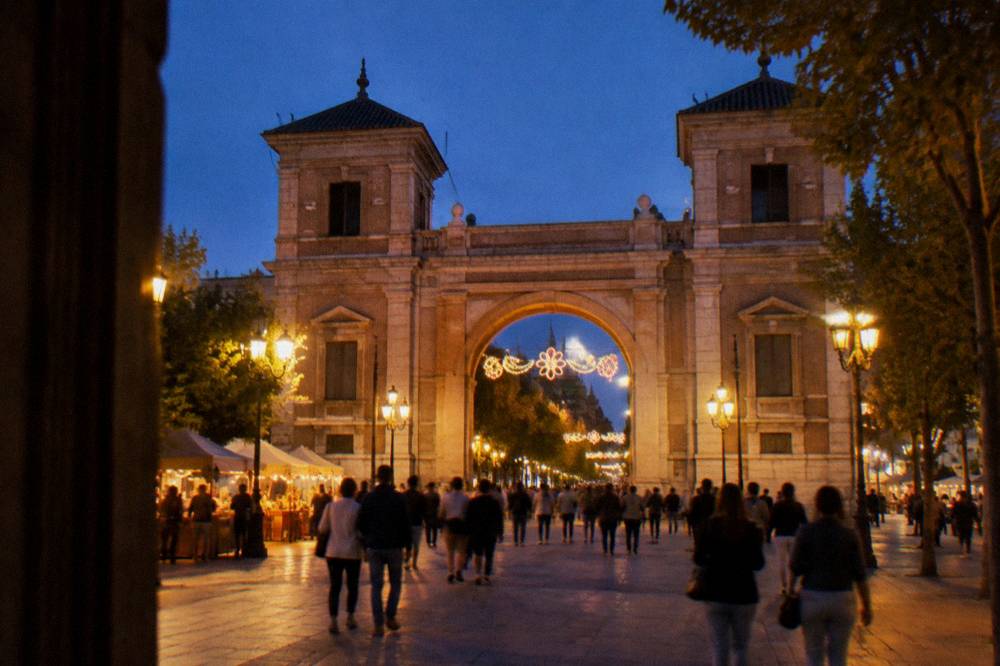
The gate's freeness shapes how you should treat it. You do not need a timeslot, you do not need to arrive early, and there is no bad time in the sense of missing access. What you are deciding is not whether to visit but when to walk past, and the answer depends on light and on what else is on your schedule. Morning sun and evening lamps both flatter cut stone; midday in July, when AEMET's 1981-2010 normals put the mean maximum at 32.4 C, flatters nothing.
| Sight | Adult entry | Free-entry rule from the timetable |
|---|---|---|
| Puerta del Carmen | Free | Always, it is a street monument |
| Basílica del Pilar | Free to enter | Tower viewpoint 6 EUR adult |
| La Seo | 10 EUR | Free for Aragon residents on the 6th, 12th, 23rd and 27th |
| Aljafería | 7 EUR, 9 EUR guided | Free the 1st and 3rd Sunday and Monday |
| Caesaraugusta museums | 3 to 4 EUR, 7 EUR bono | Free the 1st Sunday of the month |
| Museo del Fuego y los Bomberos | 3 EUR | Free the 1st Sunday of the month |
Those free-entry days are worth knowing if your stay spans a month boundary. The Aljafería's free Mondays and first and third Sundays are the most generous rule in the city, and the Caesaraugusta Roman museums, including the Roman forum museum and the river port museum, open free on the first Sunday. None of this changes the gate, which is free every day, but it changes the cost of the day you build around it.
If you prefer a guide to a self-directed walk, a short introductory tour is the cheapest way to get one, and the 105-minute monumental sightseeing tour below starts at 10.41 USD per person.
When Is The Best Time Of Year To See The Puerta Del Carmen?
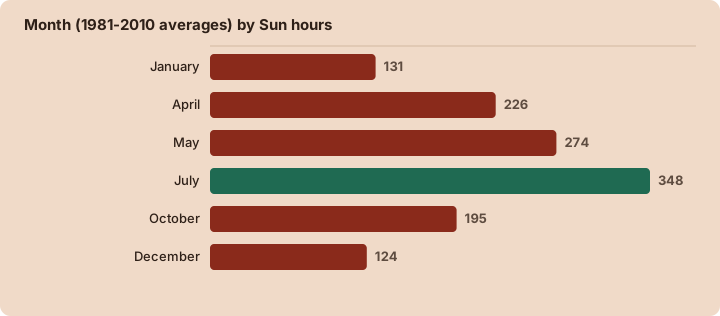
AEMET's 1981-2010 normals for the Zaragoza Aeropuerto station show the most comfortable walking months are April, May, October and November, with mean maximums of 19.6, 24.1, 21.4 and 14.8 C respectively, while July and August average 32.4 and 31.7 C. May is the wettest month at 44 mm of rain and July the driest at 17 mm, so spring brings the best temperatures with the highest chance of a shower.
Zaragoza's climate is dry continental, inland on the Ebro, and the numbers are worth taking seriously because the gate is an outdoor sight with no shelter. Winter is cold rather than merely cool, with January means of 6.6 C and overnight minima averaging 2.7 C, and the same station records 23.1 frost days a year. Summer is the opposite problem: the city's famous heat makes a midday stone-arch walk a short one.
| Month (1981-2010 averages) | Mean max C | Mean min C | Rain mm | Sun hours |
|---|---|---|---|---|
| January | 10.5 | 2.7 | 21 | 131 |
| April | 19.6 | 7.9 | 39 | 226 |
| May | 24.1 | 11.8 | 44 | 274 |
| July | 32.4 | 18.3 | 17 | 348 |
| October | 21.4 | 11.0 | 36 | 195 |
| December | 10.8 | 3.2 | 21 | 124 |
October deserves a special mention, and not only for the weather. The Fiestas del Pilar run from 10 to 18 October 2026, with the Ofrenda de Flores on 12 October filling the route from the Paseo de la Independencia to the Plaza del Pilar with tens of thousands of participants, and the gate's quarter sits right on that procession corridor. If you want the city at its loudest and most crowded, that is the week; if you want it quiet, it is the week to avoid. The Fiestas del Pilar guide covers the programme in detail.
How Does The Gate Fit Into A Day In Zaragoza?
The Puerta del Carmen works best as a waypoint rather than a destination: pair it with the Aljafería to the west, then walk east through the old town to the Plaza del Pilar, La Seo and the Ebro riverside, which is the classic west-to-east line across Zaragoza's sights. Done in that order, the gate appears early, costs you ten minutes, and sets up the rest of the walk with the wall story that explains why the old town has the shape it has.
A practical morning looks like this. Start at the Aljafería when it opens at 10:00, spend ninety minutes in the palace, then walk east: the gate falls on the way, the Centro de Historias and the Torreón de la Zuda sit inside the same stretch, and by early afternoon you are at the Plaza del Pilar with the basilica's free entry and the tower viewpoint ahead of you. Cross the Puente de Piedra for the classic view back across the Ebro, then finish along the Ebro river walk as the light drops.
The gate also earns its place in an evening plan. Zaragoza's old town changes character after dark, and a legends-and-ghosts night tour is the version of the city that leans into that atmosphere; the listing prices it from 15.76 USD per person.
For a fuller plan, the things to do in Zaragoza overview lists the full range of sights, and the tapas quarter near the gate makes a natural dinner stop. The gate's own role in all this is modest, but that is the point: it is the one piece of the wall you will pass anyway, so you may as well know what you are looking at.
Which Guided Tours Pass The Puerta Del Carmen?
The tours that cover the gate's ground are the old-town walking tours: the must-see attractions walk with a guide from 44.72 USD per person, the historical old-district tour from 106.92 USD, the free tip-based historical-centre walk, and the private custom walks from around 50 USD. The gate is old-town street furniture rather than a paid entry, so no tour sells a gate ticket, and what you are buying is the route and the guide's commentary.
The choice between them comes down to depth and budget. The free walks are tip-based and cover the core route, which suits a first afternoon. The paid group walks fix a schedule and a story, and the private walks let you set the pace, which matters if you are photographing or travelling with children. The table below compares the main options as their listings state them.
| Tour | From price per person | Rating | Length |
|---|---|---|---|
| Must-See Attractions Walking Tour With A Guide | 44.72 USD | 5 from 3 reviews | Listed on the tour page |
| Historical Tour of the Old District | 106.92 USD | 5 from 14 reviews | 2.5 hours |
| Free Tour Through the Historical Center | Free, tip based | 4.15 from 122 reviews | Listed on the tour page |
| Private Custom Walking Tour With a Local Guide | 50.65 USD | 5 from 86 reviews | 2 to 8 hours |
| Legends and Ghosts Night Tour | 15.76 USD | 5 from 1 review | 2 hours |
The must-see walk is this page's featured option because its route is built around exactly the sights this guide describes, and it is the most straightforward way to see the gate with a guide's context attached rather than walking past it cold.
For a wider comparison of the guided options, the trio below covers the paid must-see walk, a cathedral visit and the free tip-based old-town walk.
Common Questions About The Puerta Del Carmen
What is the Puerta del Carmen in Zaragoza?
It is one of the few surviving gates of the old city walls that once enclosed Zaragoza's Casco Histórico, a stone archway monument standing on the western edge of the old town. It is a public street monument with no ticket or restricted access.
Is the Puerta del Carmen free?
Yes. The gate is part of the street and costs nothing to see at any hour. Nearby sights charge, such as the basilica tower viewpoint at 6 EUR and La Seo at 10 EUR, but the gate itself has no entry fee.
How do I get to the Puerta del Carmen?
On foot from the Plaza del Pilar or the Paseo de la Independencia, or by tram or urban bus at 1.70 EUR a single, or 0.55 EUR with a Tarjeta Bus, per the 2026 Avanza fare table. Drivers should note the Casco Histórico low-emission zone applies Monday to Friday 08:00-20:00.
How long should I spend at the Puerta del Carmen?
Ten unhurried minutes is enough for the gate itself. Most visitors fold it into a longer old-town walk that takes in the Aljafería, the Plaza del Pilar and the Ebro riverside, which is the natural west-to-east line across the city.
When is the best time to see the Puerta del Carmen?
Spring and autumn, on AEMET's 1981-2010 averages: April and October mean maximums of 19.6 and 21.4 C. Avoid midday in July and August, which average 32.4 and 31.7 C, and expect the Fiestas del Pilar week of 10 to 18 October to bring big crowds to the surrounding streets.
Are there guided tours that include the Puerta del Carmen?
Yes, the old-town walking tours cover the gate's quarter, including the must-see attractions walk with a guide, the historical old-district tour and the free tip-based historical-centre walk. No tour sells a gate ticket, because the gate has none.
The Puerta del Carmen will never fill a day, and it is not meant to: it is the surviving hinge of a wall that has otherwise vanished, standing free and open on the street where the walled city once ended, and the best visit is the one that walks through it on the way to everything else.