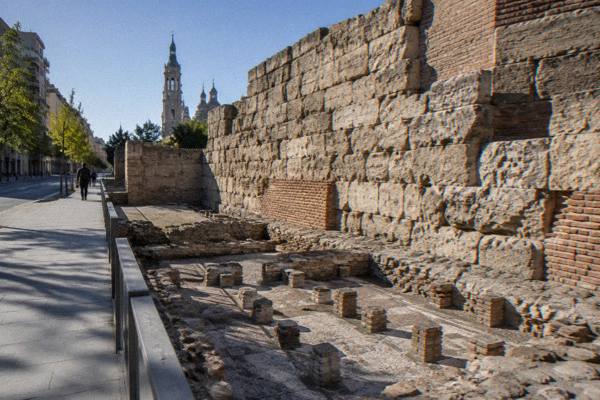
Roman Baths And Walls In Zaragoza
The Termas de Caesaraugusta preserve the bathhouse of the Roman city that became Zaragoza, the capital of Aragon on the Ebro, and they sit at the centre of a compact set of four municipal Roman museums you can cover on foot in a day.
Short answer
The Termas de Caesaraugusta in Zaragoza cost 3 EUR to enter, open Tue-Sat 10:00-14:00 and 17:00-21:00 plus Sun 10:00-14:30, and are free the first Sunday of the month. A four-museum bono covering the baths, forum, river port and theatre costs 7 EUR, or 5 EUR reduced.
Zaragoza, the capital of Aragon on the Ebro, stands on the site of the Roman city of Caesaraugusta, and the municipality has preserved the bathhouse, forum, river port and theatre of that city in four museums clustered in and around the old town. The baths, the Termas de Caesaraugusta, are the quietest of the four and the easiest to combine with everything else in the centre, because they sit below street level within a short walk of the Plaza del Pilar.
What Are The Roman Baths And Walls Of Zaragoza?
The Termas de Caesaraugusta are the preserved remains of the public bathhouse of Roman Zaragoza, displayed in one of the city's four municipal Roman museums, and the Roman walls survive as fragments woven into the later city rather than as a single continuous circuit you can walk today. The four Caesaraugusta museums together cover the forum, the river port, the baths and the theatre, and the municipal ticket system treats them as one family, with a combined bono and shared free-entry days. The baths are the smallest and least crowded of the four, which makes them a good first stop or a good pause between bigger sights.
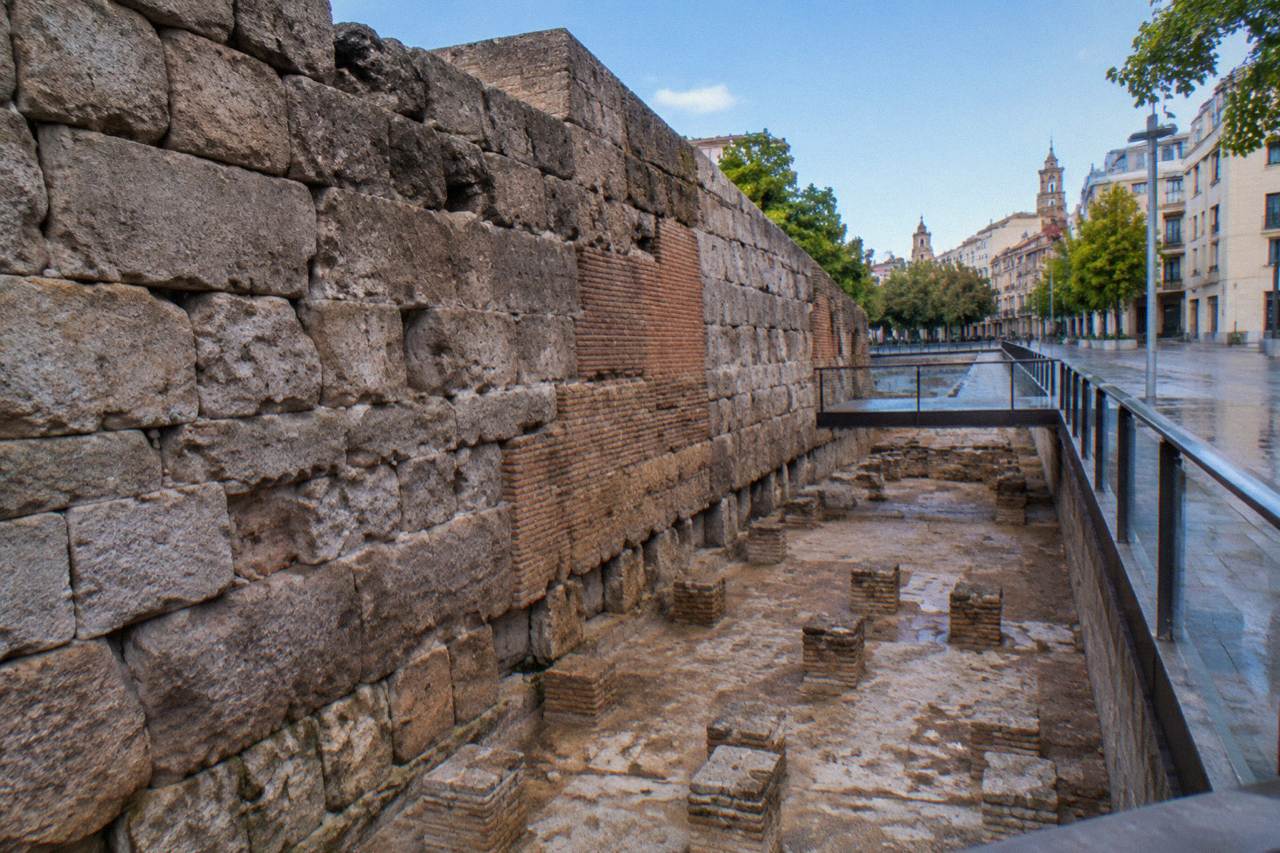
Bathhouses were the social engine of a Roman city, and Zaragoza's museum preserves that function in its layout: you are looking at the rooms where the daily routine of Caesaraugusta happened, not at a decorative ruin. Because the remains sit below the modern street, the visit has a particular atmosphere, you descend into the Roman level of the city while the contemporary one carries on overhead.
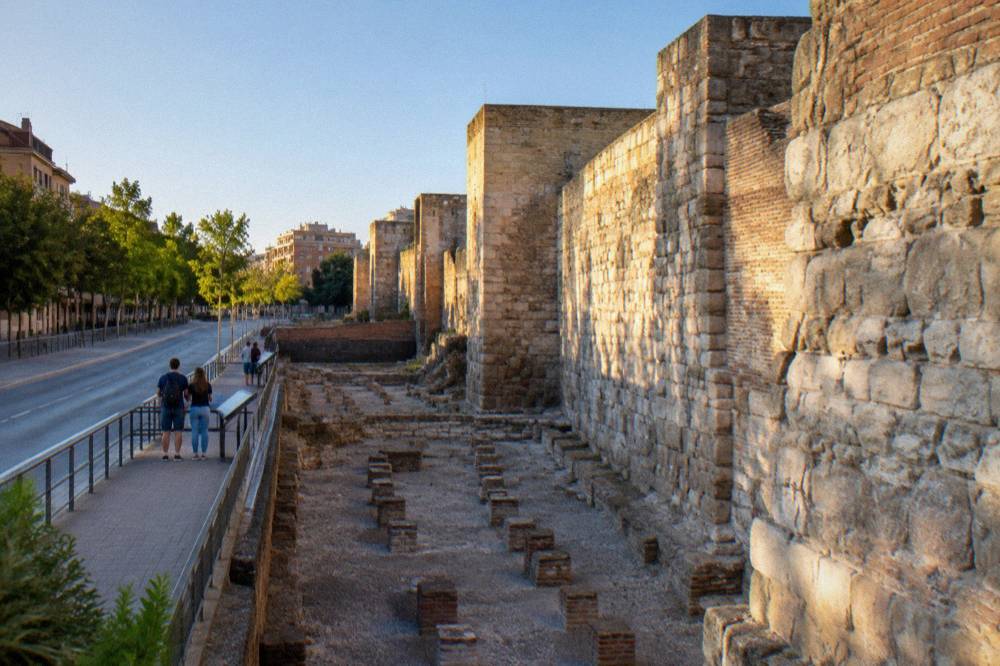
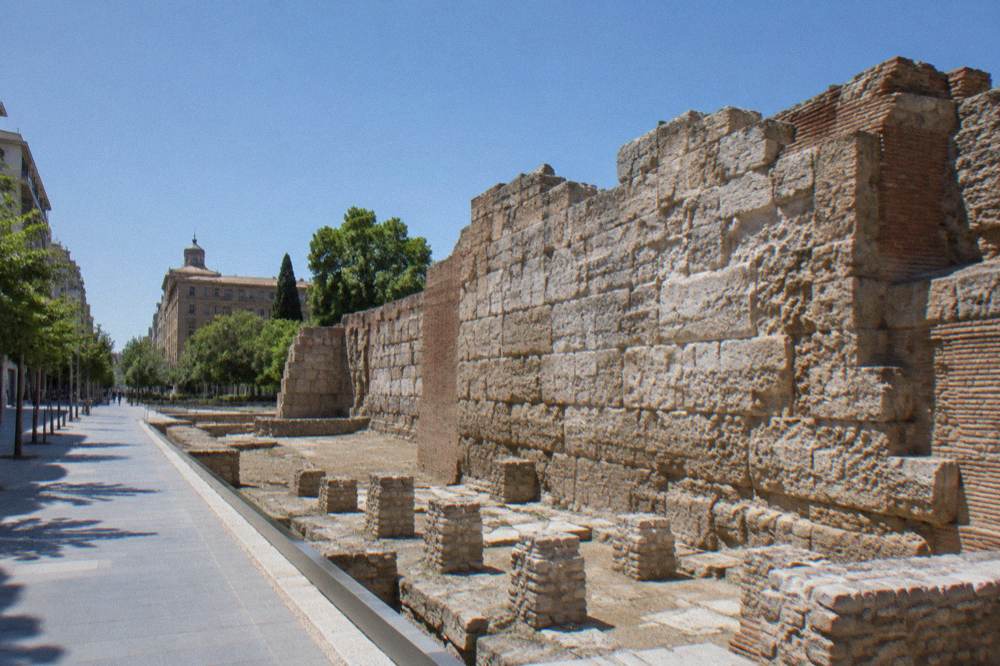
The walls are a different proposition. Where a visitor to some Spanish cities can follow a wall circuit, in Zaragoza the Roman defences survive in pieces, absorbed into later buildings and street lines, and the honest way to see them is with someone or something that points at the right stones. That is exactly what the app-guided walk advertised on this site's featured tour does: the listing describes a route from the Roman walls to the Renaissance city, narrated through an app, at your own pace and for 7.99 per person. You can read more about it on the tour's own page, and the wider Roman story of the city is laid out in the Roman Caesaraugusta guide.
How Much Do The Roman Museums In Zaragoza Cost?
The Termas de Caesaraugusta cost 3 EUR, the same as the Puerto Fluvial, while the Foro costs 4 EUR, and the four-museum bono covering the baths, forum, river port and theatre costs 7 EUR, or 5 EUR reduced, with free entry for everyone at all four museums on the first Sunday of the month. Tickets are sold through the municipal museums ticketing page, and the bono is the obvious choice if you plan to visit more than two of the Roman sites, which most visitors to Zaragoza should. There is no confirmed city tourist pass that bundles these museums with other sights, so the bono is the only combined ticket you can rely on.
| Museum | Subject | Single ticket |
|---|---|---|
| Termas de Caesaraugusta | The Roman public baths | 3 EUR |
| Puerto Fluvial de Caesaraugusta | The Roman river port on the Ebro | 3 EUR |
| Foro de Caesaraugusta | The Roman forum | 4 EUR |
| Teatro de Caesaraugusta | The Roman theatre | Included in the bono |
| Four-museum bono | All four Caesaraugusta museums | 7 EUR |
| Bono, reduced rate | Students and other eligible visitors | 5 EUR |
The arithmetic is simple. If you visit the baths alone, 3 EUR is the price. If you add the forum and the river port, you are already at 10 EUR in singles against a 7 EUR bono that also includes the theatre, so the bono pays for itself from the third museum onward. The first Sunday of the month is the free day for all four, and it is also worth knowing that several other municipal museums share free-day patterns: the Aljafería is free on the first and third Sunday and Monday of each month, and the Museo del Fuego y los Bomberos is free the first Sunday.
For a fuller run-through of the free-entry calendar across the city, the free things to do in Zaragoza guide collects the options, and the individual Roman sites each have their own page, including the Roman forum museum and the Roman theatre museum.
What Are The Opening Hours Of The Termas De Caesaraugusta?
The four Caesaraugusta museums, including the baths, open Tuesday to Saturday from 10:00 to 14:00 and from 17:00 to 21:00, and on Sundays and public holidays from 10:00 to 14:30, with Mondays closed outside the holiday calendar. These are the hours the municipal October timetable publishes for the whole Roman museum family, so the same schedule applies whether you start at the baths, the forum, the river port or the theatre. The afternoon gap between 14:00 and 17:00 is the one thing to plan around, because it coincides with lunch and the quietest stretch of the Spanish day.
| Day | Hours |
|---|---|
| Tuesday to Saturday morning | 10:00 to 14:00 |
| Tuesday to Saturday afternoon | 17:00 to 21:00 |
| Sundays and public holidays | 10:00 to 14:30 |
| Mondays | Closed |
| First Sunday of the month | Open, free entry |
A practical shape for the day is to use the morning block for the baths and one other Roman site, take lunch in the old town, then return for the 17:00 reopening to finish the set. The baths are compact enough that an hour is generous, which leaves room for the theatre or the forum in the same morning. If your visit falls on a Sunday, note that everything closes at 14:30, so the Roman museums have to be a morning activity.
The one closure to be aware of elsewhere in the municipal network is the Museo de Zaragoza: its central building at Plaza de los Sitios 6 is closed for Ministry of Culture works with no reopening date, and the Etnología and Cerámica sites in the Parque Grande are also shut at present. None of this affects the Caesaraugusta museums, but if you are building a museum day around Roman Zaragoza, plan it on the Roman four plus the open municipal sites rather than counting on that one. The Museo de Zaragoza page explains the situation in detail.
Can You Still See The Roman Walls Of Zaragoza Today?
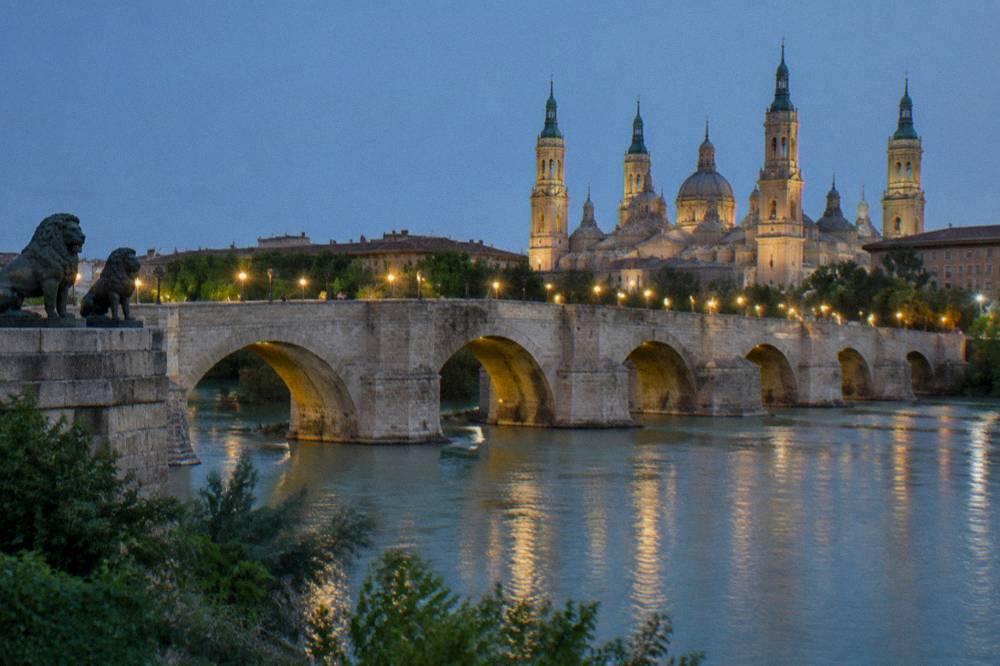
Yes, but not as a continuous walkable circuit: the Roman walls of Caesaraugusta survive in fragments embedded in the later city, and the practical way to find them is a guided or app-narrated route rather than setting off on your own, because the surviving stones sit among two thousand years of later building. The city's Roman past is better understood through its four excavated museums, the baths, forum, river port and theatre, and through the street pattern of the old town, which still follows the Roman grid in places. The river crossing is the other anchor: the Puente de Piedra stands on the line of a Roman-era crossing, though the current bridge was built from 1401 and opened in 1440.
This is why the app-guided walk is the featured tour for this page. Its listing describes a route that runs from the Roman walls to the Renaissance wonders of the city, delivered through an app at your own pace, priced from 7.99 per person and rated 4.6 from 8 reviews. For a visitor who wants the Roman layer explained while walking between the surviving stones and the later monuments, it is the most direct option, and it pairs naturally with a morning in the Caesaraugusta museums. Check availability if that combination fits your dates.
The wider question of which Roman ruins exist in the city, and how they relate to each other, is answered in the ancient Roman ruins of Zaragoza overview, and the individual museums each have a dedicated page, including the Roman river port museum. If you are short on time, the baths plus the theatre make the most coherent pair, one for daily life, one for public spectacle.
How Do The Baths Compare With The Other Caesaraugusta Sites?
The baths are the most intimate of the four Caesaraugusta museums, the forum is the largest single-ticket site at 4 EUR, the river port connects the Roman city to the Ebro, and the theatre is the most dramatic space, so the four together give you the domestic, civic, commercial and entertainment sides of Caesaraugusta in one 7 EUR bono. None of the four takes more than about an hour, and all four share the same opening hours and the same free first Sunday, which means you can treat them as a single distributed museum rather than as four separate outings.
| Site | What It Shows | Best For |
|---|---|---|
| Termas de Caesaraugusta | The public bathhouse | Daily Roman life, a quiet hour |
| Foro de Caesaraugusta | The civic heart of the city | The biggest single-site ticket |
| Puerto Fluvial | The Roman river port | The Ebro connection |
| Teatro de Caesaraugusta | The Roman theatre | Public spectacle and scale |
The order matters less than the pacing. The baths and the river port sit closest to the river and the old town core, the forum is in the commercial centre, and the theatre stands near the museum district, so a sensible walking line runs from the Plaza del Pilar outward. The bono removes any pressure to decide in advance which ones deserve the money, which is the real argument for buying it at the first site rather than paying singles and regretting it at the third.
What Else Is Near The Roman Baths In Zaragoza?
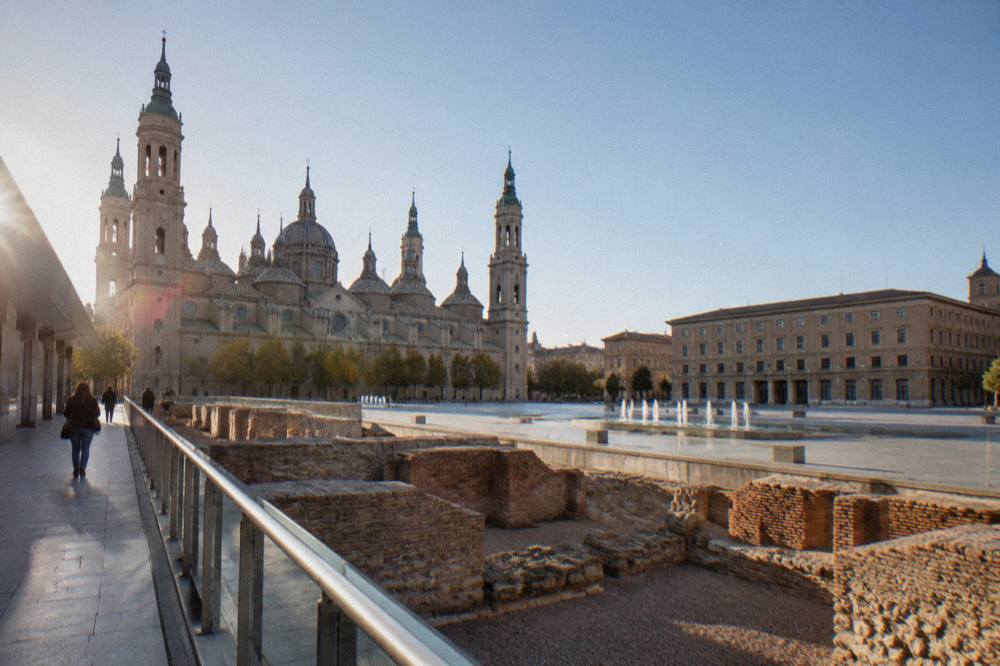
The Termas sit in an old town where the Basílica del Pilar is free to enter, its tower viewpoint costs 6 EUR for an adult, La Seo cathedral costs 10 EUR including three associated museums, and the Aljafería palace costs 7 EUR, so the Roman sites can be mixed with the city's headline monuments without ever needing transport. Everything in this cluster is walkable, and the distances between them are short enough that the limiting factor is stamina and lunch, not travel. The Torreón de la Zuda, free to enter with a viewing floor on its fifth floor, adds a panorama over the Ebro to the same walk.
| Sight | Entry | Notes |
|---|---|---|
| Basílica del Pilar | Free | Tower viewpoint 6 EUR adult |
| La Seo cathedral | 10 EUR | Includes Museo de Tapices, Museo Pilarista, Rosario de Cristal |
| Aljafería | 7 EUR | Free first and third Sunday and Monday |
| Torreón de la Zuda | Free | Viewing floor on the fifth floor |
| Centro de Historias | Free | Tue-Sat 10:00-14:00 and 17:00-21:00 |
| Museo del Origami | 3 EUR | Free first Tuesday and Sunday |
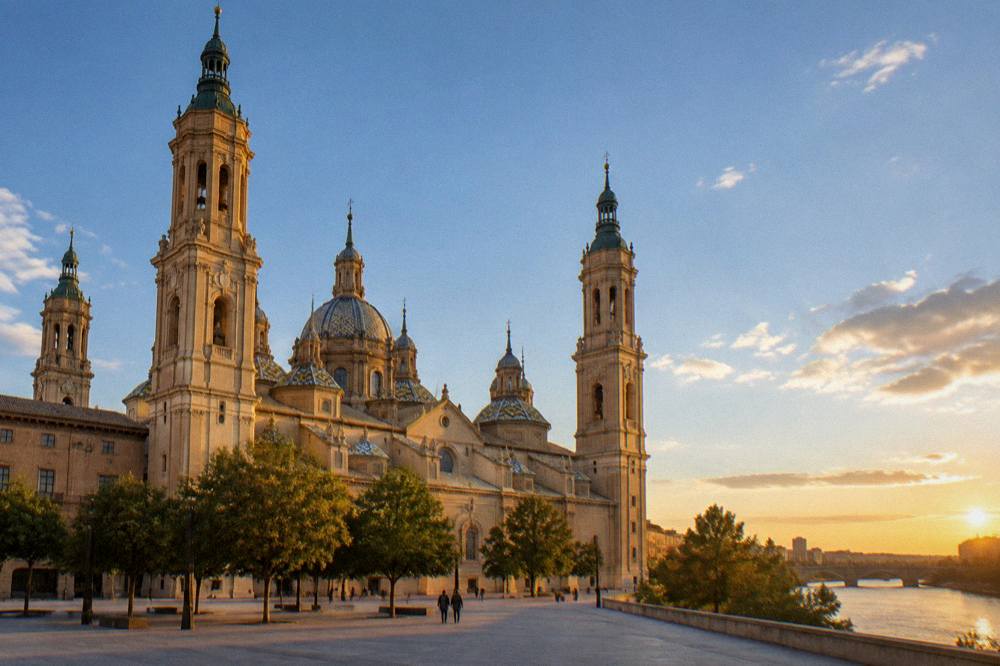
The Basílica del Pilar and La Seo cathedral between them bracket the Plaza del Pilar, and the Aljafería palace is the one sight in this cluster that asks for a deliberate walk out of the old core. If you are building a single day around the Roman museums and the monuments, the one-day Zaragoza itinerary is the natural companion page, and the Puente de Piedra makes a good closing walk, since it stands on the line of the Roman-era crossing and looks back at the whole riverside.
Do You Need A Guided Tour For Roman Zaragoza?
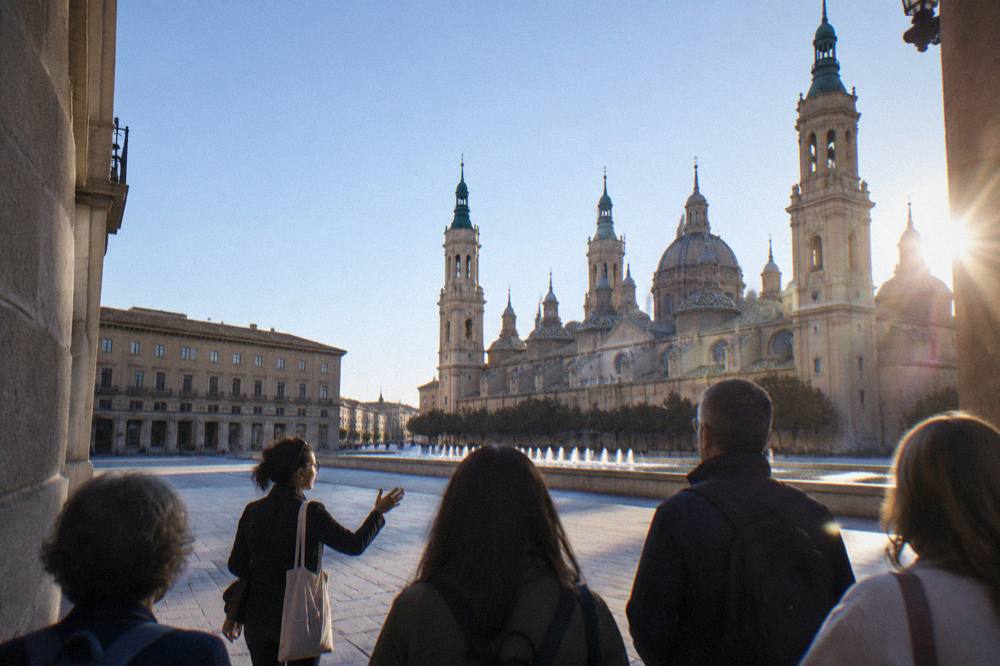
You do not need one to enter any of the Caesaraugusta museums, but a guided or app-narrated walk adds the context the museum panels compress, and the options range from a $7.99 app-guided route from the Roman walls to the Renaissance city, through a $12.38 guided visit of the Basílica del Pilar in Spanish, to a private custom walk with a local guide from 50.65 per person. The choice comes down to how much structure you want. The museums work perfectly well alone, but the walls, the street grid and the relationship between Roman Caesaraugusta and the modern city are much easier to see when someone or something is pointing at the right stones.
The app-guided walk suits independent visitors who want to move at their own pace and still get the story. The Basílica del Pilar guided visit, in Spanish, suits visitors who want the city's headline monument unpacked by a guide and who are comfortable in that language, at 12.38 per person for an hour and a half. A private custom walk with a local guide, from 50.65 per person and rated 5 from 86 reviews, is the flexible option, and a private walk with a local from 54.02 per person covers similar ground with a different operator. The custom walk's own page carries the live availability for its dates.
There is also a free layer. The Indispensable Zaragoza Free Tour of the old town runs on GuruWalk, tip based, with the guru leading the walk for whatever you choose to give at the end, and it carries a 4.97 rating from 576 reviews over two hours. It does not focus on the Roman remains specifically, but as a first orientation of the old town before you descend into the museums, it is hard to argue with the format. See this free tour on GuruWalk if you want the tip-based introduction.
How Do You Get To The Roman Sites In Zaragoza?
A single bus or tram ticket in Zaragoza costs 1.70 EUR, or 0.55 EUR with the rechargeable Tarjeta Bus, and the old town where all four Caesaraugusta museums sit is compact enough that most visitors walk everywhere once they arrive, with the tourist bus at 10 EUR for 24 hours of hop-on hop-off across 16 stops as the alternative. There is no tourist tax in Aragon, the regional government having explicitly ruled one out, so the transport fare and your museum tickets are the whole cost of the day. The airport bus is line 505, at 4.65 EUR single, or 2.25 EUR with the local card, running 25 to 35 minutes into the city.
| Transport | Price | Notes |
|---|---|---|
| Bus or tram single | 1.70 EUR | Night lines 1.00 EUR |
| With Tarjeta Bus | 0.55 EUR | Card itself 7 EUR |
| Tourist bus | 10 EUR | 24 hours, 16 stops, 90-minute loop |
| Airport bus, line 505 | 4.65 EUR | 2.25 EUR with Lazo card, 25-35 min |
| Bizi day pass | 1 EUR | Plus 0.50 EUR per trip up to 30 min |
One thing drivers should know: the low emission zone covering the Casco Histórico operates Monday to Friday from 08:00 to 20:00, with sanctions in force since 12 December 2025, and vehicles without a DGT environmental label are restricted. If you are staying in or driving into the old town, check your label before you go, and there is a 15-minute grace period if you enter by mistake. For most visitors arriving by train at Zaragoza-Delicias, the tram covers the leg into the centre, and from Madrid or Barcelona the high-speed journey is about 1.5 to 2 hours.
When Is The Best Time To Visit The Roman Sites In Zaragoza?
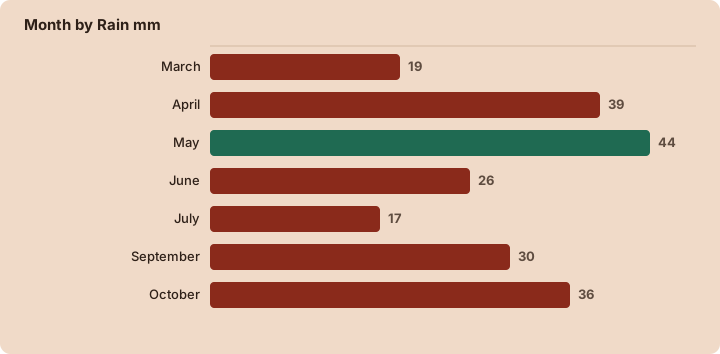
The most comfortable months to walk between the Caesaraugusta museums are April, May, September and October, when AEMET's 1981 to 2010 normals for the Zaragoza Aeropuerto station show mean maximum temperatures between 19.6 and 24.1 C in spring and 21.4 to 27.1 C in early autumn, against 32.4 C in July, the hottest month on the same series. The museums themselves are temperature-stable, being partly underground, but the walking between them is not, and Zaragoza's dry continental climate means hot summers and cool winters. May is the wettest month at 44 mm on the same series, and July and August the driest at 17 mm each.
| Month | Mean max C | Mean min C | Rain mm |
|---|---|---|---|
| March | 17.3 | 5.8 | 19 |
| April | 19.6 | 7.9 | 39 |
| May | 24.1 | 11.8 | 44 |
| June | 29.3 | 15.8 | 26 |
| July | 32.4 | 18.3 | 17 |
| September | 27.1 | 15.2 | 30 |
| October | 21.4 | 11.0 | 36 |
All figures in that table are the 1981 to 2010 averages for the Zaragoza Aeropuerto station, which is the window AEMET publishes. October deserves a special note: the Fiestas del Pilar run from 10 to 18 October 2026, with the Ofrenda de Flores on 12 October, and the city is transformed, crowded and expensive to book in that window, but also at its most alive. If you want the museums quiet, go outside those nine days; if you want Zaragoza at full volume, go during them and book everything early.
How Should You Plan A Roman Zaragoza Day?
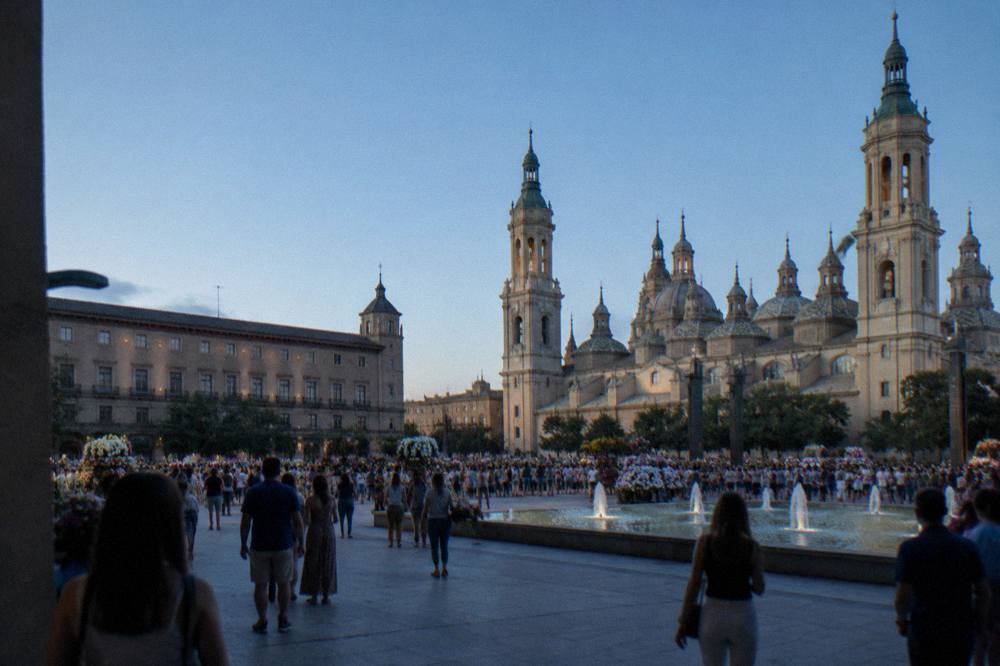
Buy the 7 EUR bono at your first Caesaraugusta museum, do the baths and the river port in the morning block from 10:00 to 14:00, take lunch in the old town during the afternoon closure, return at 17:00 for the forum and the theatre, and close the day with the free Basílica del Pilar and a walk over the Puente de Piedra at sunset. That single sentence is a complete and realistic day, and it costs 7 EUR in museum tickets plus lunch. Add the tower viewpoint at the basilica for 6 EUR if you want the panorama, and the app-guided walls walk if you want the between-sites story told.
A few refinements. If your visit falls on a first Sunday, every Caesaraugusta museum is free, and so is the Aljafería on the first and third Sunday, which makes that the single best value day of the month in Zaragoza, at the price of sharing it with everyone else. If you are travelling with children, the Zaragoza with kids guide has the family angles, and the theatre tends to be the Roman site that lands best with younger visitors. If rain interrupts the day, the museums are the ideal wet-weather layer of the city, being indoors and underground.
The Roman layer is also the best answer to the question of what makes Zaragoza different from Spain's coastal cities, and this site, Zaragoza Travel Guide, covers that argument across its pages. An inland capital on the Ebro, with a Roman bathhouse under its shopping streets and a Roman-era crossing line under its most famous bridge, offers a density of history that few cities of its size can match, and the four Caesaraugusta museums are the most concentrated expression of it.
Common Questions About The Roman Baths And Walls In Zaragoza
How much do the Roman baths in Zaragoza cost?
The Termas de Caesaraugusta cost 3 EUR for a single ticket. The four-museum bono covering the baths, forum, river port and theatre costs 7 EUR, or 5 EUR reduced, and entry is free for everyone on the first Sunday of the month.
What are the opening hours of the Termas de Caesaraugusta?
The baths open Tuesday to Saturday from 10:00 to 14:00 and from 17:00 to 21:00, and on Sundays and public holidays from 10:00 to 14:30. The same hours apply to all four Caesaraugusta museums, and Mondays are closed.
Can you see the Roman walls of Zaragoza?
The Roman walls survive in fragments built into the later city rather than as a continuous circuit, so the practical way to see them is a guided or app-narrated route. The app-guided walk from the Roman walls to the Renaissance city costs from 7.99 per person.
Which Roman museums are in Zaragoza?
The municipality runs four: the Foro de Caesaraugusta at 4 EUR, the Termas and the Puerto Fluvial at 3 EUR each, and the Teatro de Caesaraugusta, all covered by the 7 EUR bono and all free on the first Sunday of the month.
How long do the Roman baths take to visit?
The baths are the most compact of the four Caesaraugusta museums, and about an hour is generous. Most visitors combine them with at least one other Roman site in the same morning block, using the shared 7 EUR bono.
The Roman baths and walls of Zaragoza reward exactly the kind of visit this page describes: a slow morning below street level, a bono that turns four small museums into one big one, and an afternoon that walks out of the Roman city into the Basílica del Pilar, the Aljafería and the Ebro, all within a compact, walkable inland capital.