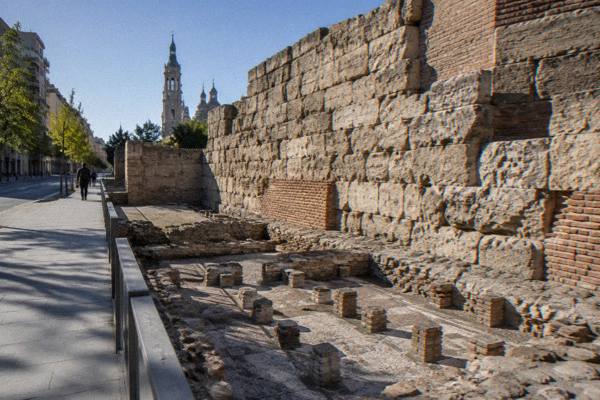
What Are The Ancient Roman Ruins In Zaragoza?
The Roman city of Caesaraugusta survives in four municipal museums in Zaragoza: the Forum, the River Port, the Baths and the Theatre. What to see, what each costs and how to plan a visit.
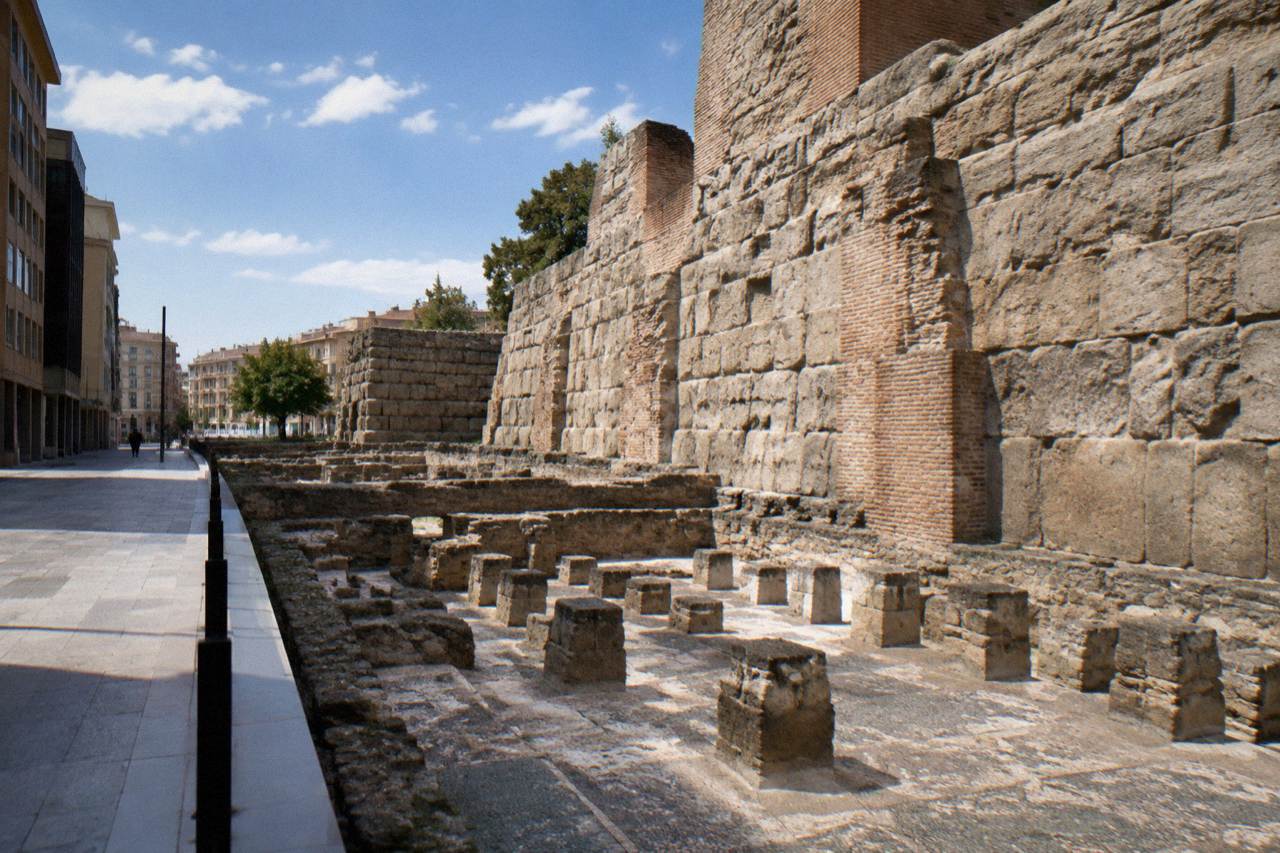
Zaragoza, the capital of Aragon on the Ebro, is one of the few Spanish cities where you can walk into a museum in the middle of the shopping district and stand inside a Roman forum, a river port, public baths and a theatre, all without leaving the old town. The Roman city was called Caesaraugusta, a name that honours the emperor Augustus, and its remains sit beneath the modern streets around Plaza del Pilar. Four municipal museums, plus a river crossing whose Roman ancestor still lies under the current bridge, carry that layer of the city today.
What Are The Ancient Roman Ruins In Zaragoza?
The ancient Roman ruins in Zaragoza are the four Caesaraugusta museums, the Museo del Foro, the Museo del Puerto Fluvial, the Museo de las Termas and the Museo del Teatro, which hold the excavated forum, river port, public baths and theatre of the Roman city, together with the Roman-era river crossing that predates the Puente de Piedra. All four museums are municipal, share one combined ticket and sit within the old town.
The four sites are not scattered ruins behind fences. Each one is a purpose-built museum wrapped around the excavation itself, so you walk down from the modern street into the Roman level and stand at the edge of the stonework. The Roman Caesaraugusta collection is run as a single group by the city, which is why the four-museum bono exists at all: the municipality prices the set as one product, not four separate attractions.
The ruins sit in the Casco Histórico, the old town between Plaza del Pilar and the Ebro. That density is the practical point for a visitor. The Forum museum stands a few steps from the Basílica del Pilar, the Theatre museum sits on the edge of the old district, and the River Port museum lies near the line of the Roman waterfront. You do not need transport between them, and the whole set can be folded into an existing old-town walk rather than treated as a separate expedition.
Where To Find Each Caesaraugusta Museum In Zaragoza
The four Roman museums sit inside the old town of Zaragoza: the Forum museum beside Plaza del Pilar, the River Port museum toward the Ebro, the Baths museum near the Calle Mayor line, and the Theatre museum on the edge of the historic district. All four share the same opening pattern, Tuesday to Saturday 10:00 to 14:00 and 17:00 to 21:00, and Sunday and public holidays 10:00 to 14:30.
The shared timetable is the detail that makes a single-morning visit realistic. Every museum opens and closes at the same minute, so there is no sequencing puzzle: pick a starting point, walk the loop, and the closing times take care of themselves. The one planning wrinkle is the midday split, since the museums shut between 14:00 and 17:00 on weekdays, which matches the Spanish afternoon rhythm rather than fighting it.
| Museum | What You See | Admission | Hours |
|---|---|---|---|
| Museo del Foro de Caesaraugusta | The excavated forum, beneath the modern street level | 4 EUR | Tue-Sat 10:00-14:00, 17:00-21:00; Sun and holidays 10:00-14:30 |
| Museo del Puerto Fluvial | The Roman river port on the Ebro waterfront | 3 EUR | Tue-Sat 10:00-14:00, 17:00-21:00; Sun and holidays 10:00-14:30 |
| Museo de las Termas | The Roman public baths | 3 EUR | Tue-Sat 10:00-14:00, 17:00-21:00; Sun and holidays 10:00-14:30 |
| Museo del Teatro | The Roman theatre | In the 7 EUR four-museum bono | Tue-Sat 10:00-14:00, 17:00-21:00; Sun and holidays 10:00-14:30 |
Tickets are sold through the municipal museums portal, and the bono is the arithmetic worth doing before you buy. Three single admissions at the listed prices already exceed the 7 EUR combined ticket, so anyone visiting more than two of the four sites saves money by default. The reduced bono is 5 EUR. The museums are free on the first Sunday of the month, which is the budget route if your dates line up.
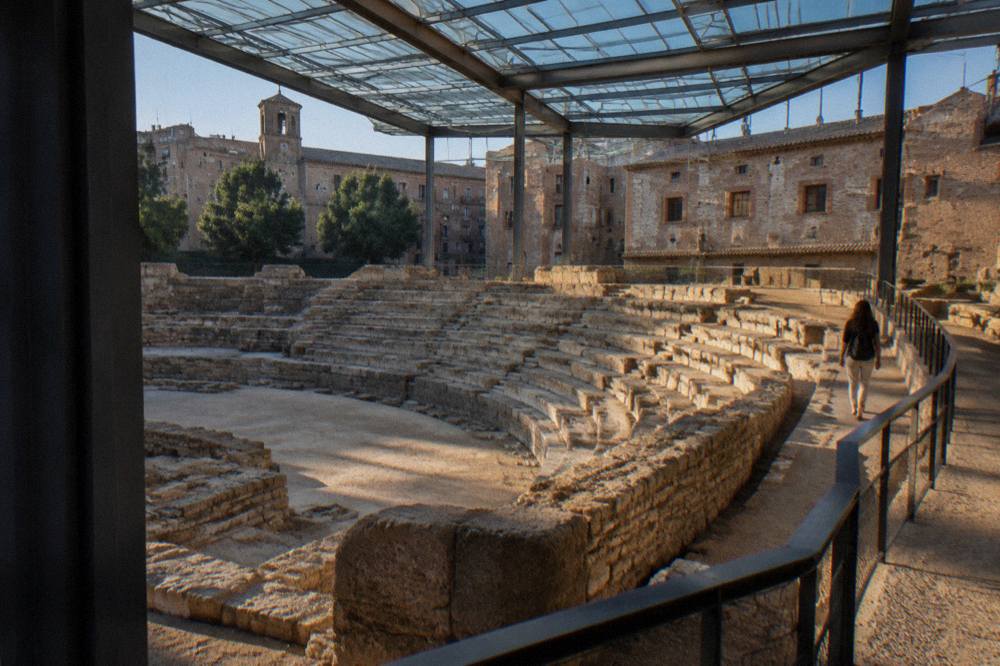
Each museum earns its place on its own. The Forum museum puts the civic heart of the Roman city under glass panels and walkways. The Theatre museum preserves the performance space itself, the largest single structure of the four. The River Port museum explains how goods moved through Caesaraugusta on the Ebro, and the Baths and walls museum shows the everyday infrastructure of a provincial city, the pipes, pools and heated floors that made Roman urban life work.
How Much Do The Roman Museums In Zaragoza Cost?
The Caesaraugusta museums cost 4 EUR for the Forum, 3 EUR for the River Port and 3 EUR for the Baths, with a four-museum combined ticket at 7 EUR, or 5 EUR reduced, covering all four sites including the Theatre. Entry is free at every one of them on the first Sunday of the month, and tickets are sold on the municipal museums portal.
That price ladder is among the gentlest in the city. For comparison, the Aljafería charges 7 EUR general and 9 EUR for a guided visit, and the La Seo cathedral ticket is 10 EUR general, 9 EUR for over 65s and 7 EUR for students and ages 13 to 18. The Roman museums underprice the big monuments while delivering the oldest layer of the city, which is the argument for fitting them in even on a short stay.
The free-entry days are worth a table of their own, because Zaragoza spreads them across the month rather than concentrating them.
| Site | Free Entry |
|---|---|
| Caesaraugusta museums (all four) | First Sunday of the month |
| Aljafería | First and third Sunday, and Monday, of each month |
| Museo del Fuego y los Bomberos | First Sunday of the month |
| Museo del Origami | First Tuesday and first Sunday |
Is The Puente De Piedra A Roman Bridge?
The Puente de Piedra you cross today is not Roman: the current stone bridge was built from 1401 and opened in 1440, but a Roman-era crossing on the same Ebro alignment predates it. Four bronze lions have watched it since 1991, and Napoleonic troops blew up one arch in 1813 during the retreat from the city.
That layered history is the honest answer, and it is more interesting than a simple yes. The Roman city needed its bridge, and the crossing point outlived every structure built on it. What stands now is medieval masonry on a Roman instinct, the shortest sensible line over the Ebro into the heart of the old town. Walk it as the last stop of a Roman-themed route and you are looking at the same river the Puerto Fluvial museum describes from the bank.
The bridge is free, always open and needs no ticket, which makes it the natural free counterweight to the four paid museums. From the middle of the span the skyline reads as one continuous history: the Basílica del Pilar above, the medieval bridge underfoot and the Roman river level below, all in a single glance back toward Plaza del Pilar.
Can You See Roman Zaragoza On A Guided Tour In One Day?
Yes, and a guided walk is the efficient way to do it, because the four Caesaraugusta museums and the Puente de Piedra sit close enough to cover in a single morning or afternoon. A guided introduction such as the Zaragoza Monumental Sightseeing Tour runs 105 minutes and costs from 10.41 USD per person, rated 4.4 from 36 reviews on the operator's live listing, and it passes the monumental core the Roman sites sit beneath.
Guides earn their fee on exactly this kind of layered city. The Roman remains sit under the medieval and Baroque ones, and a guide who points at the right stretch of pavement can turn a walk between the museums into a running commentary on what the street level hides. The 105-minute monumental tour is short enough to run in the morning before the museums open their afternoon session, so the two halves of the day do not compete. Check availability, and see the tour's own page for what the monumental intro walk covers.
If you would rather go deeper than an introduction, a private guide can be pointed at the Roman layer specifically. The private walking options in the city run two to six hours and can be shaped around the four museums, the bridge and the forum area, which suits anyone who wants the Roman story told end to end rather than in fragments between photo stops.
Common Questions About The Ancient Roman Ruins In Zaragoza
What are the ancient Roman ruins in Zaragoza, Spain?
The four Caesaraugusta museums, the Forum, the River Port, the Baths and the Theatre, plus the Roman-era river crossing that predates the Puente de Piedra. All four museums share one ticket system and sit in the old town.
How much do the Roman museums in Zaragoza cost?
The Forum is 4 EUR, the River Port and the Baths are 3 EUR each, and the four-museum combined ticket is 7 EUR, or 5 EUR reduced. Entry is free on the first Sunday of the month.
What are the opening hours of the Caesaraugusta museums?
Tuesday to Saturday 10:00 to 14:00 and 17:00 to 21:00, and Sunday and public holidays 10:00 to 14:30, per the municipal October timetable. They close on Mondays.
Is the Puente de Piedra Roman?
The bridge standing today is not: it was built from 1401 and opened in 1440. A Roman-era crossing on the same alignment predates it, so the crossing point is Roman in origin even though the stones are medieval.
Can you see all four Roman sites in one day?
Yes. They sit within walking distance of each other in the old town, share identical opening hours, and the combined ticket covers all four, so a single morning or a single afternoon session is enough for the set.
Where can I read more about planning a Zaragoza trip around the old town?
The Zaragoza Travel Guide collection carries dedicated pages on each Roman museum, on the Puente de Piedra and on how many days you need in Zaragoza, which is the natural next question once the museums are on your list.
The Roman layer of Zaragoza is compact, cheap by the standards of the city's big monuments and sitting directly under the streets you would walk anyway, which makes it one of the easiest ancient cities in Spain to see without ever leaving the old town.