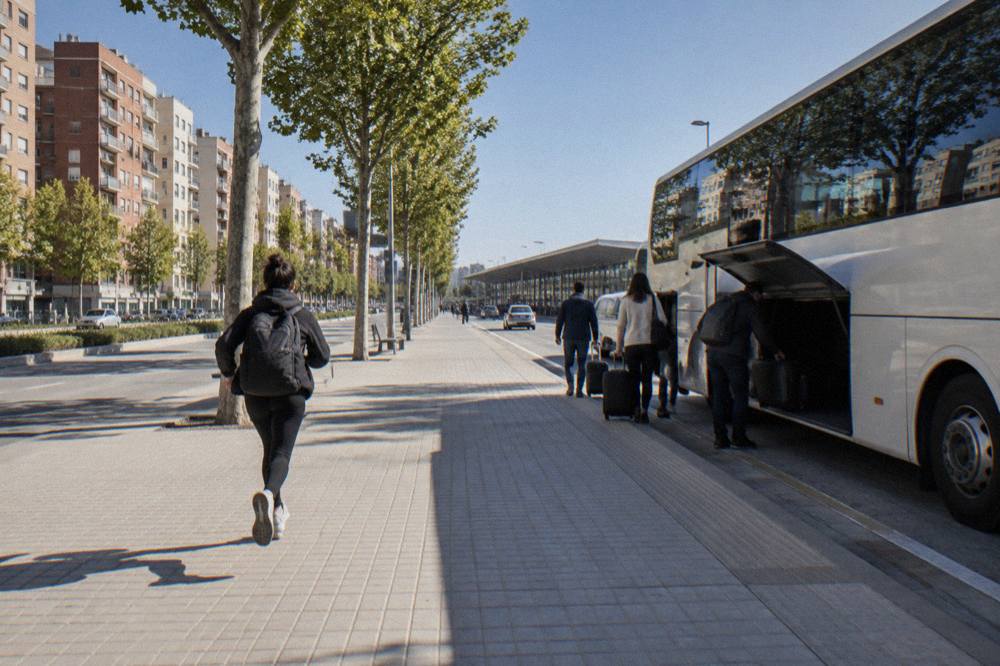
How To Get To Zaragoza
Zaragoza, the capital of Aragon on the Ebro, sits almost exactly between Madrid and Barcelona on Spain's high-speed rail line, which makes it one of the easiest inland cities in the country to reach.
Short answer
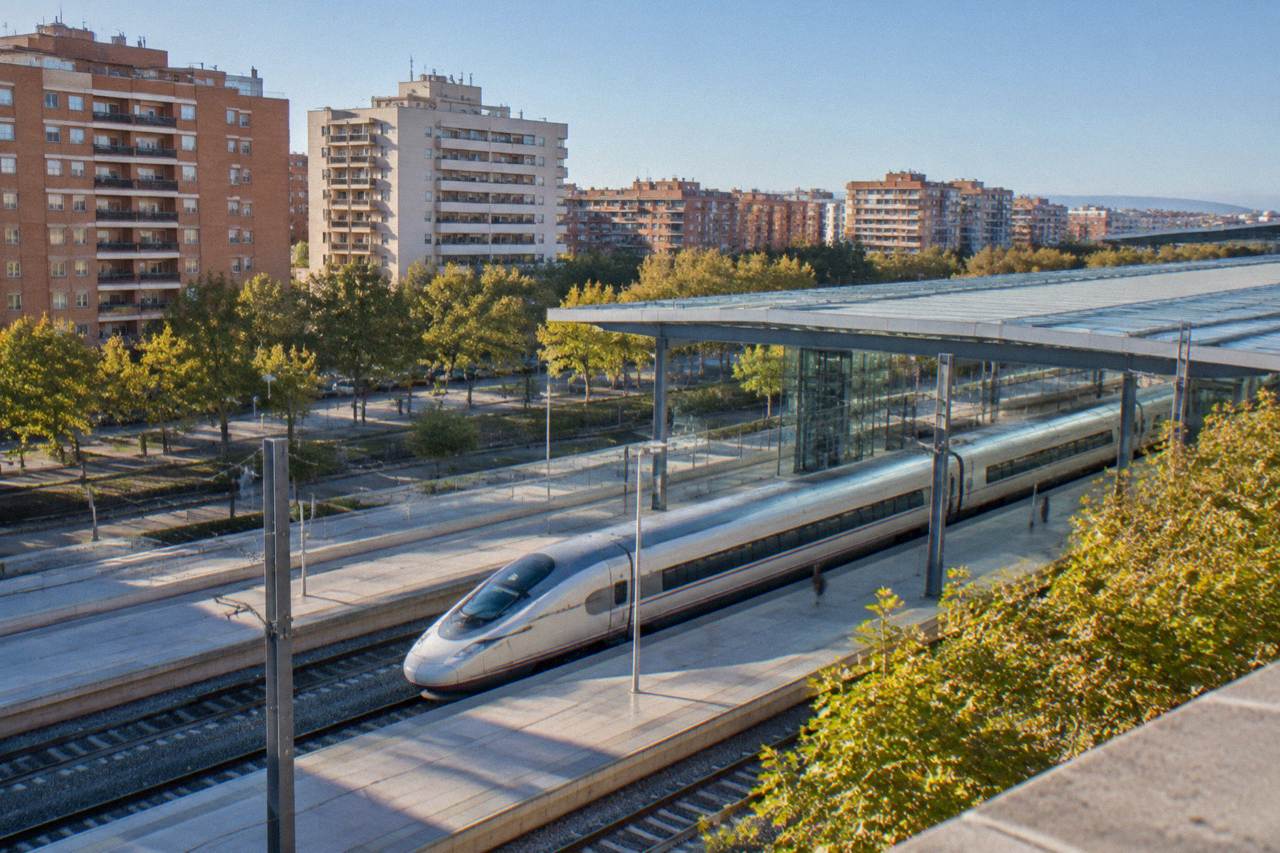
The fastest way to reach Zaragoza is by high-speed train from Madrid or Barcelona, about 1.5 to 2 hours from either city into Zaragoza-Delicias station. The city also has its own airport, Zaragoza Airport, served by line 505 bus to the centre in 25 to 35 minutes, and it is well connected by road. Check Renfe, Ouigo, iryo or Omio for live times and fares.
Zaragoza, the capital of Aragon, sits inland on the Ebro roughly halfway between Madrid and Barcelona, and that position is the whole reason the city is simple to reach. Spain's main high-speed rail corridor passes straight through it, the motorway network does the same, and the city keeps its own airport with a dedicated bus line into the centre. For the wider picture of what waits at the other end, see what to do in Zaragoza and the Zaragoza travel planning guide.
Where Is Zaragoza And How Easy Is It To Reach?
Zaragoza is the capital of Aragon, an inland city on the Ebro in north-eastern Spain, roughly halfway between Madrid and Barcelona on the country's main high-speed rail corridor. That geography makes it unusually easy to reach for a city with no coastline: the fastest trains from either neighbour take about 1.5 to 2 hours, the A-2 and AP-2 motorways pass by, and Zaragoza Airport adds a small but useful flight network. It is not in Catalonia and not a Basque city.
The city's position is not an accident. Roman Caesaraugusta grew here because the Ebro valley is the natural corridor between the interior and the Mediterranean side of the peninsula, and every transport route built since has followed the same logic. Today that means Zaragoza-Delicias, the main station, sits on the Madrid to Barcelona line, and most travellers arriving from either city never need to change trains. The where is Zaragoza guide covers the geography in more depth.
What surprises many first-time visitors is how little the city depends on tourism traffic to stay connected. Zaragoza is a working regional capital, so the trains, buses and roads run at full frequency all year, not just in holiday season. The one thing to plan around is the calendar: the best time to visit Zaragoza depends heavily on the Fiestas del Pilar, held 10 to 18 October 2026, when the city fills and accommodation needs booking well ahead.
| Route | Best option | Typical journey | Notes |
|---|---|---|---|
| Madrid to Zaragoza | High-speed train | About 1.5 to 2 hours | Check Renfe, Ouigo, iryo or Omio for live times and fares |
| Barcelona to Zaragoza | High-speed train | About 1.5 to 2 hours | Same corridor, same operators |
| Zaragoza Airport to centre | Line 505 bus | 25 to 35 minutes | 4.65 EUR single, timed to flights |
| Within the city | Bus or tram | Continuous | 1.70 EUR single, 0.55 EUR with Tarjeta Bus |
What Is The Fastest Way To Get To Zaragoza?
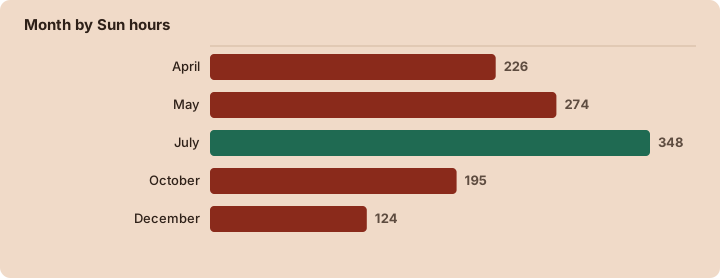
For most travellers the fastest way to get to Zaragoza is the high-speed train, about 1.5 to 2 hours from Madrid and about 1.5 to 2 hours from Barcelona into Zaragoza-Delicias. No exact minute count or fare is worth printing here, because the operators change both by date and by service, so check Renfe, Ouigo, iryo or Omio for live times and fares before booking. The station sits close to the centre and connects directly to the tram network.
Zaragoza-Delicias is a combined rail and bus interchange, which matters more than it sounds. If your onward destination is a smaller Aragonese town without a rail line, the regional bus operators leave from the same building, so a single arrival point covers almost every journey in the region. The Zaragoza-Delicias train station guide explains the layout, the tram connection and how to reach the Old Town from the platforms.
Booking strategy matters more than operator choice on this corridor. Several companies run the Madrid and Barcelona legs in competition, and the fare spread between them on the same day can be large. The practical approach is to check the aggregator first, then book direct with whichever operator comes out cheapest for your date. Full route detail for both big neighbours lives in the Madrid to Zaragoza and Barcelona to Zaragoza guides.
Once you arrive, the fastest way to waste time is to walk into the Old Town with no plan. The monumental core is compact but dense, and a first guided pass saves hours of navigation later. The Monumental Walking Tour in Old Town of Zaragoza, from $97.47 per person and rated 4.9 from 15 reviews, covers the Casco Histórico with a guide; you can also Check availability alongside the old town guide.
How Do You Fly Into Zaragoza?
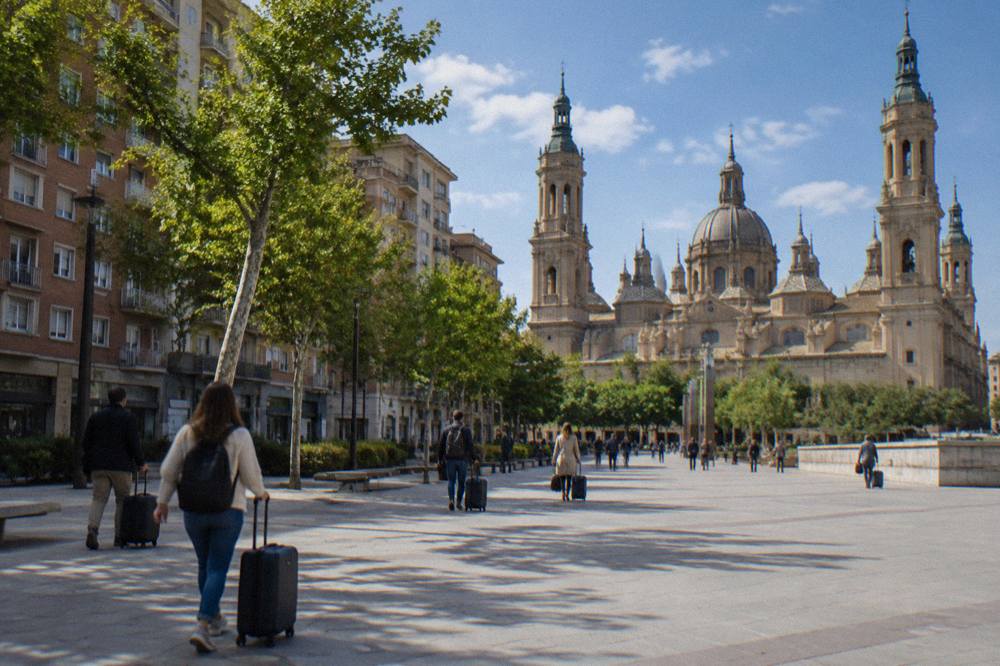
Zaragoza has its own airport, Zaragoza Airport (ZAZ), served by Ryanair, Wizz Air, Binter, Volotea, Vueling and Alba Star across 13 destinations, per the Aena airlines list. It is a small airport, so the network is limited compared with Madrid or Barcelona, but for the destinations it does cover it lands you 25 to 35 minutes from the centre by the line 505 airport bus. The flights guide covers the route detail in full.
The honest summary of flying into ZAZ is that it works brilliantly if one of the 13 destinations happens to be your origin, and not at all otherwise. The airport's strength is low-cost coverage of specific routes rather than breadth. If your home airport is not on the list, the usual play is to fly into Madrid or Barcelona and take the high-speed train onward, which adds about 1.5 to 2 hours of rail time to either arrival.
The Zaragoza airport guide covers the terminal, the airlines and the practicalities of a small-airport arrival, and the flights to Zaragoza guide lists the routes. One detail worth knowing before you land: the airport bus accepts bank card and mobile payment, so you do not need cash for the transfer into the city.
If your flight lands in the morning, the afternoon is enough for a proper first look at the city. The Zaragoza Monumental Sightseeing Tour, a 105-minute introduction from $10.41 per person, rated 4.4 from 36 reviews, is built exactly for a first day: it sweeps the major monuments quickly and leaves you oriented for everything that follows.
How Do You Get From Zaragoza Airport To The City Centre?
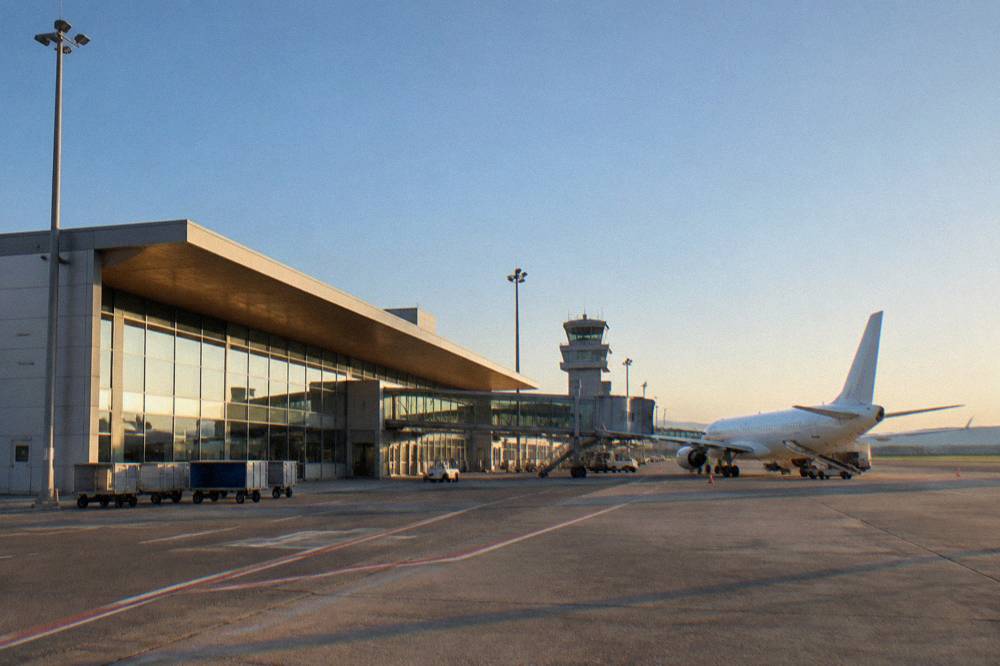
The airport bus is line 505, not the urban 44, costing 4.65 EUR single or about 2.25 EUR with a Lazo or Ciudadana card, taking 25 to 35 minutes into the centre and timed to flight arrivals. A taxi covers the same run in about 15 to 20 minutes. The dedicated airport transfer guide covers where the bus stops and how the card discount works.
Two mistakes catch visitors at this airport. The second is assuming the bus runs on a fixed timetable: it is coordinated with flight arrivals, so it waits for the flights rather than leaving on the half hour.
The fare table below is the practical core of the transfer. The card discount is worth having if you will use the city's transport more than once, because the same Lazo and Ciudadana cards work on the urban network too.
| Option | Fare | Journey | Notes |
|---|---|---|---|
| Line 505 airport bus, single | 4.65 EUR | 25 to 35 min | Timed to flights, card and mobile payment accepted |
| Line 505 with Lazo/Ciudadana card | About 2.25 EUR | 25 to 35 min | Same service, discounted fare |
| Taxi | Metered | 15 to 20 min | Rank at the terminal |
From the city-centre stop, the tram and urban bus network takes over, and the Old Town is walkable from most central stops. The Zaragoza airport to city centre guide and the getting around Zaragoza guide cover the tram lines, the bus network and the Tarjeta Bus in detail.
How Do You Get To Zaragoza By Train?
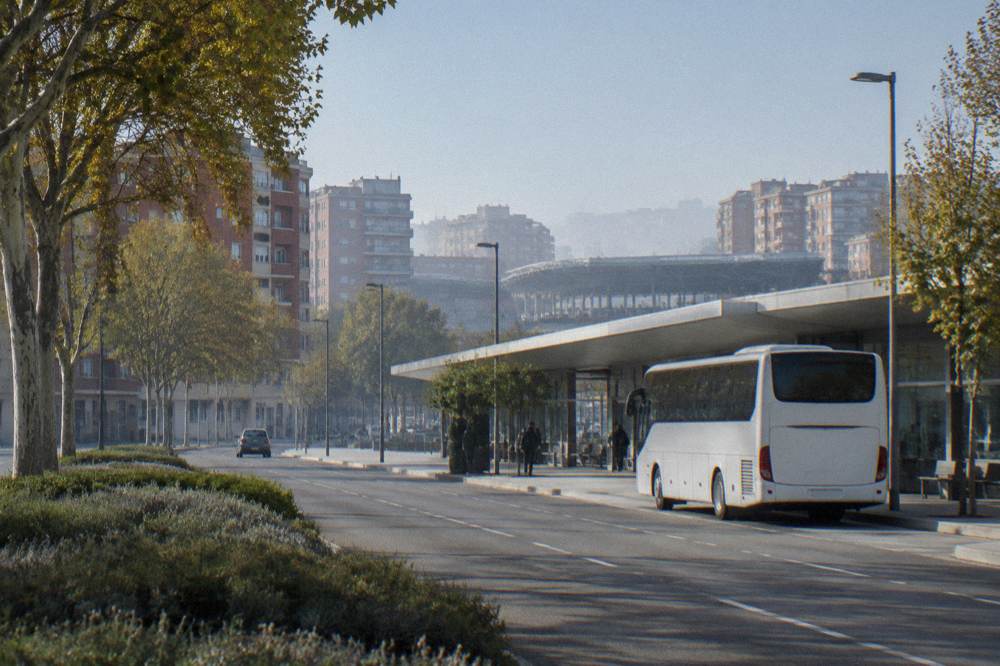
Zaragoza-Delicias is the main station, on the Madrid to Barcelona high-speed corridor, with the fastest services from either city taking about 1.5 to 2 hours. No exact timetable or fare is printed here because none was read on the operators' own pages: check Renfe, Ouigo, iryo or Omio for live times and fares. The station is also the city's main bus interchange, and tram line 1 connects it to the centre.
The station itself is one of the better arrivals in regional Spain. It was built for the 2008 Expo and it still feels new, with the bus station in the same complex and the tram stop outside. From the platforms to the Plaza del Pilar end of the Old Town is a short tram ride or a manageable walk, and luggage storage exists for travellers making a same-day stop between Madrid and Barcelona, which is a genuinely popular plan given the timings.
That same-day plan deserves a mention. Because the city sits on the corridor, a long layover between Madrid and Barcelona turns easily into half a day in Zaragoza: leave the bags at the station, tram into the centre, see the Basílica del Pilar and the Aljafería, and be back on a train by evening. The Zaragoza 1 day itinerary is written for exactly that visitor.
| Arriving from | Station | Typical fastest time | Onward connection |
|---|---|---|---|
| Madrid | Zaragoza-Delicias | About 1.5 to 2 hours | Tram line 1 to centre |
| Barcelona | Zaragoza-Delicias | About 1.5 to 2 hours | Tram line 1 to centre |
| Regional bus routes | Same complex | Varies | Shared interchange |
One seasonal note: if you are timing a train arrival around the Fiestas del Pilar, 10 to 18 October 2026, expect the station and the trams to be at their busiest of the year. The Fiestas del Pilar guide covers the programme, and the Ofrenda de Flores guide explains the 12 October flower offering that draws the biggest crowds.
Can You Drive To Zaragoza?
Yes, driving to Zaragoza is straightforward: the city sits on the A-2 and AP-2 motorway corridor between Madrid and Barcelona, with connections north to the Pyrenees and south to Teruel. The one rule that matters before you enter the centre is the ZBE, the low emission zone covering the Casco Histórico, active Monday to Friday 08:00 to 20:00 with sanctions since 12 December 2025, requiring a DGT environmental label on the vehicle.
The ZBE is the detail that catches out drivers who last visited years ago. Vehicles without a DGT environmental label are restricted from the historic core during those hours, while B, C, ECO and 0-labelled vehicles are allowed. If you enter by mistake there is a 15-minute grace period to leave the zone, per the city's own FAQ. Outside those hours and outside the zone, driving in is unremarkable for a city of this size.
Parking is the other half of the question, and the Zaragoza car rental and parking guide covers the options, from central car parks to peripheral ones with tram connections. The honest advice for most visitors is that a car is useful for the day trips and unnecessary in the city itself, because the centre is compact and the tram reaches almost everything.
| ZBE rule | Detail |
|---|---|
| Zone | Casco Histórico, first phase |
| Hours | Monday to Friday, 08:00 to 20:00 |
| Sanctions | Active since 12 December 2025 |
| Allowed | DGT labels B, C, ECO and 0 |
| Grace period | 15 minutes if entered by mistake |
Do You Need A Car Once You Have Arrived?
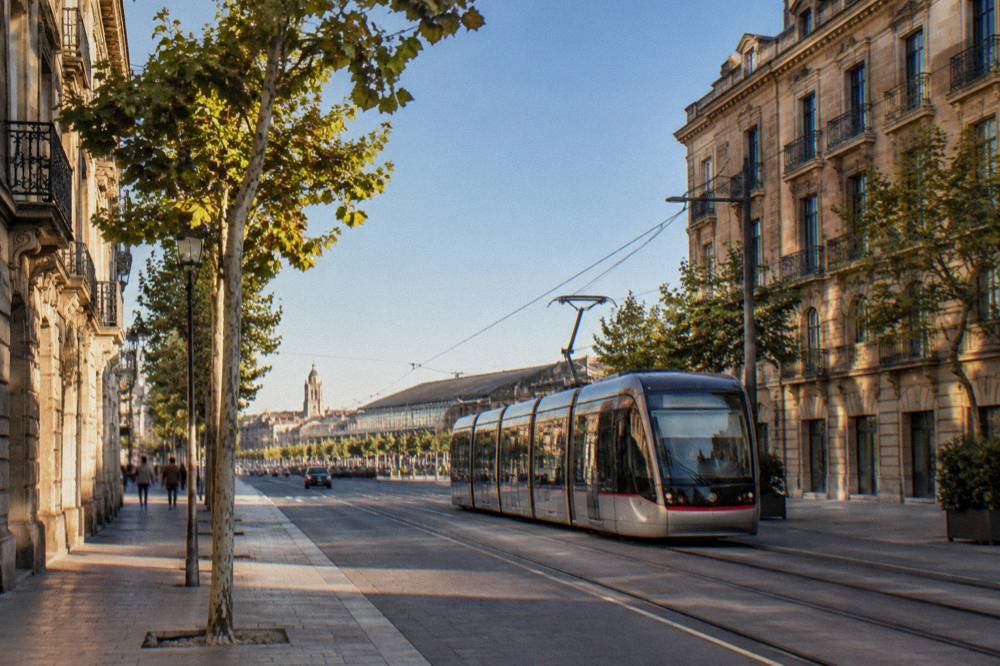
No, you do not need a car in Zaragoza itself: the urban bus and tram single is 1.70 EUR, dropping to 0.55 EUR with a Tarjeta Bus that costs 7 EUR and works on both, while the Bizi bike share offers a day pass at 1 EUR plus 0.50 EUR for the first 30 minutes of each trip. The tourist bus, at 10 EUR for 24 hours of hop-on hop-off across 16 stops, covers the spread-out sights.
The tram is the backbone of the network and the part visitors use most, because line 1 links Zaragoza-Delicias with the centre and the Expo area. The full fare detail, including night lines at 1.00 EUR, is in the getting around Zaragoza guide. The Bizi bike share suits the flat riverside stretches, and the Ebro river walk is the obvious first ride.
A car earns its keep only when you leave the city. The day-trip destinations around Zaragoza, from Monasterio de Piedra to Albarracín and the Pyrenean valleys, mostly rely on road access, and the Pyrenees day trip guide and the individual destination pages cover which of those are feasible by public transport. Within Aragon, the regional bus network from Delicias reaches more of them than visitors expect.
| Transport | Fare | Notes |
|---|---|---|
| Bus or tram single | 1.70 EUR | No transfer included |
| Night lines | 1.00 EUR | Urban night buses |
| Tarjeta Bus trip | 0.55 EUR | Card costs 7 EUR, valid on bus and tram |
| Bizi day pass | 1 EUR fixed | Plus 0.50 EUR per trip up to 30 minutes |
| Tourist bus | 10 EUR | 24 hours, 16 stops, 90-minute loop, cash only on board |
For the Aljafería in particular, the palace sits slightly west of the Old Town and is one of the sights where a guided visit repays the small premium: the Guided Tour of the Aljafería Palace in Spanish, from $25.23 per person and rated 4.7 from 23 reviews, includes the ticket, and the Aljafería Palace guide covers what you will see inside.
What Entry Rules Apply When You Travel To Spain?
The Entry Exit System, EES, has been fully operational at all external Schengen borders since 10 April 2026, so non-EU visitors entering Spain now have biometrics, fingerprints and a facial image, recorded at the border. ETIAS, the travel authorisation for visa-exempt nationals, has not started and is not accepting applications, with an expected launch in the last quarter of 2026 or later. Check the official EU border pages before you travel.
For most visitors from the EU nothing changes at all: no border checks on arrival from another Schengen country, and no authorisation needed. For visitors from outside the EU, the practical effect of EES is a slightly longer first entry, because the biometric capture happens at the port of entry rather than in advance. It is not a visa and it is not something you apply for.
ETIAS is the one to watch rather than worry about. Until it starts accepting applications there is nothing to do, and any site selling an ETIAS authorisation today is selling something that does not exist. When it does launch it will be a small online fee and form for visa-exempt nationals, not a visa.
| Rule | Status | What It Means For You |
|---|---|---|
| EES | Live since 10 April 2026 | Biometrics recorded at first entry for non-EU short stays |
| ETIAS | Not started | No applications accepted, launch expected late 2026 or later |
| EU and Schengen citizens | Unaffected | No border checks on internal arrivals |
| Tourist tax | None in Aragon | The regional government ruled one out in September 2026 |
That last row is a genuine Aragon advantage over some other Spanish destinations: there is no tourist tax implemented or planned for the region, per the Aragon government's own September 2026 position. The Zaragoza cost and budget guide builds the full picture of what a visit costs once you are there.
When Is The Best Time To Make The Journey?
October is the most atmospheric month to arrive, because the Fiestas del Pilar run from 10 to 18 October 2026, but AEMET's 1981 to 2010 normals for the Zaragoza Aeropuerto station show the whole shoulder season works: April averages 13.8 C with 39 mm of rain, May 18 C with 44 mm, and October 16.2 C with 36 mm. July and August are the driest months at 17 mm each, and July the sunniest at 348 hours.
The numbers behind that summary come from one source and one window: AEMET's 1981 to 2010 climate normals for the Zaragoza Aeropuerto station, the only series the station page publishes. They describe a dry continental climate, inland and far from any coast, with a genuinely hot summer, a mean July maximum of 32.4 C, and mild springs and autumns. The Zaragoza weather guide unpacks the full table.
For a first visit, the choice is between festival October, when the Ofrenda de Flores on 12 October brings close to a hundred thousand participants into the centre, and the quieter months either side. Winter is workable too: December averages 7 C with only 21 mm of rain, and the Christmas in Zaragoza guide covers the lights, which switch on from 20 November 2026. Spring brings Semana Santa, held 21 to 28 March 2027.
| Month | Mean C | Mean max C | Rain mm | Sun hours |
|---|---|---|---|---|
| April | 13.8 | 19.6 | 39 | 226 |
| May | 18.0 | 24.1 | 44 | 274 |
| July | 25.3 | 32.4 | 17 | 348 |
| October | 16.2 | 21.4 | 36 | 195 |
| December | 7.0 | 10.8 | 21 | 124 |
All five rows are 1981 to 2010 averages from the Zaragoza Aeropuerto station, and the year as a whole brings 322 mm of rain across 51.1 days of 1 mm or more, which is drier than most visitors expect.
Where Should You Stay On Arrival?
The Old Town puts you walking distance from the Basílica del Pilar, La Seo and the Aljafería's tram stop, and it is where most first-time visitors should base themselves; the Centro area around Paseo de la Independencia adds the shopping streets and direct tram access, while the Delicias district suits rail arrivals who want to be near the station. The where to stay guide maps the areas in full.
The choice matters less in Zaragoza than in bigger cities, because the distances are short and the tram covers the main axes. What does vary is character: the Casco Histórico is atmospheric but can be loud during the Fiestas del Pilar, the Centro is the practical middle ground, and Delicias trades atmosphere for a five-minute walk to your return train. Budget travellers have real options too, covered in the Zaragoza hostels and budget stays guide, and the hotel shortlist is in the best hotels in Zaragoza guide.
One practical note if you are driving in: the ZBE covers the Casco Histórico, so a hotel inside the zone needs a DGT-labelled car and a parking plan. Hotels just outside the zone avoid the question entirely, and the car rental and parking guide lists the car parks that work for each area. The where to stay in Zaragoza guide has the full neighbourhood breakdown.
Common Questions About Getting To Zaragoza
How do you get to Zaragoza from Madrid?
By high-speed train from Madrid to Zaragoza-Delicias, about 1.5 to 2 hours for the fastest services. Check Renfe, Ouigo, iryo or Omio for live times and fares, because no fixed timetable or fare applies. The Madrid to Zaragoza guide covers the route in full.
How do you get to Zaragoza from Barcelona?
By high-speed train from Barcelona to Zaragoza-Delicias, about 1.5 to 2 hours for the fastest services. Check Renfe, Ouigo, iryo or Omio for live times and fares. The Barcelona to Zaragoza guide covers the route in full.
Do you need a car in Zaragoza?
Not in the city itself. The bus and tram single is 1.70 EUR, or 0.55 EUR with a Tarjeta Bus costing 7 EUR, and the centre is walkable. A car is useful for day trips into Aragon, and the Zaragoza car rental and parking guide covers where to leave it.
Does Zaragoza have a low emission zone?
Yes. The ZBE Casco Histórico is active Monday to Friday from 08:00 to 20:00, with sanctions since 12 December 2025. Vehicles need a DGT environmental label, and there is a 15-minute grace period if you enter by mistake.
However you arrive, by rail along the corridor, by air into a small and efficient airport, or by road with the ZBE rules in mind, Zaragoza rewards the journey with one of the most monumental old towns in inland Spain, and the Zaragoza Travel Guide covers everything waiting at the other end.