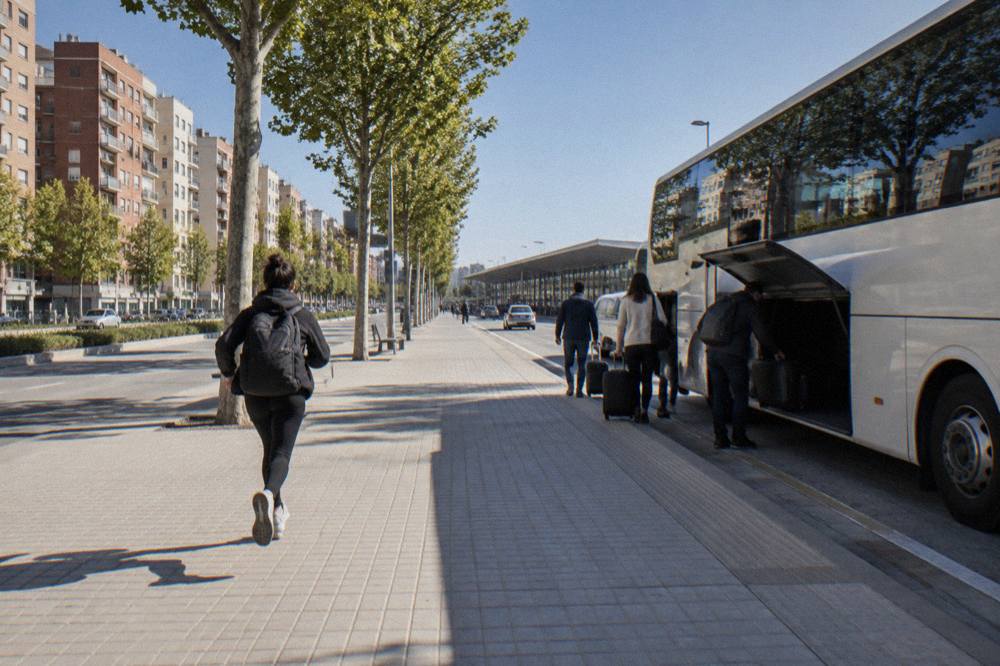
Zaragoza Airport
Zaragoza Airport (ZAZ) is the small gateway to Zaragoza, the capital of Aragon in northern Spain, and this guide covers the airlines that serve it, the line 505 bus into the city, taxi times, costs, and how to plan your first day.
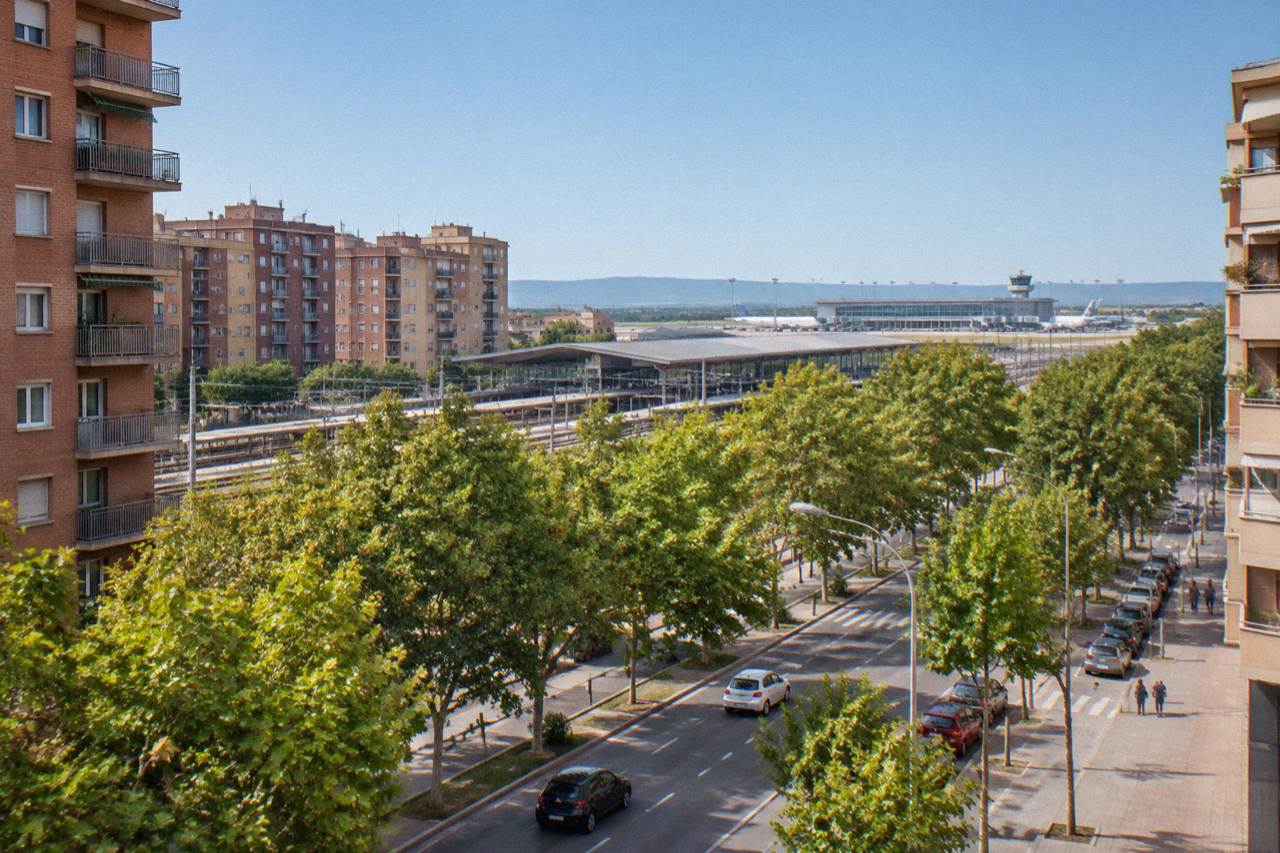
Short answer
Zaragoza Airport sits about 25 to 35 minutes from the city centre by the line 505 airport bus, which costs 4.65 EUR single or about 2.25 EUR with a Lazo card. Ryanair, Wizz Air, Binter, Volotea, Vueling and Alba Star serve the airport across 13 destinations as of 30 September 2026.
Zaragoza Airport, coded ZAZ, is the small commercial airport serving Zaragoza, the capital of Aragon, an inland city on the Ebro in north-eastern Spain. It is not a hub and it does not pretend to be one: Aena's airline list for the airport, dated 30 September 2026, names six carriers, Ryanair, Wizz Air, Binter, Volotea, Vueling and Alba Star, flying a total of 13 destinations. What the airport offers instead is proximity. The runway sits close to the city, the line 505 bus covers the distance in about 25 to 35 minutes, and a taxi takes 15 to 20 minutes, so a traveller who lands at ZAZ can be standing in front of the Basílica del Pilar within the hour. This guide from Zaragoza Travel Guide covers the airlines, the transfer options, the costs, and what to do with the hours after you land.
Which Airlines Fly To Zaragoza Airport?
Six airlines served Zaragoza Airport as of 30 September 2026, according to Aena's published airline list: Ryanair, Wizz Air, Binter, Volotea, Vueling and Alba Star, together covering 13 destinations. That is a small network by Spanish standards, built around low-cost and leisure routes rather than a hub-and-spoke schedule, so the airport works best for travellers whose home city happens to be on the route map rather than for everyone.
The list matters more than it looks. Zaragoza is the capital of a region that punches above its weight in tourism, yet its airport has always lived in the shadow of the two giants either side of it: Madrid and Barcelona, both reachable by high-speed train in about 1.5 to 2 hours from Zaragoza-Delicias. The airlines that do fly here serve a market that wants direct, cheap access to Aragon rather than a connection through a capital.
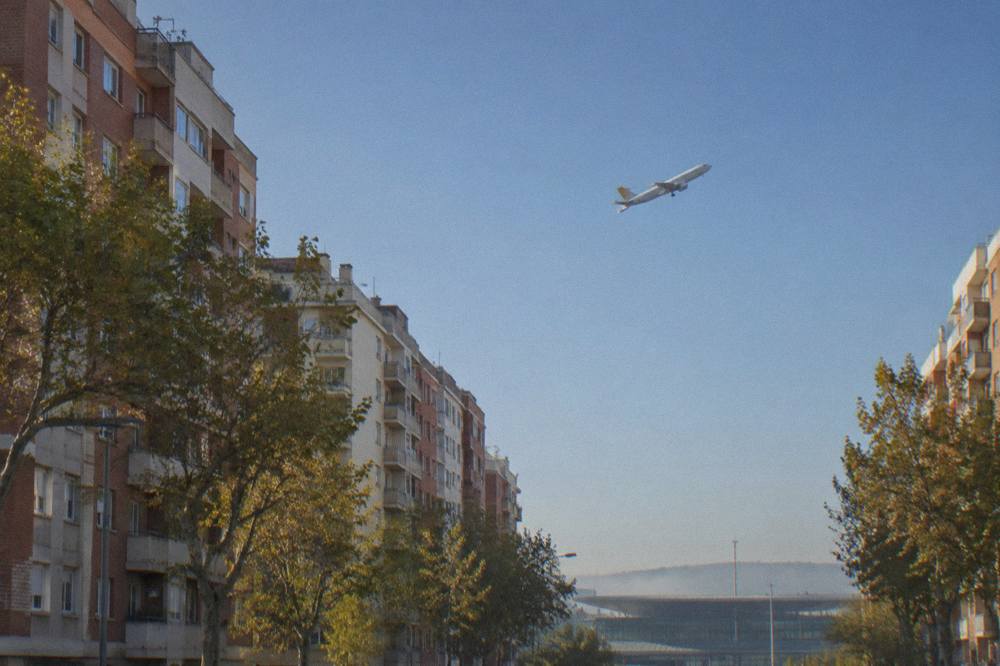
Route networks at small airports shift season by season, and the honest instruction is the practical one: check the operator's route map before booking a flight, and if your city is not on it, the train is the better plan. The dedicated flights to Zaragoza page covers the booking side in more depth.
| Airline | Status at ZAZ (30 September 2026) |
|---|---|
| Ryanair | Operating, per Aena's airline list |
| Wizz Air | Operating, per Aena's airline list |
| Vueling | Operating, per Aena's airline list |
| Volotea | Operating, per Aena's airline list |
| Binter | Operating, per Aena's airline list |
| Alba Star | Operating, per Aena's airline list |
How Do You Get From Zaragoza Airport To The City Centre?
The airport bus is line 505, which takes about 25 to 35 minutes into the centre, costs 4.65 EUR for a single ticket or about 2.25 EUR with a Lazo card, and is timed to flight arrivals rather than running a fixed timetable. A taxi covers the same journey in 15 to 20 minutes, though no fare figure is published for that ride, and the bus is the option almost every visitor uses.
The line number matters because two other numbers circulate in traveller discussions and both are wrong: 501 and 44. The 44 is an urban city bus route, not the airport service. Line 505 is the airport connection, and its departure times are coordinated with flight schedules, which means there is no fixed timetable worth printing here. The timetable is published by Avanza and the Consorcio de Transportes de Zaragoza, and those are the places to confirm times before you fly, because a flight-timed service shifts with the seasons.
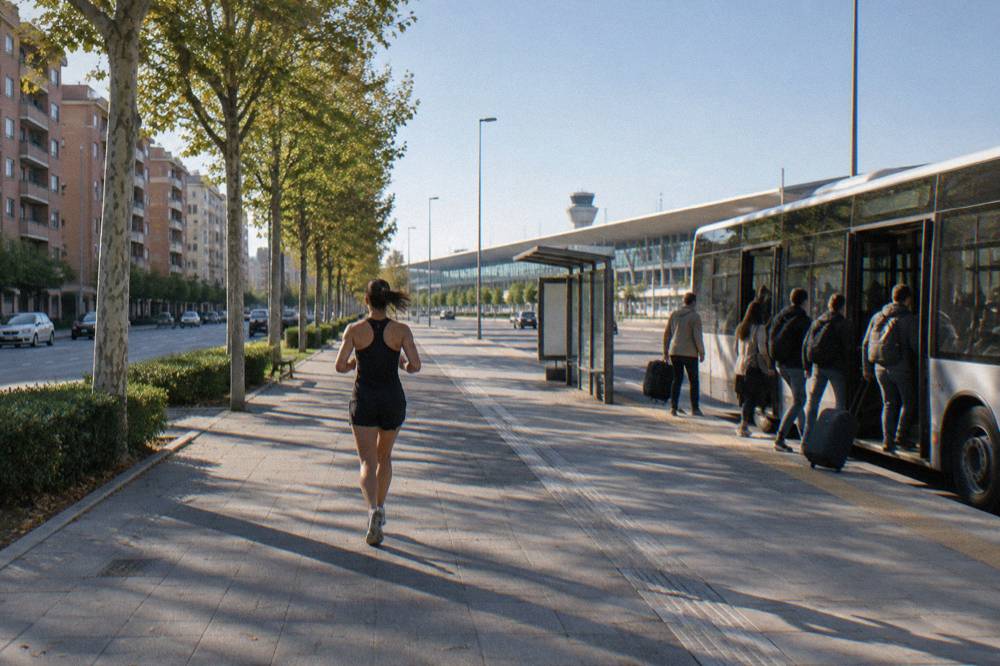
Payment is simple. The single fare is 4.65 EUR, and passengers holding a Lazo card pay about 2.25 EUR, figures reported by a local transport information site, so treat them as approximate and confirm the current fare on the operator's own page. The bus is not the only way to arrive, but it is the one with a published price attached to the exact journey, and the full step-by-step version of the transfer, including where the bus stops, lives on the Zaragoza airport to city centre page.
| Transfer | Journey time | Cost | Notes |
|---|---|---|---|
| Line 505 airport bus | About 25 to 35 minutes | 4.65 EUR single, about 2.25 EUR with Lazo card | Timed to flights, confirm times with Avanza or the Consorcio |
| Taxi | 15 to 20 minutes | No published fare | Rank at the terminal, no fixed price stated |
| Rental car | Not stated | Varies by operator | See the car rental and parking guide for driving in the city |
Once you are in the centre, the city is compact. The urban bus and tram single fare is 1.70 EUR, or 0.55 EUR with a Tarjeta Bus, per the 2026 Avanza fare table, and the getting around Zaragoza guide covers the network in detail. If you plan to drive instead, the Zaragoza car rental and parking page covers where to leave the car, including the low-emission zone rules in the historic centre.
Should You Fly To Zaragoza Or Take The Train From Madrid Or Barcelona?
Flying into ZAZ makes sense when a listed airline flies your route directly; otherwise the high-speed train is usually the better answer, because Zaragoza-Delicias sits about 1.5 to 2 hours from both Madrid and Barcelona by AVE, and a flight that requires a connection loses that time before the plane even boards. The decision is a route-map question, not a preference question.
The arithmetic is straightforward. Madrid and Barcelona operate enormous hub airports with global reach, and Zaragoza's own airport flies 13 destinations with six carriers. If your origin city is one of those 13, ZAZ saves you a transfer and a second security line. If it is not, you will be flying into Madrid or Barcelona and riding the train anyway, and the train stations in both capitals connect to the airports by local transport.
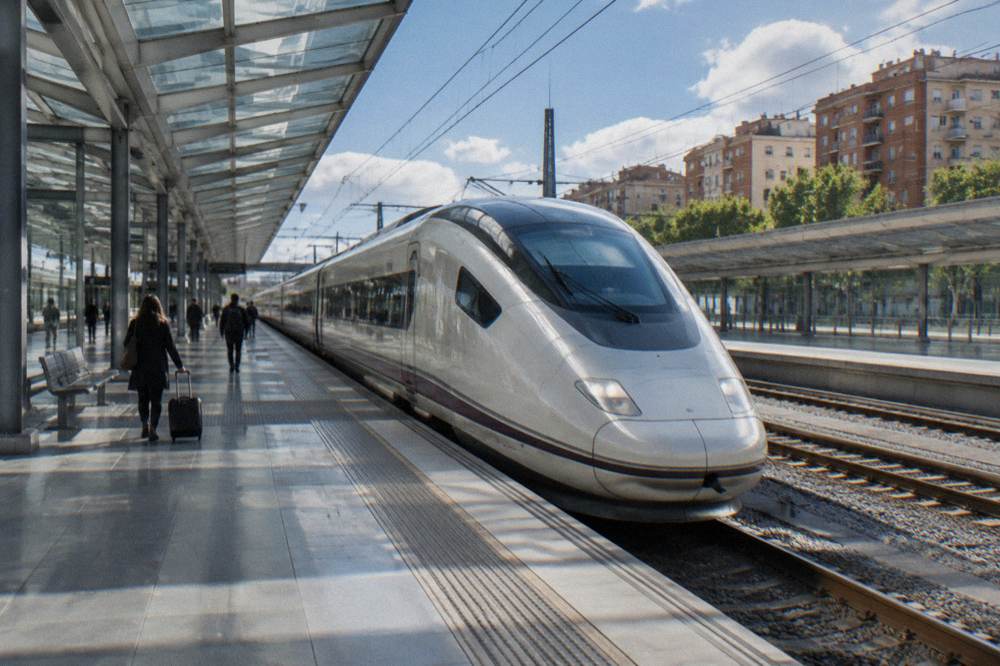
The rail comparison pages carry the detail: Madrid to Zaragoza and Barcelona to Zaragoza each break down the operators and the booking approach, and the Zaragoza-Delicias train station guide covers what the station itself offers, including onward tram connections into the centre. For the wider picture of every arrival route into the city, the how to get to Zaragoza page is the parent guide.
| Arrival route | Realistic time | Best for |
|---|---|---|
| Direct flight into ZAZ, then line 505 bus | Flight plus about 25 to 35 minutes transfer | Origins on the 13-destination route map |
| Fly to Madrid, then AVE to Zaragoza-Delicias | Flight plus about 1.5 to 2 hours on the train | Origins without a direct ZAZ flight |
| Fly to Barcelona, then AVE to Zaragoza-Delicias | Flight plus about 1.5 to 2 hours on the train | Origins without a direct ZAZ flight |
What Should You Do On Your First Day In Zaragoza?
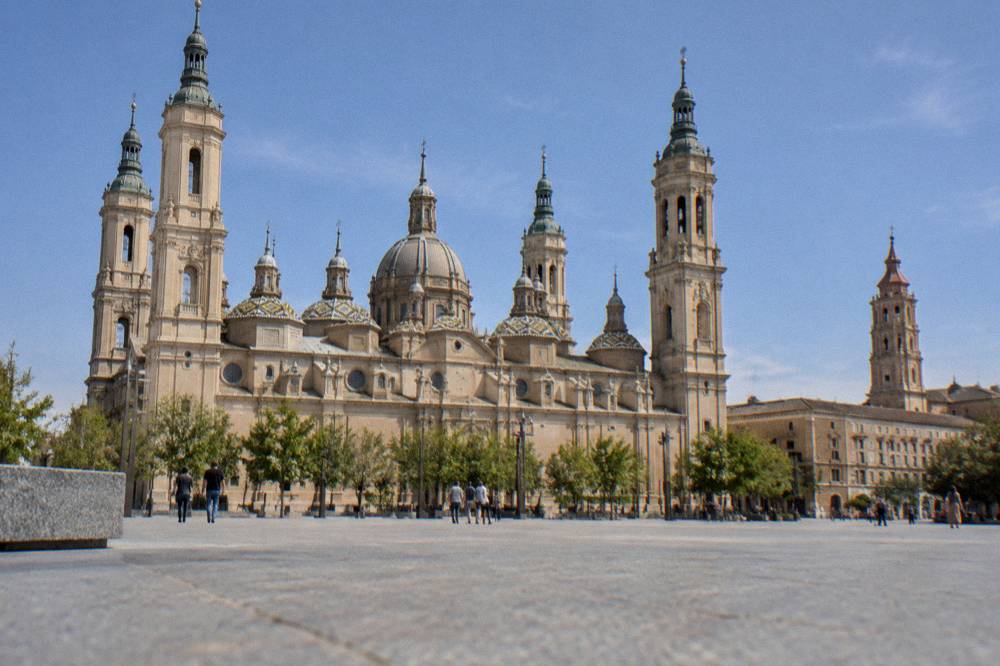
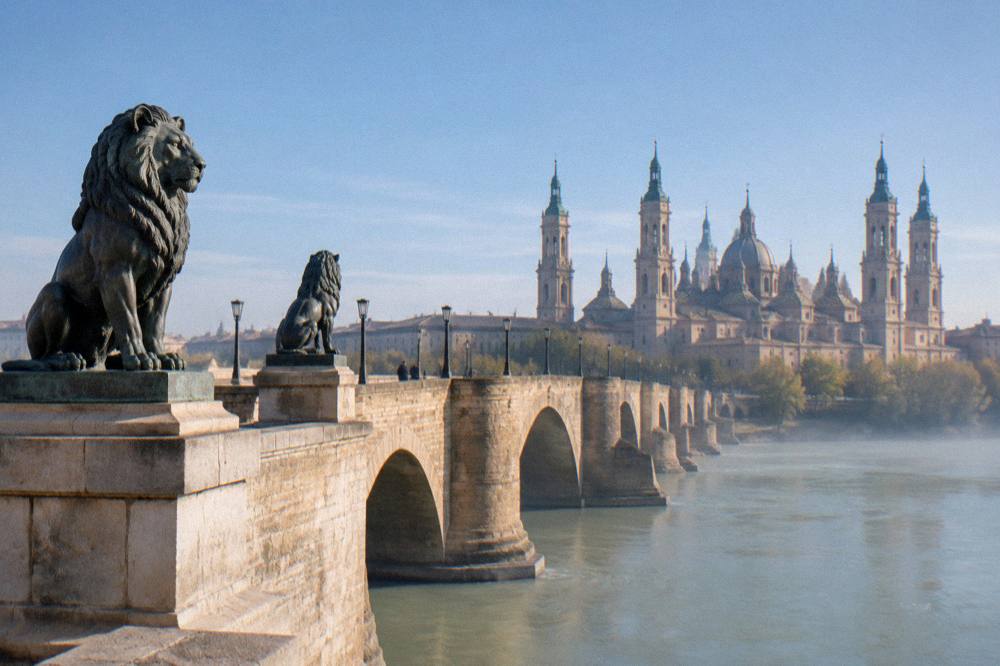
Start with the old district: the Basílica del Pilar, La Seo, the Aljafería and the Puente de Piedra all sit within a walkable core, and a guided introduction of the old town, roughly 2.5 hours on the Historical Tour of the Old District, from $106.92 per person and rated 5 from 14 reviews, is the fastest way to place every one of them in context before you explore on your own.
The logic of a first day is simple. Zaragoza's monumental core is unusually dense: the two great churches face each other across the Plaza del Pilar, the Roman ruins of Caesaraugusta sit beneath the streets between them, and the Aljafería, the Islamic palace that is one of the city's great monuments, lies a short tram ride west. A traveller who walks this without a guide sees beautiful buildings; a traveller who walks it with one learns which wall is Roman, which tower is Mudéjar and why the city's four-cultures story, Roman, Visigothic, Moorish and Christian, is visible in the stonework.
If a fixed itinerary appeals less than flexibility, the Zaragoza one day itinerary lays out the same core as a self-guided sequence, and the things to do in Zaragoza index lists everything worth planning around. Two closures matter for autumn 2026 planning: the Museo de Zaragoza's central building at Plaza de los Sitios is closed for Ministry of Culture works with no reopening date, and the Museo Pablo Gargallo is temporarily closed, so neither belongs on a first-day list. The Museo Goya, by contrast, reopens on 9 October 2026 after its renovation, Tuesday to Saturday 10:00 to 20:00 and Sundays 10:00 to 14:00, closed Mondays, with its admission price not yet published.
When Is The Best Time To Fly Into Zaragoza?
October is the standout month if you want the city at its most alive, because the Fiestas del Pilar run from 10 to 18 October 2026 with the Ofrenda de Flores on 12 October, and AEMET's 1981 to 2010 normals for the Zaragoza Aeropuerto station put October at a mean of 16.2 C with 36 mm of rain; spring, from March to May, is the quieter alternative, with the same normals showing May as the wettest month at 44 mm.
The climate table deserves reading rather than generalising. Zaragoza is inland, dry and continental, with no sea to moderate it: July carries the highest mean maximum at 32.4 C and the most sun at 348 hours, while July and August tie as the driest months at 17 mm each. Winter is real, with January means of 6.6 C and 2.7 C overnight lows, and 23.1 frost days across the year at the airport station. None of that is severe, but it means the packing list changes with the season in a way coastal Spanish cities never demand.
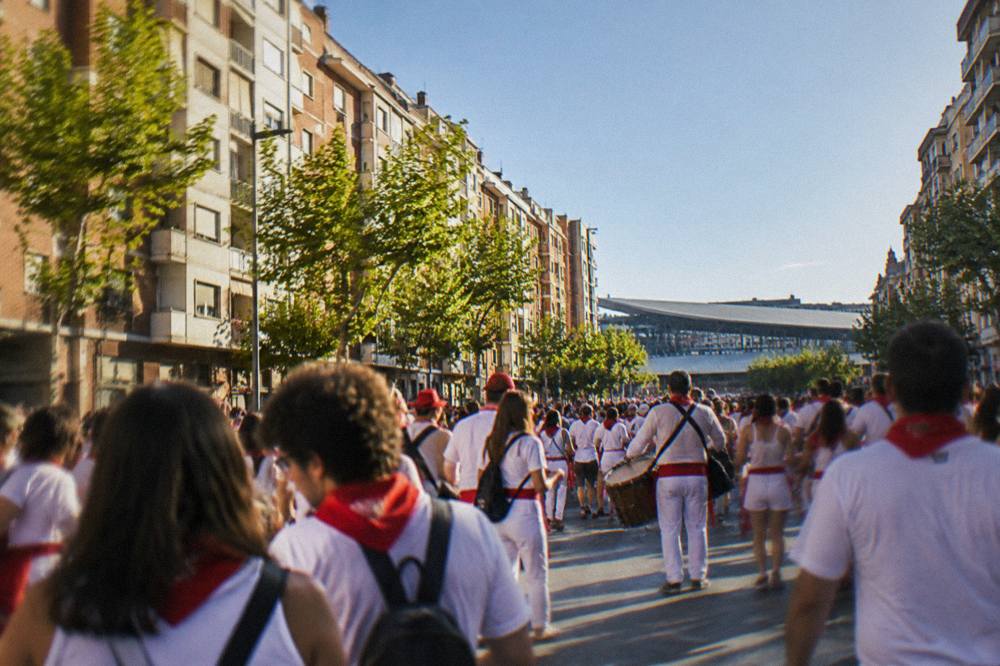
The timing decision is really a festival decision. The Fiestas del Pilar are the largest event in Aragon's calendar, and the Ofrenda de Flores, in which hundreds of groups in regional dress bring flowers to the Plaza del Pilar, draws a crowd that fills the centre, so book accommodation early for those dates. The Fiestas del Pilar and Ofrenda de Flores guides cover the programme, and the best time to visit Zaragoza and Zaragoza weather pages carry the seasonal comparison in full.
| Month (AEMET 1981-2010 normals, Zaragoza Aeropuerto station) | Mean C | Mean max C | Rain mm |
|---|---|---|---|
| January | 6.6 | 10.5 | 21 |
| April | 13.8 | 19.6 | 39 |
| July | 25.3 | 32.4 | 17 |
| October | 16.2 | 21.4 | 36 |
How Much Does A Trip To Zaragoza Cost After You Land?
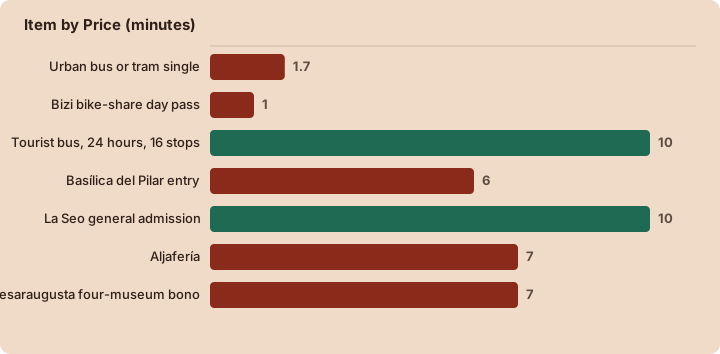
A budget traveller can move through Zaragoza cheaply by Spanish-city standards: the urban bus and tram single is 1.70 EUR, the Bizi bike-share day pass is 1 EUR plus 0.50 EUR for the first 30 minutes of each trip, the hop-on hop-off tourist bus is 10 EUR for 24 hours across 16 stops, and Aragon has no tourist tax, a measure the regional government explicitly ruled out in September 2026.
Entry costs at the big sights are equally concrete. Entering the Basílica del Pilar is free, with the tower viewpoint at 6 EUR for an adult; La Seo charges 10 EUR general admission including the Museo de Tapices; and the Aljafería is 7 EUR general or 9 EUR with a guided tour, free on the first and third Sunday and Monday of each month. The Caesaraugusta Roman museums run a four-museum bono at 7 EUR, or 5 EUR reduced. Those figures, with their free days, are the difference between a 30 EUR sightseeing day and a 60 EUR one.
| Item | Price |
|---|---|
| Urban bus or tram single | 1.70 EUR, or 0.55 EUR with Tarjeta Bus |
| Bizi bike-share day pass | 1 EUR plus 0.50 EUR for the first 30 minutes of each trip |
| Tourist bus, 24 hours, 16 stops | 10 EUR |
| Basílica del Pilar entry | Free, tower viewpoint 6 EUR adult |
| La Seo general admission | 10 EUR, includes Museo de Tapices |
| Aljafería | 7 EUR general, 9 EUR guided, free 1st and 3rd Sunday and Monday |
| Caesaraugusta four-museum bono | 7 EUR, 5 EUR reduced |
| Tourist tax | None in Aragon |
The Zaragoza cost and budget page expands all of this into a daily budget, and the free things to do in Zaragoza guide shows how much of the city costs nothing at all, from the Puente de Piedra to the Centro de Historias. For evenings, the Zaragoza food guide covers where the same money goes further.
Where Should You Stay After Landing In Zaragoza?
The historic centre is the practical first choice for a short stay, because it puts the Basílica del Pilar, La Seo and the tapas streets within walking distance of each other, and the tram line connects it to Zaragoza-Delicias in one ride; the Delicias district around the station suits travellers arriving by train and moving on quickly, while the area around Paseo de la Independencia balances price and position for longer visits.
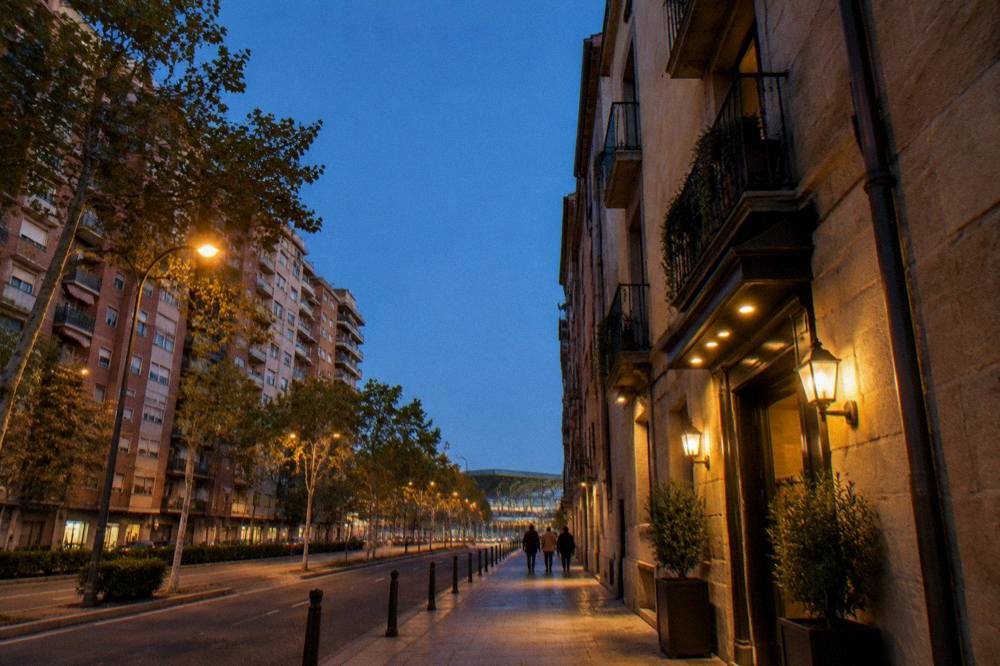
The decision usually comes down to how much walking you want to do. The old town puts everything monumental at your feet but fills during the Fiestas del Pilar, when the whole city centre becomes a festival ground. The Delicias district, covered in the Delicias district guide, trades atmosphere for convenience, and the where to stay in Zaragoza page compares every area properly, with the best hotels in Zaragoza and Zaragoza hostels and budget stays guides carrying the specific picks.
Can You Explore Zaragoza Without Booking Anything In Advance?
Yes, largely: the tapas bars, the river walk along the Ebro, the Puente de Piedra and the free entry to the Basílica del Pilar all need no booking at all, and the city's free walking tours, including the Free Tour through the Historical Center of Zaragoza on GuruWalk, tip-based and rated 4.15 from 122 reviews, run without a fixed price, so a spontaneous arrival works, though the Aljafería and the Pilar tower are easier with tickets sorted ahead.
The free-walk scene deserves a specific mention because it is unusual. GuruWalk, the platform that hosts these pay-what-you-want walks, is the one booking service this site names openly, precisely because its model is the opposite of a paid tour: the guru leads, you tip what the walk was worth to you, and the individual guides, not a corporation, set the tone. The Free Tour through the Historical Center of Zaragoza is one of three free walks in the city, and it suits a first evening when the itinerary is still vague.
For travellers who prefer structure, the guided options span everything from a 105-minute monumental introduction at $10.41 per person to a five-hour complete tour with wine and tapas at $212.71 per person, and the Zaragoza tours guide sorts them by type. The Zaragoza travel planning page then fits the pieces into a whole trip, whether you are coming for two days or a week.
Common Questions About Zaragoza Airport
How far is Zaragoza Airport from the city centre?
The line 505 airport bus covers the distance in about 25 to 35 minutes, and a taxi takes 15 to 20 minutes. The bus is timed to flight arrivals, so confirm your departure with Avanza or the Consorcio de Transportes de Zaragoza before you fly.
How much does the Zaragoza Airport bus cost?
A single ticket on line 505 costs 4.65 EUR, or about 2.25 EUR with a Lazo card, figures reported by a local transport information site, so check the current fare on the operator's page before travelling.
Which airlines fly to Zaragoza Airport?
Aena's list dated 30 September 2026 names Ryanair, Wizz Air, Binter, Volotea, Vueling and Alba Star, serving 13 destinations in total. Check the current route map before booking, as networks at small airports change with the seasons.
Is it better to fly to Zaragoza or take the train from Madrid or Barcelona?
If your origin city is on ZAZ's 13-destination route map, flying direct saves a connection. If it is not, flying into Madrid or Barcelona and taking the high-speed train, about 1.5 to 2 hours to Zaragoza-Delicias from either, is usually the faster and simpler plan.
What is the best month to arrive in Zaragoza?
October, if you want the Fiestas del Pilar, which run from 10 to 18 October 2026 with the Ofrenda de Flores on 12 October. Otherwise spring is quieter: AEMET's 1981 to 2010 normals for the Zaragoza Aeropuerto station show March and April at means of 11.6 C and 13.8 C with modest rainfall.
Zaragoza Airport will never be the biggest way into Spain, but for the destinations it does serve it is one of the easiest landings in the country: a 25 to 35 minute bus ride, a 1.70 EUR tram network on the other end, and a monumental old town waiting where the line 505 drops you.