Tarazona, Spain: A Moncayo Day Trip From Zaragoza
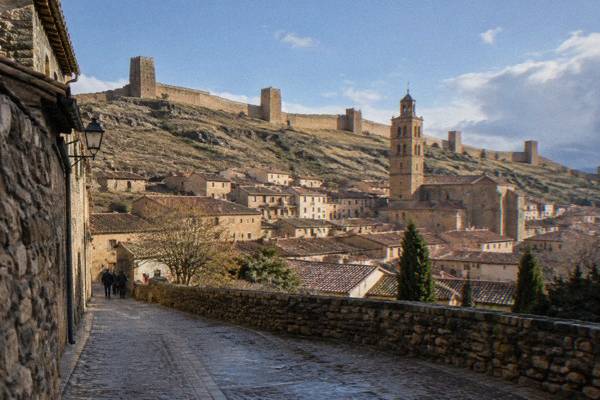
Tarazona is a small historic town in the province of Zaragoza, in Aragon, Spain, west of the regional capital at the foot of the Moncayo massif, and it makes a quiet, atmospheric day out for visitors based in Zaragoza.
Short answer
Tarazona is a small Mudéjar brick town west of Zaragoza, in Aragon, Spain, at the foot of the Moncayo massif. No bus timetable, drive time or entry price for the town is confirmed here, so check current schedules before you go, or take the guided day trip from Zaragoza, a 7-hour tour from $209.33 per person that includes food.
Tarazona is a small historic town in the province of Zaragoza, in Aragon, Spain, sitting west of the regional capital at the foot of the Moncayo massif, and it makes a quiet, brick-and-stone counterpoint to a city break built around the Basílica del Pilar and the Aljafería. Zaragoza, the capital of Aragon on the Ebro, is an inland city with no sea and no beach, and its strength as a base is exactly this kind of half-day and full-day excursion into the mountains and Mudéjar towns that surround it. Tarazona belongs to that set: a low-key destination for travellers who have seen the big three monuments and want a smaller place with a different rhythm.
This page from the Zaragoza Travel Guide covers what Tarazona is, how the day works from Zaragoza, what the guided option includes, and how it stacks up against the other day trips in the region, from Monasterio de Piedra to Albarracín. Where a figure is not confirmed, this page says so plainly rather than guessing, and every price that does appear comes from a verified source or from a tour listing named as such.
Where Is Tarazona And What Kind Of Day Does It Make From Zaragoza?
Tarazona is a small town in the province of Zaragoza, in Aragon, Spain, lying west of the city of Zaragoza at the foot of the Moncayo massif, the highest mountain in the Iberian System. It makes a full-day excursion for visitors based in Zaragoza, a town of Mudéjar brickwork and steep old lanes that contrasts with the monumental scale of the Basílica del Pilar, the Aljafería and La Seo.
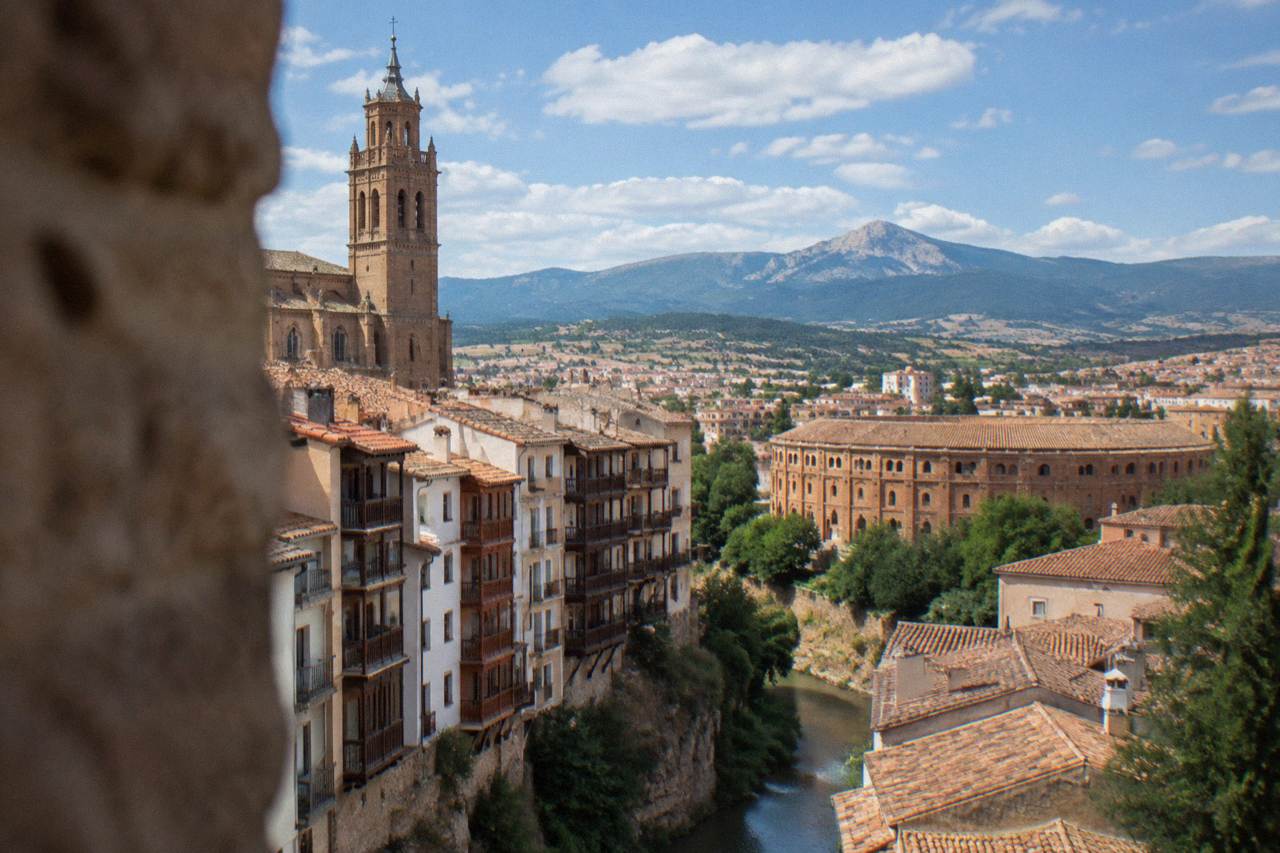
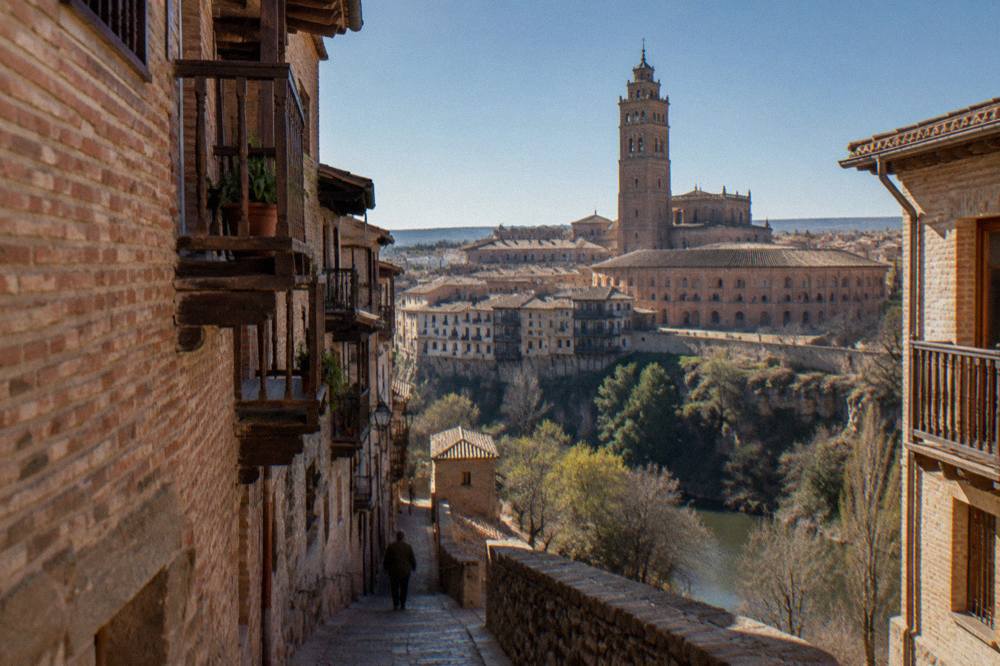
The town's character is written in its building material. Where Zaragoza's great churches rise in stone and plaster, Tarazona's older fabric is brick, the same Mudéjar tradition that earned Aragon its UNESCO recognition, and the town reads as a compressed version of the region's architectural history. The Mudéjar Architecture of Aragon item was inscribed on the UNESCO World Heritage list in 1986 under criterion (iv).
The Moncayo is the other half of the day. The massif is protected as a natural park, and the Moncayo Natural Park guide covers it in depth for visitors who want the mountain rather than the town. Tarazona and the Moncayo pair naturally, which is why the guided day trip from Zaragoza covers both in a single outing: the listing describes a day built around an excommunicated and cursed town with a history of witchcraft, reached through the Moncayo landscape, with food included.
What kind of traveller is it for? The honest answer is that it suits visitors with time to spare. If you have one day in Zaragoza, the city itself, from the Roman Caesaraugusta museums to the Ebro river walk, will fill it, and the things to do in Zaragoza overview lays out the full menu. If you have three or more, a day out west under the Moncayo is a genuine change of scene, and the sobering Civil War ruins of Belchite make a different, heavier day in the opposite direction.
How Do You Get From Zaragoza To Tarazona?
No bus or train timetable, fare, journey time or frequency for the Zaragoza to Tarazona route is confirmed on this page, so check the current schedule with the operator before you plan the day. What is verified is the shape of the trip: Tarazona lies west of Zaragoza in the same province, and the practical alternatives are independent travel by road or the bookable guided day trip from Zaragoza, a 7-hour tour with food included.
That may read as a thin answer, and it is deliberately so. Travel content for this region is full of confident minute counts and euro fares for day-trip routes that no official source confirms, and a wrong timetable strands a reader in a small town at the end of the afternoon. The better move is to say what is solid and let you check the rest. The regional bus and urban tram operator's 2026 fare table, which covers city transport within Zaragoza, lists a single fare of 1.70 EUR and 0.55 EUR with the Tarjeta Bus, but that fare applies to urban journeys, not to the interurban route west.
For orientation once you are in Zaragoza, the city transport figures below apply to getting around the base city before and after the day trip.
| Journey or ticket in Zaragoza | 2026 fare | Notes |
|---|---|---|
| Urban bus or tram, single | 1.70 EUR | No transfer included |
| Urban bus or tram with Tarjeta Bus | 0.55 EUR | Card itself costs 7 EUR, valid on bus and tram |
| Night bus lines, single | 1.00 EUR | Urban night network |
| Tourist bus, general ticket | 10 EUR | 24 hours hop-on hop-off, 16 stops, 90-minute loop |
| Airport bus line 505, single | 4.65 EUR | About 2.25 EUR with a Lazo card, timed to flights |
| Bizi day pass | 1 EUR plus 0.50 EUR per trip | First 30 minutes per trip, 50 EUR card deposit held |
The guided option removes the timetable question entirely. The Tarazona and Moncayo day trip departs from Zaragoza, runs about 7 hours, and the listing states that food is included, so the operator handles the logistics that independent travellers would otherwise be checking. For visitors who prefer to move at their own pace inside the city itself, the self-guided options below cost from $5.73 per person and need no schedule at all.
What Does The Guided Tarazona And Moncayo Day Trip Include?
The guided day trip from Zaragoza is a 7-hour tour priced from $209.33 per person, rated 4.7 from 6 reviews, and it is built around the only excommunicated and cursed town with witches in Spain, according to the tour's own description, with food included in the price. It is the one bookable product that delivers Tarazona and the Moncayo area as a single organised day out from Zaragoza.
The tour's hook is unusual, and it is worth taking seriously rather than treating as marketing noise. The listing presents a day built on the dark folklore of the Moncayo foothills, the witchcraft traditions that cling to this corner of Aragon, and a town whose history includes excommunication, all delivered with a food stop so the day is not only stories. The rating of 4.7 from 6 reviews is a small sample, so read the recent reviews on the operator's live listing before booking rather than leaning on the average alone.
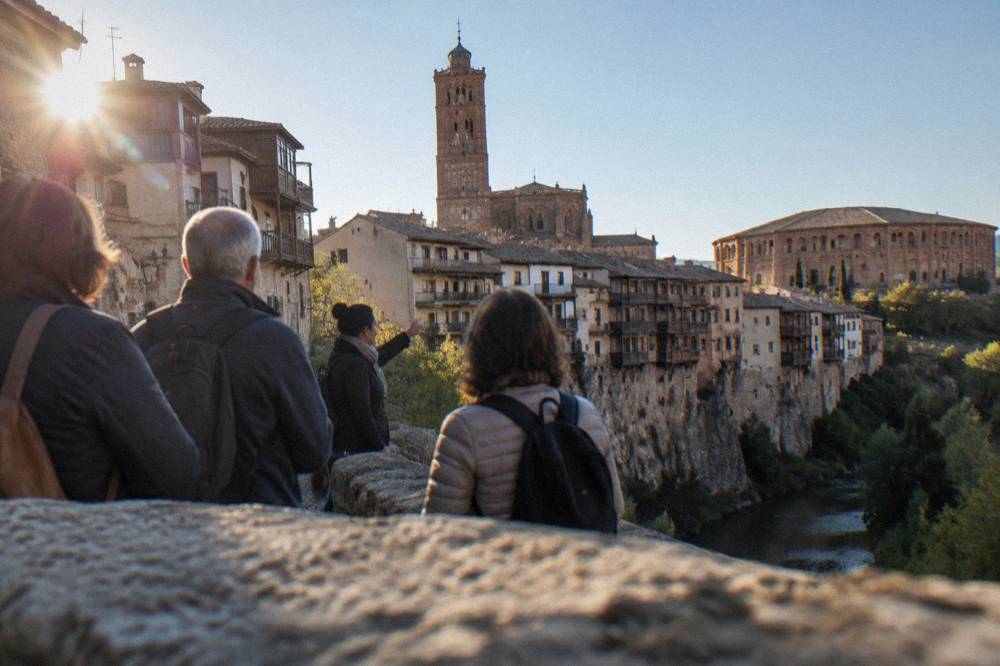
Here is what the listing confirms about the product:
| Detail | What the listing says |
|---|---|
| Tour name | Zaragoza: Only excommunicated and cursed town with witches in Spain and food |
| Duration | 7 hours |
| Price | From $209.33 per person |
| Rating | 4.7 from 6 reviews |
| Area | Tarazona and Moncayo, a day trip from Zaragoza, not in the city |
| Inclusions | Food included, per the listing |
| Booking | Reserve now, pay later, check the listing for cancellation terms |
Seven hours is a full day, so plan the evening loosely. If the tour returns with daylight to spare, the evening side of the city is worth a look, and a ghost and legends walk is one of the guided options for after dark. The thematic link is direct: a day of witchcraft folklore west of the city pairs naturally with an evening of Zaragoza's own legends.
What Do You Actually See In Tarazona?
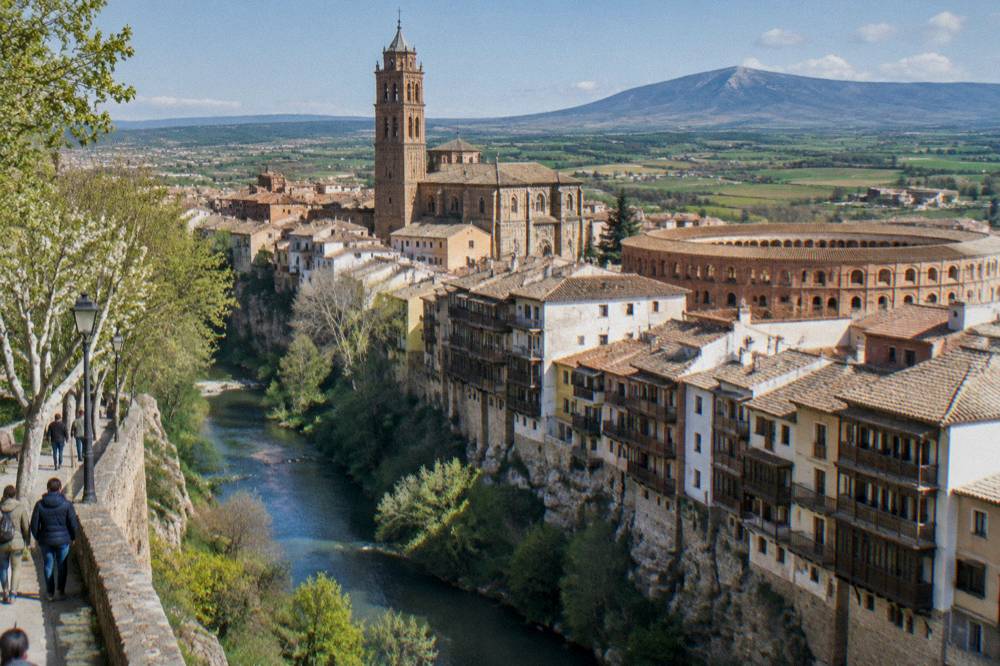
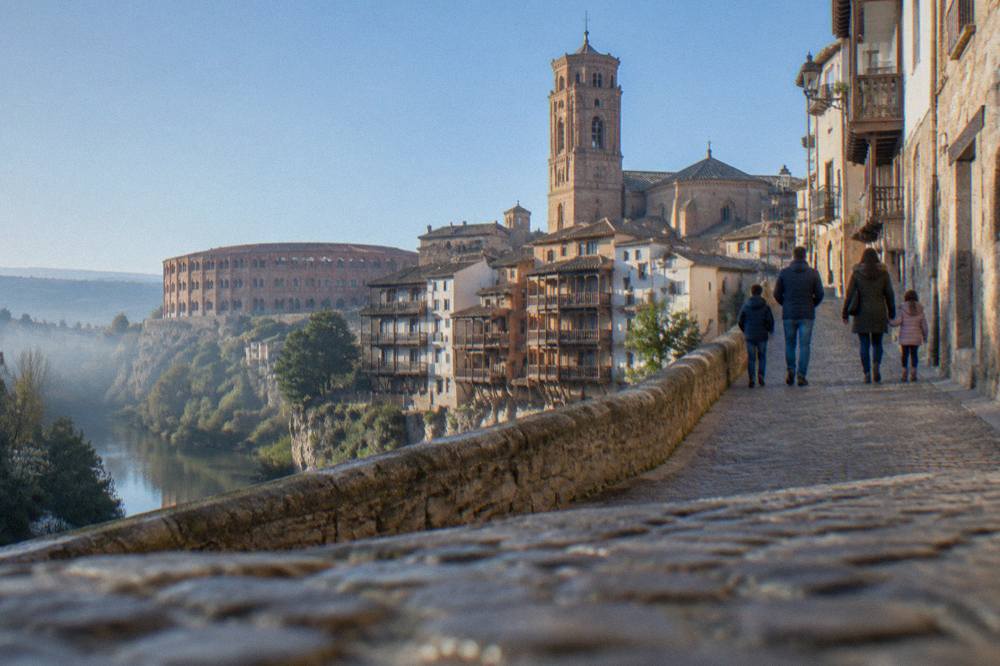
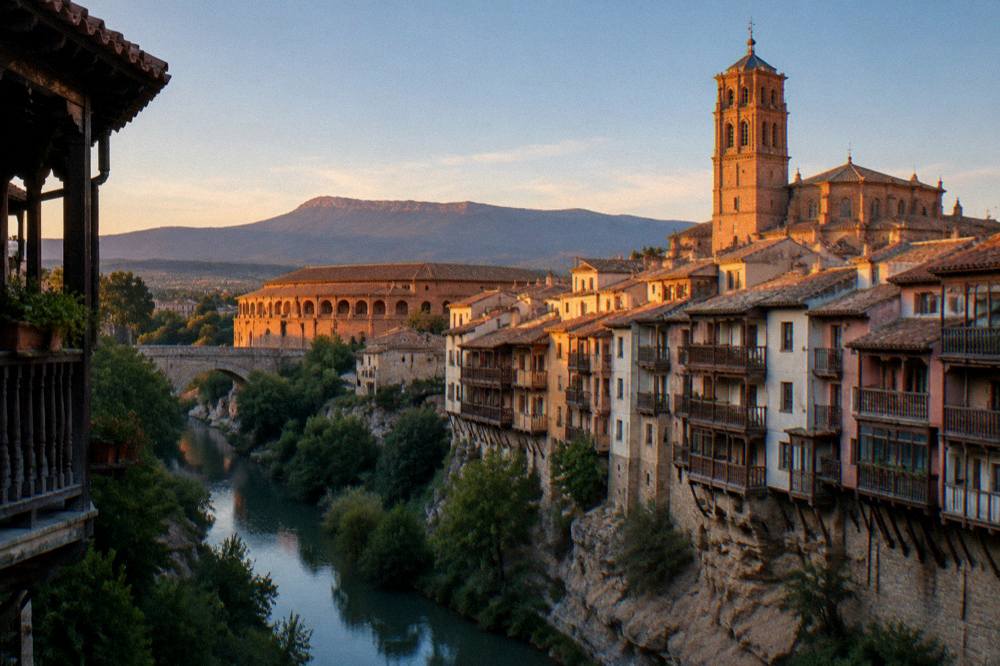
Tarazona's sights are its old town fabric: Mudéjar brickwork, a cathedral, a hillside of steep lanes and the green wall of the Moncayo behind it, and the town is best understood as a walk rather than a checklist of ticketed monuments. No entry prices, opening hours or monument schedules for Tarazona itself are confirmed on this page, so check locally or with your guide on the day.
The town rewards the same kind of slow looking that Zaragoza's old district rewards. Mudéjar is the region's signature: the craft tradition of Muslim builders working under Christian rule after the Reconquista, expressed in brick, pattern and geometry, and Zaragoza's own Mudéjar buildings explain the style before you see it concentrated in a small town. In Tarazona the style is domestic as well as monumental, wrapped around the hill rather than displayed on a plaza.
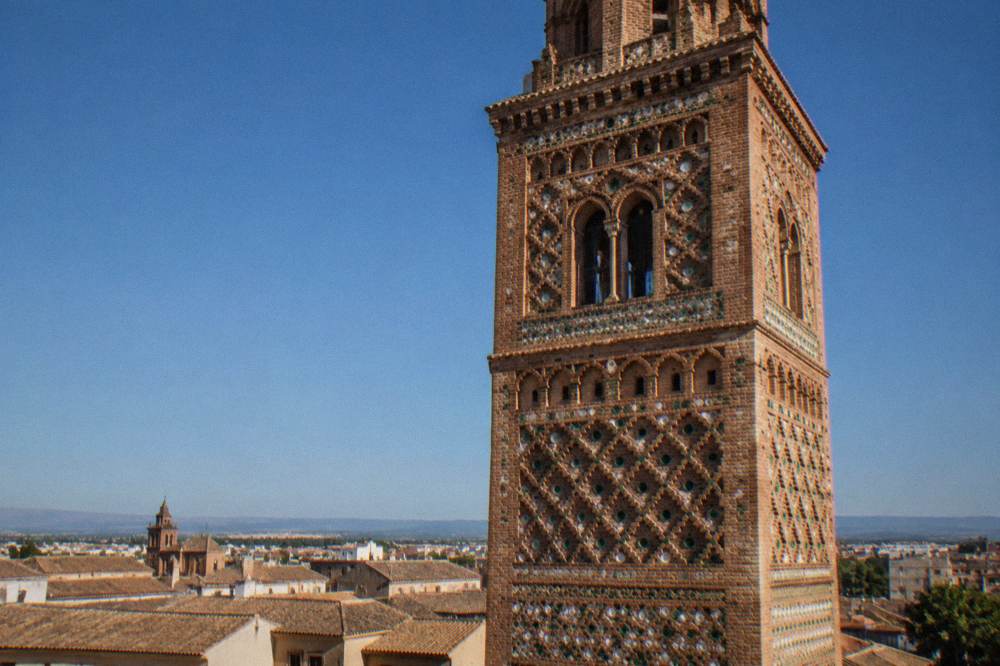
The cathedral is the town's principal monument, and the old Jewish quarter and the network of overhanging wooden balconies above the streets are the features visitors tend to remember, but the honest framing is this: the specific opening hours and admission arrangements for Tarazona's monuments are not verified here, and the guided tour resolves that question by putting a guide in front of you who handles access. Independent travellers should check current monument schedules before setting out west.
A practical note on the region: Tarazona sits close to the border with Navarre, which is why it also appears on itineraries that continue toward Sos del Rey Católico and the northern Aragonese towns. A two-town day is possible for drivers, but nothing on this page confirms a route time between them, so build the day from what you can verify when you book accommodation and check maps on the day of travel.
When Is The Best Time Of Year For A Tarazona Day Trip?
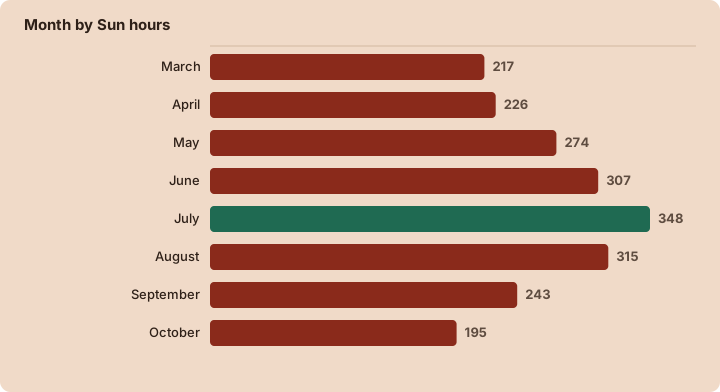
The best time is spring or autumn, based on AEMET's 1981 to 2010 climate normals for the Zaragoza Aeropuerto station: May averages 24.1 C as a mean maximum with 44 mm of rain, the wettest month of the year, while October averages 21.4 C with 36 mm, and July and August are the hottest and driest at 32.4 C and 31.7 C mean maximum with just 17 mm of rain each.
Those figures are measured at the airport station in the Ebro valley, and Tarazona sits higher toward the Moncayo, so expect the mountain foothills to run a little cooler and greener than the city numbers. The normals are still the best planning baseline, because they are the only series the station page publishes. Two seasonal notes matter for planning.
First, October is festival season in Zaragoza, and that cuts both ways. The Fiestas del Pilar run from 10 to 18 October 2026, with the Ofrenda de Flores on 12 October, a spectacular time to be in the city but a busy one, and the municipal October timetable notes that the Palacio de Sastago is closed in October and the Museo Pablo Gargallo is temporarily closed. Second, winter is real here: the same normals show 23.1 frost days a year and January mean minimums of 2.7 C, so a January day under the Moncayo is a cold day.
| Month | Mean max C | Mean min C | Rain mm | Sun hours |
|---|---|---|---|---|
| March | 17.3 | 5.8 | 19 | 217 |
| April | 19.6 | 7.9 | 39 | 226 |
| May | 24.1 | 11.8 | 44 | 274 |
| June | 29.3 | 15.8 | 26 | 307 |
| July | 32.4 | 18.3 | 17 | 348 |
| August | 31.7 | 18.3 | 17 | 315 |
| September | 27.1 | 15.2 | 30 | 243 |
| October | 21.4 | 11.0 | 36 | 195 |
All figures are AEMET 1981 to 2010 averages for the Zaragoza Aeropuerto station. There is no days-above-30 C figure on that sheet, and no wind data, though the cierzo, the cold dry north-west wind of the Ebro valley, is a real feature of the region's weather and worth packing a layer for in any season.
How Does Tarazona Compare With The Other Day Trips From Zaragoza?
Tarazona is one of several bookable day trips from Zaragoza, and the guided options range from $66.40 per person for the Pyrenees excursions to Canfranc, Jaca and Sallent de Gállego, up to $280.95 for the full-day Somontano wine excursion with a visit to Alquézar, while the Tarazona and Moncayo folklore tour sits at the upper end at from $209.33 per person because it includes food and runs 7 hours.
The comparison is easier to read as a table. Every figure below comes from the tour listings themselves, and ratings are review averages, so small review counts deserve a grain of salt.
| Day trip from Zaragoza | Kind of day | From, per person | Rating | Duration |
|---|---|---|---|---|
| Tarazona and Moncayo, cursed town and witches | Folklore and food | $209.33 | 4.7 from 6 reviews | 7 hours |
| Excursion to Canfranc, Jaca and Sallent de Gállego | Pyrenees mountains | $66.40 | 4.7 from 10 reviews | 11 hours |
| Ordesa day tour: Aínsa, Torla and Sorrosal waterfall | Pyrenees mountains | $66.40 | 5 from 3 reviews | 11 hours |
| Full-day Somontano wine excursion and Alquézar | Wine and village | $280.95 | 5 from 14 reviews | Full day |
| Olive oil tour and visit to Belchite Old Town | History and food | $108.94 | 4.8 from 18 reviews | Half day |
| Half-day winery tour from Zaragoza | Wine | $166.28 | 5 from 21 reviews | Half day |
The pattern is clear: mountain sightseeing is the cheapest guided category, wine is the most expensive, and the Tarazona tour is priced as a food-inclusive folklore day rather than as transport. Belchite deserves its own word, because it is not a comparison in tone: the old town was destroyed in the Spanish Civil War and stands as a ruin, and the olive oil tours that visit it treat it with the seriousness that deserves.
For travellers organising their own days rather than booking guided ones, the region's destinations are covered individually, from Teruel and Huesca to Loarre Castle and the Bardenas Reales, and no distance or drive time is stated for any of them on this site unless a verified source carries it.
What Should You Do In Zaragoza Before Or After The Trip?
Zaragoza's own entry prices are modest and several are free: entering the Basílica del Pilar is free, the La Seo cathedral combination ticket is 10 EUR including the Museo de Tapices, Museo Pilarista and Rosario de Cristal, the Aljafería is 7 EUR general or 9 EUR with a guided tour, and the Caesaraugusta four-museum bono is 7 EUR, so a full day of monuments in the city costs less than a single dinner in many Spanish capitals.
Those prices come from the municipal monuments timetable for October, and they make the case for the city half of any Tarazona trip. The Roman museums are the quiet highlight: the Foro at 4 EUR, the Termas and Puerto Fluvial at 3 EUR each, and the four-museum bono at 7 EUR, or 5 EUR reduced, with free entry on the first Sunday of the month. The Aljafería runs free entry on the first and third Sunday and Monday of each month, and the IAACC Pablo Serrano and Centro de Historias are free altogether.
| Monument in Zaragoza | General price | Reduced or free notes |
|---|---|---|
| Basílica del Pilar, entering the temple | Free | Tower viewpoint 6 EUR adult, 4 EUR ages 13 to 18 |
| La Seo, general including three museums | 10 EUR | Over 65 at 9 EUR, ages 13 to 18 at 7 EUR, under 12 free |
| Aljafería, general | 7 EUR | 9 EUR with guided tour, 2 EUR students and over 65 |
| Caesaraugusta four-museum bono | 7 EUR | 5 EUR reduced, free the first Sunday of the month |
| Museo del Fuego y los Bomberos | 3 EUR | Free the first Sunday of the month |
| Museo del Origami | 3 EUR | Free the first Tuesday and Sunday |
| IAACC Pablo Serrano | Free | Tue-Sat 10:00-14:00 and 17:00-21:00, Sun 10:00-14:00 |
One closure matters for museum planners: the Museo de Zaragoza's central building at Plaza de los Sitios 6 is closed for Ministry of Culture works with no reopening date, so it is not a visitable stop. The Museo Goya of the Fundación Ibercaja reopens on 9 October 2026 with Tuesday to Saturday hours of 10:00 to 20:00 and Sunday hours of 10:00 to 14:00, closed Mondays, though its admission price has not been published.
For the guided side of the city, the low-cost introductions are hard to beat. The 105-minute monumental sightseeing tour runs from $10.41 per person and is rated 4.4 from 36 reviews, which makes it the cheapest guided orientation in the city, and the free GuruWalk options cost nothing up front, tip based, including the Indispensable Zaragoza free tour of the old town, rated 4.97 from 576 reviews with its guru leading the walk, bookable on GuruWalk itself.
The self-guided options suit a Tarazona trip in a specific way: they fill the hours around a day tour without adding another fixed appointment. The scavenger hunt through the city runs from $5.73 per person, rated 4.5 from 37 reviews, and turns the old town into a puzzle rather than a lecture, which works well for families with energy left after a long day west. Check availability on the operator's live listing if that format suits your group.
Is Tarazona A Good Day Trip For Families And For Slow Travellers?
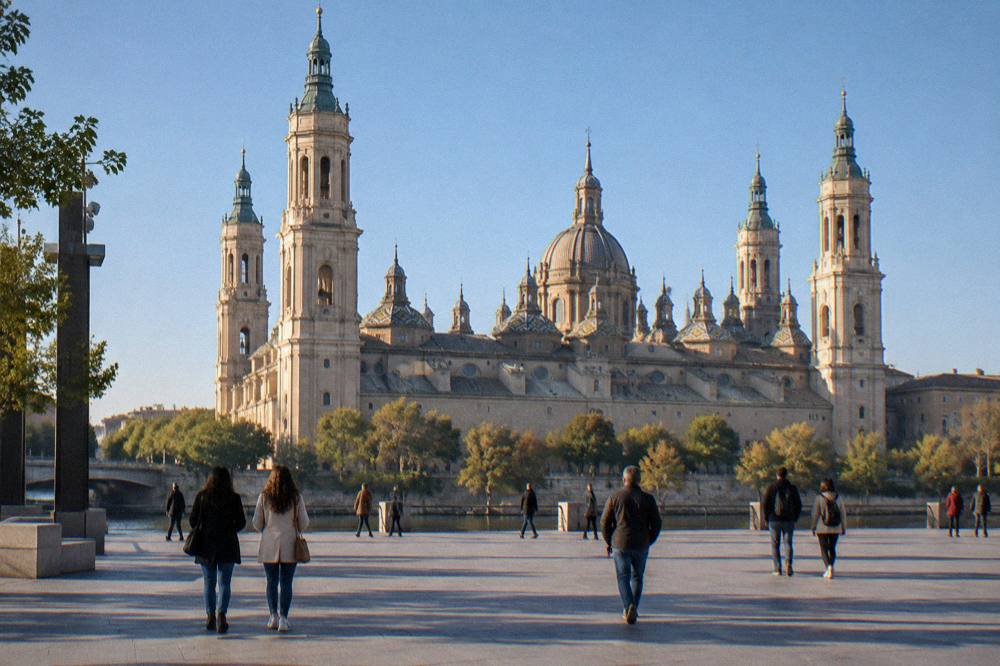
Tarazona works well for families who like folklore and walking, less well for visitors who need playground-style attractions, because the day is built on streets, stories and a food stop rather than on ticketed entertainment, and the guided tour's 7-hour span with food included is the most family-proof way to do it, since the operator handles the pacing.
The witchcraft angle is genuinely kid-friendly territory, the same reason the legends and ghosts night tour in Zaragoza is one of the city's popular evening formats. The city's family side is covered in the wider things to do in Zaragoza roundup, and the scavenger hunt format mentioned above is the self-guided equivalent for younger travellers.
Slow travellers and repeat visitors to Zaragoza are the natural audience for the town. If you have already done the first-visit circuit, the Basílica del Pilar, the Aljafería, La Seo and the river walk, a day under the Moncayo is the logical next layer of Aragon, and the folklore framing gives the day a narrative that a plain transport-and-plaza itinerary would not carry. Pair it with the Moncayo Natural Park for the mountain half and the day becomes a proper regional deep cut.
Which Guided Options Best Frame A Tarazona Day From Zaragoza?
Three guided products from the city pair naturally with a Tarazona trip: the 105-minute monumental sightseeing tour from $10.41 per person as a first-day orientation, the Aljafería guided tour in Spanish from $25.23 per person for the palace itself, and the self-guided scavenger hunt from $5.73 per person for flexible hours around the day trip, with the 7-hour Tarazona and Moncayo excursion from $209.33 per person as the main event.
The logic is simple. A day trip west eats most of a day, so the city sightseeing around it should be short and cheap, and these three fit that brief. The monumental introduction covers the core landmarks in 105 minutes, the Aljafería tour handles the one monument that genuinely rewards a guide, and the scavenger hunt fills a spare morning or evening without a fixed start time. The trio below carries all three, and each card links to the operator's live listing for current dates.
Whichever combination you choose, the shape of a good Tarazona day is settled before you leave Zaragoza: one strong guided excursion west, one cheap orientation inside the city, and loose hours either side for the monuments that cost little or nothing to enter.
Common Questions About Tarazona
Is Tarazona in Spain or somewhere else?
Tarazona is a town in the province of Zaragoza, in Aragon, Spain, west of the city of Zaragoza at the foot of the Moncayo massif. It is not to be confused with any place of the same name outside Spain.
How far is Tarazona from Zaragoza?
No distance or drive time for the route is confirmed on this page, so check a current map when planning. What is confirmed is the shape of the trip: the town lies west of Zaragoza in the same province, and the guided day trip from Zaragoza runs about 7 hours with food included.
Can you take a guided tour from Zaragoza to Tarazona?
Yes. The listing offers a 7-hour day trip from Zaragoza built around the only excommunicated and cursed town with witches in Spain, from $209.33 per person, rated 4.7 from 6 reviews, with food included. Check availability on the operator's live listing for current dates.
What is Tarazona famous for?
The town is known for its Mudéjar brickwork, its steep hillside old town and its position under the Moncayo, and the region carries a distinctive folklore tradition of witchcraft stories that the guided day trip from Zaragoza is built around.
What is the best time of year to visit Tarazona?
Spring or autumn. AEMET's 1981 to 2010 normals for the Zaragoza Aeropuerto station show May with a mean maximum of 24.1 C and October with 21.4 C, against July and August at 32.4 C and 31.7 C, and the foothills of the Moncayo tend to run cooler than the city figures.
Do you need a car for a Tarazona day trip?
Not if you take the guided day trip from Zaragoza, which handles transport and food over about 7 hours. Independent travellers should check the current bus schedule with the operator before planning, because no timetable for the route is confirmed on this page.
The bottom line for visitors basing themselves in Zaragoza: Tarazona is the region's folklore day, a brick town under a mountain with stories attached, and the guided option from the city delivers it in one organised outing with food included, while the city's own monuments, from the free entry of the Basílica del Pilar to the 7 EUR Caesaraugusta bono, cost less than almost any other stop on a Spanish itinerary. Check live schedules and the operator's listing before you commit to a date, and the day will take care of itself.