Sos Del Rey Catolico: The Medieval Hill Town Day Trip From Zaragoza
Sos del Rey Catolico is the best-preserved medieval hill town in Aragon, the birthplace of King Ferdinand of Aragon, and one of the most rewarding day trips you can make from Zaragoza, Spain.
Short answer
Sos del Rey Catolico is a medieval hill town in the Cinco Villas region north-west of Zaragoza, the birthplace of Fernando de Aragon, and a car day trip best suited to travellers who want stone streets, palace squares and castle views rather than museums or beaches.
Zaragoza, the capital of Aragon on the Ebro, sits at the centre of a web of small stone towns that most visitors to Spain never reach, and Sos del Rey Catolico is the finest of them. This is a medieval hill town in the Cinco Villas region to the north-west of the city, a compact maze of arcaded squares, palaces and church towers that has changed remarkably little since the age of the Reyes Catolicos. It is the birthplace of Fernando de Aragon, the king remembered as Fernando el Catolico, one half of the royal couple who united the crowns of Castile and Aragon, and the town's name carries his title to this day. A day here is a day of walking, looking and eating in a place that feels closer to a film set than to a working Spanish town, and it makes a natural counterpart to Zaragoza's Mudéjar churches and Roman ruins.
Where Is Sos Del Rey Catolico And What Kind Of Day Trip Is It?
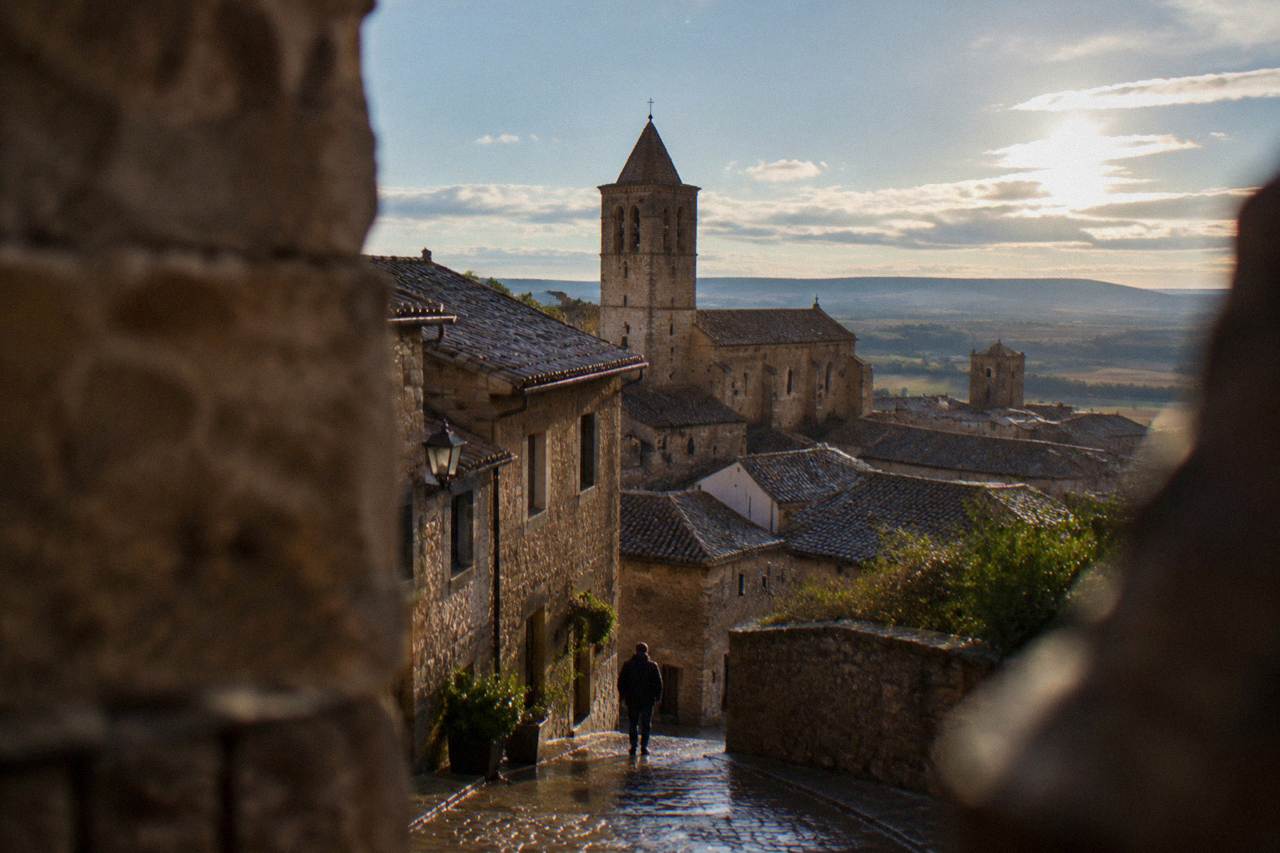
Sos del Rey Catolico lies north-west of Zaragoza, in the Cinco Villas comarca of Aragon, on the wooded foothills that rise towards the Moncayo massif and the western Pyrenees. It is a full-day trip by road, not a half-day errand, and the reward is a walled hill town of stone arcades, tower houses and a castle silhouette that ranks among the best preserved in Spain.
There is no beach, no coast and no sea anywhere near it: this is inland Aragon, dry, high and green-forested in its northern corner.
The Cinco Villas, the Five Towns, is the historic borderland where the Christian kingdoms of Aragon and Navarre, and the kingdom of Castile beyond them, met and jostled for centuries. That frontier position explains Sos itself. A town built on a hill for defence, walled, towered and overlooked by a castle, it guarded the approaches to Aragon from the north, and its noble families built fortified stone houses that still line the streets. When the military frontier faded, the town's economy faded with it, and that decline is precisely why the place survived. Nobody demolished the medieval core to build apartment blocks, because nobody needed to.
The practical shape of the day is simple. You arrive, you park at the edge of the old town, and you walk. The historic centre is closed to through traffic and compact enough that everything worth seeing sits within a few minutes on foot of the Plaza de la Villa, the main square. The day divides naturally into a morning of exploring the upper town and castle, a long lunch in one of the stone restaurants, and an afternoon of slower wandering, photography and the drive back towards Zaragoza through the Aragonese countryside. It suits travellers who enjoy atmosphere and architecture more than attractions with turnstiles.
What Can You Actually See In Sos Del Rey Catolico?
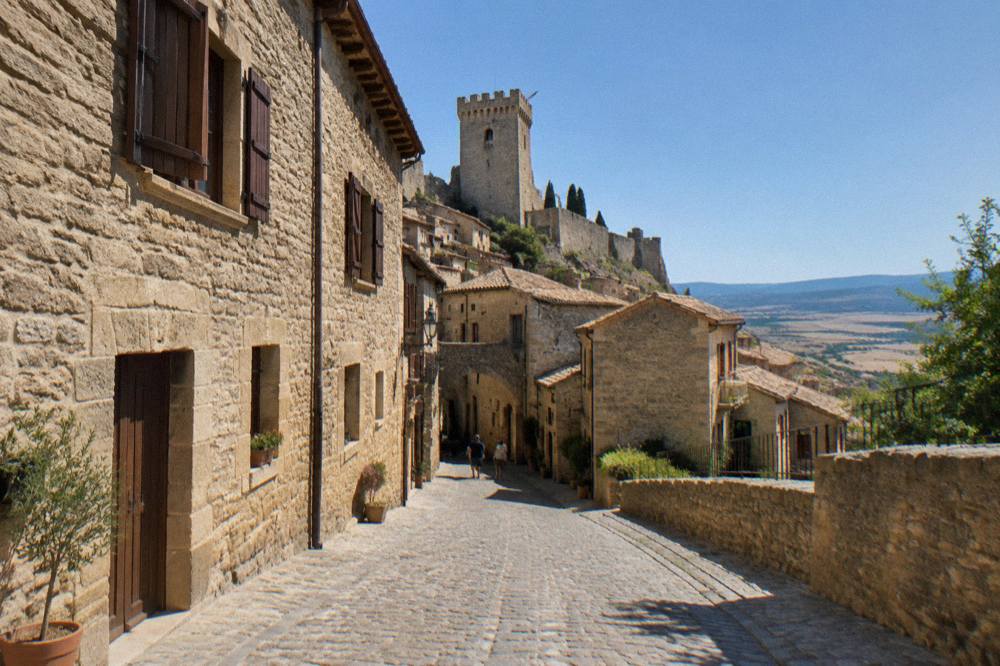
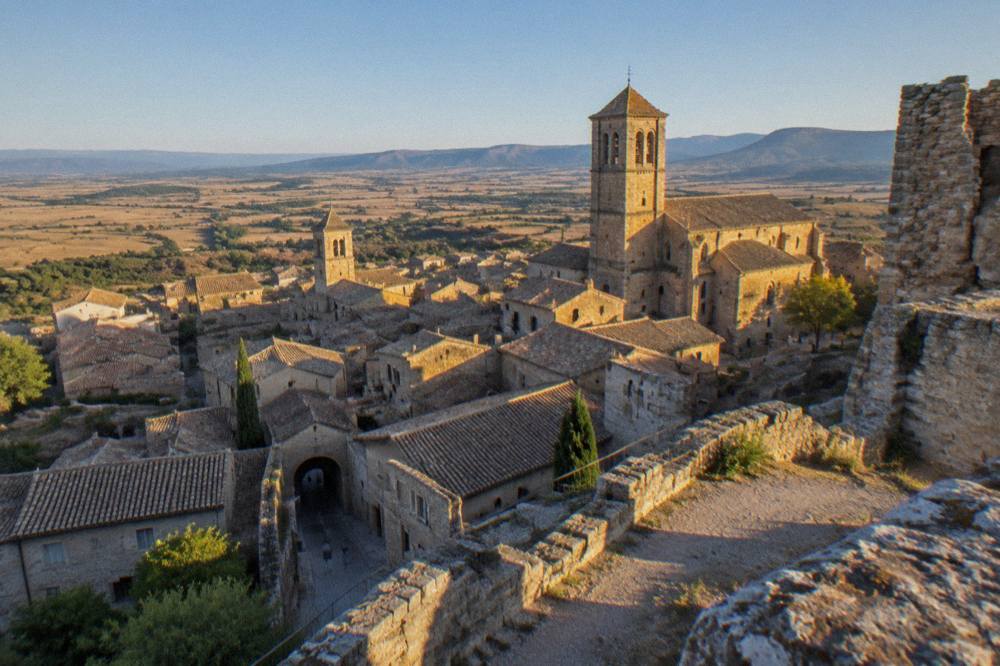
The core sights are the Plaza de la Villa with the Palacio de Sada, the parish church of San Esteban, the castle ruins above the town, and the walls and gateways that still ring the hill. The Palacio de Sada, a stone palace on the main square, is the traditional birthplace of Fernando de Aragon and the single most famous building in town. Everything sits on foot, one steep street from the next, and the whole circuit can be walked slowly in a morning.
Start at the bottom, in the Plaza de la Villa. This arcaded square, with its stone columns and overhanging wooden galleries, is the postcard view of Sos and the place every visit begins. The Palacio de Sada stands on the square, and a plaque marks it as the birthplace of the future king, whose marriage to Isabel of Castile created the dynastic pairing later known as the Reyes Catolicos. The palace now functions as an interpretation centre for the town and its most famous son, and it is the one indoor stop that belongs on every itinerary.
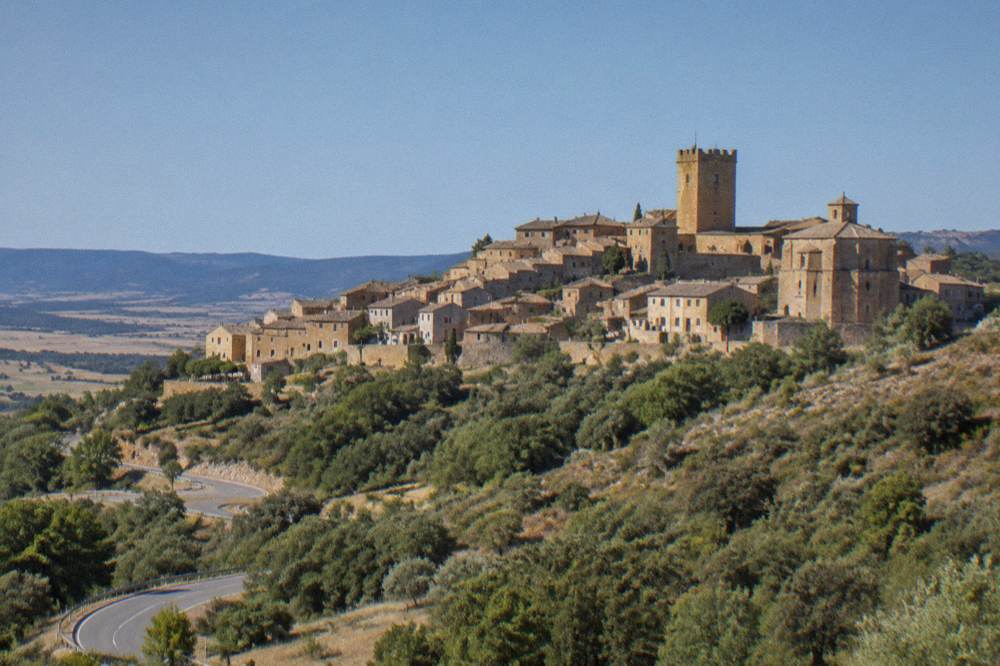
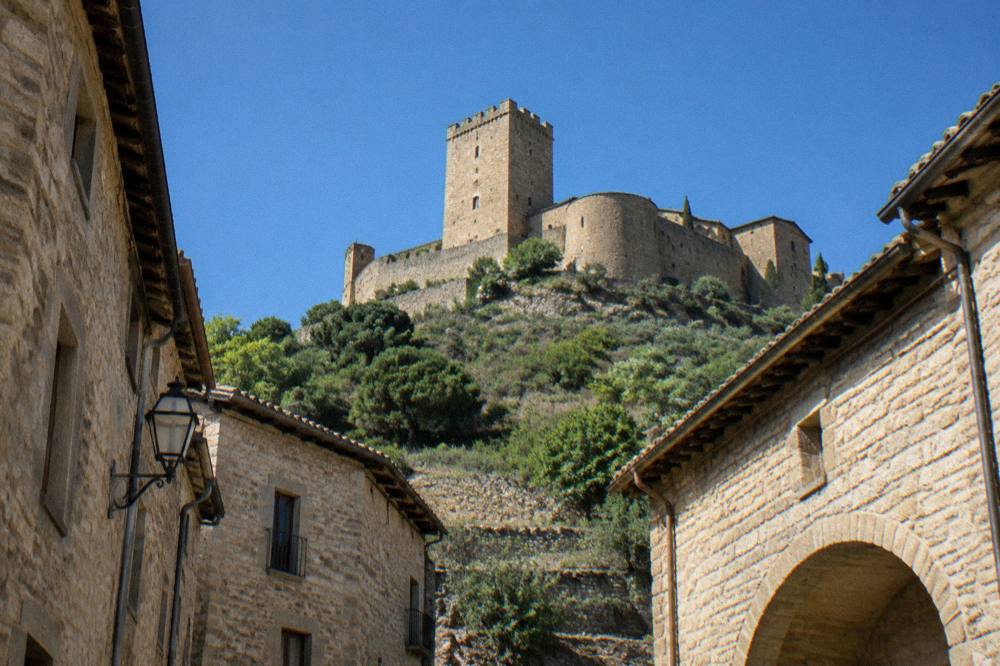
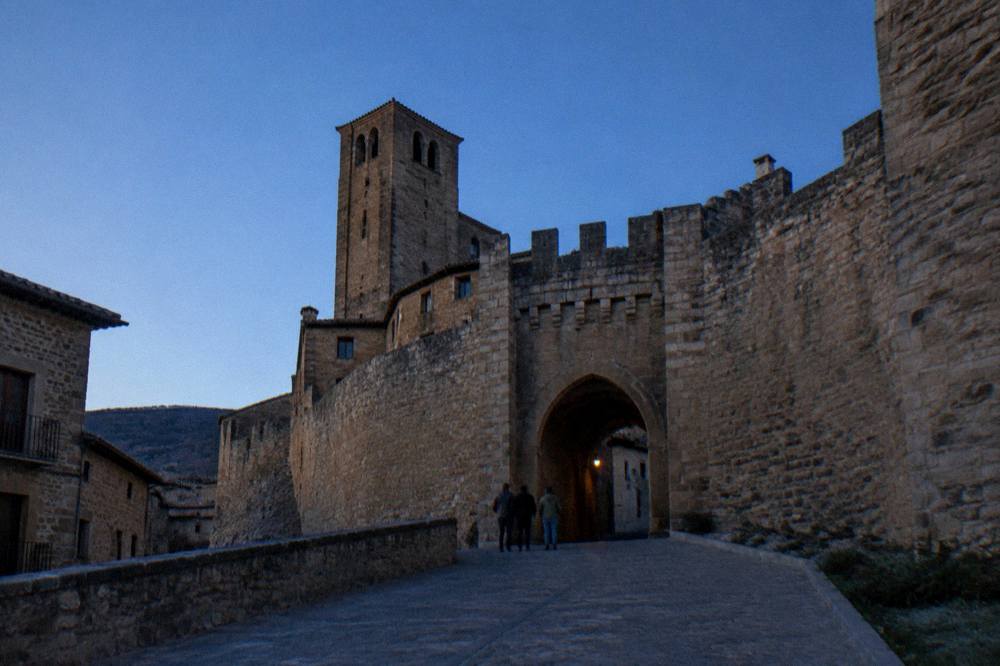
From the square the streets climb. The parish church of San Esteban, a Romanesque foundation with later Gothic additions, stands near the top of the old town, and its towered silhouette is what you see first from the approach road. Above it, the ruin of the castle crowns the hill, a fragmentary stone shell with no facilities and no ticket booth, but with the best view in the comarca: the red-tiled roofs of Sos falling away below, the wooded hills of the Cinco Villas beyond, and on a clear day the long blue line of the Moncayo to the east. The walls and their gateways, including the Puerto de Zaragoza on the southern side, frame the walk between them.
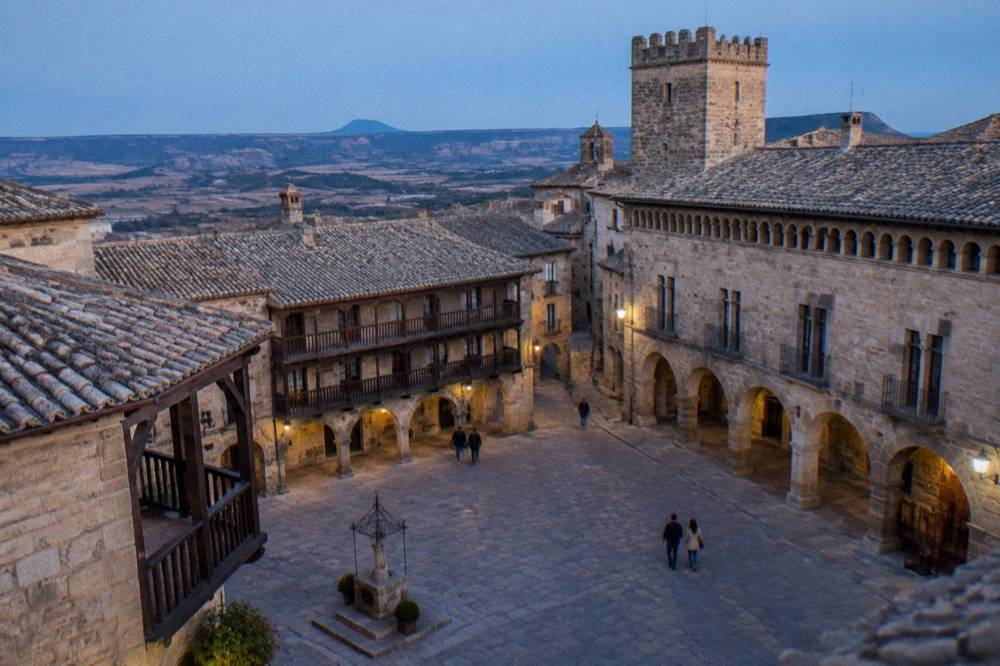
Two practical notes shape the day. First, the streets are steep and cobbled, so wear shoes that grip and expect a real climb to the castle. Second, Sos is a small town with a visitor economy to match: opening arrangements at the palace and any exhibition spaces vary through the year, so check the town's own notice before you set out rather than relying on a fixed timetable. The town itself, the streets, the walls and the views, is open all day and costs nothing.
If you would rather not drive at all, guided day trips from Zaragoza reach other corners of northern Aragon, and the Pyrenees excursion is the standout: the Ordesa day sightseeing tour takes in Ainsa, Torla and the Sorrosal waterfall in a single eleven-hour loop from the city, Check availability if mountain scenery appeals more than medieval streets.
How Do You Plan The Drive From Zaragoza To Sos Del Rey Catolico?
The route runs north-west out of Zaragoza into the Cinco Villas, through the agricultural plains that flank the Ebro basin and up into forested hill country as you approach the town. It is a genuine day trip by road, best started in the morning so that lunch in Sos falls midday and the return drive lands you back in Zaragoza in the evening. No train serves the town, so the choice is your own car, a hired car, or a guided excursion elsewhere.
Be honest about what the drive is. This is not a hop on the tram: Zaragoza's tram and bus network, cheap and useful in the city, ends well before the Cinco Villas, and no railway line climbs to Sos. If you drive yourself, fill up in Zaragoza, because the town is small and rural fuel stops are sparse. The roads are good main roads for most of the way, and the final approach winds uphill through woods, which is part of the pleasure: the landscape shifts from irrigated plain to stone and scrub to green, and the change tells you that you have left the Ebro valley proper.
If you do not drive, do not force this trip. The honest alternatives are different, and better than a stressful bus-and-taxi chain. One is to spend the day in Zaragoza itself, where the Basilica del Pilar and its tower viewpoint fill a day easily.
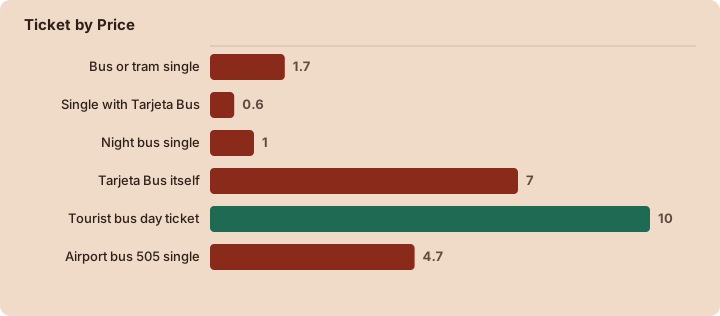
For anyone planning a longer Aragonese stay, the practical budget context is friendly. There is no tourist tax anywhere in Aragon: the regional government explicitly ruled one out in September 2026 on the grounds that it would discourage visitors. City transport in Zaragoza is cheap by any European standard, and the fare table below, from the operator's published 2026 tariffs, covers every tram and urban bus you will ride while you are based there.
| Ticket | Price | Notes |
|---|---|---|
| Bus or tram single | EUR 1.70 | No transfer included |
| Single with Tarjeta Bus | EUR 0.55 | Rechargeable card |
| Night bus single | EUR 1.00 | Night lines only |
| Tarjeta Bus itself | EUR 7.00 | Valid on bus and tram |
| Tourist bus day ticket | EUR 10.00 | 24 hours, 16 stops |
| Airport bus 505 single | EUR 4.65 | EUR 2.25 with Lazo card |
What Should You Eat On A Day Trip To Sos Del Rey Catolico?
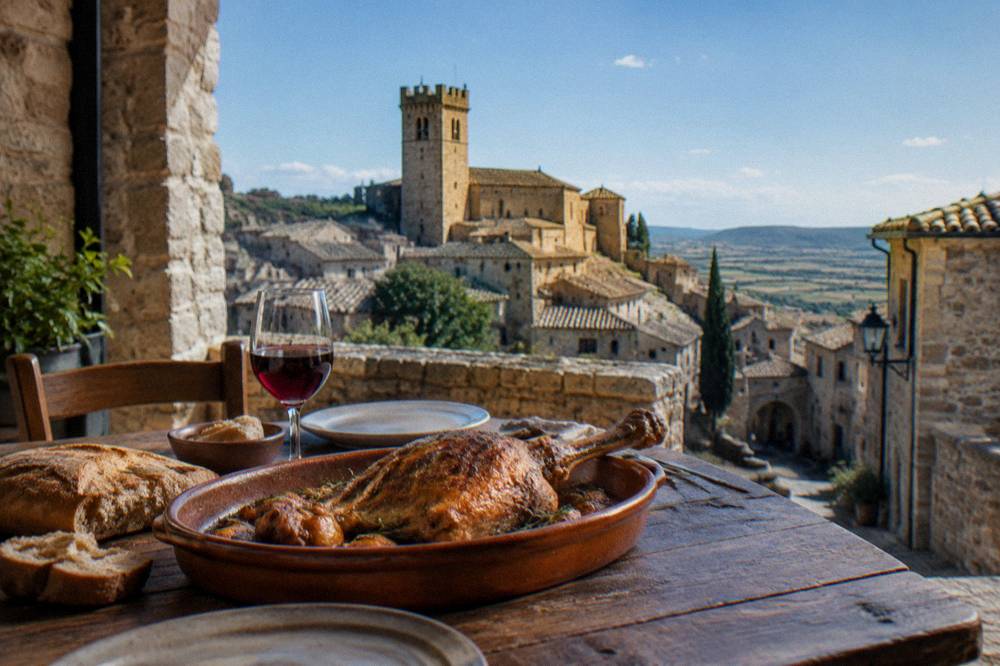
Expect hearty inland Aragonese cooking: lamb from the region, migas, stews, cured meats and cheeses from the foothills, and the long set-lunch format that rural Spain still does well. Sos has a small number of restaurants and bars rather than a food scene, and the right plan is one unhurried menú del día at midday, not a crawl. Book nothing in advance for a weekday, but in high summer and at weekends a table is worth reserving.
Aragon's signature dish is ternasco, milk-fed lamb, usually roasted, and it appears on nearly every serious menu in the province, Sos included. Alongside it come migas aragonesas, breadcrumbs fried with garlic and often chorizo or grapes, thick soups and stews suited to the hill climate, and the peppers, thistles and cardoons that the irrigated gardens of the Ebro basin supply to the whole region. The cheeses and cured meats of the northern foothills are local in the true sense: made in villages like this one, sold in the towns around them. Sweets follow the Aragonese pattern of fruit in syrup, and the peach and pear of the region are famous across Spain.
The meal matters to the shape of the day, because rural Aragon still keeps the midday rhythm. Lunch starts late by northern European habits, runs through the early afternoon, and a restaurant that is full at two may be clearing tables by four. If you arrive in Sos at eleven, walk until one, and eat at one-thirty, the day falls into place. If you skip lunch and expect a late dinner, you will find the town quiet and the kitchens closed, because Sos is a town of a few hundred permanent residents, not a resort.
For the food-focused, a different kind of day from Zaragoza may serve you better than a drive. The city has a strong tapas and wine-tour scene, including a five-hour complete tour with wine and tapas, and cooking classes built around the central market. Those products are city-based, run year-round and need no car, which makes them the natural fallback whenever a hill-town day trip feels like too much logistics.
What Is The Best Time Of Year To Visit Sos Del Rey Catolico From Zaragoza?
The best months are May, June, September and early October, when AEMET's 1981 to 2010 averages for the Zaragoza Aeropuerto station show warm, dry, sunny weather, and the worst are the July and August midday heat and the cold, grey weeks of December and January. October has a special draw: the Fiestas del Pilar run from 10 to 18 October 2026, and a hill-town escape pairs naturally with the festival. Winter visits are possible but short, with the light gone by early evening.
The climate numbers for the region come from AEMET's 1981 to 2010 normals for the Zaragoza Aeropuerto station, and they describe a dry, continental, semi-arid inland climate: 322 mm of rain across the whole year, concentrated in spring and autumn, with July the sunniest month at 348 hours and the driest alongside August at 17 mm each. May, not a winter month, is the wettest at 44 mm. What the table shows is a city climate; Sos, higher and further north, runs a degree or two cooler and greener, but the seasonal rhythm is the same.
| Month | Mean max C | Mean C | Rain mm | Sun hours |
|---|---|---|---|---|
| January | 10.5 | 6.6 | 21 | 131 |
| April | 19.6 | 13.8 | 39 | 226 |
| July | 32.4 | 25.3 | 17 | 348 |
| October | 21.4 | 16.2 | 36 | 195 |
Two seasonal notes deserve emphasis. First, October is a double-edged month: the weather is close to ideal, but the Fiestas del Pilar fill Zaragoza itself with visitors, and a hill-town day trip in the middle of the festival means missing the festival. The clean plan is to see the city during Pilar week and save Sos for the shoulder days, or the reverse. Second, the cierzo, the cold dry north-westerly wind of the Ebro valley, can make a bright winter day feel far colder than the thermometer says, and it is qualitative, not measurable: dress for wind chill on exposed castle walls in any season.
Can You Combine Sos Del Rey Catolico With Other Day Trips From Zaragoza?
Yes, and the natural pairings are the other northern and western destinations: the Moncayo massif and the town of Tarazona to the west, the castle of Loarre and the city of Huesca to the north-east, and the Monasterio de Veruela in the same Moncayo foothills. Sos itself is small enough that a very early start allows a second stop on the way back, but the honest advice is one hill town plus one big sight per day, not a rushed double-header.
The Cinco Villas region around Sos is one of several distinct day-trip zones that surround Zaragoza, and mixing zones in a single day is usually a mistake. The Moncayo country to the west holds the Monasterio de Veruela, a grand Cistercian abbey in the beech woods below the massif, and the Tarazona area, whose guided day trip from Zaragoza, the excursion to the town locals call the excommunicated and cursed one, is one of the few bookable options that reaches this western corner. To the north-east, the castle of Loarre is the finest Romanesque fortress in Spain, and Huesca is the small provincial capital beneath it.
South and east the choices change character. The Monasterio de Piedra is a monastery-and-waterfalls park, Albarracin and Teruel are the great stone towns of the south, and Fuendetodos, the birthplace of Goya, is the closest thing Zaragoza has to an artist's-shrine day trip. All of them, like Sos, are inland: Aragon has no coast, and any day trip from Zaragoza is a day trip into mountains, stone towns or wine country. The Pyrenees form the dramatic exception, a long but spectacular reach into the high mountains.
A sensible week's pattern, if you are based in Zaragoza for several days, is to alternate city days and country days. The city's own sights are dense and mostly walkable: the Roman forum museum and the river port museum sit minutes from the Plaza del Pilar, and the Parque del Agua gives the afternoon a green finish. A hill-town day, then a city day, then a mountain day, is a rhythm that keeps everyone in a group happy.
What Should You Know Before You Set Out From Zaragoza?
Four things make the difference between a good day and a frustrated one: Sos is car country with no rail link, the streets are steep and cobbled, the town is small and quiet outside weekends, and you should check the palace's opening notice before you go. There is no entry fee for the town, the walls or the castle grounds, and no tourist tax anywhere in Aragon. Bring cash, water and grip-soled shoes, and start early.
The small-town reality deserves a plain statement. Sos del Rey Catolico has a permanent population measured in hundreds, and its visitor facilities scale to that: a handful of restaurants, a couple of bars, small shops, and opening hours that follow local life rather than tourist demand. Out of season, and on weekdays, you may have the castle path largely to yourself, which is a pleasure, but you should not arrive expecting a museum town with turnstiles and audio guides. The charm is precisely that it is a lived-in place with a monumental core.
The Zaragoza end of the day has its own practicalities. If you are driving out of the city, note that Zaragoza operates a low-emission zone in the Casco Historico, active Monday to Friday from 08:00 to 20:00 with sanctions since December 2025, and vehicles without a DGT environmental label are restricted in that zone; the route north-west out of the city does not require you to enter it, but your parking arrangements back in the centre might. If you are returning to the city for the evening, the free sights are generous: the IAACC Pablo Serrano, the Centro de Historias and the Torreon de la Zuda's viewpoint floor all cost nothing.
| Zaragoza sight | Admission | Notes |
|---|---|---|
| Basilica del Pilar, temple entry | Free | Tower viewpoint priced separately |
| Pilar tower viewpoint | EUR 6.00 adult | EUR 4.00 ages 13 to 18, free under 12 |
| Aljaferia, general | EUR 7.00 | Free 1st and 3rd Sunday and Monday |
| La Seo, general | EUR 10.00 | Includes three museums |
| Caesaraugusta four-museum bono | EUR 7.00 | EUR 5.00 reduced |
One closure matters to anyone planning a museum-heavy return to the city: the Museo de Zaragoza's central building on Plaza de los Sitios is closed for Ministry of Culture works, with no reopening date announced, so build any city museum day around the Caesaraugusta sites, the Aljaferia and the Museo Goya instead.
Should You Visit Sos Del Rey Catolico On A Zaragoza Trip?
Yes, if you have a car, at least one full day, and an appetite for medieval streets over modern attractions: Sos is the best-preserved hill town within easy reach of Zaragoza and the birthplace of one of Spain's most consequential kings. Skip it if you are car-free and short on time, because the alternatives, the Pyrenees excursions and the city's own tapas and wine tours, are bookable, guided and cheaper on stress. For a two-night Zaragoza stay, choose one: either Sos or a mountain excursion, not both.
The honest trade-off is time versus character. Sos delivers an atmosphere that neither Zaragoza nor the bigger Aragonese cities can match, a complete walled ensemble on a hill, but it demands self-organisation: a car, a plan, a willingness to eat at Spanish hours and to walk uphill. The guided alternatives demand none of that. The Pyrenees day trips run to eleven hours and hand you the mountains; the city food and wine tours run to three or five hours and hand you the evening back. Travellers who want the hill town should take it, and travellers who want to be looked after should take a card instead.
Whichever way you lean, the guided options below cover the same three corners of Aragon covered above: the high Pyrenees, the western hill country around Tarazona and the Moncayo, and the city's own food and wine scene. Each card carries a live price, a rating from real reviews and a booking panel, so the comparison takes seconds rather than an evening of searching.
For the fullest Aragonese week, the pattern this site recommends is simple. Base yourself in Zaragoza, where the Zaragoza Travel Guide pages on the Basilica del Pilar, the Aljaferia and the Roman museums lay out two full city days. Give one day to the northern hill country, Sos, Loarre or the Moncayo, and one to the south, Albarracin or the Monasterio de Piedra. Reserve the final evening for tapas in the old town, and let the last morning be slow. A trip built that way shows you the Spain that exists beyond the coast, and Sos del Rey Catolico is the stone heart of it.
Common Questions About Sos Del Rey Catolico
Where is Sos del Rey Catolico?
Sos del Rey Catolico is a medieval hill town in the Cinco Villas comarca of north-west Aragon, reached by road to the north-west of Zaragoza, the regional capital. It lies in wooded foothill country towards the Moncayo massif and the western Pyrenees, far from any coast.
Why is Sos del Rey Catolico famous?
It is the traditional birthplace of Fernando de Aragon, the king known as Fernando el Catolico, whose marriage to Isabel of Castile united two of Spain's crowns. The town also preserves one of the most complete medieval urban cores in Aragon, with walls, a castle and a stone main square.
Can you visit Sos del Rey Catolico as a day trip from Zaragoza?
Yes. It is a full-day road trip from Zaragoza, best done with a hired or own car, since no railway serves the town. Guided day trips from Zaragoza reach other parts of Aragon, including the Pyrenees and the Tarazona country, but Sos itself is a self-drive destination.
What is there to see in Sos del Rey Catolico?
The main sights are the arcaded Plaza de la Villa, the Palacio de Sada where the future king was born, the parish church of San Esteban, the castle ruins above the town, and the surviving walls and gateways. All of them are within a short, steep walk of one another.
Does Sos del Rey Catolico have a beach or coastline?
No. Sos is deep inland, in the hills of northern Aragon, and Zaragoza itself is an inland city on the Ebro with no sea. Any day trip from Zaragoza goes to mountains, stone towns, monasteries or wine country, never to a coast.
Is Sos del Rey Catolico worth visiting without a car?
Not easily. Without a car the honest options are to join a guided excursion elsewhere in Aragon, such as a Pyrenees day trip from Zaragoza, or to spend the day in Zaragoza itself, where the basilica, the Aljaferia and the Roman museums fill a full itinerary on foot.