Bardenas Reales: The Semi-Desert Day Trip From Zaragoza
The Bardenas Reales is a semi-desert badland of eroded clay, chalk and sandstone in Navarra, reached on a day trip from Zaragoza by driving south-east out of the city, and it looks like nowhere else within range of Aragon's capital.
Short answer
The Bardenas Reales is a protected semi-desert badland region in Navarra, south-east of Zaragoza. There is no train line into it and no guided day trip from the city, so most visitors drive, explore the dirt tracks on foot or by car, and return the same day.
Zaragoza, the capital of Aragon on the Ebro, sits in a dry continental valley, but even its residents are surprised by what lies over the border in Navarra: the Bardenas Reales, a semi-desert of eroded clay hills, dry ravines and isolated chalk plateaus that looks closer to the American Southwest than to anywhere else in Spain. It is one of the strangest landscapes reachable on a day trip from the city, and it makes a complete contrast with the Mudéjar churches and Roman ruins of the old town. This guide covers what the Bardenas actually are, how the drive from Zaragoza works, what the rules are once you are inside, and which guided alternatives exist for travellers who would rather not take a rental car onto dirt tracks.
What Are The Bardenas Reales?
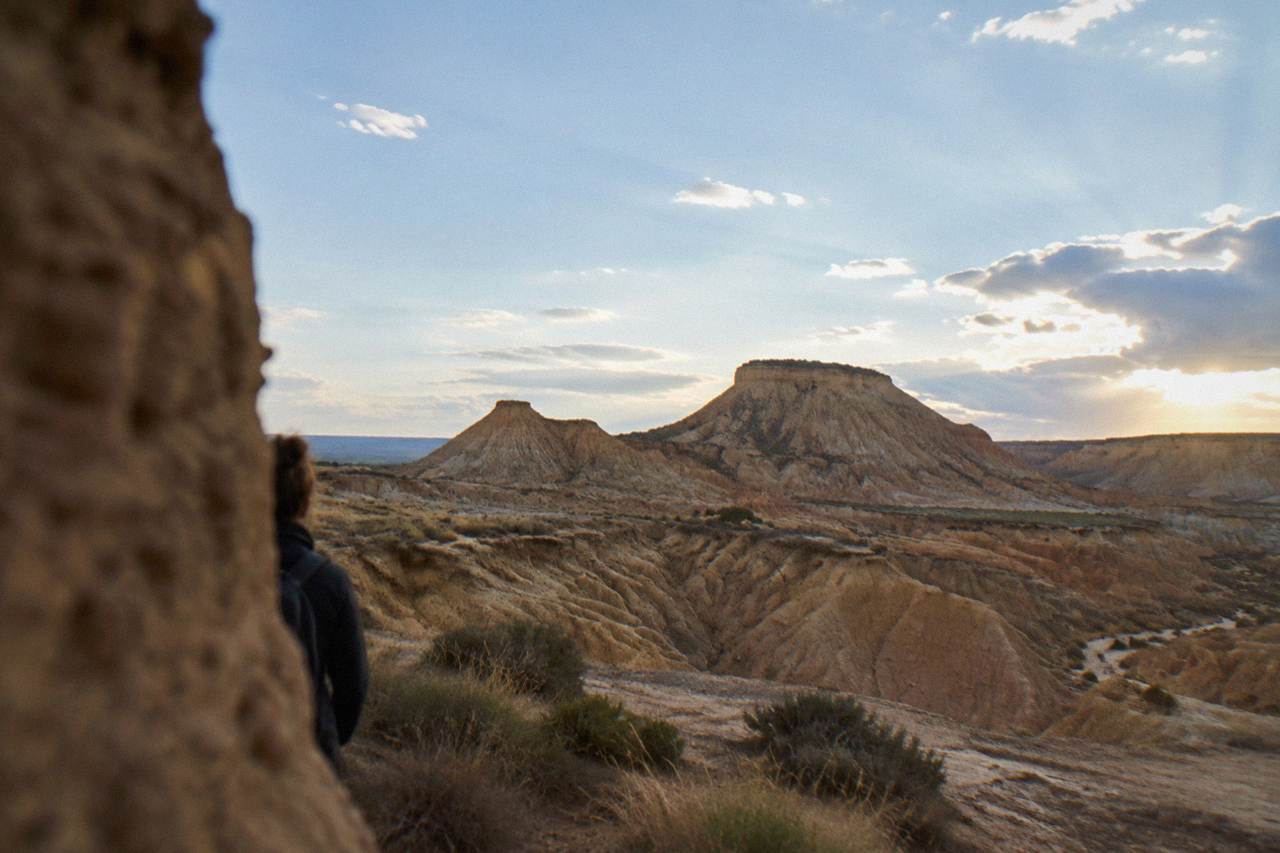
The Bardenas Reales is a semi-desert badland region in the south-east of Navarra, a landscape of soft clay, chalk and sandstone that water and wind have carved into ravines, plateaus and freestanding hills. It is protected natural territory, it is grazed by flocks under ancient grazing rights rather than farmed, and it sits within easy day-trip range of Zaragoza while looking like a different country. No sea, no river beach, no greenery to speak of in high summer: this is the driest kind of scenery a visitor based in Zaragoza can reach, and that is exactly its appeal.
The name needs a little unpacking. "Reales" refers to the old royal grazing rights, the "bardenas" themselves to the wasteland commons, and the area is still used by herders from villages around Navarra as it has been for centuries. That history matters to how the place feels: this is not a fenced national park with visitor centres and paved walkways at every turn, but a working, weather-beaten commons that happens to be one of the most photogenic landscapes in northern Spain.
For a traveller planning from Zaragoza, the mental model should be "open badlands with a few marked tracks", not "city park". The surface is clay and sand, the vegetation is sparse scrub, and the horizon is broken by white and ochre formations that change colour dramatically through the day. Sunrise and late afternoon are when photographers get the warm light that makes the hills glow, and midday in summer is when the whole plain bakes.

Where Are The Bardenas Reales Relative To Zaragoza?
The Bardenas Reales lie to the south-east of Zaragoza, across the administrative border into Navarra, in the Ebro river basin that both regions share. There is no rail line into the badlands and no direct public transport link from the city, so the realistic options are a self-driven car day or a privately arranged vehicle, with the route leaving Zaragoza towards the Ebro valley roads that head towards Tudela. The drive is straightforward main-road driving for most of the way, with the final stretch onto local roads and then dirt tracks inside the badlands themselves.
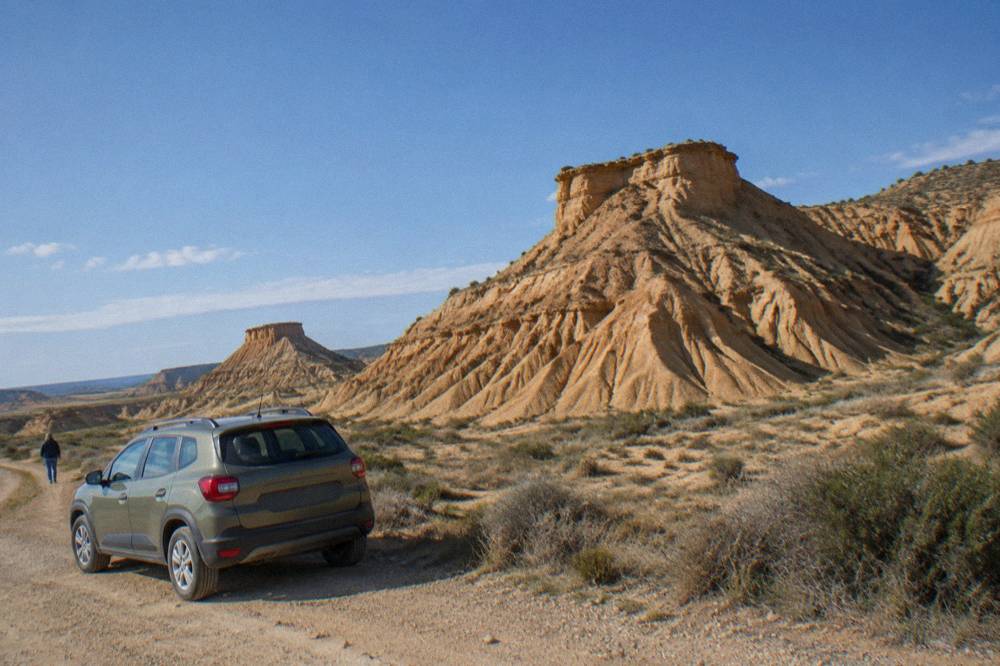
Direction matters more than any timetable here. From Zaragoza the natural route follows the Ebro downstream, and the badlands open up as the land flattens into Navarra's Ribera district. The final approach is where planning pays off: the Bardenas have a small number of entry points, and the tracks inside are unpaved. A standard city rental car can handle the main sightseeing circuit in dry conditions, but after rain the clay turns to slick mud, and that is the single most important thing to check before setting out.
If a self-driven desert day sounds like too much, the honest answer is that the bookable guided day trips from Zaragoza point in other directions, towards the Pyrenees, Tarazona and the wine country, and those are covered further down this page. For everything the city itself offers before or after a Bardenas day, the things to do in Zaragoza page collects the full range.
For context, here is how the Bardenas compares with the other day-trip directions from Zaragoza:
| Day trip from Zaragoza | Direction | Landscape | Kind of day |
|---|---|---|---|
| Bardenas Reales | South-east, into Navarra | Semi-desert badlands, clay and chalk | Self-driven, open tracks, photography |
| Monasterio de Piedra | South-west | Waterfalls and a monastery park | Walks, gardens, family day |
| Albarracín | South | Red cliffs and a medieval hill town | Town wandering, viewpoints |
| Ordesa National Park | North, into the Pyrenees | High mountain valley, forest and peaks | Hiking, guided excursion available |
| Moncayo Natural Park | West | Aragon's highest massif, forested slopes | Hiking, cooler air |
| Belchite | South | Civil War ruins, sobering historic site | Reflective visit, guided options |
Can You Take A Guided Tour From Zaragoza To The Bardenas?
No bookable guided day trip from Zaragoza to the Bardenas Reales exists among the city's guided options, so a visit means driving yourself or arranging private transport. The guided day trips that do depart from Zaragoza run north to the Pyrenees, west to Tarazona and the Moncayo, and out into the wine regions, and travellers who want a guided desert day would need to look for operators based in Navarra itself and join them locally. That is a real constraint, not a rounding error, and it shapes how this page is written.
The strongest guided day trip from the city for a landscape-lover is the Canfranc, Jaca and Sallent de Gállego tour, an excursion into the Aragonese Pyrenees that trades the Bardenas' dry heat for mountain valleys, the famous international station at Canfranc and the village of Sallent de Gállego. It carries a 5 rating from 2 reviews on its listing, and it is one of the few ways to see dramatic scenery from Zaragoza without hiring a car. Read about it on the Canfranc, Jaca and Sallent de Gállego tour page, or Check availability if the dates line up.
For anyone weighing a mountain day against a desert day, the practical difference is effort: the Pyrenees excursion handles the driving, the timing and the stops for you, while the Bardenas ask you to plan every kilometre yourself. Both deliver scenery the city cannot match, and many visitors end up doing one of each across a longer stay.
What Does The Landscape Actually Look Like?
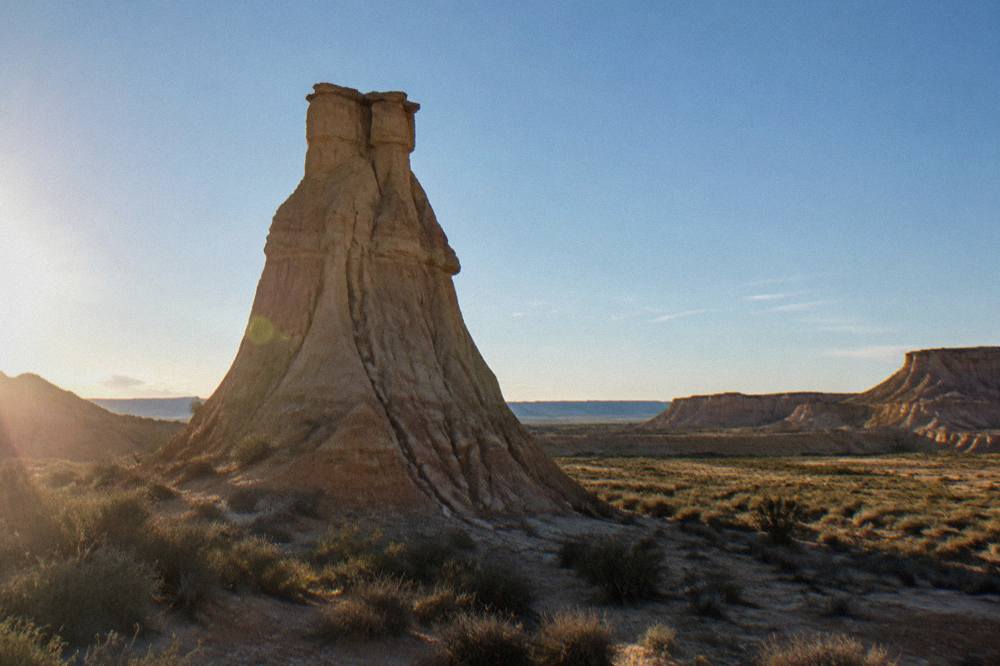
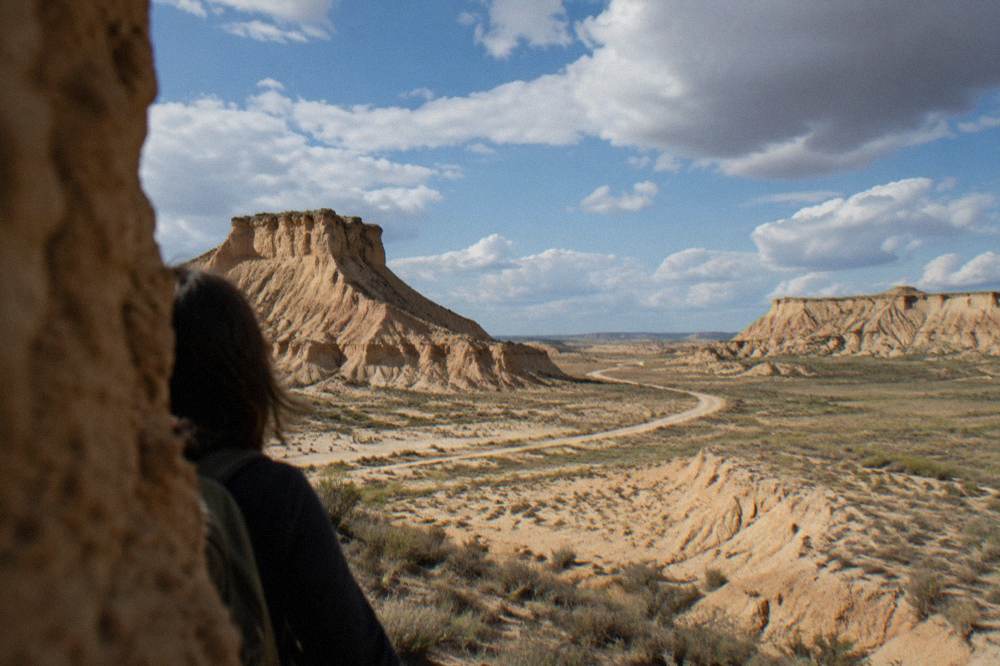
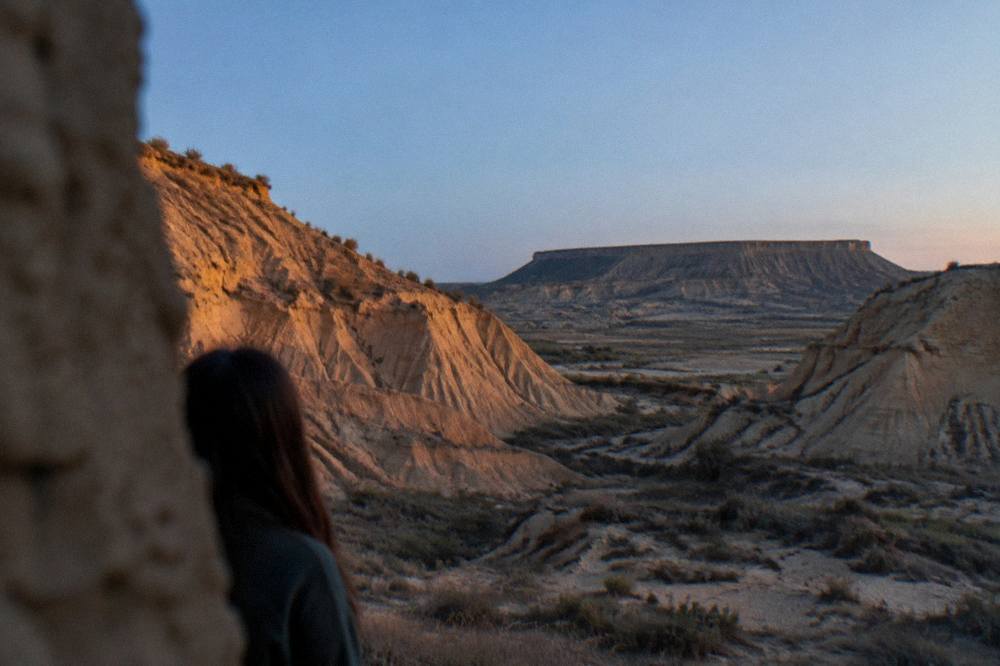
The Bardenas divide into eroded clay plains, dry ravines and isolated flat-topped plateaus, with freestanding chalk and sandstone formations rising out of the scrub. The colours run from white to ochre to grey, the vegetation is low thorn scrub and grasses, and the whole terrain is soft enough that water does the sculpting: every heavy rain reshapes gullies and undercuts the hills, which is why the formations look freshly carved rather than ancient and solid.
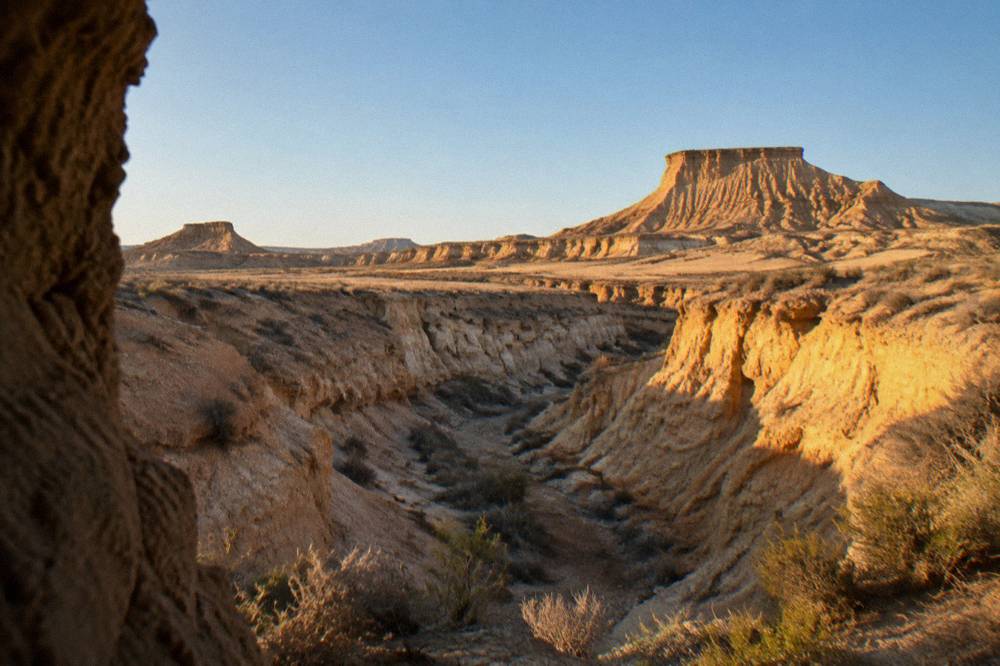
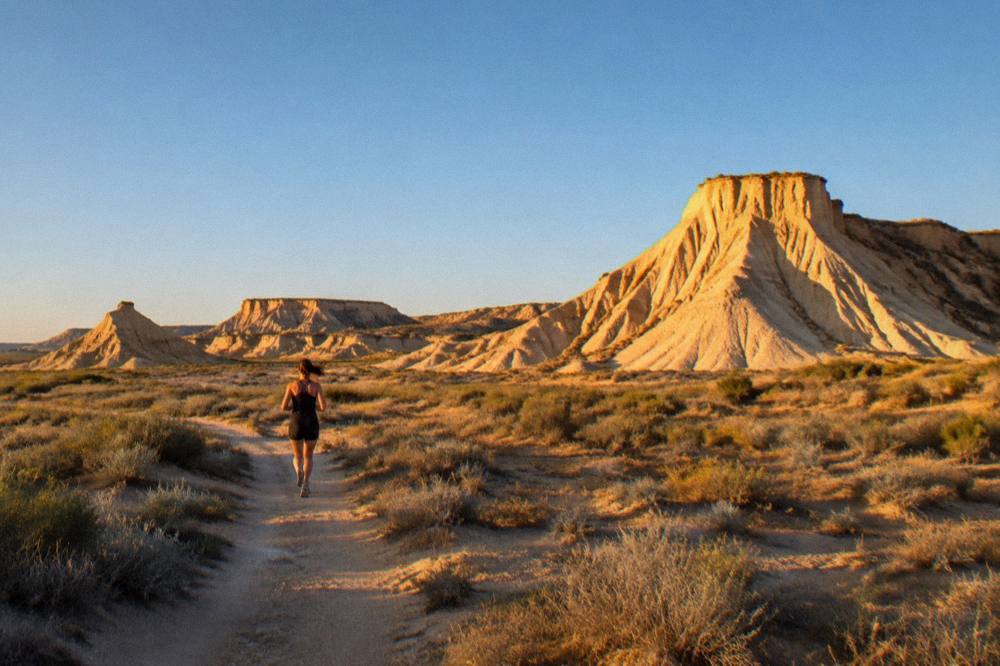
Three kinds of scenery dominate a visit. The first is the open plain, pale and almost vegetation-free, crossed by dirt tracks that vanish into the haze. The second is the ravine country, where dry watercourses cut between steep clay walls and the sense of enclosure changes completely. The third is the plateau and hill country, where the hard cap of a formation has protected the soft clay beneath it, leaving the castellated shapes that the region is photographed for.
Wildlife is a quiet bonus rather than a headline. Birds of prey patrol the ravines, and the scrub holds small birds and the odd hare. Most of a visit, though, is about geology and light, and the best hours are the first and last of the day, when the low sun turns the white clay gold and the shadows give the formations depth. Midday light flattens everything and, in summer, the heat makes walking uncomfortable.
When Is The Best Time Of Year To Visit The Bardenas From Zaragoza?
Spring and autumn are the best seasons for a Bardenas day trip, because the badlands amplify the temperature of the surrounding region and summer midday heat there is punishing. AEMET's 1981 to 2010 normals for the Zaragoza Aeropuerto station show July with a mean maximum of 32.4 C and June at 29.3 C, while April and October sit at 19.6 C and 21.4 C, and the Bardenas, with no shade and no water, feel hotter than those valley numbers suggest.
The climate table below is the verified record for Zaragoza itself, the nearest station with published normals, and it is the right planning baseline for the whole Ebro basin day-trip belt. Note that May is the wettest month at 44 mm and July and August the driest at 17 mm, which cuts two ways: spring brings the greenest scrub and the clearest light, but also the rain that can close the clay tracks. Everything else covered here is indexed on Zaragoza Travel Guide.
| Month | Mean max C (1981-2010) | Mean C | Rain mm | Sun hours |
|---|---|---|---|---|
| March | 17.3 | 11.6 | 19 | 217 |
| April | 19.6 | 13.8 | 39 | 226 |
| May | 24.1 | 18.0 | 44 | 274 |
| June | 29.3 | 22.6 | 26 | 307 |
| July | 32.4 | 25.3 | 17 | 348 |
| August | 31.7 | 25.0 | 17 | 315 |
| September | 27.1 | 21.2 | 30 | 243 |
| October | 21.4 | 16.2 | 36 | 195 |
| November | 14.8 | 10.6 | 30 | 148 |
Winter visits are possible and the low-angle light is excellent, but the days are short and the cierzo, the cold dry north-west wind of the Ebro valley, can make the exposed plain brutal. Whenever you go, check the weather forecast for rain: wet clay is the one condition that genuinely stops a visit, because the tracks become impassable and the formations lose their colour under grey skies.
What Should You Pack For A Day In The Badlands?
Pack for a hot, dry, shadeless environment even in shoulder season: more water than feels reasonable, sun protection, closed shoes with grip for clay and sand, and layers for the wind. There are no shops, no fountains and no fuel inside the badlands, so everything for the day, including a full tank and a paper or offline map for the stretches with no signal, has to be carried in from Zaragoza or the last town on the approach.
| Item | Why it matters in the Bardenas |
|---|---|
| Water, well beyond a single bottle | No supply points exist inside the badlands |
| Sun hat and high-factor sunscreen | There is effectively no shade on the tracks or plains |
| Closed walking shoes | Clay, sand and thorn scrub, not paved paths |
| Windproof layer | The Ebro-basin wind crosses the open plain unhindered |
| Offline map or downloaded route | Signal is unreliable across the tracks |
| Full fuel tank | No fuel is available inside the badlands |
| Binoculars | Birds of prey over the ravines are a highlight |
A small practical note on timing: because the best light is early and late, many photographers split the day, doing the badlands at first light or in the evening and spending the middle of the day elsewhere. Tudela, the Navarrese town on the approach, is the natural service stop for food and fuel, and it breaks up the drive sensibly.
What Are The Rules Inside The Bardenas Reales?
The Bardenas are protected territory with grazing rights and strict access rules: vehicles must stay on the marked tracks, walking is limited to designated routes, camping is not allowed, and removing anything from the landscape, or carving into the clay, is prohibited. Fire is an absolute no in a semi-desert, drones are restricted without authorisation, and the weather decides more than any signpost, because rain closes tracks that are open again within a day or two.
The reason for the strictness is that the terrain is fragile. The clay formations erode quickly by nature, and foot traffic or tyre tracks off the marked ways leave scars that persist. The grazing flocks also have right of way in a very literal sense: the region's economy has run on those rights for centuries, and the livestock and the shepherd tracks are part of the protected system, not an obstacle to it.
| Rule | Reason |
|---|---|
| Stay on marked vehicle tracks | Soft clay scars easily and erodes further |
| Walk only on designated routes | The formations and scrub are fragile |
| No camping or overnight stops | The area is a protected commons, not a campsite |
| No fire of any kind | Semi-desert vegetation is highly flammable |
| Nothing removed, nothing carved | Every formation is actively eroding heritage |
| Drones only with authorisation | Protection of wildlife and other visitors |
Respect also extends to scale. The badlands look like a film set, and they have been used as one, which tempts visitors to climb the formations for photos. Don't: the clay crumbles underfoot, and a fall onto hard-packed ground in a place with no quick rescue access is a serious matter. The 112 number is the EU emergency line, but the best safety measure is not needing it.
Which Other Day Trips From Zaragoza Compare With The Bardenas?
The closest comparisons from Zaragoza are Albarracín's red cliffs and the Moncayo's high slopes, but the real choice is between landscapes you can reach yourself, like the Bardenas, and landscapes with a guided excursion from the city, which means the Pyrenees, Tarazona and the Moncayo, or the wine regions. For travellers without a car, the guided options below are the practical way to get out of the city for a day.
The Pyrenees excursions are the headline acts. The excursion to Canfranc, Jaca and Sallent de Gállego from Zaragoza runs 11 hours, lists from $66.40 per person and carries a 4.7 rating from 10 reviews, while the Ordesa day tour covering Aínsa, Torla and the Sorrosal waterfall lists from $66.40 with a 5 rating from 3 reviews. Both deliver mountain scenery that is the Bardenas' exact opposite: green, cold and vertical.
West of the city rather than south-east, the Tarazona and Moncayo day trip, billed as a visit to Spain's excommunicated and cursed town with food included, runs 7 hours from $209.33 per person with a 4.7 rating from 6 reviews, and pairs a dramatic hillside town with the Moncayo massif that dominates Zaragoza's western skyline. The Tarazona day-trip page and the Moncayo Natural Park page cover both destinations in depth for self-drivers.
| Guided day trip from Zaragoza | Duration | From (per person) | Rating |
|---|---|---|---|
| Canfranc, Jaca and Sallent de Gállego | 11 hours | $66.40 | 4.7 from 10 reviews |
| Ordesa, Aínsa, Torla and Sorrosal waterfall | 11 hours | $66.40 | 5 from 3 reviews |
| Tarazona and Moncayo, with food | 7 hours | $209.33 | 4.7 from 6 reviews |
| Somontano wine excursion with Alquézar | Full day | $280.95 | 5 from 14 reviews |
| Half-day winery tour from Zaragoza | Half day | $166.28 | 5 from 21 reviews |
| Olive oil tour with Belchite old town | 5 hours | $108.94 | 4.8 from 18 reviews |
Wine and food days round out the alternatives. The full-day Somontano wine excursion with a visit to Alquézar lists from $280.95 with a 5 rating from 14 reviews, and the olive oil tours that combine a mill visit with the ruined old town of Belchite run from $108.94. Belchite deserves a sober note: the old town was destroyed in the Spanish Civil War and left as it stood, and the visit is a memorial as much as a sightseeing stop. The Belchite page explains the history properly.
For a gentler pace, an evening back in the city works just as well: the wine tasting and tapas experiences in Zaragoza's old town run around three hours and pair local Somontano and Cariñena pours with bar snacks, a fitting end to a day spent in the dust. The guided options below collect the three strongest day-out choices from the city in one place.
How Does A Bardenas Day Fit Around Time In Zaragoza Itself?
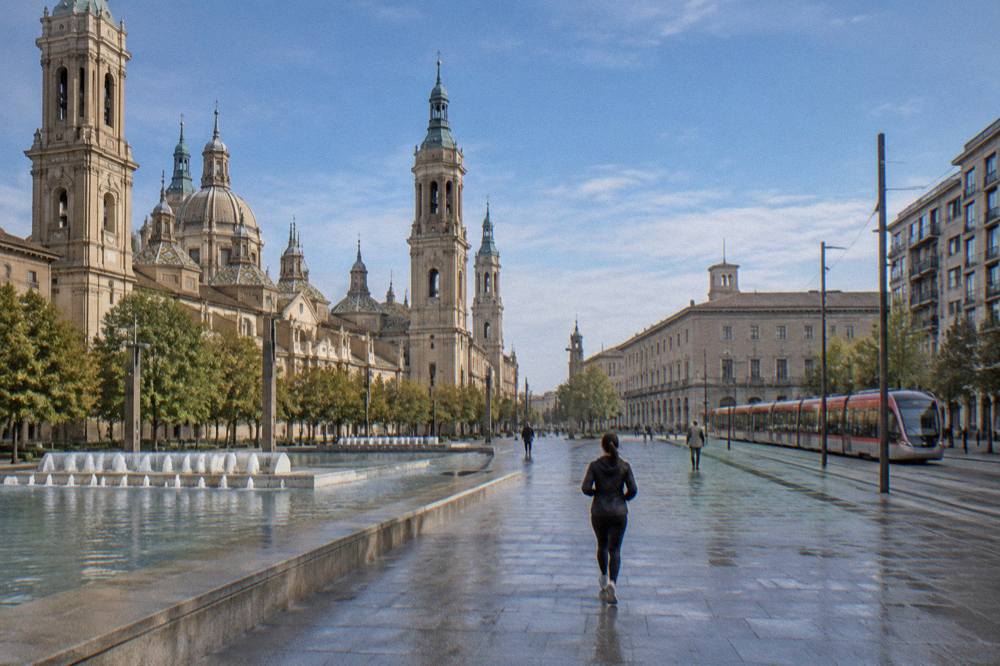
A Bardenas day pairs naturally with a relaxed city evening, because the drive back lands you in Zaragoza in time for the tapas hour, and the city's headline sights are cheap or free: entering the Basílica del Pilar costs nothing, the Aljafería palace charges 7 EUR general admission, and La Seo cathedral charges 10 EUR including its Museo de Tapices, per the municipal monument timetable. A desert morning and a Mudéjar evening is one of the better single-day contrasts Spain offers.
If the Bardenas day leaves you with a half day in the city, the Caesaraugusta Roman museums are a compact option: the Forum costs 4 EUR, the Baths and River Port 3 EUR each, and a four-museum ticket costs 7 EUR, with free entry on the first Sunday of the month. The Aljafería is open daily 10:00 to 18:00 in October, with free entry on the first and third Sunday and Monday of each month, and last access 45 minutes before closing.
| Zaragoza sight | Admission | Notes from the municipal timetable |
|---|---|---|
| Basílica del Pilar (temple) | Free | Tower viewpoint 6 EUR adult, 4 EUR ages 13-18 |
| Aljafería palace | 7 EUR general, 9 EUR guided | Free 1st and 3rd Sunday and Monday |
| La Seo cathedral | 10 EUR general | Includes Museo de Tapices and Museo Pilarista |
| Caesaraugusta Forum | 4 EUR | 4-museum bono 7 EUR, free 1st Sunday |
| IAACC Pablo Serrano | Free | Tue-Sat 10-14 and 17-21 |
| Torreón de la Zuda viewpoint | Free | "Mirador de las cuatro culturas" on the 5th floor |
One caution for the evening plan: the Museo de Zaragoza's central building on Plaza de los Sitios is closed for Ministry of Culture works with no reopening date, so do not build an itinerary around it. The Museo Goya, by contrast, reopens on 9 October 2026 after renovation, which makes an autumn Bardenas-plus-Goya combination a genuinely good pairing.
Common Questions About Visiting The Bardenas Reales From Zaragoza
Do you need a 4x4 for the Bardenas Reales?
The main sightseeing circuit uses unpaved but graded dirt tracks that a normal car can manage in dry conditions. A 4x4 helps after rain or on the rougher side tracks, but the deciding factor is the weather, not the vehicle: wet clay closes the tracks for any car.
Is there a guided tour from Zaragoza to the Bardenas Reales?
No. The bookable guided day trips from Zaragoza run to the Pyrenees, Tarazona and the Moncayo, and the wine regions. A guided visit to the Bardenas would mean joining an operator based in Navarra locally, or arranging private transport.
How long should you spend in the Bardenas?
Most visitors spend half a day on the tracks and viewpoints, timed for early or late light, and combine the trip with a stop in Tudela or another Ribera town. A full day works for photographers who want both sunrise and sunset sessions.
When should you avoid visiting the Bardenas?
Avoid the middle of the day in high summer, when the shadeless plain is dangerously hot, and avoid any day with rain in the forecast, because the clay tracks become impassable and the formations photograph poorly under grey skies.
Can you camp or stay overnight in the Bardenas Reales?
No. Camping and overnight stops are not permitted inside the protected area. Visitors stay in the surrounding towns, of which Tudela is the largest on the approach from Zaragoza, and enter for the day.
Is the Bardenas Reales visit suitable for children?
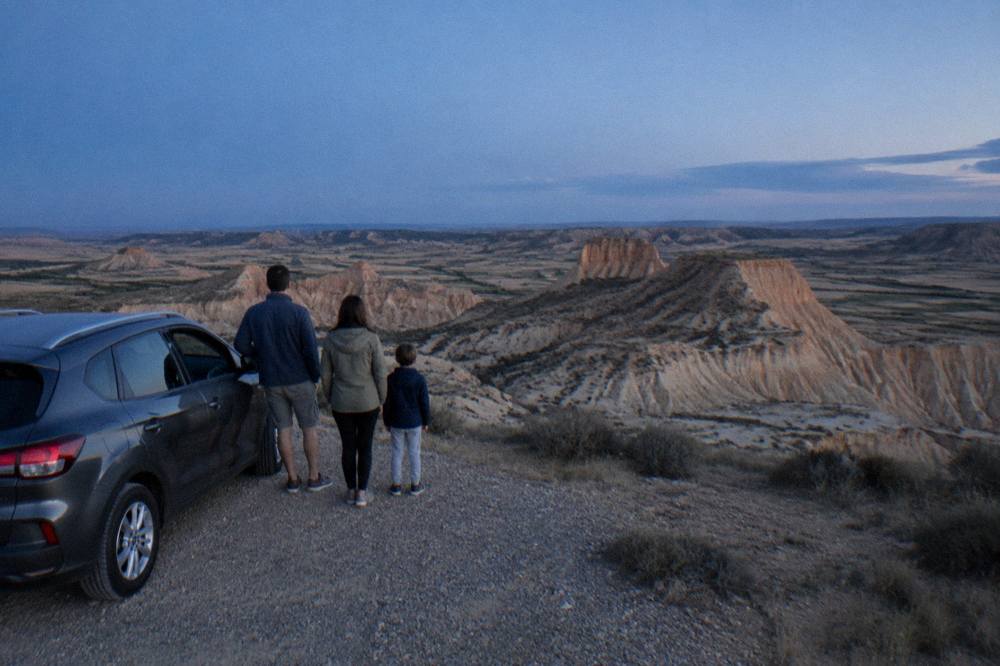
Children usually love the landscape, it looks like a film set, but the demands are real: no shade, no water points, no toilets on most of the circuit, and long stretches in the car. Go in spring or autumn, carry plenty of water, and keep the walking short.
The Bardenas Reales reward exactly the kind of traveller who plans a day trip from Zaragoza properly: someone who checks the rain forecast, fills the tank, leaves early for the good light, and respects a fragile, working landscape that happens to be one of the most extraordinary sights in northern Spain. Pair it with a tapas evening back in the old town, and you have a day that no visitor to Zaragoza, Spain forgets in a hurry.