San Juan De La Peña: A Pyrenees Monastery Day Trip From Zaragoza
The Monasterio de San Juan de la Peña is one of Aragon's most dramatic medieval sites: a monastery built into the overhang of a giant rock, in the forested foothills north of Zaragoza, Spain. This page explains what the place is, what kind of day it makes from Zaragoza, and how the guided Pyrenees excursions handle it.
Short answer
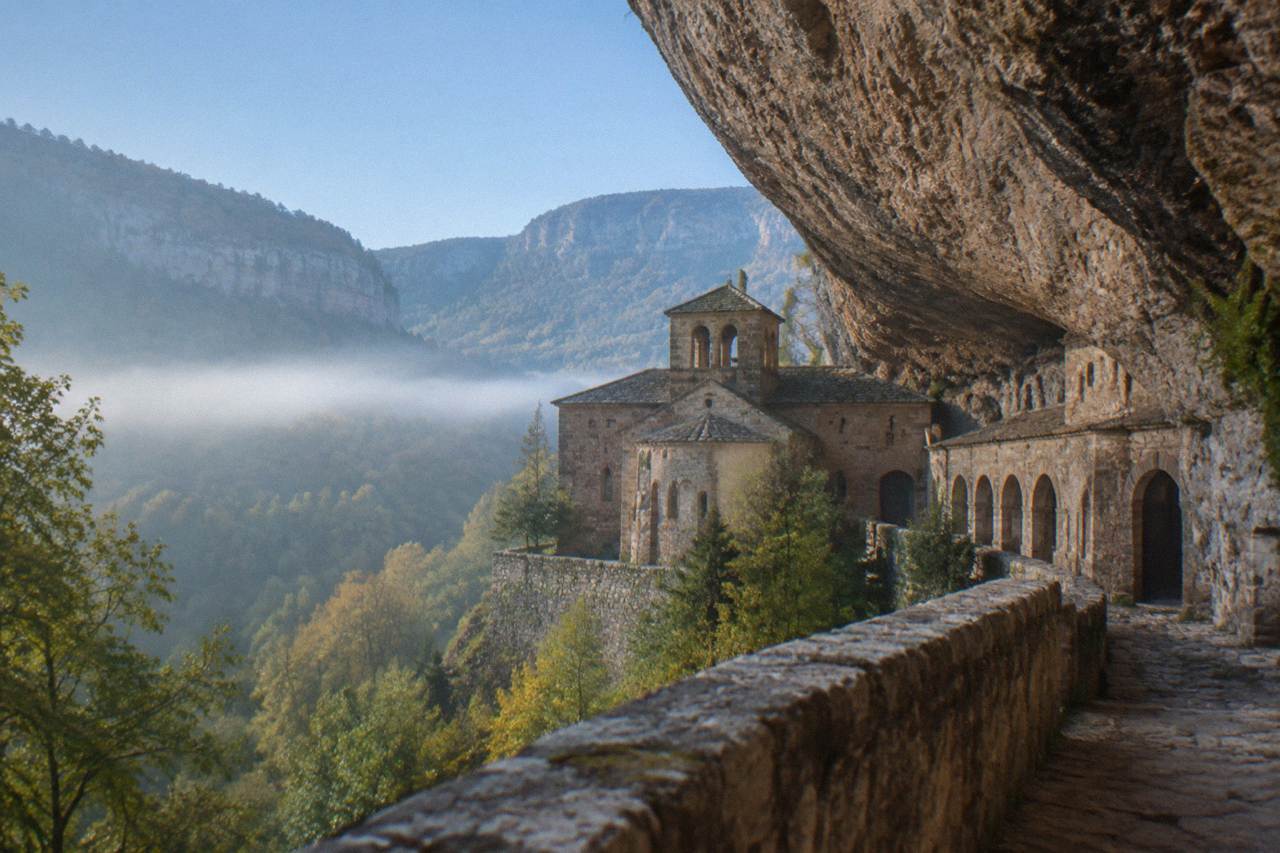
The Monasterio de San Juan de la Peña is a medieval monastery complex in the Aragonese Pyrenees foothills, northwest of Zaragoza in Huesca province. The oldest part sits sheltered beneath a huge rock overhang, with a later baroque monastery on the plateau above. It is a full-day destination from Zaragoza, reached by car or by a guided Pyrenees excursion.
Zaragoza, the capital of Aragon on the Ebro, sits on a dry inland plain, and the single biggest change of scenery available to a visitor based there is the Pyrenees to the north. The Monasterio de San Juan de la Peña is one of the most remarkable places in that whole mountain range: a monastery whose oldest rooms were built directly into the shelter of an enormous sandstone cliff, in a wooded valley in Huesca province. The site is one of the defining monuments of medieval Aragon, and it makes a memorable contrast with the Mudéjar towers and Roman stones of the city itself. This page covers what the monastery is, what the day from Zaragoza looks like, and how the guided mountain excursions fit in.
What Is The Monasterio De San Juan De La Peña?
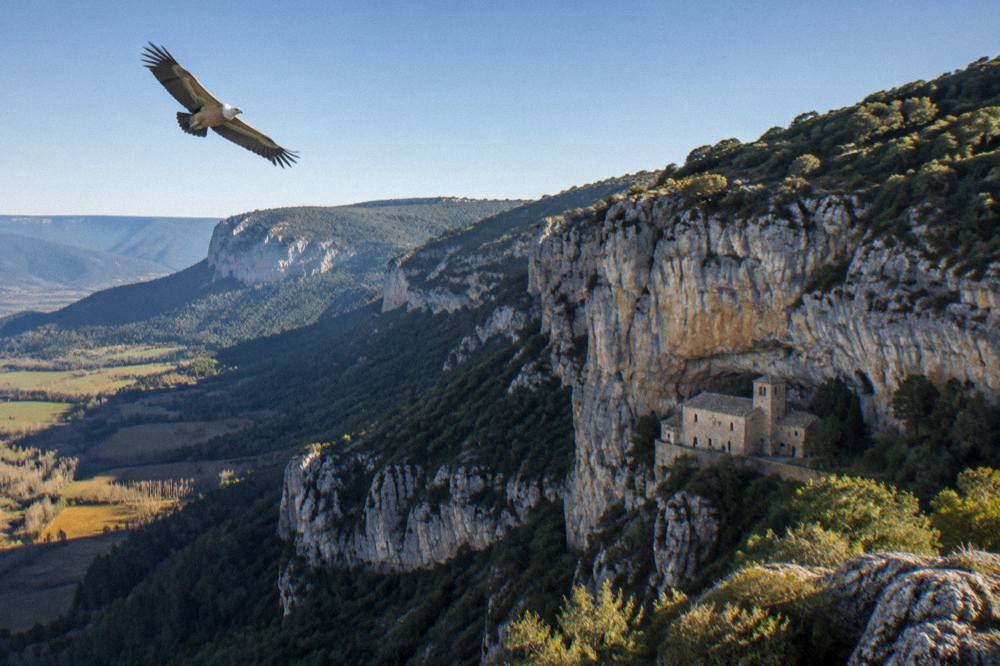
The Monasterio de San Juan de la Peña is a two-part monastery complex in the Sierra de San Juan de la Peña, in the foothills of the Aragonese Pyrenees in Huesca province, northwest of Zaragoza. The lower, older monastery is built into the overhang of a huge rock face, which is what gives the site its name, and a larger baroque monastery stands on the plateau above it. The place is tied to the medieval kingdom of Aragon and to the tradition of the Holy Grail.
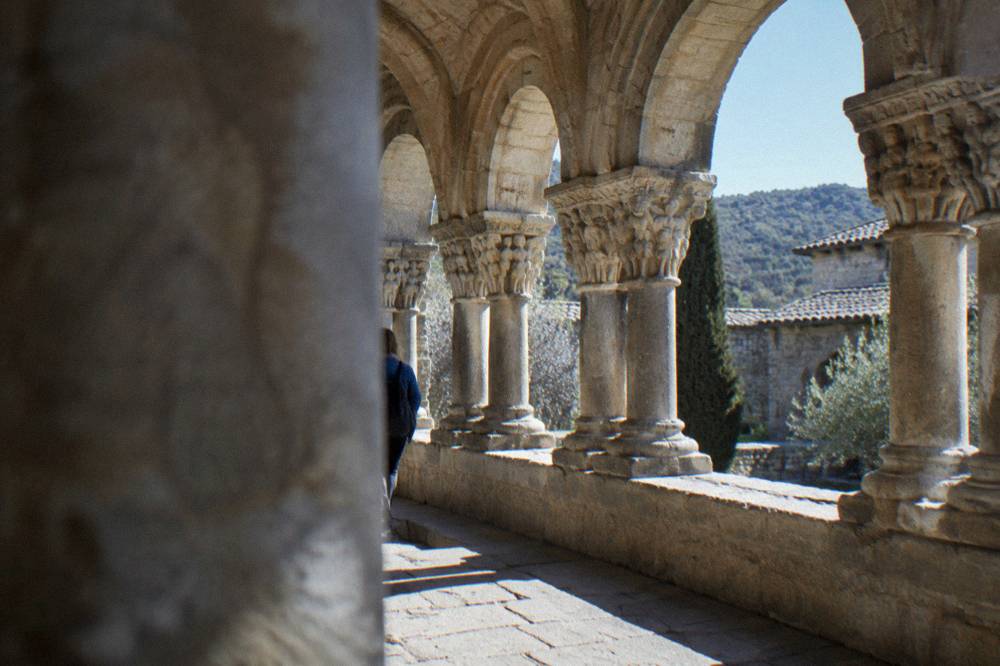
The older of the two monasteries is the reason people make the journey. Its church, cloister and monastic rooms sit underneath a natural rock shelter so deep that the cliff itself serves as the roof, and the Romanesque carving of the upper cloister is counted among the finest in Aragon. The site's own tradition holds that a piece of the Holy Grail was kept here in the Middle Ages, a legend the monastery still tells today, and the complex also served as the resting place of early kings of Aragon, which is why it carries so much weight in the region's story.
The newer monastery, a short walk or shuttle ride above, is a large baroque building that replaced the cramped lower house as the monks' main residence. Today it houses interpretation displays about the monastery's history, the natural park that surrounds it, and the birds of prey that nest on the cliffs. Between the two buildings, the site sits inside a protected landscape of pine forest and limestone, well above the plain of Zaragoza both in altitude and in mood.
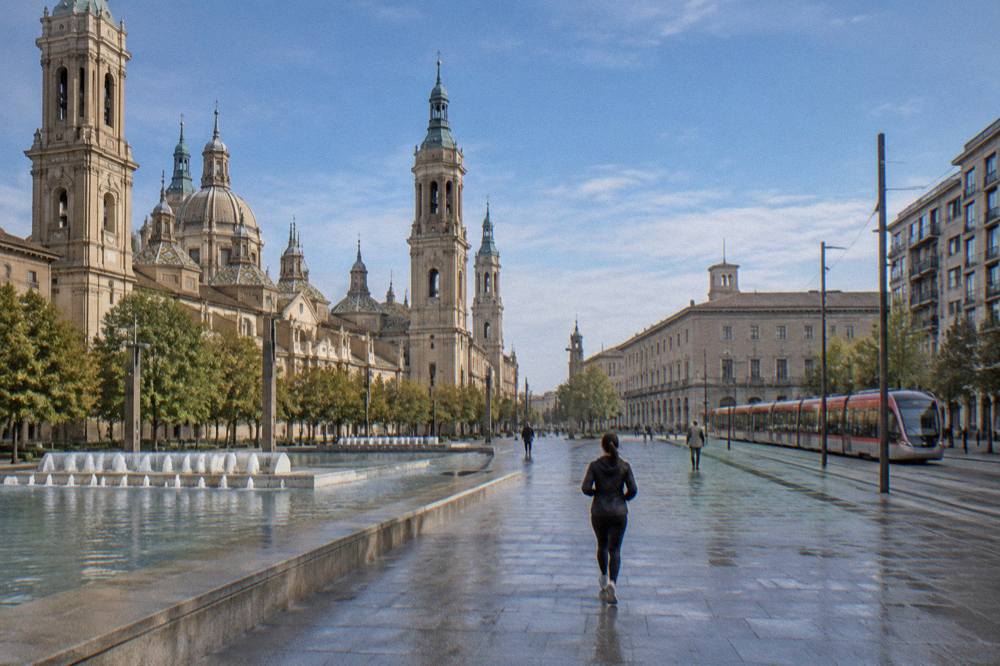
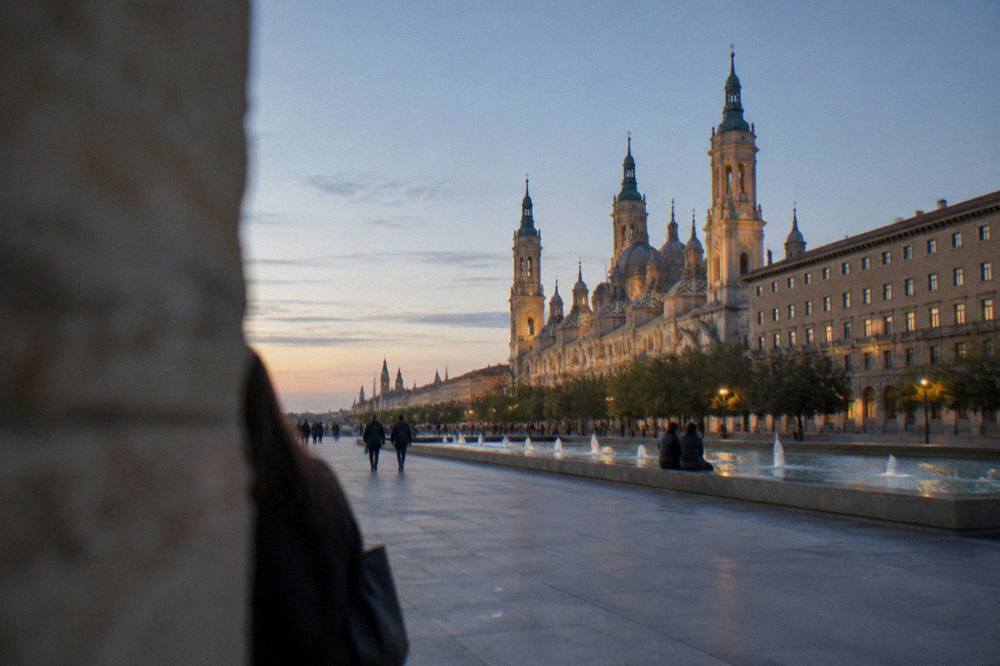
For a visitor coming from the city, the useful framing is this: Zaragoza's own monuments, the Basílica del Pilar, La Seo and the Aljafería, are urban masterpieces of brick and stone, while San Juan de la Peña is Aragon's medieval memory set into raw mountain rock. The two experiences complement each other rather than compete.
How Do You Get To San Juan De La Peña From Zaragoza?
The monastery lies in the Aragonese Pyrenees foothills in Huesca province, to the north of Zaragoza, and it is a full-day outing by private car or by guided excursion. No train serves the mountain valleys, so the realistic choices from Zaragoza are driving yourself, joining one of the Pyrenees day trips that run from the city, or building the visit into a longer self-drive tour of Huesca and the high valleys.
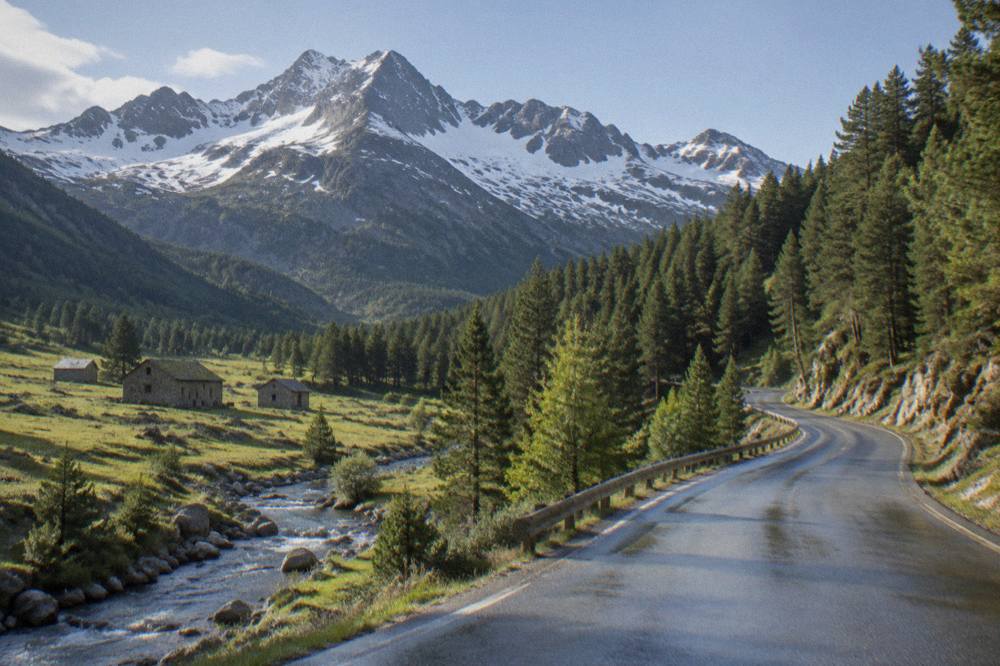
The drive is the part that shapes the day. The route leaves Zaragoza northward through the somontano, the band of rolling country between the Ebro plain and the mountains, and climbs steadily into forested hills before reaching the monastery's valley. Mountain roads on the final stretch are winding, and the site sits at altitude, so the journey is part of the experience rather than dead time. Anyone uncomfortable with mountain driving, or simply unwilling to spend a holiday day at the wheel, is exactly who the guided excursions are for.
Getting out of Zaragoza itself is cheap. The 2026 Avanza fare table lists the urban bus and tram single at 1.70 EUR, or 0.55 EUR with a Tarjeta Bus, and the card itself costs 7 EUR and works on both networks. If your Pyrenees day starts from the Zaragoza-Delicias area, those are the figures that matter.
| Departure item from Zaragoza | Figure | Notes |
|---|---|---|
| Urban bus or tram single | 1.70 EUR | 2026 Avanza fare table |
| Same trip with Tarjeta Bus | 0.55 EUR | Card valid on bus and tram |
| Tarjeta Bus card cost | 7 EUR | One-off purchase |
| Night bus single | 1.00 EUR | Night lines |
| Tourist bus day ticket | 10 EUR | 24 hours, 16 stops, 90-minute loop |
For the mountain day itself, the guided options are the practical answer for most visitors. The excursion to Canfranc, Jaca and Sallent de Gállego runs from Zaragoza into the same broad region, from $66.40 per person, rated 4.7 from 10 reviews over 11 hours, and it handles the driving, the parking and the timing in a single booking. There is also a companion Canfranc, Jaca and Sallent de Gállego tour from Zaragoza at from $67.66 per person, rated 5 from 2 reviews, and the Ordesa day covering Aínsa, Torla and the Sorrosal waterfall, from $66.40 per person and rated 5 from 3 reviews. None of these is a dedicated San Juan de la Peña shuttle, but they are the bookable way to see the Aragonese Pyrenees from a Zaragoza base.
A self-drive day, by contrast, gives you the monastery at your own pace and the freedom to stop in Jaca or the Sierra y Cañones de Guara on the way. The trade is simple: the car buys flexibility, the excursion buys ease. Check the monastery's own visitor information before setting out, because the site's access arrangements, including how visitors move between the lower and upper monasteries, are managed by the natural park and can change seasonally.
What Will You See At The Monastery Site?
The site holds two monasteries: the lower Romanesque monastery carved into the rock overhang, with its upper cloister and the royal pantheon, and the baroque new monastery on the plateau above, which now serves as an interpretation centre. Around them stretches the protected parkland of the Sierra de San Juan de la Peña, with viewpoints, forest paths and cliffs where griffon vultures and other birds of prey nest.
Start at the lower monastery, because it is the part no photograph fully prepares you for. The rock hangs over the church and cloister like a wave frozen mid-break, and the upper cloister's carved capitals, scenes of biblical figures and medieval life, are the artistic highlight of the whole complex. The pantheon area, associated with the early kings of Aragon, gives the place its weight in the region's history: this was a royal foundation in the kingdom that ruled from Jaca and later from Zaragoza itself.
The upper monastery tells the second half of the story. When the community outgrew the cliff shelter, it built a grand baroque house on the plateau, and that building today carries exhibitions on the monastery, the natural park and the raptors that circle the crags. The viewpoints near the upper house look out over the wooded valleys of the sierra, and on clear days the sense of being above the world is the site's quiet second attraction.
Between the two, the natural park matters as much as the architecture. The monastery sits in a landscape reserve, and the walk between the lower and upper sites, or the short shuttle that serves them, passes through pine woods where the temperature drops noticeably below anything on the Zaragoza plain. AEMET's 1981 to 2010 normals for the Zaragoza Aeropuerto station show the city averaging 21 C across the year, with July's mean maximum at 32.4 C, and the mountains offer a genuine escape from that summer heat.
| Part of the site | What it is | Why it matters |
|---|---|---|
| Lower monastery church | Romanesque church under the rock overhang | The rock itself forms the sheltering roof |
| Upper cloister | Carved Romanesque capitals | Among the finest Romanesque carving in Aragon |
| Royal pantheon | Resting place of early Aragonese royalty | Ties the site to the medieval kingdom of Aragon |
| New monastery | Baroque building on the plateau | Now the interpretation centre for the site and park |
| Park viewpoints | Terraces over the wooded valleys | Regular sightings of nesting birds of prey |
If the mountain day appeals but the logistics feel heavy, the guided excursions from Zaragoza are the straightforward answer. The Canfranc, Jaca and Sallent de Gállego excursion, from $66.40 per person and rated 4.7 from 10 reviews, covers the great Pyrenees sights of the same region in one 11-hour day from the city.
Is San Juan De La Peña Worth The Day From Zaragoza?
For most visitors, yes: it is one of the most distinctive day trips available from Zaragoza, because the rock-sheltered monastery exists nowhere else in Aragon and pairs a first-rate Romanesque monument with a real change of climate and scenery. It is a long day, and it demands either a hire car or a guided excursion, so it suits travellers with at least three nights in the city, or anyone whose main interest is medieval Aragon rather than tapas and Mudéjar alone.
The honest case against is the time cost. The monastery is deep in the foothills, and a day built around it leaves little room for anything else, so a visitor with only one or two full days in Zaragoza is usually better served by the city's own dense cluster of sights, which you can read about in the guide to things to do in Zaragoza. The Museo de Zaragoza page carries an important caveat too: the museum's central building is closed for Ministry of Culture works, with no reopening date, so the city's own museum offer is thinner than guidebooks suggest.
The case for is that the monastery delivers something Zaragoza cannot: the physical drama of the rock overhang, the cool of the pine forest, and the sense of the medieval kingdom of Aragon that the city's monuments only hint at. Travellers who love Romanesque architecture, or who want one mountain day inside a mostly urban trip, rank it alongside the other great Aragonese excursions, from the stone canyon monastery of Monasterio de Piedra to the walled hill town of Albarracín.
A useful way to size the day is to compare the monastery with Zaragoza's other popular escapes:
| Day trip from Zaragoza | Direction | Character |
|---|---|---|
| San Juan de la Peña | North, Pyrenees foothills | Rock-carved Romanesque monastery, forest, birds of prey |
| Monasterio de Piedra | Southwest | Waterfall gardens and a stone monastery |
| Monasterio de Veruela | Southeast, Moncayo foothills | Cistercian abbey and vineyard country |
| Loarre Castle | North, pre-Pyrenees | One of Europe's best-preserved Romanesque castles |
| Albarracín | Southwest | Walled medieval town on a river gorge |
| Bardenas Reales | Southeast | Semi-desert badlands landscape |
None of these destinations carries a verified public-transport timetable or entry price in the site's fact base, so treat the table as a planning comparison rather than a schedule, and confirm costs on each site's own information before committing. What is verified is the pattern: Zaragoza is unusually well placed for contrasting landscapes, and the monastery is the pick for mountain and medieval atmosphere together.
What Can You Combine With San Juan De La Peña?
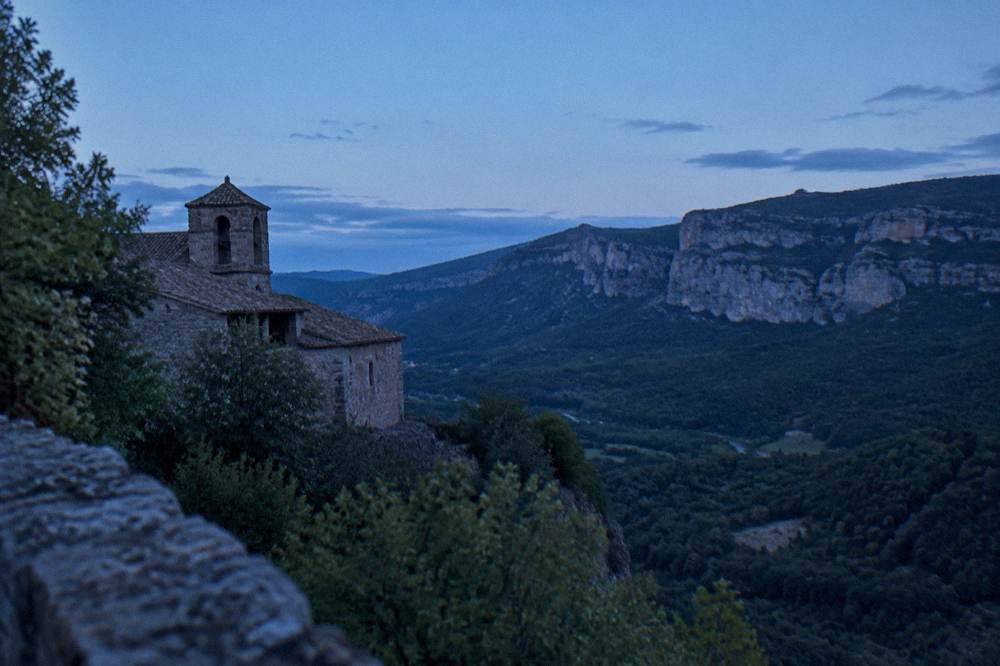
The natural pairing is the town of Jaca, the historic capital of the Aragonese Pyrenees, and the mountain valleys beyond it toward Canfranc and Sallent de Gállego, all in the same broad region north of Zaragoza. A self-drive loop can also take in Loarre Castle in the pre-Pyrenees, while the guided excursions from Zaragoza cover Canfranc, Jaca and Sallent de Gállego or the Ordesa and Aínsa country in single days.
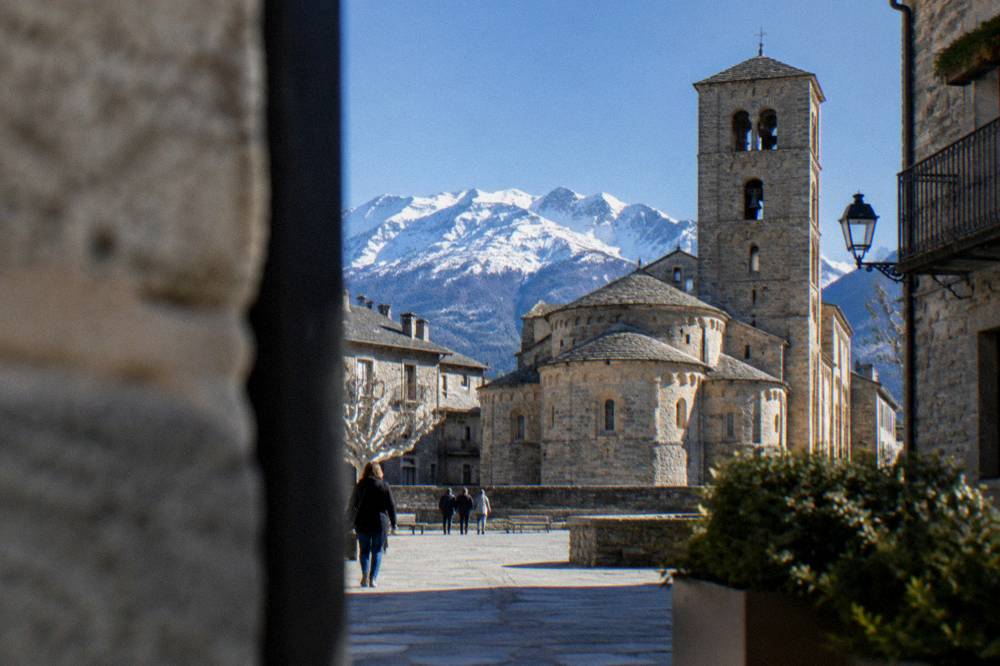
Jaca is the anchor town of the region. It was the first capital of the kingdom of Aragon, its Romanesque cathedral sits at the heart of the old town, and it functions as the service hub for the valleys around it. The great abandoned international station at Canfranc, high in the pass toward France, is one of the most atmospheric railway buildings in Europe, and Sallent de Gállego sits in a high granite valley that feels a world away from the Ebro plain. The Huesca page covers the provincial capital on the way north.
The guided options stitch these places together efficiently. The Ordesa day trip, which covers Aínsa, Torla and the Sorrosal waterfall, runs from Zaragoza at from $66.40 per person and is rated 5 from 3 reviews over 11 hours; you can read more on the Ordesa National Park page. And the second Canfranc, Jaca and Sallent de Gállego tour from Zaragoza, from $67.66 per person and rated 5 from 2 reviews, offers the same region on an alternative itinerary.
| Guided Pyrenees excursion from Zaragoza | From price per person | Rating | Duration |
|---|---|---|---|
| Excursion to Canfranc, Jaca and Sallent de Gállego | $66.40 | 4.7 from 10 reviews | 11 hours |
| Ordesa day: Aínsa, Torla and Sorrosal waterfall | $66.40 | 5 from 3 reviews | 11 hours |
| Canfranc, Jaca and Sallent de Gállego tour | $67.66 | 5 from 2 reviews | Listed on the tour page |
A self-drive week could combine the monastery with Loarre Castle, one of the finest Romanesque fortresses in Europe, and the wine country of the Carinena region on the return south. The pairing logic is simple: the monastery is a half-day of visiting wrapped in a full day of travel, so the day works best when the journey itself carries part of the reward.
When Should You Go And What Should You Bring?
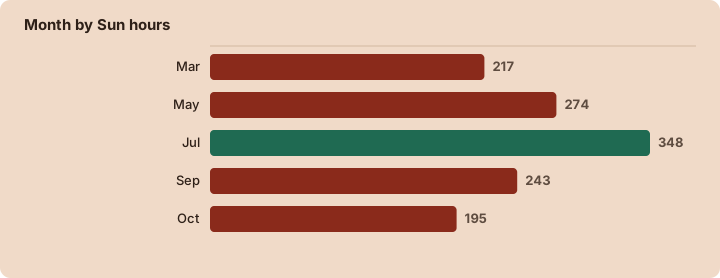
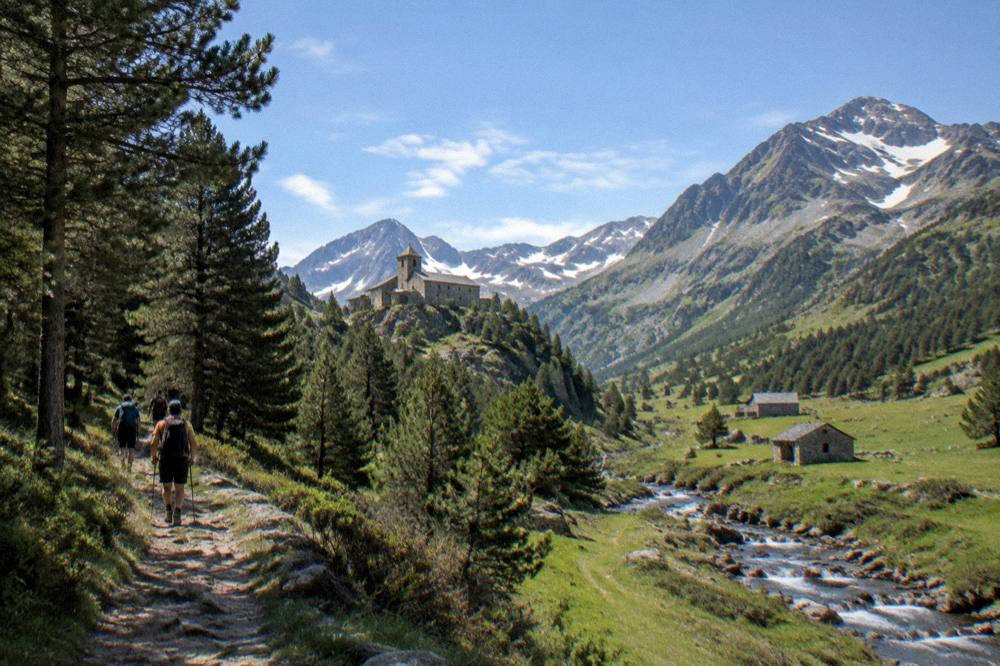
Late spring through early autumn is the comfortable window, because the mountain roads and the walk between the two monasteries are best in dry conditions, and the site's altitude makes even midsummer far cooler than Zaragoza, where AEMET's 1981 to 2010 normals for the Zaragoza Aeropuerto station put July's mean maximum at 32.4 C. Bring layers, because mountain weather changes fast, and sturdy shoes for the paths between the rock shelter and the plateau.
The climate contrast is the practical reason to time the trip well. Zaragoza is dry continental, with only 322 mm of rain across a typical year and July and August the driest months at 17 mm each, while May is the wettest at 44 mm. The mountains behave differently: the same frontal systems that brush the plain can sit in the sierras as cloud and drizzle, so a morning that looks doubtful in the city deserves a second look at the forecast for the foothills.
| Month | Mean max C | Rain mm | Sun hours |
|---|---|---|---|
| Mar | 17.3 | 19 | 217 |
| May | 24.1 | 44 | 274 |
| Jul | 32.4 | 17 | 348 |
| Sep | 27.1 | 30 | 243 |
| Oct | 21.4 | 36 | 195 |
All figures are AEMET 1981 to 2010 normals for the Zaragoza Aeropuerto station, the only window the station page publishes, and they describe the city, not the mountain site, which runs cooler. Winter visits are possible but demanding: the site sits at altitude, and access arrangements in snow conditions are the park's to announce, so check the operator's or the site's notice before you go.
One timing note for autumn travellers: the Fiestas del Pilar run from 10 to 18 October 2026, with the Ofrenda de Flores on 12 October, and while those dates fill Zaragoza's hotels, they leave the mountains quiet. A mountain day in the middle of a Pilar week is a genuinely good way to escape the crowds for a day and come back to the city for the evening.
How Does A San Juan De La Peña Day Actually Run From Zaragoza?
A realistic day starts early from Zaragoza, crosses the somontano through Huesca province, reaches the monastery's valley by late morning, splits the visit between the lower rock monastery and the plateau interpretation centre, then returns through Jaca or the pre-Pyrenees, landing back in the city in the evening, which is why the guided excursions run to roughly eleven hours door to door.
The shape of the day matters more than the clock. The monastery rewards slow looking: the cloister capitals reward twenty unhurried minutes, the pantheon rewards a guide's explanation, and the viewpoints reward a pause. Travellers who race the site to squeeze in three other stops tend to remember only the drive. Plan the monastery as the main event, with one supporting stop, and let the valley do the rest.
For the return evening, Zaragoza plays its part well. The city's tapas and food scene is built for late mountain arrivals, and the La Seo Cathedral and old town are at their best lit up at night. A common and satisfying pattern among visitors is a mountain day followed by a slow city morning, using the Roman Forum Museum or a riverside walk to recover the legs.
| Part of the day | What it involves | Planning note |
|---|---|---|
| Early departure from Zaragoza | Leaving the city before the morning rush | Urban tram or bus single is 1.70 EUR |
| The somontano drive | Rolling country climbing toward Huesca | Fuel and coffee stops are scarce near the site |
| Lower monastery visit | The rock church, upper cloister and pantheon | The artistic and historical core of the day |
| Upper monastery and viewpoints | Interpretation centre and raptor terraces | Shuttle or short forest path links the two |
| Return via Jaca or the pre-Pyrenees | Cathedral town stop or Loarre Castle option | Confirms the day as a full outing |
Common Questions About The Monasterio De San Juan De La Peña
What is the Monasterio de San Juan de la Peña?
It is a medieval monastery complex in the Aragonese Pyrenees foothills in Huesca province, northwest of Zaragoza. Its oldest part, a Romanesque church and cloister, is built into the shelter of a huge rock overhang, with a later baroque monastery on the plateau above. The site is tied to the early kingdom of Aragon and to the tradition of the Holy Grail.
Can you visit San Juan de la Peña as a day trip from Zaragoza?
Yes, it is a full-day trip from Zaragoza by private car or as part of a guided Pyrenees excursion. The guided excursions from Zaragoza that cover the same region, including Canfranc, Jaca and Sallent de Gállego, run to roughly eleven hours, so plan the monastery as the centrepiece of a whole day rather than a quick stop.
Is there a train from Zaragoza to San Juan de la Peña?
No. The mountain valleys of Huesca province have no rail link to the monastery, so the realistic options are a hire car or a guided excursion from Zaragoza. High-speed trains connect Zaragoza-Delicias with Madrid and Barcelona in about 1.5 to 2 hours, but the monastery itself is road-only country.
What is the difference between the old and new monasteries?
The old monastery is the lower, Romanesque complex built into the rock overhang, with the carved upper cloister and the royal pantheon, and it is the artistic heart of the site. The new monastery is the baroque building on the plateau above, which now serves as an interpretation centre for the monastery, the natural park and the birds of prey that nest on the cliffs.
Is San Juan de la Peña connected to the Holy Grail?
The monastery's own tradition says a piece of the Holy Grail was kept at San Juan de la Peña in the Middle Ages before its transfer elsewhere, and the site still tells that story today. It is a legend the monastery embraces rather than a documented historical fact, which is exactly how the site presents it.
What else can you see near San Juan de la Peña?
The town of Jaca with its Romanesque cathedral, the great international station at Canfranc, the high valley of Sallent de Gállego, and Loarre Castle in the pre-Pyrenees all sit in the same broad region north of Zaragoza. Guided excursions from Zaragoza cover Canfranc, Jaca and Sallent de Gállego, and the Ordesa and Aínsa country, as single-day trips.
The Monasterio de San Juan de la Peña is the day trip that shows visitors what the kingdom of Aragon looked like before Zaragoza became its capital, and Zaragoza Travel Guide rates it among the strongest mountain outings available from the city. Whether you drive the valleys yourself or let a guided excursion handle the mountain roads, the rock-sheltered cloister under its cliff is one of the sights of Aragon that stays with you long after the drive back down to the Ebro.