Parque Grande Jose Antonio Labordeta: The Complete Guide To Zaragoza's Great Park
Parque Grande Jose Antonio Labordeta is Zaragoza's great urban park, the green lung east of the old town, and the place the city goes to walk, run and escape the summer heat. This guide covers what to see, which of its museums are open right now, how to reach it by tram or bus, and the best time of year to go.
Short answer
Parque Grande Jose Antonio Labordeta is Zaragoza's largest and most central public park, reached in minutes from the old town by tram or bus for a 1.70 EUR single fare. The park itself is always open and free to enter, though the two small museums inside it, the Etnologia and Ceramica sections of the Museo de Zaragoza, are currently shut pending a new temporary exhibition.
Parque Grande Jose Antonio Labordeta is the great public park of Zaragoza, Spain, the capital of Aragon on the Ebro, and it has been the city's green escape for generations. Locals know it simply as the Parque Grande, and on any given evening its long promenades carry joggers, families, pensioners on benches and teenagers heading between the shady groves at its edges. For a visitor, it works as the calm counterweight to the monumental weight of the Basílica del Pilar and La Seo: a place to walk for an hour or two, see a couple of museums if they are open, and understand how Zaragoza actually lives when it is not putting on a show.
The park sits east of the centre, within easy tram or bus reach of the old town, and it is free to enter at all times, like any public park in the city. What follows is a complete planning guide: what the park contains, which museum buildings inside and around it are open in October 2026, how to get there on public transport, when the climate is kindest, and how to fold a park visit into a wider Zaragoza itinerary that takes in the things to do in Zaragoza beyond its gates.
What Is Parque Grande In Zaragoza?
Parque Grande Jose Antonio Labordeta is Zaragoza's principal city park, a large landscaped green space east of the centre that combines formal promenades, fountains, statuary, groves of mature trees and several museum buildings. It is free to enter and open as a public park. The two Museo de Zaragoza sections inside it, Etnologia and Ceramica, are currently closed pending a new temporary exhibition, so the park today is mainly a place to walk rather than a museum destination.
The park's formal heart is its long central promenade, a wide tree-shaded avenue that has served as the city's parade and strolling ground for as long as residents remember. Fountains, benches and monument sculpture line the route, and the whole axis is designed for the slow paseo that Aragonese cities still take seriously. Off the main spine, the park spreads into quieter groves and open lawns where the shade matters more than the design, which is no small thing in a city where AEMET's 1981 to 2010 normals for the Zaragoza Aeropuerto station put the July mean maximum at 32.4 C.
The name carries history. Jose Antonio Labordeta was a singer-songwriter, writer and deputy from Aragon, one of the region's most beloved cultural figures, and the park was renamed for him. Many residents still call it the Parque Grande and always will, and both names point to the same place. The park also sits beside the Paseo de las Damas and connects toward the wider network of green spaces that runs along this side of the city, including the much newer Parque del Agua, the 120-hectare green space in the Ranillas meander beside the Expo 2008 site, which floods safely in big Ebro rises and holds two running circuits of 5 and 10 km.
For orientation, think of the park as the eastern anchor of a walkable band of sights. From the old town you move out through the Centro and Paseo de la Independencia area, reach the park, and can continue toward the Expo-era riverside spaces if you have the legs for it. The park rewards an unhurried visit: an hour on the promenade, a loop through the groves, and a coffee at one of the kiosks is a very Zaragozan way to spend a late afternoon.
What Can You See And Do Inside Parque Grande?
The park's sights are its long formal promenade with fountains and statuary, its mature tree groves and shaded walks, its monuments and kiosks, and the museum buildings that sit inside and beside it. It is a walking park rather than an attractions park: there is no entry fee, no ticketed highlight and no ride, and the pleasure is the promenade itself. The Etnologia and Ceramica museum sections inside are shut at present, so plan on scenery, shade and atmosphere rather than exhibitions.
Start with the promenade. The main axis is the park's signature: a broad, straight, tree-lined avenue that has hosted everything from strollers to civic parades for generations. The fountains along it are a favourite subject for local photographers, and the benches under the plane trees fill up fast on summer evenings when the city's dry heat finally eases. Zaragoza's climate, per the 1981 to 2010 AEMET normals, averages just 322 mm of rain across the whole year, so the shade here is doing real work for a good part of the year.
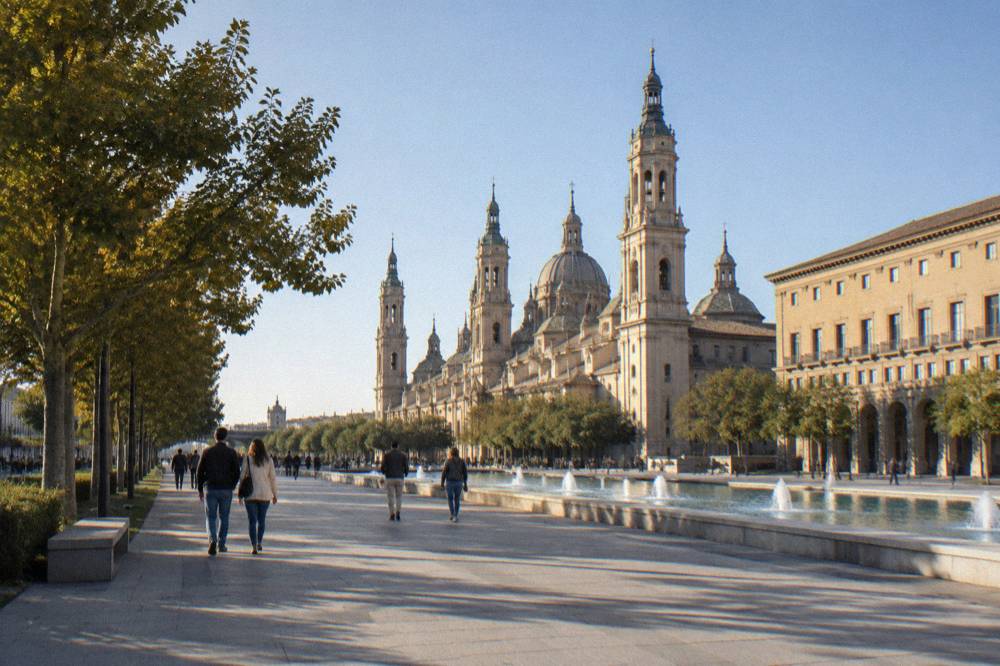
Beyond the main axis, the park opens into quieter sections where the planting gets denser and the crowds thinner. Runners and cyclists use the outer paths, families use the open lawns, and the whole space functions as the city's everyday backyard. If you are pairing the park with sightseeing, the natural rhythm is monuments in the morning, park in the late afternoon, and then dinner back in the centre, perhaps via the tapas bars around El Tubo.
If you would rather have a guide frame the monumental side of the city before you retreat to the green, the guided options below are the ones that pair best with a park afternoon.
The historical tour of the old district deserves its place at the top of that list. It runs about 2.5 hours with a licensed guide, covers the old district's layered history, and costs from $106.92 per person, rated 5 from 14 reviews on the operator's live listing. Because it ends back in the centre, it slots neatly before a tram ride out to the park.
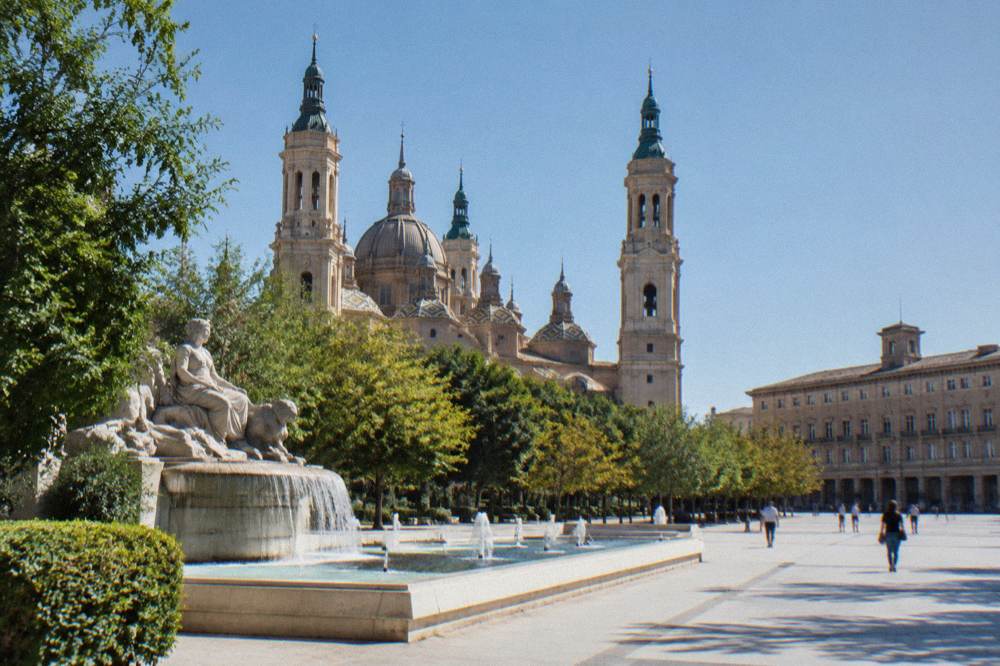
Which Zaragoza Museums Sit In Or Near Parque Grande?
Two sections of the Museo de Zaragoza sit inside Parque Grande, Etnologia and Ceramica, and both are currently closed pending a new temporary exhibition, while the museum's central building at Plaza de los Sitios 6 is closed for Ministry of Culture works with no reopening date. Museums that are open elsewhere in the city include the IAACC Pablo Serrano, free, the Torreon de la Zuda, free, the Centro de Historias, free, the Museo del Fuego y los Bomberos and the Museo del Origami.
This is the one point where a Parque Grande visit needs real planning, because the museum buildings inside the park are not currently visitable. The Museo de Zaragoza's own notice confirms the central building is shut for works run by the Ministry of Culture, with no reopening date given, and the municipal October timetable shows the Etnologia and Ceramica sites in the park also closed at present. Do not build a museum day around the park right now.
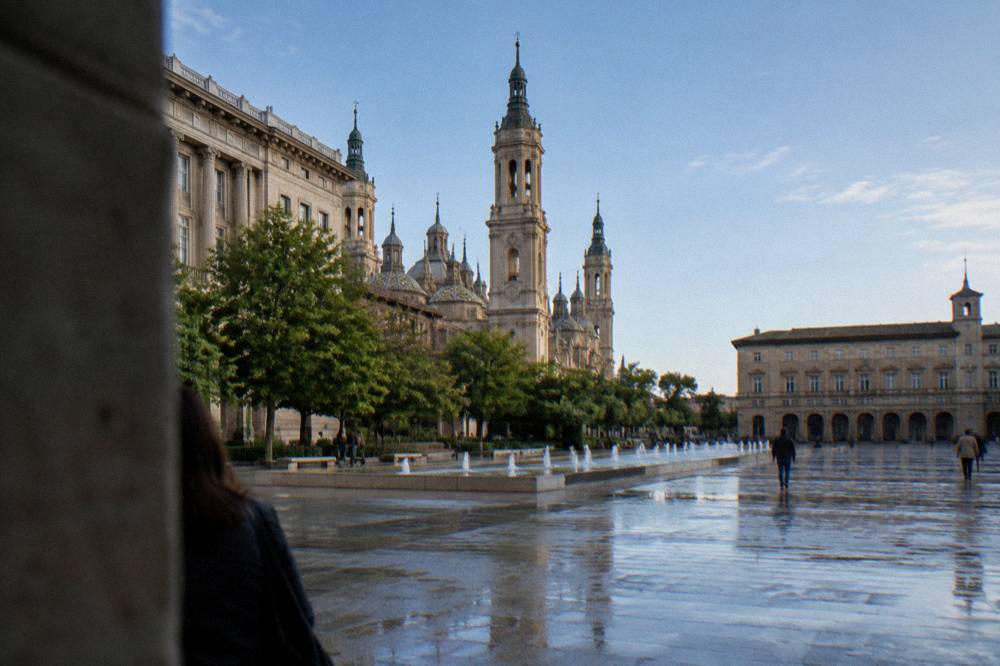
The museums that are open are worth the detour instead, and several sit within a short tram or bus ride of the park gates. The IAACC Pablo Serrano, the city's contemporary art centre, is free and open Tuesday to Saturday 10:00-14:00 and 17:00-21:00, Sunday 10:00-14:00. The Torreon de la Zuda, with its "Mirador de las cuatro culturas" viewpoint on the fifth floor, is free and open Monday to Saturday 10:00-14:00 and 16:30-20:00, Sunday 10:00-14:00. The table below pulls the current picture together.
| Museum | Status (October 2026) | Admission | Hours |
|---|---|---|---|
| Museo de Zaragoza, central building (Plaza de los Sitios 6) | Closed for Ministry of Culture works, no reopening date | - | - |
| Museo de Zaragoza, Etnologia and Ceramica (in Parque Grande) | Closed pending a new temporary exhibition | - | - |
| IAACC Pablo Serrano | Open | Free | Tue-Sat 10:00-14:00 and 17:00-21:00, Sun 10:00-14:00 |
| Torreon de la Zuda | Open | Free | Mon-Sat 10:00-14:00 and 16:30-20:00, Sun 10:00-14:00 |
| Centro de Historias | Open | Free | Tue-Sat 10:00-14:00 and 17:00-21:00, Sun 10:00-14:30 |
| Museo del Fuego y los Bomberos | Open | 3 EUR | Tue-Sat 10:00-19:00, Sun 10:00-14:00 |
| Museo del Origami | Open | 3 EUR | Free the 1st Tuesday and Sunday of the month |
For Goya in particular, the Museo Goya (Fundacion Ibercaja) reopens on 9 October 2026 after renovation, open Tuesday to Saturday 10:00-20:00 and Sunday and holidays 10:00-14:00, closed Mondays, with no admission price published yet. The wider Goya story in the city, including the Goya in Zaragoza trail, is one of the strongest museum threads Aragon has, and the reopening makes autumn 2026 a good season for it. The Caesaraugusta Roman museums are also all open and verified, and the four-museum bono at 7 EUR is one of the better values in the city.
If a museum-and-park day sounds like the shape of your visit, a guided walk that strings the old district together first is the efficient way to do it. Check availability on the operator's live listing, and read more about the old town to see what the walk covers.
How Do You Get To Parque Grande From The Centre Of Zaragoza?
Parque Grande is reached from central Zaragoza by urban tram or bus, with the single fare at 1.70 EUR, or 0.55 EUR with a Tarjeta Bus, which itself costs 7 EUR and works on both bus and tram. Night lines cost 1.00 EUR. The tram and bus network serves the park directly from the centre, and the ride is short enough that the park works as a spontaneous late-afternoon destination rather than a planned expedition.
The 2026 Avanza fare table lists the urban single at 1.70 EUR with no transfer included, and 0.55 EUR for Tarjeta Bus holders. The card costs 7 EUR and is valid across bus and tram, so anyone staying more than a couple of days and using public transport more than a handful of times will likely save money. Fares below are the current Avanza figures.
| Ticket | Price | Notes |
|---|---|---|
| Bus or tram single | 1.70 EUR | No transfer, 2026 Avanza fare table |
| Night line single | 1.00 EUR | Night bus network |
| Tarjeta Bus trip | 0.55 EUR | Requires the card |
| Tarjeta Bus card | 7 EUR | Valid on bus and tram |
| Tourist bus day ticket | 10 EUR | 24 h hop-on hop-off, 16 stops, 90-minute loop, cash only on the bus |
| Bizi day pass | 1 EUR + 0.50 EUR per trip | First 30 min per trip, 50 EUR card deposit held |
Cyclists have another option: the Bizi bike-share, whose 2026 tariffs list a day pass at 1 EUR fixed plus 0.50 EUR for the first 30 minutes of each trip, with a 50 EUR card deposit held for day, month and single-trip users. The city is flat, dry and sunny, and AEMET's 1981 to 2010 normals give Zaragoza 2,693 hours of sunshine a year, so a bike ride out to the park is pleasant for most of the calendar. The tourist bus, at 10 EUR for a 24-hour hop-on hop-off ticket over 16 stops on a 90-minute loop, is a different tool: it is for sightseeing, not commuting, and it is cash only on board.
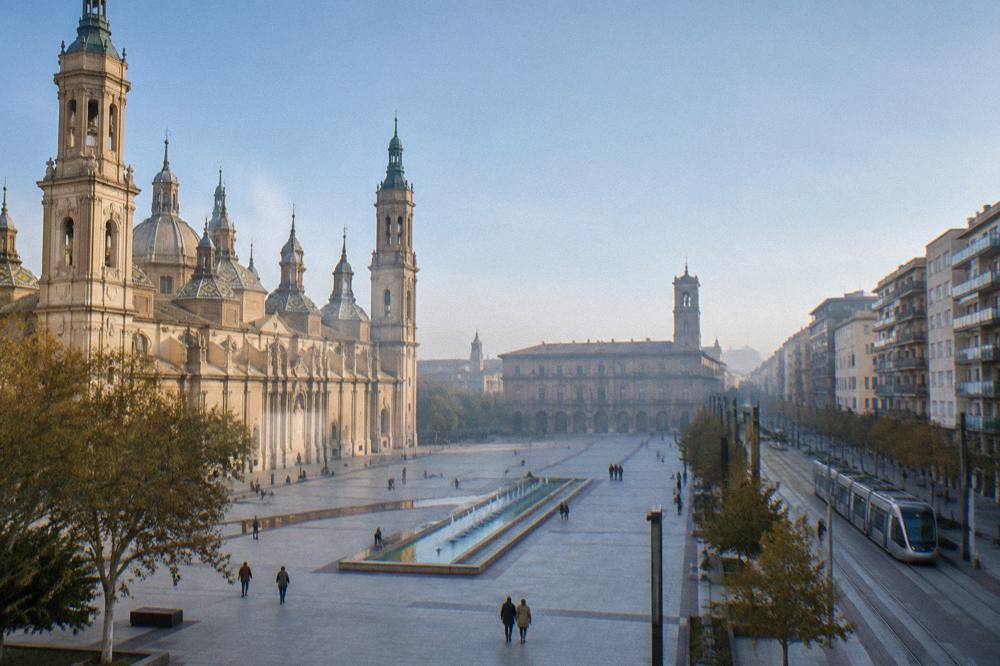
One planning note for drivers: Zaragoza operates a low-emission zone, the ZBE Casco Historico, with sanctions since 12 December 2025, active Monday to Friday 08:00-20:00, restricting vehicles without a DGT environmental label, with a 15-minute grace period if you enter by mistake. That zone covers the historic centre rather than the park, but it shapes where a hire car can sensibly go. The full picture, including parking, is on the site's wider getting-around guidance, and the Zaragoza Travel Guide covers the car-rental question in detail.
When Is The Best Time Of Year To Visit Parque Grande?
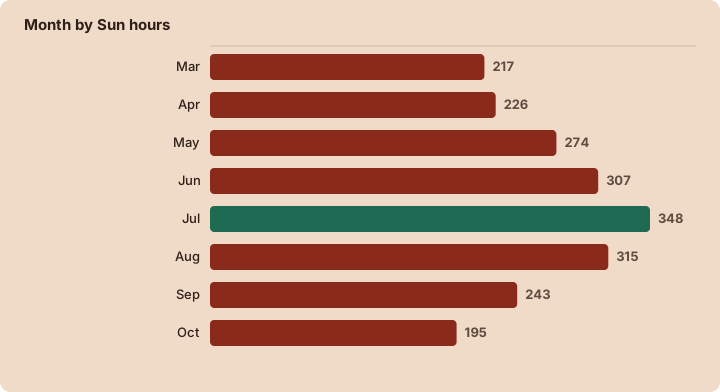
The best months for Parque Grande are April, May, September and October, when AEMET's 1981 to 2010 normals for the Zaragoza Aeropuerto station show mean maxima of 19.6 C, 24.1 C, 27.1 C and 21.4 C respectively, with May the wettest month at 44 mm and July and August the driest at 17 mm each. July is both the hottest month, at a 32.4 C mean maximum, and the sunniest, at 348 hours, so summer visits belong to the early morning and evening.
The park is a shade destination in summer and a promenade destination the rest of the year, and the numbers behind that are worth knowing. Zaragoza is inland on the Ebro with a dry continental semi-arid climate, and the only published normals, the 1981 to 2010 series for the Zaragoza Aeropuerto station, show a year that averages 15.5 C overall with 322 mm of rain across 51.1 days of 1 mm or more. Winter is real but not brutal: January averages a 10.5 C mean maximum against a 2.7 C mean minimum, and the station records 23.1 frost days a year.
| Month | Mean max C | Mean C | Mean min C | Rain mm | Sun hours |
|---|---|---|---|---|---|
| Mar | 17.3 | 11.6 | 5.8 | 19 | 217 |
| Apr | 19.6 | 13.8 | 7.9 | 39 | 226 |
| May | 24.1 | 18.0 | 11.8 | 44 | 274 |
| Jun | 29.3 | 22.6 | 15.8 | 26 | 307 |
| Jul | 32.4 | 25.3 | 18.3 | 17 | 348 |
| Aug | 31.7 | 25.0 | 18.3 | 17 | 315 |
| Sep | 27.1 | 21.2 | 15.2 | 30 | 243 |
| Oct | 21.4 | 16.2 | 11.0 | 36 | 195 |
All figures above are AEMET 1981 to 2010 normals for the Zaragoza Aeropuerto station, the only window the station page publishes. One local factor the table cannot show: the cierzo, the cold, dry north-west wind of the Ebro valley, which blows qualitatively and can make an exposed promenade brisk even under a blue sky. There is no published wind figure, but every Zaragozan knows the feeling.
October deserves a special mention, and not only for the mild 21.4 C mean maximum. The Fiestas del Pilar run from 10 to 18 October 2026, with the Ofrenda de Flores on 12 October and the pregon from the Ayuntamiento balcony at 21:00 on the 10th. The park is a natural breather between fiesta events, and the festival's fireworks programme includes shows after the pregon, at Parque Pignatelli, a new display in plaza San Francisco, and the closing spectacle by the Ebro on 18 October. Note that the Palacio de Sastago is closed in October and the Museo Pablo Gargallo is temporarily closed, so plan indoor backups around those two.
What Is There To Do Near Parque Grande?
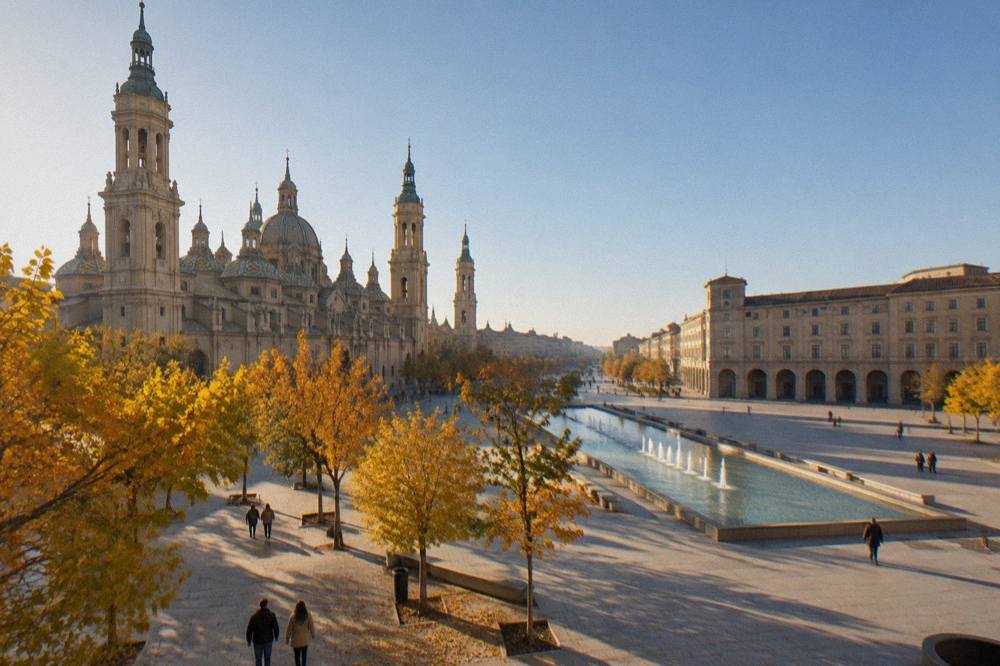
The area around Parque Grande connects to Zaragoza's wider green and riverside network, including the Parque del Agua Luis Bunuel, a 120-hectare green space in the Ranillas meander beside the Expo 2008 site that was the first European green space to earn the Green Globe certification, plus the Expo-era landmarks along the Ebro such as the bridge pavilion and the water tower. Back toward the centre, the monumental cluster of the Basílica del Pilar, La Seo and the Aljafería makes up the heavyweight sightseeing circuit.
The Parque del Agua is the park's modern sibling and a genuine contrast: designed as part of the Expo 2008 transformation of the Ranillas meander, it floods safely when the Ebro rises and carries two marked running circuits of 5 and 10 km. Where Parque Grande is old-fashioned formality, the Parque del Agua is contemporary landscape architecture, and the two together give a visitor both faces of Zaragoza's green identity. The Expo site's landmarks, including the water tower and the bridge pavilion, sit in the same riverside band.
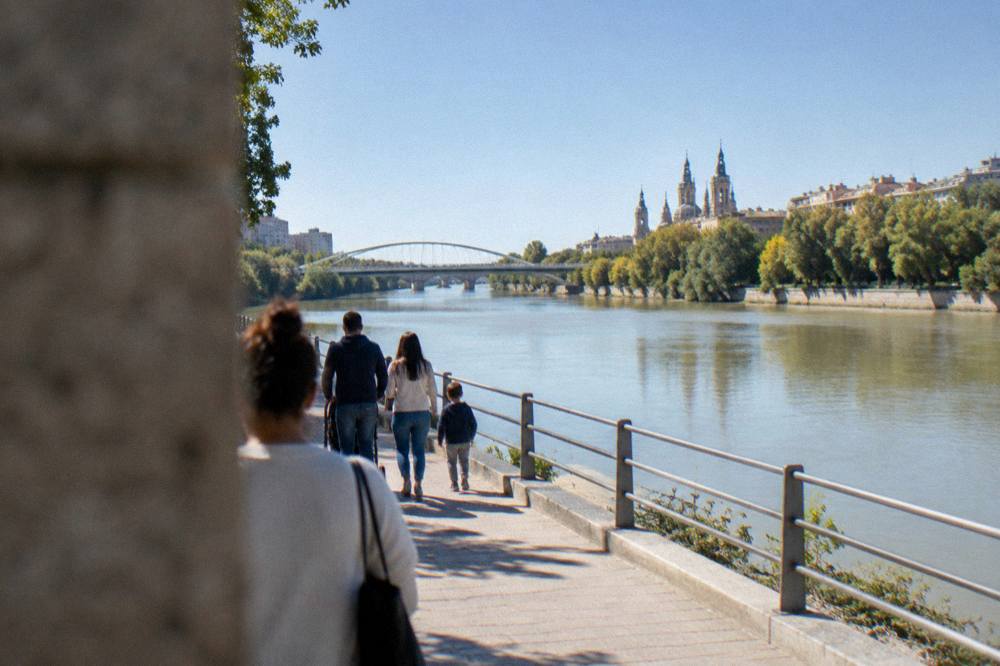
Toward the centre, the sightseeing is dense and famous. The Basílica del Pilar is free to enter, with its tower viewpoint at 6 EUR for an adult, and its dome, the Regina Patriarcharum, has been under restoration since an agreement signed on 23 January 2026 funded with 600,000 EUR from the Fundacion Ibercaja, with completion not confirmed. La Seo charges 10 EUR general admission that includes the Museo de Tapices, the Museo Pilarista and the Rosario de Cristal, and the Aljafería charges 7 EUR general or 9 EUR with a guided visit, free the 1st and 3rd Sunday and Monday of each month.
| Sight | Admission | Notes |
|---|---|---|
| Basílica del Pilar, temple | Free | Holy Chapel zone 8:00-20:30 |
| Basílica del Pilar, tower viewpoint | 6 EUR adult | 4 EUR ages 13-18, free under 12 |
| La Seo | 10 EUR | Includes Museo de Tapices, Museo Pilarista, Rosario de Cristal |
| Aljafería | 7 EUR general, 9 EUR guided | Free 1st and 3rd Sunday and Monday |
| Caesaraugusta 4-museum bono | 7 EUR | 5 EUR reduced, free 1st Sunday |
| Acuario de Zaragoza | 20 EUR general | 14 EUR child 4-14 and senior, 0-3 free |
If you want a guide to carry the weight of that circuit, the basilica's own Spanish-language guided visit is a strong pick: from $12.38 per person, rated 4.7 from 46 reviews, 1.5 hours, and it covers a building whose interior rewards explanation. Check availability on the operator's live listing for your dates. For a first-day orientation, the 105-minute monumental sightseeing tour, from $10.41 per person and rated 4.4 from 36 reviews, is the cheapest guided introduction on the books.
Can You Combine Parque Grande With A Guided Tour Of Zaragoza?
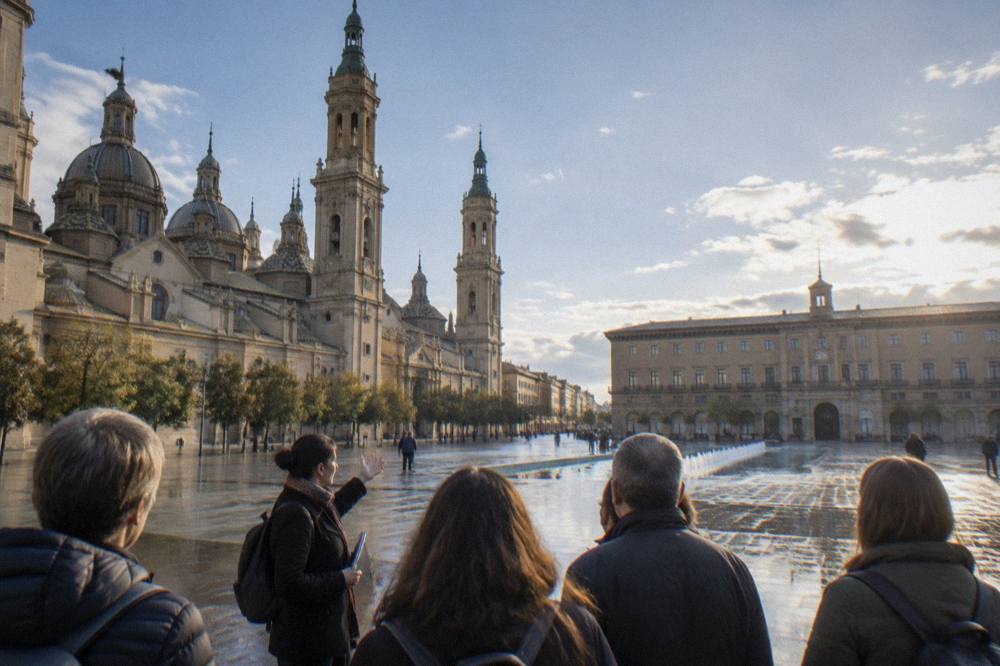
Yes, and the pairing works best in that order: a guided walking tour of the old district or the historical centre in the morning, a long lunch, then the tram out to Parque Grande for the late afternoon, when the promenade shade is at its best and the evening paseo begins. Every tour in the trio below starts in Zaragoza, most from the centre, and none requires a car, so the park can simply be the quiet end of a walking day.
The logic is climatic as much as logistical. With July averaging a 32.4 C mean maximum in the 1981 to 2010 normals, midday monument-hopping and midday park-strolling are both mistakes in high summer; the morning belongs to guides and interiors, the late afternoon to shade and fountains. In April, May, September and October the pressure drops and you can run the day in either order.
The free tour through the historical centre deserves a word of explanation, because it is not this site's product: it is a GuruWalk free tour, tip-based, rated 4.15 from 122 reviews, and the guru who runs it should be named on the tour's own page. Free tours are a legitimate way to get oriented, and the tip model means you pay what you think the walk was worth at the end. The private custom walking tours, from $50.65 per person and rated 5 from 86 reviews, are the flexible alternative when you want the route bent toward your own interests.
For families, the park-plus-monuments day is one of the easier formulas in Spain with kids, and the site's Zaragoza with kids guidance builds on exactly this rhythm. The park's lawns and the Acuario de Zaragoza, at 20 EUR general and 14 EUR for children 4 to 14, make a natural pair, and the aquarium's own listing calls it the largest river aquarium in Europe with more than 5,000 specimens.
How Much Time Should You Spend In Parque Grande?
Plan on one to two hours for Parque Grande itself, a slow loop of the promenade and groves with a stop at a kiosk, and add another hour or two only if you are extending toward the Parque del Agua or the Expo riverside. The park is a component of a day, not a destination that fills one, and the most common mistake is treating it as a tick-box photo stop rather than the unhurried green space it is designed to be.
The honest sizing matters. Zaragoza's heavyweight sights, the Pilar, La Seo, the Aljafería and the Caesaraugusta museums, are all indoors or monumental, and a first-time visitor with two days should weight time toward them. The park earns its slot as the breathing space between them, and as the place where the city's evening culture, the paseo, actually happens. The site's Zaragoza 2-day itinerary slots it exactly there, late on the second afternoon.
For runners and walkers, the picture changes: the park becomes a daily destination, and the Parque del Agua's 5 and 10 km circuits extend it into a proper training landscape. With 81.6 clear days a year at the airport station and 2,693 hours of sunshine, the odds of a walkable evening are good in every season.
Common Questions About Parque Grande Zaragoza
Is Parque Grande in Zaragoza free to enter?
Yes. Parque Grande Jose Antonio Labordeta is a public park with no entry fee and no ticket, open as public parks are. The only costs inside would be kiosks or events; the museum buildings in the park are currently closed and have no tickets to buy.
Are the museums in Parque Grande open?
No. The Etnologia and Ceramica sections of the Museo de Zaragoza, which sit in Parque Grande, are currently closed pending a new temporary exhibition, and the museum's central building at Plaza de los Sitios 6 is closed for Ministry of Culture works with no reopening date. Open museums elsewhere in the city include the IAACC Pablo Serrano, the Torreon de la Zuda and the Centro de Historias, all free.
How do I get to Parque Grande from the Basílica del Pilar?
By urban tram or bus from the centre, with the single fare at 1.70 EUR, or 0.55 EUR with a Tarjeta Bus. The park sits east of the centre and the ride is short; the 2026 Avanza fare table is the source for both fares.
What is the best month to visit Parque Grande?
April, May, September and October, according to AEMET's 1981 to 2010 normals for the Zaragoza Aeropuerto station, which show mean maxima of 19.6 C, 24.1 C, 27.1 C and 21.4 C for those months. July is the hottest and sunniest month, at a 32.4 C mean maximum and 348 hours of sun, so summer visits belong to early morning and evening.
Can you combine Parque Grande with the Fiestas del Pilar?
Yes, easily. The Fiestas del Pilar 2026 run from 10 to 18 October, with the Ofrenda de Flores on 12 October, and the park sits a short tram ride from the fiesta's centre of gravity around Plaza del Pilar. October's mean maximum of 21.4 C makes the promenade comfortable between events.
Is Parque Grande the same as Parque del Agua?
No. Parque Grande Jose Antonio Labordeta is the historic landscaped park east of the centre, while the Parque del Agua Luis Bunuel is the 120-hectare green space in the Ranillas meander beside the Expo 2008 site, the first European green space certified with the Green Globe. They are different parks in the same eastern band of the city.
A final planning note: the park asks nothing of you, which is its charm. Check the operator's notice before booking any guided walk for that day, carry water in July and August, and let the promenade do the rest.