Semana Santa In Zaragoza: The 2027 Dates, Weather And What To Expect
Holy Week in Zaragoza, the capital of Aragon on the Ebro, falls on 21 to 28 March 2027, with Palm Sunday on 21 March and Good Friday on 26 March. Here is what the dates, the weather and the city itself mean for a visit.
Short answer
Semana Santa in Zaragoza runs from Palm Sunday, 21 March 2027, to Easter Sunday, 28 March 2027, with Good Friday on 26 March. March in the city averages 11.6 C on the 1981 to 2010 AEMET normals, and the great monuments of the old town, the Basílica del Pilar, La Seo and the Aljafería, keep their published hours through the week.
Zaragoza, the capital of Aragon on the Ebro, keeps its Holy Week between 21 and 28 March 2027, with Palm Sunday on 21 March and Good Friday on 26 March. Semana Santa is the quietest of the city's two great festival moments, a week of processions and church services staged against one of the most monumental old towns in inland Spain, and it arrives weeks before the October crowds of the Fiestas del Pilar.
When Is Semana Santa In Zaragoza?
Semana Santa in Zaragoza falls on 21 to 28 March 2027, with Palm Sunday on 21 March, Good Friday on 26 March and Easter Sunday on 28 March. These are the reported dates for the city's Holy Week, and they follow the Gregorian calendar like every Spanish city, so Zaragoza's Easter moves with the rest of the country each year. The week sits two seasons away from the Fiestas del Pilar, which run 10 to 18 October 2026.
The date matters more here than in a coastal resort, because Zaragoza's Holy Week is a city event rather than a beach-and-procession hybrid. The old town is compact, the Basílica del Pilar and La Seo stand a few hundred metres apart, and the whole week plays out across the same stones a visitor walks in any case. Late March is also shoulder season for the city's hotels, well before the October peak that the Ofrenda de Flores brings on 12 October.
One planning note is worth fixing early: the dates above are reported dates for the 2027 calendar, and the detailed programme of processions, routes and times is published by the city and the cofradías closer to the week itself. Do not build an hour-by-hour itinerary around specific procession times before that programme exists. Build it around the monuments, the weather and the daylight instead, and let the processions find you.
If you are weighing Holy Week against the autumn festival, the comparison is a real one. The Fiestas del Pilar guide covers the October version of the city, which is louder, bigger and far more crowded, while the best time to visit Zaragoza page puts both windows against the rest of the year.
What Is The Weather Like In Zaragoza At Easter?
March in Zaragoza averages 11.6 C, with a mean maximum of 17.3 C, a mean minimum of 5.8 C, 19 mm of rain over 3.7 days of 1 mm or more, and 217 hours of sunshine, all from AEMET's 1981 to 2010 normals for the Zaragoza Aeropuerto station. April, which can catch late Easter weeks, averages 13.8 C with 39 mm of rain. Expect mild days, cold evenings and very little rain.
Those numbers describe a dry continental city, not a Mediterranean one. Zaragoza sits inland on the Ebro, and its spring warms quickly through March and April while its nights stay cold. The 5.8 C mean minimum for March is the figure that surprises visitors who pack for Andalusian Easter weather: evenings by the Ebro, and any pre-dawn start, wants a real jacket. The cierzo, the cold dry north-west wind of the Ebro valley, can make a March day feel sharper than the thermometer suggests, though no speed or frequency figure exists for it on the station normals.
| Month | Mean C | Mean max C | Mean min C | Rain mm | Rain days 1 mm+ | Sun hours |
|---|---|---|---|---|---|---|
| March | 11.6 | 17.3 | 5.8 | 19 | 3.7 | 217 |
| April | 13.8 | 19.6 | 7.9 | 39 | 5.7 | 226 |
| May | 18.0 | 24.1 | 11.8 | 44 | 6.4 | 274 |
All three rows are the 1981 to 2010 averages from AEMET's Zaragoza Aeropuerto station, the only window the station page publishes. Two readings fall out of the table. First, May is actually the wettest month of the Zaragoza year at 44 mm, not the winter, so a late Easter in April carries more rain than a March one despite feeling warmer. Second, the sun hours climb steeply through spring, from 217 in March to 274 in May, which is why the light on the Pilar's towers photographs so well in the Holy Week weeks.
The practical packing list follows directly from the normals: layers for a 17 C afternoon that becomes a 6 C evening, something rainproof but light for the odd shower, and comfortable shoes for cobbles. The fuller picture, including the summer heat and the question of whether it snows, sits on the Zaragoza weather page.
What Should You See In Zaragoza During Semana Santa?
The core of a Holy Week visit is the monumental triangle of the Basílica del Pilar, La Seo and the Aljafería, plus the Roman Caesaraugusta museums between them. Entering the Pilar is free, La Seo charges EUR 10 general including its Museo de Tapices, and the Aljafería charges EUR 7 general or EUR 9 with a guided tour, all per the municipal monument timetable. The Pilar tower viewpoint costs EUR 6 for an adult.
Holy Week gives these buildings a different weight than an ordinary week. The Pilar is the spiritual centre of Aragon and the destination of the October flower offering, and its interior, free to enter, is open long hours: the main altar zone runs 7:30 to 13:30 and 16:30 to 20:15 Monday to Saturday, with the Holy Chapel zone open 8:00 to 20:30. The tower viewpoint, the Torre Mirador, runs 10:30 to 14:30 and 16:00 to 20:00 Monday to Thursday and 10:00 to 20:00 Friday to Sunday, with last access 30 minutes before closing.
The Best of Zaragoza sightseeing tour, from $22.28 per person and rated 4.6 from 41 reviews, is a natural fit for the first day of a Holy Week stay: it covers the must-see monuments in about 2.5 hours with stories, photo stops and a churro tasting, and it leaves the rest of the day free for the churches. Check availability for your dates, since Holy Week departure times fill earliest.
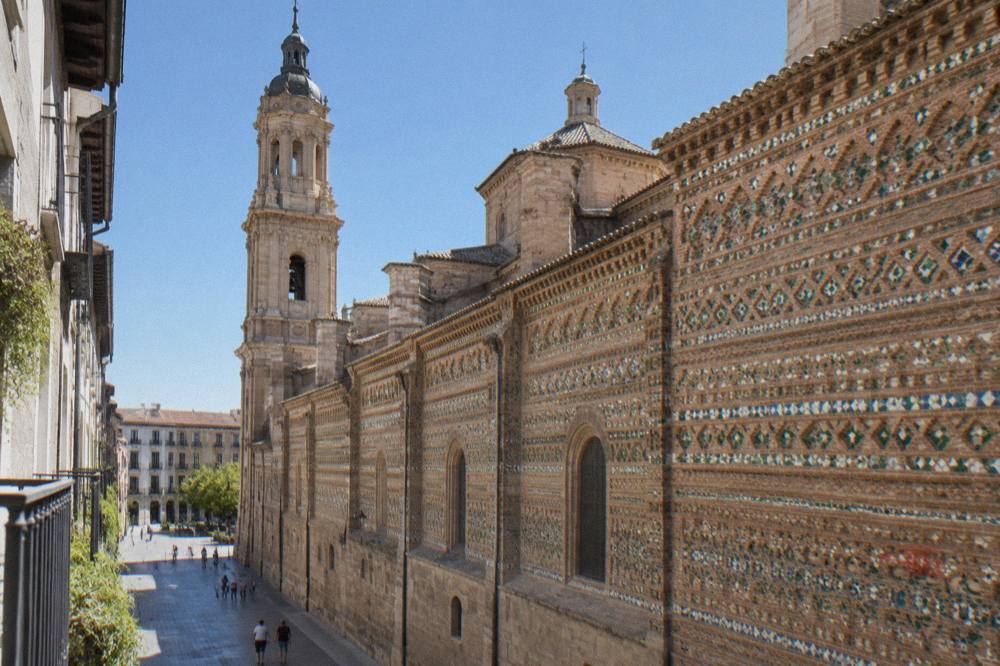
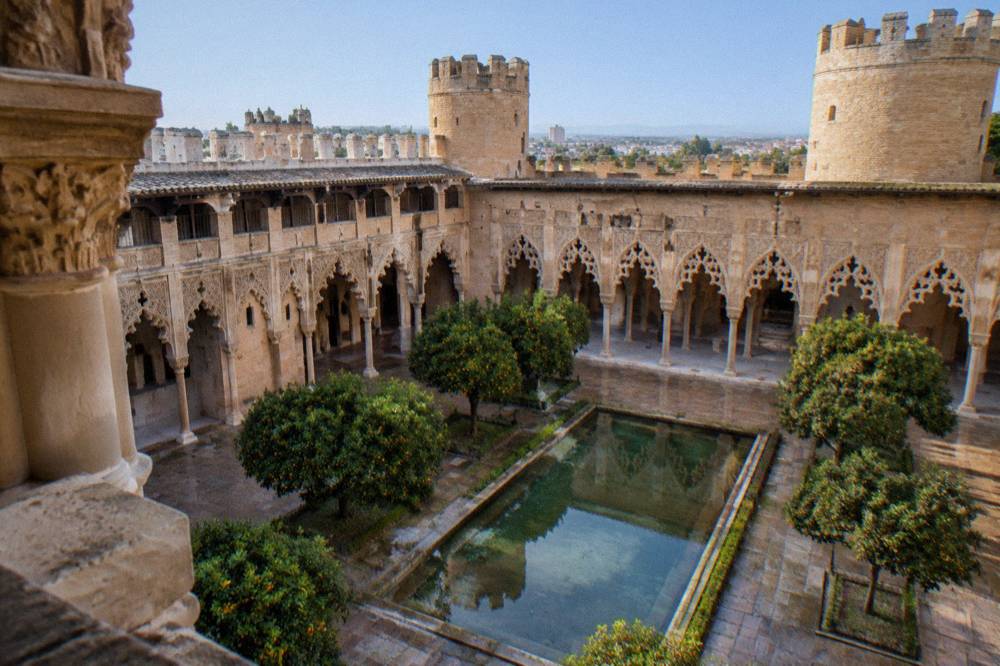
La Seo, the cathedral of San Salvador, sits a short walk east of the Pilar and is the quieter of the two great churches. Its EUR 10 general ticket includes the Museo de Tapices, the Museo Pilarista and the Rosario de Cristal, with reduced rates of EUR 9 for over 65s and EUR 7 for students and ages 13 to 18, free entry under 12, and a combined ticket with the Pilar tower at EUR 12. The Aljafería, the Islamic palace of the Banu Hud dynasty, is a tram or a brisk walk west of the centre and holds its own Goya exhibition, "Goya, del Museo al Palacio", with a dedicated 11:30 tour.
The Roman layer is the city's quiet trump card. Caesaraugusta, the Roman town under modern Zaragoza, left a forum, a river port, baths and a theatre, and the four sites are open Tuesday to Saturday 10:00 to 14:00 and 17:00 to 21:00, Sunday and holidays 10:00 to 14:30. Entry is EUR 4 for the Foro and EUR 3 for the Termas and Puerto Fluvial, with a four-museum bono at EUR 7, or EUR 5 reduced, and free entry the first Sunday of the month. The Roman Caesaraugusta guide unpacks all four.
Which Zaragoza Monuments Are Open During Semana Santa, And What Do They Cost?
The municipal October timetable lists the Pilar free to enter with its tower at EUR 6, La Seo at EUR 10 general, the Aljafería at EUR 7 general or EUR 9 guided, the Caesaraugusta museums from EUR 3 with a EUR 7 bono, and the IAACC Pablo Serrano, the Torreón de la Zuda and the Centro de Historias all free. The Museo Goya reopens 9 October 2026, hours Tuesday to Saturday 10:00 to 20:00.
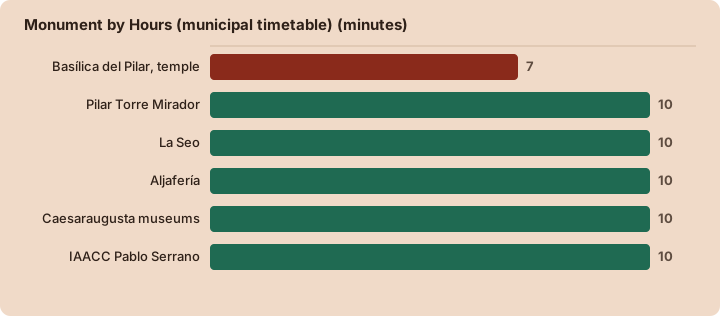
Holy Week hours can shift around the liturgical calendar, and the Pilar in particular runs a different rhythm on wedding Saturdays, so treat the table below as the published baseline and check the monument's own notice for Easter-week variations. What the table does show is how inexpensive Zaragoza's monumental core is: a visitor who walks the free churches, pays for the Pilar tower and buys the La Seo ticket spends under EUR 20 on entry fees for the whole set.
| Monument | Published entry | Hours (municipal timetable) |
|---|---|---|
| Basílica del Pilar, temple | Free | Main altar zone Mon-Sat 7:30-13:30 / 16:30-20:15, Sun 7:30-13:30 / 16:30-21:30 |
| Pilar Torre Mirador | EUR 6 adult, EUR 5 over 65, EUR 4 ages 13-18, free under 12 | Mon-Thu 10:30-14:30 / 16:00-20:00, Fri-Sun 10:00-20:00 |
| La Seo | EUR 10 general, EUR 9 over 65, EUR 7 students, free under 12 | Mon-Sat 10:00-14:30 / 16:00-20:00, Sun 10:00-12:00 / 16:00-20:00 |
| Aljafería | EUR 7 general, EUR 9 guided, EUR 2 students and over 65, free under 12 | Daily 10:00-18:00, last access 45 min before close |
| Caesaraugusta museums | Foro EUR 4, Termas and Puerto EUR 3, bono EUR 7 | Tue-Sat 10:00-14:00 / 17:00-21:00, Sun 10:00-14:30 |
| IAACC Pablo Serrano | Free | Tue-Sat 10:00-14:00 / 17:00-21:00, Sun 10:00-14:00 |
Two free-entry rhythms are worth knowing before you plan. The Caesaraugusta museums, the Museo del Fuego y los Bomberos and the Aljafería on its first and third Sundays and Mondays all run free days, and the Aljafería's Spanish guided tours depart at fixed times, 10:30, 12:30, 13:30, 15:00 and 16:00, with the Goya exhibition tour at 11:30. The free things to do in Zaragoza page collects the full set.
One museum note for the Goya-inclined: the Museo Goya, Fundación Ibercaja's collection in the city, reopens on 9 October 2026 after renovation with hours Tuesday to Saturday 10:00 to 20:00 and Sunday and holidays 10:00 to 14:00, closed Mondays, and its admission price has not been published. The Goya in Zaragoza page follows the painter through the city he was born near.
How Do You Get To Zaragoza For Semana Santa?
Zaragoza sits on the Madrid to Barcelona high-speed corridor, with trains from Zaragoza-Delicias to both cities taking about 1.5 to 2 hours, and the city's airport is served by Ryanair, Wizz Air, Binter, Volotea, Vueling and Alba Star across 13 destinations. The airport bus is line 505 at EUR 4.65 single, about 25 to 35 minutes, and the urban bus and tram single fare is EUR 1.70.
The rail position is the reason Zaragoza works as a Holy Week destination at all: it is the inland hinge between Spain's two biggest cities, and a train from Madrid or Barcelona covers the distance in about 1.5 to 2 hours on the fastest services. Exact times and fares vary by operator and date, so check the live schedules rather than planning around a fixed timetable. The how to get to Zaragoza page holds the full picture, with the Madrid to Zaragoza and Barcelona to Zaragoza pages for each corridor.
| Transport | Fare or figure | Note |
|---|---|---|
| Urban bus and tram single | EUR 1.70 | EUR 0.55 with Tarjeta Bus; night lines EUR 1.00 |
| Tarjeta Bus card | EUR 7 | Valid on bus and tram |
| Airport bus, line 505 | EUR 4.65 single | About 25 to 35 min, timed to flights |
| Tourist bus | EUR 10, 24 hours | 16 stops, 90-minute loop, cash on the bus |
| Bizi day pass | EUR 1 plus EUR 0.50 per trip up to 30 min | EUR 50 card deposit held |
For Spanish speakers, the Basílica del Pilar guided visit in Spanish, from $12.38 per person and rated 4.7 from 46 reviews, is the cheapest way to get inside the basilica's history with a guide, in about 1.5 hours. Check availability on the operator's live listing alongside your train dates.
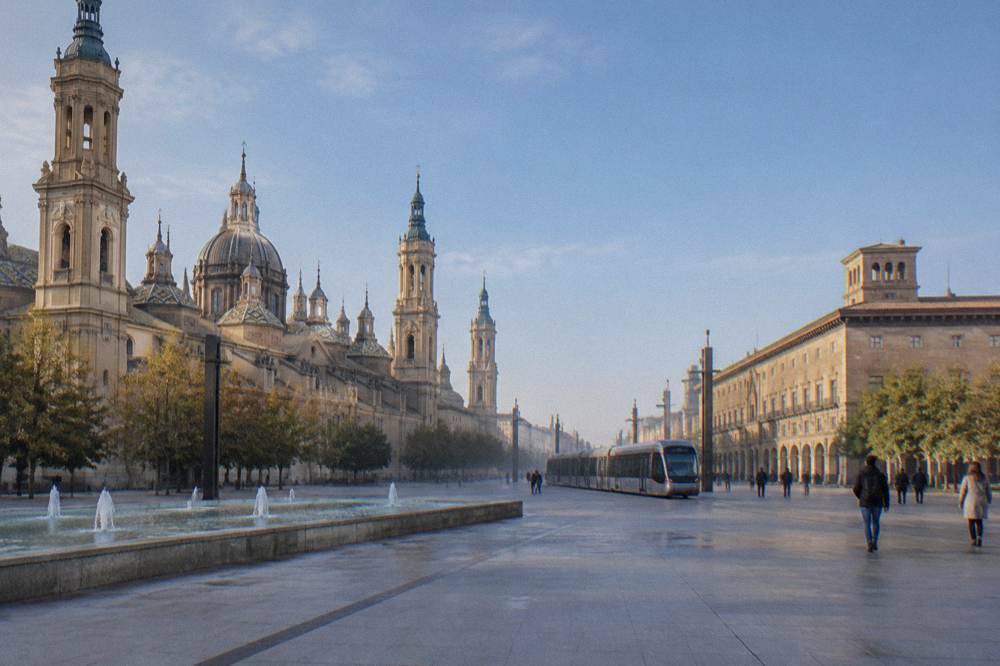
Within the city, the tram and bus network covers everything a Holy Week visitor needs, and the old town itself is walkable end to end. The getting around Zaragoza page explains the network, and drivers should note the ZBE low-emission zone in the Casco Histórico, which restricts unlabelled vehicles Monday to Friday 08:00 to 20:00 with sanctions in force since 12 December 2025, before consulting the car rental and parking guide.
Where Should You Stay In Zaragoza For Semana Santa?
The old town, the Casco Histórico between the Pilar and La Seo, puts a visitor within walking distance of every Holy Week focal point, and the Centro around Paseo de la Independencia adds the tram line and the main shopping street. March is shoulder season, so hotel prices sit below the October Pilar peak, and there is no tourist tax in Aragon, which the regional government ruled out in September 2026.
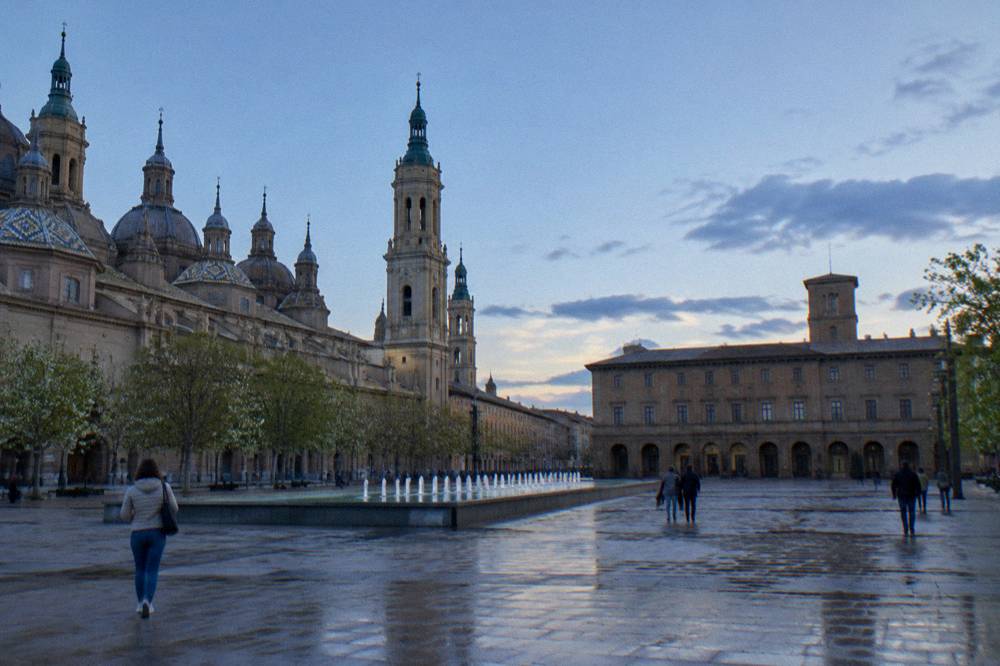
The trade-off is noise against proximity. A room on Plaza del Pilar itself puts the week's church services and processions at the door, which is either the point of the trip or a problem depending on the traveller. The Centro and Delicias districts, the latter around the main rail station, trade a short tram or walk for quieter nights and often lower rates. The where to stay in Zaragoza page maps the districts properly, with the best hotels and hostels and budget stays pages for each budget.
| District | Character | Best for |
|---|---|---|
| Casco Histórico | Medieval streets, the Pilar and La Seo at the door | First-time visitors, festival atmosphere |
| Centro, Paseo de la Independencia | Grand central axis, tram, shops | Walk-everywhere comfort, quieter nights |
| Delicias | Around the AVE station, modern blocks | Rail arrivals, lower rates |
The no-tourist-tax point is small but real: unlike several Spanish regions that have introduced visitor levies, Aragon's government explicitly discarded one in September 2026 on the grounds it would discourage visitors, so the room rate is the whole cost. Budget planning more broadly, from tapas prices to monument tickets, is covered on the Zaragoza cost and budget page.
What Else Is Happening In Zaragoza Around Semana Santa?
Beyond Holy Week itself, Zaragoza's event calendar runs from the Cincomarzada on 5 March, days before Palm Sunday, through the Fiestas del Pilar of 10 to 18 October and the Navidad lights that switch on from 20 November 2026. The Ofrenda de Flores on 12 October is the city's single biggest day, when a reported 994 registered groups deliver flowers to the Pilar.
The Cincomarzada, 5 March, is a local anniversary with a historic flavour, and in 2027 it falls on the Friday before Palm Sunday weekend, which lengthens the season's first busy stretch. Holy Week itself is sacred music, services and processions rather than the concert programme of October; the reported 2026 Pilar programme, with its jota finals and headline concerts, belongs to the autumn festival, not the spring one.
| Event | Dates | Status |
|---|---|---|
| Cincomarzada | 5 March 2027, a Friday | Traditional annual date |
| Semana Santa | 21 to 28 March 2027 | Reported dates, Palm Sunday 21 March, Good Friday 26 March |
| Fiestas del Pilar | 10 to 18 October 2026 | Confirmed on the city's festival page |
| Ofrenda de Flores | 12 October 2026 | Confirmed, usual route Paseo de la Independencia to Plaza del Pilar |
| Navidad lights | From 20 November 2026 to about 7 January 2027 | Reported by the city |
The Ofrenda de Frutos and the Rosario de Cristal, reported for 13 October, and the pregón from the Ayuntamiento balcony on the opening Saturday are the other anchors of the autumn festival, and the Ofrenda de Flores page covers the big day in detail. For the spring visitor, the point is simpler: Holy Week is the calm, monumental face of Zaragoza, and October is its carnival.
How Does Semana Santa Compare With The Fiestas Del Pilar?
Semana Santa is the smaller, quieter festival: a late-March week with mild days around a 17.3 C mean maximum, shoulder-season hotel rates and a monumental focus, while the Fiestas del Pilar in October brings the Ofrenda de Flores, a full concert programme and the city's biggest crowds. A visitor who wants the churches and the palaces rather than the party should choose March; a visitor who wants the party should choose October.
The two festivals sit at opposite ends of the visitor experience. October's mean maximum of 21.4 C is only four degrees warmer than March's, but the atmosphere is a different season: the Pilar festival fills Plaza del Pilar with flower platforms and the Ebro banks with fireworks, while Holy Week fills the same squares with services and processions. Crowds follow the same split, and the same hotel room that is scarce on 12 October is usually available across Holy Week.
| Factor | Semana Santa, late March | Fiestas del Pilar, mid-October |
|---|---|---|
| Mean max C, AEMET 1981-2010 | 17.3 (March) | 21.4 (October) |
| Mean min C | 5.8 (March) | 11.0 (October) |
| Rain mm | 19 (March) | 36 (October) |
| Character | Services, processions, monuments | Ofrenda de Flores, concerts, fireworks |
| Crowds | Shoulder season | The city's annual peak |
Either week works for the same core itinerary, and the one day itinerary holds for both, but the pace differs. March gives you the buildings at their emptiest and the light at its sharpest; October gives you the city at its loudest and most decorated.
For the evenings, the Legends and Ghosts night tour, from $15.76 per person and rated 5.0 from its first reviews, adds a two-hour walk through the old town's darker stories once the monuments close. Check availability on the operator's live listing for the nights of your stay.
What Should A Semana Santa Itinerary For Zaragoza Look Like?
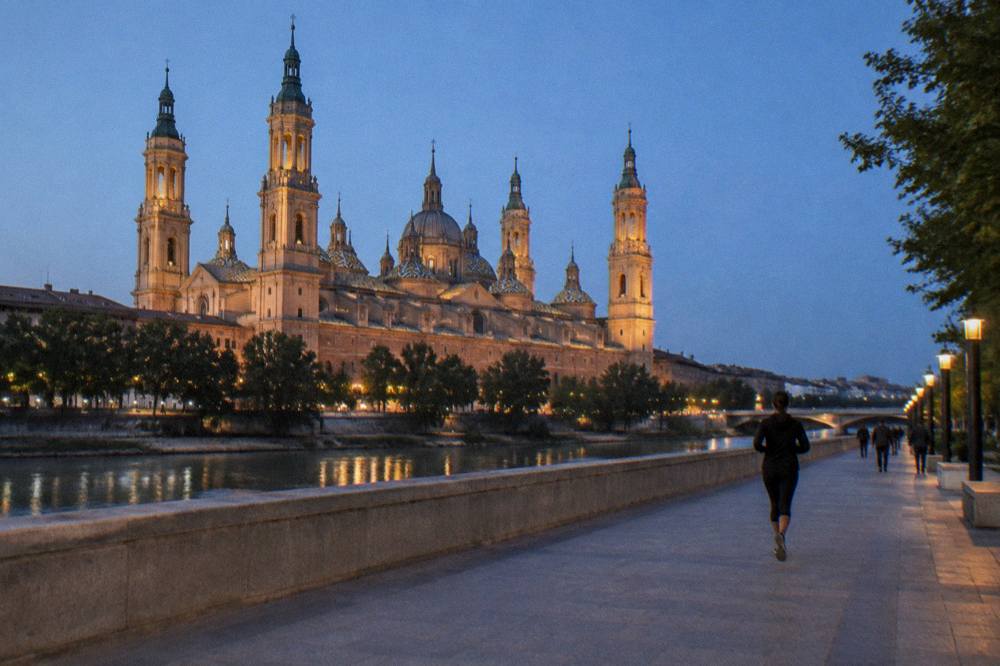
A Holy Week itinerary should run the monumental triangle on day one, the Pilar and its tower in the morning and La Seo and the old town streets in the afternoon, the Aljafería and the Caesaraugusta museums on day two, and the Ebro river walk with the Puente de Piedra at sunset on the last evening. The whole set fits inside three days at an unhurried pace, and the March light rewards early starts and late finishes.
Day one belongs to the centre. Enter the Pilar free, climb the Torre Mirador for EUR 6 while the morning queue is shortest, then walk east to La Seo and its EUR 10 ticket with the Museo de Tapices included. The afternoon is the old town: the El Tubo lane network for tapas, the Mercado Central if the morning ran long, and the streets of the Casco Histórico between them.
Day two goes west. The tram to the Aljafería for opening at 10:00, the EUR 7 general ticket or the EUR 9 guided visit, then the Roman museums back in the centre in the afternoon, ideally with the EUR 7 bono covering all four. The Zaragoza museums page sequences them for visitors with more time.
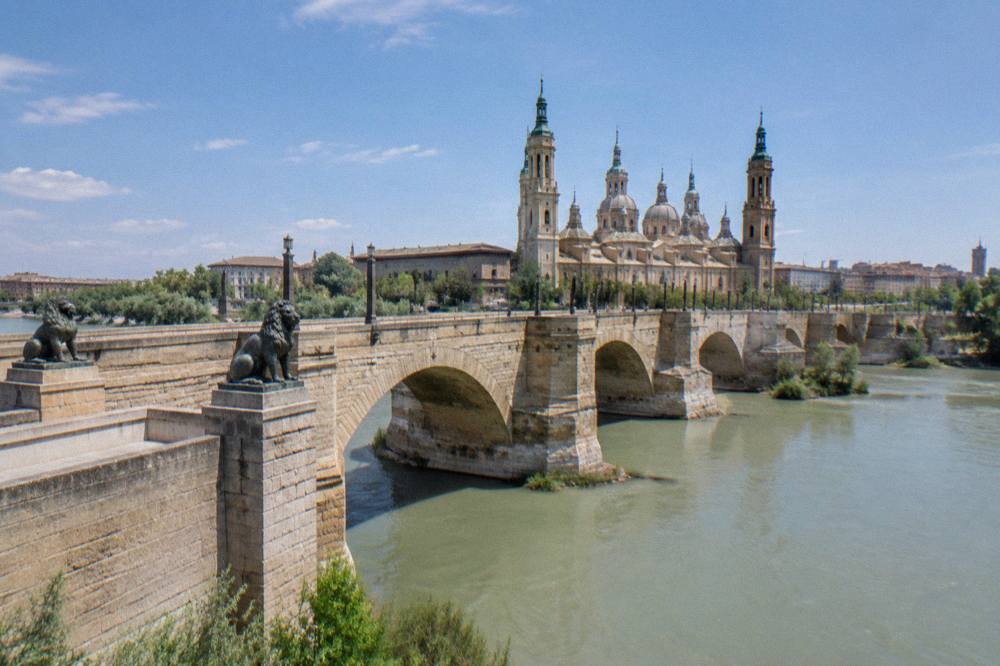
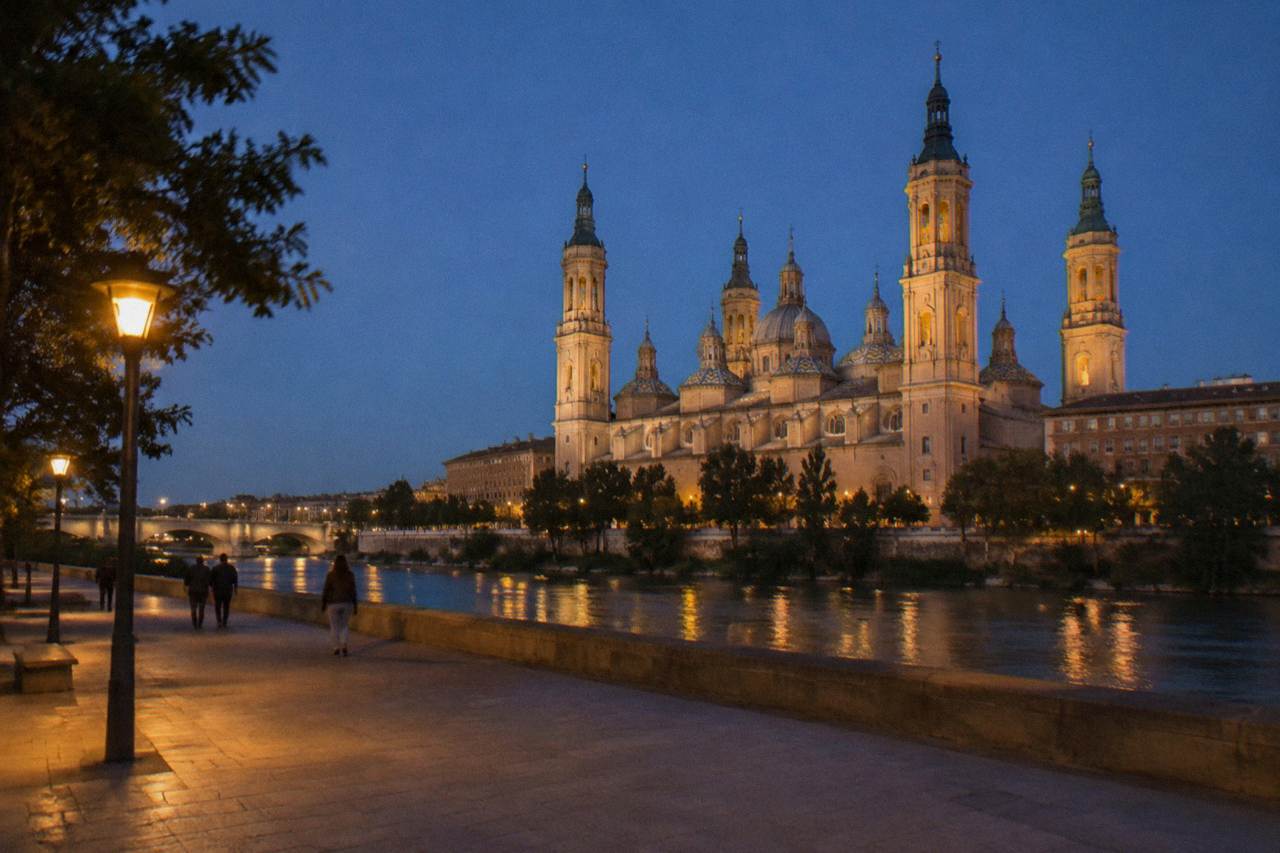
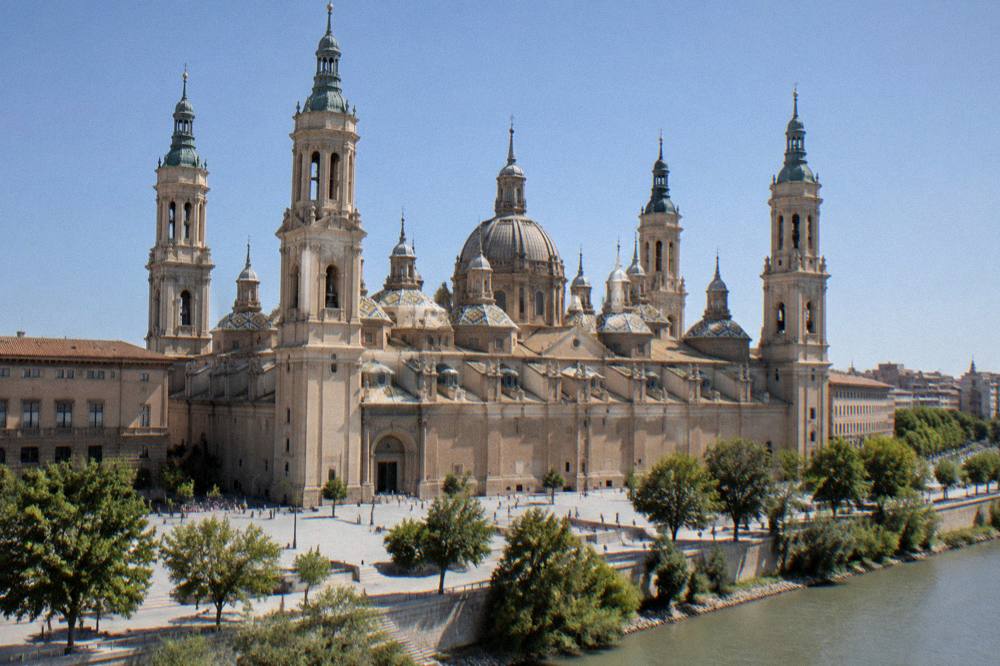
Day three, or the last evening of any stay, belongs to the river. The Puente de Piedra, the stone bridge whose current form was built from 1401 and opened in 1440, guarded by its four bronze lions since 1991, gives the classic view back across the Ebro to the Pilar's domes, and the Ebro river walk extends it in both directions. The three day itinerary scales the same skeleton up for a longer stay.
The Historical Tour of the Old District, from $106.92 per person and rated 5.0 from 14 reviews, is the deeper 2.5-hour option for the old town day, with a guide through the district's layered history. Check availability on the operator's live listing for day one or two.
Common Questions About Semana Santa In Zaragoza
When is Semana Santa in Zaragoza?
Semana Santa in Zaragoza runs from Palm Sunday, 21 March 2027, to Easter Sunday, 28 March 2027, with Good Friday on 26 March. These are the reported dates for the city's Holy Week, and the detailed procession programme is published closer to the week itself.
Is Semana Santa in Zaragoza a big festival like the Fiestas del Pilar?
No. Holy Week is the quieter of the city's two great moments, focused on services and processions in the old town, while the Fiestas del Pilar, 10 to 18 October 2026, bring the Ofrenda de Flores on 12 October, concerts and the year's biggest crowds. The Zaragoza Travel Guide covers both in depth.
What is the weather like in Zaragoza during Semana Santa?
March averages 11.6 C on AEMET's 1981 to 2010 normals for the Zaragoza Aeropuerto station, with a mean maximum of 17.3 C, a mean minimum of 5.8 C and only 19 mm of rain over the month. Expect mild days, cold evenings and little rain, and pack layers.
Are Zaragoza's monuments open during Semana Santa?
The published municipal timetable lists the Pilar free to enter with the tower at EUR 6, La Seo at EUR 10 general, the Aljafería at EUR 7 general or EUR 9 guided, and the Caesaraugusta museums from EUR 3 with a EUR 7 four-museum bono. Easter-week variations are announced by each monument, so check the notice before you go.
How many days do you need in Zaragoza for Semana Santa?
Three unhurried days cover the monumental triangle, the Roman museums and the river walk. The two day and three day itineraries hold for a Holy Week stay, with time left for the processions in the evenings.
Is Zaragoza expensive during Semana Santa?
No tourist tax applies in Aragon, and March is shoulder season ahead of the October peak. A visitor who uses the free basilica entry, the EUR 7 Caesaraugusta bono and the free museums spends under EUR 20 on entry fees for the whole monumental core, with tapas and transport on top.
Holy Week in Zaragoza is the city at its most monumental and its least crowded: the same Pilar, the same Aljafería and the same Roman stones as October, under March light and with room to breathe, and the reported 21 to 28 March 2027 dates give a full week to do it in.