Best Hotels In Zaragoza
Where you sleep in Zaragoza, Spain decides how much of the city you see on foot. This guide matches each hotel district to a kind of trip, with verified fares, opening figures and the weather window to book against.
Short answer
The Casco Histórico and the Centro around Paseo de la Independencia are the best hotel areas for most visitors to Zaragoza, Spain, because the Basílica del Pilar, La Seo, the Aljafería and the tapas-bar grid of El Tubo all sit within a compact walkable core. Delicias suits rail arrivals and budget stays, and the Expo riverside suits quiet riverside nights.
Zaragoza, the capital of Aragon on the Ebro, is a city where the hotel decision is really a walking decision. The monumental core is compact enough that a room in the right district replaces a transport budget entirely: the Basílica del Pilar, La Seo, the Aljafería and the dense old-town grid of tapas bars behind the basilica all cluster within a few minutes of one another. Pick the wrong bank of the river or the wrong edge of the ring roads and the same city becomes a series of tram rides. This guide from Zaragoza Travel Guide works through the hotel districts one by one, what each one is genuinely like, what the verified fares and opening figures say, and how the seasons should shape the booking.
Where Is The Best Place To Stay In Zaragoza?
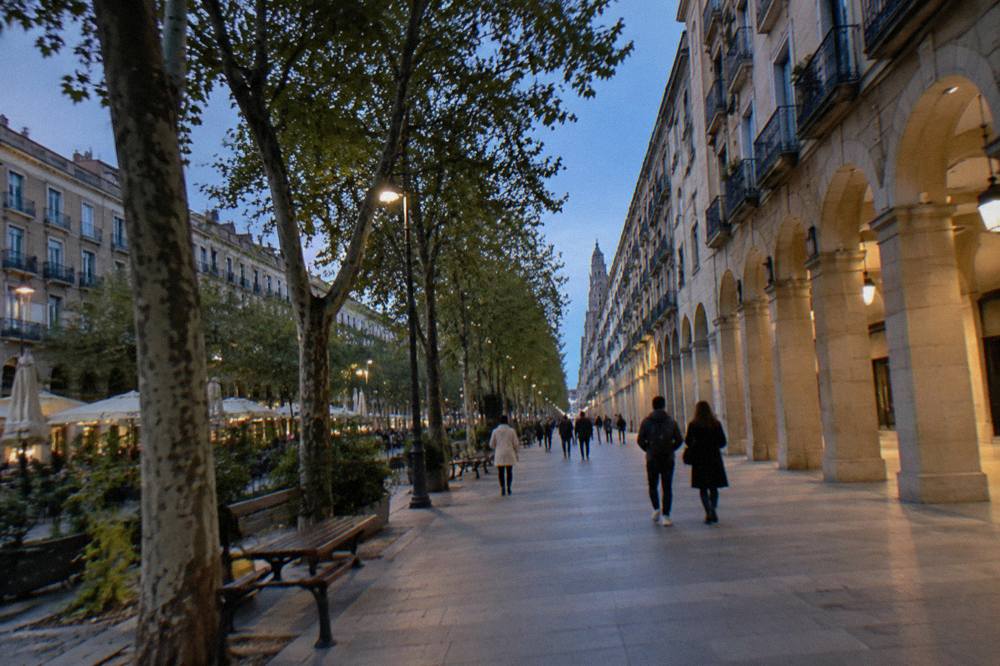
For most trips the best place to stay in Zaragoza is the Casco Histórico, the old-town district between the Basílica del Pilar and the Ebro, with the Centro grid around Paseo de la Independencia a close second. Both put the Pilar, La Seo, the Aljafería and El Tubo's tapas bars within an easy walk of the hotel door. Delicias is the practical choice for rail arrivals, while the Expo riverside trades centrality for quiet and modern surroundings.
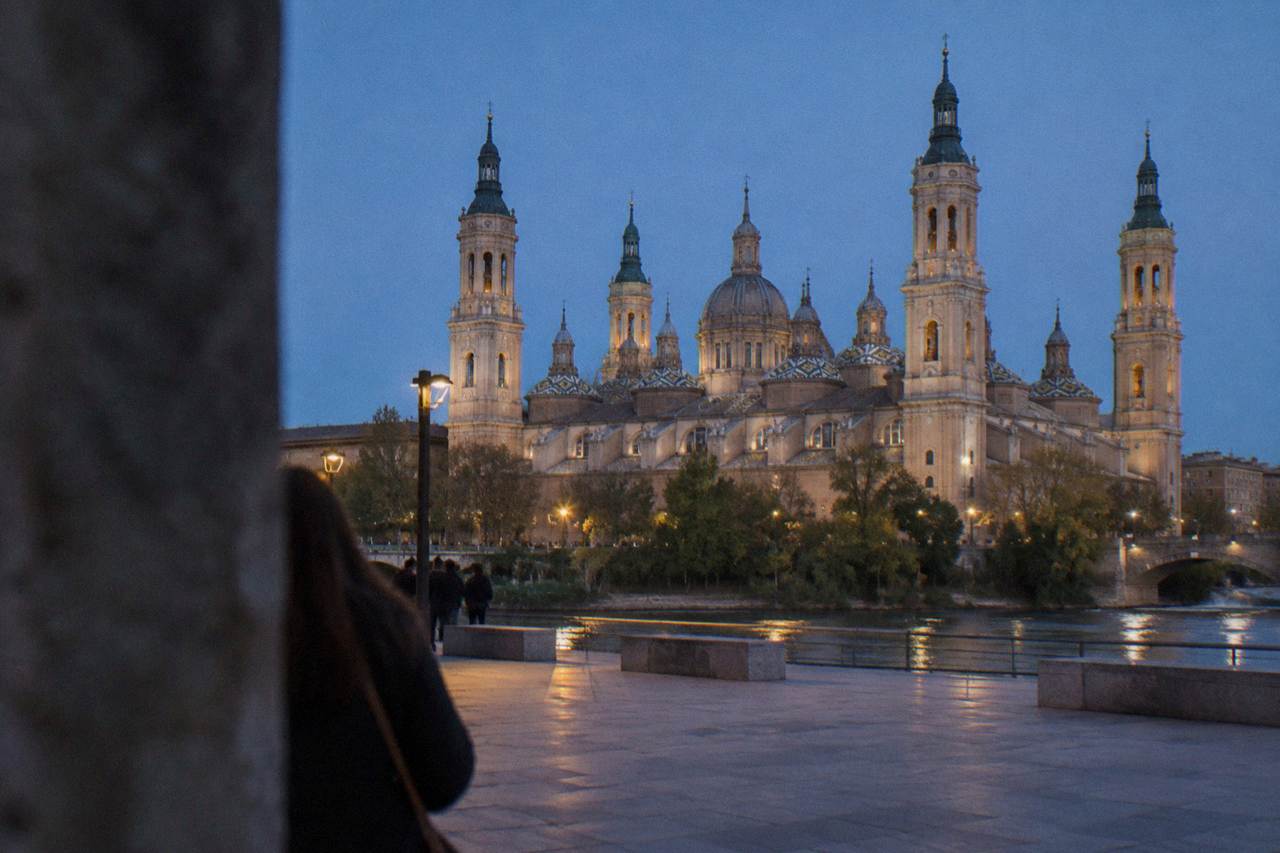
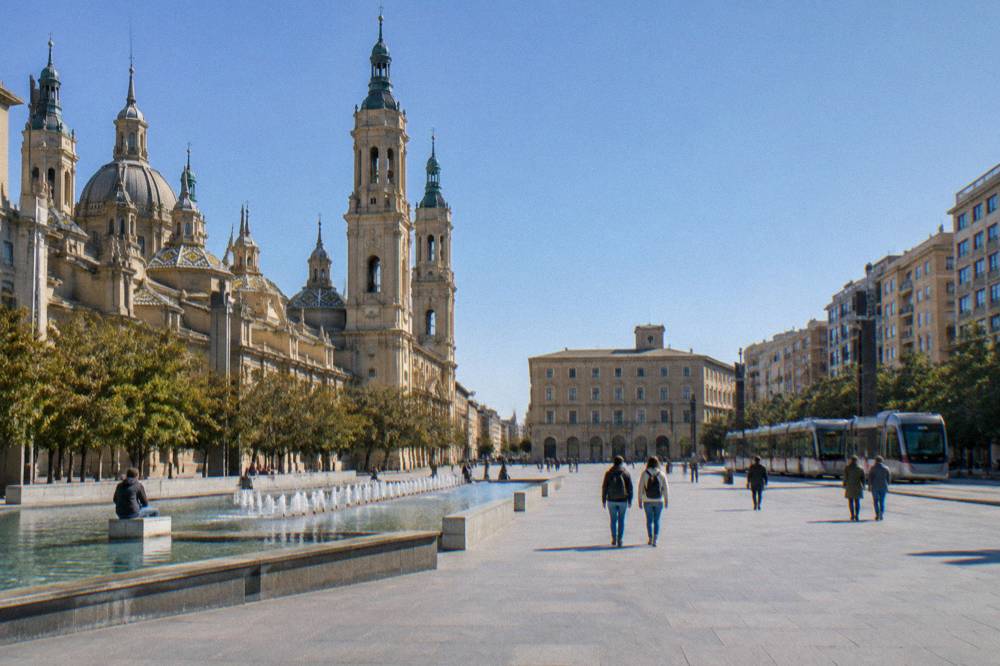
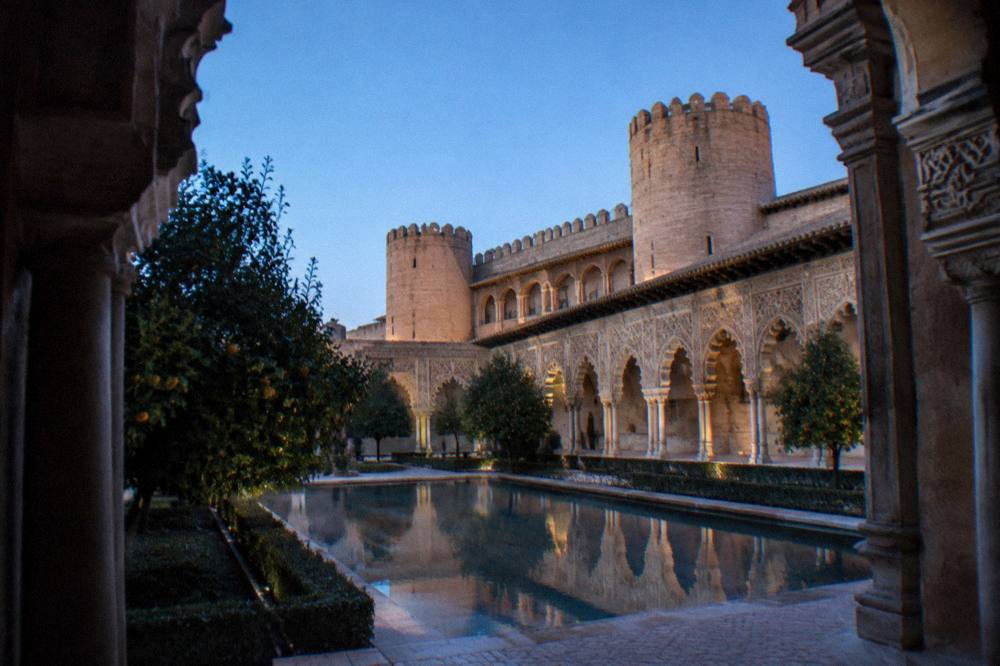
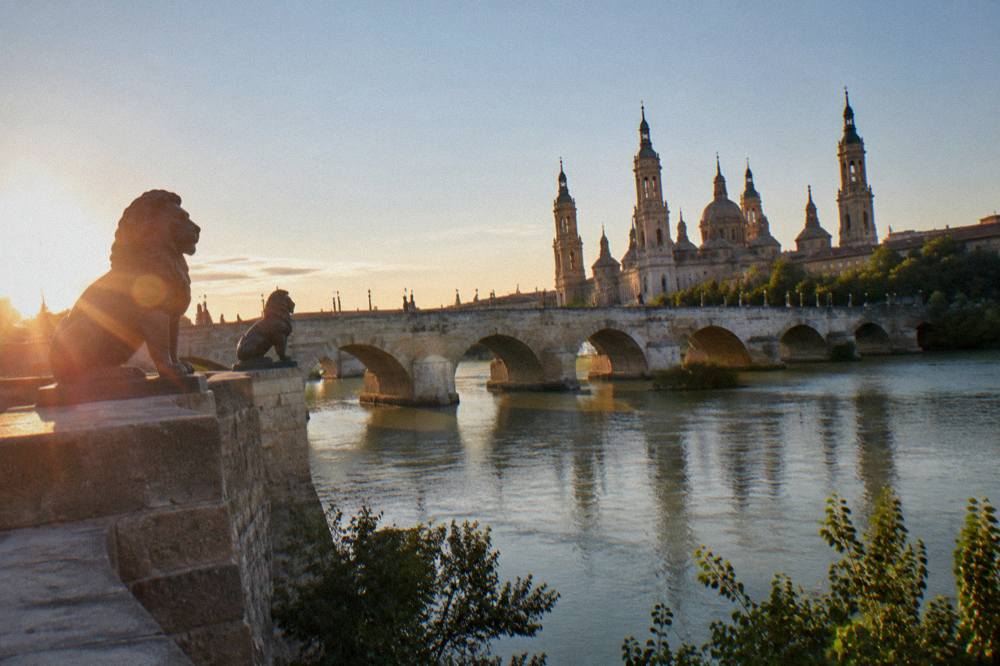
The reason the old town wins so often is simple geometry. Zaragoza's sights are unusually concentrated: the Basílica del Pilar stands at the head of Plaza del Pilar, La Seo is a couple of streets east, the Puente de Piedra crosses the Ebro at the basilica's flank, and the Aljafería, the great Moorish palace of Aragon, sits a tram ride or a brisk walk to the west. A hotel anywhere inside that triangle means the day's sightseeing starts the moment you leave the lobby.
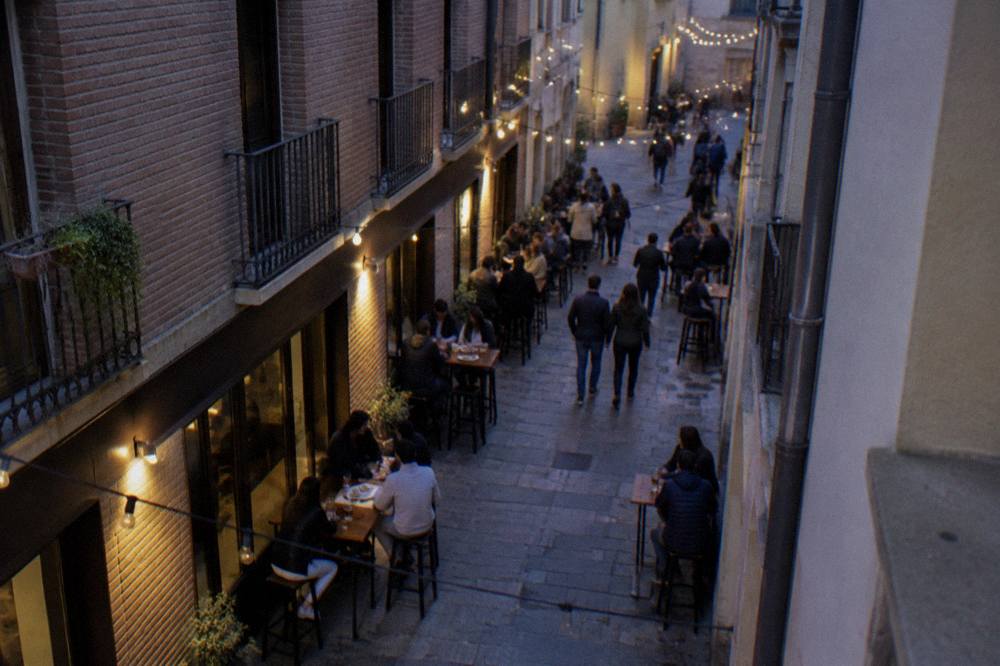
The old town itself is a dense historic grid: narrow streets, Mudéjar brickwork, the cathedral, and behind the basilica the lattice of small streets known as El Tubo, packed with tapas bars. It is the most atmospheric address in the city and the one that empties your evening into restaurants rather than transport. The trade-off is character over space: older buildings, smaller rooms, and streets that fill during the Fiestas del Pilar, which in 2026 run from 10 to 18 October.
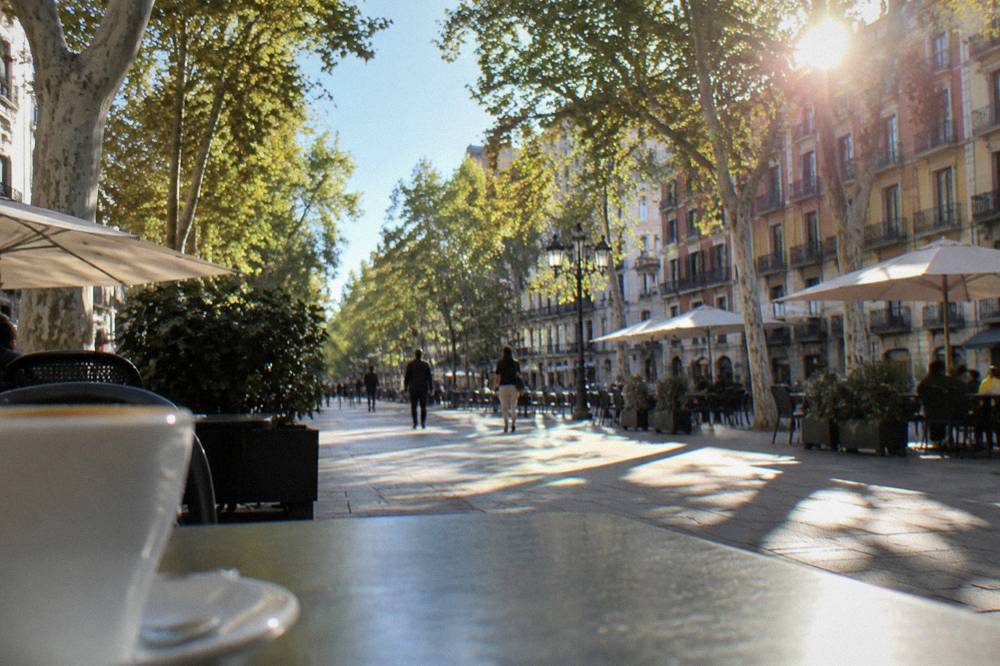
The Centro, the stately grid around Paseo de la Independencia, is the calmer, roomier sibling. It keeps the walk to the Pilar short, adds wide shopping streets and smarter café terraces, and generally offers larger rooms in later buildings. For a first visit of one or two nights, either district works; the choice is mostly about whether you want to sleep inside the postcard or five minutes outside it.
Which Zaragoza Neighbourhood Fits Your Trip?
Choose the Casco Histórico for atmosphere and short nights out, the Centro around Paseo de la Independencia for space and shopping, Delicias for rail arrivals and budget stays near Zaragoza-Delicias station, and the Expo riverside for quiet, modern rooms beside the Ebro and Parque del Agua. Each district trades centrality for something else, and none is more than a 1.70 EUR tram or bus ride from Plaza del Pilar.
The table below matches each hotel district to the trip it suits. Fares are the current Avanza single for urban bus and tram, with the Tarjeta Bus price in brackets.
| District | Character | Best for | Getting to Plaza del Pilar |
|---|---|---|---|
| Casco Histórico | Medieval grid, Mudéjar brick, tapas bars of El Tubo | First visits, food-focused trips, short stays | On foot, the basilica is the district's centrepiece |
| Centro (Paseo de la Independencia) | Stately expansion grid, shops, wider streets | Couples, shoppers, anyone wanting larger rooms | Short walk east along the Paseo |
| Delicias | Modern blocks around the rail station | Rail arrivals, budget stays, longer visits | Tram or bus, 1.70 EUR single (0.55 EUR with Tarjeta Bus) |
| Expo riverside / Parque del Agua | Waterfront parks, Expo legacy buildings | Families, quiet nights, river walks | Tram or bus, 1.70 EUR single (0.55 EUR with Tarjeta Bus) |
Delicias deserves a longer word because it is the district visitors know without realising it. Zaragoza-Delicias is the city's high-speed rail station, with Madrid and Barcelona both about 1.5 to 2 hours away by fast train, so a hotel here means stepping off the AVE and being checked in within minutes. The district is functional and modern rather than beautiful, but the tram connects it to the centre cheaply, and the station guide covers the layout in detail.
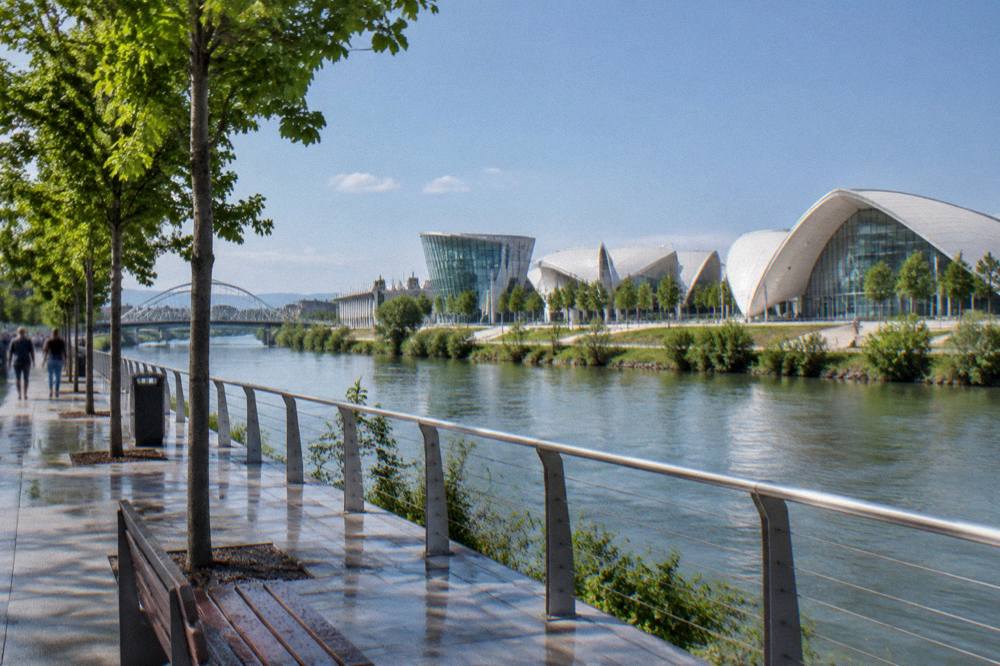
The Expo riverside is the newest address in the city. The Ranillas meander along the Ebro was transformed for Expo 2008 and now holds Parque del Agua Luis Buñuel, more than 120 hectares of green space with 5 and 10 km running circuits, the first European park to carry the Green Globe certification. Families and anyone who wants to end the day with a river walk rather than a tapas crawl do well here, and the Parque del Agua guide describes the park itself.
If the trip is built around food, the old town is the only sensible answer: the evening tapas tours in the city all start from its streets. If it is built around arrival logistics, Delicias wins. And if October's festivals are the reason for the trip, being inside the old town during the Fiestas del Pilar means the concerts, the Ofrenda de Flores on 12 October and the fireworks all arrive on foot.
When Should You Book A Zaragoza Hotel?
Book early for the Fiestas del Pilar, which run from 10 to 18 October 2026 and fill the old town around the Ofrenda de Flores on 12 October, and again for Semana Santa. Outside those windows the best value sits in the shoulder months: May averages 18 C, June 22.6 C and September 21.2 C as 1981-2010 AEMET means for the Zaragoza Aeropuerto station, while July and August average 25.3 C and 25.0 C with only 17 mm of rain each.
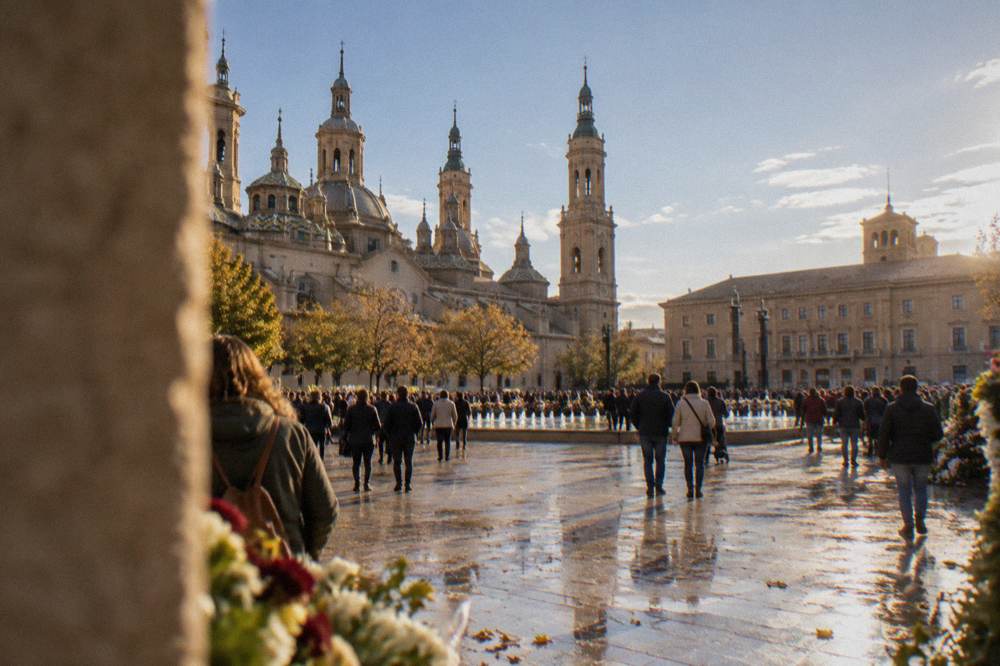
The October festival window matters more in Zaragoza than in most Spanish cities. The Fiestas del Pilar are the city's defining event: the pregón opens them from the Ayuntamiento balcony at 21:00 on Saturday 10 October, the Ofrenda de Flores brings a river of flower-offering groups to Plaza del Pilar on 12 October, and the closing fireworks close them by the Ebro on 18 October. A hotel room inside the old town during those nine days is the most in-demand bed in Aragon. The Fiestas del Pilar guide covers the programme, and the best time to visit guide weighs the whole calendar.
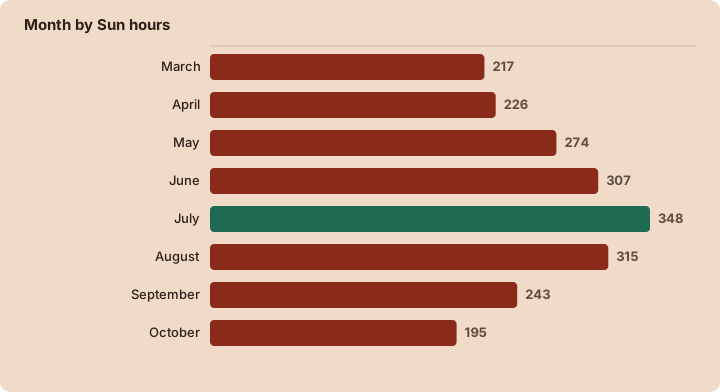
The climate table below is the AEMET 1981-2010 normals for the Zaragoza Aeropuerto station (number 9434), the only window the station publishes, and it is the honest basis for choosing a month.
| Month | Mean C | Mean max C | Rain mm | Sun hours |
|---|---|---|---|---|
| March | 11.6 | 17.3 | 19 | 217 |
| April | 13.8 | 19.6 | 39 | 226 |
| May | 18.0 | 24.1 | 44 | 274 |
| June | 22.6 | 29.3 | 26 | 307 |
| July | 25.3 | 32.4 | 17 | 348 |
| August | 25.0 | 31.7 | 17 | 315 |
| September | 21.2 | 27.1 | 30 | 243 |
| October | 16.2 | 21.4 | 36 | 195 |
Two readings of that table shape hotel planning. May is actually the wettest month of the year at 44 mm on the 1981-2010 AEMET average, though "wettest" in a semi-arid inland city still means only a handful of rain days. July and August are the hottest and driest, with mean maxima of 32.4 C and 31.7 C, so a summer booking should prioritise air conditioning over charm; the weather guide unpacks the seasons in full. Winter stays are quiet and cheap, with January means of 6.6 C and 23.1 frost days across the year, mostly falling then.
One wind note that belongs in any Zaragoza hotel conversation: the cierzo, the cold, dry north-westerly that funnels down the Ebro valley. It is a real feature of the city's character and a reason riverside rooms feel brisk in winter, but it is qualitative: no wind speed or frequency figure is published in the climate normals, so treat any precise-sounding claim about it with suspicion.
How Do You Reach Your Hotel From The Airport And The Station?
From Zaragoza Airport, the dedicated bus is line 505 at 4.65 EUR single, about 25 to 35 minutes, timed to flights; from Zaragoza-Delicias station the tram or any urban bus costs 1.70 EUR single, or 0.55 EUR with a Tarjeta Bus that itself costs 7 EUR. A hotel in Delicias makes the station leg a walk with luggage; a hotel in the old town adds one cheap tram or bus ride from either arrival point.
The airport detail is worth pinning down because old sources get the line number wrong: the airport bus is line 505, not 44, which is an urban route. The single fare is 4.65 EUR, cheaper at about 2.25 EUR with a Lazo or Ciudadana card, and the service is coordinated with flight arrivals. The airport guide and the airport-to-centre guide cover the options, including the taxi alternative.
| Journey | Mode | Fare | Notes |
|---|---|---|---|
| Airport to centre | Line 505 bus | 4.65 EUR | About 25-35 min, timed to flights |
| Airport to centre | Line 505 with Lazo card | about 2.25 EUR | Card discounts apply |
| Delicias station to centre | Tram or urban bus | 1.70 EUR | Tarjeta Bus price 0.55 EUR |
| Any urban journey | Tarjeta Bus card | 7 EUR for the card | Valid on bus and tram |
| Hop-on sightseeing | Zaragoza Bus Turístico | 10 EUR | 24 h, 16 stops, 90-minute loop |
The tourist bus deserves its place in that table because it changes what a hotel address means. A 10 EUR ticket buys 24 hours of hopping between 16 stops, which softens the penalty for staying slightly out of the core; the tourist bus guide has the route. Cyclists have the Bizi share system too, with a 1 EUR day pass plus 0.50 EUR for the first 30 minutes of each trip.
Drivers have one extra consideration: the low-emission zone. The ZBE Casco Histórico restricts unlabelled vehicles Mon-Fri 08:00-20:00, with sanctions in force since 12 December 2025, and the city allows a 15-minute grace window if you enter by mistake, which is roughly enough to drop bags at an old-town hotel and leave again. The car rental and parking guide covers the mechanics.
What Can You Walk To From Each Hotel Area?
From an old-town or Centro hotel you can walk to the Basílica del Pilar, La Seo, the Puente de Piedra, the Roman Caesaraugusta museum sites and the Aljafería, and the verified entry figures are modest: the basilica's temple is free, its tower viewpoint is 6 EUR, La Seo is 10 EUR including three museums, and the Aljafería is 7 EUR general or 9 EUR guided. From Delicias or the Expo riverside, the same sights are one cheap tram ride away.
The concentration of paying sights inside the walkable core is what makes the central districts worth their premium. The table below gathers the verified October figures from the municipal monuments timetable and the palace's own ticketing page.
| Sight | Entry | Hours (Oct) |
|---|---|---|
| Basílica del Pilar, temple | Free | Main altar Mon-Sat 7:30-13:30 / 16:30-20:15 |
| Basílica del Pilar, Torre Mirador | 6 EUR adult | Mon-Thu 10:30-14:30 / 16:00-20:00, Fri-Sun 10:00-20:00 |
| La Seo (includes Museo de Tapices, Museo Pilarista, Rosario de Cristal) | 10 EUR general | Mon-Sat 10:00-14:30 / 16:00-20:00 |
| Aljafería | 7 EUR general, 9 EUR guided | Daily 10:00-18:00 |
| Caesaraugusta Foro | 4 EUR | Tue-Sat 10:00-14:00 / 17:00-21:00 |
| Caesaraugusta 4-museum bono | 7 EUR | Same hours across the four sites |
Free days stretch this further. The Caesaraugusta museums are free the first Sunday of the month, and the Aljafería is free the first and third Sunday and Monday of each month, facts that pair well with a Sunday arrival into a central hotel. The free things to do guide collects the rest.
Two closures matter when you plan walks from a Centro hotel. The Museo de Zaragoza's central building on Plaza de los Sitios is closed for Ministry of Culture works with no reopening date, and Palacio de Sastago is closed in October, with the Museo Pablo Gargallo temporarily shut too. Against that, the Museo Goya reopens on 9 October 2026, Tue-Sat 10:00-20:00 and Sundays 10:00-14:00, with no admission price yet published, so check the museum's own page before budgeting that visit.
A guided walk is the fastest way to convert a central hotel into a full sightseeing day. The historical tour of the old district with a guide runs 2.5 hours from 106.92 per person, is rated 5 from 14 reviews, and covers the ground a central room puts outside your door; the old district history walk has the details, and Check availability before the festival window fills.
Which Hotel Area Works Best For Food And Nightlife?
For food, stay in the Casco Histórico: El Tubo, the dense old-town grid of tapas bars behind the Basílica del Pilar, plus the streets around La Seo and the Mercado Central put the evening within a two-minute walk of any old-town room, and the city's tapas and wine tours all start from those streets. The Centro offers smarter restaurants and cafés along Paseo de la Independencia, while Delicias and the Expo riverside are quieter at night and usually mean a tram ride to dinner.
El Tubo needs careful description because a lot of folklore surrounds it. What can be said plainly is that it is a dense old-town lattice of small streets lined with tapas bars, the natural end point of a day that began at the basilica. No history, bar names or opening hours can be stated from a verified source here, so treat the guidebook colour with a pinch of salt and let the streets speak for themselves; the El Tubo guide keeps to what is checkable.
What is firmly verifiable is the tour layer. An evening tapas walk of the old town runs 3 hours from 106.92 per person, rated 4.9 from 62 reviews, and a midday market and tapas version runs the same duration at the same from-price, rated 5 from 9 reviews. The Zaragoza food guide covers the dishes themselves, from ternasco de Aragón to migas aragonesas.
For wine rather than tapas, a 3-hour wine tasting with tapas in the old town starts from 106.92 per person, rated 5 from 21 reviews. The pattern is consistent: nearly every food and wine product in the city starts from the old-town streets, which is the strongest practical argument for sleeping there.
How Do Day Trips Change The Hotel Decision?
Day trips do not change the base: nearly every excursion in the region starts from central Zaragoza, so a Casco Histórico or Centro hotel keeps every departure easy, and the long Pyrenees excursions run about 11 hours, which makes a quiet room and an early night the priority the evening before. The Belchite olive-oil trip runs 5 hours, and the witch-town excursion to Tarazona and Moncayo country runs 7 hours, all from the city.
The Canfranc, Jaca and Sallent de Gállego excursion runs about 11 hours from $66.40 per person, rated 4.7 from 10 reviews, and the Ordesa day visiting Aínsa, Torla and the Sorrosal waterfall is the same length at the same from-price, rated 5 from 3 reviews. The Pyrenees day trip guide and the day-trip planning pages cover the destinations.
Closer to town, the olive-oil tours to the old town of Belchite run 5 hours from 106.92 per person, rated 5 from 35 reviews. Belchite is a Civil War ruin and the visits are sobering rather than festive, a contrast worth knowing before booking. The Belchite guide treats it with the seriousness it deserves.
The practical hotel takeaway is simple: on excursion days you leave early and return late, so the room matters mainly as a bed and a breakfast. That is the one scenario where Delicias or the Expo riverside genuinely compete with the old town, since the money saved on the room can fund a second excursion.
Between those two guided options sits a third shape of visit: the private walk with a local, from $54.02 per person and rated 4.7 from 86 reviews, which suits anyone who wants the old district explained at their own pace and their own start time.
How Many Days Do You Need, And How Does That Shape The Room?
One night is enough for the Pilar, La Seo, El Tubo and a riverside walk; two nights add the Aljafería, the Roman sites and a tapas evening without rushing; three nights open the door to a full-day excursion and the museum quarter. A one-night stay should be entirely inside the old town or Centro, while stays of three nights or more can spread to Delicias or the Expo riverside without losing anything.
The one-night trip works because the core is so tight. Arrive at Zaragoza-Delicias from Madrid or Barcelona, about 1.5 to 2 hours by high-speed train, drop bags at an old-town hotel, and the rest of the day is the Pilar's tower viewpoint, La Seo, the Puente de Piedra and dinner in El Tubo. The one-day itinerary sequences it hour by hour.
Two nights is the sweet spot for most visitors. It buys the Aljafería at a civilised hour, the Caesaraugusta museum route, and an evening for the tapas crawl that a single night squeezes. The two-day itinerary and the three-day itinerary both assume a central base for exactly this reason.
Longer stays shift the arithmetic. Once you are in Zaragoza for four nights or a week, the quieter districts stop being a compromise: the tram fare of 1.70 EUR each way is a rounding error against a week of savings, and Parque del Agua becomes a daily amenity rather than a sight. The where to stay guide and the budget guide cover the money side, and the hostels and budget stays guide covers the cheap end of the market.
Common Questions About Hotels In Zaragoza
What is the best area to stay in Zaragoza?
The Casco Histórico, the old town around the Basílica del Pilar and La Seo, is the best area for most visitors, with the Centro around Paseo de la Independencia a close second for larger rooms and calmer nights. Delicias suits rail arrivals and budget stays, and the Expo riverside suits families and quiet river walks.
Is Zaragoza expensive for hotels?
There is no tourist tax in Aragon, the regional government having ruled one out in September 2026, and urban transport is 1.70 EUR per single tram or bus ride, 0.55 EUR with a Tarjeta Bus. The old town commands a premium during the Fiestas del Pilar, 10 to 18 October in 2026, and booking outside that window is the single biggest saving available.
Should I stay in the old town or near the station in Zaragoza?
Stay in the old town if the trip is short and food-focused: El Tubo's tapas bars, the Pilar and La Seo are all on foot. Stay near Zaragoza-Delicias station if you arrive by high-speed train from Madrid or Barcelona, about 1.5 to 2 hours away, or if you want cheaper rooms and don't mind a 1.70 EUR tram ride into the centre.
Can I walk everywhere from a central Zaragoza hotel?
Almost. The Basílica del Pilar, La Seo, El Tubo, the Puente de Piedra and the Roman Caesaraugusta sites are all walkable from any central room, and the Aljafería is a longer walk or one tram ride. The 10 EUR tourist bus, a 24-hour hop-on hop-off ticket with 16 stops, covers everything else.
Do I need a car at a Zaragoza hotel?
No, and driving into the old town carries a complication: the low-emission zone restricts vehicles without a DGT label Mon-Fri 08:00-20:00, with sanctions in force since 12 December 2025, though a 15-minute grace window allows a mistaken entry long enough to drop bags. Trains, trams and buses cover the city and the fast links to Madrid and Barcelona.
The short version: book the old town or the Centro for anything up to three nights, book Delicias or the Expo riverside when the budget or the length of stay points that way, and book very early if the dates touch October's Fiestas del Pilar, because those nine days are the one window when Zaragoza's hotel market genuinely tightens.