Zaragoza Museums
Zaragoza, the capital of Aragon on the Ebro, packs its Roman ruins, Goya paintings and Mudéjar palaces into a walkable old town. This guide sets out which museums are open, what they cost, and which days let you in for free.
Short answer
The open museums of Zaragoza include the four Caesaraugusta Roman sites, the Aljafería, La Seo with its Museo de Tapices, the IAACC Pablo Serrano, the Centro de Historias, the Museo Goya from 9 October 2026, and the Origami and Fire museums. The Museo de Zaragoza central building, the Palacio de Sástago and the Museo Pablo Gargallo are closed.
Zaragoza, the capital of Aragon on the Ebro, holds more museum floor space than most visitors expect from an inland city of its size. Four Roman sites sit under the modern streets, a Gothic cathedral keeps the Museo de Tapices, one of Europe's finest textile collections, an Islamic palace doubles as a museum, and the city claims Francisco de Goya, born in the nearby village of Fuendetodos, as its own painter. Not everything is open at once, though, and the municipal October timetable currently lists three significant closures alongside the headline reopening of the Museo Goya. This guide walks through what is open, what each ticket costs, which days are free, and how to string a full museum day together without backtracking across the city.
Which Museums In Zaragoza Are Open Right Now?
The open list in October 2026 runs to the four Caesaraugusta Roman museums, the Aljafería, La Seo with its Museo de Tapices, the Museo Pilarista at the Basílica del Pilar, the IAACC Pablo Serrano, the Centro de Historias, the Torreón de la Zuda, the Museo del Fuego y los Bomberos, the Museo del Origami, the Alma Mater Museum and, from 9 October 2026, the Museo Goya. The central building of the Museo de Zaragoza, the Palacio de Sástago and the Museo Pablo Gargallo are closed.
The museum's own notice says the Plaza de los Sitios building is shut for works run by the Ministry of Culture, and no reopening date has been given, so a museum itinerary built around it will disappoint. The compensation is that the Roman museums, which cover much of the same archaeological ground, are fully open, and the Caesaraugusta bono at 7 EUR covers all four of them.
The other closures are shorter-term. The Palacio de Sástago, a Renaissance palace on the Paseo de la Independencia that hosts exhibitions, is closed in October, and the Museo Pablo Gargallo, dedicated to the Aragonese sculptor, is temporarily closed. Neither has a published reopening date in the municipal timetable, so check the city's monument-hours notice close to your visit before walking to either.
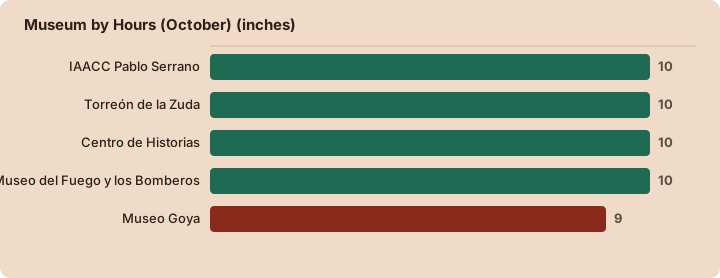
The open list, with hours and prices from the city's October monument timetable, looks like this:
| Museum | Hours (October) | Admission |
|---|---|---|
| IAACC Pablo Serrano | Tue-Sat 10:00-14:00 and 17:00-21:00, Sun 10:00-14:00 | Free |
| Torreón de la Zuda | Mon-Sat 10:00-14:00 and 16:30-20:00, Sun 10:00-14:00 | Free |
| Centro de Historias | Tue-Sat 10:00-14:00 and 17:00-21:00, Sun 10:00-14:30 | Free |
| Museo del Fuego y los Bomberos | Tue-Sat 10:00-19:00, Sun 10:00-14:00 | 3 EUR |
| Museo del Origami | Listed in the municipal timetable | 3 EUR |
| Alma Mater Museum | Listed in the municipal timetable | 5 EUR |
| Museo Goya | From 9 Oct 2026: Tue-Sat 10:00-20:00, Sun and holidays 10:00-14:00, Mon closed | Not published |
The three free municipal museums cluster around the old town and the Paseo de la Independencia, so they slot easily into a walking day. The Centro de Historias occupies a former convent near the Roman walls and covers the city's own story, which makes it a sensible first stop before the site-specific Roman museums.
What Do The Caesaraugusta Roman Museums Cost?
The four Caesaraugusta museums, the Foro, the Puerto Fluvial, the Termas and the Teatro, charge 4 EUR for the Foro and 3 EUR each for the Puerto Fluvial and the Termas, with a combined bono covering all four sites at 7 EUR, reduced to 5 EUR for eligible visitors. They open Tuesday to Saturday 10:00-14:00 and 17:00-21:00, and Sunday and public holidays 10:00-14:30, and entry is free on the first Sunday of the month.
The bono is the obvious buy if you intend to see more than two sites, and the arithmetic is simple: three individual tickets already exceed the combined price. The Foro, on the Plaza de la Seo beside the cathedral, preserves the forum of Roman Caesaraugusta beneath a modern building, with the sewer system and shop foundations of the colonial city visible from walkways. The Museo del Teatro holds the remains of a Roman theatre, one of the largest in Roman Hispania, while the Puerto Fluvial documents the city's river trade and the Termas show the public baths.
| Caesaraugusta site | Standard ticket | In the 7 EUR bono | Free day |
|---|---|---|---|
| Museo del Foro | 4 EUR | Yes | 1st Sunday of the month |
| Museo del Puerto Fluvial | 3 EUR | Yes | 1st Sunday of the month |
| Museo de las Termas | 3 EUR | Yes | 1st Sunday of the month |
| Museo del Teatro | Listed on the city ticketing page | Yes | 1st Sunday of the month |
The four sites sit within a few minutes' walk of one another in the Casco Histórico, which is why they pair so well with a guided walk. The historical tour of the old district with a guide runs 2.5 hours through the same streets, from $106.92 per person, rated 5 from 14 reviews, and it passes the forum site and the theatre on its route through the Roman, Moorish and Renaissance layers of the city. If you prefer to move at your own pace, the Roman museums' own panels are detailed, but a guide adds the narrative thread between them.
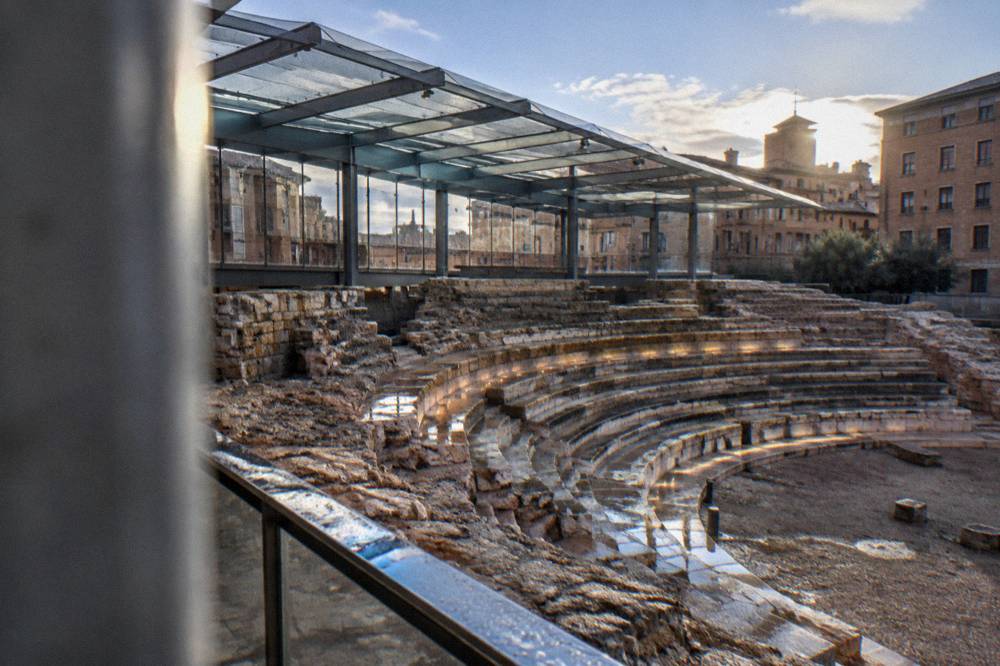
For the wider Roman picture, the dedicated Roman Caesaraugusta guide covers the empire's footprint across the city, and the Roman forum museum and Roman theatre museum pages go deeper on the two largest sites.
How Much Do The Aljafería And La Seo Museum Tickets Cost?
The Aljafería charges 7 EUR general admission, 9 EUR with a guided tour, 4 EUR if you arrive holding a tourist bus ticket, 2 EUR for students, over-65s and Carnet Joven holders, and nothing for under-12s, and it is open daily 10:00-18:00 in October with last access 45 minutes before closing. La Seo cathedral costs 10 EUR general, which includes the Museo de Tapices, the Museo Pilarista and the Rosario de Cristal, with the cathedral-plus-tower combination at 12 EUR.
The Aljafería is the city's great Islamic palace, built for the Banu Hud rulers of the taifa of Zaragoza and later a residence of the Catholic Monarchs. Its carved stucco arches and the oratory with its delicate mihrab make it the most architecturally striking interior in Zaragoza, and the palace now also houses a museum space and the provincial courts. Spanish-language guided tours run at 10:30, 12:30, 13:30, 15:00 and 16:00, and an exhibition tour titled "Goya, del Museo al Palacio" runs at 11:30.
Because the Aljafería's guided visits are in Spanish, visitors who want the palace explained in their own language often book a private guide instead. The guided tour of the Aljafería Palace in Spanish bundles the ticket with a Spanish-language visit from $25.23 per person, rated 4.7 from 23 reviews, while a private walking tour with a local from $54.02 per person, rated 4.7 from 86 reviews, lets you set the language and the pace across the palace and the old town in one walk.
La Seo's ticket is the best value in the city for museum lovers, because the 10 EUR general admission strings together four experiences: the Gothic cathedral itself, rebuilt over the main mosque of Islamic Zaragoza, the Museo de Tapices with its Flemish and Aragonese textile collection, the Museo Pilarista across the square, and the Rosario de Cristal. Reduced rates apply, at 9 EUR for over-65s and 7 EUR for students and 13-to-18-year-olds, and under-12s enter free. Aragon residents get free entry on the 6th, 12th, 23rd and 27th of each month.
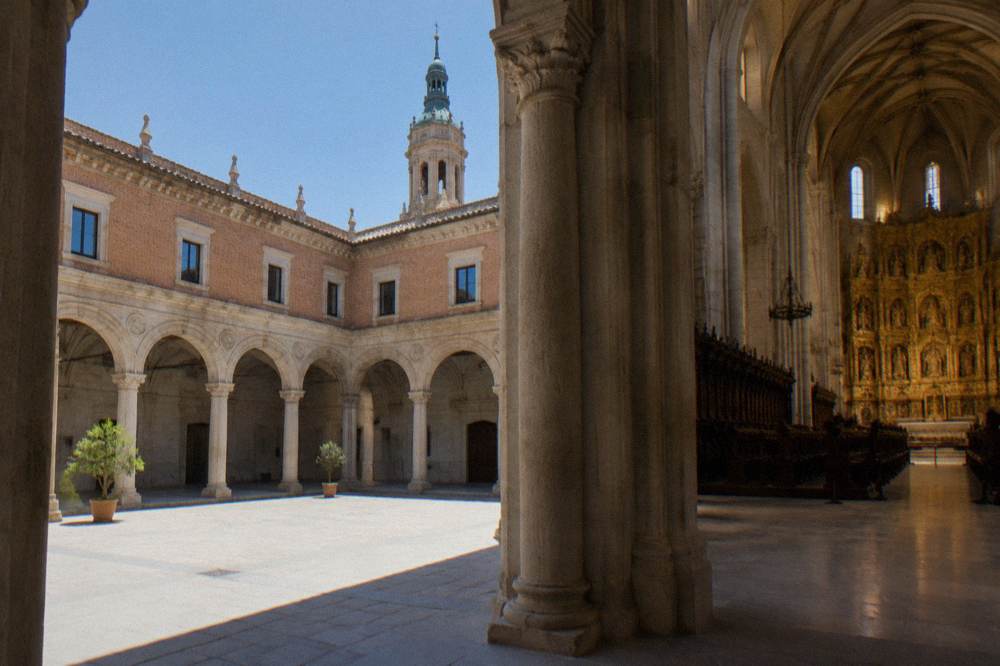
The Museo de Tapices is the hidden gem of the set. The municipal timetable lists it under La Seo's opening pattern, Monday to Saturday 10:00-14:30 and 16:00-20:00, Sundays 10:00-12:00 and 16:00-20:00, with shortened wedding-Saturday mornings, and the collection is regarded as one of the finest in Europe. The Rosario de Cristal, the glass-bead procession floats museum, keeps its own hours, 11:00-14:30 and 16:00-18:30 daily, and is closed from 4 to 15 October.
When Does The Museo Goya Reopen In Zaragoza?
The Museo Goya, run by Fundación Ibercaja in the Camón Aznar building, reopens on 9 October 2026 after a renovation and expansion that adds a new access, immersive experiences and larger exhibition spaces. Its hours are Tuesday to Saturday 10:00-20:00 and Sunday and public holidays 10:00-14:00, closed Mondays, and the admission price has not been published.
The reopening is the biggest museum event in Zaragoza this autumn. Goya was born in Fuendetodos, a village in the Zaragoza province, and trained and worked in the city before leaving for Madrid, and the museum's collection traces his career through paintings, engravings and drawings. The Fundación Ibercaja pages confirm the 9 October 2026 opening date and the hours, but no admission figure, so check the museum's own page before you go rather than relying on any price you may have read elsewhere.
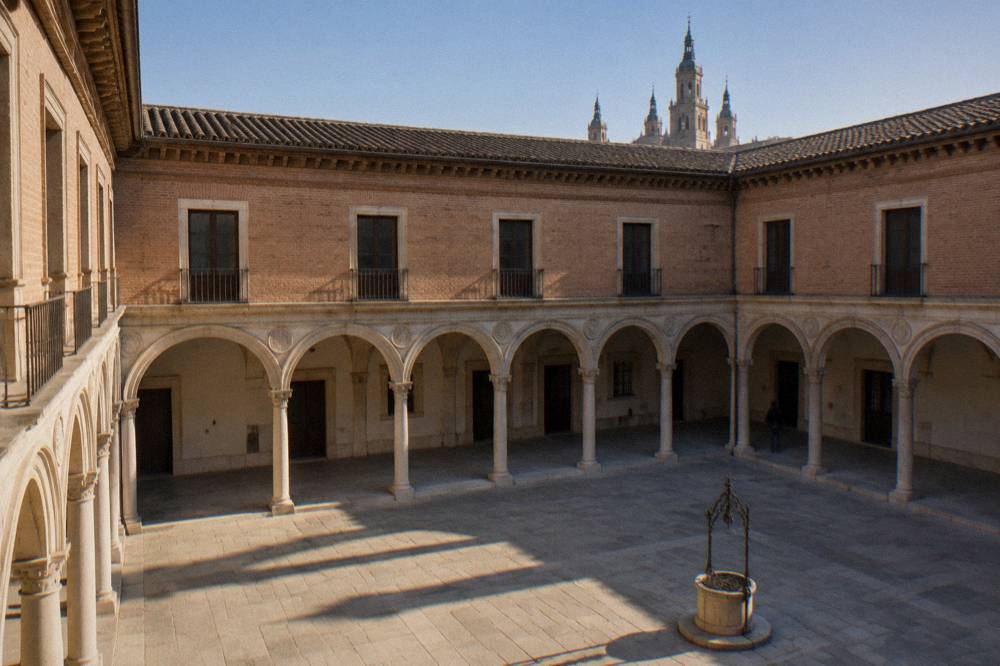
The museum sits in the Renaissance Palacio de los Pardos in the old town, a short walk from the Basílica del Pilar, which makes it easy to combine with the basilica's own Museo Pilarista, open daily 10:00-13:30 and 16:00-20:00 and covered by the La Seo combined ticket. For the fuller Goya trail, the Goya in Zaragoza guide maps the painter's city, and the Museo Camón Aznar page covers the building's history.
Timing matters here. The museum opens the day before the Fiestas del Pilar begin on 10 October, and the festival runs to 18 October, so the opening fortnight will be busy. If your dates are flexible, the best time to visit Zaragoza guide weighs festival week against quieter shoulder months.
Which Zaragoza Museums Are Free?
The IAACC Pablo Serrano, the Torreón de la Zuda and the Centro de Historias are always free, the Caesaraugusta museums and the Museo del Fuego y los Bomberos are free on the first Sunday of the month, the Aljafería is free on the first and third Sunday and Monday of each month, the Museo del Origami is free on the first Tuesday and Sunday, and entering the Basílica del Pilar temple itself costs nothing.
The always-free trio covers contemporary art at the IAACC Pablo Serrano, the city's own history at the Centro de Historias, and the Torreón de la Zuda, the surviving medieval tower of the old citadel, whose fifth floor carries the "Mirador de las cuatro culturas" viewpoint over the Roman walls. Between them you can fill a full day at zero admission cost, and all three keep the standard municipal pattern of a lunchtime split, so plan around the 14:00 to 17:00 gap. More of these guides are collected on Zaragoza Travel Guide.
| Museum or site | Standard price | Free entry condition |
|---|---|---|
| IAACC Pablo Serrano | Free | Always |
| Torreón de la Zuda | Free | Always |
| Centro de Historias | Free | Always |
| Basílica del Pilar temple | Free | Always |
| Caesaraugusta museums | 3-4 EUR each, 7 EUR bono | 1st Sunday of the month |
| Museo del Fuego y los Bomberos | 3 EUR | 1st Sunday of the month |
| Aljafería | 7 EUR | 1st and 3rd Sunday and Monday |
| Museo del Origami | 3 EUR | 1st Tuesday and Sunday |
The free-day pattern rewards a calendar check. A visit that straddles a first Sunday can save the better part of 20 EUR per person across the Roman sites, the fire museum and the Aljafería. The free things to do in Zaragoza guide extends the same logic to the city's outdoor sights, and the Zaragoza cost and budget page puts the museum line of a trip budget in context.
What About The Basílica Del Pilar And Its Tower?
Entering the Basílica del Pilar temple is free, the Museo Pilarista is covered by the La Seo combined ticket, and the Torre Mirador viewpoint costs 6 EUR for adults, 5 EUR for over-65s and residents, and 4 EUR for ages 13 to 18, students and groups of 20 or more, with under-12s free. The tower opens Monday to Thursday 10:30-14:30 and 16:00-20:00 and Friday to Sunday 10:00-20:00, with last access 30 minutes before closing.
The basilica is Zaragoza's defining monument, and its museum layer is easy to miss in the rush to the viewpoint. The Museo Pilarista, daily 10:00-13:30 and 16:00-20:00, holds the basilica's liturgical art and its most venerated image, and because the La Seo ticket includes it, the sensible sequence is La Seo in the morning, the Museo de Tapices beside it, then the Pilarista and the tower across the square. The Basílica del Pilar guide and the basilica tower page cover the building and the climb in detail.
One caution for the coming year: the basilica's own foundation page records that the restoration of the Regina Patriarcharum dome was agreed on 23 January 2026, funded with 600,000 EUR from Fundación Ibercaja, with work expected to take around six months from a February start. The completion of that work is not confirmed, so the state of the dome is something to check on the basilica's own page before a visit built around photography.
How Do You Plan A Museum Day In Zaragoza?
A workable museum day in Zaragoza starts at the Aljafería when it opens at 10:00, crosses to the Caesaraugusta Foro beside La Seo for the late-morning slot, takes the combined La Seo and Museo de Tapices ticket after lunch, finishes at the Museo Pilarista and the Basílica del Pilar, and ends with the free Torreón de la Zuda viewpoint or a night walk past the floodlit basilica.
The geography makes this easy. The Aljafería sits slightly west of the centre, and the tram and urban bus network, with a single fare of 1.70 EUR or 0.55 EUR with the Tarjeta Bus, connects it to the Paseo de la Independencia in minutes. From there everything on the list is a walk: the Foro and La Seo share a square, the Pilar and its museum are two minutes further, and the Centro de Historias and the Roman walls are on the way back east.
| Time | Stop | Ticket |
|---|---|---|
| 10:00 | Aljafería palace and museum | 7 EUR, or free on 1st/3rd Sunday |
| 12:00 | Caesaraugusta Foro, then Puerto Fluvial | 7 EUR bono covers all four Roman sites |
| 14:00 | Lunch in the old town | Not included |
| 16:00 | La Seo and Museo de Tapices | 10 EUR, includes Pilarista and Rosario de Cristal |
| 18:00 | Basílica del Pilar and Museo Pilarista | Temple free, covered by La Seo ticket |
| 19:30 | Torreón de la Zuda viewpoint | Free |
Budget the day at roughly 24 EUR per adult in tickets if you buy the bono and the La Seo combination, less on a free Sunday, plus the tower if you want the view. The Zaragoza one day itinerary folds these museums into a wider first-day plan, and the getting around Zaragoza page covers the tram and bus fares in detail.
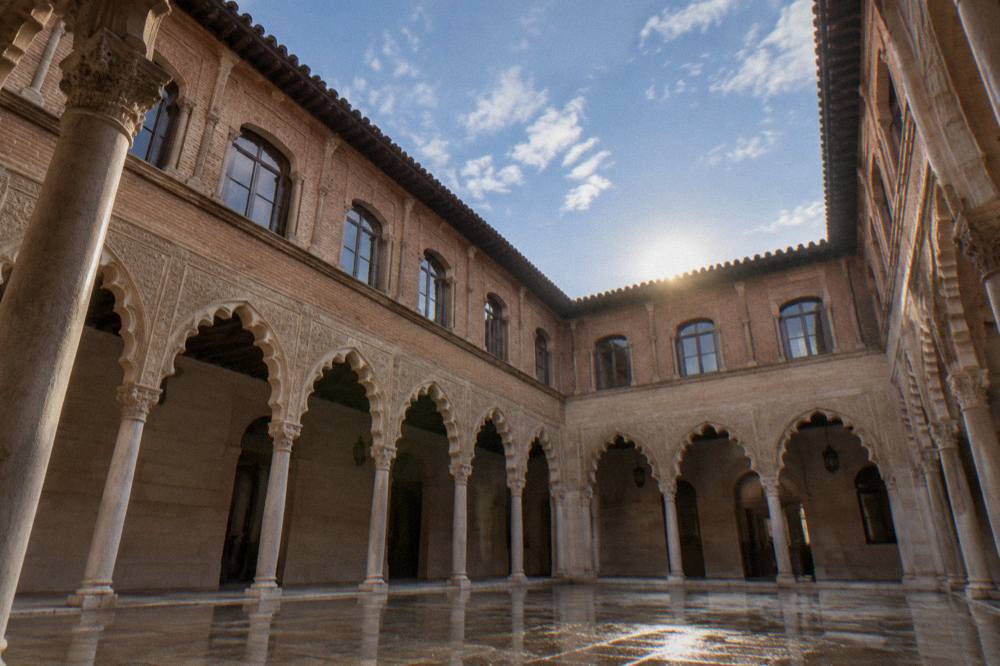
For visitors who want the whole old district explained rather than just its museums, the guided options below pair the same streets with a local's commentary, and the private version lets you linger inside the Aljafería or the Roman sites as long as the timetable allows.
A private guide is also the answer to the language question at the Aljafería, whose own guided visits run in Spanish. The private walking tour with a local runs 2 to 6 hours from $54.02 per person, rated 4.7 from 86 reviews, and a longer private day can stretch to 8 hours if you want the museums and the palace inside a single booked walk.
What Should Families With Kids See?
Families get the most from the Museo del Origami at 3 EUR, the Museo del Fuego y los Bomberos at 3 EUR with its historic fire engines, the Roman theatre museum's dramatic underground space, and the Caesaraugusta bono at 7 EUR, with under-12s entering the Aljafería and La Seo free and the first-Sunday free days applying to everyone.
The Origami museum is Zaragoza's surprise package, a small museum in the old town dedicated to paper folding, with works from international artists and rotating exhibitions, and its free days on the first Tuesday and Sunday of the month make it an easy add-on. The fire museum, Tue-Sat 10:00-19:00 and Sunday 10:00-14:00, fills a former fire station with engines and equipment, and children of a certain height of interest in fire trucks will forgive a whole morning of Roman forums afterwards.
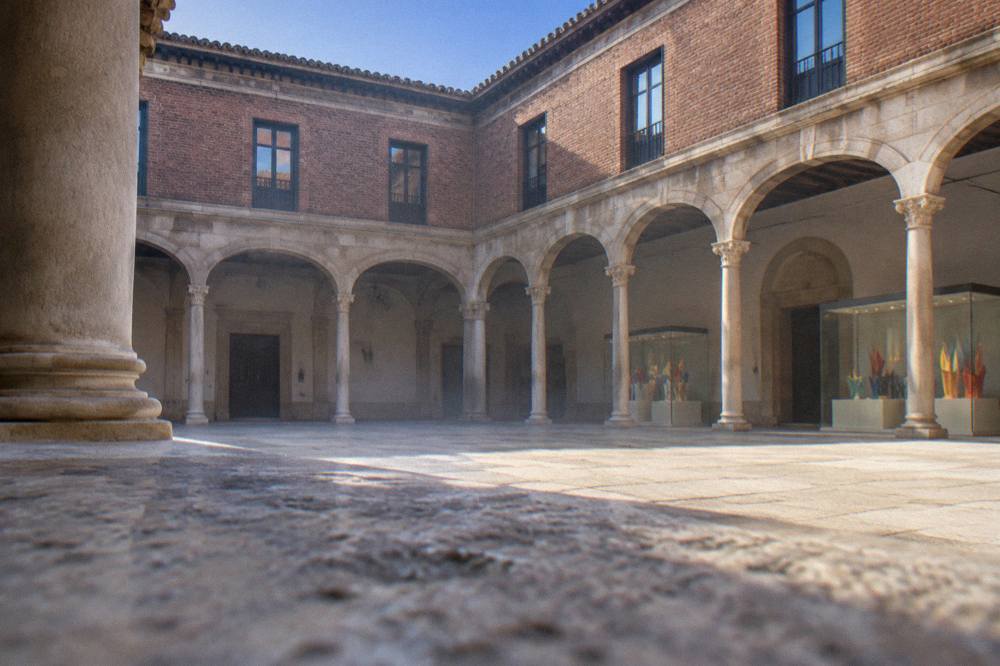
The Roman theatre is the other reliable child-pleaser, its tiered ruins giving the sense of walking into a buried building rather than reading panels. The Zaragoza with kids guide balances the museums against the Parque del Agua and the aquarium, and the rainy day in Zaragoza page is built almost entirely from the indoor list above, which is worth knowing in a city where AEMET's 1981-2010 normals for the Zaragoza Aeropuerto station show October averaging 36 mm of rain over 5.4 days.
Common Questions About Zaragoza Museums
When does the Museo Goya reopen?
The Museo Goya, run by Fundación Ibercaja in the Camón Aznar building, reopens on 9 October 2026, open Tuesday to Saturday 10:00-20:00 and Sunday and public holidays 10:00-14:00, closed Mondays. The admission price has not been published, so check the museum's own page before visiting.
How much does the Caesaraugusta bono cost?
The four-museum bono costs 7 EUR standard and 5 EUR reduced, covering the Foro, the Puerto Fluvial, the Termas and the Teatro. Individual tickets are 4 EUR for the Foro and 3 EUR each for the Puerto Fluvial and the Termas, and entry is free on the first Sunday of the month.
Which Zaragoza museums are free?
The IAACC Pablo Serrano, the Torreón de la Zuda and the Centro de Historias are always free, as is entering the Basílica del Pilar temple. The Caesaraugusta museums and the fire museum are free on the first Sunday of the month, the Aljafería on the first and third Sunday and Monday, and the Origami museum on the first Tuesday and Sunday.
Does the La Seo ticket include other museums?
Yes. The 10 EUR general ticket to La Seo includes the Museo de Tapices, the Museo Pilarista and the Rosario de Cristal, and a combined cathedral-plus-tower ticket at 12 EUR adds the Pilar's Torre Mirador viewpoint. Aragon residents enter free on the 6th, 12th, 23rd and 27th of each month.
Are the Palacio de Sástago and the Museo Pablo Gargallo open?
No. The municipal October timetable lists the Palacio de Sástago as closed in October and the Museo Pablo Gargallo as temporarily closed, with no reopening dates published. Check the city's monument-hours notice close to your visit before walking to either.
The museums of Zaragoza reward a little planning: buy the Caesaraugusta bono, take the La Seo combination for the Museo de Tapices and the Pilarista, aim a first Sunday at the Aljafería, and give the Museo Goya, from its 9 October 2026 reopening, the quietest weekday you can manage.