Does It Rain A Lot In Zaragoza?
No. Zaragoza is one of the driest cities in Spain, with 322 mm of rain a year on the AEMET 1981-2010 averages. Here is how rain actually falls across the year and what it means for a visit.
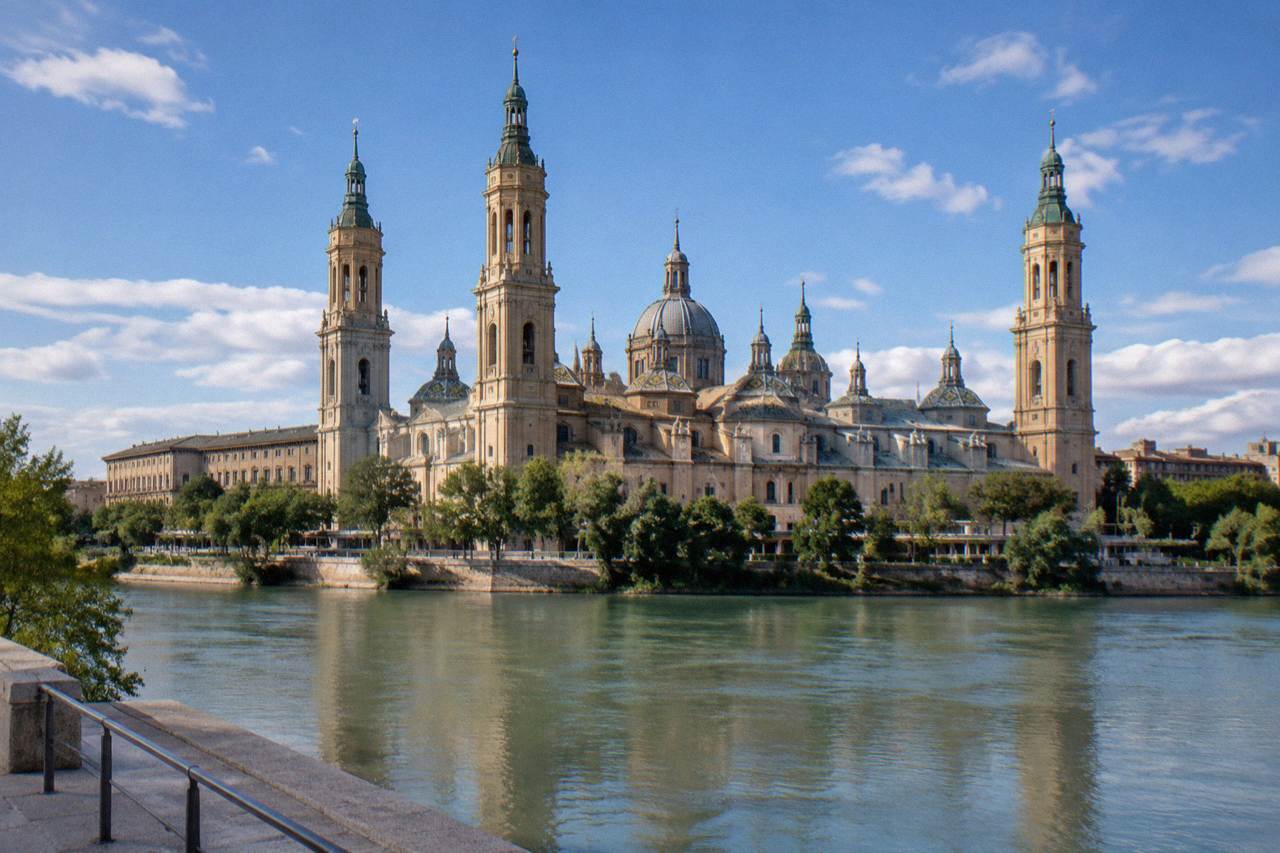
Zaragoza, the capital of Aragon on the Ebro, is a dry city. AEMET's 1981-2010 climate normals for the Zaragoza Aeropuerto station (number 9434, altitude 249 m) record 322 mm of rain across the whole year, falling on 51.1 days with 1 mm or more, alongside 2,693 hours of sunshine. That is the profile of a semi-arid, inland continental climate: no sea, no coast, and long dry stretches in summer. If you are packing for a trip, the honest answer is that rain will almost certainly not be the thing that defines it.
Does It Rain A Lot In Zaragoza?
No. Zaragoza averages 322 mm of rain per year on the AEMET 1981-2010 normals for the Zaragoza Aeropuerto station, spread over just 51.1 days with 1 mm or more of rain. The wettest month, May, averages only 44 mm, and July and August average 17 mm each. For comparison, the same series records 2,693 hours of sunshine a year and 81.6 clear days, so dry weather is the norm, not the exception.
That annual figure deserves context. A total of 322 mm is what many European Atlantic cities receive in three or four wet autumn months. Zaragoza's rain does not arrive as month after month of drizzle either: the 51.1 rain-day count covers every day with 1 mm or more, which means the city can go weeks between measurable falls, especially from late June into August, when the monthly average drops to 17 mm and the mean maximum climbs to 32.4 C in July.
The reason is geography. Zaragoza sits inland on the Ebro, in the middle of the Ebro depression, sheltered from Atlantic fronts by the Iberian System and open to the cierzo, the cold, dry north-west wind that funnels down the valley. The same setting that makes the city windy, as covered in is Zaragoza a windy city, also keeps it dry: the air has already lost most of its moisture over the mountains before it arrives.
For trip planning, this means a rain jacket is a lighter priority than sunscreen and a water bottle. It does not mean rain is impossible: spring and autumn both carry realistic monthly totals, and a wet day in October can be genuinely grey. But the odds favour you, month after month.
How Much Rain Does Each Month In Zaragoza Get?
On the AEMET 1981-2010 averages for Zaragoza Aeropuerto, the monthly rainfall runs from 17 mm in July and August, the driest months, to 44 mm in May, the wettest. The spring and autumn months carry the most rain, with April at 39 mm and October at 36 mm, while winter months sit at 21 to 22 mm. Every month of the year averages less than 50 mm, which is a genuinely dry calendar.
Here is the full monthly picture from the same AEMET series, with the mean temperature and mean daily maximum added because rain in Zaragoza is best understood alongside heat:
| Month | Rain mm | Days with 1 mm+ | Mean C | Mean max C |
|---|---|---|---|---|
| Jan | 21 | 4.0 | 6.6 | 10.5 |
| Feb | 22 | 3.9 | 8.2 | 13.1 |
| Mar | 19 | 3.7 | 11.6 | 17.3 |
| Apr | 39 | 5.7 | 13.8 | 19.6 |
| May | 44 | 6.4 | 18.0 | 24.1 |
| Jun | 26 | 4.0 | 22.6 | 29.3 |
| Jul | 17 | 2.6 | 25.3 | 32.4 |
| Aug | 17 | 2.3 | 25.0 | 31.7 |
| Sep | 30 | 3.2 | 21.2 | 27.1 |
| Oct | 36 | 5.4 | 16.2 | 21.4 |
| Nov | 30 | 5.1 | 10.6 | 14.8 |
| Dec | 21 | 4.8 | 7.0 | 10.8 |
Two patterns stand out. First, May, not a winter month, is the wettest: the AEMET 1981-2010 normals put May at 44 mm over 6.4 rain days, ahead of April's 39 mm. Late-spring convective showers, not Atlantic fronts, do much of the work. Second, the rain-day counts are low everywhere: no month averages even seven days with 1 mm or more of rain, and August averages just 2.3.
A walking tour is the classic first activity in a city this compact, and dry weather makes it easier. The Zaragoza Must-See Attractions Walking Tour With A Guide covers the headline sights in a single guided walk, Check availability for your dates, since dry afternoons book up first.
When Is The Wettest Time Of Year In Zaragoza?
May is the wettest month on the 1981-2010 AEMET normals for Zaragoza Aeropuerto, averaging 44 mm of rain over 6.4 days, followed by April at 39 mm and October at 36 mm. The driest stretch is high summer, with July and August both averaging 17 mm, and July is also the sunniest month at 348 hours. So the shoulder seasons carry the rain, not the depths of winter.
This distribution surprises people who assume Mediterranean-coast logic, where October is the dangerous month. Zaragoza's October is moderately wet at 36 mm, but the real concentration sits in April and May, when warming ground and unstable air produce short, heavy showers. A spring visitor should plan for the possibility of a downpour in the afternoon rather than a washed-out day.
Summer inverts the picture completely. July and August combine 17 mm of rain each with mean maxima of 32.4 C and 31.7 C, and the heat, not the rain, is the planning problem; more on that in the hottest month in Zaragoza. Winter is drier than spring but greyer: December averages just 21 mm, and the same station series records 23.1 frost days and 21.3 fog days a year, so cold-season visits bring chill and occasional fog more often than rain.
Does The Rain Ever Spoil A Trip To Zaragoza?
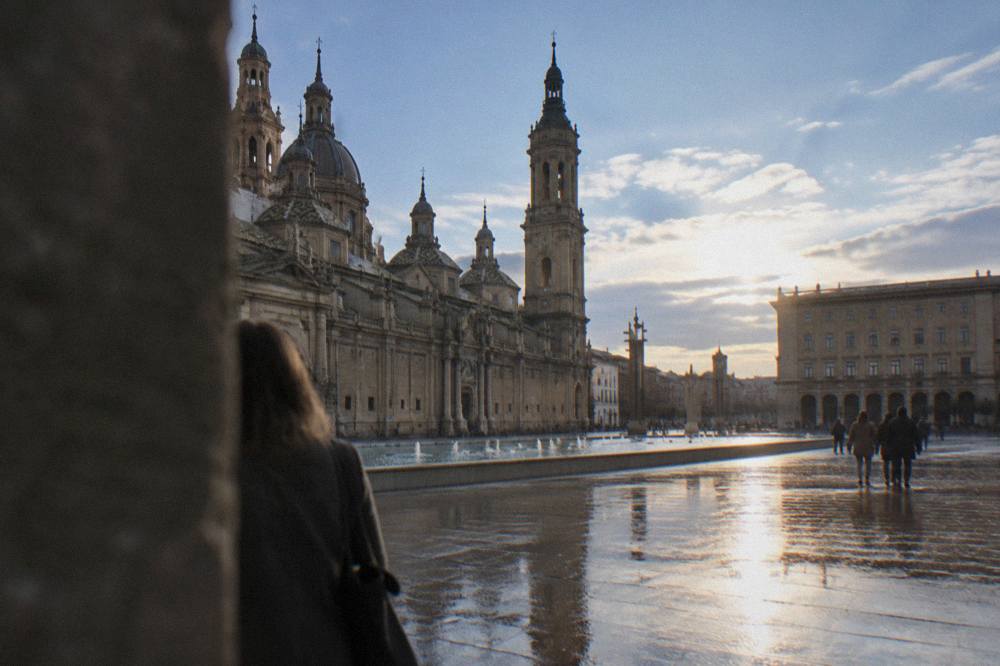
Rarely, and almost never for a whole day. With 51.1 rain days a year on the 1981-2010 AEMET averages, and no month averaging even seven of them, Zaragoza rain tends to arrive in short bursts rather than sustained fronts, and the city's big sights, the Basílica del Pilar, La Seo and the Aljafería, are all indoors. The realistic worst case is a grey, showery afternoon, not a lost holiday.
The city's structure helps. The monumental core is dense: the Basílica del Pilar, whose temple entry is free, La Seo, the Roman Caesaraugusta museum sites and the Old Town's covered shopping streets all sit within a short walk of one another. A shower sends you into a museum or a café for an hour, and the pavement is often dry again by the time you come out.
Practical adjustments are small. An umbrella is enough for most visits; proper waterproof boots would be over-packing for a city averaging 322 mm a year. The Ebro riverside walk and the Parque del Agua are the two experiences most exposed to weather, so check the sky before committing an afternoon to them, and keep the monumental quarter as the fallback.
The one genuinely weather-sensitive week is the Fiestas del Pilar, held 10 to 18 October 2026, with the Ofrenda de Flores on 12 October taking place outdoors along the route from Paseo de la Independencia to Plaza del Pilar. October averages 36 mm of rain over 5.4 days on the 1981-2010 normals, so a dry Ofrenda is more likely than not, but it is the one Zaragoza event where a forecast check genuinely matters.
What Should You Pack For Zaragoza Weather?
For most of the year, pack for dryness and sun rather than rain: sunscreen, a hat, a refillable bottle and layers for cold nights, with a compact umbrella as a light insurance item. The AEMET 1981-2010 normals show a 15.5 C annual mean with a 21.0 C mean maximum, 2,693 sunshine hours and only 322 mm of rain, so heat management matters more than waterproofing in every season except spring.
A simple month-by-month frame, using only the same AEMET series:
| Period | What the averages say | Packing priority |
|---|---|---|
| Dec-Feb | Means 6.6 to 8.2 C, maxima 10.5 to 13.1 C, 21-22 mm rain | Warm layers, fog possible, 23.1 frost days a year |
| Mar-Apr | Means 11.6 to 13.8 C, 19-39 mm rain | Light layers plus a real rain layer |
| May | Wettest month, 44 mm, mean 18.0 C | Umbrella, but mostly warm and bright |
| Jun-Aug | Maxima 29.3 to 32.4 C, 17-26 mm rain | Sun protection, water, midday shade |
| Sep-Oct | Means 21.2 to 16.2 C, 30-36 mm rain | Light rain layer for afternoons |
| Nov | Mean 10.6 C, 30 mm rain | Layers and a jacket |
The spread between day and night is the detail most visitors miss. In August the mean minimum is 18.3 C while the mean maximum is 31.7 C, and in January the mean minimum drops to 2.7 C: a single day can swing across a wide range, so layers beat a single heavy coat almost every month.
If the forecast does turn wet on your first day, a guided walk still works: the must-see attractions walking tour with a guide moves between sheltered monuments, and a guide will flex the route around a shower. For a broader sense of what the city offers in any weather, see is Zaragoza worth visiting, and the Zaragoza Travel Guide covers every district and sight in detail.
Common Questions About Rain In Zaragoza
Does it rain a lot in Zaragoza?
No. AEMET's 1981-2010 normals for the Zaragoza Aeropuerto station record 322 mm of rain a year over 51.1 days with 1 mm or more, alongside 2,693 hours of sunshine. Zaragoza is a dry, semi-arid inland city where rain rarely dominates a visit.
What is the wettest month in Zaragoza?
May, on the 1981-2010 AEMET averages, with 44 mm of rain over 6.4 days. April follows at 39 mm and October at 36 mm. No month of the year averages as much as 50 mm.
What is the driest month in Zaragoza?
July and August tie as the driest months on the same AEMET series, each averaging 17 mm of rain. July is also the sunniest month at 348 hours, with a mean maximum of 32.4 C, so heat rather than rain is the summer consideration.
Does it snow in Zaragoza?
Snowfall figures are not part of the published AEMET 1981-2010 normals for the station, so no snowfall average can be stated. What the series does record is 23.1 frost days a year, concentrated in winter, when January's mean minimum is 2.7 C.
Do I need an umbrella in Zaragoza?
A compact one is sensible in April, May, September and October, when monthly averages run from 30 to 44 mm. In July and August, with 17 mm each, it will likely stay in your bag, and sunscreen and water matter far more.
Is Zaragoza drier than the rest of Spain?
Zaragoza is one of Spain's drier provincial capitals, with 322 mm of annual rain on the 1981-2010 AEMET normals, a figure shaped by its inland Ebro-valley position. The same series shows 81.6 clear days and 2,693 sunshine hours a year, both signs of a genuinely dry climate.
In short, Zaragoza's 322 mm annual average makes it one of the driest cities you are likely to visit in Spain, and the rain that does fall clusters in spring and autumn showers rather than endless grey weeks.