What Is The Hottest Month In Zaragoza?
July is the hottest month in Zaragoza, Spain, with a 1981-2010 average high of 32.4 C. Here is how the Aragonese capital's summer really behaves, month by month.
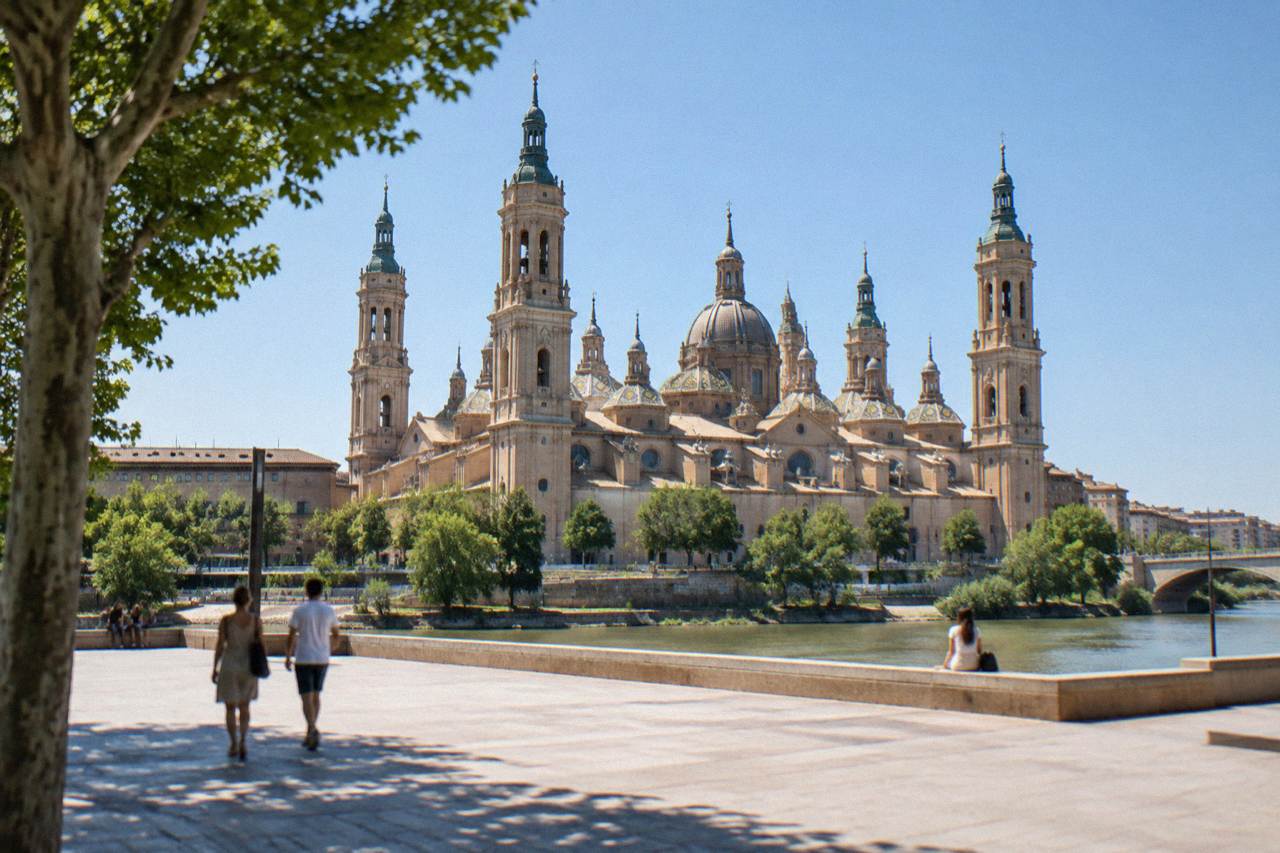
Zaragoza, the capital of Aragon on the Ebro, is an inland city with a dry, continental semi-arid climate, and its summer behaves like one: hot afternoons, warm nights and very little rain. The question of which month tops the table has a clean answer in the official record. AEMET's 1981 to 2010 climate normals for the Zaragoza Aeropuerto station (number 9434, altitude 249 m), the only averaging window the station page publishes, put July first on every heat measure that matters.
What Is The Hottest Month In Zaragoza?
July is the hottest month in Zaragoza, Spain, with an average daily high of 32.4 C and an overall monthly mean of 25.3 C on AEMET's 1981-2010 normals for the Zaragoza Aeropuerto station. August is the close runner-up, averaging 31.7 C for daytime highs and 25.0 C overall. Both months share the same mean daily minimum, 18.3 C, and both are the driest of the year at 17 mm of rain each.
July also wins the sunshine contest, at 348 hours across the month, against 315 hours in August. The two months are separated by less than one degree on every measure AEMET publishes, so in practical terms they behave as one hot block. What the numbers do not show is any count of days above 30 C: the station's normals sheet carries no such row, so no figure of that kind belongs in any honest answer. What the sheet does carry is a mean maximum, a mean and a mean minimum for each month, and on all three July leads the year.
The pattern behind those numbers is the Ebro valley's own. Zaragoza sits inland, far from any sea, so no coastal breeze softens the afternoon. Rain is scarce in the height of summer: 17 mm in July and 17 mm in August, averaged over the 1981-2010 window, with only 2.6 and 2.3 days of rain of 1 mm or more respectively. The same normals give the city 81.6 clear days a year and 61 percent average humidity, a dry heat rather than a sticky one. For how the rest of the year stacks up against that, the monthly picture below shows the whole curve.
How Hot Does Each Month Get In Zaragoza?
June, July, August and September all carry average highs above 27 C in Zaragoza, on the 1981-2010 AEMET normals: June 29.3 C, July 32.4 C, August 31.7 C and September 27.1 C. The shoulder months are milder, with May at 24.1 C and October at 21.4 C for average daytime highs, and the winter months sit between 10.5 C and 13.1 C.
The full table, from AEMET's 1981-2010 normals for the Zaragoza Aeropuerto station, shows how steeply the city warms through spring and how gradually it cools in autumn:
| Month | Mean high C | Mean C | Mean low C | Rain mm | Sun hours |
|---|---|---|---|---|---|
| Jan | 10.5 | 6.6 | 2.7 | 21 | 131 |
| Feb | 13.1 | 8.2 | 3.3 | 22 | 165 |
| Mar | 17.3 | 11.6 | 5.8 | 19 | 217 |
| Apr | 19.6 | 13.8 | 7.9 | 39 | 226 |
| May | 24.1 | 18.0 | 11.8 | 44 | 274 |
| Jun | 29.3 | 22.6 | 15.8 | 26 | 307 |
| Jul | 32.4 | 25.3 | 18.3 | 17 | 348 |
| Aug | 31.7 | 25.0 | 18.3 | 17 | 315 |
| Sep | 27.1 | 21.2 | 15.2 | 30 | 243 |
| Oct | 21.4 | 16.2 | 11.0 | 36 | 195 |
| Nov | 14.8 | 10.6 | 6.3 | 30 | 148 |
| Dec | 10.8 | 7.0 | 3.2 | 21 | 124 |
Two details in that table surprise people. May, not any autumn month, is the wettest of the year at 44 mm, and July and August tie as the driest at 17 mm each. So the hottest stretch is also the driest, which is why the heat feels so dry: the whole year averages just 322 mm of rain over 51.1 days of 1 mm or more, with 2,693 hours of sunshine. If rain is what concerns you, the fuller picture is in does it rain a lot in Zaragoza.
Is July Or August The Better Month To Visit Zaragoza?
August is marginally cooler than July in Zaragoza, by 0.7 C on average daytime highs, and noticeably quieter, because much of Spain takes its holidays in August and local life shifts toward the evening. July holds the records for heat and sunshine, 32.4 C and 348 hours, while August offers nearly identical weather with slightly shorter days. Neither month is a bad choice if you plan around the midday hours.
The practical difference between the two is rhythm rather than temperature. With mean daily minimums of 18.3 C in both months, evenings stay warm enough for terrace dining, and the city's monuments keep long summer hours: the Basílica del Pilar's main altar zone runs to 20:15 on weekdays and 21:30 on Sundays in the October timetable, and similar extended openings apply across the high season. A sensible summer day starts early, rests through the early afternoon and comes back out after 18:00.
That schedule suits a guided walk well. The two-hour private must-see walking tour covers the Basílica del Pilar, La Seo and the old town's shaded lanes in one loop, and its morning slots dodge the worst of the afternoon. Check availability if an early start appeals.
What Is The Best Time Of Year To Visit Zaragoza For Warm Weather Without The Heat?
May, June and September are the sweet spots for warm, manageable weather in Zaragoza: average highs of 24.1 C in May, 29.3 C in June and 27.1 C in September, with mean temperatures of 18.0 C, 22.6 C and 21.2 C respectively. October, at a 21.4 C average high and 16.2 C mean, is also comfortable, though it is one of the wetter months at 36 mm.
Each of those months carries a different character. June is warm and bright with 307 sunshine hours and only 26 mm of rain. September cools the afternoons by five degrees against August while keeping the evenings pleasant at a 15.2 C mean minimum. May is the greenest option but also the wettest month of the year, so a May visit should keep an indoor fallback: the Caesaraugusta museum route, the Aljafería and La Seo all work in rain. The Aljafería is open daily 10:00-18:00 in the October timetable at EUR 7 general admission, with free entry on the first and third Sunday and Monday of each month. The wider set of guides lives on Zaragoza Travel Guide.
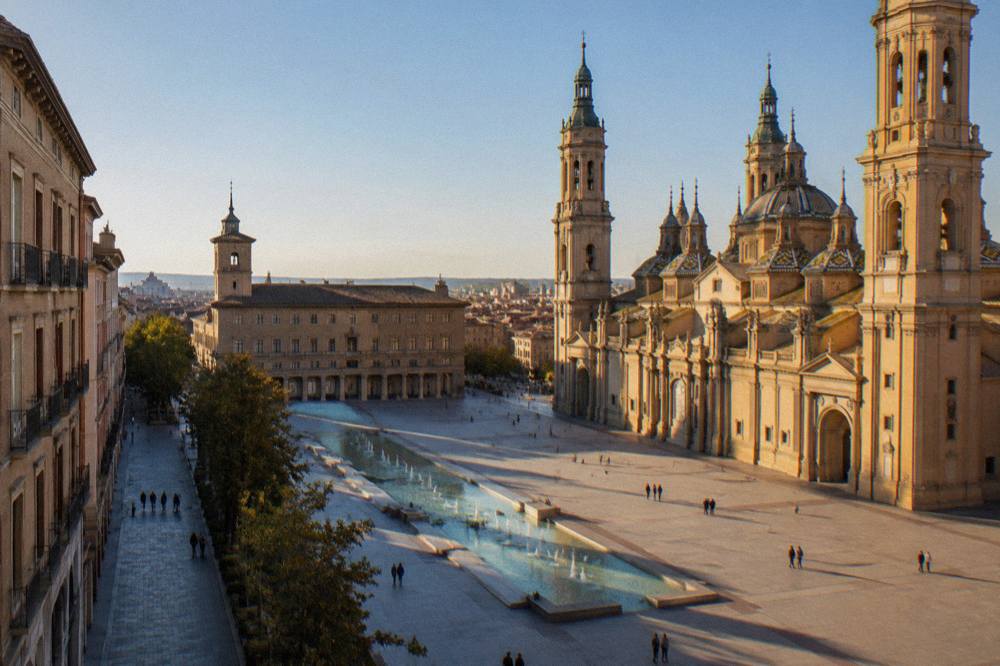
One October caveat is worth knowing. The Fiestas del Pilar run from 10 to 18 October 2026, with the Ofrenda de Flores on 12 October, and the city fills dramatically during those days. The heat is gone by then, but so is the calm; the details of what the 12th involves are covered in what happens on October 12 in Spain. If a quieter, warm month is the goal, June or September fits better.
Does The Cierzo Wind Cool Zaragoza In Summer?
The cierzo, the cold, dry north-west wind that funnels down the Ebro valley, is a real feature of Zaragoza's climate and can bring sharp relief on a hot afternoon, but no published speed, gust or days-of-wind figure exists for it on the AEMET normals sheet, so its effect cannot be quantified here. What the record does show is the dryness it reinforces: 61 percent average humidity and just 322 mm of rain a year.
The wind is part of why Zaragoza's heat feels different from a coastal city's. It is a dry heat, and the same valley geography that brings the cierzo also blocks any sea breeze: Zaragoza is inland, and the nearest coast is hours away by car or train. Visitors sometimes ask whether the city is unusually windy overall, and that question has its own fuller answer in is Zaragoza a windy city.
Planning around the wind is mostly a matter of checking the forecast before a day outdoors, because AEMET issues wind warnings for Aragon when conditions warrant. For sightseeing purposes, the wind is more often a friend than a problem in July and August, when any moving air at 32.4 C is welcome.
For travellers who want the heat question settled before anything else, a short guided introduction to the city is the most efficient first move on arrival. The must-see walking tour pairs the two great monuments of Plaza del Pilar with the shaded lanes between them, and it can be booked for a morning slot while the air is still cool.
How Should You Plan A Summer Day Around The Heat?
Plan a Zaragoza summer day in three blocks: sights and walks before 13:00, a long shaded lunch or indoor museum through the hottest hours, and the evening outdoors from about 19:00, when the mean summer minimum of 18.3 C keeps terraces comfortable. The AEMET normals show July and August afternoons averaging above 31 C, so the midday block is not optional.
A sample shape for a hot day:
| Time block | What to do | Why it fits the climate |
|---|---|---|
| 08:00-13:00 | Guided walk, Basílica del Pilar, La Seo, Puente de Piedra | Morning is the coolest sightseeing window of the day |
| 13:00-17:00 | Long lunch, Aljafería interior, Caesaraugusta museums | Indoor spaces and shade through the hottest afternoon hours |
| 17:00-20:00 | Parque del Agua or the Ebro river walk | Heat easing, more than 120 hectares of green space |
| 20:00 onward | Tapas in the old town, evening monuments | Mean summer minimum of 18.3 C keeps evenings warm |
The Aljafería makes a good midday stop precisely because it is an interior visit: the palace is open daily 10:00-18:00 in the October timetable, with Spanish-language guided tours at set times through the day. The Caesaraugusta museums, the Roman forum, river port, baths and theatre, run Tuesday to Saturday 10:00-14:00 and 17:00-21:00, so their late window also suits an evening plan, and a four-museum combined ticket costs EUR 7.
For a fuller daily structure, the itineraries and time-budget questions are covered in how many days do you need in Zaragoza, Spain, and the wider case for the city in any season is made in is Zaragoza Spain worth visiting.
Common Questions About The Hottest Month In Zaragoza
What is the hottest month in Zaragoza?
July is the hottest month in Zaragoza, with an average daily high of 32.4 C and a monthly mean of 25.3 C on AEMET's 1981-2010 normals for the Zaragoza Aeropuerto station. August is a close second at 31.7 C and 25.0 C.
Does Zaragoza get hotter than Madrid or Barcelona?
No comparison figure for Madrid or Barcelona is carried here, so none is printed. What the Zaragoza record shows is an inland, semi-arid climate: July averages 32.4 C by day with only 17 mm of rain, and no sea breeze softens it.
How cold do summer nights get in Zaragoza?
They do not get cold at all. The mean daily minimum in July and August is 18.3 C on the 1981-2010 AEMET normals, warm enough for terrace dining and evening walks.
Does it rain in July in Zaragoza?
Barely. July averages 17 mm of rain over 2.6 days of 1 mm or more on the 1981-2010 normals, tied with August as the driest month of the year.
Which month has the most sunshine in Zaragoza?
July, with an average of 348 sunshine hours on the 1981-2010 AEMET normals. August follows at 315 hours, and the year as a whole totals 2,693 hours.
Is Zaragoza too hot to visit in summer?
Not with a shifted schedule. Average July afternoons reach 32.4 C, but mornings and evenings are pleasant, monuments keep long hours, and indoor options like the Aljafería and the Caesaraugusta museums cover the hottest hours.
July is the hottest month in Zaragoza, and knowing that is the easy part; the useful part is that the same record shows a city built for its own climate, with dry heat, warm evenings and a calendar of months, May through October, that each offer a different balance of warmth and comfort.