Is There A US Military Base In Zaragoza?
The straight answer to whether Zaragoza, the capital of Aragon in Spain, hosts a US military base, plus what the air base is and what the city actually offers a visitor.
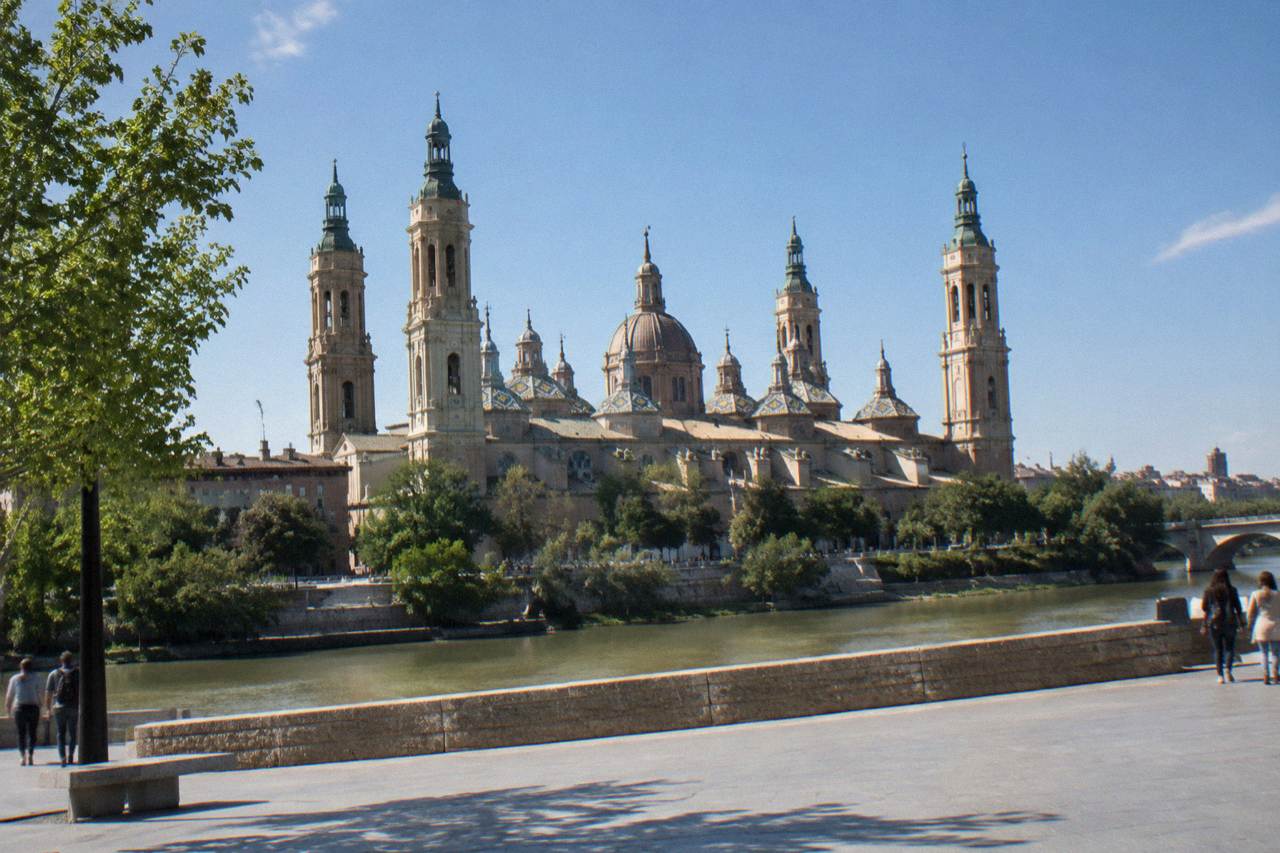
Zaragoza, the capital of Aragon in north-east Spain, sits inland on the Ebro and is best known to travellers for the Basílica del Pilar, the Aljafería and a Roman past under the name Caesaraugusta. It is also a city with a serious military aviation identity: the Spanish air force has a large base on its eastern edge, and the question of an American presence there comes up often enough, in search bars and in conversation, that it deserves a plain answer. This page gives that answer, explains what the air base actually is, and then gets to what matters for a visitor: the city around it, which is one of the most rewarding in Spain.
Is There A US Military Base In Zaragoza?
No, Zaragoza does not host a base that belongs to the United States. The large air base on the city's eastern side is a Spanish air force facility. A US presence at that base is a matter of public record elsewhere, but the installation is not American territory, not American-run, and not a US base in the way Ramstein in Germany or Rota's naval station are often described. Travellers cannot visit it, and it sits well outside the tourist city.
That is the whole answer in one paragraph, but the nuance is worth a little more room. Zaragoza's air base is one of the Spanish air force's principal installations, and Spain and the United States have a long defence relationship that has repeatedly touched this city. None of that changes what a visitor experiences. The base lies east of the centre, beyond the airport corridor, and nothing about the old town, the Pilar, the Aljafería or the tapas bars of the centro histórico is shaped day to day by who refuels whose aircraft. If the question behind the question is whether Zaragoza feels like an American garrison town, it does not. It feels like a big, confident Spanish regional capital with a Roman forum under its squares and a Mudéjar skyline.
For orientation on the city itself, see where Zaragoza sits on the map of Spain, and for what draws people here, what Zaragoza is famous for.
Where Is The Zaragoza Air Base And Can You Visit It?
The air base sits on the eastern side of the Zaragoza metropolitan area, in the same corridor as the civilian airport, several kilometres from the historic centre. It is an active military installation and is not open to the public: there is no visitor programme, no viewing area promoted for tourists, and no way to include it on a sightseeing walk. Nothing about it appears on any tourist itinerary, and it plays no part in the city's visitor life.
The practical geography is simple. The base and the civilian airport share the eastern approach to the city, which is why some travellers notice military aircraft in the sky while staying nowhere near anything military on the ground. The tourist city is a different world entirely: the Plaza del Pilar, the two cathedrals, the Roman Caesaraugusta museums and the Aljafería are all within a compact walkable core on the other side of town. The Ebro runs through the middle of that core, crossed by the Puente de Piedra, the stone bridge whose current form opened in 1440 and whose bronze lions date from 1991, according to the municipality's own page on the bridge.
If you are planning your time around the question, the honest advice is to stop planning around it. The base is a non-event for visitors. The city is not. A good starting point is the things to do in Zaragoza overview, and a guided first hour works even better: the Zaragoza Monumental Sightseeing Tour, a 105-minute guided introduction rated 4.4 from 36 reviews, from $10.41 per person, exists precisely for travellers who want the Pilar, La Seo and the old town explained quickly and cheaply. Check availability
Why Does The US Military Come Up In Connection With Zaragoza?
Because the United States and Spain have a decades-long defence relationship, and Zaragoza's air base has appeared in it repeatedly, as a matter of public record. During the Cold War the base served as a major US strategic air command facility, and that history is well documented. Today the installation belongs to the Spanish air force, and any American use of it happens under arrangements between the two governments rather than as a standing American base.
The Cold War chapter is the reason the question exists at all. American forces operated from Zaragoza on a large scale, and the base was one of the most significant US Air Force facilities in southern Europe. That era ended, and the installation passed fully to Spanish control. What remains today is a Spanish base that occasionally appears in news coverage when alliance exercises, refuelling stops or government-to-government arrangements bring allied aircraft through, which is normal for a major NATO-country airfield. None of it is visible from the tourist city, and none of it requires a visitor to know anything about defence policy.
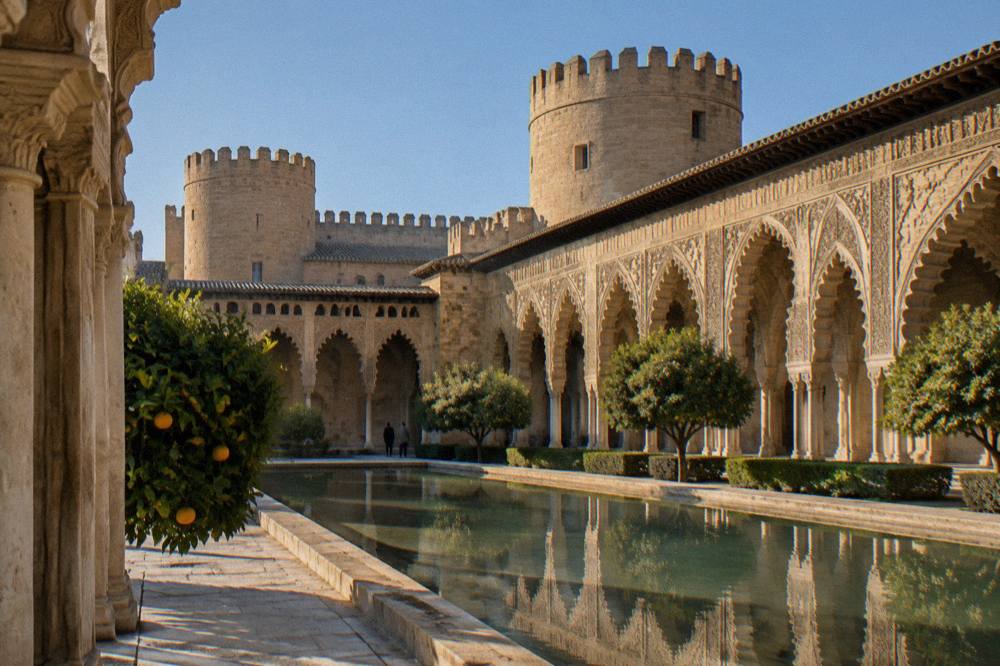
It is worth being precise about what this page will not do. It will not print personnel numbers, treaty dates or base access rules, because those details belong to official defence publications and change with each government arrangement. What a traveller genuinely needs is simpler: the base is east of the city, it is Spanish, it is closed to visitors, and it has no bearing on a trip. If you want to read the city's military past in a way you can actually stand inside, the Aljafería does it better than any airfield. The palace-fortress, open daily 10:00-18:00 in October with general admission at EUR 7 and guided visits at EUR 9 per the municipal monument timetable, was a seat of Islamic-era rule, then a royal palace, then a barracks, and its layered history is the city's military story told in stone.
What Should You Actually See In Zaragoza Instead?
The visitor highlights are the Basílica del Pilar, free to enter as a temple, with its tower viewpoint at EUR 6 for an adult; La Seo cathedral at EUR 10 general admission including three further sites; the Aljafería palace-fortress at EUR 7; and the four Roman Caesaraugusta museum sites on a EUR 7 combined ticket. All of these sit in or beside the compact old town, and none of them requires a car or a tour bus.
The Pilar is the emotional center of the city and the single most famous building in Aragon. Entering the temple itself is free, per the municipal monument timetable, with the Holy Chapel open 8:00-20:30 and the main altar zone open in two daily blocks. The Torre Mirador viewpoint above it costs EUR 6 for an adult, EUR 5 for over-65s and residents, and is free for children under 12. La Seo, the older of the city's two cathedrals, charges EUR 10 general admission and that ticket also covers the Museo de Tapices, the Museo Pilarista and the Rosario de Cristal, with reduced rates for over-65s at EUR 9 and for students and ages 13-18 at EUR 7. The wider set of guides lives on Zaragoza Travel Guide.
The Roman layer is the city's quiet trump card. Caesaraugusta, the Roman city whose name is the ancestor of the modern one, left a forum, a river port, baths and a theatre, each with its own museum site. The four-museum bono costs EUR 7, or EUR 5 reduced, and the sites are free on the first Sunday of the month. For a deeper look, the Roman ruins of Caesaraugusta guide walks through all four.
| Sight | Adult entry | Key detail from the municipal October timetable |
|---|---|---|
| Basílica del Pilar (temple) | Free | Holy Chapel 8:00-20:30; tower viewpoint EUR 6 adult |
| La Seo cathedral | EUR 10 | Includes Museo de Tapices, Museo Pilarista, Rosario de Cristal |
| Aljafería palace | EUR 7 | Daily 10:00-18:00 in October; guided visit EUR 9 |
| Caesaraugusta four-museum bono | EUR 7 | Foro EUR 4 alone; free on the 1st Sunday of the month |
| IAACC Pablo Serrano | Free | Tue-Sat 10-14 and 17-21, Sun 10-14 |
One October caveat that matters if you are coming soon: the Museo de Zaragoza's central building on Plaza de los Sitios is closed for Ministry of Culture works with no reopening date, and the Palacio de Sástago is closed in October, so build neither into a plans list. The Museo Goya, by contrast, reopens on 9 October 2026 after renovation, open Tue-Sat 10:00-20:00 and Sun 10:00-14:00, closed Mondays, with admission pricing on the museum's own page.
Does Zaragoza Feel Like A Military City To A Visitor?
No, it feels like a food-and-monuments city. The visitor experience of Zaragoza is tapas in the old town, two cathedrals a few metres apart, a Roman theatre under a museum, and a riverside Ebro walk, with the military aviation world invisible beyond the eastern horizon. The air base shapes the local economy and the skyline's distant eastern edge, not a single minute of a tourist's day.
The tapas culture is the best evidence. Evening tapas walks in the old town, wine tasting with tapas in the ancient centre, and midday market tours all operate in the historic core, several rated at or near 5 stars by their guests. The evening tapas walking tour in the old town, rated 4.9 from 62 reviews at from $106.92 per person for three hours, and the wine tasting and tapas in the ancient town, rated 5 from 75 reviews at from $108.94 per person, are typical of the products on offer. For the food question in full, see what food Zaragoza is famous for.
The October fiesta season deserves a mention precisely because it is the opposite of a military spectacle. The Fiestas del Pilar, running 10 to 18 October in 2026, are the city's biggest annual event, with jota competitions, concerts, fireworks after the pregón and a closing display by the Ebro on 18 October, and the Ofrenda de Flores on 12 October drawing enormous crowds along the route from Paseo de la Independencia to the Plaza del Pilar. If your question about a US base is really a question about whether Zaragoza is a lively place to spend days in, the fiesta calendar answers it. For the national holiday that anchors it, see what happens on October 12 in Spain.
How Many Days Do You Need, And What Tours Help Most?
Two full days cover the Pilar, La Seo, the Aljafería and the Roman museums at a comfortable pace, with a third day for the Museo Goya, the Ebro riberas and a proper tapas evening. First-time visitors benefit most from a short guided walk on day one, a free or paid tour of the old town, and a guided Aljafería visit, since the palace rewards explanation far more than it rewards wandering.
The guided options below are the ones that fit that shape best. The monumental sightseeing tour is the cheap, fast orientation; the free tour through the historical centre, on GuruWalk, is a tip-based walk with the guru named in the tour details, rated 4.15 from 122 reviews; and the Aljafería guided tour in Spanish, from $25.23 per person and rated 4.7 from 23 reviews, is the one to book if your Spanish is up to it, because the palace's history is the story. For the pacing question in full, see how many days you need in Zaragoza.
A practical note on the Aljafería: the palace is free on the first and third Sunday and Monday of each month, per the municipal timetable, and a combined ticket with the tourist bus costs EUR 4. The tourist bus itself, the Zaragoza Bus Turístico, runs a 90-minute loop with 16 stops on a EUR 10 general ticket valid 24 hours hop-on hop-off, cash only on the bus. Neither of these touches the air base, which is exactly the point: everything a visitor does in Zaragoza happens on the western, monumental side of the city.
Common Questions About Zaragoza And Its Air Base
Is there a US military base in Zaragoza, Spain?
No. The air base at Zaragoza belongs to the Spanish air force. A US presence at the base is a matter of public record elsewhere, but the installation is not a US base and is not open to visitors.
Can tourists visit the Zaragoza air base?
No. It is an active military installation with no visitor programme, and it lies well east of the historic centre, far from every sight a tourist comes to see.
Is Zaragoza safe for American travellers?
Zaragoza is a normal Spanish regional capital with the ordinary big-city precautions any visitor takes. The air base has no effect on safety in the tourist core, and the city's visitor areas around the Plaza del Pilar and Paseo de la Independencia are busy and well patrolled.
Why do people think there is a US base in Zaragoza?
Because the base hosted a large US strategic air command presence during the Cold War, a history that is well documented and still circulates online. The installation has long since returned to Spanish control.
Does the air base affect flights into Zaragoza Airport?
Civilian flights serve Zaragoza Airport through operators including Ryanair, Wizz Air, Vueling and Volotea, with the airport connected to the city centre by bus line 505. The military base shares the corridor but does not shape a visitor's airport experience.
The short version of this whole page: Zaragoza, the capital of Aragon, has a Spanish air base and an American Cold War chapter in its recent history, and neither is a reason to visit or to stay away. The Basílica del Pilar, the Aljafería, the Roman museums and the tapas bars of the old town are the reasons, and they are all waiting on the other side of the city from the runway.